

| Rank | Name | Country | Group | Speeches | |
|---|---|---|---|---|---|
| 1 |
|
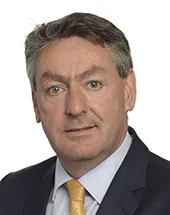
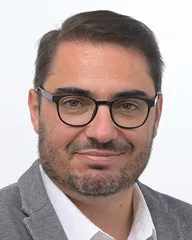
Lukas Sieper | Germany DEU | Non-attached Members (NI) | 390 |
| 2 |
|
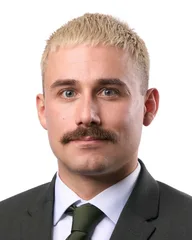
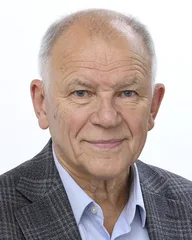
Juan Fernando López Aguilar | Spain ESP | Progressive Alliance of Socialists and Democrats (S&D) | 354 |
| 3 |
|
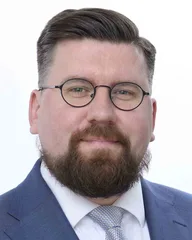
Sebastian Tynkkynen | Finland FIN | European Conservatives and Reformists (ECR) | 331 |
| 4 |
|
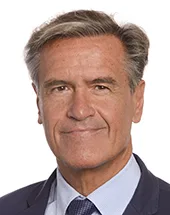
João Oliveira | Portugal PRT | The Left in the European Parliament (GUE/NGL) | 232 |
| 5 |
|
Vytenis Povilas Andriukaitis | Lithuania LTU | Progressive Alliance of Socialists and Democrats (S&D) | 227 |
All Contributions (273)
Preparedness for a new trade era: multilateral cooperation or tariffs (debate)
Madam President, a very important debate here today in the Chamber. Certainly, we don't want a situation where we make decisions on ideological views about whether we like President Trump or dislike him. But we must do it strategically. And obviously, Europe has to stand firm in the potential threats of tariffs and tax changes. But from our perspective, we have to ensure that whatever tariffs we put in place, that we don't do collateral damage to our own industries. And what I find extraordinary is those that were advocating for President Trump and Elon Musk and all during the last number of months, will they be the same people that will arrive in the car factories in Germany, Slovakia and the Czech Republic and elsewhere telling them why they are laying off workers due to the fact of tariffs on European products, on European manufacturing? Because, simply, tariffs will ensure that European industries will struggle. And equally, from an American perspective, they will equally struggle in America. So longer term, a trade war is of no benefit either to Europe or the US itself. I would urge the Commission that in drafting up its proposed retaliatory measures, that I would look at it strategically, but that they would also continue to engage. Continue to engage, Commissioner. We all know that longer term, there is no benefit in a trade war. It won't benefit the workers in European factories, and it won't benefit those in American companies either.
Combating Desertification: 16th session of the Conference of the Parties (COP16) of the United Nations Convention (debate)
Mr President, as I stand here, my home country of Ireland is preparing to be battered by one of the strongest storms in decades. And if you look at the weather forecasts across Europe, there's rain in many areas. So it's a concept that is very hard to understand when we sometimes speak about desertification. But, in reality, the scale of this problem – the desertification – should be everyone's concern. It affects the land of homes to 1.5 billion people. The UN estimates that 135 million people have already been displaced due to desertification, and this could rise to 700 million by 2050. This land is also important agricultural land, and the UN estimates that 40 % of agricultural land has already been degraded. The consequences are far-reaching: humanitarian, migration, environmental problems, food and water security, political stability or political instability, for global security, for trade and supply chains there are significant challenges. And each of these consequences will have an impact also on Europe and the daily lives of our citizens. We cannot reverse the problems in the very short term, but we have to plan and we must make real collective efforts to halt its spread and to address its long-term implications. So while I welcome the commitments at the COP16 of the United Nations Convention to Combat Desertification, especially regarding the financial commitments from both the public and private sector, we do need to ensure that we make a common effort to bring forward the challenges regarding drought and the protocols with regard to tackling the same. If we are going to halt this runaway train, we need to have a common, coherent plan for tackling drought and that involves governments, businesses, local people, scientists and engineers.
Geopolitical and economic implications for the transatlantic relations under the new Trump administration (debate)
Mr President, the Trump presidency will be disruptive and will be unpredictable in the areas of tax, trade and security, so we need to accept that and deal with it. We need to maintain dialogue. There is no point in us being ideologically opposed to the fact that the American people have elected Donald Trump as their president. Both on the left and the right, we need to temper our language to ensure that Europe continues to dialogue with its most important strategic partner. European companies provide huge employment opportunities right across Europe, and we have to ensure that we maintain and protect that, so the areas of tax and trade are of significant importance. American troops died on this continent twice over the last 110 years to save ourselves from ourselves, so it is critically important from a security perspective as well. And sometimes, on the right, I hear people championing Trump, but equally, I'd like them to stand in front of their own citizens and say that in the event of Trump withdrawing from NATO, either directly or funding, taxes in their countries will go up, the threat to their countries will increase. So very clearly, those that do trumpet Trump should also be very conscious of the potential consequences of President Trump if he does renege on his security commitments to date in the areas of NATO funding directly, and also military support.
Ceasefire in Gaza - the urgent need to release the hostages, to end the humanitarian crisis in Gaza and to pave the way for a two-state solution (debate)
Mr President, after the barbarity of 7 October 2023 and the subsequent invasion of Gaza and the brutality of Israeli attacks on civilians right across Gaza, this ceasefire is welcome – very welcome, but very late. 42 000 people dead and hostages detained in underground cellars across Gaza. We need the hostages out and we need humanitarian aid into Gaza immediately. We need international oversight to ensure that this has been carried out. But ultimately, we need a political settlement. We need a two-state solution proposal, and we need to ensure that Europe acts as an honest broker. It has been inherently dishonest in this debate for many, many years. It simply will not accept that the Palestinian people have a right to statehood, have a right to freedom, and have a right to their own destiny. So Europe must act, while we have this opportunity with a ceasefire, to insist on a political settlement, to ensure that a two-state solution and Palestinian statehood is a priority for this House and right across the EU institutions as well.
Recommendation to the Council on the EU priorities for the 69th session of the UN Commission on the Status of Women - EU priorities for the 69th session of the UN Commission on the Status of Women (joint debate - EU priorities for the upcoming session of the UN Commission on the Status of Women)
Mr President, colleagues, in the last six months we have had local and European elections and, most recently, national parliamentary elections in Ireland. As a candidate, I get my fair share of abuse online. However, it pales into comparison to the level of vitriol and hate directed at female candidates from all political parties and none. For too many people, mainly men, they see female candidates as fair game. They do not debate with them; they abuse and intimidate. They seek to debase them and undermine their right to take part in the political life of my country. This issue is not unique to Ireland. Women across the world are harassed, harangued and humiliated online by faceless cowards. It is having a chilling effect. While Ireland has a 40 % gender quota for local and national elections, political parties struggle in finding female candidates to stand for elections. I have had colleagues break down in tears over the abuse they receive online and now, worryingly, it is abuse on the streets and intimidation as they go about their political duty. It needs to stop. It is damaging our society and undermining democratic representation. Ending the abuse of women online must be a priority for us all here in this Chamber, but also for those operating social media platforms across the globe.
Need to update the European strategy for the rights of persons with disabilities (debate)
Madam President, I wish the Commissioner well in her new role. Delighted to take part in this debate, and it is a very timely discussion. We need to update this strategy to reflect the realities of the modern age, and in particular concerning employment. We need to empower people with disabilities to secure gainful and meaningful employment. Article 27 of the UN Convention on the Rights of Persons with Disabilities articulates that people with disabilities have a right to work on an equal basis to others. This right must be vindicated in real terms, in the real world. It simply cannot be an aspiration that is down on paper only. In Ireland and across the EU, too many people with disabilities remain outside the active workforce. According to the Irish census 2022, 14 % were unemployed – that is three times the national rate in Ireland – with the rate of unemployment increasing in line with the severity of disability. This is neither good for the people concerned or for society as a whole. The next strategy, Commissioner, must, I believe, have this commitment to employment opportunities for people with disabilities. Finally, it cannot be just left to the public sector to provide employment opportunities. The private sector must play its part. It must be supported in mobility adaptation, but also in other soft supports to ensure that they can employ people with disabilities, but they will want to employ people with disabilities. And we have to have a cultural change as well in that context. With the growing digitalisation of our economy, we can find the mechanisms needed to ensure that all members of society, irrespective of their disability status, have the ability to enjoy work with dignity.
Misinformation and disinformation on social media platforms, such as TikTok, and related risks to the integrity of elections in Europe (debate)
Mr President, colleagues, the EU and its democracy is under attack. It is under attack from nefarious third countries who simply do not like our way of life and the values that we cherish here: the rule of law, democracy, equality, media and judicial independence. And it is being facilitated by social media platforms who wilfully allow the spread of misinformation and disinformation. We saw firsthand how it can skew elections following the recent Romanian presidential election, where an unknown far-right candidate was catapulted into first place through the use of TikTok. We saw it in Ireland when X's owner, Elon Musk, attempted to fan the flames of discord and amplify the voices of extreme candidates, parties and opinions. In Ireland, we were lucky. The Irish people saw through what was happening and no far-right candidates were elected. But will we be lucky every time? Will we be lucky in the next election? Europe needs to act. I look forward to the work of the Special Committee on the European Democracy Shield, and I am confident that you, Commissioner McGrath, will ensure that our democracy and our electoral systems are fit for purpose, safe, secure and transparent.
Presentation by the President-elect of the Commission of the College of Commissioners and its programme (debate)
Madam President, I want to wish the individual Commissioners success personally, and I hope that the Commission collectively will have success into the future. We have significant challenges geopolitically, economically and in the areas of competitiveness. President, you referenced the issue of increasing our spending in innovation and research, decarbonising our economy and supporting the Green Deal and ensuring economic security. These are critical issues to be dealt with immediately. You speak about investment and public and private funding, simplification of the single market, decent wages, quality of life, education, childcare, healthcare and housing. And in our regions and our rural communities, you speak about ensuring that farmers and fishers have a future. But most importantly, President, we have a duty in this House to ensure that we hold you to account. You spoke about the fact that you were going to work from the centre out. Well, I honestly believe that the centre starts there and finishes there (points to the left and the right of the Chamber). And if you are to work from the centre out, if you continue, and if others continue, to listen to the far right, well, then the centre will not hold. And our duty is to ensure that the centre does hold, because on the far right they want to destroy the very values that you spoke about. So we cannot give comfort or succour to those on the far right. Let us be very clear. Individual freedoms and individual rights never, ever come from the far right, and our history and lessons should teach us that. So, Commission President, I wish you well, and I hope that you will ensure that the coalition of the centre will work, will function and will be supported, and people in this House have a duty to ensure that the coalition works as well. So we do not want to be in truck to those on the right.
The Autumn 2024 Economic Forecast: a gradual rebound in an adverse environment (debate)
Madam President, the autumn economic forecast for the EU seems cautiously optimistic. After prolonged stagnation, we are returning to very modest growth. Inflation is still decreasing and should continue to ease. The labour market is holding up and employment is expected to continue to grow. But the current geopolitical landscape means there are strong winds against us. We face a triple threat of trade wars, taxation and tensions. To withstand these challenges, we must ensure that our citizens can emerge from this cost-of-living crisis. We must redouble our efforts. If President von der Leyen is able to garner the support of this House tomorrow for her College of Commissioners, in return we expect swift and assertive action in the area of competitiveness – for it to become the cornerstone of our policies. We want to see the implementation of the Draghi report and the Letta report, and we cannot continue to sit on our hands and watch the EU economies slowly stagnate. I would also issue a word of caution to political factions around Europe. This is not the time to play politics and political games. We need to stabilise the EU economy and brace ourselves, what may come, because there are headwinds that could be very, very severe if we do not handle them well.
Reinforcing EU’s unwavering support to Ukraine against Russia’s war of aggression and the increasing military cooperation between North Korea and Russia (debate)
Madam President, Russia's invasion of Ukraine in February 2022 was not just about some regional conflict. It was about crushing an entire nation whose hopes and aspirations were to join the European Union, to embrace Western values and democracy. This House has been supportive, but not every political grouping in this House has been supportive of Ukraine. We saw more recently the shameful conduct of Viktor Orbán, Prime Minister of Hungary, in being friendly with a dictator like Putin. It is appalling in this day and age that this particular home of democracy, the European Parliament, can't even come together in unanimity around the issue of sanctions on Putin and on Russia. We have to ensure that we bring Russia's capabilities to its knees through sanctions and obviously in the area of military as well. Reference has been made to the fact that two nuclear powers are at war. Yes, they are: North Korea and Russia are at war, and are at war against a peaceful people in Ukraine as we speak. Some of the conduct in this particular Chamber has been disgraceful, primarily from over there. It has been shameful. Slava Ukraini!
International Day for the Elimination of Violence against Women (debate)
Mr President, in the EU alone, almost 2 500 women are killed each year by their partners, and 1 in 3 women suffer physical or sexual violence during their lifetime – our mothers, sisters and daughters. We want laws that protect our women and girls, and we want laws that punish perpetrators. And it should start in here. Of course, we have wild hyaena cheers from the right from time to time, you know, advocating for political leaders across the world that are the very leaders that try to crush the individual rights of women and young girls, objectify them and sexualise them beyond belief. It is shameful, at times, when we listen to debates, that we don't have an honest assessment of what is happening across the globe, and certain leaders in political times do objectify, do undermine the basic rights of women, and that it is shameful and it is happening in Europe and it is happening by political parties over there who are applauding on a daily basis their leaders who are undermining the basic rights of women and girls in our society and in the European Union. It's shameful.
EU-US relations in light of the outcome of the US presidential elections (debate)
Madam President, EU‑US relations will change with a Trump victory and entering the White House and also control of Congress. But we should not react in an emotional or irrational way to a democratic process. We have to acknowledge what has happened in the United States and deal with it accordingly. Our transatlantic alliance is a very old alliance. US troops have twice come to this continent to liberate us from fascism and from other forms of autocracy. But at the same time, we also have to realise that trade is a significant issue on which Donald Trump, as US President, will renegotiate. I would be concerned that we haven't the capacity in Europe to sit down and work out what is in the interests of the old alliance with regard to trade. We can't just pretend that there will be no changes. Yes there will. But equally, we must not just accept that we are into a cycle of trade tariffs, aggressive tax planning and other areas that undermine the institutions and the efficiencies of industry in both Europe and also in the US. So I believe that with rational thought, with dialogue and discussions, we can come to an arrangement with an ally that is critically important both for Europe and the United States in terms of our economies and our competitiveness.
Protecting our oceans: persistent threats to marine protected areas in the EU and benefits for coastal communities (debate)
Madam President, this is a very important topic for a number of reasons, and for a large number of communities in our Union. As an MEP for an island nation, I'm acutely aware of the importance of our oceans, seas and coasts to sustain an abundance of life and communities, both socially and economically. As such, today's debate on protecting our oceans, persistent threats to marine protected areas in the EU and benefits to our coastal communities is an important milestone. At present, 10% of Irish waters are now classified as marine protected areas, up from 2.4 % in 2020. The Irish Government is committed to achieving a 30 % coverage rate by 2030 and will, in the early 2025, pass legislation putting in place a legal commitment to do so. This is something I and the Fianna Fáil party supports. However, as an island nation, we have competing objectives and goals. In the first instance, we want to protect our marine ecosystems, but equally we want to support our fishing communities, many of whom have fished in areas set to be designated as marine protected areas for generations. Thirdly, we want to become an offshore wind energy superpower. Our challenge is to ensure that all these objectives can be met. It is therefore a necessity that all the stakeholders involved enter into this process with an open mind and without narrow ideological opinions. Fishers have a right to fish and not have their livelihoods destroyed by losing access to waters that they have historically fished in. Countries have a right to diversify their electricity generation, their waters. And yes, we have a moral obligation to protect our oceans, rivers and coastal areas. However, Commissioner, we have a significant challenge in Ireland, as Norway is being granted access to Irish waters for mackerel fishing. Mackerel stocks are being overfished. Irish mackerel quota will be cut by 22 % in 2025, and it will cost the Irish fishing industry EUR 18 million. Yet at the same time, we grant access to Norwegian supertrawlers to fish in Irish waters and to overfish and exploit mackerel stocks. The Irish fishing industry is very dependent on the mackerel stocks. So, Commissioner, I cannot understand how in one way we are talking about sustainability and ensuring we protect marine life and at the same time grant unlimited access to supertrawlers to fish in Irish waters, to exploit fish stocks and undermine the Irish fishing industry and the coastal communities that depend on it. When we are talking about sustainability, we must have fairness for the Irish fishing industry and the coastal communities that depend on it.
Closing the EU skills gap: supporting people in the digital and green transitions to ensure inclusive growth and competitiveness in line with the Draghi report (debate)
Mr President, the Draghi report makes very sober reading for us in the European Union with regard to the challenges that we face in the digital economy and in the green economy in particular. Also, when you couple that with the demographic changes that are happening and the fact that we are an ageing population, our skills and labour force planning leaves a lot to be desired. What has happened now is that we've been found out with regard to skills shortages in key areas right across the entire economy. For example, 54 % of EU businesses, big and small, report skills shortages as the most pressing issue facing them. So we need to incentivise and reward upskilling and reskilling. We also need to promote lifelong learning, something that is more important as life expectancy increases over the years, and back‑to‑education and back‑to‑work as well. There are many cohorts of people, particularly women, who are not able to get back into the workplace because of a lack of support when finished with child rearing. That is a key area where we have consistently failed across many economies in the European Union in terms of incentivising and supporting labour activation and back‑to‑work and back‑to‑education for cohorts that were locked out for various reasons. So I hope that we invest in skills and lifelong learning and back‑to‑education, and support labour mobility as well.
Empowering the Single Market to deliver a sustainable future and prosperity for all EU citizens (debate)
Madam President, the Letta report and the Draghi report are a wake-up call for the European Union in terms of digitisation, the Green Deal, our knowledge economy, investing in innovation, research and development, ensuring that we have growth and competitiveness. The single market, the internal market, is a cornerstone on which all of this is built, and we have to protect it and ensure that it prospers and flourishes. The fact of the matter is, at the moment we are very short on capital in the European Union to invest in all of the above. So we have to advance the Capital Markets Union and the Banking Union to ensure that we have the capital to invest in the knowledge economy, in the Green Deal and other areas of research and development. The free movement of people, goods and services and capital is the cornerstone. Of course, we do have some in this Chamber who are even trying to undermine the basic principle of free movement of people. We have to be very conscious that we can't cherry‑pick the Single Market – free movement of capital, goods, services and people is the cornerstone and we must all defend it to the last. More broadly, over the next number of months, we have to ensure that we respond to the Letta report and the Draghi report in what they observe are the challenges ahead for our competitiveness.
Consequences of the devastating forest fires in the Amazon and the importance of the Amazon for climate change (debate)
Madam President, we must incentivise countries to protect the most valuable ecosystem on the planet. Unfortunately, to date we have incentivised its destruction and we intend to do that by supporting the Mercosur agreement, which I find very hard to fathom, which is incompatible with the goals stated by the Commissioner around protecting this valuable ecosystem. Let us be under no illusions. The vast majority of the destruction of the Brazilian and Amazonian rainforest is because Europe demands product from them: timber, soya, livestock, coca and other products. So it is time for us to accept our responsibility in the degradation of this most amazing ecosystem. Commissioner, the people of Brazil and the other eight nations that make up this particular rainforest area are entitled to maximise their livelihoods from the rainforest – but not by its destruction, but by rewarding its preservation, by ensuring that we maximise the carbon credit for those countries, that we incentivise them and reward them for ensuring that those particular rainforests are protected for the future. So any trade deals that Europe enters into with those countries should not be about encouraging them to cut down the Amazonian rainforests and plant grass to farm cattle to import to the European Union, where we already have more than an abundance of beef already. Commissioner, it makes no sense. We have a moral obligation to the world to ensure that we address the inherent weakness in all these trade deals that we are entering into – it is that it is primarily based on one fundamental principle that we want more product as cheaply as possible at any cost, and I don't accept that. And I don't accept it for a number of reasons. I can't tell the farmers in my country, in Ireland, that they should forfeit the rearing of cattle, so that we incentivise a Brazilian rancher to cut down rainforests to grow grass to produce cattle to import into the European Union. Let us reverse this trend, and from now on, trade deals should be about incentivising and rewarding those countries that are the guardians of the lungs of the world to protect the forests, rather than we encouraging them to destroy them. So Mercosur as it is should be scrapped.
Facing fake news, populism and disinformation in the EU - the importance of public broadcasting, media pluralism and independent journalism (debate)
Madam President, independent media and journalism is under attack across the globe and, sadly, inside our European Union as well. Over recent years, the ability of journalists and public broadcasters to hold politicians and state institutions to account has been eroded by the actions of certain governments. This cannot be allowed to continue, Commissioner. An independent, free media is a cornerstone of our democracy in the European Union, and the next Commission must not give an inch to any government that seeks to silence journalism in the European Union. Renew Europe will not tolerate it, nor should anyone else who wishes to defend and support democracy. Finally, independent, free media requires funding. Our newspapers and radio stations should receive public funding while maintaining strict impartiality to ensure their ability to do their work and to ensure that societies are seen to be open and fair and free. No fear must be placed on journalists or journalism or the industry, and they should be able to work without fear or favour in holding governments to account and ensuring that we have a free, open, democratic society across the European Union.
The historic CJEU ruling on the Apple state aid case and its consequences (debate)
Mr President, we accept the ECJ Court ruling. It's obviously assessing on a historical context, and since that, Ireland has engaged fully with the OECD in terms of international taxation – both Pillar One and Pillar Two. It has implemented the corporate residence rules, the base erosion and profit shifting. It has implemented the anti-tax avoidance directive and the minimum tax directive. But just for members of the House here who may not be aware: Apple in Cork in Ireland employs 6 000 people. It's not just a wallplate company. It is a real, tangible company employing 6 000 of my constituents. So I just want to ensure that people are aware of that. There's a perception that it seems to be just some tax avoidance wallplate company. It is a very tangible, real business in Cork: it came to Cork in 1980 with 50 employees and it is now employing 6 000 people. We accept the ruling, but Ireland and the integrity of our taxation laws and policy is something that the Irish Government stands by. And that is why they were involved in the process of appealing as well with Apple, because the General Court found in favour of Apple and Ireland. It was on appeal that the European Court of Justice found against. But that's why Ireland was involved in that case. It was because we do defend the integrity of our taxation policy and industrial policy.
War in the Gaza Strip and the situation in the Middle-East (debate)
Madam President, it's almost a year since the barbaric attacks of Hamas on 7 October, which killed over 11 000 people and took hundreds of people hostage, many of whom are still in captivity, and I call for their immediate release. And the subsequent Israeli invasion of Gaza has been described as a genocide, as a war crime. It has been described by politicians as that, but equally the International Criminal Court has raised genuine concerns about Israel's activity in Gaza. The International Court of Justice has cited Israeli politicians in terms of the illegal occupation in the West Bank. But being quite truthful, the mandate that this House, and the Commission, has had has been dishonest because we have done nothing in the last five years to address what is an illegal invasion of Palestinian lands in the West Bank. The European Union has done nothing to advance the two-state solution. It has sat on its hands and has watched the occupation of the West Bank by settlers, supported by the Israeli army and by the Israeli Government. And we have done nothing. We have an Israeli-EU trade association agreement, which includes human rights obligations in the articles. I have seen no effort by the European Union to address that issue. It is shameful, but it is more shameful that it continues.
The future of European competitiveness (debate)
Madam President, I very much welcome the Draghi report on European competitiveness. And just to say a few things stand out quite clearly, and that's the issue of capital, in other words, the Banking Union, the Capital Markets Union, access to finance. There is no doubt that traditional banking systems that we had in Europe for many years are no longer functioning, and for us to unleash our potential, but in terms of using public funding and then multiplying that out by private funding, we do need to see a Banking Union and a Capital Markets Union. I know that the harmonisation, the mutualisation of debt is an issue that is very much a faultline in the debates in this particular House. But I think we should have to look at it another way: in terms of mutualisation of investment, where we can see a common purpose in terms of expanding the economy, investing in infrastructure and creating greater competitiveness. Not necessarily mutualisation of debt for everyday current expenditure. And I think it's an area that the Commission should look at in terms of how they can extrapolate out where we can mutualise investment, rather than the concerns that are often expressed here around the mutualisation of debt for everyday current expenditure of Member States.
Global measures towards social media platforms - Strengthening the role of DSA and protecting democracy and freedom in the online sphere (debate)
Mr President, what is being broadcast and disseminated on X and other social media platforms is sowing seeds of disharmony in our Union and, sadly, facilitating violence on our streets. Last month, violence erupted on the streets of Belfast in Ireland. It was encouraged and spurred on by the comments of the owner of X, Elon Musk. His comments were about civil war and, I believe, a deliberate attempt to ratchet up the rhetoric and antagonise people. As a liberal, I will defend a person's right to freedom of speech and expression, and their fundamental rights. However, as a democrat, I cannot support the right of a person to incite hate or violence and undermine our democratic systems with misinformation and disinformation for nefarious motivation. This is the challenge we as parliamentarians face – to balance these two often competing objectives. We are not the United States. There are no First Amendment rights. There are no universal rights to freedom of speech. We need to be very careful in the weeks and months ahead that nefarious actors do not use social media platforms under the guise of free speech to undermine our democratic systems and cause violence and havoc on our streets. Finally, I want to wish Michael McGrath, my colleague from Ireland, the very best in his new appointment to the Commission, where he will be in charge of the European Democracy Shield, which is now more and more important than ever.
Pre-enlargement reforms and policy reviews (debate)
Madam President, while Treaty change may be required in the event of extra enlargement, I believe at this stage what we should do is prepare citizens, both within the European Union and in the candidate countries, to ensure that we can have a seamless merging of candidate countries. There is no doubt that there are concerns that some countries would not be able to live with the pace of the European economy, but I would like to remind people that Ireland, in 1973 when it joined, was the poorest country in Europe, and at that stage even some European countries opposed our application to join the EU. So I do believe that it is in the interests of the candidate countries as well, but we must ensure that we invest in them now, in terms of institutions, democracy, a functioning market economy and ensuring that they can live with the EU obligations. If we don’t invest in them now, well then we will have significant challenges in convincing citizens within the European Union now that others are welcome into our Union. So I certainly support the concept of enlargement, investment in the candidate countries now, to ensure that they will have the capacity to live within the European Union, and as importantly, European citizens will then be able to embrace them and welcome them.
Promised revision of the EU animal welfare legislation and the animal welfare-related European citizens’ initiatives (debate)
Madam President, firstly, I welcome any proposals that would improve animal transport regulations and the obvious mistake made over the last number of years was we did not enforce Regulation 2005. I sat on the Committee of inquiry that looked at that, and it also made recommendations. And I very much welcome the proposals put forward in terms of ensuring that we transport animals in a way that respects their integrity and ensures their safety and quality of life. But equally, we also have to accept that Ireland, specifically, is an island nation and to have access to the single internal market, it does have to transport animals off the island, so we need to ensure that the transporters are of the highest quality, in terms of ventilation, temperature, lifetime, satellite tracking, veterinary oversight, feeding systems in place and ensuring that there is quality. But at the same time, any regulations that are brought forward must protect the integrity of the single market and must allow Ireland to have access to that market and, in the meantime, ensure that we have the highest standards to transport animals from Ireland to the continent.
European Semester for economic policy coordination 2024 – European Semester for economic policy coordination: employment and social priorities for 2024 (joint debate – European Semester)
Mr President, it seems that some groups have used this European Semester report to try to undermine the work done on finally reaching an agreement on the new economic governance framework for the EU itself. And this is clearly very disappointing. I actually believe that this is quite a good agreement, in the sense that it gives flexibility in terms of spending and ensures that we have sustainability and prudence as part of that particular package. So the European Semester itself should not be used for that purpose. From an Irish perspective, we did need to have flexibility and the economic governance framework to ensure that we were able to address a few fundamental challenges that are inherently causing pressures in the Irish economy. They are, namely, the issue of housing in terms of supply of housing, building, but also soaring rents. And these are two significant issues that do need state intervention to stimulate our housing market, to ensure that we can house our people. So I honestly believe that those that are making the argument to undermine the agreement that we have on the economic governance framework are doing it for reasons I simply cannot understand, other than playing absolute politics with it. But from my perspective, the Irish Government has an opportunity with the flexibilities in this economic governance framework to address the serious challenges of housing, both in terms of delivery and building, and also ensuring affordable rents for people.
EU climate risk assessment, taking urgent action to improve security and resilience in Europe (debate)
Madam President, this EU risk assessment indicates quite clearly the challenges that we face as a continent in addressing the climate change. My country, Ireland, has already declared a climate emergency and we have to act with urgency, both in terms of mitigation and also adaptation: mitigation in ensuring that we move to carbon-free electricity generation, wind, solar and also nuclear energy across Europe as well. And we must have interconnectivity across the entire continent so that our electricity generation systems can complement each other at varying times. We also need to have this debate based on science, based on research, ensuring that we unlock the creative innovation that’s on this continent. And that can only be done by ensuring that we have investment, both public and private, to underpin the advances that will be required in the area of generation of electricity. From an Irish perspective, we have a lot of work to do in increasing the grid to ensure it has capacity, to transport electricity across the island and to export it, to ensure we have investment in ports, in skill sets, and ensuring that we unlock the lethargic bureaucracy at Irish level in terms of applications for planning and ensuring that projects get the go-ahead to ensure that we can meet our climate targets and we can complement Europe in meeting them as well.