

| Rank | Name | Country | Group | Speeches | |
|---|---|---|---|---|---|
| 1 |
|
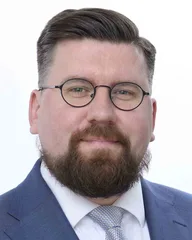
Lukas Sieper | Germany DEU | Non-attached Members (NI) | 390 |
| 2 |
|
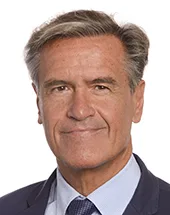
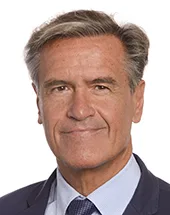
Juan Fernando López Aguilar | Spain ESP | Progressive Alliance of Socialists and Democrats (S&D) | 354 |
| 3 |
|
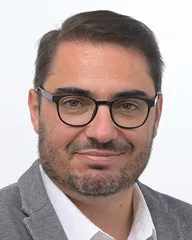
Sebastian Tynkkynen | Finland FIN | European Conservatives and Reformists (ECR) | 331 |
| 4 |
|
João Oliveira | Portugal PRT | The Left in the European Parliament (GUE/NGL) | 232 |
| 5 |
|
Vytenis Povilas Andriukaitis | Lithuania LTU | Progressive Alliance of Socialists and Democrats (S&D) | 227 |
All Contributions (612)
Ongoing hearings under Article 7(1) TEU regarding Poland and Hungary (debate)
The Socialist delegation voted in favour of this resolution as it shows a genuine commitment to make significant progress in the ongoing Article 7(1) TEU procedures, in line with its obligations under the Treaties. At Parliament’s request, hearings are not organised in a regular, structured and open manner. We urge future Presidencies to organise hearings regularly and at least once per Presidency. We call on the Council to ensure that hearings under Article 7(1) TEU also address new developments, including those related to violations of fundamental rights. We call on the Commission and the Council to refrain from approving the national plans of Poland and Hungary under the Recovery and Resilience Facility until they have fully complied with all country-specific recommendations under the European Semester and implemented all relevant judgments of the Court of Justice of the EU and the European Court of Human Rights. The Commission's conclusions should constitute sufficient grounds for the Council to adopt recommendations in the Article 7(1) TEU procedure.
Activities of the European Ombudsman – annual report 2024 (debate)
No text available
Human trafficking and grave human rights violations linked to the recruitment of non-Russian nationals, in particular from Africa, for Russia’s war of aggression in Ukraine
No text available
AccessibleEU and the strategy for the rights of persons with disabilities: state of play and the future of EU accessibility policy (debate)
No text available
Situation of the rule of law in Greece, following the Court decision on Predator spyware (debate)
No text available
Rise of political violence, notably by far-left organisations (debate)
No text available
Immunity of International Criminal Court officials and the activation of the EU Blocking Statute to strengthen EU strategic autonomy (debate)
No text available
Child sexual abuse online: protect children, not perpetrators (topical debate)
No text available
EUCO and situation in the Middle East (joint debate)
No text available
Tackling barriers to the single market for defence - Flagship European defence projects of common interest
No text available
One-minute speeches on matters of political importance
No text available
Harmonising certain aspects of insolvency law (short presentation)
No text available
Gender pay and pension gap in the EU: state of play, challenges and the way forward, and developing guidelines for the better evaluation and fairer remuneration of work in female-dominated sectors (debate)
No text available
European Union regulatory fitness and subsidiarity and proportionality – report on Better Law-Making covering 2023 and 2024 (debate)
No text available
Framework Agreement on relations between the European Parliament and the European Commission (debate)
No text available
Systemic oppression, inhumane conditions and arbitrary detentions by the regime in Iran
Mr President, Commissioner, once again a debate on the massive violation of human rights in Iran and a resolution in which the majority of this European Parliament clearly reaffirms its commitment and solidarity with the opposition and with the resistance, which manifested itself in Berlin this weekend: those young people fed up with repression and those brave women who stand up after so many years of discrimination and brutal oppression. But this Parliament also sends a message that the blocking of online and telephone communications is intolerable, but that it is, of course, absolutely incompatible with European diplomacy – which is for something – the death penalty that is being carried out massively in Iran. That is therefore the strongest message, even beyond the Islamic Revolutionary Guard Corps' declaration as a terrorist organization, which is a welcome step forward. It is a very powerful message that the European Union will be ready when the time comes for a regime of freedoms and pluralism in Iran.
Post-election situation in Uganda and threats against opposition leader Bobi Wine
Mr President, Commissioner, more than 10 years ago, in my first mandate in this European Parliament, I was a member of an EU electoral commission mission to Uganda – a country long tormented by oppressive, brutal regimes. Museveni was elected. So many years after, Museveni is still in place, but democracy has been eroded; human rights continue to be violated. I had the opportunity to check the importance and the weight of EU diplomacy on the spot in Uganda. It summed up with the embassies of the Member States, and we're still powerless in order to make the right point to bring about fair, credible elections in Uganda. Insofar as there is something we can do, it's to make the case for the human rights that are violated of the leaders of the opposition, so that the European message is still heard – in Kampala, in Uganda, all over the place – that we do care about those leaders of the opposition who are so unfairly prosecuted. So please, Commissioner, take the message: action is needed in Uganda, in Kampala.
Accession of Montenegro to the Convention of 2 July 2019 on the Recognition and Enforcement of Foreign Judgments in Civil or Commercial Matters - Accession of the Republic of Albania to the Convention of 2 July 2019 on the Recognition and Enforcement of Foreign Judgments in Civil or Commercial Matters (joint debate)
Mr President, Commissioner, we are discussing here the accession of Albania and Montenegro to an international convention on the recognition and enforcement of judgments, a convention to which the European Union is a party. And, as has been heard here, the majority of this Parliament welcomes that willingness on the part of Albania and Montenegro to fulfil the conditions for accession, in due course, to the area of freedom, justice and security, which is based on mutual trust and mutual recognition of judicial decisions. Therefore, they are doing the right thing. But this Parliament cannot fail to do the task entrusted to it by the Treaty on the Functioning of the European Union, which reserves the last word to the European Parliament (final say, decisive) decisive for the entry into force of any agreement negotiated by the European Commission as mandated by the Council. This is the case: The European Parliament therefore reserves the final say in the final adoption of this agreement for the free movement of judicial decisions in the area of freedom, justice and security.
Developing a new EU anti-poverty strategy (debate)
Madam President, Commissioner Mînzatu, we have again a debate on social Europe, on the fight against poverty: an EU anti-poverty strategy. And those of us who are lawyers know that rights are worth what their guarantees are worth, including social rights, which means that the European Child Guarantee must have a budget allocation - as this European Parliament calls for - of at least EUR 20 billion per year in the budget. And there is a gender factor, but also generational, in the translation of poverty, and, therefore, a huge challenge is to combat homelessness and the difficulty of access to housing, which has become the largest factor of inequality in the European Union. And there is something the European Union can do to facilitate access to housing: not only to mobilise EUR 700 billion in the European Affordable Housing Plan, but also to combat speculative investment by investment funds and vulture housing funds, which makes it prohibitive, not only for young people, but also for the working class in the European Union.
International Day of Education, fighting inequalities in access to education (debate)
Madam President, Commissioner, when we talk about education in this Parliament, we see that many of us have come to politics from teaching and some and some from a lifelong passion for equal rights and opportunities, because that is education: a capital pillar of social Europe, redressing inequalities. This is recognised not only in the Sustainable Development Goals (Goal 4), but above all in the Charter of Fundamental Rights of the European Union (Article 14). I bring to your attention two dimensions that have been discussed in this Strasbourg plenary session: firstly, the necessary budgetary allocation in the multiannual financial framework for the European Social Fund and for the Erasmus+ programme, which has to be sufficient to act as a tool, as a lever for equalisation of opportunities and as a social lift in a fundamental right such as education. But, secondly, it is the one that refers to the protection of minors against those digital tools that have to be incorporated into their educational curriculum through digital literacy, to protect minors and make them less vulnerable to the manipulation of the platform's business model.
Rule of law, fundamental rights and misuse of EU funds in Slovakia: the need for an EU response (debate)
Madam President, Commissioner, of the concerns I have already heard regarding the rule of law and the management of European funds in Slovakia, I would add and underline one that sums them all up: the removal by law of 2025 of the Whistleblower Protection Office and the withdrawal of the protection enjoyed by those who had already reported. And this affects European legislation, the Directive on the protection of whistleblowers that we launched after the conclusions of the Commission of Inquiry on large-scale electronic surveillance by the National Security Agency of the United States. It therefore affects compliance with European law and the fight against corruption, the management of European funds and the principle of non-regression – not going backwards – which is a fundamental criterion in the rule of law according to the reports of the Venice Commission. Add to this the 2024 reform – for which this European Parliament has already expressed its concern – of the Criminal Code to abolish the Special Anti-Corruption Prosecutor’s Office, and you have the full picture, Commissioner McGrath, to know that the Commission’s mission is to monitor compliance with European law. This does not mean any prejudice against Slovakia, of course, nor any leftist conspiracy, which does not exist. No, it means judgment on the facts in Slovakia.
Spain’s large-scale regularisation policy and its impact on the Schengen Area and EU migration policy (debate)
No text available
Presentation of the action plan against cyberbullying (debate)
Mr President, Commissioner Micallef, the last legislature was the legislature of the strategy for the protection of minors and of the resolutions on the rights of minors in compliance with Article 24 of the Charter of Fundamental Rights of the European Union. But this is the legislature's move to action against the cyberbullying, against harassment of minors in networks, cyberbullying. And, therefore, the first and foremost thing is to ensure the mental health of minors, but also the ability of the European Union to impose its right to large digital platforms and its business model. Therefore, it is necessary to enforce the Digital Services Act, but also the provisions in the Digital Equity Act, with a very powerful chapter of protection of minors, which requires digital literacy, thus incorporating the rules of self-protection of minors in educational programs through the educational process of minors. But, in addition to that, the European Union needs to finally harmonise its age verification rules because parental control is not enough, and it is not possible to abandon exclusively to the governments of the Member States the heterogeneous age verification rules that continue to contribute more data to that business model of large digital platforms. And finally, a European protocol for the identification and protection of minor victims is needed so that we do not have to regret tragedies arising from the self-destructive impulse to which cyberbullying leads. cyberbullying on the net.
Building a stronger European defence in light of an increasingly volatile international environment (debate)
Madam President, Commissioner Kubilius, you have used two images in your speech. First of all, he has used Jean Monnet's classic quote that refers to Europe growing through crises, but he did not say that he had to do it spasmodicly, but learning from bad experiences, and, undoubtedly, the Greenland episode is, and the lesson is clear: This is the first time that the European Union has been forced to recall that Article 42(7) is in force, and is a collective defence clause in the absence of Article 5 of the Washington Treaty. Secondly, he has referred to awakening the giant, but it is not only necessary to awaken him; You have to get it out of the comfort zone, and to increase investment in U.S. armaments is to stay in the comfort zone. It is not to integrate capabilities, put them in common and have a single command with a rapid intervention force. And finally, there is an essential idea: civic education for advocacy, with powerful political communication and leadership to explain to citizens what we are doing and why.
One-minute speeches on matters of political importance
Mr President, Commissioner, this week we are voting here, in plenary, on the report on the proposal for a regulation on the 'safe third country', an initiative that is alien to the Pact on Migration and Asylum, in which many of us have our sights not only, but also our hopes for, at last, an acceptable balance between shared responsibility and compulsory solidarity that is so crucial in external border regions such as the Canary Islands. The Government of Spain has activated a programme for the relocation of children who have arrived after dramatic rescue and rescue operations, overcoming many difficulties, in order to articulate, at last, an internal solidarity in which it is crucial that there be a pan-European reference of solidarity in the management of migratory flows and asylum claims. That is why full compliance with the Pact on Migration and Asylum and, above all, the coordination and monitoring of solidarity offers raised by the Member States, by the EU Solidarity Coordinator, is so important, because this is where the credibility of the pact goes and the response - finally humanitarian and responsible - to a challenge that requires a pan-European response goes.