

| Rank | Name | Country | Group | Speeches | |
|---|---|---|---|---|---|
| 1 |
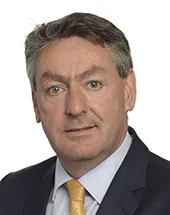
|
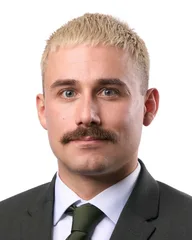
Lukas Sieper | Germany DEU | Non-attached Members (NI) | 390 |
| 2 |
|
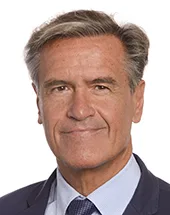
Juan Fernando López Aguilar | Spain ESP | Progressive Alliance of Socialists and Democrats (S&D) | 354 |
| 3 |
|
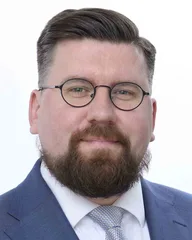
Sebastian Tynkkynen | Finland FIN | European Conservatives and Reformists (ECR) | 331 |
| 4 |
|
João Oliveira | Portugal PRT | The Left in the European Parliament (GUE/NGL) | 232 |
| 5 |
|
Vytenis Povilas Andriukaitis | Lithuania LTU | Progressive Alliance of Socialists and Democrats (S&D) | 227 |
All Contributions (273)
One-minute speeches on matters of political importance
Madam President, the 2022 Nitrates Derogation states that farmers who wish to plough grassland can only do so between 1 March and 31 May. Reseeding is a very important component to increase grass production, but it is also very important to ensure that we comply with the farm to fork strategy and the biodiversity strategy in terms of increasing the uptake of clover planting and also multi-species swards. Of course, at the same time as we are encouraging those uptakes of those particular plants like clover and multi-species swards, we at the same time ban clover-safe sprays which are there to ensure that the swards are clean of weeds and that we can actually have proper agricultural practices. So the point I’m trying to make, Commissioner – and we made it earlier as well – is that we don’t seem to have joined—up thinking in terms of the farm to fork strategy or the biodiversity strategy, both at national and at European level. I would ask that in the context of those policies in the future, that they would be joined up, that they would address the challenges that farmers are facing, but also put in place measures to ensure there is uniformity at national and European level.
Question Time (Commission) Reducing the use of pesticides and strengthening consumer protection
So I welcome that, Commissioner, but I do believe that we actually have to have the publications of these impact assessments in advance of us actually making fundamental decisions around how we farm, how we produce food and how we make sure it’s safe, right throughout the process to the tables in homes across Europe. Because we simply cannot hope that there will be some replacements, we have to insist that there will be. So, we do need to see the impact assessments on the potential drops in yields, the potential spikes in food, but also in what we actually intend to replace these chemical pesticides with.
Question Time (Commission) Reducing the use of pesticides and strengthening consumer protection
I am just wondering, Commissioner: what impact assessments have been carried out in the Farm to Fork Strategy to ensure that we will have a sustainable food industry in the years ahead, if we are to reduce and bring forward this regulation with regard to the Sustainable Use of Pesticides Regulation, which I very much support? We do have to have the research, the innovation, around the alternatives, like bios, like organics, but also even in the context of genetically modified. And I know that we in this House, in previous times, have had major discussions on this particular issue. But we fail to come to a consensus. We fail to understand the science or to accept the science. So I’m just wondering, have we carried out impact assessments? Do we know that the alternatives will be there immediately? And what other impacts could it have on the cost of food, the drop in yields and production by farmers because they are not able to put chemical pesticides on crops? So, particularly in view of escalating food costs, inflationary pressures, this is a significant issue and we have to give assurance and clarity to the agricultural sector, the farmers, but also the consumers, not only in terms of the safety of the products, but the cost of the product as well.
2021 Report on Turkey (debate)
Mr President, I wish this report could read differently, but it does indicate how Turkey has backslid in the fundamental principles of democracy. The report calls on Turkey to fully implement all judgments of the European Court of Human Rights, in line with Article 46 of the European Convention on Human Rights. It reiterates the strong condemnation and regret over Turkey’s withdrawal, by presidential decree, from the Council of Europe’s Convention on preventing and combating violence against women and domestic violence. It asserts that the continued prosecution, censorship and harassment of journalists and independent media, an issue of concern in Turkey, needs to be addressed without delay. The report goes on and goes on. It does highlight, unfortunately, and expresses deep concern about the state—sponsored deterioration in human rights situation for the LGBTQI people, in particular with regard to physical attacks and hate crimes, especially against transgender persons and protective bans on pride marches across the country. I would love to see a different Turkey, but we have a long way to go before it is acceptable to the norms and principles which we prescribe in this particular Parliament.
One-minute speeches on matters of political importance
Madam President, the killing of Shireen Abu Aqla on 11 May in Jenin refugee camp was reprehensible. It was an attack not just on the individual, but on the ability for journalists and the press to go about their business to inform the world. I have to say at the outset that we have to have an independent investigation, and the European Union must insist, or else we have to recalibrate our relationship with the Israeli State. What was done on that day was reprehensible, but the Israeli State was not just content with killing Shireen; it then had to take her dignity in her death by attacking her funeral cortege. It was an outrageous attack on an individual and on their family and what she stood for. Commissioner, there’s no doubt in this House: the Palestinian State is being systematically dismantled by the Israeli State. The two-state solution no longer exists, and if we continue to allow Israel not just to occupy, but to annex and dismantle, the two-state peace strategy will be dead.
Minimum level of taxation for multinational groups (debate)
Madam President, I very much welcome this agreement – an OECD Pillar Two agreement on minimum taxation. And bear in mind, it’s not just a European agreement: this is a global agreement. And I urge everybody now to come together to ensure that it is implemented and that there is no further deviation or prevarication. It was very difficult. My country had major concerns and reservations, but we came to the table in good faith and eventually, like another 137 countries, we signed up to it. So now I would urge the plenary session to send a very strong message to the Council and the broader global community that this taxation of corporates at 15% is fair, is equitable, and it is the right thing to do. And bear in mind this suits large countries, small countries, developed countries and developing countries. And I think to have certainty and consensus around a global taxation system on corporates, I believe, is a very welcome step in the right direction. And I would urge that we now take this particular decision and implement it quickly. The Lalucq report recommends that, and a strong, broad signal of consensus in this House, both from left and right, would, I believe, send a strong message to the broader global community. But more important, we now need certainty. We need certainty for business to ensure that they can plan ahead to create opportunities and investment; but more importantly, that Europe remains competitive, that we create employment for our citizens across the entire continent. So I commend the report and I look forward to voting tomorrow to recommend this to the world.
The impact of the war against Ukraine on women (B9-0219/2022)
Madam President, I voted in favour of this report and I strongly urge the Commission, European colleagues across Europe to ensure that there’s enough supports and services put in place to accommodate the five million plus refugees that have now entered the European Union, 90% of which are women and children. We have to accept that we have not enough support in some countries to accommodate them, both in terms of physical accommodation, but clearly in the areas of sexual reproductive health and other healthcare areas, we simply must resource those Member States that have a lot of refugees coming into their country. So the report highlights the deficiencies. It also highlights the fear and the anxiety among many women that they may be abused. And that is something that we have to ensure is not only objected to, but recorded as well. And in Ukraine itself, we have evidence and testimony of rape of women and young girls by Russian soldiers. We need to ensure that all of this is recorded so that the supports are put in place immediately, but thereafter people can be brought and prosecuted for these crimes.
Discharge 2020: European Fisheries Control Agency (A9-0114/2022 - Tomáš Zdechovský)
(start of speech off mic) Mr President, I voted in favour of the discharge earlier today. However, I want to raise a few concerns with regard to Ireland. We have a common fisheries policy, but that is about the end of it in terms of being common, because many people in Ireland have major concerns, not only about how we allocate quota, how we use quota, how we burden-share, how we support coastal communities. There is no doubt that since Brexit, the Irish fishing industry has been placed at a huge disadvantage because of the cuts of quota. So, in the context of the common fisheries review, we have to accept that Ireland has to be supported. There has to be additional burden-sharing. And on top of that, with regard to the common fisheries policy, we have to also police based on a common set of rules. Our national control authorities must operate and must enforce on a level playing pitch across the entire Union. We can’t have à la carte. So I call for a review of national control authorities, how they implement the rules and how they police. We do not want to make criminals out of fishing and coastal communities. We want to support them. And that is not what we are doing at the moment, in many instances.
Discharge 2020: European Border and Coast Guard Agency (A9-0110/2022 - Tomáš Zdechovský)
Mr President, I very much welcome the Temporary Protection Directive that was introduced because of the unfolding humanitarian crisis in Ukraine, which allowed Ukrainian citizens to come into the European Union and for the European Union to do what it’s good at in terms of supporting them initially and then trying to find accommodation and providing other services. But we do have a major problem with regard to Frontex and also our basic administration in terms of how we deal with people who come into the European Union. (The President cut off the speaker)
Competition policy – annual report 2021 (debate)
Mr President, competition is the heartbeat of the European single market and competition, I think, showed that we have a dynamic economy that was able to go through the most difficult periods in terms of the financial crisis, the pandemic and now the Ukrainian war. Of course, it also shows that we must have flexibility, Commissioner, in our policies around competition. And certainly the temporary crisis framework and the suspension of the state-aid rules was a significant issue to ensure that Member States could support entities in the countries that were most under pressure. There are two significant groups that are going to find the challenge in the next number of months and years very difficult. Those are people on low and middle incomes because of the huge inflationary pressures, and also small and medium-sized businesses. So I would urge that when we are unwinding any of the policies around the temporary crisis framework, that we do take into account the vulnerability of many small and medium-sized businesses, bearing in mind they are also the heartbeat of many economies across the European Union. But I do commend the Commission on what it did over the last number of years in terms of addressing the emergency that small and medium-sized businesses face.
One-minute speeches on matters of political importance
Mr President, the Food and Agricultural Organization, a part of the United Nations, has identified the fertiliser issue as a stand-out difference between previous crises in agriculture, in 2007 and 2011. The price of fertiliser is not just an agricultural issue; it concerns the security of global food supplies. And if the European Union, as a global leader, does not take immediate action, we are going to have a profound impact on the cost of food for the poorest in the globe. So I would call on the Commission and particularly other major food-producing countries to collectively come together to see how they can address the issue of the price of fertiliser to ensure that fertiliser is identified initially in particular for the countries that need it most in terms of planting season and the cyclical nature of crop production. Otherwise, we will have a profound crisis for humanity in the next number of months in North Africa and across tracts of the Middle East as well. So we do need to take immediate action to drive down the price of fertiliser and increase food supply.
A sustainable blue economy in the EU: the role of fisheries and aquaculture (short presentation)
Mr President, the Commission will report in December of this year to the Council and the Parliament with regard to the review of the Common Fisheries Policy. And certainly we need to take into account many voices in this particular debate. But the one thing for sure is, there are competing interests out there in our oceans across the globe. When you look at the context of huge industrial ships, factory ships scooping up entire areas of the sea, coupled with now the concerns of local coastal communities around the issue of offshore wind – the fact that that could be impacting on the ability to fish in shallow waters in the offshores. So the Common Fisheries Policy, I believe, has an obligation not just to look at the dividing up of the quota allocations between Member States – and Ireland must have its voice heard in that – but equally, we have to assess the impact that the factory ships are having on fishing communities across the European Union, and also to ensure that Irish fishers and those in shallow waters have access to their fishing grounds, even in the event of offshore wind becoming very prevalent in those areas.
Reaching women's economic independence through entrepreneurship and self-employment (short presentation)
Mr President, I very much welcome this report. Looking forward, it’s very important that these two issues are addressed to ensure that women have independence and access to entrepreneurship and then self—employment. There are two key issues. That is, first, education, and also childcare. Those two key components are very often a bar to women advancing themselves and their communities. And the other significant challenge, of course, is microcredit. And that is a key issue that has been identified in many reports for many years for women to access independence and entrepreneurship. So I would urge the Commission and particularly Member States in general to ensure that any policies that are being pursued are inclusive, are dynamic, and try to reach out to equality. That being: access to education and childcare as one component, but ensuring that there’s also access to credit and microfinance for the establishment of enterprises by women. So, while I commend the report, we have a lot of work to do in this House and in Member States throughout the Union.
Right to repair (B9-0175/2022)
Mr President, I strongly support this resolution on the right to repair and I am glad today that the House adopted this report and sent a strong message to the Commission. We know, of course, that there are millions and millions of tons of electrical goods discarded every year across the European Union. In Ireland alone, there are over 5 million phones in drawers, on shelves and inside garages all over Ireland. So we have a problem with regard to waste, and what we need to do now is to shift the focus from disposal to the right to repair and the obligations that will have to be placed on people, companies and entities to ensure that there is proper affordability in terms of accessing repair of electrical goods. It happens day in, day out, across the European Union, where products that break down are simply discarded, a guarantee system in place, and a new product provided to the customer. While that’s very welcome for the customer, there is a hidden cost to the environment. There is a hidden cost to the supply chain right back to the original manufacturing and where all those raw materials came from. So the right to repair is not just about consumers’ rights. It’s about us protecting the environment for future generations as well. So I commend that resolution on the right to repair.
Mental Health (debate)
Mr President, I too welcome the opportunity to speak on this very important issue and I want to compliment all colleagues across all political parties that keep this very much to the fore in the European Parliament. Of course, there are significant challenges now because of the COVID-19 pandemic, social isolation, individual isolation, the changes in economic circumstances of families and individuals and now, on top of that, the significant challenge that Europe faces and its obligations to ensure that we put in place the necessary resources around child psychiatrists, psychotherapy and counsellors to address what will happen and is happening in the months and years ahead with regard to refugees coming into Europe from across Ukraine. We have an obligation to increase the capacity of our health services, to provide support for children who have been scarred and who have been damaged and potentially destroyed. If we don't step in in time and provide the necessary supports around child psychiatrists, psychotherapy and counselling, we owe that to the children of Europe, be they Ukrainian or be they French or Irish. Let's deal with mental health pan-European to ensure that every child has an opportunity.
Conclusions of the European Council meeting of 24-25 March 2022: including the latest developments of the war against Ukraine and the EU sanctions against Russia and their implementation (debate)
Madam President, how many more Buchas? How many more Mariupols? How many more refugees? How many more bombed-out maternity hospitals? How many more mass graves? How many more rapes and summary executions? How many more war crimes do we have to unearth before we realise and accept and declare Putin as a war criminal? The only way to address this war criminal is by bringing his industrial-military complex to its knees. Europe has to act. It has to be strong and united. I say to Germany and my German colleagues: we have to ensure that we cut off the support that Putin gets by the purchase of gas and oil. I call for a full embargo, a full sanction on gas and oil from Russia. It is the only way that we can hurt the military-industrial complex that is funding the war crimes in Ukraine. How many more millions of refugees have to pour across the European borders to seek sanctuary from the bombs and the bullets and the appalling atrocities of Russian troops and Russian forces? And, at the exact same time, we are sending cheques to Russia for the purchase of oil and gas. It is shameful. There’s a moral obligation on every country in the European Union and, specifically, Germany has to accept that it has a moral obligation as well to cut the gas, to cut the oil and cut the funding of Putin’s criminality and war machine that is slaughtering Europeans in Ukraine as I speak. It will be shameful for us to continue in that vein. Mr Borrell, I urge you, and I urge the Commission, to bring forward those sanctions now. Not next week or next month.
Trans-European energy infrastructure (A9-0269/2021 - Zdzisław Krasnodębski)
Mr President, I was happy to support the final vote on the revision of the TEN-E guidelines. It is a very significant proposal. Many of the projects of common interest included are aimed at enhancing energy security across the EU. One of the very important ones on that particular list is the Celtic interconnector, which is an essential piece of energy infrastructure needed to protect Irish interests post—Brexit. We have to ensure that we can move electricity from where it is generated to where it is needed at specific times. Ireland, with his ambitious plans to roll out large amounts of wind energy generation off the west coast of Ireland in the years ahead, will at times have surplus energy to export into the European grid. But equally, at times we will have to draw from that through the Celtic interconnector. So I very much welcome the report and I do look forward to the implementation and the investment in energy infrastructure across the EU so that we can have real renewable energy transferred across the entire continent where it is needed from where it is generated.
Future of fisheries in the Channel, North Sea, Irish Sea and Atlantic Ocean (A9-0042/2022 - Manuel Pizarro)
Mr President, I supported the vote at today’s plenary session as it was a reasonable proposition. However, last week I was actually willing to co-sign amendments tabled by my constituency colleague, Mick Wallace MEP, highlighting the inequity of the current fishing quota allocations, especially following Brexit. We have to accept now that Brexit had a catastrophic effect on the Irish fishing industry and over the next four years, it will reduce the value of the fish catch by about 21 million per annum up to 2026, where it will be 43 million. So, it is a significant loss and, therefore, we have to now accept the premise that in the common fisheries policy we do need to have a very open, transparent reassessment of the allocation of fishing quotas. Ireland simply does not have enough fish quota. Other countries have quota that they don’t fully use. Yet we can’t swap because we have nothing to give and we need more. So, I would hope that the common fisheries policy would have a genuine review with a view to assessing the inequity of the fishing allocation quotas to the Irish fishing fleets.
Outcome of the EU-China Summit (1 April 2022) (debate)
Mr President, I’m very disappointed with the outcome of the EU—China summit. I think it highlighted the fact that we can no longer trust China as an honest, independent broker in terms of being a partner in trade or in diplomacy. The fact that in the discussions around Ukraine and how it exposed itself to be a supporter of an illegal invasion where there are catastrophic, humanitarian challenges now in the Ukraine, war crimes being committed, and yet China fails to condemn the Putin war machine. So, I am very disappointed but I am not surprised, Mr Borrell. But I do welcome the fact that you did engage, even though I’ve criticised you previously when you travelled to Moscow that time knowing full well that Moscow was only going to use it as a propaganda stunt. But I welcome the fact that at least engagement was made. But we have to put on the record the appalling abuse of the Uyghur people, the human rights abuses in Hong Kong, the dismantling of the free press of a democracy. They are many instances of China’s bully tactics, and we have to now accept that it is no longer an honest player in international affairs. It is a pariah, unfortunately.
Situation in Afghanistan, in particular the situation of women’s rights (debate)
Madam President, (inaudible) proverb, if you educate a man, you educate an individual, but if you educate a woman, you educate a nation. Now more than ever, we have to stand with the women and girls of Afghanistan to ensure that their basic rights are vindicated at some stage in the future. We have to give them hope. The tragedy that is Afghanistan has been unfolding before our eyes for the last 50 years of my life. But at no stage do I now think that there can be anything other than certainty brought about the issue of women’s rights. We have to make it contingent and very clear to the Taliban that they must come to heel when it comes to their absolutist, fundamentalist views of women and girls. The idea that you can build a nation by destroying the hopes and the aspirations of women and girls is an outrage in itself. We will have an entire nation held hostage to the Taliban. We will have famine and poverty. And in the years ahead, we will look back and say, did we do enough? I ask the European Commission and world leaders in general to put pressure on the Taliban through their contacts, to insist that any humanitarian aid goes directly to those that need it most, rather than the Taliban itself, who certainly don’t deserve it.
One-minute speeches on matters of political importance
Mr President, we need a rapid review of the VAT Directive. There is no point in us continuing to wait and prevaricate any further. It has been agreed by the Council and by the Minister of Finance that there is a fundamental need for us to have flexibility at Member State level in terms of the VAT Directive. We are now talking about the decision being made in April or May of this year to afford countries the flexibility to reduce VAT on home heating oil and other fuels. Bearing in mind that bills are now at their highest because of the fact that we are coming out of the winter, and by the time we make this decision, bills will already have been paid and we won’t need the VAT Directive reductions at that stage at all, it will have no meaningful impact. So I urge the Commission to make the decision quickly to allow the flexibility to Member States to reduce the VAT rates on home heating oil and other fuels, to ensure that we lighten the burden, that we reduce the burden on families that are already very hard pressed. So I ask the Commission to act quickly on this issue.
European Withholding Tax framewor (debate)
Mr President, first of all, I’d like to thank the rapporteur Pedro Marques and my fellow shadows for the excellent work on this particular report. Of course, the withholding tax framework was unfortunately thrust into the spotlight by a series of scandals involving flawed and complex webs of transactions in the so-called cum-ex and cum-cum scandals. It is clear that the framework needs reform. We need to close the loopholes and improve communication amongst our tax authorities, as was referenced by Pedro Marques and also by the Commissioner himself this evening. And we need to ensure that criminals can be identified and brought to justice, and that is where we have a significant challenge within many Member States. The political will, the legislation, the enforcement, the effort of the system to ensure that those that are caught in tax evasion are prosecuted. We do have, by and large, two rules. One’s for smaller criminals and those that fly private jets and are very often swanning around in the finest resorts in their yachts. Yet no sanctions taken against people who wilfully abuse our tax laws. Another more positive aim of the reform is to simplify and streamline the reclaiming of withholding tax. And this was obviously an issue that was brought to our attention when we spoke to many of the experts in this particular area. Many of them stressed that it was burdensome, the administrative procedures across Member States were very difficult and hard to understand, and that they didn’t link into each other from a digital point of view. So we do need to digitise and when we talk again about digital Europe in the area of tax authorities talking to each other, being able to relay live information, transactions across Member States, the administration of taxation itself, we do have to embrace that concept of digitisation. And while I’m often critical of the Commission and people in this House with regard to Article 116 about rates of taxation and about the sovereignty of countries in terms of striking rates in taxation, we still have the opportunity – and in my view the obligation – to ensure that we share information, that we pool information, so that there is no hiding place for those that want to abuse our complex tax laws that are in various Member States. So we do need to simplify the overall taxation code, and I welcome this particular report. I think it is a very inclusive report. It takes into account a lot of the views expressed by the various groups. But more importantly, the overall framework of taxation referred to in Pillar I and Pillar II needs also to be transposed to ensure that we have an effective modern taxation system for the EU in the years ahead.
Fair and simple taxation supporting the recovery strategy (continuation of debate)
Mr President, I welcome the debate on this particular issue regarding the report on fair and simple taxation supporting recovery. And I suppose while we were publishing these reports and processing these reports the last number of weeks, we are now very much in a new dispensation, Commissioner. We face existential challenges in terms of the Ukrainian crisis, and it has changed all the basic metrics on which we were assessing growth into the future and making projections and predictions about how Europe would recover from the COVID pandemic. But we now, as I said, face a more serious crisis, the immediacy obviously of supporting Ukraine, addressing the refugee crisis and supporting the countries where refugees are spilling into the European Union so they can cope and provide humanitarian assistance. But beyond that, when we talk about a fair and simple taxation supporting the recovery, we also have to acknowledge that we do need to do an awful lot more in terms of coordinating within the European Union, reducing the administrative burden so small and medium-sized businesses can trade across the entirety of the single market. And that is always, and consistently is, a significant challenge. So we want to simplify the codes, but at the same time, I am challenged because I also have a difficulty with some of the tone and the content, not just necessarily of this report, but of the general content coming from the Commission, for example, around the issue of unanimity in taxation matters. And Commissioner Gentiloni, you have often raised this particular issue yourself. And I just highlight one instance that will create huge difficulties for Irish people in the short and medium term, that is the cost of home heating oil, a massive increase in home heating oil, and the Irish Government’s hands are tied because there is no flexibility around the issue of VAT in terms of home heating oil. So I bring that to your attention because I am concerned with this continual drift and encroachment of the independence of countries to set their own tax rates. In income tax specifically and other areas, I have a deep concern. But I make a plea on the issue of VAT that there would be flexibility, not just to Ireland, but to many Member States that will find that families will be significantly challenged because of the cost increases in home heating oil and many other fuel products.
European Semester for economic policy coordination: annual sustainable growth survey 2022 – European Semester for economic policy coordination: employment and social aspects in the annual sustainable growth strategy survey 2022 (debate)
Madam President, at the outset the immediate priority must be to support the countries – Poland, Slovakia, Hungary, Romania and Moldova – in welcoming and supporting and assisting the Ukrainian refugees that are pouring across our borders to the sanctuary of Europe. I visited western Ukraine last weekend to see thousands and thousands of people dragging their bags behind them as they walked for kilometre after kilometre to the sanctuary of Europe. So when we talk about semesters and we talk about financial frameworks, our immediate priority must be to support the refugees and the countries that are welcoming them at the moment. That must be our immediate priority. We also have to accept that all the fundamentals and the certainties that we based this report on and our views up until now are changed and probably changed forever. So we are now in a new dispensation, and I want to say that from now on, when we talk about stability and growth, when we talk about the general escape clause, we have to accept that Europe’s capacity to provide sanctuary and safety, not only for refugees, but also the new plight that will be facing the citizens of Europe in terms of cost of living, will be issues that we will have to do a big rethink on very, very quickly.
Strengthening Europe in the fight against cancer(debate)
Madam President, strengthening Europe in the fight against cancer and the Commission’s Europe’s Beating Cancer Plan are both very welcome initiatives, and of course, we should learn something from the pandemic, Commissioner: your role and that of the Commission and Europe in general, pooling its resources, coming together to face a significant challenge. There’s nothing as significant as the challenges that we face in the area of cancer. We need to be able to prevent, we need to have the research, the innovation and the creativity behind that to assess the statistics. We need early detection, and we need diagnostics and treatment. The idea that a young child will not be diagnosed because of where they’re born or who they’re born to is something that is a failure, not only of Member States and their policies, but equally of the European Union itself. So I would urge that we would cooperate in the areas of prevention, in research and development and also in rare diseases, Commissioner. I believe that, in the area of rare cancers, Europe has a central role in bringing all Member States’ health capacities together to ensure diagnosis and treatments for those with rare diseases. I commend the broad thrust of the report and the broader efforts of the Commission in terms of Europe’s Beating Cancer Plan, but we must do a lot and it’s better to do it together.