

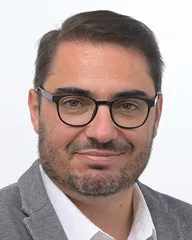
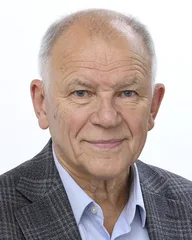
| Rank | Name | Country | Group | Speeches | |
|---|---|---|---|---|---|
| 1 |
|
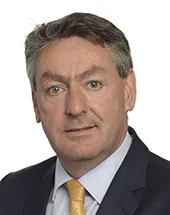
Lukas Sieper | Germany DEU | Non-attached Members (NI) | 390 |
| 2 |
|
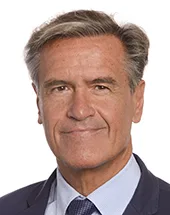
Juan Fernando López Aguilar | Spain ESP | Progressive Alliance of Socialists and Democrats (S&D) | 354 |
| 3 |
|
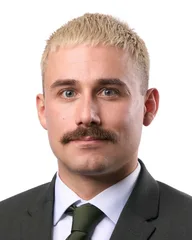
Sebastian Tynkkynen | Finland FIN | European Conservatives and Reformists (ECR) | 331 |
| 4 |
|
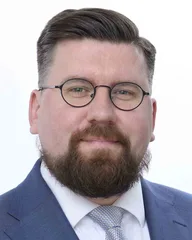
João Oliveira | Portugal PRT | The Left in the European Parliament (GUE/NGL) | 232 |
| 5 |
|
Vytenis Povilas Andriukaitis | Lithuania LTU | Progressive Alliance of Socialists and Democrats (S&D) | 227 |
All Contributions (273)
The state law relating to abortion in Texas, USA
The Fianna Fáil delegation was glad to give our support to the resolution on the state law relating to abortion in Texas, USA. The resolution rightfully denounces the abortion law in Texas (Senate Bill 8), which de facto amounts to a total ban on abortion, with no exception for cases of rape, incest or fetal health conditions incompatible with sustained life after birth. In 2018, the Irish people voted by an overwhelming majority to repeal the Eight Amendment, demonstrating our commitment to providing safe and legal options for women and girls seeking abortions, and safeguarding their sexual health and reproductive rights. We acknowledge that highly restrictive laws prohibiting abortion do not necessarily reduce the need for abortions, but result in women having to seek clandestine abortions, travel in order to obtain abortions or carry their pregnancy to term against their will, which is a violation of their human rights. We are therefore deeply concerned to see this development in Texas, and we call on representatives of the State of Texas to swiftly repeal Senate Bill 8. In addition, we expect the Federal Government and US Supreme Court to do everything within their power to vindicate a woman’s right to choose, as protected by Roe v Wade.
Immunity of International Criminal Court officials and the activation of the EU Blocking Statute to strengthen EU strategic autonomy (debate)
Mr President, the ICC was established by the Statute of Rome. It is the court of last resort to uphold international law, and the credibility of the international community is at stake. But from a European perspective, our credibility is at stake. If we are to stand by the rule of law, if we are to stand by the principles on which this particular institution and the other institutions of the EU are founded, on upholding law and the rule of law, well the very least we should do is first and foremost condemn the sanctions placed on ICC members, but more importantly, bring forward the blocking statute to address some of the personal concerns for the individuals that have been sanctioned. More importantly, the International Criminal Court deals with international crimes, crimes against humanity, genocide, crimes of aggression and war crimes. The reasons these sanctions were placed were stated by President Trump himself when he signed the sanctions themselves, when he said it is an attack on the US and on Israel. Now, by any credible stretch of the imagination, what the ICC is doing is holding Israel to account and many other actors as well that have been involved in genocide, in war crimes in the Middle East – and that includes leaders of Hamas as well. So they have been impartial in addressing those particular issues. It is a shameful act, and we should deal with it very quickly.
Savings and Investments Union: time to accelerate the process to deepen market integration (debate)
Madam President, I welcome the decision of the EU leaders on the 19 and 20 February to accelerate the completion of the savings and investments union. Indeed, when you listen to the debate here, it is quite clear that this particular project will have to work from the centre out again. I would urge those to come out of their ideological cabins and look at what we are trying to do here, which is effectively using private capital to invest in projects in infrastructural development, in stimulating the acceleration of small and medium-sized businesses and creating job opportunities across the European Union. It is about making Europe more competitive, and I cannot understand why people on the left or people on the extreme right could object to the concept of making Europe more competitive and creating job certainty. So I would urge all concerned to look at this from the purpose of what it is about. Certainly, if we have an opportunity to debate this in the near future, we should also look at it in the context of the Draghi report and what is highlighted with regard to the deficiencies in the investment gap. We certainly do not need any further political stagnation, bureaucratic paralysis. What we need now is action to bring forward the savings and investments union. If those countries are too slow to move with this, we do need to move ahead without them, but still encourage them to stay in our coat-tails so they can eventually catch up.
Building Europe's clean, independent and secure energy following the 2026 North Sea Summit (debate)
Madam President, we welcome the outcome of the Hamburg Declaration and the signing by the countries in the precincts of the North Sea, and Ireland was a signatory to that declaration as well. It is quite ambitious, Commissioner: 300 GW by 2050 from wind energy in the North Sea area. From my perspective, it means that we not only have to announce and outline what we are going to do, but we have to follow through with regard to timelines and the monitoring of Member States. Clearly, this is not just about transitioning. It's also about making Europe resilient and less reliant on fossil fuels from the areas that we can no longer geopolitically depend on. But more importantly, we need to get competitive. And to be competitive, we have to have cheaper electricity for our industries and for our homes as well. So while we welcome this, we have to ensure that there is strong monitoring. From an Irish perspective, we still have significant challenges, Commissioner, in the area of planning and permitting, and we also need greater connectivity to the UK and then, obviously, into the European Union itself as well. So we would appreciate those commitments in the Hamburg Declaration which ...
EUCO and situation in the Middle East (joint debate)
Madam President, nobody will shed tears for the mad theocracy and brutal dictatorship that is the Iranian regime. We sincerely hope that it would fall immediately and that the people of Iran will be able to decide its future. But we are at a crossroads here in terms of a number of things from the European perspective. First and foremost, are we going to acquiesce to the abandonment of multilateralism and international rules‑based order? Because we are a rules‑based order here in the European Union and we claim to live by the UN Charter and international law. It is clearly evident that what is happening in the Middle East is not within the confines of the UN Charter. So, let's at least be honest with ourselves: we either are going to accept the international rules‑based order and defend it, or else we are going to abandon it. President Trump has acted unilaterally on a number of occasions. From the point of view of the European Union, we have had the situation with regard to an attack on the sovereignty of a Member State in terms of Denmark. We have had a situation where we have had on and off support for Ukraine from President Trump. This is a war that is at our front, the eastern front. Simply, we are the ones that will be faced with either the success or failure of Ukraine. Equally, in the context of the Middle East, it will be Europe that will be the one that will be most likely affected. We have already seen an attack on Cyprus itself. The displacement of people – if the displacement of people starts from the Middle East, they will end up in Europe. These are the real questions that we have to ask ourselves when we are talking about the UN Charter, multilateralism and respect for international law. Clearly, I believe that this particular war in the Middle East is not within those confines.
Housing crisis in the European Union with the aim of proposing solutions for decent, sustainable and affordable housing (debate)
Madam President, the housing crisis is a challenge for the individuals, for a generation and could fracture the social cohesion and generational solidarity. So, we are in the midst of a crisis and rather than climbing into the ideological trenches and trying to fight it from there, maybe we should just look at the obvious problems that we have. Supply is a significant challenge. It seems to me that states and local authorities are conspiring to stop the development of homes by the fact that the planning and the permitting system in Ireland and across most of Europe is a significant challenge to developing homes. Whether they are for the private sector, for the rental sector or for social housing, it simply is impossible at the moment to get homes through the planning process in Ireland. I also welcome the fact that the reform of the state aid rules is included in this report. That is a significant issue and I believe those on the left should really look at this as an issue that we fought hard to ensure would be included because that would give flexibility to Member States to fund local authority social and affordable housing. So, I very much welcome that. The issue of the single market and building ...
Gender pay and pension gap in the EU: state of play, challenges and the way forward, and developing guidelines for the better evaluation and fairer remuneration of work in female-dominated sectors (debate)
Madam President, I'd like to congratulate deputies Joveva and Nykiel for their own-initiative report. Year after year, we stand at this podium and deplore the gender pay gap, and whilst it is narrowing, the progress is far too slow. The World Economic Forum has estimated that it could take over a century to close the global gender gap. One of the most worrying factors for me is the pay gap is evident at the very beginning of a woman's career. A recent study in Ireland has shown that a 25-year-old man earns, on average, EUR 50 more per week than his female counterpart. These figures show to serve that differences cannot be explained away by differences in experience or the impact of career breaks. They show that the inequalities are ingrained in the system and must be rooted out. These inequalities are compounded over the decades. In 2025, the average pay rise for men in Ireland was 6.5 %, compared to 5.4 % for women. Continuously repeated over a career of several decades, this eventually amounts to an even greater pension gap of 25 % in the EU and a huge 31 % in Ireland. It's very sad, finally, that we still have a situation where we are inside this Parliament consistently negotiating women's rights and begging the right to be more understanding of the need to ensure that we have equality. I do want to say to the centre in this House that we have an obligation to ensure that we do not play with equality from over there, and we stand firm on the issue of equality from the centre out, rather than from the right over there.
Upcoming European Research Area (ERA) Act (debate)
Madam President, just to say, at the outset, I really welcome this debate, and I think it is very timely that we do actually accept that Europe has an awful lot of work to do in making ourselves competitive in the whole area of innovation and research. Draghi was quite clear in outlining in his report what we had to do, because if we didn't, we were going to fall further behind. So I do welcome the European Research Area. 3 % of GDP is an ambitious target. And clearly, obviously with diversion of funds in recent times for security and defence, we still have to be ambitious in trying to insist on that target being met in the short and medium term. With regard to academia, working with industry and government in ensuring that you have creative research, innovative research, cutting-edge research and then the spin off of that out into the commercial world is something that we are not as good as other countries. And if you look at what has happened in recent years, the large companies, those that have grown rapidly in recent years have all been founded out in the United States or in Asia. And we do have an awful lot of work to do to make sure that not only do we have the academic research, but that we can innovate and spawn that out into the commercial world. I welcome this very much and hope that it is followed through with the underpinning proposals.
European Union regulatory fitness and subsidiarity and proportionality – report on Better Law-Making covering 2023 and 2024 (debate)
A Uachtaráin, since June 2024, this Parliament has spent a lot of time unwinding everything we did in the 2019-2024 Parliament, that was previously supported and adopted, and much of that was at the request of the Commission. Of course, some will say that this unwinding, or U-turning, is in response to emerging new issues and threats, and that is correct in certain circumstances. However, in many cases it is because due diligence in terms of the impact new EU legislation would have on overall EU economies and broader society was not carried out properly. Take, for example, the Nature Restoration Law. Yes, an impact assessment was carried out in terms of how the legislation would impact on biodiversity and climate objectives. However, no detailed impact assessment was carried out in terms of the law's impact on land usage, farming, housing development and energy infrastructure. That is why I really welcome this own-initiative report and compliment the author for high-quality legislative drafting proposals, robust economic assessments and systemic ex-post evaluation. Citizens expect legislators to get things right first time around and not to waste time cleaning up badly drafted and poorly justified legislation without proper impact assessments.
Recommendation to the Council on EU priorities for the 70th session of the UN Commission on the Status of Women (debate)
Mr President, earlier this week, during the debate on the migration package, people on the right of this House stood up and repeatedly claimed that asylum seekers are a grave danger to women and girls in our communities. We just heard it again this morning. Yet the fact remains that women are most likely to be attacked by someone in their own family. To put this in context, while 60 % of female homicides are committed by their partner or family, this is the case for 11 % of male homicides. The people who are trying to stoke fear and distrust towards asylum seekers and migrants are the same people who will vote today to water down the Parliament's priorities for the 70th session of the UN Commission on the Status of Women. They will try to water down calls to ensure better access to the judicial system. They will try to water down ensuring greater representation of women in the judicial system. They will try to deny calls to introduce a consent-based definition of rape. I call on my colleagues in this House and for the Member State governments not to let this narrative take hold. Let us send out a very clear and strong message that women's rights are enforceable. In fact, they should be non-negotiable. But tragically, inside this House, we have people who are willing to sell out and undermine half the population of this globe and undermine their rights. Let you be heard, I say to the women. You will be believed and you will have access to justice.
State violence in Minneapolis and the rule of law in the United States (topical debate)
Madam President, the scenes of harassment and intimidation, with multiple breaches of people's human rights across the United States in recent months is heart-breaking for those of us who view the United States positively and have fond connections and memories and visit the country regularly. Illegal arrests, detentions without trial, state-overseen murders are now all the hallmarks of US immigration. Policy that is now more akin to something that we would have seen in the Soviet dictatorship than in the supposed 'land of the free'. Madam president, I want to raise the case of Seamus Culleton, originally from Kilkenny, Ireland, who has lived in the United States since 2009 and is married to a US citizen. He owns a construction business in Boston, employing many Americans and Irish Americans. He was arrested in September in Massachusetts and has been detained by ICE since that time in Texas. The case in the US system resulted in him being ordered released after a bond was paid, and then having that release order revoked. He's being detained in what can only be described as inhumane conditions for political reasons. Until President Trump returned to office, Mr Culleton's case wasn't on anyone's radar. Like many Irish Americans, he was in the process of regularising his immigration status. Like others, my office has raised Seamus' detention and detainment with the Taoiseach and the Irish Government, and I hope that he will be released as soon as possible so he can get on with his life and that of his family.
Urgent actions to revive EU competitiveness, deepen the EU Single Market and reduce the cost of living - from the Draghi report to reality (debate)
Madam President, it's good that within this Parliament, there is a clear focus on the need to boost European competitiveness. The Renew Group wholeheartedly supports the Draghi report. Of course, every MEP and every Member State may have issues with certain parts, but the overall trajectory of Draghi is something we must all sign up to and sign up to fast. We have spent 18 months now reading the Draghi report. It is time that we put the report down and started implementing what it requests of us. There is an investment gap of about EUR 800 billion per annum that we need to fill, and that needs to be filled by a number of key factors and policy changes. The savings and investments union is a critical component. In every assessment, we have to unlock the capital that's tied up in deposit accounts across the European Union and get it into the real economy. The other issue, of course, is what we call deregulation or simplification. Some people see deregulation as a risk and a threat. Others see it as a golden opportunity to unwind ambition. What we really need is to simplify, to take the burden away from small and medium-sized businesses so they can get on with their job of innovating and creating opportunity and employment. So I don't see it as a one or the other. What we must do is just distil down the regulations that are there to ensure that it doesn't cost a small and medium-sized business, you know, 20 % of its overall labour force complying with national regulation and European regulation. So it is clearly time for us to address that issue and simplify both at national level and European level. The 28th regime is not a key area that we have to address very quickly. The single market is not deep. Let's be very honest: the single market is fragmented. There is no free movement of capital. There is no free movement of financial services. Even goods, at times, are still facing difficulties in transiting across the European Union. So we have to start looking at the 28th regime and give the opportunity to small and medium-sized businesses to work beyond their country in a truly European fashion. So I call for immediate simplification, ensuring that the 28th regime moves smoothly, and that the savings and investments union is brought forward with urgency to ensure that Europe can grow again.
Presentation of the action plan against cyberbullying (debate)
Mr President, cyberbullying is abhorrent. It is in general faceless, but it causes untold distress, harm and, tragically, loss of life in each and every one of our countries. Bullying of any form is a cowardly act that usually covers up for the bully's own failings and insecurities as a person. The easiest and simple way to curtail cyberbullying, and indeed most problems on social media, is to ban anonymous accounts. If you want to post on social media, your ID needs to be stored and verified by the company. By all means, call yourself and your account '@Patriot1916', but if you bully a child, incite hatred, threaten people, be warned: we will know who you are and your Member State's legal system will deal with you in accordance with the law. No doubt that when this video goes on X, I will be attacked by the Second Amendment‑waving US free‑speech heroes. Sorry guys, the EU does not have unlimited right to free speech. Stop trying to impose your country's legal system into our European Union. We care about young people and vulnerable sections of society. We can no longer allow serious harm caused by social media and cyberbullying to continue.
A new action plan to implement the European Pillar of Social Rights (debate)
Madam President, the Action Plan on the European Pillar of Social Rights has been a good driver for implementing the necessary changes for the digital and green transitions, but progress is too slow. The need for greater action and pace has been compounded by the boom in the use of AI, as well as the geopolitical uncertainties. But in the context of the social pillar itself, and the social rights around housing and homelessness, I just want to focus in for a while, Commissioner. There is genuine concern that we could fracture society – the cohesiveness – across Europe if we don't address the increasing scarcity of affordable housing to citizens. Rising rents, and the inability for us to get housing and home developments through the planning and the permitting system in many countries, is causing huge difficulties for local authorities and states to provide social and affordable homes to citizens. This is really having a major impact across many countries. I know we have a Commissioner for Housing and that we have a Housing Committee established in this Chamber, but we do need to focus in on ensuring that we remove as many blockages on developing homes, so that we have homes for people who can afford them, for people who need support, and for those in homelessness, so the State can afford to build homes for people in homelessness as well.
European Council meeting (joint debate)
Mr President, at the outset, I welcome the statement by the President of the Council and the President of the Commission regarding the fact that we are determined to insist on international rules‑based order, multilateralism and the UN Charter, and ensuring that Europe plays its part in being a reliable partner in that context and in that architecture. Reference has been made to Ukraine and we have to ensure that we support Ukraine – both the European Union, NATO and its allies – to insist that the integrity and the sovereignty of Ukraine is protected. That means continual financial support, as was announced with the EUR 90 billion common European loan for Ukraine. But if we are to be genuine about international rules‑based order, it cannot be à la carte. We have to insist on international rules‑based order in every conflict, in every aspect of life. That means we have to insist on international rules‑based order in Gaza as well and we have to insist that Israel complies with international law when we are dealing with Gaza. President, I find it very hard to listen to people in this Chamber, particularly from the far right, advocating for President Trump. When President Trump is using the wine producers in Italy and in France as leverage to beat us, when President Trump is using the car factory workers in Munich, in Slovakia and in other countries right across the European Union, when he is using their jobs as a battering ram to threaten us, it is incomprehensible that you could be supporting a President of the United States who wants to undermine everything we are trying to achieve in the European Union. If you don't believe me, just go to President Trump's US national security strategy and scroll down to see where he says promoting European greatness and then takes a sledgehammer to everything that we stand for here in this European Union. It is quite shameful and hard to understand. So again, I say, go back to your constituents, go back to your voters and tell them that it is your icon, it is your hero that is threatening their jobs.
Tackling AI deepfakes and sexual exploitation on social media by making full use of the EU’s digital rules (debate)
Madam President, when there was high fives at the headquarters of X and Grok over the last number of weeks celebrating the fact that they had so many hits because of the AI-generated deepfakes of sexually explicit material, it sends a very chilling message for me as an elected public representative in this Parliament and not a faceless bureaucrat or not a faceless tycoon who sits behind the paywall of X promoting such visual, sexualised content. I find it deeply offensive that we're in a position here where we are now saying that protection of free speech requires us to allow Elon Musk and others with large social media platforms to promote soiled child sexual abuse imagery. It simply doesn't make sense from any perspective to come into this Chamber and say that Elon Musk is a defender of free speech. It was exploitation at its highest level because this was fundamentally about making money out of sexual exploitation in increasing hits on Grok and X. And if you want to be sure of it, just look at what Elon Musk said when it was initially brought to his attention after Christmas: he put up a smiley emoji – a smiley emoji. Dismissing child sexual abuse is a shameful thing and, unfortunately, is happening too regularly in this House as well.
Motion of censure on the Commission (debate)
Madam President, colleagues, political stunts like this motion of censure from so-called patriots reminds me of a quote, often misattributed to Albert Einstein, that defines insanity as doing the same thing over and over again and expecting different results each time. How many times do we need to vote on hopeless censure motions until the extremists are satisfied or accept the democratic will? For the record, my position on Mercosur is well known at home in Ireland and among my colleagues: I do not support it. Equally, my dissatisfaction with some of President von der Leyen's policy positions is well publicised. But colleagues, have you seen what is happening in the real world? Our world is under grave threat, and the extremists in this Parliament, driven by their own sense of self-importance, want to get rid of the Commission President and her entire college of commissioners. Our citizens need a functioning executive now more than ever. If MEPs vote to remove President von der Leyen on Thursday, who will negotiate with President Trump on behalf of us all? It can't be left to each Member State because we know that each Member State has their own domestic priorities. Renew Europe will oppose this motion of censure, not because we are universally in love with the President and everything her Commission does, but because, unlike the extremists and the populists, we can see the bigger picture. We see the absolute need for a strong, coherent response to the external threats facing our Union and our citizens. The proposals of this motion want the European Union to fail. Get rid of this Commission, bring in another Commission, get rid of that – because you want the European project to fail. So of course, they want us leaderless in a time of crisis. Their hero in the United States – President Trump – also wants this Union to be weak and to fail. Perhaps instead of motions of censure, you might use the time to explain to your constituents and the citizens why your hero is jeopardising the peace and prosperity of our voters across the entire European Union. It is our normal playbook – undermine the system and then blame the system when it does not deliver. The far right have been using this tactic for 100 years, since the 1920s, and it has led us to very dark places. Renew Europe, the liberals, democrats and centrists of this Parliament will not allow them ruin our continent and destroy the lives of the people again.
Framework for strengthening the availability and security of supply of critical medicinal products as well as the availability of, and accessibility of, medicinal products of common interest (debate)
Madam President, citizens expect results when it comes to critical medicines. They expect Europe to deliver on the basics. Making sure our citizens who are sick will have medicines they need to get better is a fairly basic requirement. The Critical Medicines Act is a good start. I believe Parliament, through its committees, has made the Commission proposal better and aligned it with the needs of citizens. In light of what is happening in the United States at present and the geopolitical risks across the globe, it is important that we decrease our reliance on third countries for vital medicines for our citizens. With the little time I have remaining, I just want to deal with some amendments that have been tabled that are not based in empirical fact, but are based on ideological fiction. For the record, there is no evidence that EU environmental or chemical legislation has caused a shortage of any critical medicine. The Court of Auditors have also investigated and they found that shortages actually come from geopolitical, trade or internal market issues. Even the pharmaceutical sector does not make these ludicrous claims. Repeatedly during the ENVI negotiations, we asked for empirical evidence and repeatedly we never saw any. I urge everybody to reject those amendments that are tabled for ideological purposes and oppose the environmental standards that we all advise.
The 28th Regime: a new legal framework for innovative companies (debate)
Madam President, the introduction of the 28th Regime for European companies could be a real catalyst for boosting competitiveness, strengthening the single market and reducing fragmentation in the EU. It could create the right conditions for the next generation of high-growth companies to stay in Europe, to start up, to innovate and to scale up, rather than seeking growth abroad. Just last week, Commissioner, the Financial Times reported that trade between Member States had dropped for the first time in a decade. This regime could reduce complexities and encourage more companies to look outside their own domestic markets. The 28th Regime is an opportunity, so let's not waste it. Let's not over-legislate and overcomplicate something to make sure it works perfectly in theory, but for it to work in practice, this regime needs to be simple, have added value and most importantly, it needs to be attractive. I strongly support Parliament's recommendations to the Commission to keep this proposal targeted and avoid areas that fall under national competences such as taxation, insolvency and employment law. Instead, the proposal should focus on having a broad scope, ensuring that it's a voluntary opt-in regime, complementing the 27 and embedding 'first digital' and the 'once-only' approach. I look forward to the publication by Commissioner McGrath bringing forward this proposal in March.
Cases of pro-Russian espionage in the European Parliament (debate)
There are plenty of Putin apologists and propagandists, and even useful idiots, in this House, sadly – mainly on the right, but some on the extreme left as well. And we have to acknowledge the fact that when you listen to some of the debates here from time to time, it is clear that there are people who advocate for Russia, and try to undermine the basic values of this House and what the European Union stands for. Commissioner, misinformation and disinformation is being disseminated at an alarming rate on social media platforms. It is very often healthy debate in one person's view, but overall it is sinister in trying to undermine the European Union. Let's be very clear: President Putin doesn't want a strong Europe; he doesn't want a cohesive Europe. He wants fools who will advocate and undermine the values that this House stands for, and he continually supports them. The evidence is already there, in the context of an Old Bailey trial in London, where Nathan Gill was jailed for ten and a half years for promoting Russia from those seats just there, only five and a half years ago. It is shameful that we don't do more to condemn those who advocate for a war criminal like Putin in these seats – on both sides of me, sadly.
Preparation of the European Council meeting of 18-19 December 2025, in particular the need to support Ukraine, transatlantic relations and the EU’s strategic autonomy (debate)
Madam President, tomorrow's European Council summit is a vital opportunity for the EU to take a united and unequivocal response to President Trump's national security strategy. Europe cannot underestimate the gravity of this strategy, and that it signifies a seismic shift in norms of geopolitics. For centuries, relations between our countries have been underpinned by clear principles: sovereignty and non-intervention, reciprocity and respect. I fear that the national security strategy threatens all three. Trump has stated that Europe needs to correct its course trajectory, and that America would cultivate resistance to Europe's current trajectory within the European Union. This is exactly the approach we have come to expect from our adversaries, not our allies. Russia and China have been systematically trying to cultivate resistance and undermine our democracies for the last decade through misinformation and disinformation online. Must we now fend off those threats from the West? At this week's summit, the members must decide on a robust response to the US strategy and Europe's approach going forward. As a priority, Member States must reiterate our core values and insist that we will not waver. They must challenge Trump's characterisation of these as elite-driven, anti-democratic restrictions on core liberties in Europe. Not least, the Commission and Member States must commit to implementing and applying the Digital Services Act and our rules on media pluralism, transparency without favour or exception, and we need to accelerate the work on the democracy shield. Only Europe can decide how to protect its citizens and how to regulate businesses operating here, and we should not be told how to do it by anybody else. All that being said, we must not forget that the EU-US relationship is a valuable one based on a long, shared history. We have stood arm in arm during some of the darkest times for this continent and for theirs. It is in this relationship that we should work to rebuild and protect it. That is why I am calling on the EU Member States and the Commission to organise a bilateral summit in the US to return the relationship between the EU and the United States of America to one of positivity, mutual respect and understanding, and above all, decency.
European Citizens’ Initiative ‘My voice, my choice: for safe and accessible abortion’ (debate)
Mr President, up until 2018, abortion was banned in Ireland. Twelve women a day travelled either to England or the Netherlands for a termination. This was not abortion tourism; these were lonely journeys – very lonely journeys – of lonely women, sometimes in very vulnerable positions, because they could no longer continue a pregnancy for whatever reason. It's fairly shameful that inside this Chamber – the bastion of democracy – we have to politicise the autonomy of a woman's body, that we have to negotiate a woman's right. A woman has a right to bodily autonomy, and she has a right to make a choice. I concur and I support 'My voice, my choice'. At these moments and these debates, I think of Savita Halappanavar, a young woman who died in Ireland in 2012 because she was refused an abortion in an Irish hospital. And she died because of it. I think of the 'X case' in 1992: a 14-year-old girl who became pregnant from rape and was threatened that if she went to England for an abortion, she would be detained and held in custody. This is what happens when you start eroding rights, and it would be shameful for us to do that here.
Presentation of the EU Cardiovascular Health Plan (debate)
(Start of speech off mic) ... 1.7 million deaths, disability, early retirement and dependency and the huge cost to individuals and society in our economy. And if we are to address it, Commissioner, I do really welcome the Safe Hearts Plan, but we have to really insist on investment in prevention and early detection, in other words: health promotion. The biggest challenge that we have is that countries across the European Union are always firefighting with their health budgets. It is always just trying to address the immediate issues. And there simply is not the capacity to invest in longer-term strategic health promotion and prevention. And I think that would be a key area where this particular plan could encourage Member States, particularly through protocols on early checks and screening. There is another area that has been referenced as well, Commissioner, and that's the whole area of inequalities geographically, but also gender-based inequalities as well. And we have a significant problem with regard to gender inequalities in research, in diagnostics and in clinical trials themselves. And I do hope that the Commission will support the recommendations that we will bring forward in our report on the issue of gender inequalities in health and the significant challenges that it is causing women and girls in terms of diagnosis and clinical research.
Presentation of the European Affordable Housing Plan (continuation of debate)
Madam President, I welcome the publication and presentation of the European affordable housing plan. And just to say at the outset, Commissioner, we have to succeed in this. At the moment, across most of Europe, we have a housing crisis. It's fracturing society, undermining social cohesion and harmony, and undermining intergenerational solidarity, and we are now in a situation where we are in a demographic spiral as well, where people simply can't get involved in family formation. They are delaying that, and that is putting huge pressure on our demographics across Europe. Social and affordable housing is a key area, and the lifting of State aid rules to ensure that states can invest directly in housing is a critically important component. From my perspective in Ireland, one of the significant challenges we have is in our inability to go through the planning and the permitting system, not only directly for houses themselves, but for the infrastructure that is required to underpin them: water, roads and waste as well, and electricity. So clearly, from the planning and permitting perspective, Commissioner, I would urge that you would use everything possible to benchmark across the entirety of the European Union the speed at which planning and permitting are granted, and that they can flow through the process in a seamless way so we can start building houses.
One-minute speeches on matters of political importance
Mr President, sadly, the Governments of France, the Netherlands, Germany and Poland ganged up last Friday to block the implementation of the Hague Preferences for 2026, which will result in a catastrophe for the Irish fishing sector. The Hague Preferences were created in the 1970s to account for Ireland's underdeveloped fishing fleet and to counter the impact of increased access to Irish waters provided to other Member States' fleets. The Hague Preferences are only applied during periods of severely depleted quotas. These four countries have acted unfairly and with avarice. They have chosen not to show solidarity with fellow Member States at a time of crisis. Irish waters are some of the most bountiful inside the Union, yet Irish fishermen are allowed to catch only the tiniest amount of quota compared to other Member States. Since Brexit, Commissioner, Irish fishing has lost approximately EUR 43 million per year, and next year's reduction due to overfishing by Norwegian supertrawlers is expected to cost a minimum of EUR 94 million, and possibly up to 2 300 jobs directly. The Hague Preferences would have helped soften the blow, but these four countries decided that European solidarity means nothing anymore. Undermining the solidarity framework of a Union is bad policy and only rallies people to the extremes. The countries that opposed Ireland have effectively condemned Irish coastal fishing communities to depopulation and further challenges.