

| Rank | Name | Country | Group | Speeches | |
|---|---|---|---|---|---|
| 1 |
|
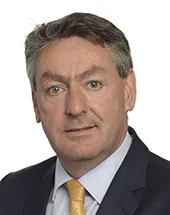
Lukas Sieper | Germany DEU | Non-attached Members (NI) | 390 |
| 2 |
|
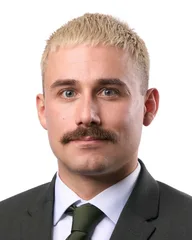
Juan Fernando López Aguilar | Spain ESP | Progressive Alliance of Socialists and Democrats (S&D) | 354 |
| 3 |
|
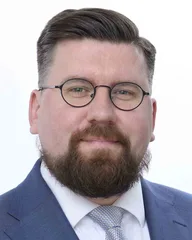
Sebastian Tynkkynen | Finland FIN | European Conservatives and Reformists (ECR) | 331 |
| 4 |
|
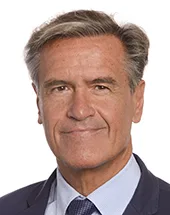
João Oliveira | Portugal PRT | The Left in the European Parliament (GUE/NGL) | 232 |
| 5 |
|
Vytenis Povilas Andriukaitis | Lithuania LTU | Progressive Alliance of Socialists and Democrats (S&D) | 227 |
All Contributions (273)
Framework for strengthening the availability and security of supply of critical medicinal products as well as the availability of, and accessibility of, medicinal products of common interest (debate)
Madam President, citizens expect results when it comes to critical medicines. They expect Europe to deliver on the basics. Making sure our citizens who are sick will have medicines they need to get better is a fairly basic requirement. The Critical Medicines Act is a good start. I believe Parliament, through its committees, has made the Commission proposal better and aligned it with the needs of citizens. In light of what is happening in the United States at present and the geopolitical risks across the globe, it is important that we decrease our reliance on third countries for vital medicines for our citizens. With the little time I have remaining, I just want to deal with some amendments that have been tabled that are not based in empirical fact, but are based on ideological fiction. For the record, there is no evidence that EU environmental or chemical legislation has caused a shortage of any critical medicine. The Court of Auditors have also investigated and they found that shortages actually come from geopolitical, trade or internal market issues. Even the pharmaceutical sector does not make these ludicrous claims. Repeatedly during the ENVI negotiations, we asked for empirical evidence and repeatedly we never saw any. I urge everybody to reject those amendments that are tabled for ideological purposes and oppose the environmental standards that we all advise.
The 28th Regime: a new legal framework for innovative companies (debate)
Madam President, the introduction of the 28th Regime for European companies could be a real catalyst for boosting competitiveness, strengthening the single market and reducing fragmentation in the EU. It could create the right conditions for the next generation of high-growth companies to stay in Europe, to start up, to innovate and to scale up, rather than seeking growth abroad. Just last week, Commissioner, the Financial Times reported that trade between Member States had dropped for the first time in a decade. This regime could reduce complexities and encourage more companies to look outside their own domestic markets. The 28th Regime is an opportunity, so let's not waste it. Let's not over-legislate and overcomplicate something to make sure it works perfectly in theory, but for it to work in practice, this regime needs to be simple, have added value and most importantly, it needs to be attractive. I strongly support Parliament's recommendations to the Commission to keep this proposal targeted and avoid areas that fall under national competences such as taxation, insolvency and employment law. Instead, the proposal should focus on having a broad scope, ensuring that it's a voluntary opt-in regime, complementing the 27 and embedding 'first digital' and the 'once-only' approach. I look forward to the publication by Commissioner McGrath bringing forward this proposal in March.
Cases of pro-Russian espionage in the European Parliament (debate)
There are plenty of Putin apologists and propagandists, and even useful idiots, in this House, sadly – mainly on the right, but some on the extreme left as well. And we have to acknowledge the fact that when you listen to some of the debates here from time to time, it is clear that there are people who advocate for Russia, and try to undermine the basic values of this House and what the European Union stands for. Commissioner, misinformation and disinformation is being disseminated at an alarming rate on social media platforms. It is very often healthy debate in one person's view, but overall it is sinister in trying to undermine the European Union. Let's be very clear: President Putin doesn't want a strong Europe; he doesn't want a cohesive Europe. He wants fools who will advocate and undermine the values that this House stands for, and he continually supports them. The evidence is already there, in the context of an Old Bailey trial in London, where Nathan Gill was jailed for ten and a half years for promoting Russia from those seats just there, only five and a half years ago. It is shameful that we don't do more to condemn those who advocate for a war criminal like Putin in these seats – on both sides of me, sadly.
Preparation of the European Council meeting of 18-19 December 2025, in particular the need to support Ukraine, transatlantic relations and the EU’s strategic autonomy (debate)
Madam President, tomorrow's European Council summit is a vital opportunity for the EU to take a united and unequivocal response to President Trump's national security strategy. Europe cannot underestimate the gravity of this strategy, and that it signifies a seismic shift in norms of geopolitics. For centuries, relations between our countries have been underpinned by clear principles: sovereignty and non-intervention, reciprocity and respect. I fear that the national security strategy threatens all three. Trump has stated that Europe needs to correct its course trajectory, and that America would cultivate resistance to Europe's current trajectory within the European Union. This is exactly the approach we have come to expect from our adversaries, not our allies. Russia and China have been systematically trying to cultivate resistance and undermine our democracies for the last decade through misinformation and disinformation online. Must we now fend off those threats from the West? At this week's summit, the members must decide on a robust response to the US strategy and Europe's approach going forward. As a priority, Member States must reiterate our core values and insist that we will not waver. They must challenge Trump's characterisation of these as elite-driven, anti-democratic restrictions on core liberties in Europe. Not least, the Commission and Member States must commit to implementing and applying the Digital Services Act and our rules on media pluralism, transparency without favour or exception, and we need to accelerate the work on the democracy shield. Only Europe can decide how to protect its citizens and how to regulate businesses operating here, and we should not be told how to do it by anybody else. All that being said, we must not forget that the EU-US relationship is a valuable one based on a long, shared history. We have stood arm in arm during some of the darkest times for this continent and for theirs. It is in this relationship that we should work to rebuild and protect it. That is why I am calling on the EU Member States and the Commission to organise a bilateral summit in the US to return the relationship between the EU and the United States of America to one of positivity, mutual respect and understanding, and above all, decency.
European Citizens’ Initiative ‘My voice, my choice: for safe and accessible abortion’ (debate)
Mr President, up until 2018, abortion was banned in Ireland. Twelve women a day travelled either to England or the Netherlands for a termination. This was not abortion tourism; these were lonely journeys – very lonely journeys – of lonely women, sometimes in very vulnerable positions, because they could no longer continue a pregnancy for whatever reason. It's fairly shameful that inside this Chamber – the bastion of democracy – we have to politicise the autonomy of a woman's body, that we have to negotiate a woman's right. A woman has a right to bodily autonomy, and she has a right to make a choice. I concur and I support 'My voice, my choice'. At these moments and these debates, I think of Savita Halappanavar, a young woman who died in Ireland in 2012 because she was refused an abortion in an Irish hospital. And she died because of it. I think of the 'X case' in 1992: a 14-year-old girl who became pregnant from rape and was threatened that if she went to England for an abortion, she would be detained and held in custody. This is what happens when you start eroding rights, and it would be shameful for us to do that here.
Presentation of the EU Cardiovascular Health Plan (debate)
(Start of speech off mic) ... 1.7 million deaths, disability, early retirement and dependency and the huge cost to individuals and society in our economy. And if we are to address it, Commissioner, I do really welcome the Safe Hearts Plan, but we have to really insist on investment in prevention and early detection, in other words: health promotion. The biggest challenge that we have is that countries across the European Union are always firefighting with their health budgets. It is always just trying to address the immediate issues. And there simply is not the capacity to invest in longer-term strategic health promotion and prevention. And I think that would be a key area where this particular plan could encourage Member States, particularly through protocols on early checks and screening. There is another area that has been referenced as well, Commissioner, and that's the whole area of inequalities geographically, but also gender-based inequalities as well. And we have a significant problem with regard to gender inequalities in research, in diagnostics and in clinical trials themselves. And I do hope that the Commission will support the recommendations that we will bring forward in our report on the issue of gender inequalities in health and the significant challenges that it is causing women and girls in terms of diagnosis and clinical research.
Presentation of the European Affordable Housing Plan (continuation of debate)
Madam President, I welcome the publication and presentation of the European affordable housing plan. And just to say at the outset, Commissioner, we have to succeed in this. At the moment, across most of Europe, we have a housing crisis. It's fracturing society, undermining social cohesion and harmony, and undermining intergenerational solidarity, and we are now in a situation where we are in a demographic spiral as well, where people simply can't get involved in family formation. They are delaying that, and that is putting huge pressure on our demographics across Europe. Social and affordable housing is a key area, and the lifting of State aid rules to ensure that states can invest directly in housing is a critically important component. From my perspective in Ireland, one of the significant challenges we have is in our inability to go through the planning and the permitting system, not only directly for houses themselves, but for the infrastructure that is required to underpin them: water, roads and waste as well, and electricity. So clearly, from the planning and permitting perspective, Commissioner, I would urge that you would use everything possible to benchmark across the entirety of the European Union the speed at which planning and permitting are granted, and that they can flow through the process in a seamless way so we can start building houses.
One-minute speeches on matters of political importance
Mr President, sadly, the Governments of France, the Netherlands, Germany and Poland ganged up last Friday to block the implementation of the Hague Preferences for 2026, which will result in a catastrophe for the Irish fishing sector. The Hague Preferences were created in the 1970s to account for Ireland's underdeveloped fishing fleet and to counter the impact of increased access to Irish waters provided to other Member States' fleets. The Hague Preferences are only applied during periods of severely depleted quotas. These four countries have acted unfairly and with avarice. They have chosen not to show solidarity with fellow Member States at a time of crisis. Irish waters are some of the most bountiful inside the Union, yet Irish fishermen are allowed to catch only the tiniest amount of quota compared to other Member States. Since Brexit, Commissioner, Irish fishing has lost approximately EUR 43 million per year, and next year's reduction due to overfishing by Norwegian supertrawlers is expected to cost a minimum of EUR 94 million, and possibly up to 2 300 jobs directly. The Hague Preferences would have helped soften the blow, but these four countries decided that European solidarity means nothing anymore. Undermining the solidarity framework of a Union is bad policy and only rallies people to the extremes. The countries that opposed Ireland have effectively condemned Irish coastal fishing communities to depopulation and further challenges.
Relations between the EU and Saudi Arabia (short presentation)
Mr President, I welcome the report. And just to say that we should continue to engage in dialogue, particularly human rights dialogue between the European Union and the Kingdom of Saudi Arabia. And that dialogue, obviously should cover women's rights, vulnerable groups and migrants. It should also cover the rule of law, rights to a fair trial, and obviously the issue of the death penalty. Saudi Arabia is a key geopolitical partner in the Gulf region now. It has huge influence and huge resources. It is an ally very often of Israel. It is an ally of the United States in the key geopolitical decisions being made in that region. Equally, the European Union should work closely with Saudi Arabia to ensure that our views and what we would like to see happen in that particular region is reflected as well and relayed to Saudi Arabia. But the one thing we can do is pretend that there isn't appalling abuse in the kingdom of Saudi Arabia, and we must continue to advocate for the points already raised by the Members here with regard to women's rights, vulnerable groups, rule of law, the right to fair trials, the death penalty and making sure migrants are protected and not abused.
Impact of the geopolitical situation on European patients and their access to medicines (debate)
Mr President, of course, we should be very concerned about the geopolitical tensions and the impact that they may have on medicine supplies in Europe. We have to ensure that we have a continuity of supply, both in terms of the production, the manufacturing, but also access to ingredients and generics. Being too dependent on a small number of countries for the large volumes of medicines that we purchase does put us in a very vulnerable position, Commissioner. We have now the pharmaceutical strategy, the Critical Medicines Act as well. But what we really need to do is to make sure that Europe becomes a hub for innovation and research, broadening clinical trials and improving our competitiveness. That is the real significant barrier to ensuring that Europe has the capacity not only to innovate, but to produce – research, innovation, clinical trials and our competitiveness. On a broader issue, Commissioner, I do think we do have to look at the whole issue of procurement and reimbursement. We cannot have a situation where your access to medicine is based on a lottery code on where you live, which country you are born in. Certainly I believe that if you have a centralised procurement system under the auspices of the European Union, that that in a way would be able to stimulate greater, quicker payments to companies and further stimulate innovation.
Fishing opportunities 2026: ensuring the sustainability of fish populations, marine ecosystems and coastal communities
Mr President, the scientific advice regarding the quotas for 2026 are devastating from an Irish perspective: a 70 % cut to mackerel, a 41 % cut in blue whiting and a potential loss of 2 600 jobs in coastal communities across Ireland. Norway, the Faroe Islands, Iceland, Russia: non-EU states are unilaterally pillaging Irish waters, Commissioner – pillaging our coastal communities of their ability to make a living. Norway in particular, who has access to Irish waters with super trawlers, continues to overfish at an alarming rate. As was pointed out, over the past five years, around 1 million tonnes have been fished above what is acceptable by scientific advice. We simply have to stop this pillaging of Irish waters. Ireland was dealt harshly in Brexit, but we now again have a situation where the country that catches the least amount of fish in its waters is the one that's being penalised most in the context of the scientific advice. Very soon the scientific advice will be assessing the loss of fish in Irish waters, and, equally, they will be assessing the fact that we have no more fishing coastal communities on the island of Ireland. It is time that the EU acts fairly and squarely and stands behind Irish fishers in Irish waters.
Defence of Democracy package (joint debate)
Madam President, Nathan Gill, a former Member of the European Parliament, a member of UKIP, sat on those seats from 2014 to 2020. He was jailed for 10 years at the Old Bailey last week for taking bribes from Russia – Russian money paid by oligarchs to make speeches in this Chamber promoting Russia and denigrating Ukraine. It sounds very familiar from those benches over there. Oleg Voloshyn was a Russian who prompted Mr Gill to make these continuous speeches, and we have to accept that some of the commentary in this House goes beyond what should be allowed with regard to defending the democracy that upholds this place, and it behoves us all to call out those who are supporting political groups and parties and governments that want to undermine the democracy in this House and the European Union, and all that we share, and the values that underpin us. It is shameful that we have this continual diatribe from over there with regard to being pro-Russian, anti‑Ukraine, and undermining the basic principles of this House. We need transparency, but we also need honesty.
EU response to the continuous airspace violations and sabotage of critical infrastructure in the EU originating from Russia and Belarus (debate)
Madam President, last week, the Russian spy ship Yantar, spotted in the UK waters, was heading to the Irish exclusive economic zone. The ship is specifically built for subsurface work, and so was seen as a threat to undersea cables and energy pipelines. This is the same boat that was escorted from Irish waters last November. It also coincides with the fact that President Zelenskyy is planning to come to Ireland on 2 December. We have had consistent monitoring of the cables off the southwest coast of Ireland, where some of the largest data flows between Europe and the US flow through our waters. It is incumbent on the Irish state – our navy and defence forces – supported by the European Union, to ensure that we have the capacity to observe, in Ireland's exclusive economic zone, what is happening both on the water and underwater. With that in mind, we have encouraged the Irish Government to increase spending in defence capabilities and in observation capabilities to ensure that we play our part in making sure that Europe is safe and protected from Russian aggression and from Russian threats of sabotage to critical infrastructure in the European Union.
Increasing the efficiency of the EU guarantee under the InvestEU Regulation and simplifying reporting requirements (debate)
Madam President, the agreement on the simplification of the InvestEU programme is something I welcome with open arms. Increasing the guarantee by EUR 2.9 billion will strengthen the InvestEU instrument and can help boost the EU's competitiveness. According to the Draghi report, the EU is facing an EUR 800 billion investment gap annually. A strengthened InvestEU can help mobilise much-needed public and private investment into a broad range of areas. In Ireland, where 50 000 people currently remain on social housing waiting lists – with 40 000 in defined housing distress – the expansion of the financial capacity of InvestEU could allow for much-needed investment in Ireland's social housing sector. This would not be unknown territory, Commissioner. Support for social housing is clearly EU policy. The InvestEU programme has previously provided up to 8 500 social housing units and renovations across the EU, and has supported Ireland's community, voluntary and social enterprise sector through its derivative social finance fund. Not only does the advancement of InvestEU efficiency make key EU objectives more attainable – reinforcing our alignment with EU priorities through green and sustainable impacts – by improving social investment for Ireland, it improves the synergy of our Union as a whole.
Communication on the Democracy Shield (debate)
Mr President, I very much welcome the announcement of the European Democracy Shield and the EU Strategy for Civil Society. We have to protect our societies as importantly as our democracies – they are intertwined. But our minds and our freedoms cannot be for sale to the highest bidders. And, in that context, I really urge the Commission to continually support and underpin the DSA to ensure that it is not unravelled or intertwined in trade agreements. We simply cannot have a situation where our DSA is decided by others, rather than the democratic institutions that put it in place in the European Union. I am really concerned at some of the tone of the debate in this particular House – the way they dismiss Russian interference and interference in elections from outside the European Union. We simply must protect our democracies. From that perspective, Putin having any say in the context of democracy in the European Union must be defended against at all times. So, Commissioner, I urge you to ensure that the European Centre for Democratic Resilience, and in particular the foreign information manipulation and interference and disinformation, is taken seriously both in the context of Russia, but also other actors who are willing to undermine our democracies as well.
Existence of a clear risk of a serious breach by Hungary of the values on which the Union is founded (debate)
Mr President, there's a very simple principle when you join a club, a group or an organisation, or indeed our Union: you comply with the rules of law. In this case, Article 2 of the Treaty on European Union and the European Charter of Fundamental Rights. In Hungary, at the moment, we have attacks on rule of law and public institutions, freedom of media, attacks on civil society, attacks on people's sexual orientation, women and girls' reproductive rights, migration and asylum, and international justice. These are the harsh realities of life in Hungary under Orbán and Fidesz, and no amount of clapping or intimidation from over there (speaker gestures to the right of the House) will hide the fact that people in Hungary are already very concerned about the autocracy that is happening in Budapest. And if you only want to know why, all you are trying to do is find people over there to use, to drive divisions in society, in Hungary and across Europe. But the fact of the matter is, less people are going to Hungary and more people are leaving. And you should be asking yourself that question: why are the academics, why are the young people, why are so many Hungarians leaving Hungary to go to other countries within the European Union? I'll tell you why: because of oppression and economic stagnation, because of Orbán and Fidesz and his corrupt cronies.
Conclusions of the European Council meeting of 23 October 2025 (debate)
Madam President, I welcome the conclusions of the European Council and its emphasis on competitiveness and decarbonisation, and the President referring to the fast, effective response that is required for the challenges ahead and some of the success that we have made in terms of the Paris Agreement, going from a projected 4°C increase to just a little over 1.5°C, and that we are bending the curve in a positive way. But the cost of electricity is causing competitive challenges across Europe, both in terms of industry but also in private homes as well. One of the most significant issues that we face in trying to address the issue of competitiveness and in ensuring that we have cheap electricity, is our planning and permitting systems across the entire European Union, Commissioner. If you look at the timelines, it is simply not acceptable that we are now talking about up to ten years before wind farms – from conception to completion – are delivered. That simply is putting huge costs on industry, uncertainty in investment, and undermining our capacity to deliver electricity at a reasonable cost and our support for renewables and cleaner energies. So, if the Commission is serious, we have to address every blockage, and primarily in the area of planning and permitting. I honestly believe it is not capital that is our challenge, but it is ourselves in terms of the red tape and the bureaucracy – not just at European level, but at Member State level as well. And I believe we now need to do a complete deep dive and an assessment of all Member States to see how we can assist them in removing blockages and permitting to infrastructural developments, primarily in the area of grid connectivity and renewables.
Combating violence against women and girls, including the exploitation of motherhood (debate)
Madam President, equality between men and women is a fundamental principle of our Union. Yet right across our Union, in countries, women are objectified, subjugated, exploited and commodified, and we do need to take this very seriously. In Ireland alone, in 2024, there were 41 000 cases of domestic violence. Recently, Minister Jim O'Callaghan brought forward proposals with regard to a domestic violence register, to register people who have been convicted of domestic violence. Women need to know the backgrounds of their potential partners and this is a very welcome proposal. Also, we have to accept that online is now a cesspit of violence against women and girls, and it has to be addressed. We have the Digital Services Act, and we have other pieces of legislation, but we just have simply not taken this seriously. And the idea that we can have a situation where shared images are sent online, to the point where young girls are taking their lives because of this damaging harassment online – we simply have to take this seriously if we are to talk about equality and protecting girls and women, and certainly any legislation that would come forward in supporting women should also be supported by those that expose free speech.
Commission Work Programme 2026 (debate)
Mr President, Commissioner, I welcome the publication of the work programme for 2026. I also welcome many of the aspects that are included from the Renew Group. You speak about competitiveness, cost of living, jobs, growth and investment, and research and innovation. Of course, the most fundamental issue that we need to address is the harmonisation and the deepening of the single market, coupled with the 28th regime and bringing forward the savings and investment union. If we do not achieve those things, we undermine all that we are trying to do in the context of this work programme, but more broadly. So over the next number of months, my group will play its part in ensuring that the work programme can move forward with speed, to react to the issues that you have outlined as being very serious. 'Draghi Plus' has been mentioned. Of course, Draghi is the Bible across Europe at the moment, but we do need to accept that there are many things in Draghi that need to be done quickly. Most fundamentally, the only way we can untap the single market and the private market is by bringing forward that savings and investment union. I hope that you put strong emphasis on that particular project. On an issue that is political, President von der Leyen, the people in this Chamber who are primarily supportive of this work programme sit from here to here, and it doesn't always work. You have an obligation, President, to ensure that the platform does work, and that we try and work from the centre out on the policies that you have outlined in your programme. Otherwise, you will have significant challenges in this Chamber in trying to get through a work programme that is critical to the citizens of Europe. So I do hope that strong emphasis will be put on the platform and ensuring that this programme goes ahead smoothly.
Recent peace agreement in the Middle East and the role of the EU (debate)
Madam President, I welcome the recent ceasefire. Calling it a peace process may be very ambitious, but we must welcome the fact that the massive attacks on Gaza have stopped. But we also have to expect that humanitarian aid has to flow immediately unhindered into Gaza. We also need to see an international observation and international peacekeeping force deployed rapidly to ensure that there are no further breaches from a military perspective. In any peace process, accountability is critically important in the longer term, but in the medium term what is significantly at issue is the recognition of Palestine as a state because, clearly, peace without hope will not last very long. I welcome this change and the slight change in tone in many European actors – particularly the Commission itself and some of the major European countries – around the need to support a two-state solution. But if we are to see the European Union play a role in the EU, it must play a positive role. It must not be afraid to say to Israel that the trade association agreement will be suspended if it does not honour its full commitments in terms of the ceasefire, promoting the peace plan, allowing humanitarian aid flow, and – just as importantly – the longer-term acceptance of a two-state solution.
The role of simple tax rules and tax fragmentation in European competitiveness (debate)
Mr President, firstly, I would like to thank the author of the report, Michalis Hadjipantela, personally and professionally and his office as well, and I really appreciate the work he's put into this. We keep saying that to make Europe more competitive, we need to re-energize our European companies in the single market. But the companies I speak to in my constituency have boundless energy. However, they need to spend a lot of it on navigating complex regulation or overcoming regulatory hurdles. We also say that we need to motivate our companies to invest and grow, but the companies I speak to are not lacking in motivation. The issue is that they need to plough through a lot of their money in compliance costs. In fact, a European Commission study found that the annual tax compliance bill for companies in the EU and the UK stands at around 200 billion, and a disproportionate amount of this falls on to our small and medium-sized enterprises. I fully support this report on simplifying tax rules and addressing tax fragmentation. In this report, we take a very practical and feasible approach to simplifying the framework. Too often, this House immediately jumps to harmonisation as a solution to problems. But such an approach gets stuck in the weeds of politics in Council and Parliament, and there is no benefit to European companies. Instead, this report focuses on practical changes that can be made in the short term to ease the day to day processes of doing business. We need to streamline the framework and ensure certainty and predictability so our businesses can be confident in making decisions in the future. We need to improve the efficiency of tax administration and digitise where possible. And there should be a level of continuity amongst the interfaces of the different tax authorities, so when a company in Ireland engages with the authority in France, for example, there is a familiarity. So I want to commend the report and again thank the order and hope that we act upon it.
The EU’s role in supporting the recent peace efforts for Gaza and a two-state solution (debate)
Madam President, on the anniversary of 7 October, we must remember the 1 200 people killed, the 251 hostages taken by Hamas, a terrorist organisation. We now need a ceasefire, a release of all hostages and humanitarian aid to flow into Gaza. And we need to support a two-state solution and a peace plan. But let us be under no illusions. This conflict did not start in the last number of years. This has been ongoing for decades. The continual undermining and encroaching of the Palestinian territories by Israel has been continually allowed by this institution and many others in the European Union. As I have said previously, Israel acts with impunity because we have granted it immunity. It is absolved from all its obligations under international law, under basic decency and humanity, and it continues to flout and we continue to bow our head and pretend we don't see. It is a shameful, shameful stain on this Parliament and on the institutions that make up the European Union. We have to act and stand in solidarity and support a two-state solution, and insist that Israel is held accountable...
Endometriosis: Europe’s wake-up call on the gender health gap (debate)
Mr President, Commissioner Lahbib, gender inequality in our health system is systemic. It permeates from research through to diagnosis, from treatment to prognosis. There is a lot of research now which identifies the causes, both societal and medical. It is now for us as policymakers to address the root causes of these problems. The topic at hand today is endometriosis, a painful, progressive condition that can be debilitating at times and can affect fertility. It can plague women from their first menstrual cycle in their teens to their last menstrual cycle in life. It is estimated that 1 in 10 women, that's 14 million women in Europe and around 155 000 in Ireland alone. And on average, Commissioner, it takes about eight years for diagnosis. And that is a significant issue in itself alone. So there are promising studies taking place in Europe at the moment, including the University College, Cork, University College Dublin, that these studies are making more use of machine learning and AI to find novel ways to identify endometriosis and the means of easing the pain. I see four things we should strive for: increase the funding in female‑specific health issues, and identifying the differences in how symptoms present and reactions to treatments and drugs; move away from the male‑centric approach to treatment and listen to women and their experience, give them back control of their health and their treatment; make it not into a postcode lottery ‑ have common guidelines for treatment and for gender‑specific health issues across the EU; and eliminate the taboo, many gender‑specific health issues are mired in stigma and secrecy. Society needs to work to eliminate the stigma, and we can start by enshrining sexual and reproductive health rights in the EU Charter of Fundamental Rights. Commissioner, I do have to say that I am worried sometimes from the tone of debates in this House and coming from some in the Commission as well, with regard to reproductive and sexual health rights for women. There can be no backsliding on this. There can be no weakening of a fundamental principle that a woman has a choice, and it is non-negotiable from my perspective. And I do find in terms of debates in this House, a disturbing drift to undermine all that we've achieved to ensure that women can make that choice. From an Irish perspective, we had this debate. We had a debate where we had to move from a very restrictive, aggressive view of a woman's entitlement to abortion services, where it was completely banned by our Constitution, to a point where we now facilitate and support choice. But I do detect at times, particularly in this House and from the right, may I say, that they are trying to undermine and roll back on this, and that I hope the Commission and this Parliament will continue to stand up and vindicate sexual, reproductive and health rights for women across the entirety of the Union and promote and facilitate the basic principle of women having a choice. It is, in my view, a fundamental aspect of what we are as a European Union in terms of ensuring that women are put first and centre in control of their lives. So while I support and ensure that we find funding for endometriosis in terms of research, I think the broader issue of ensuring that women are put at the centre of health and sexual‑reproductive rights is a fundamental principle on which I, or my group, will not be bend.
Presentation of the programme of activities of the Danish Presidency (debate)
Madam President, first of all, I want to wish you, Prime Minister, and the Danish Presidency success over the next six months. Of course, you're taking over at a very strategic time in Europe's destiny in terms of the uncertainty of international challenges, geopolitical challenges and, of course, the continuous threat of security and defence from Russia in Ukraine and our eastern borders. So, I do want to wish you and your government well. Of course, the key issues that our citizens face on a daily basis are the issues that you refer to: competitiveness, the Green Deal, energy costs and ensuring that we have sustainable policies around housing. All very key and important areas. Renew, as you know, Prime Minister, visited Copenhagen recently, where we met with your government and engaged with them. Renew will always be a bridge‑builder. In fact, we will work as effectively as we can between the S&D and the EPP. At times, they do make it challenging, but we will continue to ensure that we have a pragmatic majority in this Parliament that can address the fundamental needs of the citizens. Very often, Prime Minister, the difficulty is that we come to challenges with ideological baggage. What we need to do is look at things in a practical, clear sense. So, the Draghi report, for example, is a template that has been handed to us that we must address with urgency – not just talk about the report itself, but actually implement what it says it must do in terms of competitiveness, the Green Deal, deepening the single market, addressing energy costs and ensuring that we remain competitive and start engaging internationally in multilateralism as well. These are the key fundamental issues that are facing citizens. One issue, Prime Minister, where I think you might look at it is single European skies. We have a situation where, continually, industrial disputes bring aviation to a standstill across Europe. It is a matter that affects jobs, competitiveness, citizens on holidays and business. I believe it is one key area that, if it was addressed, would send out a strong signal that Europe works for citizens, it works for competitiveness. So, I just hope that you take that specific issue on in terms of the single European skies, along with, obviously, the larger challenges that face the European Union. I wish you, your government and your people the best.
Preparation for the 2025 EU–China Summit - Tackling China's critical raw materials export restrictions
Madam President, I welcome the EU-China summit that's happening in the near future, because we do need a reset of relationships between the European Union and China. We need to have reciprocity. We need to have mutual respect and fairness. We need to have access to the Chinese market for European companies. We need to ensure that we wean our dependency off China in certain areas of raw materials and rare earths. And we need to insist on a rules-based order, an international rules-based order, the World Trade Organisation, the United Nations and the others that keep this world revolving around fairness and respect for each other. On the issue of Ukraine, we have to call it out straight: China is actively supporting Russia in the war in a European country. And that has to be said very loud and clearly. We can't have a situation where we dance around this particular fact. And until such time as China says clearly that they respect the international integrity of the Ukrainian borders, well, then we must always call them out. But I wish the summit well, because we do need a reset and we need to rebalance it, ensuring that it is in Europe's favour as well.