
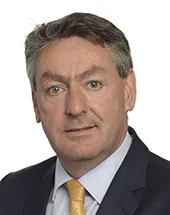

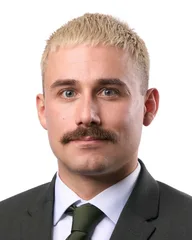
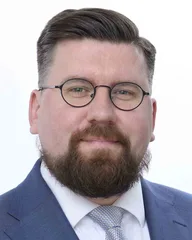
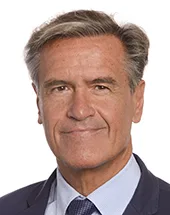
| Rank | Name | Country | Group | Speeches | |
|---|---|---|---|---|---|
| 1 |
|
Lukas Sieper | Germany DEU | Non-attached Members (NI) | 390 |
| 2 |
|
Juan Fernando López Aguilar | Spain ESP | Progressive Alliance of Socialists and Democrats (S&D) | 354 |
| 3 |
|
Sebastian Tynkkynen | Finland FIN | European Conservatives and Reformists (ECR) | 331 |
| 4 |
|
João Oliveira | Portugal PRT | The Left in the European Parliament (GUE/NGL) | 232 |
| 5 |
|
Vytenis Povilas Andriukaitis | Lithuania LTU | Progressive Alliance of Socialists and Democrats (S&D) | 227 |
All Contributions (273)
Establishment of an independent EU Ethics Body (debate)
Mr President, the European Parliament is rightly under the spotlight. Members of this House have brought shame to this institution. Their actions have diminished our standing in front of those we seek to represent. While those who engage in disgraceful behaviour are few in number, they have left a trail of destruction and suspicion in their wake. We collectively as a body must act. It is essential that an independent EU ethics body is established as quickly as possible to help restore confidence. However, it is only the actions of an EU ethics body, and not simply its establishment, that can help to restore trust that has been lost. There must be a common, uniform definition of what constitutes a conflict of interest in the European Union and how we hold to account if there is going to be ambiguity across Member States. The EU ethics body must be completely independent. It must not require approval to start investigation. It needs to have teeth and not be worried about seeking approval from the powers that be. The time of self-regulation must come to an end in the European Parliament and we have seen that there are those who are willing to use this office and have been elected to advance themselves. It is time that we stand firm against such activities.
Small-scale fisheries situation in the EU and future perspectives (debate)
Madam President, I welcome this report and in particular the call for additional support and policy changes for small—scale fishers. This is incredibly, incredibly important to maintain their viability and they play a huge role in coastal communities across the European Union. Speaking of additional support and viability, I want to implore the EU Commission and Member States not to ignore the needs of commercial Irish fishers. Negotiations are currently ongoing over granting access to Norwegian boats to Irish waters to catch considerable amounts of blue whiting. Norway are looking for 450 000 tonnes, 60% of which will be caught in Irish waters. Ireland currently has a quota of 48 000 tonnes and no prospect of an additional blue whiting quota under the current deal. This deal does nothing for Irish fishers and the industry in general. In the interests of fairness and parity, Irish fishers should get two things as part of the deal: an additional blue whiting quota – at the minimum it must be doubled to at least 100 000 tonnes – and, secondly, additional quota in other species as Ireland lost out heavily as part of the Brexit fishing deal. Our fishers need additional quota to maintain viability, their families and the future of coastal fishing in Ireland.
Terrorist threats posed by far-right extremist networks defying the democratic constitutional order (debate)
Madam President, the playbook from the extreme right is the same time and time again: take a group of people, isolate them, dehumanise them and debase them to the point where other people start thinking that they are not human. We’ve seen this time and time again. I’d like to quote from a former MEP and Nobel Peace laureate, John Hume, who brought peace to the island of Ireland, and I quote, ‘Difference is the essence of humanity. Difference is an accident of birth and it should therefore never be a source of hatred or conflict. The answer to difference is to respect it’. In my own country, where we don’t have an extreme far right of substance, they are outside reception centres where we are housing refugees fleeing war, protesting and harassing and haranguing them. So we would not want to dismiss the fact that the far right is alive and it has now capacity to organise through social media. It’s in this House. I have heard chants and cheers from that side of the house when we were speaking about migrants drowning in the Mediterranean and in the English Channel. So we don’t have to go too far to see racists in Europe.
Protection of the EU’s financial interests - combating fraud - annual report 2021 (debate)
Madam President, I welcome the report. The EU and Member States share responsibility in many aspects of this particular report. The EU Member States’ authorities manage the largest share of EU expenditure and collection of own resources. The recovery and resilience fund over the next number of years will inject EUR 1.8 trillion into the European economy in supports and grants. There are certainly the issues of money laundering, tax evasion, procurement and public contracts being awarded, and a very significant issue that we have to deal with as well is the VAT gap that is consistently being highlighted. Of course, if we don’t have rule of law, if we don’t have independence of police forces, tax authorities, revenue authorities, audit authorities and prosecution authorities, and ultimately the independence of the judiciary, we will always have significant challenges in holding individuals or authorities to account when they fail to do their duty at Member State level in ensuring that EU funds are spent appropriately.
Control of the financial activities of the European Investment Bank - annual report 2021 (debate)
Madam President, having spoken previously in this House on the European Investment Bank annual reports, I was often critical when we were speaking about fraud issues and non-protection of whistleblowers. But reading this report and looking at what has been achieved in recent times, particularly guiding ourselves through the COVID pandemic and the impact that that was having on real economies, real lives, small and medium-sized businesses and employment, I do welcome very much the capabilities and the competence of the EIB in terms of navigating small and medium-sized businesses and broader economies through that particular crisis. I also welcome the fact that the EIB has taken its previous statements, to the effect that it wanted to become the climate bank, seriously. It is now well committed to funding the transition, both in the digital economy, as well as in climate change directly itself. I do welcome very much its commitment to REPowerEU. We have to continue with that, both because of the geopolitical reasons with regard to the invasion of Ukraine and Russia’s aggression, and due to the fact that there is huge opportunity in terms of protecting the environment and the climate, as well as in terms of innovating and creating jobs in those particular areas to do with the transition and the digital economy. So I do commend the report and I welcome the continued commitment to the climate agenda.
The establishment of a tribunal on the crime of aggression against Ukraine (debate)
Madam President, crimes against humanity, war crimes, crimes of aggression – unfortunately, there’s no shortage of those crimes in Ukraine as I speak here tonight. Having witnessed Bucha and the shallow graves for young men were bound and shot in the back of the head, meeting women who had been violently raped in their homes by Russian soldiers as they retreated from Kyiv last April, and seeing first-hand the destruction of towns and villages north of Kyiv in February and March of last year, we have no shortage of evidence, Commissioner. What we need now is will – the will to act. Not just the European Union. The European Union must show the lead; it must be the lead in this but it must build a coalition internationally of like-minded countries that are supportive of the concept of justice and the rule of law. Putin is responsible for all the crimes in Ukraine. He is the man that sent the Russian troops to kill Ukrainians, to plunder Ukrainian towns, to rape Ukrainian women, and to destroy the lives of multiple communities across the entirety of the country. We must show leadership and we must ask the world to follow us to ensure the rule of law is upheld and people are held accountable for the dastardly deeds and crimes in Ukraine.
The EU’s response to the appalling attack against civilians in Dnipro : strengthening sanctions against the Putin regime and military support to Ukraine (debate)
Madam President, Bucha, Irpin, Borodyanka, Mariupol and now Dnipro – Russia is a state terrorist and the Wagner Group are terrorists as well. And it is time that we accept, not just in this Parliament but across the entire European Union, that we are dealing with an aggressor of appalling brutality and sanctions have to be brought forward swiftly and rapidly. We are in a situation where we are still taking kid gloves to Putin and his cronies when it comes to sanctions. Last year, when we called for gas to be sanctioned in this House, we were told we couldn’t live without Russian gas. The reason we don’t have Russian gas now is because Putin turned the tap off, not because we said no. That’s the way we are, unfortunately, in the European Union. So, we now have to accept that we have to bring forward sanctions that have a material impact on the regime that surrounds President Putin. So I call for visas to be curtailed – all of the 6 700 on the Navalny list. We have to seize every asset that we can across the entire globe, we have to target the bank reserves – the 300 billion bank reserves – because we owe it to the mangled bodies that are buried deep in the apartment basements of Dnipro as we speak here.
Question Time (Commission) - Food price inflation in Europe
Would the Commissioner not agree that we should base all our policies on concrete data and on scientific evidence? And we have to move beyond hope. We have to make decisions knowing the potential outcome and impact that those decisions will have. And our production capacity, our competitiveness, our import costs and, ultimately, the cost to consumers will increase. Will increase – we know that definitively. And now we have the added additional problems with regard to the cost of fertiliser and other inputs into the food chain in the European Union. So all I’m asking – I’m not opposing, I support it – but we have to do it on science.
Question Time (Commission) - Food price inflation in Europe
Food inflation is 18%; input costs to farmers are running at 24%. Inflation is having a significant impact on lower-income families across Europe and is now having a significant impact on farmers being able to produce food itself. So I ask the Commission: first and foremost, what is it going to do in terms of addressing the input costs, primarily fertiliser, and other commodity costs, like protein feeds for animals, for example, to convert to meat or milk production? That is going to be a significant challenge. I would like to know what efforts will be made to displace the importation of soya, maize, oilseed with crops grown in Europe under the protein strategy. And finally, Commissioner, we have never had an impact assessment on Farm to Fork, on the Biodiversity Strategy or on the Green Deal itself. So is it not time that we would have an impact assessment on the strategies to ensure that some of those strategies aren’t adding further to the difficulties regarding price inflation and food inflation?
Defending the European Union against the abuse of national vetoes (debate)
Mr President, let’s be clear and honest: what we are discussing here today is the abuses of national vetoes, the use of the veto in a manner that is malicious and spiteful, that does not consider the proposal on its merits, but instead uses it as a pawn in a larger political game. This is against the spirit of the Treaties and undermines the genuine arguments for sovereignty and the purpose of unanimity voting procedures. Unanimity voting allows the voice of each Member State to be given equal weight on sensitive issues, regardless of size. These are matters that go to the very heart of sovereign states, for which there needs to be direct accountability for any decisions made. So let’s focus our efforts on finding a genuine solution to tackle the abuse of the veto and not allow this debate to slide into an attack on unanimity in every area of policy. Much of the solutions relies on the goodwill of Member States and some peer pressure amongst leaders. But one practical solution would be to address the voting mechanism of Article 7 procedures for when Member States have breached the core values of the EU. As it stands, suspending voting rights of Member States that have breached these fundamental values requires a unanimous vote in the Council. This is akin to asking turkeys to vote for Christmas. These Member States should not be allowed to breach our core values and then use any commitments to remedy this as leverage for other votes. So we do need to address Article 7 at the very least.
Tackle the cost of living crisis: increase pay, tax profits, stop speculation (topical debate)
Madam President, with temperatures plummeting across Europe this week the cost of keeping warm is very much at the forefront of our minds. We need to take fast and meaningful action to protect the most vulnerable in our societies and make sure no one has to make the choice between heating and eating. The EU acted decisively when imposing a tax on excessive profits of energy companies, and there should be no unnecessary profiteering from this crisis. But I am deeply disappointed to hear that the EU ministers are now dragging their feet on imposing a cap on gas price. I would urge them to get around the table again to have a deal by the end of this year. Taking a step back and looking at the cost of living at the moment, there is no doubt we are in a crisis. Inflation across Europe is still around 10%. In my own country it is at 8%. But we should also be conscious that we should not go chasing inflation. Our actions need to be measured and effective. The ECB economists have already said and indicated that we are reaching or have reached the peak of inflation. We now need to prioritise and shield the most vulnerable in our societies and use any flexibility in our national EU budget to do so. And clearly what we need now, Commission and Member States, is not to go chasing the inflation, but to target the vulnerable groups, the vulnerable cohorts out there that are finding it hard to make ends meet. Certainly, we do need flexibility around national budgets to do that, but at the same time, it would be remiss of us if we just blindly started chasing inflation as it stands. I said already, I am deeply disappointed by the Member States in the Council that they couldn’t agree on a gas price cap. It is clearly evident that there is profiteering by some energy companies, but we have to break the fundamental link between gasping the price setter of electricity across Europe, and that has to happen very, very quickly, otherwise we will continue to have energy inflation feeding into the rest of the broader economy and damaging vulnerable cohorts and the standard of living of people who most need our support.
Prospects for the two-State solution for Israel and Palestine (debate)
Mr President, (start of speech off mic) sustainable, permanent cease-fire, the lifting of the blockade in Gaza and the establishment of a two-State solution based on the 1967 borders. But let’s be very clear; while we talk, Israel is systematically dismantling Palestine. If you look at any map from Jenin in the north to Hebron in the south, there is no longer a contiguous, functioning Palestinian state. We talk about it in the abstract – occupation. This is an illegal invasion of Palestinian lands. It is a breach of international law, it is a breach of UN Charters, it is a breach of fundamental rights and it is a breach of basic decency. So Europe does have to act. And we will pass resolutions, we will condemn in soft language, but we will do nothing to advance this two-State solution. If no more, if we would only ban the produce coming from the illegally occupied areas, it would send a message to both Israel and Palestine that we are serious about the two-State solution. We want to ensure that Palestine survives and that Israel has security as well. But we cannot sit idly by and let it dismantle Palestine as it is.
Renewable Energy, Energy Performance of Buildings and Energy Efficiency Directives: amendments (REPowerEU) (continuation of debate)
Madam President, (start of speech off mic) ... renewables is urgent for many, many reasons: the war in Ukraine and our dependence on fossil fuels from Russia, and the long-term aim of ensuring that our planet survives. From that perspective, it would be a shame if it was the failure of public administrations in Member States across the European Union to implement and allow permitting and planning for REPowerEU. There’s no doubt that we do need to transform. We need to transform quickly and efficiently. And speeding up the planning and permitting process does not mean that you have to jeopardise the Habitats Directive, the Water Directive and other directives that protect the environment. This is significantly important and we have to hold Member States to account to ensure that they invest in their public administration, that they get the resources for the public administration to ensure that they can assess planning permissions and permitting quickly and efficiently. We cannot wait any longer, Mr Timmermans, and I would ask that you ensure that all Member States are held to account to ensure public services in the area of permitting and planning are funded and resourced efficiently.
One-minute speeches on matters of political importance
Madam President, a total of 187 medicines used by Irish patients are currently in shortage or out of stock, according to the list maintained by the Health Products Regulatory Authority, including 11 that feature on the World Health Organisation’s critical medicines list. This is a very serious issue for doctors and pharmacies, but above all else for the people who depend on these medicines. One of the main challenges Ireland faces is that of these 187 medicines, 40% are provided by a single supplier, meaning that pharmacies have no alternative to purchase from elsewhere. This is compared to the EU average of 25%. For example, two very important antibiotics, amoxicillin and penicillin, are on this list. Ireland is currently facing some of the very serious challenges with regard to Strep A, and this needs to be addressed. We need a solution that works for all Member States. We need to move to a system whereby Member States have a single unified process of approvals, authorisation, purchasing and reimbursement. I appreciate that Member States have varying purchasing abilities, but our current system actually enables certain pharmaceutical companies to pick and choose those who they supply first, depending on the price they are willing to pay
A long-term vision for the EU's rural areas (debate)
Madam President, I welcome the report. At the outset I think we have to look at rural Europe from a very different perspective. For far too long we have been looking at as a theme park for people to visit and to look at from time to time. They are real communities with real people and we now have to accept that we have to do an awful lot more to ensure that the vibrancy of these communities is maintained into the future. Obviously, agriculture is a critical cornerstone in ensuring rural development and rural communities are sustained, but we have to look beyond that. We have to embrace the digital technologies that are out there now. We have to put in place the infrastructure to ensure that there are quality jobs in rural communities across Europe. One issue that never ceases to amaze me is that we consistently talk about ensuring that young people stay in rural Ireland or in rural Europe, but at the same time, they simply can’t provide houses in rural communities. They can’t get planning permissions. They can’t build sustainable environments. So we do need to look at the whole of rural communities across Europe to ensure that we have young people, quality jobs, but at the same time that they can actually build a home in those communities and reside there into the future. Otherwise, we will continue to lose young people to our cities, and rural communities will continue to degrade.
Amending Council Regulation (EU, Euratom) 2020/2093 of 17 December 2020 laying down the multiannual financial framework for the years 2021 to 2027 - Amending Regulation (EU, Euratom) 2018/1046 as regards the establishment of a diversified funding strategy as a general borrowing method - 'Macro-Financial Assistance+' instrument for providing support to Ukraine for 2023 (debate)
(start of speech off mic) shrank by 35%. It is running a budget deficit of about 4 to 5 billion per month. So we do welcome this MFA+ to try and ensure that the very state and the functions of the state of Ukraine survive during this particular war. This particular fund will assist in keeping hospitals going, keeping the infrastructure going, paying basic salaries. But let us be very clear: Ukraine is on financial life support and we will need an awful lot more in the short and medium term to ensure that the state itself can function while it is fighting the war against Russia. There is no doubt: we all want to see an outcome that is peaceful, that there is a settlement. But until such time as Russia withdraws from Ukrainian territory, accepts the integrity of Ukraine as a country, well then we will have a situation where the war will continue. And Europe has to support Ukraine in every way it can, both in terms of the immediate financial package that’s here before us, but also into the medium term and the longer term with regard to construction. We have to say confidently that we will stand with Ukraine for as long as it takes for Russia to withdraw and for us to rebuild Ukraine.
System of own resources of the European Union (debate)
Mr President, I welcome the Commission's proposals. It shows commitment to the interinstitutional agreement on own resources. I mean if we expect Europe to do more, we ask Europe to do more, well then we must be willing to fund it as well. We spoke today about 70 years of celebration of Parliament in Strasbourg, representing European citizens. So we have accountability in the context of a parliament through the democratic process but, at the same time, we have no capacity to change people’s lives and European citizens’ lives because of our inability to provide a continuity around the funding of own resources. There is no doubt that some of the proposals put forward in regard to the Emissions Trading Scheme and the Carbon Border Adjustment Fund will by their nature reduce over a period of time. And if we want to expand the role that the European Union plays in terms of addressing climate challenges, the digitisation of our economy, supporting the next generation Recovery Resilience Fund and the challenges that are still very evident among the Member States because of the pressures with regard to cost of living, inflation and energy security, we do need to have certainty. And I would urge the Council in particular to come forward and break loose of their chains with regard to their very restrictive views of how we fund own resources. The template is there. The OECD report has made recommendations, and I believe it is now time for the Council to come forward with proposals. I say this as a person who still advocates for the certainty of national competency around taxation, but the Council collectively can still come to an agreement to address the issue of funding own resources into the future.
A high common level of cybersecurity across the Union (debate)
Madam President, cyber—terrorism is a very real threat to both our economy and our society. Firstly, I’d like to congratulate and thank Bart Groothuis, my colleague, for his excellent work today and keeping cybersecurity at the top of the political agenda in my Group and in this Parliament. If people are in any doubt about what cyber—terrorism is, I would like to remind people that on 14 May 2021, there was a massive cyberattack on the Irish health services. It has cost our health services to date about EUR 120 million, and to put IT systems in place to ensure that we have integrity in our health systems with regard to cyberattacks it will cost at least another EUR 700 million. But it was an attack on citizens; it was an attack on people. Irish citizens will die because of delayed diagnosis in radiology departments, delayed outcomes and in terms of treatments as well. So this has cost lives already. So we have to be very conscious that we are not talking about some abstract form of cyber threats. We are talking about real threats to real people that are being carried out by nefarious actors, both in terms of countries and criminal organisations throughout the world. So we must be vigilant and we must always be prepared and ready, and consistently improve our cybersecurity in both financial services, but in every other aspect of public services in Europe.
Digital finance: Digital Operational Resilience Act (DORA) - Digital Finance: Amending Directive regarding Digital Operational Resilience requirements (debate)
Mr President, just again, to acknowledge Frances Fitzgerald, Alfred Sant, Bogdan Rzońca and José Gusmão as shadow rapporteurs for their cooperation and help on this file. This is about ensuring the integrity of our financial services, it’s about protecting the financial systems, but more importantly, it’s about protecting citizens. It’s about ensuring that citizens have confidence that their information, that their money, that the systems that they use every day in a modern, functioning, digitised world has the integrity at its heart in terms of cybersecurity protections. So from that perspective, I would urge the regulators now that are charged with the responsibility to engage with the major stakeholders and industry to ensure that they can bring forward second-tier proposals and guidance to ensure that we have seamless understanding of the obligations that will be placed on ICT third-party providers, on financial entities themselves, and all those regulated in the European Union to ensure that we have a swift move to where we need to get to, to ensure that that integrity, as I said, is there. We do also have to ensure that resources are made available, Commissioner. We need the regulators to be able to regulate, to be able to oversee. And in doing that, that requires resources. Also, Member States must be conscious of their obligations. And what we don’t want is for regulators, even though we did put in an overarching framework, we don’t want regulators and Member States to become siloed again. We want to have uniformity across the entire European Union in terms of regulation, in terms of oversight, in terms of obligations on financial entities and third-party critical providers as well. So in thanking everybody, I hope that over the next number of years we will see an evolving, exciting, enthusiastic engagement by regulators and the broader industry to ensure future-proofing, that our competitiveness is protected, but most importantly, that we have robust systems against cyber-attacks from nefarious actors who are willing to hurt us.
Digital finance: Digital Operational Resilience Act (DORA) - Digital Finance: Amending Directive regarding Digital Operational Resilience requirements (debate)
Madam President, first and foremost, I am delighted to be here presenting this particular report to Parliament. The financial sector has always been an attractive target for cyberattacks, given the potential lucrative gains, and cybersecurity, as all security has been a long—standing priority for the sector. However, the legal requirements and financial entities across the EU differed, depending on the services they provided or where they were located. There was just a patchwork of rules and regulation. Moreover, as the sector became more digitised, the interconnectivity with, and the reliance on, the tech sector has increased the chances and the risks of a cyberattack. DORA seeks to address both of these issues and to create a robust and harmonised security framework across the entire EU financial sector. I suppose that due to geopolitical issues, the importance of this framework has unfortunately been thrown into the limelight and become more pertinent since Russia has invaded Ukraine. It does indicate the great risk that we are at, if we have a very aggressive neighbour like Russia that is willing to attack people, destroy electrical infrastructure, to make people cold, to use food as a weapon and to weaponize energy, then be in no doubt that Russia would be willing and very capable of attacking our fundamentals in terms of financial services. We have to be very conscious of that. I approached this file with three principles. First and foremost, proportionality, then future—proofing and maintaining and encouraging the competitiveness of the EU’s financial services and tech sectors. I think we achieved that in the final text. DORA takes an ambitious approach to third—party ICT providers, such as cloud computing providers to the financial sector, in that it introduces an oversight framework. It was very important to ensure this oversight framework had robust and just governance, and that we recognise that such oversight is novel and there will be many lessons to be learned from us and expertise to be developed in the period ahead. Therefore, despite some initial reluctance from Member States, the resulting governance structures ensures that all European financial supervisors are involved and that they don’t start working in silos again at Member State level. In other words, there’s a cross—fertilisation of ideas. I am proud to say that, as co—legislators, we avoided imposing location requirements. This was a quite a contentious issue early on. ICT providers building a ‘fortress Europe’ and making it unattractive for global companies to do business with our European companies will not strengthen the security of EU markets. I would urge the Commission to avoid undermining the approach taken to third—country ICT providers in DORA, for example, and in the upcoming EU Cloud Certification scheme. The agreement was voted in ECON on 20 July 2022, with 41 in favour, zero against and six abstentions. I have to say that I am extremely disappointed with the ID Group, who have tabled a number of amendments – and I don’t mean to make an overtly political point on this, but time and again we see people on the left and on the very right tabling amendments on an agreed compromise text. I wouldn’t mind if they were involved in the process, but they never engaged in it. My office was as open with every political grouping, and not once was there any engagement from the ID Group. So from that perspective, I am deeply, deeply disappointed that we now see amendments being tabled when there was an opportunity to engage in the process whereby we actually agreed a text between most political groupings. Therefore, I would urge the House to vote against the amendments and stick to the agreed text. Finally, I would like to thank Mikuláš Peksa, the rapporteur for the DORA amending directive, and my Renew colleague Bart Groothuis, the rapporteur for the NIS Directive, for their cooperation and alignment during the legislative process. Finally, I would like to thank all the shadow rapporteurs, including Frances Fitzgerald, who is also a colleague of mine, and all the others who engaged in the process. I will be summing up later on so will be able to thank you on an individual basis then as well.
Communication on ensuring availability and affordability of fertilisers (debate)
Madam President, I welcome the statement from the Commission, but being truthful we have to live in the here and now in terms of food security and food supply, and a lot of the proposals and ideas coming forward from the Commission are looking beyond the immediate horizon. I mean the significant challenges are for the planting season next spring. Will there be sufficient amounts of fertilizer in place to guarantee that yields will be of sufficient nature to guarantee food security and food supply in the autumn of next year? That is a significant issue. Speaking of hydrogen and methane are longer—term projects, but we have to try and ensure that we have enough gas supply available for the production of fertilisers in the spring of 2023. Of course, when we are doing that we will also be using gas that we need for electricity. So we have to ensure that there’s a greater capacity. I would just urge the Commission to look aggressively at the concept of ensuring that we have more than just enough gas for electricity production, but that we also start to fill our storage capacity for next spring, for the planting season, in terms of the production of fertilizer. That is the immediate priority. Food production, food security, increased yields in the time ahead.
Lukashenka regime's active role in the war against Ukraine (debate)
Madam President, stolen elections, political prisoners incarcerated, abuse of basic human rights, the list is endless. We saw first—hand in 2020, when Lukashenko stole the election and effectively crushed the opposition. We stand with the people of Belarus in their hour. But we must do more. We must ensure that we bring forward sanctions, not against the Belarussian people but against the regime of Lukashenka and his cronies. He is but a Putin puppet at this stage. When you look at the fact that troops crossed the border from Belarus to Ukraine on 24 February this year, where war crimes were committed in Bucha and Irpin, elsewhere north of Kyiv, those troops crossed the border from Belarus. Lukashenko is as responsible as Putin for the bodies that were taken out of those graves in Bucha and Irpin. So we do need to be very, very powerful in our support of the opposition people, of Sviatlana Tsikhanouskaya and others who stand for democratic accountability in Belarus. We should support them as much as we can in everything we do. And we should bring forward sanctions against the corrupt regime of Lukashenko and his cronies.
Question Time (Commission) - Protecting critical infrastructure in the EU against attacks and countering hybrid attacks
On the 14 May 2021, there was a devastating cyberattack on the Irish healthcare system, on the HSE. It ground it to a halt and cost lives in loss of data, loss of information, cancellation of appointments for people. So from that perspective, I just urge the Commission, knowing fully that they are very conscious of the threats in terms of cybersecurity, that this would be put front and centre as well as to the physical elements with regard to the digital concerns that are out there. NIS, DORA and the many other areas that this Parliament has debated must be a critical part of any measures we put in place to address cyber attacks, both physical and digital.
Question Time (Commission) - Protecting critical infrastructure in the EU against attacks and countering hybrid attacks
Europe’s age of innocence came crashing down around us on 24 February this year. But in advance of the invasion of Ukraine by our psychopathic neighbour in the Kremlin, the Russian navy were off the south—west coast of Ireland the previous month, in January 2022. They were observing undersea cables where the most dataflow between the United States of America, Europe and the UK takes place, where there is the most critical infrastructure in terms of communications, digital flow, dataflow, financial transactions, law, the internet and all the connectivity of a modern world in terms of digital connectivity. From that perspective, Commissioner, I would like to ask, how do you see this particular directive assisting the Irish Government, the Irish Defence Forces and others in ensuring that we have some level of resilience, we have some level of observance as to what is happening in the vast oceans around the west coast of the European Union and how we will put measures in place? Bearing in mind not every country there is a member of a military organisation.
Keep the bills down: social and economic consequences of the war in Ukraine and the introduction of a windfall tax (debate)
Mr President, these are not normal times. This is not a free market. This is a market that’s been held to ransom by Putin. So we do need to have extraordinary measures put in place. I very much welcome the proposals around a windfall tax. We do need to show in solidarity with citizens, with small businesses, with families that simply are unable to afford electricity bills and other gas utility bills in the weeks and months ahead. Member States have gone to extraordinary levels in some countries to try and buffer the impact that inflation is having on people. But the European Union must do more in terms of bringing forward a windfall tax, a solidarity tax, that can be dispersed to people and entities and businesses that most need it. We also need to be brave in the area of decoupling of the wholesale electricity price from gas prices. We can’t have a situation where we are continually blackmailed, held to ransom by Putin and his cronies in the efforts to keep the lights on, businesses going and families warm this winter. We do need to be brave. We do need to change how we price electricity in Europe.