

| Rank | Name | Country | Group | Speeches | |
|---|---|---|---|---|---|
| 1 |
|
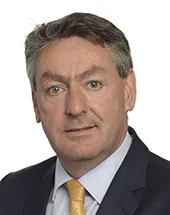
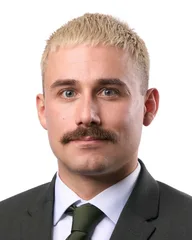
Lukas Sieper | Germany DEU | Non-attached Members (NI) | 390 |
| 2 |
|
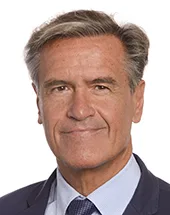
Juan Fernando López Aguilar | Spain ESP | Progressive Alliance of Socialists and Democrats (S&D) | 354 |
| 3 |
|
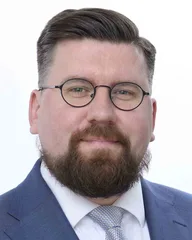
Sebastian Tynkkynen | Finland FIN | European Conservatives and Reformists (ECR) | 331 |
| 4 |
|
João Oliveira | Portugal PRT | The Left in the European Parliament (GUE/NGL) | 232 |
| 5 |
|
Vytenis Povilas Andriukaitis | Lithuania LTU | Progressive Alliance of Socialists and Democrats (S&D) | 227 |
All Contributions (273)
One-minute speeches on matters of political importance
Mr President, production of green hydrogen is inextricably linked to the availability of large quantities of renewable electricity. In an Irish context, that means implementing an ambitious offshore wind energy strategy with urgency. Green hydrogen will be the clean fuel that drives our long—distance public transport systems, our marine transport and heavy goods vehicles, and it will not only be electric batteries due to the discharge requirements and recharging capabilities. We need to ramp up our offshore wind electricity generation to give us the ability to electrolyse water to give us the green hydrogen our economy needs. Ireland sadly suffers from regulatory inertia, and this often stops us from being first movers. The EU adopted its own hydrogen strategy in 2020, with updates since then, but Ireland has consistently lagged behind. Similar to anaerobic digestion, Ireland doesn’t need any more pilot projects. We don’t need any evidence base anymore. We just need to ensure that we use the technologies that are already there and evidence—based by use across the European Union. Ireland easily has the capacity to generate over 30 gigawatts of wind—powered electricity, if it can get its act together with regard to wind energy and planning. Our target of five gigawatts by 2030 is relatively low, and we must aim to do an awful lot better.
The death of Mahsa Amini and the repression of women's rights protesters in Iran (B9-0425/2022, RC-B9-0434/2022, B9-0434/2022, B9-0435/2022, B9-0436/2022, B9-0439/2022, B9-0442/2022, B9-0455/2022)
Mr President, on 16 September, Mahsa Amini, a 22 year old, died while in custody, detained by the morality police in Tehran. Now, I want to say at the very outset and what I say for the next number of seconds has nothing to do with being opposed to religions: it is about fundamental human rights. It’s about the right of women in any part of this globe to go about their lawful business without being hindered by what they have to wear or by why they can’t wear what they want to wear. They should have the fundamental freedoms in any country, either in the European Union or in the Islamic Republic of Iran or anywhere else. Women should be free to wear what they want. It is an absolute disgrace that we are talking about a woman of 22 years of age who died simply because her headscarf was too loose. That is a fundamental breach of any human right. It’s a fundamental breach of basic decency. I ask the Islamic Republic of Iran to loosen the restrictions on individuals so they can go about their business in the manner that they feel fit, not in the manner that the mullahs and Ayatollah Khamenei feel they should.
COVID-19 – Sustaining EU preparedness and response: looking ahead (debate)
Mr President, the COVID—19 pandemic showed our vulnerabilities as a collective in terms of Europe’s first response. But let’s be very honest, we did get our act together very, very quickly in terms of dealing with what was unknown at the time in terms of the pandemic. Certainly from now on, I believe that a collective effort is required by Member States when we want, first of all, to have vigilance in terms of assessing potential variants and outbreaks, and then the preparedness that follows from that. Certainly when we look at the vaccine side of it, again it showed that when we collectively work together in terms of procurement, Europe did exceptionally well. So we do need to ensure that continues and that we put in place now co—ordination and surveillance systems across Europe, and indeed cooperating with others across the globe, to ensure that we can assess respiratory illnesses, the potential variant changes not only in COVID itself but also in other acute inflammatory diseases as well, and respiratory illnesses. Certainly that will be one area where I believe we could make a meaningful impact. I just want to say to this House as well, there was a lot of misinformation throughout the COVID pandemic. There was a lot of scaremongering and fearmongering put out there – even by Members in this particular house. The science showed that vaccines worked. The science showed that it saves lives, and we should always try and advocate on the side of science and dismiss those that continue to scaremonger the facts that are before us. So I would like a full assessment as well about the impact that the vaccines had on the saving of lives and on the reduction of people attending hospitals, because those that spread misinformation should hear the truth.
The urgent need for an EU strategy on fertilisers to ensure food security in Europe (debate)
Mr President, the true cost of the problem for consumers and farmers has not been fully evolved yet due to the fact that a lot of the crops this year were sown by input costs from last year. But now, as we unwind all of that into the marketplace, we’re going to see huge pressures on farm profitability, but more importantly, the pressures that will be on consumers through food inflation. This is going to have profound implications across the globe. But from a perspective of Europe, we have to ensure that we take immediate steps to address the cost of artificial fertilizer, and that means unwinding natural gas and decoupling the cost of electricity from gas itself to ensure that we can manufacture fertilizer. Obviously, 60% of our fertilizer is now cut off due to Russia’s illegal war in Ukraine. But we do have to do things immediately, Commissioner. Obviously, there are longer term issues with regard to the reduction of artificial fertilizers, but in the here and now, every effort must be made to sustain our food supply and our food security through cheaper cost efforts.
The EU’s response to the increase in energy prices in Europe (RC-B9-0416/2022, B9-0416/2022, B9-0417/2022, B9-0418/2022, B9-0419/2022, B9-0420/2022, B9-0421/2022, B9-0422/2022)
Mr President, this is a very important file, and it has real, tangible repercussions for citizens across Europe. I voted in favour of the potential cap on gas without being prescriptive. And I think it’s very important that the Commission comes forward with deep, meaningful proposals that make an assessment on the risks and the opportunities around the price cap. The first thing we have to do is to ensure that we have certainty going forward in terms of energy security and the cost of electricity across the entirety of the European Union. But equally, we have to be conscious that as we speak here and as we face a winter, across Ukraine people are dying because the real oppressor in all of this, the real person who’s causing the difficulties with regard to citizens, the cost of fuel, the cost of living, the cost electricity is Vladimir Putin himself. So whatever we do, we must ensure that we have strong unity of purpose, sanctions hit Russia, and that we try to alleviate the pressures on European citizens by ensuring that we have a cap on gas that reduces the cost of electricity and energy across the European Union.
Outcome of the Commission’s review of the 15-point action plan on trade and sustainable development (debate)
Mr President, I welcome the outcome of the Commission’s review on the 15-point action plan on trade and sustainable development. There is no doubt, as the strongest economic trading bloc in the globe, we have obligations both to ourselves, but also to the broader world itself, in ensuring that standards are maintained and lifted. So we can’t have a situation where there is exploitation in third countries, third world countries and trading blocs for the benefit of the European Union alone. In future, trade agreements have to do a serious, tangible assessment of the impact, not only in the context of the impact on Europe, but also how will it impact on the countries and the partnerships we are drafting agreements with. That is of fundamental critical importance to the adherence of decency in world trade. If you take, for example, environmental standards, labour standards, social employment standards and other human rights obligations, it is imperative that we start to shift and nudge not just Europe, but also, more importantly, the people that we are trading with whose standards are not ours. We have to encourage and nudge them as well. So, I welcome the publication, but we have a lot of work to do to ensure that our trade agreements are consistent with basic decency across the globe.
The situation in the Strait of Taiwan (RC-B9-0389/2022, B9-0389/2022, B9-0392/2022, B9-0394/2022, B9-0396/2022, B9-0398/2022, B9-0400/2022)
Madam President, the European Union says it respects the One-China policy. Ireland stands for the One-China policy. I hope that the issues around the historical differences between Taiwan and China mainland itself can be resolved, but let us be very honest with ourselves. China’s track record, in terms of how it has addressed Hong Kong in recent years, would give grave concern to those living in Taiwan and those that want to see the issues addressed between China and Taiwan resolved in the years ahead. We also have to call on international partners to dial down the rhetoric around the issue of Taiwan. I went there myself personally many, many years ago. I saw first-hand their genuine efforts at trying to ensure that democracy was part and parcel of their political life. Looking across the Taiwan Strait at how Hong Kong has been undermined and how democratic principles has been undermined does not give the Taiwanese comfort that, in the event of there being a One-China policy completed, their democratic values and their ways of life would be respected. So we do need to dial down the rhetoric, and we have to call on China to reduce its aggression in the Taiwan Strait as well.
Implementation of the Updated New Industrial Strategy for Europe: aligning spending to policy (A9-0214/2022 - Tom Berendsen)
Madam President, I voted in favour of this report, and it does highlight the challenges facing Europe with regard to the COVID pandemic and now the Russian aggression in Ukraine. It shows that we are very reliant on international trading partners, and sometimes we are incapable of ensuring that we can have production within our own borders within the European Union. At the same time, I would be very concerned that we would use this to put up barriers to international trade, to put up barriers that force, rather than encourage, competition, and that ensure that we have the standards that we can export across the globe as well in terms of environmental, labour and other standards as well. While we do need to have a capacity within our European borders in production, in modern technologies, and in creation of new ideas, thinking and innovation, we certainly do not need to become cold to others wanting to locate in Europe as well, to express themselves here in terms of how they manufacture and what they want to produce. So while welcoming the report, let’s not make Europe a cold place for international trade and international innovation.
State of the SME Union (debate)
Madam President, SMEs are the backbone of the economy, we say, but they are also the backbone of social cohesion across the Union. They support our communities right throughout Member States and they are under significant pressure. And when we talk about regulations, red tape, the unwinding of all of these barriers, the most immediate challenge, Commissioner, is the lack of access to credit to address what is going to be a major crunch in the next couple of weeks and months with escalating energy prices. We are going to see an awful lot of small and medium-sized businesses go to the wall if they can’t access working capital and short-term credit to facilitate the extraordinarily high energy bills that will land on their desks in the next couple of weeks. In Ireland alone, some companies, or some small and medium-sized businesses, are experiencing a threefold increase in their energy bills alone. And it is a very, very worrying aspect for most of them. So I would urge the Commission in doing all the other things, the Late Payments Directive, but the immediate issue is to ensure that they have access to credit to address what will be a major cash flow crisis in the short and medium term.
Existence of a clear risk of a serious breach by Hungary of the values on which the Union is founded (debate)
Mr President, membership of the European Union is based on shared commitment to common values as outlined in the Treaties. It’s about principles. It’s about deep values that we should cherish, democracy, equality, individual rights and freedoms, respect for the rule of law and free, independent media and judicial independence. Let us be very clear, Orbán and his party are not supporting and underpinning those very principles. They’re doing everything to undermine us: gay rights, individual freedoms, corruption, many aspects of what is happening in Hungary is because of Viktor Orbán and his political philosophy, which fundamentally attacks everything that this Chamber stands for and the European values that underpin it. And if you are in any doubt, if you are in any doubt, show me your friends and I’ll tell you who you are. At this moment, Viktor Orbán is backing Putin against the Ukrainian people. It’s a shameful act and it is indicative of all that stands for in terms of Viktor Orbán and Fidesz. You should be ashamed of yourselves. He should be campaigning to get rid of them and stand with European values.
Sustainable aviation fuels (ReFuelEU Aviation Initiative) (A9-0199/2022 - Søren Gade)
Mr President, in making the decisions on this particular file I tried to stick as close as possible to the Commission proposals. Having consulted widely, being truthful with stakeholders, we concluded the original Commission proposal was the best option in terms of how we transition the aviation sector to a cleaner, greener future. And there is no doubt, I believe, that if we put the right policies in place that the airline industry will be up for us because it will have to be stimulated, invested in. But I do believe that sustainable aviation fuel will have great downstream benefits as well, not just in the context of the initial aspect, with regard to carbon reduction from airplanes themselves, but also the feed stocks that will be required for sustainable aviation fuels. So, for that reason, that that was a decision that I took. I want to thank the Renew Europe colleague Søren Gade as this file’s rapporteur for his work on file. He had a nearly impossible task, being quite truthful. And, while he was excellent in bringing all parts of the Parliament together, I just believe that there were so many competing interests in here that the compromises were not suitable for what’s needed to stimulate sustainable aviation fuel investment in airlines.
Developing an EU Cycling Strategy (debate)
Mr President, I very much welcome the strategy. I think it’s a very positive development and I hope that the resources are put in place by Member States throughout the European Union to ensure that we have an integrated policy around cycling. Of course the real challenge here is that we want to address the climate issue, the climate change, and we want to ensure that cycling and bicycles are part of that transition to a carbon neutral economy, and from that perspective it has to be integrated. We cannot have a situation where bikes are not able to be parked at work, mentions and references to arriving at work after what could be long distances, or in Ireland’s case, cycling steep hills to work, and being unable to wash, put on fresh clothes in advance of a day’s work. So there’s a lot of work to be done to ensure that it is an integrated, seamless system of transport integrated into the broader transport scheme. I also would like to see a great emphasis on leisure cycling and I know many countries have done exceptional work on that, and Ireland is starting that process too of rolling out greenways. But I do believe that cycling, as part of a sort of family recreation, leisure for elderly people getting out, getting active, that greenways must be supported in every Member State across the Union and specifically in Ireland itself as well.
Facilitating export of Ukrainian agricultural products: key for Ukrainian economy and global food security (debate)
Madam President, the blockade of the Black Sea ports by the Russians and by Putin is not just an attack on the Ukrainian economy, it is an attack on the food supply and security of populations across the entire globe. North Africa, the Middle East and many other areas that depend on commodity-type products for their staple diet – like wheat, like barley and like corn – will be fundamentally challenged in feeding their populations in the short and medium term. So it is an attack on the world population and Putin must be called to account on that. From our perspective, with the resources that the European Union has, I do welcome the announcement of ‘solidarity lanes’. But we have to ensure that the 30 million tonnes of wheat, barley and corn that are in Ukrainian-held territories can move swiftly through the European Union and flow into the world food supply system. Otherwise, we will be witnessing not just price increases of food, but we will be witnessing hunger and famine in the poorest regions of the world – and all because of the shameful illegal war of Putin in Ukraine.
The UK government’s unilateral introduction of the Northern Ireland Protocol Bill and respect for international law (debate)
Mr President, I want to thank the European Union, the Parliament, the Commission, the Council and all the constituent parts that make up Europe for the solidarity they have shown to Ireland, not only the Member State that is remaining within the European Union, but also for the part of our island that has been excluded from membership of the European Union – and that’s a very fundamental thought to keep in mind. We need to ensure that Northern Ireland is not punished, is not suffering, by leaving the European Union against the wishes of the majority of the people of Northern Ireland. The European Union has shown great flexibility, great patience and great perseverance through Maroš Šefčovič, in terms of their understanding of the importance of ensuring there is no hard border on the island of Ireland. In my lifetime – and I’m 54 years of age, I saw some harrowing events on my island. Most importantly, the protocol understands that and tries to address it to ensure there is no hard border on the island. What we need now to do is to ask the British Government to come back in to the tent and sit down and negotiate in good faith, under the basic principles of the Withdrawal Agreement, the Northern Ireland Protocol, but more importantly, for peace and stability on the island of Ireland. Thank you Commissioner Šefčovič and thank you, Parliament, for your support and solidarity on this crucial issue.
One-minute speeches on matters of political importance
Mr President, For the first time ever, due to COVID, we are able to see the benefits of cooperation on healthcare in the EU. This unified approach, to fight COVID, has greatly improved efficiency and parity among our citizens. A European Health Union will allow us to respond together to emerging health crises, ensure medical supply, and prevent and treat diseases. I think that the alignment of diagnostic services should be the central cornerstone of this strategy. For example, European countries currently have different policies on newborn diagnostics. ‘Heel-sample testing’ is used in Ireland. However, while doctors in Ireland test for nine possible illnesses, there are variations among other countries: France tests for six (6), but Spain tests for twenty-four (24). Common guidelines on diagnostics would allow us to share resources to provide equipment and expertise, as well as ensure equality among our citizens. These fundamental and crucial aspects must be central to a European Health Union.
Women’s poverty in Europe (debate)
Madam President, I welcome the broad thrust of the report, but there’s no doubt we have a long way to go in terms of working conditions and gender pay equality. At the outset, a lot of our legislation is weak in these particular areas to defend and vindicate the rights of women, but equally in terms of access to education, access to credit, access to housing, access to health and reproductive rights. These are all issues that are contingent on Member States either giving or not giving, and they should be mandatory obligations at this stage in terms of certain guarantees and fundamental rights. So when we talk about education, young women with a number of children are unable to access further education, in many cases. They are unable to access proper housing provision. They are unable to access the workplace simply because their conditions are not protected in legislation. So when we talk about equality, when we talk about the gender pay gap, we do have obligations in this House; but, equally, Member States – where the competency still lies in many areas around legislation on employment – have a lot to do and we should hold them accountable equally across the European Union.
Inclusion measures within Erasmus+ 2014-2020 (A9-0158/2022 - Laurence Farreng)
Madam President, I was very proud to vote in favour of this report, and particularly the inclusion measures contained in this. The Erasmus+ programme is a wonderful programme. It does allow young people to travel, to live, to learn, to love across Europe. Many Irish people have had that beautiful benefit of being able to study abroad, and we also welcome people to Ireland from other parts of Europe. It does give people a really grounded basis of what Europe is about and it opens up opportunities. But it needs to be opened up more. I believe it’s too restrictive in the sense that people who access it primarily are coming through the third—level system. I’d like to see it opened up into areas where people are studying in the trade sector and in the technological area as well. So I’d like to see that broadening of the base and to ensure that people with disabilities and from minority backgrounds also have access to this particular programme. It would be wrong of us if we were just to contain this to those that are going through the formal third—level process as well. It is a wonderful programme and most young European citizens should have an opportunity of being able to embrace it in some way or another, rather than just through the formal third—level process itself.
Implementation of the Recovery and Resilience Facility (A9-0171/2022 - Eider Gardiazabal Rubial, Siegfried Mureşan, Dragoş Pîslaru)
Madam President, the Recovery and Resilience Facility is a very important fund and it is there to ensure that economies can grow again and can invest in services. But we have to also be honest. We can’t have this as a bargaining chip on the fundamental principles of equality, of independence of the judiciary, independence of the media, and fundamental freedoms. Oppression of the LGBTQ community and oppression of women in certain countries is now something that’s beginning to happen again. The idea that we would actually negotiate the most fundamental rights that are the pillars on what Europe is about with regard to the Recovery and Resilience Facility is, in my view, very unacceptable. The countries that made applications to the Recovery and Resilience Fund knew in advance of making those applications their obligations to fundamental rights, their obligations to ensure that they eked out corruption in their countries, that they followed the independence of the judiciary and the independence of the media, and that there would be no oppression of minority groupings. That is not happening in every country. Particularly in the context of Poland and Hungary, they have a long road to travel, and the idea that we would make these funds available to countries that don’t comply is very regrettable.
Draft amending budget No 3/2022: financing reception costs of people fleeing Ukraine (A9-0181/2022 - Karlo Ressler)
Madam President, I strongly supported the motion for a resolution on the draft amending budget to finance reception costs of people fleeing Ukraine. There is no doubt there are about four and a half million people who have left Ukraine, fleeing Russian military aggression in their country. I was very heartened at the response that the European Union came up with in such a short period of time, but particularly the Member States that are closest to Ukraine itself. I instance the extraordinary efforts of the Polish people in trying to accommodate as many Ukrainian refugees as is possible. Of course, there has been a dispersing of refugees across the entire European Union, and I want to commend all of those people that have tried to accommodate Ukrainian refugees, either in their own areas, communities or their own homes. But we need to be conscious that this could go on for a prolonged period of time. So we need to be continually reviewing the budget so that we have enough supports in place to ensure that there is no downgrading of facilities, of support to Member States that are housing and receiving refugees from Ukraine.
National vetoes to undermine the global tax deal (debate)
Mr President, I’m extremely disappointed that we were unable to implement this particular OECD agreement of 137 countries after many, many years of negotiations. My country, Ireland, had genuine concerns about the proposals and we were one of the last countries to sign up to it. But we did come to the table in a spirit of negotiation and compromise, and we did welcome and sign up, as I said, to the agreement. The fact of the matter is that Hungary is vetoing this not because of the specific issue of the tax deal itself, but they just want to flex their political muscle because of the other issues that Orbán is consistently raising. That undermines the basic structures and fabric of what the European Union stands for. But I do think that we want to be very careful that we don’t rush headlong into a situation where we now use the fact that Hungary is blackmailing Europe, through a tax proposal, to unwind national sovereignty around the issue of taxation. And if we are to have any major discussions in how Europe is framed, how it’s underpinned with treaties, the integrity and the sovereignty of nations, taxation is a fundamental issue. It’s fundamental to citizens in Member States. Governments are elected in Member States. One of the great democratic processes is an election itself. And very often taxation is at the centre of those debates at Member State level. So if we are to have a debate around unanimity versus a qualified majority voting on the issue of taxation, we want to be very careful that we don’t undermine the basic concept of member sovereignty in the areas of taxation, which means democratic accountability as well. Tread carefully on that particular issue.
The call for a Convention for the revision of the Treaties (B9-0305/2022, B9-0307/2022)
Mr President, I voted in favour of the motion for a resolution on the call for a convention for the revision of the Treaties. The reason I did is I believe we do have to have a discussion. We had the Conference on the Future of Europe – that did facilitate some form of debate, but the European Union is changing, is evolving, and we do need to assess where we are in terms of making sure that there is democratic accountability. Of course, when you do start changing treaties, you have to be very conscious of something, and that is that we do not leave the citizens behind. That it’s not seen as changing the treaties to centralise power. So for any revision of treaties, particularly in the functioning of the institutions and how they work, we have to have checks and balances; we have to ensure that the citizens are at the heart of the decision—making process. The idea that we just scrap unanimity completely does undermine the concept of subsidiarity, of small Member States believing that they have a voice at the table as well. In these discussions, it is vital that we consult, listen and have the citizen at the heart of the decision-making process rather than the centre.
Illegal logging in the EU (debate)
Mr President, the European Union should move swiftly, and the Commission should move swiftly, to take infringement proceedings against countries who fail to implement the basic standards of protection in terms of forestry and illegal logging. And certainly with the technology and satellite observation and tracking systems in place, it should not be beyond the capabilities of Member States not only to observe but to prosecute those that are involved in illegal logging. And I would urge that the Commission would take infringement proceedings against countries who fail to act. In terms of Ireland, as was already referenced, in Ireland the opposite is the case. We can’t plant forestry due to regulation, planning difficulties. And if we do plant it, we can’t harvest it – and I’m talking about commercial forestry – because of the inability of the public administration to deal with licensing for felling. So I would also invite the Commission to look at Ireland’s track record to try and meet our goals of increasing forestry, bearing in mind we have only 11% of our landmass under forestry, and we simply are not meeting any targets in terms of our ambition to increase the amount of forestry planted for commercial purposes.
Global threats to abortion rights: the possible overturn of abortion rights in the US by the Supreme Court (debate)
Madam President, criminalising abortion criminalises women and girls, it risks the lives and health of women and girls, and it ends up in backstreet abortions and bathroom abortions. Roe v. Wade was a fundamental decision of a court at a time that conferred rights on women, and we must not deny that there is a backsliding of women’s rights across many Member States in this Union as well. We have to stand up and stand in solidarity with women in countries where there is a fundamental breach of their basic human rights in terms of access to health care, abortion care and sexual and reproductive health care as well. Ireland had a ban on abortion, but we had abortions every day of the week for years, even though we had a ban, because they got on the plane and they went to the UK. They went to other countries in Europe as well. So be under no illusions, the idea that you’re banning abortions in a Member State, in this country, in this Union means only one thing – they are going elsewhere, and you are putting their lives at risk. We must stand with them!
Article 17 of the Common Fisheries Policy Regulation (A9-0152/2022 - Caroline Roose)
Madam President, I supported this well-written report and I very much welcome it. It’s very important that we have greater transparency in how quota is allocated within a country. Of course, it is also very important that we have greater transparency to assess how quotas are allocated between countries. And we do need to insist that in a formal review of the common fisheries policy that we take into account the migratory changes of fish in terms of their movement patterns in the seas around Europe. And from an Irish perspective, we have to take into account the environmental, the social and economic criteria to ensure that Ireland gets its fair share of allocation in the review of the common fisheries policy, bearing in mind we have been singularly most impacted because of Brexit, where we have had large cuts to quota. And this is going to have a profound impact on the viability of the fishing industry, on the viability of rural coastal communities around Ireland. So in the context of the motion regarding Article 17, I welcome the report. We need transparency, but we equally need transparency in the review of the common fisheries policy so that we can have a fair allocation of the fish in the seas that belong to all Europeans.
Security in the Eastern Partnership area and the role of the common security and defence policy (debate)
Madam President, Russian aggression in Ukraine shows clearly that Russia does not want to have functioning, free democratic countries along its borders. And I hope there is a clear, unequivocal message from the Council in the next number of weeks around the candidate status for Ukraine in application to join the European Union. At the moment, Ukrainians are dying to defend their homes, their families, their towns and their country. But equally they are dying to defend values that we hold dear in this House. And if we are to be serious about talking about Eastern Partnership, well, the European Union will have to come forward and support in a real, meaningful, tangible way, and that would be to confer candidate status on Ukraine immediately. I have seen first-hand the devastation in Bucha, in Irpin and other parts of the Ukraine, and it will be shameful for us to turn our backs and not to give clear messages of support and solidarity to the Ukrainian people as they are dying defending the values that we hold dear. So in the next number of weeks confer candidate status and give them hope and support.