
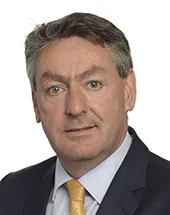

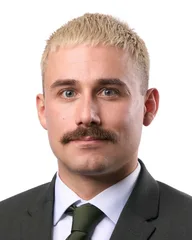
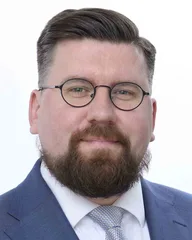
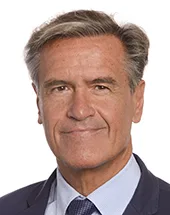
| Rank | Name | Country | Group | Speeches | |
|---|---|---|---|---|---|
| 1 |
|
Lukas Sieper | Germany DEU | Non-attached Members (NI) | 390 |
| 2 |
|
Juan Fernando López Aguilar | Spain ESP | Progressive Alliance of Socialists and Democrats (S&D) | 354 |
| 3 |
|
Sebastian Tynkkynen | Finland FIN | European Conservatives and Reformists (ECR) | 331 |
| 4 |
|
João Oliveira | Portugal PRT | The Left in the European Parliament (GUE/NGL) | 232 |
| 5 |
|
Vytenis Povilas Andriukaitis | Lithuania LTU | Progressive Alliance of Socialists and Democrats (S&D) | 227 |
All Contributions (273)
Digital Markets, Digital Euro, Digital Identities: economical stimuli or trends toward dystopia (topical debate)
Mr President, I must say, it's weird that the far right have requested this debate and are attempting to portray attempts to digitise the European economy as dystopian. Perhaps they don't actually know what 'dystopian' really means. 'Dystopian' is defined as 'relating to or denoting an imagined state or society where there is great suffering or injustice'. Within the world of film and literature, there's a particular genre that focuses on how humanity will survive in dystopian societies. They all have some fairly common features: centralisation of power, erosion of privacy, erosion of rights, spreading of false information and propaganda, the incitement of fear and suspicion. These dystopian symptoms are sadly on the rise across Europe. However, it is nothing to do with the digitalisation of our society. These unkind and uncaring trends are all due to the underhanded, nasty, mean‑spirited actions of the far right who peddle lies, whip up fear and hate, and seek to divide rather than unite society. So, to the far right in this house, take a long, hard look at yourselves and your actions before lecturing the rest of us and seeking to make our lives, our citizens' lives, easier and more prosperous.
Electricity grids: the backbone of the EU energy system (debate)
Madam President, we need to invest in the transnationalisation of our grid. We need a seamless transmission of electricity across the entire continent. The cost of electricity and energy is a significant threat to our collective competitiveness. At times, in certain parts of this European Union, we dump surplus electricity, rather than being able to use it in some other part of the continent. So we do need to ensure that we can transport energy across the continent. It will also drive down costs and increase our competitiveness. But we do need to ensure that we have a stable mix of electricity sources: solar, wind, nuclear, hydrogen storage, and obviously gas in the short to medium term as well. And that will ensure that we have base-loading and balance and grid stability, which is a very important component in the modern world. So from my perspective, I do want to see a great emphasis on an energy union, on investment in the transnationalisation of the grid and ensuring that when we do generate electricity, that we can use it for those that need it most in terms of our competitiveness, but certainly not in dumping electricity when we surplus production.
Stopping the genocide in Gaza: time for EU sanctions (topical debate)
Madam President, 50 000 people dead in Gaza, hospitals targeted by bombs, schools attacked, the West Bank killings, displacements, illegal settlements, International Court of Justice and International Criminal Court rulings, fundamental breaches of international law, genocide in Gaza, using food and aid as a weapon of war – as a weapon of war. Israel acts with impunity because we have granted it immunity. We have done nothing to address the fundamental issues, which are that a two-state solution is required, that the Palestinians have an entitlement to statehood and their own lands, and that Israel has an entitlement to exist and defend itself. But we have always taken only one side in this debate. We are losing our moral authority. We are losing any shred of credibility. We have to act as an honest broker. The unconditional support by the President of the Commission to Israel simply is unacceptable, and a fundamental breach of trust and the Treaties on which this Union ...
European Ocean Pact (debate)
Madam President, Commissioner Kadis, I would like to thank you for visiting Ireland recently, and meeting with stakeholders and particularly fishers in the west of Ireland and Castletownbere. I appreciate it and I know they appreciate the engagement as well. At the outset, the lawless exploitation and abuse of our oceans has to stop, and I hope that the European Ocean Pact is a policy that will bring about that change in mindset. From my perspective, when we talk about sustainable fishing, we have to address a very fundamental issue, Commissioner, and that is the fact that super-trawlers across the planet are industrial-scale fishing and exploiting stocks beyond sustainable capacities. So I believe that, if we are to have a review of the common fisheries policies, we have to look at the fact that we are overfishing in many areas. And that has predominantly been done by super-trawlers, as opposed to the smaller trawlers and coastal community fishers that are taking sustainable stocks from our seas. So any re-evaluation and review of the common fisheries policy must look at sustainable coastal communities, supporting our fishers, but certainly addressing the issue of the massive exploitation of fishing stocks across the globe and in European waters by super-trawlers.
Single Market Strategy (debate)
Mr President, firstly, I welcome the strategy, Commissioner. Just to say at the outset: anything that takes burdens away from small and medium-sized businesses in terms of developing the growth trajectories is very welcome. So this particular strategy must be coupled with real action now. I know that a lot of us will have difficulties in Member States trying to protect national competences, and the fact that we have so much crossover with regard to oversight and regulation, and the interpretation of regulation in different jurisdictions. The fourth omnibus simplification package is very significant, of course, with regard to establishing a mid-sized CAP company, whereby companies that aren't multinational, yet are significant players, aren't burdened with the same obligations that we would place on massive multinationals. I very much welcome it. If we are to really exploit the single market though, we ultimately need to unleash a lot of capital, and that requires us to really embrace the concept of a banking union and a capital markets union. So, Commissioner, not only is this a very, very welcome process, but we have to underpin that with capital availability, and the capital markets union is one of the only ways we can do that, to prise out the trillions of dollars that are in deposit accounts across the European Union, doing nothing for the real economy. So I would urge that that would be a part of the policy as well.
The fine against TikTok and the need to strengthen the protection of citizens’ rights on social media platforms (debate)
Madam President, just to remind my colleagues over there: I wouldn't hold up China as a bastion of free speech or protection of civil liberties. I certainly wouldn't trust them with my data. So certainly, from that point of view, we should be very conscious of the need for democratic oversight to ensure that the data of European citizens is protected. The Irish Data Protection Commissioner did take very serious steps to sanction TikTok to ensure that they comply with the democratic rules expressed in this House and Member States across the European Union. So it's quite shameful to come in here and undermine the concept of what we're trying to do, which is protecting citizens and ensuring that their data is safe. I commend the Data Protection Commissioner for the efforts they made in ensuring there was a lengthy investigation, and they came up with the sanction and the fine. On the broader issue, Commissioner, we have to ensure that not only data protection but the Digital Services Act and the Digital Markets Act are enforced. We need additional support to ensure that there is enforcement and that there are sanctions if there are breaches of those particular acts, particularly in the area of vulnerability and children. We certainly haven't done enough yet in Europe to ensure that their space is safe on digital platforms.
Banking Union – annual report 2024 (debate)
Madam President, for the last ten years, the interest rates on an Irish mortgage have been continuously higher than the EU average and at some times double the average. Likewise, an SME seeking a loan in Ireland has to pay considerably more than an SME on the continent. Commissioner, there are a few significant barriers that are of national competence, but equally also with regard to the risk weighting of assets. That is causing significant challenges for Irish banks in their obligations to retain additional capital because of legacy issues from the financial crisis of 2008 to 2010. If you look at the banks' balance sheets and their lending books, they are well capitalised, they have reduced their risks, bad loans are quite reduced, but yet, at the same time, we are consistently risk-weighted at the highest level, forcing Irish banks to retain additional capital and then putting further costs on them when it comes to lending. So I would urge, in the context of the Commission evaluating the banking sector's competitiveness and producing a report by 2026, that they would also look at these particular impediments to ensure that we open up the market competitively with the banking union, but also that we remove obstacles to banks lending in Ireland as well.
The role of gas storage for securing gas supplies ahead of the winter season (debate)
Madam President, having sufficient energy storage is not just a wise energy policy, it's also an issue of national security and European security. And we were sadly exposed when Russia invaded Ukraine and then decided to blackmail Europe in the context of using energy as a weapon. But Europe did react very, very positively in terms of bringing forward floating storage and regasification units and making themselves less dependent on Russian gas. But we must do more. From an Irish perspective, Ireland is an island nation. We are very dependent on interconnection. So from an issue of national security, in terms of energy, we all obviously had to set up a state-led strategic gas reserve to ensure that we were no longer fully dependent on the interconnectivity between the UK and Ireland, that we will have the ability to import liquefied natural gas from other sources. Sustainability, affordability and security are key issues in the medium term until we transition to renewable fuels. I do want to commend the Commission – as I am often very critical – on how they responded very, very quickly to the need to pivot from Russian fossil fuels.
Preparation of the EU-UK summit (debate)
Madam President, thank you very much. I do really welcome the reset of EU-UK relations, and I do look forward to a positive outcome in the summit. And there's just a few points I want to allude to, Commissioner, in terms of the important issues: one being the issue of the Erasmus programme. It has been spoken about a lot, but it really is hugely fundamental to the concept of young people being able to travel, to live, to learn, to love in other cultures. And it would be a shame if over the next number of years, we were unable to see another generation of UK citizens travelling to Europe and European citizens travelling to the UK. From my perspective, sharing a jurisdiction on the island of Ireland, it is critically important that we have that continual building of personal relationships, and universities and third-level institutions are a great way to do that. The other key areas where I believe we have to make a lot of progress – again, I look at it from the context of Ireland being offshore – offshore in terms of wind energy and the distribution of electricity from Ireland through the UK and onwards into Europe. I believe we have to have a full and open and honest debate with the UK around that particular issue to ensure the simplification of the export and import of electricity via the UK itself. Otherwise, our ability to export the large sums of wind energy that will hopefully be generated in the years ahead would be significantly challenged, because there will have to be interconnectors directly from Ireland to France otherwise.
Passing of Pope Francis – Statement by the President
Madam President, sadly, Pope Francis's death did not come as a shock to most of us. Unfortunately, his health had been waning, and while we had all hoped for the best, it was clear that his time was coming to an end. His time, however, as supreme pontiff was different, to say the very least. His recommitment to the church being a 'church of the poor' was profound and real. And while he could not make all the changes he wanted, he has, I believe, changed the Catholic Church for the better. His pontificate will be known as one committed to decency, human dignity, social justice and the raising of those on the margins of society. On behalf of the Renew Europe group. I want to extend my deepest sympathies to the 1.4 billion Catholics across the globe who are mourning over the loss – not just of their spiritual leader, but also of a man who lived each day committed to the service of the poor, the marginalised and the vulnerable. In 2018, the people of Europe welcomed Pope Francis to our shores as we hosted the World Meeting of Families. Pope Francis was welcomed with open arms and with deep respect by my fellow citizens. To everyone elected in this Parliament and to parliaments across the world who claim to profess the Christian faith: I would urge you to listen to Pope Francis's words and his teachings. There is nothing Christian about cheering when migrants drown in the seas. There is nothing Christian about making those in the margins fear for their safety just because they are different to us. Pope Francis's death is a loss to us all. Whether we are Catholic, another kind of Christian, practice another religion or indeed are non-believers – his humanity transcended denominations. Society has lost a great leader and a great teacher with his passing. Ar dheis Dé go raibh a anam dílis.
Health care related tourism: protecting EU patients abroad (debate)
Mr President, healthcare is getting more and more expensive and it is getting difficult to access in some countries across Europe, so it's only reasonable to expect that some of our citizens will travel to wherever they can to get the best value and a timely service for their money. For example, in Ireland, a dental implant with a crown will cost about EUR 2 200, but this can easily rise to over EUR 3 000. In Türkiye, the same procedure is likely to cost about 40 % of this amount. The same can be said about weight loss surgery, hair transplants and other forms of cosmetic surgery and elective medical surgery as well. However, the grass is not always greener on the other side and there are inherent risks with going abroad and citizens should be made aware of these. There are issues with both quality of care while overseas, but also with a lack of aftercare in their home Member State. In Ireland, we have heard about very tragic cases of people dying after weight loss surgeries that took place abroad. There is little or no aftercare provided, people are travelling after very serious surgery and our medical services in Ireland do not have up-to-date medical records for patients presenting in emergencies. While I am not or would never advocate for any prohibition of travelling abroad for healthcare, we do need to put in place better educational programmes, post-treatment care plans and improve the sharing of essential medical information. And Commissioner, while we also begin to look at the opportunities with regard to the provision of a health union across Europe in the area of rare diseases and other services in the health sector, we also need to look at the Cross-Border Healthcare Directive and to see where we can fine tune that to ensure that there is no spare capacity across Europe not being used in Member States that might have additional surplus capacity, while other countries are overburdened and unable to meet the needs of their citizens because of a lack of capacity. And I certainly believe that the Cross-Border Healthcare Directive is a wonderful opportunity for us to expand that, so that we can share and pool our resources to ensure that patients have access to standardised, proper healthcare across the European Union in any Member State, if their own Member State is unable to provide it.
Establishment of a European Day of the Righteous (debate)
Mr President, I am privileged to be able to take part in this debate. The establishment of a European Day of the Righteous is not only a wonderful idea, it is also long overdue and very necessary to honour, but also to remember and to remind us, and to make sure it reminds us never to repeat the horrors of the past. This is an idea that has been long in gestation, and we must now deliver. The righteous war, for the main part, ordinary people who did extraordinary things, they did most noble of things. They put themselves at risk to save the lives of others. As has been said, just over 28 000 people have been confirmed with the status of Righteous Among the Nations, 28 000 people who went above and beyond to support their fellow human beings, 28 000 people who stood up for European values of human dignity and decency, 28 000 people who stood up against Nazism and stood up for the Jewish people being hunted and murdered by the most evil and vile people. From a personal point of view, I'm very proud of the only Irish person to receive the honour, Marie Elisabeth Elmes, from my home city of Cork. She helped save the lives of 200 Jewish children during the Holocaust by hiding them in her car and transporting them to safety in the south of France. Mary Elmes died before she received her due recognition. However, I was delighted and honoured in 2019 to attend the official opening of a pedestrian bridge in Cork city, named in her honour. We all owe a great debt of gratitude to everyone who stood up against Nazism, and especially those who risked their lives to save the lives of our Jewish brothers and sisters. It is only right that we, as a Union, have a day to honour them and their good deeds.
European Action Plan on Rare Diseases (debate)
Mr President, the issue of rare diseases and how we, as a society, support people living with them should be a priority for us all. Fragmentation of services and supports results in one thing: poor outcomes for people with rare diseases and the families supporting them. We need to come together as a Union and address the bottlenecks in terms of developing new medicines and treatments, improving diagnosis and especially securing diagnosis at a far earlier point. A simple but effective change will be a rollout of a gold standard neonatal testing scheme, or a heel test, across the 27 Member States. There shouldn't be a postcode lottery when it comes to neonatal testing. We must urgently address the unmet medical needs and inequality in patient journeys. We must pool our resources and, crucially, our expertise. Rare diseases, by their nature, are rare. Not every country or region can have a clinical centre of excellence for every type of rare disease. Europe needs to become what it once was: a hub of innovation and research. We must come together to ensure that we can conduct proper clinical trials. We have the skills, the resources and the values to really make an impact in addressing rare diseases. But we must do it working collectively.
Conclusions of the European Council meeting of 20 March 2025 (debate)
Madam President, President von der Leyen said that the EU had the strength to negotiate and the power to push back. And those are the two things that we must do. We must negotiate and continue to have dialogue. But equally, the European Union is obligated to ensure that it acts strategically in terms of potential tariffs that may be placed on European goods tomorrow, which is called 'Liberation Day' by President Trump. But may I say from the outset, it is critically important that when we are looking at tariffs and when we are looking at retaliatory measures, that we do it strategically and without emotion, that we look at it from the point of view of the impact that it will have collectively across Europe. But equally, we have to look at it from a Member State perspective and ensuring that countries that are specifically dependent on certain sectors are not harshly punished by decisions of the EU collectively. And for that, I welcome the fact that President von der Leyen has said she has been in discussions with the Heads of State and Heads of Government across Europe to try and come up with a strategy to ensure that we can retaliate, but also in a way that does not damage Member States and certain sectors of industry in Member States itself. From an Irish perspective, we clearly want to maintain that unity of purpose of the European Union. But in doing that, we must ensure that we look at every country and the dependence that they may have on specific sectors when we are making decisions on behalf of the European Union.
European Schools Alliance: potential to achieve the European education area by driving innovation, enhancing mobility and championing inclusivity (debate)
Mr President, I am very excited about this European Schools Alliance, and I really do welcome it, and I hope that it is supported across the entirety of the European Union. This is not about integration. It's about a celebration of diversity, broadening horizons and deepening understanding, learning about each other and learning from each other. And if we can get to that principle in terms of education, I think we will have done an awful lot for the generations of children to come. If you look at the Erasmus+ programme, it has has been really beneficial to third‑level students right across the European Union. To learn to live, to love in another country and another culture is a beautiful experience and something that stays with people for evermore. So I hope that this particular programme will be supported and encouraged at Member State level, facilitated by local authorities. But we need to ensure that in areas of deprivation, they are not forgotten, and that they're as entitled to access this programme as any other child across the continent. There must be no barriers to children being able to access this programme and facilitated by the educators that support them. I commend it and support it.
Action Plan for Affordable Energy (debate)
Mr President, I welcome the publication of the Action Plan for Affordable Energy. Of course, affordable energy and energy in the context of security is vital for the development of the European economy, to give certainty in terms of investment, but equally – and importantly – we have to address a very fundamental issue around our competitiveness, the cost to businesses and the cost to families and households right across Europe. Reference has been made to affordability and, of course, affordability varies greatly across the European Union itself. I would like to see greater investment in generation capacities and in harnessing capacities, particularly in the area of solar and wind, and we do need a Eurogrid, Commissioner, whereby we can transport electricity from where it is produced to where it is needed, and there will be significant challenges. From an Irish perspective, of course, we are an island nation. We have great potential in terms of wind energy, but we need to have the capacity to export it through interconnectors, via France directly, and also via the UK as well. There would be significant costs and challenges, but this needs to be done to advance our wind energy capacity.
European Semester (joint debate)
Mr President, I welcome the debate. I suppose sitting in the centre of this Chamber and listening to the ideological debates from the left and the right probably points out that I'm sitting in the right place. We are obliged to put in place a sustainable financial and monetary policy in Member States and across the European Union, if we are to preserve, first and foremost, the integrity of the Euro currency. Of course, there are also immediate difficulties facing the EU in escalating geopolitical tensions and now, more recently, the trade tariff and tax distortion and threats to global trade. But of course, we also have to address some very fundamental challenges facing us in the European Union from a social perspective as well, and that is the whole issue of housing and unemployment and weak economies not giving opportunities to our younger people. And therein lies the significant challenge that we face: to try and get budgets in line that are sustainable, but equally, to ensure that we have the capacity to invest into the economies, to ensure that we provide services for people and also stimulate housing, etc. And Draghi identifies the majority of those particular challenges. Of course, it is up to the Commission and ourselves here to come up with funding bases that will sustain that in a sustainable way. And of course, the big debate will be around the mutualisation of risk, the mutualisation of debt and how we fund the European Union and the Multiannual Financial Framework into the future.
Clean Industrial Deal (debate)
Madam President, I welcome the publication of the EU Clean Industrial Deal. Just to say at the outset: I want to wish you well, Commissioner, in this particular endeavour. It is critically important that we do use decarbonisation as a growth pathway to ensure that Europe becomes competitive. But there is just one specific area I want to hone in on, and that is the issue of sustainable aviation fuel. Aviation accounts for about 4 % of our EU emissions. And if you look at it in the context of the transport sector, that would be about 14 % of transport emissions inside the European Union. Yet at the same time, sustainable aviation fuel – and reference to it in the Clean Industrial Deal – is very light, to say the least. So I really hope that there would be policies put in place to incentivise and encourage not only the innovation, but the production scale-up aspect of it as well. There is demand for sustainable aviation fuel. The problem is that there is no supply. We have to incentivise supply and encourage supply. So we need policies underpinned in that, because it will require huge capital investment. But more importantly, if there is certainty in policy, then I'm quite sure the aviation sector would embrace it.
European Council meetings and European security (joint debate)
Well, we have been very supportive of Ukraine's application to join the European Union and it has happened over many, many years. In fact, in recent times we have supported them financially. They have been supported militarily. And of course, you are promoting the propaganda from Russia and elsewhere saying quite clearly that the European Union does not support. But if you look at it, and if you listen to President Zelenskyy himself, he says quite clearly and categorically that the European Union has been a friend to Ukraine and a support them both financially, militarily and in humanitarian assistance as well. So I reject your points out of hand, as they don't stack up with the evidence.
European Council meetings and European security (joint debate)
Madam President, the EU is a beacon of hope for millions of people across the globe. It's why Ukrainians broke down in tears when they crossed into our Union after Putin's immoral invasion of their country. And it's why migrants do everything to get here, to live and raise their families. And that's why Putin and other tinpot dictators despise us. We give people hope, while they only give people fear. It's why it must be defended. 'If something is worth building, it is worth defending' – these are the words is Seán Lemass, former Irish Taoiseach and leader who submitted Ireland's application to join the European Economic Community. My country is militarily neutral. We won't join a military alliance, but that doesn't mean we don't take sides. We are on the side of freedom, democracy, multilateralism, and a global order based on international law. Ireland is lucky. We are an island in the Atlantic, surrounded by non-threatening nations. But I know my friends and colleagues along the eastern border of our Union live in fear of the return of Russian imperialism. I see the worry in their eyes. I hear the pain in my friends' voices when they speak about living under Russian occupation before independence. That is why I will not stand in the way in terms of defending your homelands and your homes. And Europe must collectively defend itself. Our unity is our strength. This is a big change, and I know I will be castigated by the extremists at home, on the left and on the right, but it is morally the right thing to do. Ireland will not join NATO, but I firmly believe we must ensure our fellow Member States have the resources needed to defend their sovereignty and their values. We must have defence bonds. We must make it easier for the states to strengthen their militaries by relaxing Stability and Growth Pact rules. We must all work together on sharing intelligence and ensuring interoperability and defence systems and energy security. Ireland must use every possibility under our constitution to support our European friends: humanitarian aid training, non-lethal weapons, support for demining initiatives, financial support and increasing our own military defence capabilities. I will say it again, if it is worth building, it is worth defending. There has never been a greater force for peace, prosperity and progress than the European Union and we must defend this.
Cutting red tape and simplifying business in the EU: the first Omnibus proposals (debate)
Madam President, when I met business owners throughout the campaign, without fail, they would raise their concerns about the burdens of regulation and compliance, and when I continue to meet them, they still raise it. Regardless of whether it is a local high street business, a family farm or even a large multinational, they all felt the heavy weight of compliance and felt stifled because of it. Finally, the EU has woken up to the fact that the complex and duplicated regulatory requirements are weighing on European businesses. I urge my colleagues in this House and all Member States to act swiftly on these proposals, to keep their eyes on the objective and not try to reopen and rehash political debates that were settled when these pieces of legislation were adopted. I call on the Commission to keep up the momentum and continue to simplification agenda without diluting our ambition or its intent. We must assess the framework for each of our industries and ensure they're not being unnecessarily burdened. However, acting swiftly does not mean acting recklessly. This Parliament needs to carefully scrutinise the Omnibus proposals to ensure that they are truly bringing forward simplification measures and not deregulation for the sake of it. I think there is a big debate that is required in this particular House with regard to deregulation and simplification, and I do not think that we should be using deregulation to throw out the ambition that this Parliament, the Commission and the Council set in the last mandate.
Collaboration between conservatives and far right as a threat for competitiveness in the EU (topical debate)
Mr President, the single market is our strength; free movement of people, goods and services underpinned by the rule of law. The solution to our problems actually here is in front of us; it is to come to the centre and support Renew policies in ensuring we remain competitive and build our competitiveness. The idea that we would listen to the extreme left or the extreme right will just sew divisiveness and undermine the strength of the single market. Because all I hear is from the right and the extreme right is that nationalism, national fervour, will resolve the problems of individual countries. Let us be very clear – history in the continent of Europe has underpinned the simple fact that nationalism and extreme far-right nationalism has only led us to one thing: wars and division and hatred and destruction. So I invite those that sometimes fraternise with the far right to look to the centre, to look to sensible solutions and to sensible policies to ensure that the centre holds and that we do what is right for all the citizens of Europe.
Commission Work Programme 2025 (debate)
Madam President, 'we have reached the point where, without action, we will have to either compromise our welfare, our environment or our freedom'. They were the words of Mario Draghi when he published his 400-page document on revitalising Europe. Firstly, I want to thank you, Mr Šefčovič, for at least living up to the commitment of the Commission to publish their first 100-day plan in office, and I hope that the promises that are in this will be delivered efficiently and effectively. Your Work Programme is, in fact, what most of us would call a programme for government. Your commitments to the people of the European Union, that's your plan for reform and revitalisation of the Union's economy. And of course, as MEPs, we all want you to do well. It is our job, however, to hold you to account for your promises and, crucially, for your delivery on those promises. Now to the actual proposals. It is very welcome from me and my Renew Europe group that Europe's competitiveness is finally being given the priority it deserves. Don't get me wrong: I'm not against the ambition in the previous Green Deal and all the other policy proposals that were put forward over the last five years and legislated by this Parliament. But European competitiveness is critical to ensure that we have a strong economy. Our ability to lead by example on key issues such as sustainability, energy, climate action, democracy and rule of law will be destroyed if we do not have the economic capacity to put pressure on our global partners. Simplification is another buzzword in this document and I, for one, am very glad to see that. During the last year's European elections, many sectors raised deep concern about the bureaucratic burden being placed on them in order to comply with EU regulations. Small and medium-sized businesses, farmers, industry leaders and business owners were spending more time than it was worth filling out forms and providing data in order to meet their obligations. Anything that can allow these important parts of our economy to get on with their job, rather than being overloaded with bureaucracy, is a good thing. However, simplification must not mean a reduction in ambition. For the past five years, the Commission, Member States and MEPs have expended a lot of time and effort in attempting to communicate to citizens the importance of the Green Deal, the Farm to Fork Strategy, for us now just to tear it up for the campaign of simplification itself. More importantly, many of our farmers and businesses are already embracing the changes and investments in meeting their obligations, and they should not lose out. First movers should not be penalised when it comes to deregulation. Finally, I want to see swift action on the areas of the single market that will benefit our competitiveness, particularly banking union and capital markets union. And let us also address the fact that Draghi mentioned EUR 800 billion per annum additionally, to make sure that Europe was competitive. So we have to address that huge deficit if we are to keep our ambition for our citizens.
Protecting the system of international justice and its institutions, in particular the International Criminal Court and the International Court of Justice (debate)
Madam President, the International Criminal Court and the International Court of Justice and international law are not optional extras, and unfortunately, in this Chamber and in the Council and in the Commission, we have for a period of time been turning a blind eye to the fact that we obviously regularly ignore the will of the international courts. Not only do we not support their workings: we don't even support their findings. In several areas in international law we have consistently ignored their findings. And if we talk about the rule of law in this Chamber, if we talk about the rule of law in terms of the Council and the Commission, well, we're obligated to stand by the principles on which those courts were founded and support international law. Reference has been made to Prime Minister Netanyahu. He has been cited. And yet we had countries that are willing to allow Prime Minister Netanyahu to fly into their country, publicly said, flouting the very principle of obligating Member States here to comply with and support international law. And it's not just President Prime Minister Netanyahu, it is many others as well. That is simply unacceptable, and the Council has an obligation to uphold and defend the integrity of international law.
Wider comprehensive EU-Middle East Strategy (debate)
Mr President, we're talking about a comprehensive EU Middle East strategy. Well, first and foremost, we must have a strategy around the issue of Israel and Palestine, and today the European Union simply does not have a strategy. It has been dishonest in its approach: it says on the one hand that it supports a two-state solution. Yet, over the last number of days since President Trump announced that he was going to annex financially Gaza and make it into a riviera, there has been no commentary from the Commission. Zero. Same from the Council. Our leadership across Europe has gone blind to the fact that the Palestinian people have now been told by the United States – and by Europe, by its complicity in its silence – that Palestine has no right to exist. And yet we say that we are supporting the two-state solution. I have to say that our manner on this has been shameful, and we ought to ensure that we stand by our original proposals of a two-state solution, protecting the security and the right for Israel to exist, and also for Palestine, Gaza and the West Bank to live in security and independence as well. That is our stated policy, and it should be time that the Commission and the Council stand up and voice that particular position.