
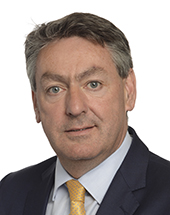

| Rank | Name | Country | Group | Speeches | |
|---|---|---|---|---|---|
| 1 |

|
Lukas Sieper | Germany DEU | Non-attached Members (NI) | 390 |
| 2 |

|
Juan Fernando López Aguilar | Spain ESP | Progressive Alliance of Socialists and Democrats (S&D) | 354 |
| 3 |

|
Sebastian Tynkkynen | Finland FIN | European Conservatives and Reformists (ECR) | 331 |
| 4 |

|
João Oliveira | Portugal PRT | The Left in the European Parliament (GUE/NGL) | 232 |
| 5 |

|
Vytenis Povilas Andriukaitis | Lithuania LTU | Progressive Alliance of Socialists and Democrats (S&D) | 227 |
All Contributions (273)
European Central Bank – annual report 2021 (continuation of debate)
Madam President, inflation is a continuing challenge now at the moment. The Commission published its Winter 2022 Economic Forecast last week, and it said that inflation will be around 3% for most of this year. Of course, there are now the challenges with geopolitical tensions in Ukraine and Russia. Now all eyes are on the ECB, but Madame Lagarde, I just want to bring your attention to the fact that in the event of there being a necessity to raise interest rates to address the issue of inflation, I want you to take into account the fact that we do not have uniform interest rates across the European Union. And I do believe that the ECB and the European Banking Authority have an obligation to unleash the blockages that are causing significant difficulties for some countries in keeping interest rates low – and I significantly mention Ireland itself, where the capital requirements and prudential obligations on our banks are looking at it through the prism of the last financial crisis. We have reduced our non-performing loans, our banks are in a healthy state, yet our obligations are based on historical facts. I would believe and urge that you should act on this in the event of interest rates having to rise, because this would have a profound impact on Ireland and on other countries that have higher interest rates than the EU average.
Protection of animals during transport - Protection of animals during transport (Recommendation) (debate)
Madam President, first and foremost, may I say at the outset I did very much welcome this process with regard to the Committee of Inquiry on the Protection of Animals during Transport (ANIT) and the engagement that we had with outside bodies, NGOs, science, research and just a broader consultation within this Parliament itself. And throughout that debate I had a fundamental disagreement with many people on the committee, but at the same time, we all are collectively in here trying to address the same issue. And that’s to ensure that animal welfare is brought to the highest priority in the European Union and also within Member States. Let us be under no illusions. There have been catastrophic failures by the European Union and Member States in the enforcement of Regulation (EC) No 1/2005. We saw that recently with the ships the Elbeik and the Karim Allah, for example, in the Mediterranean. So, from that perspective, we do need to ensure that regardless of where these consultations and this report take us, in the meantime we have to ensure that Regulation (EC) No 1/2005 is enforced, is vindicated and that the integrity of animal transport and the welfare of animals in transport is vindicated too, Commissioner. So from that perspective, while we continue our consultations, while you consider your deliberations with regard to new regulations, we have to ensure that animal welfare is kept to the highest priority on everybody’s agenda. So from my perspective, and I say this honestly in this European Parliament, this Parliament should represent everybody. We shouldn’t be exclusively in favour of animal rights and against farmers, or for farmers and against animal rights. We fundamentally have the capacity in this particular Chamber, and the Commission and the Council, to ensure that they can both work in tandem. I am very much in favour of ensuring the highest welfare standards of animals from birth right through to the fork. But at the same time, we can’t make theme parks or adventure parks out of our rural communities. So I honestly believe that if we work collectively, intelligently, base our decisions on science, base our decisions on research and base our decisions on the fact that people in rural communities across the entirety of the European Union provide us every day with food, sustenance, maintaining the population. They rear their families. They live in rural communities, sustain those rural communities. So from that perspective, I urge everybody in this Parliament, wherever the report takes us, wherever deliberations with the Commission and the regulations that will come forward in 2023, ensure in the meantime that we enforce the standards that are there. And when we bring forward new regulations, we bring forward regulations that are based on the realities of what happened both in terms of animal welfare and what happens with regard to farmers and broader rural communities across the entirety of the European Union. It can’t be a one-size-fits-all. It can’t be animal transport and animal rights against farmers and rural communities, or vice versa. We have the intelligence and the capacity, and the Commission is obligated to bring forward regulations that are real, that are sincere, that take into account animal welfare in transport, and also sustaining agriculture, rural communities and farming communities.
The situation in Cuba, namely the cases of José Daniel Ferrer, Lady in White Aymara Nieto, Maykel Castillo, Luis Robles, Félix Navarro, Luis Manuel Otero, Reverend Lorenzo Rosales Fajardo, Andy Dunier García and Yunior García Aguilera
Mr President, I utterly condemn the attacks on freedom of expression, arbitrary imprisonment, detaining political opponents, forced labour camps, censorship and political re-education of minorities by the Cuban regime. Be it a totalitarian regime on the left or on the right, we must condemn in equal measure both, because both are fundamentally anathema to what this House stands for. I am surprised to listen to some people because of their ideological views on the left that will stand here, in this Parliament that affords us huge luxuries and opportunities in terms of freedom, and defend the Cuban regime, which has persecuted its people for years. It is not so long ago when Cuban people weren’t even allowed to leave their country, and they wanted to leave it by the hundreds of thousands. So let us be very clear. Condemn totalitarian regimes that are corrupt on the right and are corrupt on the left. I stand for the centre. I stand for liberty and freedom and I stand with the Cuban people. Shame on those who support the Cuban regime as it is.
One-minute speeches on matters of political importance
Madam President, I speak on two types of inflation. Firstly, the construction materials inflation, which obviously is going to put huge pressure on governments and on the European Union, too, in terms of value for money for the Next Generation recovery fund. And the difficulties that governments will have in providing public housing for citizens and for those that want to afford or can afford to buy a house; it is now slipping away from them. Ordinary citizens unable to get on the ladder in terms of the cost of housing because of the inflation in construction materials. On top of that, the whole issue of consumer price index inflation as well, which is really hitting lower-income families. It is the enemy of the lower-income people, inflation in this context. We have to do something to address these two particular issues: construction material inflation and consumer price inflation as well. The common reason for the rise, of course, in inflation is COVID-19 and the impact it has had on supply chains and logistical supply chains. But equally, the issue of fuel, energy, gas and oil. These particular issues are areas that the Commission and national governments will have to get on top of. Otherwise, we will condemn many people being unable to purchase a home and many people unable to heat their homes because of the inflationary pressures.
A European Action Plan Against Rare Diseases (debate)
Madam President, we need to have a uniform new-born screening programme. We need to ensure there’s early diagnosis. We have too many mis-diagnoses, non-diagnosis, delayed diagnosis of children when they are born in the area of rare diseases. And we also have to accept that we have to have collaboration between Member States in terms of research, innovation, specialist services, medical personnel in the areas of the very rare diseases, because we simply cannot assume that every country will have the capacity, or the population base, or the expertise, or the wherewithal, or the resources, to make available the therapeutic medicines, the orphan medicines and the care that is required in every area of rare diseases. So, this European Action Plan Against Rare Diseases is very welcome, and we have to ensure now that it is bought into by the Member States in areas of, as I said, support for people with rare diseases. My specific area of interest is in the context of PKU (Phenylketonuria) – I am the co-chair of a cross party alliance here in the European Parliament, and we do want to bring the issue of rare diseases right to the very top and to ensure that when medicines are approved by the European Medicines Agency that every citizen in the European Union can get access to them, not based on individual Member States and their ability to pay or not. So I commend the review and I hope that we will engage positively with all Member States.
One-minute speeches on matters of political importance
Madam President, in the wake of the COVID-19 pandemic, the economic measures that were taken by the European Union, the European Central Bank and the European Investment Bank, and national governments, did stave off a crisis. But there’s no doubt we are now in another wave of the COVID-19 pandemic, and this is going to put huge pressure on public finances across the European Union in Member States. In particular, the activation of the general escape clause was very welcome because it allowed Member States to borrow more than they would have anticipated, to stave off that particular risk of a recession and also to invest in public health care. But we’re now in a situation where the European Central Bank is talking about unwinding the pandemic emergency purchase programme, which expires next March, and also the asset purchase programme. On top of that, the pressures that are now coming to bear in terms of inflation leads me to believe that unless the Commission itself has a very strong plan on how it is going to unwind from the support that’s out there at the moment, some economies will be put under huge pressure. We have to be very conscious of that, and make sure we have a plan in place to assess Member States individually rather than with a broad-brush stroke when they’re deactivating the general escape clause.
One-minute speeches on matters of political importance
Mr President, any review of the common fisheries policy has to have two words at its heart in terms of its assessment of what we must do into the future: sustainability and fairness. Sustainability of fishing stocks, but also sustainability of fishing coastal communities, and fairness and burden-sharing have to be at the heart of the decisions that we will make between now and the end of next year on how we go about sharing the seas of the European Union. Brexit has had a catastrophic effect on Irish fishing. This year alone, we will lose EUR 20 million and by 2026, we will have lost EUR 43 million of value in terms of fish landed. Ireland cannot get involved in sharing of quotas simply because we don’t have enough quota to share in the first place. And other countries are not catching their full quota allocations. And yet at the same time, we are told that we can share with those countries. We simply cannot give what we don’t have. So I would suggest that, in the meantime, there should be a ‘use it or lose it’ in terms of countries who do not take up their full fishing quota allocation. But, in the meantime, the common fisheries policy must be fair and it must be fair to Irish fishers, who have 6% of the quota and 22% of the seas.
An intellectual property action plan to support the EU’s recovery and resilience (short presentation)
Mr President, the protection of intellectual property rights is of fundamental importance in ensuring that there’s creativity and innovation and investment in the whole area of research. Of course, the collaboration across the European Union is significant and what we need to do is when you are protecting intellectual property rights that that percolates down into the universities, and that there is a strong collaboration between industry and universities in creativity, in innovation and research. So from that perspective, I do very much welcome this report. Of course, we also have to be equally conscious of the fact that when intellectual property rights are stolen, very often they percolate into the criminal aspects of the world. So you will see that quite significant intellectual property rights, in terms of theft, on a regular basis and that very often funds criminal organisations and criminal entities. Of course, as we become more dynamic and digital-centred, we have to also accept that intellectual property rights can be stolen very, very easily through cyber-crime as well. So from that perspective, we also have to ensure that we have strong resilience in our digital space to protect intellectual property rights in general and ensure that creativity, research and innovation isn’t stolen by cyber-crime.
European Partnership on Metrology (debate)
Mr President, on this report, there’s no doubt we need to ensure there is strong collaboration across the European Union in the area of metrology itself. We have to ensure that, when we are involved in this, that we use the best scientific evidence available to us and that can only be brought about if we quantify it and measure it and have the proper statistics available for us, in terms of policymakers, in terms of government, in terms of industry, to ensure that when they are making decisions, there are basing them on the most up-to-date, scientific evidence available through proper measurement. We also have to accept that we’re in a changing period – global warming, climate change, medical devices, medicines, atomic research, atomic science – that there are key significant areas that are taking us into areas of the unknown. And in going there, we have to ensure that we have the best evidence available to us in terms of quantifying and measurement. So, from that perspective, I think the European Partnership on Metrology is very welcome, and I think it will be significant not only for research and innovation, but also filtering out into the broader education curriculum right across the European Union. So I very much welcome this report and I hope that we can get on with implementing its recommendations.
The European Education Area: a shared holistic approach (debate)
Mr President, I welcome the opportunity to speak on this report. I think it’s important that we do have a collective embracement of education across the continent. We have to accept that we need to ensure we have recognition of skills – both in terms of learning but also in terms of teaching. For too long we’ve had a disparate approach to education. I also accept that the education process is part of Member State competency. But above and beyond that, if you look at what the Erasmus Programme has achieved in recent times in terms of third—level students being able to travel abroad, to learn abroad, to live abroad, and to love abroad, we certainly need to get that concept across the entire plethora of the educational strata. So I would certainly urge that the report, when being adopted and the EU Commission coming forward, would look at the Bologna Process and accept that we do need to ensure that skills and competencies are approached across the entire European Union. Equally and finally, with regard to language, it is a failure of the European Union that we haven’t gotten a process of proper language training capabilities across the entire continent. So language skills, teacher skills and education skills and competencies across the entire eurozone, and recognition of the same, is an important factor to ensure the Bologna Process can move ahead.
Disclosure of income tax information by certain undertakings and branches (debate)
Madam President, I welcome the recent agreement by the OECD in terms of the G20 and the140 countries that subscribed to that agreement. I also want to point out that there is a clear obligation to ensure that we have tax transparency, but sometimes tax competitiveness gets caught up in the same debate around tax transparency and Ireland would have been a country that is very competitive in terms of taxation, but is also transparent. So I do believe that sometimes some of the language that is used conflates the two. May I say at the outset, there is no doubt that we have a challenge here in the European Union because when we talk about taxation, we have to accept that it is still a national competency. Of course, the Commission, in its wisdom, from time to time uses Article 51 in terms of the Treaty on the Functioning of Europe to address this particular issue around the disclosure of income tax information by certain undertaking and branches. I am just concerned that we are undermining the credibility and the integrity of the treaties and if we are to move to a situation where tax is no longer a competency of sovereigns, well then, we should at least have that discussion. I certainly am of the view that until such time as there is a fundamental change in the treaties, well then, it is a matter for the Member States. Clearly there has been a move in recent times by the Commission to try and bring taxation out of the articles that it should be under, in terms of Articles 113 and 115, and move them into other areas. As recently as last year, Dáil Éireann, my national parliament published a reasoned opinion that the proposal made here under Article 50(1) – freedom of establishment – was in effect, moving the goalposts. And ,of course, this is done with the purpose of removing the threat of the veto. It is done with the purpose of going from unanimity to qualified majority voting. If we are to have that debate, let us be honest and upfront about it, but don’t have the Commission coming in with proposals under articles where it was never envisaged when the treaties were passed and ratified. So if you want to change those issues, have that discussion and ask the citizens of Europe to change it.
Strengthening democracy, media freedom and pluralism in the EU (debate)
Madam President, I welcome the report. Fundamental rights and the rule of law are cornerstones of the European Union, so we have to ensure that we have freedom for the individual and freedom of the press, the media and the judiciary. That is clearly a fundamental cornerstone of any modern, vibrant democracy that holds power to account. The day that we turn our back on journalism and the integrity, independence, freedom and fearlessness of journalism, well we undermine all our basic freedoms and rights. I do urge the Commission to look at this report and to try to take it on board and remove the obstacles and the threats to a free, independent media. Certainly, strategic lawsuits against public participation (SLAPPs) do put a fear factor on individuals. They can be used by governments, public authorities and corporations to quieten dissent, to quieten questioning – and that is something that I take very, very seriously. We need to insist that the European Union and all the other political institutions support the media, support independent integrity of journalism and ensure that they are also supported by an independent judiciary, which is also under attack in many countries in our European Union.
Global Tax Agreements to be endorsed at the G20 Summit in Rome, 30th/31st of October (continuation of debate)
Mr President, I welcome the agreement that the OECD finally got all Member States to agree on, but there’s no doubt it was a long and tortuous road, and it did take some time. From my perspective, as an MEP from Ireland, we had genuine concerns, and it does go to show the importance of unanimity in terms of tax issues when it comes to the European Union. The fact of the matter is, Ireland did have genuine concerns and they were addressed eventually, at the end of the negotiations, in terms of ensuring certainty around tax rates. That is very important and very significant, Commissioner. We can’t have a situation where the Commission, which is to uphold and implement the treaties, at the same time, is now looking at the option of using Article 116 in areas of tax harmonisation. I believe that is against the spirit of what Article 116 is about, and I would urge caution in that direction. It goes to show that, when we do put our collective minds together, when we make an argument, we can sit down and we can come to an agreement, and that happened with the OECD in the context of 136 countries. So it was an achievement, and it does go to show that collectively we can work together. We now have to ensure that it is implemented in a fair manner and that it is implemented for a long period of time. In other words, we don’t have people coming back to the table again next week, next month, next year, saying, ‘Well, we need to raise it further. It should be increased, increased, increased.’ From that perspective, we need certainty. We need the Commission now to get along with the legislation, implement it, and uphold the spirit of the treaties in terms of Article 116, and not to abuse it.
Increased efforts to fight money laundering (debate)
Mr President, I welcome the announcement of the package by the Commission, and I want to commend Commissioner McGuinness on this. Just to say at the outset, the Pandora leaks shows quite clearly that money laundering is not always by some nefarious groups; it is very often by respected politicians across the globe. I think that is an indication of why we are so slow – not just in Europe but across the globe – in terms of addressing the issue of money laundering. It is not a victimless crime. It robs and siphons money from scarce public facilities. The other issue, of course, is it funds terrorism, drug dealing and prostitution, racketeering and smuggling of people. For all those reasons, anything we can do to stamp out this criminal act is very welcome, and I commend the announcement by the Commission on that. We have to ensure that there is strong cooperation between the national authorities in terms of banking, oversight, and also the revenue commissioners to ensure that each country is capable of referring suspicious activities to the centralised anti—money laundering authority, so that there can be investigations. At the end of the day, there has to be prosecutions, and that often is referred back to the national authorities for prosecution. I’d like to see a bit of clarity brought on that particular issue because in the event of there being very influential people found to be money laundering, well then, can there be or is there the will to actually prosecute? Particularly, as I said, when they are people at the top end of our politics and commerce across the globe. As I said, the Pandora Papers show that this is widespread, is nefarious, and it must be stamped out. I commend the package announced, and I hope that it is implemented speedily, and it gets cooperation from all involved in the European Union.
General budget of the European Union for the financial year 2022 - all sections (debate)
Madam President, I welcome the fact that this House is very committed to providing a budget that addresses the major issues and challenges facing us in terms of the COVID pandemic and the need to have resilience built into the economies in the years ahead. I was very disappointed with the Council’s decision, of course, to pare back on some of the key most important issues like innovation research, like in the digital economy and other very significant areas. Reference has been made to the fact that the committee wanted to prioritise investment in research, innovation and in education, and specifically in young people. Now there is also in the report an issue with which I have serious concerns, and that is the reserve of EUR 20 million being placed on funding to the United Nations Relief and Works Agency – UNRWA. I reject that proposal. I think it’s sneaky, it’s unfair and it is politicising children in Palestine where I have visited and seen first-hand the appalling conditions they live in. And while the curriculum must be readjusted to ensure that it does not propose hatred to the Israelis, we still at the same time must provide our funding to ensure that Palestinians are educated in the first place. So I welcome the committee’s decision, but I want to reject that amendment and that proposal.
Pandora Papers: implications on the efforts to combat money laundering, tax evasion and avoidance (debate)
Madam President, the Pandora Papers leak had 12 million documents, exposing quite clearly that there is continual tax evasion, money laundering of ill—gotten gains. And it is at the highest levels, and unfortunately, we have situations where we have Prime Ministers that sit on the Council, who are now being identified as people who are using letterbox companies and other nefarious means to avoid paying tax. There is no doubt that we have to accept that at the highest levels in politics across Europe and across the globe, people are engaging in this ill—gotten activity. Of course, that delays the capacity of the Council, the Commission and even this Parliament in trying to bring forward legislative proposals that will weed out this particular activity. We have to ensure that our tax authorities cooperate at a greater level than heretofore. If anything comes from the Pandora Papers leak, it shows that at the highest level of politics, there is illegal activity in terms of tax evasion, and our tax authorities must cooperate to ensure that we can root this out.
The future of EU-US relations (debate)
Mr President, I welcome the opportunity to speak on this particular issue and I point out that there are strong historical bonds between many European nations and the United States of America, so the transatlantic alliance is significant and very important for many reasons. Of course, we should also be mindful of the fact that we do not always agree. Ireland is a small nation, it doesn’t always agree with the foreign policy of the United States of America, and it might also not agree with foreign policy of Member States within the European Union. The areas on which we can agree collectively would be the whole area of climate change and the need to address that with the resources of the European Union and the United States of America, ensuring that other large players, like China, Russia, India and other trading blocs come together to ensure that the climate change agenda is kept very much to the fore, and ensuring that there is real and significant action on it to ensure that citizens globally can benefit from a healthy environment in the time ahead. To be very clear: the transatlantic alliance is important, but it must be refocused not on areas of defence, but on areas of climate change and humanitarian aid to poorer regions of the world as well.
United States sanctions and the Rule of law (continuation of debate)
Mr President, the European Union is often very quick to launch investigations or reports on corruption or wrongdoing in third countries. That is a very positive thing. However, the EU is often extremely slow to investigate illegal and corrupt behaviour in one of its Member States. We are deeply concerned that the United States seems to have acted faster than we did on corruption allegations in Bulgaria. We need to be tough, determined and efficient in order to maintain control over our own affairs. It is a shame that the U.S. has taken action faster than we did. The European Union cannot manifest itself as a model of morality and best practice when it is slow to deal with wrongdoing in one of its own Member States. The Commission must make better use of its own powers to deal with corrupt persons and protect the Rule of Law no matter where breaches occur.
Reversing the negative social consequences of the COVID-19 pandemic (debate)
Mr President, there will obviously be many negative social consequences because of the COVID-19 pandemic – mental health issues in young and old, the loss of life and the inability to grieve is a very significant issue, family separation, education of our children in their formative years and the loss of those social contacts, and the pressure on our health services. Of course, all of these issues will significantly challenge our public services and the key issue from my perspective will be that the European Union and Member States come together to ensure that they have the financial capacity over the next number of years to deal with this. I know that the European Union has been extraordinarily ambitious in terms of its social contract with Member States and its citizens in terms of the Recovery and Resilience Fund, but we have to be very conscious that in the years ahead, circumstances could unfold whereby the consequences of the COVID-19 pandemic are not felt for a number of years. We will have to have flexibility in ensuring that national governments have the ability to respond with the financial wherewithal. Equally and as importantly, Ursula von der Leyen, the President of the Commission, said today that we do not want ‘a pandemic of the unvaccinated’ and that is a significant issue that has to be addressed both within the European Union and in some Member States where there is a weak uptake of vaccines. But globally as well, we have to ensure from now on that we have a quality of access to vaccines globally to ensure that we are all safe together. So I would urge the Commission, in both those areas, to address those particular issues in the short, medium and longer term.
Implementation of EU requirements for exchange of tax information (debate)
Madam President, I welcome the overall content of the report, and trust the report in highlighting the deficiencies that are still clearly there in terms of oversight and information sharing between tax administrations across the European Union. We do need to have that flow of information, either be it publicly or confidentially between the various administrations, to root out tax evasion, tax avoidance and money laundering. But unfortunately, again, these reports are being used to go to the very heart of what the European Union is about in terms of Member State competences, and the issue of taxation is one that I feel very strongly about. There seems to be a continuous effort in this Parliament – and by the Commission as well at this stage – to undermine that sovereign concept of Member States having unanimity and competency in the areas of taxation. I am for cooperation and for ensuring that we have a free flow of information, but at the same time, we have to insist that the Treaties and the functioning of the European Union are upheld and vindicated on a regular basis, and that is the obligation of the Commission as well. But overall, I welcomed the overall trust in this report. Unfortunately, at the end of the day, efforts are being made to put amendments to it to undermine the concept of unanimity and sovereignty in the areas of taxation.
Brexit Adjustment Reserve - Draft amending budget No 1/2021: Brexit Adjustment Reserve (debate)
Mr President, I very much welcome the agreement that has been finally reached. There is no doubt it was a long, tough process, but I think most sides can be happy. Brexit isn’t a good idea. It is bringing about economic and social consequences across a lot of Europe, but in my country, it is also bringing about potential political consequences. Beyond that, I do welcome the fact that Europe has showed solidarity in terms of the Brexit Adjustment Reserve. But I do want to bring a particular emphasis to the fact that the Irish fishing industry has been very badly damaged by Brexit itself. We have to accept that Ireland has 22% of the European waters, yet we catch 3% of the fish. So from that perspective, I do hope, when we have a review of the Common Fisheries Policy, that the Irish Government advocates very strongly for the fishing communities throughout the whole island of Ireland and for ensuring that we have burden-sharing and a concept of solidarity with communities and sectors that have been profoundly damaged because of Brexit. So, if we do want to talk about solidarity in a real, meaningful way, let us show that commitment when we review the Common Fisheries Policies and, as I said, have that burden-sharing where additional quotas can be made available to communities, and particularly communities in Ireland that have been affected. So, I call on the Irish Government, I call on the Commission and I call on the Council and other Member States – in showing that solidarity that has been shown very strongly throughout this whole process by my European colleagues – that we now take one step further, review the Common Fisheries Policy and make sure that Irish fishing communities have their fair share of fishing quota in waters.
Review of the macroeconomic legislative framework (debate)
Mr President, when calculating the economic cost of the Covid-19 pandemic, the European Parliament should take a strong and ambitious position on the review of the economic governance framework. EU and member state governments have worked hard to help our collective economy. However, we need to make sure that this financial support is withdrawn smoothly and carefully. We must continue the strong solidarity we have shown over the past fifteen months, so that no Member State is left behind. My country is well aware of what happens when solidarity is overlooked during an economic crisis. In the longer term, the review of the macroeconomic framework needs to ensure more flexibility for national governments to be able to invest in much-needed public projects. We need to invest in the future of our countries and our citizens. Above all, we can do this while ensuring prudence and fiscal responsibility. Finally, I would like to thank the Rapporteur Margarida Marques, and her office, for her hard work and openness.
State of play of the implementation of the EU Digital COVID Certificate regulations (debate)
Mr President, the fact that 200 million European citizens have downloaded the Digital COVID Certificate shows the importance of this concept that was conceived in this particular House and is now implemented by the Commission. But we have to ensure now that Member States embrace the concept, that they use the concept of uniformity, of bestowing rights on all European citizens. I would be very concerned if Member States started to use the COVID Digital Certificate to confer rights and entitlement on some citizens and not on others. So from my point of view, I really want to insist that Member States – and I include my own government in that – need to ensure that everybody has access to services, be they ones that are vaccinated, tested, or in recovery. So from that perspective, I sincerely hope that the Digital COVID Certificate is not used to discriminate between citizens. Equally and finally, I want to ask Member States, and particularly my own country, to embrace the concept of rapid antigen testing to ensure that we can open up our societies and our economies and ensure that we can return to normality in a safe way. I commend the COVID certificate and I encourage everybody to download it and Member States to implement it.