
| Rank | Name | Country | Group | Speeches | |
|---|---|---|---|---|---|
| 1 |
|
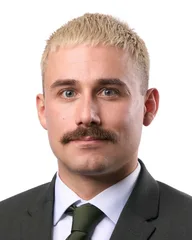
Lukas Sieper | Germany DEU | Non-attached Members (NI) | 390 |
| 2 |
|
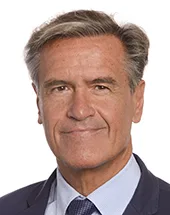
Juan Fernando López Aguilar | Spain ESP | Progressive Alliance of Socialists and Democrats (S&D) | 354 |
| 3 |
|
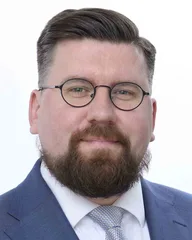
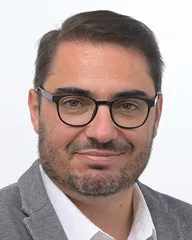
Sebastian Tynkkynen | Finland FIN | European Conservatives and Reformists (ECR) | 331 |
| 4 |
|
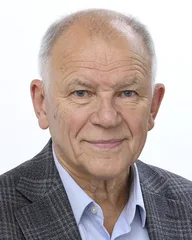
João Oliveira | Portugal PRT | The Left in the European Parliament (GUE/NGL) | 232 |
| 5 |
|
Vytenis Povilas Andriukaitis | Lithuania LTU | Progressive Alliance of Socialists and Democrats (S&D) | 227 |
All Contributions (173)
Situation of the rule of law in Greece, following the Court decision on Predator spyware (debate)
Madam President, the rule of law concerns in Greece go far beyond beyond the spyware scandal. Greece suffers from a governing culture of weak accountability and impunity. It dangles at the bottom of European media freedom indexes, journalists are dragged to court. Trust in judicial independence is low and providing life-saving aid is punished, but those who put lives in danger with pushbacks walk free. Just recently, it adopted a law that further criminalises members of registered NGOs, sending a chilling message: help people in need and you're risking your freedom. So why is the Commission backing down? Where are the systematic infringement procedures and activation of budget conditionality? I repeat the call of this House in its last resolution on Greece: defend the EU's values in Greece. Show the people there who continue their fight in this toxic environment that the EU system is on their side, and that consequences really do arrive.
Immunity of International Criminal Court officials and the activation of the EU Blocking Statute to strengthen EU strategic autonomy (debate)
Madam President, Commissioner, what is the EU commitment to upholding international law and the rule of law worth if it refuses to defend international judges under attack? The US has sanctioned ICC judges not for corruption, not for abuse, but for delivering justice against the most heinous international crimes. And the same applies to actors delivering evidence to the ICC, like UN rapporteurs and NGOs. This strikes at the very core of our international legal order, and it is a brutal assault on national judicial independence. The sanctions are not symbolic: they punish real people, disrupt real lives, and try to break those who dare to stand up for international accountability. This Parliament has repeatedly called for the activation of the blocking statute. The silence of Commission and Council is plain weakness disguised as caution. Europe has the legal tools to respond, so use them! Protect the judges, protect international law and the credibility of our Union. These judges did exactly what was demanded from them. Now, Commissioner, it's your job to do the same.
EU enlargement strategy (debate)
Mr President, Commissioner, the Russian invasion of Ukraine was an urgent wake‑up call that the EU must become stronger and more autonomous. The most effective tool to achieve this is in our own hands: EU integration with our neighbours. The urgency has only increased with the threats coming now also from Washington. Yet, Member States seem to backtrack from their ambitions and get stuck in old habits, while we so urgently need to keep our eyes on the ball and show leadership, also towards our own electorate. That is the only way to keep the ambition for the necessary, meaningful reforms in candidate countries alive and avoid pushing them into the direction of our geopolitical rivals. That is the only way to reach the autonomy that we need so much, but also to give citizens in these countries a real, true perspective.
Restoring control of migration: returns, visa policy and third-country cooperation (topical debate)
Mr President, dear Commissioner, the brutal murder of Renee Good by ICE mobs on 7 January left the world in deep shock. How did the US reach the point that razzias, deportations and now even murder have become the reality? A society that is deeply divided by fear and distrust. But the painful truth is that Europe is walking a similar dead‑end street. Many European politicians now finally recognise that Trump has become an enemy instead of an ally, and that the EU should become independent and different to protect our common values. But that lesson seems to be forgotten when it comes to refugees and migrants. The dehumanisation and scapegoating of migrants is dominant here as well. Refugees and migrants are blamed for the problems that politicians fail to solve. Amplified by disinformation and AI, they win elections on lies and fearmongering, and this debate is another example. Minnesota gives us a taste of where this road can lead. No rules or treaty‑based order, but inequality, arbitrariness, human rights violations, immense fears and a deeply divided society. But we can still turn the page. Let's work together to solve the real problems in our society and the world. Let us keep our societies together and protect our values for real, and make effective, evidence‑based policy on migration with which the Member States then also comply. That is how we restore trust...
Pending approval of the Hungarian national plan for Security Action for Europe (SAFE) funding in light of persistent concerns around the allocation of public funding (debate)
Madam President, dear Council, dear Commissioner, the Commission's plan to allocate EUR 16 billion of SAFE loans to Hungary is exactly what Orbán needs. He already transferred Hungary's defence industry to his oligarch friends, and they will do anything to keep Orbán in power. And Orbán will continue to serve Putin's aggressive agenda. This autocrat uses endless public funds for his own campaigning and propaganda. With this decision, we would put EUR 2 billion of pre-refinancing immediately into the pockets of Orbán because we will not immediately apply conditionality, so it will immediately land in his pockets. This is what we understand because we did not see any freezing or conditionality application so far. And this while the Commission has been holding off on rule of law measures in order not to influence the elections. What is this, if not undue influence? It is a gift against democracy, against Hungarian citizens. So Commission, Council, do not let this happen.
30th anniversary of the signing of the Dayton-Paris Peace Agreement (debate)
Mr President, dear Commissioner, this year we commemorated the genocide in Srebrenica that took place 30 years ago. It was followed by the Dayton Peace Agreement, meant to bring peace and safety. That was a necessary step, but not meant to last for 30 years. The agreement that was needed to stop the long years of bloodshed now cements and deepens division and ethnic tensions. For politicians in and outside of Bosnia, this ethnic divide has become and serves as a business model to consolidate their power at the cost of harmony and civic freedoms in society. For Bosnia to become a democracy ready for EU integration, constitutional changes are necessary in line with the European Court of Human Rights' rulings. The EU, but also its Member States, must use their leverage and support to make that happen, to live up to what we promised and to give the Bosnian citizens the democracy and the EU path that they deserve.
Implementation of the rule of law conditionality regime (debate)
Madam President, dear Commissioner, money talks. You know that. So when we need to hold countries responsible for violating our basic values, effective budgetary measures are essential. But no matter what the rules are, rule of law conditionality can only be effective if it is genuinely and effectively applied. And here, Commissioner, the Commission fails. Measures against Hungary came too late and, despite serious deteriorations, as established by the Commission itself, it continues to receive billions from the EU. Apart from the ongoing deterioration in a corrupt autocracy such as Hungary, all EU funding is at risk. So it is high time to freeze all EU funds for Hungary, and until that happens, the Commission and Council must stop using the release or reshuffling of frozen funds – let alone granting huge SAFE loans – as bargaining chips to get Hungary's support for unanimous Council decisions. The EU cannot let itself be held hostage like that. We must do better. When taking budgetary measures, we must safeguard the interests of the final recipients. They are often the last bastion protecting the rule of law and EU values, and they need our support. Think of NGOs, independent media or local governments. For example, the City of Budapest, which is being financially squeezed by Orban and pushed rapidly towards bankruptcy. Therefore, ensuring direct access to EU funding for those consumers is essential.
Application of the ‘safe third country’ concept (vote)
Madam President, dear colleagues, let us be clear: this is not serious legislation. Declaring autocratic regimes like Egypt and Tunisia safe is a Christmas gift to repression. It will push LGBTIQ people and political dissidents right back into the arms they try to escape. Opening the door for deportation deals, to ransom our responsibility for asylum seekers and offload it onto the global South, is a new moral low. And we know the result: human rights violations, court cases and a staggering waste of public money, with no result. The EPP refused to work with the democratic centre in this House, rushing to kill core elements of the pact that it defended so fiercely before. And why did it defend the pact? It said it needed to prevent the rise of the far right. This is reckless and poor lawmaking, and it shows how the EPP is hijacked by its electoral fear of the far right. I hope that Christmas will offer time for reflection on this dead-end street.
Recent developments in Palestine and Lebanon (debate)
Mr President, Commissioner, in Gaza, we all observe the genocide, the killing and the starvation continues and the people are suffering tremendously. Yet we observe a paralysed EU. I just visited the West Bank with my colleagues, and there we see the apartheid and the ethnic cleansing through State-organised violence and repression, sterilised roads, walls and checkpoints, demolished houses, olive groves, refugee camps and homeless, rightless and impoverished Palestinians, the UN being criminalised. And yet we observe the EU's complete silence and complicity in those gross violations of international law. There is no justice without accountability. Colleagues, our values, our credibility, our legal orders are dying before our eyes. Time is long overdue. So the Commission and Council need to act now.
30th anniversary of the Barcelona Process and the new pact for the Mediterranean (debate)
Madam President, Commissioner, despite the good and broad objectives that the pact for the Mediterranean includes, we see that many partnerships are still prioritising stemming irregular migration as an EU interest, instead of putting human rights, rule of law and democracy first. I really wonder how many more billions of euro will the Commission hand over to militias, autocrats, warlords even, before realising they are not reliable partners? The only thing it does is cement and legitimise their power and make the EU complicit. The increased repression causes citizens to flee their country and refugees to travel onwards to a real safe haven. And we let the human rights defenders down, and with them, all who promote values and democratic reforms in a hostile environment in their countries. I think of Egypt. I think of Tunisia. The exact opposite of the Commission's proclaimed purpose and its treaty obligations. I am not saying no to cooperation, not at all. But it should lead to more protection for refugees and to democratic and human rights-compliant reforms for the societies concerned.
Existence of a clear risk of a serious breach by Hungary of the values on which the Union is founded (debate)
Madam President, I would like to thank the democratic and value-based majority in this Parliament for its support. Their contributions today reflect how we wrote this report – with outrage over the violations that the Hungarian people are subjected to every day, with frustration that the EU has let it get so far with anger at the lack of action and, when action is taken, at the lack of consistency and communication, and at the fact that this Parliament has been calling for stronger measures for years without sufficient effect. So we call upon the EU institutions again – if the EU wants to protect its values, the political leaders who persistently breach them must face consequences. If not, their impunity will inspire others, as we see in an increasing number of Member States, but also even here in the European Parliament. That threatens our values in the EU as a whole. And, eventually, the actors that are still upholding and protecting the rule of law in Hungary – civil society, independent media, human rights defenders – they cannot keep defending EU values if the EU itself fails to stand up for them. Madam President, people in Hungary deserve to live in freedom without discrimination, without interference, without corruption or repression by their government – they are counting on us. Therefore, I would like to thank my shadow rapporteurs again for their loyal and ambitious cooperation in this process, as well as the LIBE Secretariat and our advisers. Let us continue to join forces until the Hungarian people are truly free and protected.
Existence of a clear risk of a serious breach by Hungary of the values on which the Union is founded (debate)
Mr President, I wish I could have said 'Thank you, Council', I am sorry, but thank you very much, Commissioner, for being here. More than seven years ago, the Parliament initiated the Article 7 procedure against Hungary. It saddens and worries me deeply that in this second interim report, we conclude that Hungary has continued and increased its violation of EU values. In this report, we point out a dizzying array of new, even more extreme violations. Let me just mention a few. Judicial independence is under extreme pressure due to the capture of the highest courts, which even sideline judgments of the CJEU. The government continues to rule by decree under the so‑called 'state of danger', recently extended until after the elections in April next year. Corruption remains widespread and anti‑corruption bodies are being obstructed. School curriculums are under increasing ideological influence and teachers' right to strike is curtailed. The media environment is in the hands of pro‑government propaganda, attacking critical voices relentlessly. The government subjects independent media and civil society organisations to smear campaigns and intimidating investigations, claiming foreign interference – a Russian‑style practice – to silence them. A pending draft law could even cut them off from all realistic funding, thus emptying civic space and meaningful checks and balances in Hungary. LGBTIQ+ people face restrictions of their rights, including through the Pride bans with facial recognition enforcement. The organiser of the Pride in Pécs is currently facing a criminal investigation simply for peacefully standing up for the rights of the LGBTIQ+ people. Mind you, this is happening within the EU in 2025. So in this report, we conclude that Hungary has turned into a hybrid regime of electoral autocracy. And the most worrying thing is that this total crackdown on the freedoms of people, the rule of law and democracy, has not led to any meaningful action by the Council. On the contrary: during seven years of the Article 7 procedure, the Council enabled Orbán to enrich himself at the cost of society and our European values, and even let them hijack and undermine our security policy. The Commission failed to take decisive and effective action at crucial moments. Hungarian people received the message that their freedoms and democracy are not safe in the EU's hands. It is high time to choose their side and act with urgency. The EU institutions must use all the available tools to stop this. This report calls upon the Commission to use infringement procedures in a more effective way and to take additional budgetary measures by freezing up to 100 % of EU funds for Hungary. Additionally, the report calls upon the Council to identify a risk under Article 7(1) and initiate the procedure under Article 7(2), including the possible suspending of voting rights. The report states that any further inaction would be a breach of the rule of law principle by the Council itself. So, I am proud to present this report with the support of a broad, constructive majority in this Parliament and I thank my shadow rapporteurs sincerely for the team spirit in which the report came about. It shows the Parliament's unwavering support to the Hungarian people and the European values. Finally, last October, at its ninth hearing on the Article 7 procedure, the Council itself concluded that more Member States want to see action. Well then, Council, take it. You have all the evidence of the value breaches, and with this report, you will once again have our urgent call to act.
Allegations of espionage by the Hungarian government within the EU institutions (debate)
Madam President, from Russia with love in our own Union. Who could have imagined that? For Hungary, the EU is the big enemy ten years ago, but it still is. Think, for example, about how Orbán designates EU funding as foreign interference in his draft anti-NGO law, or his friendship and collaboration with war criminals like Putin and Netanyahu, whom he happily invites into our Union's territory. And to make things worse. Hungary's espionage seems to have happened under the leadership of Commissioner Várhelyi, of now Commissioner Várhelyi. Our Parliament already called for investigations into Commissioner Várhelyi's conduct as Commissioner several times, where he prioritised Orbán's interests above those of the Union. This scandal is the last straw. With the enemy within, the EU's functionality and credibility is under serious threat. So Commission, Parliament and Council conduct a thorough investigation and take the only right action if these revelations appear true.
Institutional consequences of the EU enlargement negotiations (debate)
Mr President, thank you, Commissioner, for being here. The foundation of our common project is the shared commitment to values, democracy and the rule of law. The requirements to become an EU Member State are high; we are asking candidate countries to implement significant changes, and rightfully so. But we have to do our homework ourselves as well. We cannot allow enlargement to be obstructed by individual Member States just because of bilateral conflicts or interests. So it is crucial to remove national vetoes of all the internal steps towards enlargement, as Council President Costa also proposed. But we should also actively support candidate countries during the accession process by supporting their reform agenda on government level, but also by stepping up our support to civil society, free media and other actors promoting the enlargement agenda, sometimes against the atmosphere that is in their countries. So we should reward those countries meeting demands and punish those backsliding. If we are serious about renewed commitment to enlargement, please let us show it.
The EU’s role in supporting the recent peace efforts for Gaza and a two-state solution (debate)
Madam President, Council, Commissioner, across Europe record numbers of people have taken to the streets: Rome 1 million, Madrid 400 000, Amsterdam 250 000, Berlin and Barcelona 100 000. Hundreds of vessels sailed to Gaza to break the unlawful humanitarian blockade. Evident opinion polls express people's frustration. So all over Europe, we see an unprecedented disconnect between the people and politicians because they simply reject that their leaders and the EU remain silent and even facilitate genocide in Gaza and the ethnic cleansing in the West Bank. This is in no way compliant with international law, in no way leading to peace, in no way what European citizens want. Our citizens do not allow you any longer to cowardly hide behind Trump or even ongoing negotiations. We need to go all out to stop the genocide, to enforce international law and include the Palestinians in any decision about their own land.
Revision of the Visa Suspension Mechanism (debate)
Madam President, Commissioner, colleagues, my warm congratulations to my colleague Matjaž Nemec, the rapporteur for this file. At the core of the EU's founding principles stands cooperation as a tool to bring peace and prosperity, opening up our societies and enhancing people‑to‑people contact to strengthen economic, social and cultural ties. The common visa policy established 40 years ago has served this goal towards societies outside the Union. It is a big mistake to turn the tide based on unfounded fearmongering of migrants. Member States are closing their borders, endangering the future of Schengen, and this Commission now willingly serves them with closing avenues with friendly nations by turning positive tools of cooperation into punitive tools of conditionality and pressure, and by violating the principle of reciprocity, which is key in healthy international relations. Expanding the grounds for a visa suspension will also be very likely ineffective because imposing visa obligations on citizens of transit countries will obviously not result in less irregular arrivals or asylum requests, or any other policy aim. It only leads to a sanction for citizens for the acts of their governments. Furthermore, there is a big risk of arbitrariness, giving vague definitions as hybrid threats, and the high discretion for the Commission probably leads to being soft on its strong countries and tough on those depending on us. But let me end with the positive element. I am happy that this Parliament managed to include a human rights clause, enabling the EU to suspend visa‑free travel of diplomats in case of serious breaches of international human rights or humanitarian law. It is clear that the ongoing genocide in Gaza requires the introduction of visa obligations for Israeli Government officials. I urge the Commission to fulfil this obligation. That should be the bare minimum.
Rule of law and EU funds management in Slovakia (debate)
Well, if you don't know, it's good that you ask the question, of course. And I think if you read the Rule of Law reports of the Commission, you can see very clearly that it's a constellation of different values and guarantees that all Member States need to ensure to protect citizens. And maybe the most important rule of law principle you can find in Article 2 of our Treaty on European Union, where our values are anchored and where every Member State needs to obey this principle.
Rule of law and EU funds management in Slovakia (debate)
Madam President, Commissioner, Council – Putin, Orbán, Fico. Sadly, Slovakia is following in the footsteps of Hungary and Russia. Prime Minister Fico is cracking down at the moment on fundamental rights, NGOs and free media in a rapid rule of law 'race to the bottom'. A new constitution would deny gender diversity and restrict rainbow families and sex education. This is yet another blow for the Slovakian LGBTI+ community and women whose hopes for future progress are being squashed. Once again, the pretence of protecting national sovereignty is used to oppress citizens and negate the primacy of EU law. Fico's anti-NGO law uses allegations of foreign influence to silence critical voices. Council, Commissioner – in Hungary we have seen that the typical EU strategy of acting too little, too late fails to protect citizens. The impunity of Orbán has now emboldened Fico to follow suit. So Commission, Council – do not make the same mistake again.
Announcement by the President
Madam President, on behalf of the Greens/EFA Group, I would like to fully echo the point of order made by S&D and Renew. The debates in this House must be based on rights, freedoms, principles and values enshrined in our Treaties. It's not only obligations under the Rules of Procedure, but our moral duty as elected representatives of the European Union as well. We can debate migration. We can have different opinions, but we cannot allow the racist demonisation of people by far-right Members. Let us, as democratic groups, collectively and firmly reject the scapegoating and show that this has no place in the democratic heart of the European Union.
Lessons from Budapest Pride: the urgent need for an EU wide anti-discrimination law and defending fundamental rights against right-wing attacks (topical debate)
Madam President, Commissioner, Pride is a protest and what a protest it was! 300 000 people came together in Budapest. They took to the streets to stand up for the LGBTIQ community and for the right to protest. The threat of sanctions did not keep them the way ‑ on the country. They said, enough! Enough with repression, enough with corruption, enough with Orbán. Many of us walked by their side. But this protest was in no way thanks to the Commission, which refused to use its tools. I remind the Commissioner that the restrictive assembly law still exists. Pride organisers and the major of Budapest can be prosecuted. Orbán can still ban any future protest and use illegal facial recognition again. So Orbán must be taken to court. And with any new repressive act Orbán imposes, and he will, please show that the EU stands up for its people and act immediately. And as a major said today in this House, de EU is not from the governments, but from the nations, from the citizens. Commission and Council, protect our values, protect our citizens.
Lessons from Budapest Pride: the urgent need for an EU wide anti-discrimination law and defending fundamental rights against right-wing attacks (topical debate)
Madam President, Commissioner, Pride is a protest and what a protest it was! 300 000 people came together in Budapest. They took to the streets to stand up for the LGBTIQ community and for the right to protest. The threat of sanctions did not keep them the way ‑ on the country. They said, enough! Enough with repression, enough with corruption, enough with Orbán. Many of us walked by their side. But this protest was in no way thanks to the Commission, which refused to use its tools. I remind the Commissioner that the restrictive assembly law still exists. Pride organisers and the major of Budapest can be prosecuted. Orbán can still ban any future protest and use illegal facial recognition again. So Orbán must be taken to court. And with any new repressive act Orbán imposes, and he will, please show that the EU stands up for its people and act immediately. And as a major said today in this House, de EU is not from the governments, but from the nations, from the citizens. Commission and Council, protect our values, protect our citizens.
2023 and 2024 reports on Bosnia and Herzegovina (debate)
Madam President, dear Commissioner and also dear rapporteur, because I would like to thank you very much for your cooperation, together with the other shadows. The adoption of the annual Bosnia report could not come at a more symbolic moment: in a week that we are commemorating Srebrenica, the horrific genocide of 30 years ago that still keeps the country hostage today, deeply dividing the political scene and society. The Dayton structure after the war was only supposed to be a temporary solution, set up under enormous pressure to stop the atrocities, but over time actually entrenching the deep divide within the country. As confirmed by the European Court of Human Rights many times, this Dayton structure is not democratic. It is used as a business model nowadays of ethno-nationalistic politicians who fuel tension for power and self-enrichment. So the international community, especially the EU, must act to help the country overcome division and let Bosnia prosper as an inclusive and real democracy, and of course, as an EU Member State. That is the only way, colleagues, to truly pay tribute to the many victims and survivors of the genocide 30 years ago.
2023 and 2024 reports on Bosnia and Herzegovina (debate)
Madam President, dear Commissioner and also dear rapporteur, because I would like to thank you very much for your cooperation, together with the other shadows. The adoption of the annual Bosnia report could not come at a more symbolic moment: in a week that we are commemorating Srebrenica, the horrific genocide of 30 years ago that still keeps the country hostage today, deeply dividing the political scene and society. The Dayton structure after the war was only supposed to be a temporary solution, set up under enormous pressure to stop the atrocities, but over time actually entrenching the deep divide within the country. As confirmed by the European Court of Human Rights many times, this Dayton structure is not democratic. It is used as a business model nowadays of ethno-nationalistic politicians who fuel tension for power and self-enrichment. So the international community, especially the EU, must act to help the country overcome division and let Bosnia prosper as an inclusive and real democracy, and of course, as an EU Member State. That is the only way, colleagues, to truly pay tribute to the many victims and survivors of the genocide 30 years ago.
2023 and 2024 reports on Albania (debate)
Madam President, dear Commissioner, dear members of the Albanian delegation that may be here, dear rapporteurs and shadow rapporteurs, thank you very much for the report and the great constructive work. Albania is an accession frontrunner, making solid progress to fulfil its aim of entering the EU by 2027. And that could be historic, of course. Albania's EU membership will accelerate economic prosperity for its citizens and increase the geopolitical strength of our union, but also encourage other candidate countries to work on their reforms. Of course, we need more improvements on rule of law, fundamental freedoms, media freedom and tackling corruption. But I am confident that it is possible for the Albanian Government, dear Mr Kyuchyuk – that the Albanian Government will deliver on these priorities in time. And I hope that the EU will give all its support for that aim. But we can only credibly demand to stick to a merit-based approach to improve the rule of law and refrain from political blackmail if we do it ourselves too. The Italy-Albania agreement opposes exactly these principles, because it's an abuse of Albania's EU aspirations by one EU Member State to dump people out of its borders. This agreement is inhumane, expensive and ineffective. And the Commission's silence so far is deafening. Let us end this hypocrisy and stick to the values that we demand from our candidate countries too.
2023 and 2024 reports on Albania (debate)
Madam President, dear Commissioner, dear members of the Albanian delegation that may be here, dear rapporteurs and shadow rapporteurs, thank you very much for the report and the great constructive work. Albania is an accession frontrunner, making solid progress to fulfil its aim of entering the EU by 2027. And that could be historic, of course. Albania's EU membership will accelerate economic prosperity for its citizens and increase the geopolitical strength of our union, but also encourage other candidate countries to work on their reforms. Of course, we need more improvements on rule of law, fundamental freedoms, media freedom and tackling corruption. But I am confident that it is possible for the Albanian Government, dear Mr Kyuchyuk – that the Albanian Government will deliver on these priorities in time. And I hope that the EU will give all its support for that aim. But we can only credibly demand to stick to a merit-based approach to improve the rule of law and refrain from political blackmail if we do it ourselves too. The Italy-Albania agreement opposes exactly these principles, because it's an abuse of Albania's EU aspirations by one EU Member State to dump people out of its borders. This agreement is inhumane, expensive and ineffective. And the Commission's silence so far is deafening. Let us end this hypocrisy and stick to the values that we demand from our candidate countries too.