
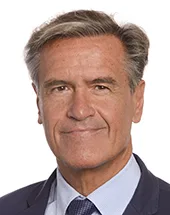
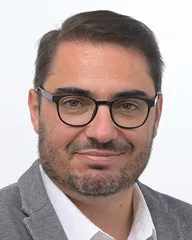
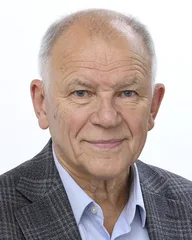
| Rank | Name | Country | Group | Speeches | |
|---|---|---|---|---|---|
| 1 |
|
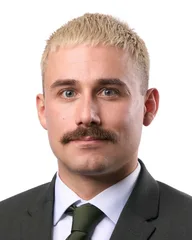
Lukas Sieper | Germany DEU | Non-attached Members (NI) | 390 |
| 2 |
|
Juan Fernando López Aguilar | Spain ESP | Progressive Alliance of Socialists and Democrats (S&D) | 354 |
| 3 |
|
Sebastian Tynkkynen | Finland FIN | European Conservatives and Reformists (ECR) | 331 |
| 4 |
|
João Oliveira | Portugal PRT | The Left in the European Parliament (GUE/NGL) | 232 |
| 5 |
|
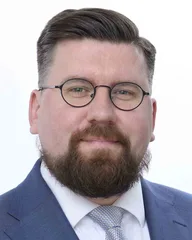
Vytenis Povilas Andriukaitis | Lithuania LTU | Progressive Alliance of Socialists and Democrats (S&D) | 227 |
All Contributions (173)
Commission’s 2021 Rule of Law Report (debate)
Madam President, Commissioner, Council, the annual rule of law report is vital to preventing and combating rule of law violations, but only if it is followed by concrete actions. That was the right conclusion of the rapporteur. The Polish Government has crossed all the lines. Judges and journalists are muzzled. Citizens cannot exercise their rights. But the Commission and Council failed to act and become even more silent. And we lack clarity about the actions against Hungary. Madam President, the current war in Europe is between autocracy and democracy. These were also your words, Mr Reynders. It’s not an equal fight. If we want democracy and rule of law to win, we must be more firm and more persistent. And the rule of law report also aims that we act timely upon backsliding countries. And Greece is one of them. Commissioner, please act upon the pushbacks, and the criminalisation of journalists and NGOs rescuing migrants and defending their rights. Impunity paves the way for autocracy.
Violations of right to seek asylum and non-refoulement in the EU Member States (debate)
Madam President, the united solidarity with refugees from Ukraine is impressive. It reassures us that the European values and the right to protection do have a meaning in the European Union, but these principles leave no room for double standards. People fleeing a war, persecution or inhuman treatment all fall under the same protection regime. The situation people are fleeing from determines their right to protection, not the country that they left. Yet, despite the hospitality towards refugees from Ukraine, the right to enter an asylum procedure is being violated at many European borders. At the Polish borders, we see that in one place, thousands of people are welcomed, while only a few kilometres away, refugees are being pushed back into Belarus, deprived of their rights, goods and dignity. In Greece, the push-backs have become a daily and systematic practice. If a refugee manages to apply for asylum, the Greek authorities refer them back to Turkey, even when they know that they are not allowed to re-enter Turkey. Greece is an important country of entrance for refugees from Syria, Afghanistan and other dangerous countries. But the policies of Greece simply mean that they all end up in a lawless situation. Their lives and health are at risk, despite all the safeguards that we have in our legislation. The Commission knows exactly what’s going on; many investigations conclude the same. So how is it possible that the Commission accepts such blatant breaches of the right to life and protection and, even if a state allows for push-backs in the legislation, the Commission stays silent? So, when will you finally act to ensure protection for all refugees in the European Union? Bring them to court like you did with Hungary. Make border and asylum fronts conditional. Speak up and demand respect for human rights, and use the current wave of solidarity to push for a common responsibility of all Member States for our asylum seekers.
Situation in Afghanistan, in particular the situation of women’s rights (debate)
Madam Chair, all eyes are on the Russian aggression, and rightly so. But let us not make the mistake we make so often of jumping from crisis to crisis and forgetting about the rest of the world. Just last summer, our anger and frustration were targeted at the Taliban takeover, which has turned Afghan lives into absolute hell. The Taliban is showing its real face as a brutal oppressor and a jailer of women and girls. More than 4 million girls are stuck at home, while women are deprived of their right to work, to study and to travel freely. Girls face forced marriages. And formal official or government members, journalists, human rights defenders and minorities are attacked, detained and killed. We must prioritise their human rights by making tough demands towards the Taliban, by reaching out to protect them. The Taliban takeover has also made the lives of all Afghan people extremely dire. More than 24 million people depend on humanitarian aid, and the drought, pandemic and the freezing of international aid have deepened this crisis. The Russian invasion has even increased food insecurity due to skyrocketing grain prices. We must ensure that sanctions effectively target the Taliban, without undermining the basic socioeconomic rights of the poor Afghan people, by creating alternative ways to reach them and by stepping up humanitarian aid. Because if we do not act now, we risk more people dying from the humanitarian crisis in the country than from the last 20 years of conflict. Many people are at immediate risk of persecution in Afghanistan, and they need our support to leave the country and be protected elsewhere. I call upon the High Representative and the Commission to step up the coordination for evacuation and to press Member States to enhance their visa and resettlement policies. We must invest in the better protection of refugees in neighbouring countries. But let’s be fair: there is a clear need for safe passage to our embassies and the European Union as well. Let us make sure that Afghan refugees are welcomed and protected, not pushed back and let down. Our solidarity with the Ukrainian refugees has shown that we are able to do it. Every refugee has the same needs and the same rights. The Afghans need and deserve our support now.
The situation in Bosnia Herzegovina (debate)
Mr President, Europe’s response to the Russian aggression was almost united – almost. While the rest of Europe was discussing sanctions, Bosnian Serb leader Dodik talked with the Russian ambassador and with Minister Lavrov. This continuous flirting with Putin reconfirms his disinterest in democracy, international order and European security. Yet the brutal invasion in Ukraine shows the need to more strongly combat Russian interference in the Balkans, as it directly threatens European security. The long—overdue sanctions for Dodik’s secessionist aggression must be imposed right away, including financial ones. So thanks, Commissioner, for your clear position on that; it’s a first step. Bosnian citizens have become truly scared, reliving their traumas from the 1990s. Russian influence and interference also moves them further away from the EU perspective, which is devastating for their right to live in a stable and fully—fledged democracy. Yet strong support for Bosnian civil society and the EU integration process right now would really increase their trust in the EU and in a democratic and prosperous future. Let us strongly engage with the citizens, with civil society and, as a first step, ensure free and fair elections in October. That would be the best and most promising medicine against Russian interference.
The deterioration of the situation of refugees as a consequence of the Russian aggression against Ukraine (debate)
Madam President, at our borders, Putin is putting the lives of millions of people at risk. His brutal invasion targets the citizens of Ukraine violating international humanitarian law, and people are desperately seeking protection. It is unprecedented how quickly the number of refugees keeps growing, and the EU’s response is unprecedented as well, with the activation of the Temporary Protection Directive. We applaud the Commission and Council for the swift and united response to give their full support to the refugees and their families. It will only work, however, if every Member State is ready to host a substantial number of refugees. So let the weakest part of the Directive, namely the voluntariness, not become the obstacle for an effective and humanitarian response. Coordination, funding and guidance by the Commission will be much needed. It is encouraging that the Council includes refugees who lived in Ukraine, but all people fleeing Ukraine must be safe. Referring third—country nationals, even if they lived permanently in Ukraine, to their region of origin, creates huge insecurities and risks, and in our view, this is unjustified, so please do not make any distinction. And this also goes for the border. We hear and see discrimination on skin colour, ethnic background, gender and sexual identity. We need agencies and international organisations to ensure equal treatment and to take care for the vulnerable people. The heartening hospitality of citizens will not be sufficient with the rising numbers and vulnerabilities, and the Commissioner already also referred to the risk of trafficking for minors. Member States should therefore organise a safe route to hosting locations. And Zelenskyy was right when he called the transport of refugees to Belarus and Russia immoral, because who wants to find refuge in a country of your own invader? So we must help them, but also the Russian citizens under pressure to find protection in our countries. Refugees from Ukraine deserve our unconditional support, no matter how long, no matter how many. But let me be very clear. Being forced to flee means the same misery, despair and fear wherever you are in the world. Let this war at our doorstep not distract us from the needs and rights of refugees from other countries. Do not believe politicians who make us believe that protection for the one means less protection for the other. If we equally share our global responsibility, we can offer every refugee the protection that she or he needs and deserves.
The proposed Council decision on provisional emergency measures for the external border with Belarus based on article 78(3) TFEU (continuation of debate)
Madam President, since Lukashenko started to abuse migrants in its conflict with the EU, the EU itself has been framing migration and asylum only as a security threat. This narrow view comes at the cost of fundamental rights, of complying with EU asylum rules, and now also with democracy. This summer, the Polish and Lithuanian governments changed their laws to allow border guards to push people back. The Commission stayed completely silent on the structural violation of the right to apply for asylum, and instead of forcing the countries to reverse their legislation, the Commission is now proposing to legalise these pushbacks. Also, the need to derogate from very vital standards in the asylum procedure and the reception of asylum seekers is very questionable. Commissioner Johansson proudly announced that she had reduced the number of flights. Merkel had stopped the instrumentalisation. So what is the emergency? Geopolitical conflicts can only be solved on a geopolitical level, not by undermining the right to asylum. The Commission is not defending EU rules. It accommodates all wishes and interests of the Member States, and yesterday’s Schengen proposal affirms this attitude. All violations by the Member States, be it pushbacks, be it ethnic profiling or indefinite internal border controls, are being legalised on the proposal of the Commission. So I urge the Commission: return to your role as guardian of the Treaties. Give the right example and respect the rule of law.
Preparation of the European Council meeting of 16-17 December 2021 - The EU's response to the global resurgence of Covid-19 and the new emerging Covid variants (debate)
Mr President, while the tension at Ukraine’s border is, for very good reasons, on the agenda tomorrow, there’s another crisis with the potential to destabilise our neighbourhood, but we appear to be asleep. For months now, the Bosnian Serb leader, Milorad Dodik, has been violating the Dayton Agreement and the constitutional order of Bosnia. Last Friday, he took the latest concrete step towards secession. The EU policy of appeasement does not work and even seems to legitimise his demands and undermine legitimate institutions. This is a direct slap in the face for all Bosnian people fighting for their country’s democratic future. We need an urgent shift of our Bosnian policy with our common values at its absolute core, and this starts by sanctioning those responsible for the current crisis. I urge the Council, therefore, to add the crisis in Bosnia to its agenda and take the EU responsibility to bring Bosnia and Herzegovina closer to our Union.
Cooperation on the fight against organised crime in the Western Balkans (continuation of debate)
Mr President, the Western Balkan countries must be able to rely on the EU as a partner, and in this case a partner in combating crime. If the judicial system is not resilient enough, organised crime affects all parts of society, including the state itself. This is also why we should be much tougher if it comes to corruption. Our EU agencies like CEPOL, GRECO and OLAF should give all possible support to strengthen the capacity to combat organised crime. But we must be cautious if it comes to close cooperation and data exchange on criminal and police matters, as this requires mutual trust in the judicial systems, which is at the moment still lacking. And this also applies to asylum. We must help and step up improving the asylum systems in the Western Balkan countries. But support in controlling borders right now may prevent refugees from leaving the country, even if there’s no asylum procedure for them available. That would be dangerous and seriously undermine the right to asylum. So we need to do things in the right order. Secure, effective judicial systems in the Western Balkan countries, including an asylum system, and only then can we start with mutual trust.
Fundamental rights and the rule of law in Slovenia, in particular the delayed nomination of EPPO prosecutors (debate)
Mr President, Council, Commissioner, the rule of law crisis in Poland and Hungary have taught us to better monitor and intervene at a much earlier stage of regression, and our assessment of Slovenia is therefore timely. The rule of law functions, but it is under threat. It is unacceptable that the threats directly come from President Janša and his ruling party. The personal attacks and lawsuits against actors safeguarding checks and balances are deeply concerning. They affect the authority of independent institutions, the freedom of speech of NGOs and citizens, and freedom of media for journalists. The government almost broke the Slovenian press agency by a complete budget cut. It must guarantee structural funding – not mid-next year, but now. The governmental contempt for court rulings is devastating. Thanks to national and European pressure, the candidates for EPPO have finally been appointed for five years, but the Supreme Court judgment to end collective expulsions of migrants, for instance, is still ignored. So Janša’s disdain and embarrassing behaviour towards the European Parliament perfectly mirrors the problems he’s causing at home. Let’s hope that new elections will give the protection of the rule of law back to the Slovenian citizens. But I urge the Commission to stand with the people of Slovenia, stay alert and intervene if necessary.
Situation in Bosnia-Herzegovina (debate)
Madam President, 26 years ago the Dayton Peace Agreement was signed ending a bloody and deadly war in Bosnia Herzegovina. It installed strong international oversight until the country develops into a fully functional and accountable democracy. And with many others, I regret that we still need this oversight. The country is in a political deadlock caused by corrupt ethno nationalistic politicians. Dayton and this special supervision brings a huge international responsibility, responsibility to actively engage and protect the peace agreement and the Constitution. And Dayton is under heavy pressure today. Milorad Dodik is playing a dangerous game, directly challenging the territorial integrity, sovereignty and security of Bosnia—Herzegovina. We cannot accept this. I urge the EU ministers to impose sanctions against Mr Dodik and his enablers. I urge the EU and the whole international community not to compromise on the much-needed democratic reforms and to finally depart from the ethnic division lines. And we all know we will not get there in a deal with politicians interested in the status quo, but only through an inclusive and truly democratic process. Please do this for the Bosnian citizens.
Situation in Belarus and at its border with the EU and the security and humanitarian consequences (debate)
Mr President, the illegal power that Lukashenko uses affects all of us: the Belarusian citizens suffering oppression, the EU, and specifically Lithuania and Poland, under attack, the migrants and refugees whose human dignity and fundamental rights are severely violated. It is a relief that EU and national diplomatic efforts have led to a reduction of the number of flights to Minsk. The repatriation has ended physical suffering for some of them, though many are still traumatised and have huge problems in paying back their debts. But not everyone is able to depart. Think of the Syrian and Afghan refugees and Iraqi nationals who are still in need of protection. They cannot be contained at the border forever. They need access through an asylum procedure, and adequate protection now. The refugees did not start the crisis. Lukashenko did. The EU’s response should focus on his regime instead of circumventing EU asylum law. The Commissioner’s portfolio of the European way of life wouldn’t be worth much if he would allow pushbacks and walls to be the answer. The best way to discourage the instrumentalisation of people is a functioning asylum system and taking a fair share of responsibility for refugees. The biggest mistake would be to normalise and legalise pushbacks. That would mean that our commitment to the refugee convention of over 70 years does not stand the test of this temporary crisis. We as Parliament should never let this happen.
The escalating humanitarian crisis on the EU-Belarusian border, in particular in Poland (debate)
Madam President, every day Mr Lukashenko proves that he should not be in power: he has lost the elections, he brutally oppresses the legitimate winners and he violates their human rights on a large scale. And now he targets the EU by misleading and abusing innocent migrants. Two weeks ago, I visited Russia and the Lithuanian border to assess the alarming situation at the border. As you know, ten people have already died and many fear more victims to come. Yet we see that governments from both sides leave those people to die. We should strongly condemn and sanction Lukashenko’s ruthless behaviour. But we cannot, and should not, respond in the same way as this dictator does. Our rule of law, our values, should not fail this test. This geopolitical crisis cannot be solved with pushbacks because that is creating a humanitarian crisis, and accepting these pushbacks would send a fatal signal to other countries, allowing them to do exactly the same. That would be the end of our asylum law, our fundamental rights and values. So let us stay united in our approach to Lukashenko: strong and swift sanctions, support Belarusian society and stop new arrivals of innocent migrants. But let us also unite in defending and implementing our own laws. Let’s support Poland and Lithuania in organising decent reception conditions and access to aid and a proper asylum procedure. Demand, but also enforce, if necessary, a lawful approach and be ready for relocation. Finally, we just paid respect to the High Commissioner of the UNHCR, Mr Grandi. He urged for leadership from the EU. Can the High Representative confirm it will not fund walls and fences like President Michel just announced, but instead step up and show real global responsibility?
The outcome of the Western Balkans summit (debate)
Mr President, it is awful to conclude, but we must admit that the EU Member States are not committed to the Western Balkan region. Their permissive conclusions of the summit last week made that again painfully clear. The refusal to keep their promise towards countries making progress towards the EU accession criteria has a devastating impact. It hurts their economy, young people leave, Russia, China and Turkey fill the gap that the EU leaves and tensions rise in the whole region. And some tensions are related to resistance against reforms. And we see a big crisis now in Bosnia—Herzegovina with the potential to escalate into another civil war. A vote is scheduled in the Republika Srpska (RS) Assembly to withdraw from the federal infrastructure of Bosnia—Herzegovina. Yesterday, they already took the first step with the RS medical agency. These decisions directly threaten the stability and peace in the region. It will blow up the Dayton agreement and throw the country back in time, far from the path towards succession. And I wonder, do the High Representative and the Commission realise the urgency of this threat? The joint declaration of Mr Borrell and Mr Blinken called upon all parties to respect and protect state institutions. Why not a clear call upon Mr Dodik, who is playing with fire at the moment? We urge you to do everything you can to prevent these votes and also to show the consequences of the adoption of the votes beforehand, because the members of the RS Assembly must realise the impact of their decision before they take it. And we need to be reassured that the EU has prepared an adequate response. So, bring this crisis to the highest level of the Commission and discuss it in the EU Council tomorrow. At the same time, we must keep our promise, start the negotiations talk with North Macedonia and Albania, make unambiguously clear that both countries already meet the criteria. Bilateral disputes are no justified reason to obstruct the start. I hope that the High Representative will affirm this very clearly, and I urge the Bulgarian government to lift the veto as soon as possible. Opening negotiations and granting visa liberalisation to Kosovo is not only deserved but necessary to regain the trust of their citizens and to reassure the people in the whole region that we generally welcome their European aspirations.
Pushbacks at the EU's external border (debate)
Madam President, I must confess it’s with deep concern and also despair that I contribute to this debate. Yesterday, in an intense debate on the rule of law, a vast majority in the Parliament demanded clear action against the destruction of the rule of law in Poland. And that makes me wonder: does the rule of law stop at our borders? For years now, we know that thousands of people have been pushed back from the EU borders. They all could not request for protection. Many of them suffered from violence, and a number of them even lost their lives. The silence from the Commission, as guardian of the Treaties, and from the Member States has encouraged border countries to make these push packs a systematic practice, and the debate has even turned from denial to a demand that push-backs are legalised. Let’s just hear the Council just a minute ago. Dear Commissioner, I know that you condemned push-backs, but you are the vital actor who is able to put those words into practice. We depend on you to stop these flagrant violations and ensure protection, to start infringement procedures, make funding conditional and to ensure that Frontex does not facilitate but prevent push-backs. And you also referred to the new pact proposals. But I hope you realise there is no sense in waiting for new legislation. The current rules have to be respected now, so let’s avoid that at the end of our political term, we have to conclude that we did not manage to restore the rule of law at our borders and that instead we have only turned it into worse. We still have a chance, but we really do not have time to lose.
The Rule of law crisis in Poland and the primacy of EU law (debate)
Mr President, with its decision to deny supremacy of EU law, the Polish government is not only undermining the EU, but also its own country. The treaties are here to safeguard equality of the Member States but, of course, also the equal rights of all EU citizens. President von der Leyen, you expected to solve the rule of law crisis with dialogue and, well, after two years, we must conclude that the situation has only deteriorated. So, we need the sense of urgency in your actions. Commission, use all legal and financial means at your disposal now because the house is on fire. The Council must finally break its deafening silence and take action and stand up for the Polish citizens’ rights, to rely on EU law, to have an independent judiciary and a government that respects their fundamental rights.
Implementation report on the EU Trust Funds and the Facility for Refugees in Turkey (continuation of debate)
Madam President, I would like to congratulate all the rapporteurs. This report can really help to ensure that future funding goes hand in hand with accountability and human rights compliance. For that, we need democratic oversight and to make sure that funding is used for the right purposes, for instance, with development policy money. We also see a high risk that funding border and migration management would facilitate human rights violations, such as refusing access to protection or even worse. Just take a look at yesterday’s UN report on Libya. A stronger conditionality between funding and human rights is much needed. For all these reasons, we urge the Commission to ensure transparent and independent monitoring of how the funds are implemented and how fundamental rights are respected. It’s not the first time that we are asking for this. The Parliament has pressed for this many times now, and it’s high time to take action as the EU’s credibility is really at stake.
The situation in Belarus after one year of protests and their violent repression (debate)
Mr President, one year after the fraudulent presidential elections, the situation in Belarus politically, and human rights situation has only further deteriorated. As my colleague already pointed out, the EU must step up its support of the Belarusian society, and make our sanctions and measures more effective. But in the meantime, Lukashenko has looked for a strategy to silence or punish the EU and the Member States for rightly supporting democratic opposition. The use of migrants and refugees as a geopolitical tool at the borders is shameful and disgusting; it should be strongly condemned, and in no way become effective. But we also need to ensure we do not play the same game as Lukashenko does, and this is actually, what we exactly see happening now. Poland, Latvia and Lithuania are keeping the borders closed for asylum seekers who ask for protection, and even refrain from giving them food, water and shelter for many weeks now. Five migrants have died at the borders, and many others, among them Afghan and Syrian refugees, are still kept in a deplorable and threatening situation. No one is allowed access to these people, despite clear instructions from the European Court of Human Rights, which are completely disregarded. Until now, the most important measures from the message from the EU was that the EU stands behind Poland, Latvia and Lithuania. Of course, we need to support those states, but at the same time, not accept that normal EU rules on Schengen and asylum are so painfully violated. When will the High Representative and the Commission clearly speak up against instrumentalisation of migrants and refugees from both sides? We urge you, Commission, to immediately act to ensure that no more people will die, that access to protection is guaranteed. Of course, we need to give support, but let us show real solidarity by relocating asylum seekers... (The President cut off the speaker)
Instrument for pre-accession assistance (IPA III) 2021–2027 (debate)
Mr President, we welcome the IPA III Regulation, as already said by my colleague Mr Waitz, to support and incentivise the accession process. But we must be honest: the accession process is in a very challenging situation in many countries and sometimes even in a deadlock. In North Macedonia we saw due to external actors, and in some other countries, think of Bosnia Herzegovina, we really see that political leaders are obstructing the process themselves. And in those situations, EU accession is not an effective tool anymore to make progress. And there’s a big risk that the process of accession is being misused in order to get access to IPA III funding for the own interest of the political leaders. So therefore, I really welcome the strengthened conditionality mechanism in IPA III on democracy, human rights and rule of law, and the possibility of suspending assistance in case of severe backsliding. But we need to make it an effective tool. If I look at the current text, it’s quite vague on how to trigger it, so we would invite the Commission to specify this part and make it an effective tool for a real integration.
Situation in Afghanistan (debate)
Madam President, High Representative, as the dust settles from the rapid Taliban takeover of Afghanistan and the departure of the Western presence over summer, we should seize this moment to reflect, to learn from this debacle because we need to create a more strong and effective foreign policy to protect and strengthen human rights. But we also must urgently act now because it is heart breaking to see how Afghan citizens are exposed to the brutal violence of the Taliban, with summary executions, arbitrary decision and the severe and violent oppression of women and girls. The Afghan people face an enormous humanitarian disaster with shortages of food, water and other basic needs. And those Afghan people were counting on us. So let us do whatever we can to protect them against the Taliban terror. So let us take our responsibility with a strong EU coordination on evacuations of people who worked for us or at imminent danger of Taliban persecution, on a humanitarian visa for those arriving in neighbouring countries, on increasing and ensuring access to humanitarian aid to Afghan people. Redirect developing assistance to non-governmental actors or international organisations to help the people but prevent any type of recognition to the Taliban as long as human rights are at risk. And on taking our responsibility for refugees, it is time to step up resettlement, facilitate family unification and prepare for the arrival of Afghan refugees at our border. They must receive immediate protection even if their request was already rejected before. The Temporary Protection Directive was designed to equally divide refugees between Member States and the Commission and Council must now fully make use of it. The Justice and Home Affairs Council gave a wrong and selfish message. Let the Parliament give the right direction. Dear colleagues, I look forward to a strong parliamentary resolution reflecting courage and solidarity that the Afghan population so much needs and deserves in these difficult times.
State of play of the implementation of the EU Digital COVID Certificate regulations (debate)
Mr President, summer holidays are knocking at our door and many EU citizens long to travel again. So in the coming weeks the ambition of a common COVID—19 certificate will be put to the test. Will the certificate be easily accessible? Will there be discrimination? And will the Member States apply the same rules? This does not seem to be the reality for now. We hear about additional restrictions and hassle at borders, restrictions that completely undermine the whole point of a single EU—wide certificate facilitating free travel. And not only do Member States make up their own rules, but there’s a huge lack of clear information. Citizens are totally confused and uncertain. So I urge the Commission to closely monitor and immediately intervene if Member States act against the regulation, because time is of the essence here, and to report back to Parliament. But, Commissioner, you also made a strong commitment yourself, namely to ensure financial support with a fund to promote affordable testing and to make more funding available if necessary. But when Parliament asked you to do so, you simply answered ‘No’. We see that mainly young people, who are not yet vaccinated, are facing the threshold of expensive tests. Their access to testing will not only facilitate free travel, but also protect others against the virus. So I urge the Commission to spend more money on free travel for all. Parliament wants you to do so for the sake of harmonisation, free travel, non—discrimination and for the protection of everyone’s health. I wish you a relaxing, free and healthy summer holiday.
Conclusions of the European Council meeting of 24-25 June 2021 (debate)
Madam President, I’m very happy with all the criticism over the Hungarian developments, which are very concerning. But the EU Council also decided to consolidate the EU Turkey statement with new funding. And only the previous part-session, Parliament adopted the resolution with clear demands on migration deals. We must ensure human rights compliance, which requires impact assessments and independent monitoring, democratic and judicial control, and scrutiny of the use of funds. The EU Turkey statement doesn’t meet any of these criteria. So how do we monitor the situation of refugees? Is it taken into account that non-Syrian asylum seekers lack access to an asylum procedure? Will the funding of border controls result in a complete closure of the southern-east borders where refugees tried to escape violence? There are strong indications that forced returns to Syria are being made and that UNHCR doesn’t have access to any removal centre. Let me be clear: we must support the refugees in Turkey. Many of them are in precarious circumstances, and Turkey takes a large share but the conditions on border control and readmission have a human rights impact, and we must ensure that we support human rights that affect them in our external action.
Annual Report on the functioning of the Schengen area (debate)
Madam President, I would like to thank the rapporteur again for the report and the strong position. Of course, 2020 was an extraordinary year due to the pandemic, but also before, we observed the shocking lack of compliance with the rules on border control, internal border controls that were not temporary nor justified, and consistent reports about pushbacks at many places along our external borders – a grave violation of Article 4 of the Schengen Borders Code. It’s important that we look ahead and discuss a new Schengen strategy. But whatever the outcome will be, without compliance and enforcement, no border policy is credible. What will hopefully help is a more robust, swift and transparent Schengen evaluation and monitoring mechanism, with much more attention for fundamental rights. I call upon the Council and the Commission to ensure that Parliament can act as a co-legislator while making those new rules – because societal support for our border policies starts with democratic control.
Asylum, Migration and Integration Fund 2021-2027 - Integrated Border Management Fund: Instrument for Financial Support for Border Management and Visa Policy 2021-2027 (debate)
Madam President, on behalf of my colleague, shadow rapporteur Alice Kuhnke, many thanks to the rapporteur for her great work and achievements. I think due to the pressure of the European Parliament a number of important improvements have been made in this legislation, like more emphasis on non-discrimination of fundamental rights, support for humanitarian visa, and improving the visa policies and search and rescue as an autonomous implementing measure. But we object to some other elements like the unlimited possibilities to fund border cooperation with third countries and to the large-scale IT systems interoperable in the hotspots. But our main objection actually, for the moment, is in general that we have big problems with agreeing at the moment on a huge amount of financial support for external border management in a time of persistent and consistent allegations of fundamental rights violations at the border without transparent and thorough investigations or enforcement actions from the Commission. We first need to see improvements in respect for fundamental rights and accountability and this funding should be made conditional upon fundamental rights compliance. It should be a tool to demand monitoring and compliance and to link the funding to the condition that a Member State which cooperates with Frontex fully also cooperates with monitoring and investigations by Frontex. I would like to hear and see from the Commission that this will be part of the gain. But for now, for the reasons I gave, we will abstain.