
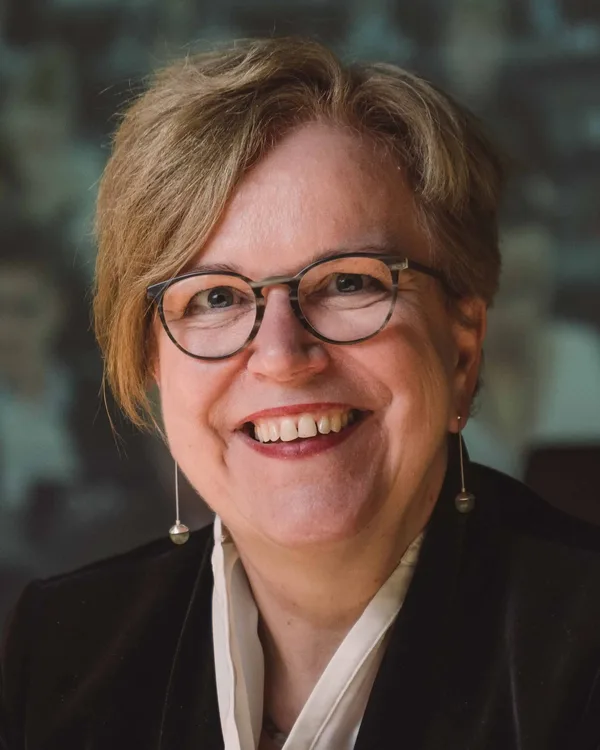





| Rank | Name | Country | Group | Speeches | |
|---|---|---|---|---|---|
| 1 |
|
Lukas Sieper | Germany DEU | Non-attached Members (NI) | 390 |
| 2 |
|
Juan Fernando López Aguilar | Spain ESP | Progressive Alliance of Socialists and Democrats (S&D) | 354 |
| 3 |
|
Sebastian Tynkkynen | Finland FIN | European Conservatives and Reformists (ECR) | 331 |
| 4 |
|
João Oliveira | Portugal PRT | The Left in the European Parliament (GUE/NGL) | 232 |
| 5 |
|
Vytenis Povilas Andriukaitis | Lithuania LTU | Progressive Alliance of Socialists and Democrats (S&D) | 227 |
All Contributions (150)
Order of business
Madam President, ladies and gentlemen, We negotiated this resolution last week and all weekend, and all the political groups in this House have approached the EPP. We have reduced a lot both in form and in content in order to have the EPP on board, as I said; I would like to make it clear once again: This is not an EPP resolution, but a resolution of the political groups in this House. And I would like to point out once again, Mr Weber, that on 30 April you once again stressed in the Süddeutsche Zeitung that citizens expect a clear message that the EU must become stronger, more efficient, more democratic and more ambitious. We see it the same way – the other political groups, the S&A/D group, I am speaking for Renew, greens And also the left. We now have the opportunity to send a signal so that the French Presidency can take up this, for the European Council. In the history of Europe it has always been this way: There's a moment when you have to jump. We have here clear and really reduced to the minimum demands that are important. In this sense, I would ask you not to accept the request.
Prosecution of the opposition and the detention of trade union leaders in Belarus (debate)
Madam President, Colleagues! We have heard here that the situation in Belarus is getting worse and worse, that the KGB is brutally attacking, trade unionists imprisoning the leadership, threatening the people whose tools are being collected and thus trying to break up the trade union movement, in particular to intimidate the members so that they leave this federation, which is relatively small compared to the state unions – with its 12,000 members compared to four million. It is so important that we give the signal here that we support the detainees here. They need our protection, they need our solidarity, but also concrete support. That is why, I believe, it is very, very important that we say once again very clearly: All political prisoners must be released, but also genuine freedom of assembly and trade union rights must be protected – in Belarus and everywhere. I want to conclude with a quote from the International Secretary of this Federation of Free Trade Unions, Maryja Taradzetskaya, who said: "I believe in the universe and in the trade unions, and I believe in Europe's solidarity and ability to act."
Commission’s 2021 Rule of Law Report (debate)
Madam President, I send my congratulations to the rapporteur. To protect the rule of law is so essential, not only outside the EU, but especially inside the EU. I can’t resist answering this colleague from ECR. The simple fact in Europe is, if you want to become a member, if you want to stay a member in the European Union, you have to guarantee rule of law and democracy. It’s not a ‘nice to have’, and therefore it is very important that we have the right instruments here at hand to make sure that it happens and that citizens trust us that we can deliver on this essential value of the EU. Here indeed, Commissioner, we see room for improvement in the reports, especially, on the one hand, regarding the scope. I think that we really have to extend it to cover democracy and fundamental rights, especially also including women’s rights, migrants’ rights and LGBTIQ rights. Also, and it was mentioned here already, it doesn’t help to treat all Member States the same way, because we cannot step away from the fact that we have Member States – in the plural – in the European Union with systematic and severe attacks and violations of rule of law. We have to address it. We have to make it stronger to keep the trust of the citizens and hopefully also of the rapporteur.
The follow up of the Conference on the Future of Europe (debate)
Madam President, ladies and gentlemen, I wished so much that all Members of Parliament had had the opportunity to participate in this future conference and to experience the citizens. They got together, and they really shared ownership of their proposals. The ambassadors they have appointed have also felt committed to these results. I hope that as Parliament, which has always been the driving force behind this process, we will assume just as much responsibility and ownership as the citizens. It has been said here – many proposals in many policy areas. But you can now have discussions – if you are in favour of treaty changes, you are against them; Here in the house, we know about how this divides up. If we take citizens' proposals seriously, we have to make Treaty changes because a large number of the proposals they have made require them. Of course, we can now say: Pah, after the conference everything is different again, we don't take this so seriously. But it would be a slap in the face for citizens who trust it. And I have to say one thing: If one thing really excites me, it is that these citizens have not lost confidence in the European project. They want change, they want Europe to be better positioned, more able to act, more democratic, more social. And that is why, I believe, it is so important for us, as a Parliament, to take this first step. We cannot ask the Council to do that. They have delayed this process, tried again and again to put stones in the way, so that this dynamic does not develop at all. We, as Parliament, are giving this signal together on 9 May that we say that taking the proposals seriously also means launching Treaty amendments, as well as for the Commission to take this into account in the next work programme. In this sense, a strong vote is also a strong signal.
Election of the Members of the European Parliament by direct universal suffrage (debate)
Mr President, ladies and gentlemen, This week, as a Parliament, we really have a great opportunity. We have the chance to write European history and to carry the European project a little further forward. The vote on this EU right to vote is about a few really central issues. Do we here in the House have the courage for more Europe? Do we have the courage for truly European elections for the European Parliament? For so far, we have largely 27 very often nationally oriented European themes that dominate the election campaign. European parties – ask local citizens – hardly play a role. But it is also about the question: Do we want to give Europeans a second vote in the elections in order to really decide who and which lead candidate, which lead candidate will become the President of the European Commission after the election? This is not a question of any top position, but of centralising European policy. At the Future Conference, which ended last weekend, the citizens gave us a very clear mandate on this issue: They want us to have a right to vote in Europe that is not only in Europe's name. And that is why they have also proposed as one of the central demands of this future conference and supported the change of this right to vote. Domènec Ruiz Devesa has done a really good job as rapporteur. He took the doubters with him – he tried. He has spoken to everyone, to everyone, to really develop a model where the little ones do not have to fear that they will fall short, where they think that only the big countries are represented; and, together with the shadow rapporteurs, found a smart solution. But this is not just about transnational lists and top candidates. There is also a lot to do in terms of gender equality – take a look around the house – and you will find this in the proposal as well. Or when it comes to accessibility: Here, too, we still have a leap forward to make. Therefore: Nothing was broken over the knee. They really took the time to come up with solutions. This will be put to the vote tomorrow. All those – I am looking at them – who still have doubts or who say that I am also a little afraid of such a solution – give yourself a jolt here! It is Parliament's third attempt at transnational lists, clear rules for lead candidates, more democracy in Europe and real Europeanisation. Let's have the courage to take this step together!
Ongoing hearings under Article 7(1) TEU regarding Poland and Hungary (debate)
Madam President, ladies and gentlemen, ladies and gentlemen, I believe – as Mrs Jourová has already said – that the previous debate on Russia funding extremist parties in Europe shows that it has an interest in destabilising Europe. If we continue to weaken our values of democracy and the rule of law, that would play into Putin's hands. That is why it is all the more important that we really defend with all our strength the values of the EU – the rule of law, democracy, respect for human rights – which are coming under increasing pressure, including in Europe. Parliament has always made its position very clear here. We also think that we need a sharper sword here to actually defend fundamental rights, to defend the rule of law. That is why we, as the Committee on Citizens' Rights, together with the Constitutional Committee, recently made a joint delegation trip to Poland and once again made our own impression of the erosion of the rule of law. Therefore, all eyes are on you as a commission. We have written two letters to President von der Leyen, from the Committee Chair, as well as a joint letter from the S&A/D Group with the Renew, Greens and The Left groups. Our message is very clear: Do not approve the Polish recovery plan with the reconstruction funds until the conditions are really met – independence of the judiciary and the requirements set by the European Court of Justice to ensure the independence of judges and the judiciary. And I can tell you one thing from many conversations on the ground: Polish civil society is hoping for Europe, and we must not disappoint them on this issue. That is why, dear Commission, here in the House of European Democracy, tell us, confirm to us that you will not give in here. We will continue to defend these rights together.
Question Time (Commission) - von der Leyen Commission: Two years on, implementation of the political priorities
Thank you very much! May I take another look and ask: If the citizens are committed to this and if at the end it comes out that certain Treaty changes are needed, especially in the area of strengthening democracy and parliamentarism, what would, in your view, be three key points that we would then have to address and would you then also support accordingly?
Question Time (Commission) - von der Leyen Commission: Two years on, implementation of the political priorities
Madam President, Madam President, I am pleased that you are here. I wanted to remind you once again that in our letter before your election as S&D, we called for an agenda of change, we campaigned for a future conference, we wanted to achieve a democratic push. And we have always seen this as part of or in preparation for a convention. It'll be ready in four weeks. We will have a report. We will have proposals from the Future Conference that were presented to fellow citizens who were representative. In their political guidelines – I was very pleased at the time – you attached great importance to the Future Conference. They also campaigned for the strengthening of democracy and parliamentarism, saying at the time: ‘I am also open to treaty change.’ So, my question is: Are you therefore now advocating for a convention following the conference on the future?
EU Protection of children and young people fleeing the war against Ukraine (debate)
Mr President, ladies and gentlemen, ladies and gentlemen, This war is shaping an entire generation of children in Ukraine. But it also shapes a whole generation of young Europeans, children and young people, who are looking at how we deal with this war and how we deal with the children and young people who have fled. That's why it's important: The seven and a half million children in Ukraine who need protection, who need help – it has been said – who need psychosocial support here. That is why it is important that we make this debate a stellar moment here. I find it outrageous that the Council is not present, it is obviously not a sufficiently interesting debate here. It is therefore very important that we have once again called on the Council – and this is what we have done as a S&D Group – to put forward a child protection package. Children need special protection in Europe. And who, if not us, should give it to them? It has already been said – Ylva Johansson said it: We must treat these refugee children first and foremost as children. Sounds simple, but it's not. That is why we need special measures for this. Education is enormously important, that we really make access inclusive, but that we also give digital support to these young children, childcare and access to the labour market for women. It has been said: Exploitation of these women and children is always a great danger, and we see the vultures waiting there, international organizations here that actually have networks of traffickers. We have to stop this! And one more point: We can be proud in Europe that we have the guarantee for children who Child guarantee. But we need to refresh them now. We need to adapt them to this situation, both in terms of content and financially. Because one thing is also clear – I said it at the beginning – that in the end we are judged by whether we were able to protect these children in this war. We, as a Parliament, will do everything we can to ensure that these children find sufficient security.
Debriefing of the European Council meeting in Paris on 10 March 2022 - Preparation of the European Council meeting 24-25 March 2022 (debate)
Madam President, Millions of refugees have now arrived in Europe, millions of traumatised children, millions of women who had to leave their loved ones, their fathers, their brothers behind to seek protection in Europe. The majority of these refugees are in Poland. Poland has absorbed more than all the other EU countries combined – thank you for that. But also in my homeland, in Berlin, thousands of people arrive every day. More than 20,000 people have found shelter, and we see that there are groups that need special support, especially those who are sick or in need of care. That is why it is right – and I would like to thank the Commission for doing so – that it launched CARE so quickly. We must give the concrete signal to all the municipalities, all the cities that are helping now, which have such a strong, great civil society: We will not leave you in the rain, we will support you now that we come – Europe is helping here. But this aid will only work in the medium term if we now really adopt a distribution key for all refugees across Europe. Therefore, my appeal to the Council: It's up to you, solve it! Otherwise we will not be able to say in half a year: Long live unity!
European Semester for economic policy coordination: annual sustainable growth survey 2022 – European Semester for economic policy coordination: employment and social aspects in the annual sustainable growth strategy survey 2022 (debate)
Madam President, ladies and gentlemen, dear representative of the Council, dear representative of the Commission! The majority of the speakers here clearly see that we cannot now move forward in the routines of the European Semester. We are in a completely new situation, and therefore business as usual is not an option here at all. In the last crisis, we took the step to say: We need to strengthen resilience. The resilience of the economy, but also of society. We have to go on. Because if we look at the situation now, we simply have to see that we are facing huge challenges, including in terms of the social stability of our societies. The Council representative said: Already in the last crisis, it was predominantly the people in precarious living and working situations who were most affected. It will be no different in this crisis. That is why it is important that we take this up in the European Semester. Strong shoulders need to shoulder more, and those who are now particularly affected need support. If we can do this, we will avoid further destabilization of our society. In this sense: Europe will be social or not. At least that's the right quote from Mitterrand.
The deterioration of the situation of refugees as a consequence of the Russian aggression against Ukraine (debate)
Madam President, We are holding this debate here today on 8 March. This is International Women's Day, and a core requirement for over 100 years is: Bread and roses for women. We now see that we have over two million – mostly women and children – who seek security, who seek protection, and we really see a wave of solidarity in Europe. But what we can see – and I was able to convince myself in Berlin that I was in Budapest last week: The strength of Europe in such a situation is the active civil society in Europe, which has not long debated, which has rolled up its sleeves and stands everywhere at the stations and helps the people. Governments alone, municipalities alone would not have done this. I think this active civil society deserves great praise, great applause and great support. From bread to roses. We gave the refugees bread, a roof over their heads. But the next step must be – and local authorities need support – that we find school places and kindergarten places for these refugee children, that we integrate them here. These regions need support, because you can see, especially when you go to the border regions with Ukraine, that these are also the poorest regions in these countries. That is why we need to show much greater solidarity here. We need to mobilize all resources so that we can also say in the end: We did this, not just at the beginning, but over the entire period.
Foreign interference in all democratic processes in the EU (debate)
Madam President, Commissioner, ladies and gentlemen! For many years, we have been debating that democracy is in danger. We have a lot of studies showing that today we have more autocratic countries in the world than democracies and that today we are back to 1990 levels. And it is very clear – and that is why I am very pleased with Raphaël Glucksmann, the whole group that is now putting forward proposals – how we can strengthen resilience in Europe, namely democratic resilience. We have seen here in the debate: The crack also goes through this house. That is why I would like to point out once again: It's not just a few scattered people who say exactly: We also need to protect our democracy much more. We have disinformation not only from foreign countries, we also have it from governments within the EU, and we must not be blind. But it is the citizens who, in the Future Conference, in the Working Group, have made this proposal to us, asking us to ensure – in their proposal No 28 – that we should really devote significant financial and human resources to really stop disinformation, and that we must actually also support civil society much more strongly here, that we must ensure that we strengthen media literacy, and that we also present appropriate sanctions against these large platforms, for example, that do not sufficiently address it. Therefore: Let's get it ready!
Protection of workers from the risks relating to exposure to carcinogens, mutagens and reprotoxins at work (continuation of debate)
Honourable President, Honourable Commissioner! Let's be honest: European social policy, many people turn off and think: This has nothing to do with me, it does not affect me, most of it is decided at the national level anyway. Here, European directives show that European policy saves lives, hundreds of thousands of lives – in case of doubt, your colleagues, your friends, your relatives. And that's why it's important that we deliver the message together: We have already achieved a lot here, but we have to go much further, because there are still many people who make their work sick, who die by going to work every day and doing their job. And that is why we want to ensure that even more substances that are carcinogenic, that are genetically modified, are absorbed and that we ensure here: Our goal is that we have zero dead people who die through their work, because work must not make them sick, work must not kill. And that is why we need to be much more ambitious here. In this sense: Support the policy, put pressure on it!
Activities of the European Ombudsman – annual report 2020 (debate)
Madam President, dear Mrs O'Reilly! I really want to thank you for your tireless commitment, for full transparency. They want to open the window wide so that citizens can really see how decisions are made. Some people just want to open a gap so that you can take a look. But we see how seriously you take your work, and I think that's important. I listened to your presentation. In fact: 2020 was a very special year, and we had to act quickly. And yet it is important that transparency is respected and that you also have clear communication, because without this we will not achieve democratic resilience. And the currency for that is really trust. That is why I would like to thank you once again for really putting your finger in the wound and insisting that the contracts with the pharmaceutical companies really create clarity here, otherwise only conspiracy myths will be supported and, I think, fake news will be promoted. We can't let that happen. Therefore: The future is made of courage. You've had enough of that. With a small office, but still a big order. And there you have our full support as S&D faction.
Empowering European Youth: post-pandemic employment and social recovery (debate)
Mr President, Commissioner, Secretary of State! I would like to start with a quote from a 16-year-old, which she made during a recording with us at the Bavarian Youth Ring; She said: “I can't go out and have my own experiences. All I have left is to read books about the lives of young people.” I think adolescence is really a phase of life that is irretrievable, experiences that can only be made at this stage, and that's why the frustration of youth grows, and many feel put around the best time. That is why it is important that we actually make a solid catch-up programme for these young people here, not just symbolic gestures – a bit more Youth Guarantee here and a bit actually other programmes there. And that actually means that we have to make investments for it, that we really give this youth a perspective for the future. In order to really establish credibility – and it all starts with a first step – I also recommend saying that we put a stop to unpaid traineeships and that we give young people genuinely paid perspectives as an entry point into the profession.
Presentation of the programme of activities of the French Presidency (debate)
Madam President, Mr President, Europe will be social or it will not be. Es ist kein Zufall, dass dieses geflügelte Wort in französischer Sprache nach Europa gekommen ist. Es gehört quasi zur DNA jeder französischen Präsidentschaft, das soziale Europa voranzubringen. Und ich stimme Ihnen absolut zu, dass die Ungleichheit das Friedensversprechen wirklich gefährdet. Und neue Studien wie von Oxfam zeigen wirklich deutlich, dass COVID-19 ein Brandbeschleuniger für Ungleichheit ist. Umso wichtiger ist dieses Leuchtturmprojekt für faire Mindestlöhne, die wirklich dazu beitragen, die Taschen der Menschen, die arbeiten, wieder angemessen zu füllen, und auch dafür zu sorgen, dass wir eine gute und starke Tarifpolitik haben. Deshalb kann es sich weder die französische Ratspräsidentschaft noch können wir als Parlament es uns leisten, dass diese Verhandlungen scheitern. Und bezüglich Ihres Bonmots von Schuman, mit dem Sie noch einmal auf die kreativen Bemühungen abgestellt haben, würde ich Sie sehr bitten, was die Verordnung 883 anbelangt – die soziale Sicherheit –, Ihr kreatives Bemühen yesterday einzubringen.
European framework for employees' participation rights and the revision of the European Works Council Directive (debate)
Mr President, ladies and gentlemen, ladies and gentlemen, Commissioner! I am pleased to be speaking here in this House today on a topic that is very, very close to my heart, and I believe most of those in this room. And I am also pleased, dear Nicolas, that you are part of our debate today, because that is an important signal from the Commission. We all know that we are really living in times of quite a change. And we see that in many areas of work, digitalization is progressing, that automation is replacing work steps and jobs, that the role of artificial intelligence is increasing, including in the allocation or evaluation of work. The list could be greatly expanded here. At the same time, we have agreed on a Green Deal, with which the Paris Agreement really sets us great goals. And with this, just as with digitalization, enormous transformations are associated. And it is also the case that in certain regions and also in certain sectors they trigger worries and fears, because we know that millions of people are affected by these transformations. We have also talked a lot about democracy in recent months, especially in the context of the Future Conference – how important it is for us to involve and involve people in truly shaping solutions and shaping their own future. And, of course, this also applies to the world of work. And that is why it is as important as in the report that we give workers a voice, that we involve them in decisions, and that is part of the DNA of the social market economy and therefore also of the DNA of social Europe. And there are good examples in Europe that both sides, capital and labour, benefit from companies being better off if they engage employees early and appropriately. For example, last week I had the opportunity to speak to Unilever's European works council. The company recently signed a European framework agreement with the Euro Works Council on the future of work. And noteworthy are two things I want to highlight here: One thing is that this agreement underlines once again that the pursuit of pure profit, regardless of the employees, creates companies that are not sustainable. And what this agreement does further is that it really provides for concrete upskilling plans for employees, with reskilling, with upskilling, with individual entitlement to counselling, where we have digital disruptions, where new technologies are used. And this gives employees security in change and the opportunity to participate in the change. And that's why it's worth looking at – as many studies show – that companies are more sustainable and better off through crises when they involve workers. They also train more. Even in the case of women's employment, it can be seen that there is more equal pay for equal or equivalent work than in other companies. And that is why it is important that we strengthen this voice, and that is where the report starts. That is why, in the face of these really massive challenges, we call on the Commission to adopt a horizontal approach and to present a European framework directive for participation, for the participation rights of workers, but also to revise the Euro Works Council Directive and for participation in the framework of the European Company. We need minimum standards in all areas that cannot be undermined, whether you are restructuring the company, changing its corporate form or moving its headquarters to another country. We want to enable workers to play an active role in shaping these transitions and not just be the object of these changes. We also want to make companies more sustainable. I therefore ask for broad support for this report, in order to send a really strong signal to the Commission to put forward proposals here during this legislative period. I would also like to wholeheartedly thank the shadow rapporteurs for their constructive work. We have negotiated really hard on the matter, but we have reached compromises on everything, and it is therefore good that the Committee has also really supported this report by a large majority. And I believe that the millions of workers we have here in Europe are waiting for a signal that we are saying: Yes, we will become workers' rights, we will strengthen participation. And so together we will get through this change, this transformation well and make sure that in the end no one is really left behind and that this is not just a hollow phrase, but that we create the tools and the procedures for it, and where they are, we strengthen and improve them. In this sense, I thank you very much.
Introduction of a European social security pass for improving the digital enforcement of social security rights and fair mobility (debate)
Mr President, Commissioner, ladies and gentlemen. We've heard it before: We talk about something for far too long, but it is not done concretely. This is our problem here: We've been talking about it since 2014, and no one will deny that we live in the digital age and have completely different options now. Only in the world of social security coordination has this not been the case at all. We've been following this for years. We have long been able to access data technically in real time. We would not have to have cumbersome procedures. This would also help some Gordian knots, which we have at the moment in certain negotiations. But there is not enough courage to really move forward here and not always to come up with new technical matters, new proposals, but to really act together. That's why I listened carefully to 2023 to ensure that we can move forward and succeed. I like to hear the message, but I lack faith, I must say at this point. That's why we need to keep pushing.
Statute and funding of European political parties and foundations (debate)
Madam President, Commissioner! I am pleased to be standing here as a shadow rapporteur and to note that, as the European Parliament, we have very clear ideas that we want to strengthen political parties and foundations in Europe, that this is important in order to really create a European public sphere, that European political parties can also play a greater role, including in the Member States, and that they can be visible – and not only on a point-by-point basis when a European election is once again due. That is why it is also important for us to be able to contribute accordingly. Commissioner Jourová said: It is also particularly important for us that the European parties and foundations respect the values we have as a European Union and also carry them forward in their work. Therefore, it cannot be the case that European parties or foundations receiving European funds could, for example, organise events or campaigns that undermine and undermine these values and do not respect them. We need mechanisms for this. It is also important for us to limit the amount of donations in order to reduce opportunities for influence and really ensure independence. I can say for my political group that we don't accept donations at all to ensure that. But limiting it to a total of 3,000 euros is an important step. I would like to thank the two co-rapporteurs. Mr Wieland said: We did not agree on all points. But that's normal. But we agree on the broad lines of strengthening European political parties and foundations and making them more present. And I also thank my shadow rapporteurs for the good work and cooperation.
General budget of the European Union for the financial year 2022 - all sections (debate)
Madam President, indeed, I’m speaking on behalf of the Committee on Constitutional Affairs. We contributed to this resolution and I would really like to reiterate the need for allocation of proper financial means for the Committee on Constitutional Affairs’ to be able to respond to its priorities in the next budget. I would like to reiterate that communication with citizens is essential here. The roll out of the Conference on the Future of Europe, the existing participatory instruments like the European Citizens’ Initiative, the Citizens Equality Rights and Values Programme all play a crucial role in strengthening European citizenship and democracy, as we heard this morning. And last but not least, activities aimed at raising awareness and countering disinformation. I am also very much looking forward to seeing the continuation of the implementation of two pilot projects; one of them, in particular, namely Building Europe with Local Entities, which is very important with a view to implementing pilot projects and the Temporary Citizens Assembly.
Employment and social policies of the euro area 2021 (debate)
– Madam President, ladies and gentlemen, Commissioner! Thank you to the rapporteur! The report really contains everything we need for reconstruction and, in fact, for more resilience in the economy and in society! This is more important than ever in the pandemic, as many have already said. We have a compass. Our compass is the pillar of social rights, which must be applied more strongly here. That's why it's right to say here: We are leaving the path of austerity. We focus on the well-being of citizens. The well-being of citizens can only be achieved through good work, which must be at the centre of attention. And good work, ladies and gentlemen, only goes with a strong role for the social partners, with more people covered by collective agreements that guarantee good wages and good work. That is why it is important that the well-being of the people not only remains such a word, but that we really make sure that there is a corresponding progress pact that ensures that, instead of a technocratic semester. That's why the message is right: New departure here, and no role backwards.
Reversing the negative social consequences of the COVID-19 pandemic (debate)
Dear President, Commissioner! I was wondering today: How many times this year has the Commission actually quoted the number of Eurobarometers that nine out of ten European women say that European, social Europe and the capacity to act are very important to them? And I was wondering today: Where was social Europe in the State of the Union speech? I barely discovered it. That is why I am pleased with what has been said on our questions, Commissioner, dear Nicolas. However, it is also important to say here in plain language that I have really had great doubts today as to whether the Commission's top floors have really understood what kind of crisis this pandemic has caused, how it affects millions of people, and that at the same time it is a crisis that strikes everywhere, but affects people very differently. I liked the fact that the Union managed to prevent really large mass unemployment, through the SURE programme, because it reacted quickly and courageously. This was super important, so that we do not have the same unemployment fates as in the financial crisis. An evaluation of SURE is a first step. But my question is: Will the Commission keep its promise that it will really launch a European unemployment reinsurance scheme and that this will not be lost along the way? The second point: I was pleased that the directive on European minimum income was mentioned. Poverty and inequality have grown in this crisis. But here too the question: When can we expect that there will really be a proposal for this? Because this would also give people a perspective and strengthen the confidence that we are not just talking here, but that the European Union is acting. Therefore, my question on the 2022 work programme: What do we find in these questions?
Fair working conditions, rights and social protection for platform workers - New forms of employment linked to digital development (debate)
Madam President, Commissioner! I believe that this debate clearly shows that we cannot allow slave-like new forms of work to be created, but that they are, so to speak, in a hip guise. But it is nothing more than a relapse into pre-modern times, in principle before industrialization. And we have labour rights and co-determination, we have won the generations before us, and they are protected by law. But what do we find? In my constituency in Berlin – I want to give an example – drivers from the Gorillas delivery service are fighting to set up a works council. The reality is that these platforms are often centres of competence, how to undermine and simply not apply co-determination, how to deal with labour rights, how to deal with occupational safety. You have hired people for a limited time, and if you want to set up a works council, then the contract expires, it simply does not continue to be employed. This report, dear Nicolas Schmit, is a great opportunity for the Commission to come forward with a directive. And I wanted to say to Mr Reil, who is no longer here: Such a study, you have to finish reading it. Because at Bertelsmann you can find good suggestions on what you can change.
Amendments to Parliament’s Rules of Procedure (short presentation)
Madam President, Madam Vice-President! We will vote this week on my report amending the Rules of Procedure. This is a bit like the road traffic regulations: It sets very clear rules for how we work and creates a high level of legal certainty. Due to the pandemic, we have already recently decided to amend the Rules of Procedure so that we can continue to function. This had to be done quickly, we had to put forward intensively, and therefore some questions from pre-pandemic times have remained. We have now taken up these and have therefore predetermined mainly technical changes. So we update sources, we introduce new procedures that were already planned, but not yet defined. We delete rules that have become obsolete, we extend the term of office of interparliamentary delegations, and we provide clarity on when decisions and recommendations of coordinators in committee are deemed adopted. Well, I said yes: Mostly technical changes. One question is very political, and it is also important for this Parliament. This is Article 213. It is about the formation of committee bureaux and, in particular, about greater diversity, because without it democracy remains incomplete. So far, this rule states that it is sufficient if a committee does not consist exclusively of male or exclusively female members. Say: A single member is enough, and then the requirements are met. We want to go one step further here. And that is why we propose that the chair and the first vice-chair of a committee should not be of the same sex. In addition, the remaining Executive Board and, in the future, the entire Executive Board will be staffed on a parity basis. This will apply from the next legislature. You all know: The role of the first Vice-Chair is a very special one, and that is why it really makes sense to link this. We usually make our decisions in this working group by consensus. Unfortunately, it was not possible with this rule, and I really tried. Nevertheless, a majority of the political groups support this innovation. I still hope that all the political groups, including the largest in this House, will be able to support my report. What we are saying here is not revolutionary. It's what we've been expecting from listed companies for years. And it is therefore also a question of credibility that we are leading the way here ourselves. Recent experiences such as the Future Conference – Ms Šuica knows this – confirm it: Since the EPP had made a firm plea for a parity occupation and even made its decision for the overall list dependent on it. Colleagues! Then please let us apply this principle of gender parity to all our work and not just à la carte if it fits. Finally, a remark: Even with an abstention, one cannot evade responsibility. For or against gender equality, that's the question. I therefore ask your support for this amendment to the Rules of Procedure of the European Parliament, which then also meets the requirements of the 21st century. It is a small step for you, but a big step for parity and a big step for Parliament. Give yourself a jerk.