
| Rank | Name | Country | Group | Speeches | |
|---|---|---|---|---|---|
| 1 |
|
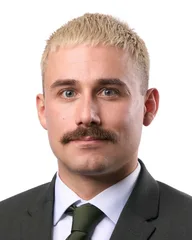
Lukas Sieper | Germany DEU | Non-attached Members (NI) | 390 |
| 2 |
|
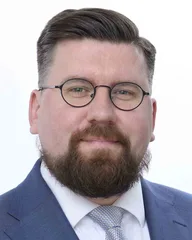
Juan Fernando López Aguilar | Spain ESP | Progressive Alliance of Socialists and Democrats (S&D) | 354 |
| 3 |
|
Sebastian Tynkkynen | Finland FIN | European Conservatives and Reformists (ECR) | 331 |
| 4 |
|
João Oliveira | Portugal PRT | The Left in the European Parliament (GUE/NGL) | 232 |
| 5 |
|
Vytenis Povilas Andriukaitis | Lithuania LTU | Progressive Alliance of Socialists and Democrats (S&D) | 227 |
All Contributions (150)
Preparation of the Special European Council meeting of February, in particular the need to develop sustainable solutions in the area of asylum and migration (debate)
Mr President, Madam Minister! Disappointment and hope are very close when it comes to migration. Looking back again at the Future Conference, we can see that citizens are extremely disappointed that Europe is not able to act in the field of migration and that many problems arise from the fact that Europe is not able to act. And that is why it is really extremely important to see that only European solutions are possible here. I think that hope is indeed the roadmap here and that Parliament has agreed on a roadmap with five presidencies of the Council. But if I listen like this and watch the pace, then I wonder if this can be achieved at all in the time that still remains for us. And when I see that you always want to pick out raisins here – individual points, one the screening, the other points: This will only work if it is a package that is truly based on international law, our values, human rights. And one thing I would like to say again: I'm from Wall City. Building walls and fences has always been a declaration of bankruptcy, never part of the solution.
Revision of the European Works Councils Directive (debate)
Mr President! Commissioner, ladies and gentlemen! I would like to thank the rapporteur and the shadow rapporteurs for this report. And it shows once again that Parliament is able to work out good compromises together, and that deserves broad support in plenary. Strengthening democracy is the challenge. We have discussed it here several times this week, and we can see that where people can get involved, their working environment can be shaped, democracy will be strengthened. I am not surprised that from the far right here in the House – ID – the strengthening of democracy is not so central and that they equate this with bureaucracy. But that's a mistake. When we look at the directive on the establishment of a European Works Council, one of the great innovations was that we designed these design rights transnationally. Many have already said it: Times have changed since 1994, and even the last adjustment has not been enough. We have huge transformations ahead of us, huge transformations. It is about the Green Deal – implementation – and digitalisation. And that is why this is now the opportunity to actually strengthen democracy, to strengthen the champions of democracy in the workplace, who act transnationally, and here, as the report suggests, to close loopholes and strengthen social rights. I would also like to take a look at the Commission: take note of this report. So, to see the report, that's just not enough. We need a Commission that delivers here and that actually takes up and not only takes note of this broad desire to actually strengthen democracy in the workplace. One more note: I can only recommend to all who have doubts here and say: “What are these European works councils anyway? This only creates new bureaucracy’: Look around at home in your city, in your region where you live, talk to the European works councils. I did this yesterday with some, and they expect us to deliver here so that we can really say: We are equipped to meet the challenges. And we do not allow a substantial part of it to be deprived of democratic rights.
Revelations of Uber lobbying practices in the EU (debate)
Mr President! Ladies and gentlemen, many of us have recalled the hearing that took place in this House's Committee on Employment and Social Affairs. It was really a stellar moment for Parliament, and every now and then our breath stalled when we heard what methods Über works with. And that's why it's right: Whistleblowers need our special protection. They take risks because they realize that something is going wrong in their company to make sure that this is stopped. And also thanks to the journalists. They've worked their way through thousands of these files. This was actually only possible in a consortium to inform the public and to ensure that we shed light on this darkness and know what is actually happening in the backrooms and backrooms, as About European governments has led to deregulation of their markets in order to establish and expand its business model, at the expense of employees. And if the compromise on the negotiating mandate is confirmed, then for me it is also proof that this House, this Parliament - unlike some governments - cannot be impressed by this massive lobbying, which takes place directly or indirectly. And what is this about? This is not just about a company or platforms. In reality, it is also a question of having a choice between good working conditions and social protection for all those who are employed and offer their labour power, and the establishment of new forms of Wild West capitalism, which are also spreading further and further. That's why we have the choice, we have postponed the vote. This may give some people time to think again. We have the choice to make a decision on whether to leave millions of platform workers in the rain or whether to make sure that they also know – not only today – how much money they are getting so that they can pay their rents, that they can plan and that they have access to the labour market and good employment.
Terrorist threats posed by far-right extremist networks defying the democratic constitutional order (debate)
. – Madam President, Minister Roswall, Commissioner Johansson! Thank you for the clear words also regarding the dangers that threaten our democracy here. We have known for a long time that we really need a defensive, a contentious democracy. With us in Germany, this discourse and the awareness of it have really arisen from the experiences of National Socialism, and it is important for us that democracy defends itself against the enemies. However, it also depends on the citizens who really play a very active role here. It is therefore good that we discuss what we can do here at European level and how we can counter these right-wing terrorist threats. It has already been said: We don't just have to look at countries like the US or Brazil. We can see what is happening in Europe here, and we have seen that the pandemic, but also the war, is really contributing to the radicalisation of certain groups, far-right movements, foundations and citizens. That must make us think. We've also heard that we need to take a closer look: Who is funding these groups? Russia is indeed one of them. We must and can build stronger hurdles here in Europe, as the European Parliament, so that this will no longer be possible in the future. We have had terrible experiences in Germany. We have had the NSU, a group that has roamed murderously through Germany and murdered citizens for racist reasons. We have had long blinkers – including the authorities – as it really came to light that it was not just any ‘donor murders’, as was transported in the media, but really relevant groups. We have now, and this has already been mentioned, actually had this raid on the Reich citizens and must state that in Germany, according to the constitutional report, we have 21,000 people who are attributable to this environment. We really need to do more to get into these groups. The Commissioner said: It is not the abandoned losers of globalization who go into such groups, but it is precisely the middle of society, it is academics, it is nobles, it is doctors. We need to find the right answers. If we look into research, we see a point that more needs to be done, because the normalization of such movements, which we find, in Europe also contributes to these movements gaining stronger support. Again, there is a lot to do for us here in Parliament to ensure that this fourth wave of right-wing extremism and terrorism does not spread further, but we stop it – together.
Conclusions of the European Council meeting of 15 December 2022 (continuation of debate)
Madam President, Happy birthday from my side as well. Six out of ten Europeans are satisfied with the cooperation of the Member States in addressing the social and economic consequences of the war. On the one hand, this is good, but it also shows that there is still room for improvement and that everything stands and falls with it, that we give citizens the confidence that Europe is able to meet these challenges. And indeed: We have inflation, and purchasing power is under threat, which worries many people in Europe. The high raw material prices pose major challenges for our companies. And that's why it's not enough to just talk about competitiveness, but when we talk about competitiveness, we're always talking about jobs in Europe. And indeed, it is extremely important that we secure the economic and industrial base, all the more so since we have the U.S. Inflation Act But it also has a big climate and a big social package. And that's why I'm not just asking for the old lyre, but that we really develop new concepts here to give confidence. And allow me to say one last sentence about Iran: The Iranian Revolutionary Guards must be placed on the EU sanctions list. That's very clear, and it's overdue.
Tackle the cost of living crisis: increase pay, tax profits, stop speculation (topical debate)
Madam President, 2022 will be a year that will be specifically mentioned in the history books, including whether it is a crucial year for stabilising democracy or weakening it. We can see that rising energy prices and rising inflation are simply causing many people to have less money in their pockets and that the conversations before Christmas revolve around: Where can you save, where can you limit yourself? The hardest hit is, of course, poor families, who had to turn around every euro before and wonder whether to eat or heat. When we look at food prices, we see that they are rising more than energy prices actually give. Therefore, it is obvious that we have to take action here and that we do not allow companies to enrich themselves here and actually only increase their profits at the expense of the people. That is why it is important, as the Commissioner has said, that we have to absorb the excess profits and that we have to support the vulnerable groups much more than before – those who need it most – so that this crisis does not turn into a crisis of democracy. This also means that we need to increase wages. But in addition to rising wages, we need supportive measures for these groups, because this alone cannot be achieved. That's why it's important: We need an initiative that the directive on the minimum wage, which has two years to transpose, is implemented earlier so that we really give more money to those who need it most. Let's do it!
The recent JHA Council decision on Schengen accession (debate)
Mr President, Commissioner, Minister! We all welcome the fact that Croatia will actually be there from 1 January. That was a good decision and I really congratulate everyone who contributed to it. But it has already been said by the Commissioner, by everyone: It was really a serious mistake on the part of Austria and the Netherlands, Bulgaria and Romania, who have met all the criteria for years, and who have even agreed to accept these additional requirements. fact-finding missions To show good will, to deny it. This will only strengthen the anti-European, populist forces in these countries. That's why I heard a little glimmer of hope. But that's not enough, because we always do it like this: It does not work – Promise, it does not work – Promise. We must deliver that these two countries are really included, because rules must apply to everyone, in every club. Otherwise, the base here will erode us. That is why we need a clear signal here.
Suspicions of corruption from Qatar and the broader need for transparency and accountability in the European institutions (debate) (debate)
Mr President, ladies and gentlemen. I think it has become quite clear that this is a tough week for all of us. I have rarely seen so many feelings in this Parliament: So much anger, so much disappointment and so much real shock. But I believe we have shown that this attack, which is really aimed here at our democracy, at the credibility of our institutions, continues to challenge us beyond these emotions. We have taken the first steps in great unity today. And I would like to thank Commissioner Ylva Johansson for the clear words, because I believe that we, as institutions, must also work harder here to tackle such corruption, criminals. That is why it is right that we have proposed, for example, an independent ethics council for all the institutions. I am glad that the Commissioner and the Presidents of the Commission support this. We also need to get the advice. And we have to do our homework here in our house when it comes to lobbying third countries, companies, etc. That's what we're going to do. In the new year, we must immediately try to regain the confidence that we have lost here.
A need for a dedicated budget to turn the Child Guarantee into reality - an urgency in times of energy and food crisis (debate)
Mr President, Commissioner, Minister, ladies and gentlemen! Imagine this block here would be filled with children like the rest of the house. Then on this side, all the children from poor families sitting in cold apartments would get barren breakfasts, their shoes broken, their talents not encouraged. That would be the reality, because poverty is spreading to the middle of society. That's why it's so important that we don't have Sunday or Christmas speeches here. This week we have a chance to vote in favour of an amendment that will finally equip the child guarantee in a better way. We made it through the financial crisis with the Youth Guarantee. We can do the same with the child guarantee. But that means that the room will not be as empty as it is now, that we will talk to everyone in the political groups and make sure that this request is supported this week. This is your chance. This is our chance to make sure that we have sustainable investments in the children, because they are our future and because we can actually achieve a lot with relatively little money.
The need for a European solution on asylum and migration including search and rescue (debate)
Mr President! I believe that, in the light of the debate here, it is good that we remember once again what the citizens of the Future Conference on Migration wrote to us in the home book. They said that we should act more decisively and finally achieve a common migration policy, and I believe that the migration pact is the proof of what we have to create in order to follow it. And they have told us once again that they want a reform of European asylum law based on the principles of solidarity and fair sharing of responsibilities, and they recommend that we ensure common EU rules on procedures for examining applications for international protection, which are to be applied uniformly to all asylum seekers, and that they must take into account human dignity procedures and international law. They also want us to review the Dublin system – solidarity and a fair distribution of responsibilities across Member States. And if nothing fundamentally changes, populist actions such as those in Italy will continue to divide Europe, poison the climate and leave citizens in doubt; and also here: Acting instead of populist games.
Conclusions of the European Council meeting of 20-21 October 2022 (debate)
Mr President, Mr Vice-President Šefčovič! It is good to prepare for next winter, and many of the measures being discussed by the European Council will not take effect until next winter at the earliest. But it is also very daring to say that we are already well positioned, that everyone will come over this winter as well. Many people don't know how to pay their bills. Companies that are energy-intensive have registered short-time work, small companies stand with their backs to the wall. That is why energy prices must now go down and purchasing power must be strengthened, and that is why over-profits across Europe must indeed be sufficiently absorbed and used to support the weakest. This is not happening in Europe at the moment. And that's why citizens can't warm up this winter to be supported next winter. We now need immediate action in Europe, preferably a European solidarity package, as proposed by the S&D Group.
Whitewashing of the anti-European extreme right in the EU (topical debate)
Dear Mr President, ladies and gentlemen, One can get the impression that trivialization and normalization of right-wing extremists or post-fascists is always what the others do, what doesn't happen where we are. But that's not the case, and that's why we put it on the agenda. We simply see that in many Member States right-wing extremists, populists, post-fascists, parties with a Nazi past are winning and exploiting people's fears and concerns. We have seen it in Italy and Sweden, where they make it all the way to government participation – and in both cases only because they can count on the support of parties of the so-called political centre. At the same time, parts of these parties have adopted the discourses of these parties, and they also normalize them with them. We look at Italy, and there we can see that Silvio Berlusconi, who is Manfred Weber's close party friend, has entered into a coalition with the Italian post-fascist brothers. And how does the leader of the largest faction in the House react? He's just trivializing it. He asserts that Forza Italia and Berlusconi are only in this coalition so that it remains pro-European. You're not serious, Mr. Weber. Would you enter a government with the AfD in Germany to say that we want to ensure that it stays on the pro-European course? I mean, we've just seen the days through new tweets from Berlusconi, on whose side he's on: On Putin's side, where he reiterated that he wrote him a great letter and sent 20 bottles of vodka and he reacted just as nicely. Colleagues, these patterns of trivialisation are really dangerous. They are politically dangerous, and we have seen how long Orbán and his illiberal democracy have been downplayed here in this House in the largest group. Let's turn back, because that's a dangerous path. Back to a bulwark of democracy against right-wing extremists and post-fascists!
Keep the bills down: social and economic consequences of the war in Ukraine and the introduction of a windfall tax (debate)
Mr President! Many have said it here: This energy crisis threatens the very existence of millions of Europeans, and ordinary workers cannot cope with such price increases. The worst hits the poorest. 30% in Europe cannot make any reserves. That's why the first answer is: Wages up, prices down and solidarity with the strikers here in Europe. The excess profit tax has already been mentioned to finance this. But what really worries me is the skyrocketing energy prices that affect millions of jobs in energy-intensive industries. If you don't act faster here and if you just let this go, it breaks the industrial backbone of Europe. And what is the consequence of that? Not only the unemployed and impoverished regions, but also more global dependency and less strategic autonomy. That is why Europe now has to act faster and can no longer rely solely on the problem to be solved. Those who want good prospects for the future are now acting courageously.
The accession of Romania and Bulgaria to the Schengen area (debate)
Madam President, Minister Bek, Commissioner, ladies and gentlemen! In fact, for eleven long years, Romanians and Bulgarians here are waiting for the door to the Schengen area to finally open and for them to get this privilege that all Europeans want to enjoy. It has been said: There are 27 million people involved, tens of thousands of companies, and both Member States meet all the criteria. Now one wonders: Parliament has long since given the green light. The Commission has also reiterated that it has given the green light. But it is the Council that has not given the green light. And I want to say one more point about countries that block this: It is precisely the spiritual arsonists like this screamer here in this room that scares the governments that prevent this. And they have to take action against it, because to tolerate it, to take over, creates much more division in Europe. But I would like the Council to: I think it is a great opportunity for the Czech Presidency to open this door after eleven years. That is why it is important that we not only conjure up what an achievement this is, but do it. But let me also make a remark: It is once again the unanimity that makes it possible for a single country to prevent eleven years, that if all the criteria are met, the law still does not come into its own and that this can be prevented. We need to change that too. It has really been emphasized here: If we continue to have first-class and second-class freedom of movement in the long term, it will shake confidence in European law and also in the institutions. That is why my appeal, Mr Bek, is that you, as the Czech Presidency, make the change here, give courage so that the Council can really make this decision. It's been overdue for eleven years. 22 is the year for that.
Countering the anti-European and anti-Ukrainian propaganda of Putin’s European cronies (topical debate)
Mr President, Minister Bek, Commissioner, ladies and gentlemen! When the AfD speaks of the need for objective debates in this House, I can only say: Take care! Mr. Beck is no longer there. But I would like to say again: It was indeed a mistake of many parties to trust Putin for so long. But it's his party, and it's his country chairman Höcke, who called in August this year to open Nord Stream 2. So much for the facts in the house. And which parties are now instrumentalizing people's fears and concerns, driving them onto the streets, trying to destabilize democracies? These are the right-wing populists. These are exactly those post-fascists, and they're doing Putin's business with it. He can rub his hands, because that's what he's trying to do. And he has an army of bots to support him, and a lot of useful idiots to spread it. And it was the US intelligence service that recently pointed out that right-wing populist parties and candidates received over 300 million francs in 2014 after the annexation of Crimea to destabilize our democracy, and we have to put a stop to that. That must not be possible. For this reason, however, those who now speak of Ukrainian refugees as welfare tourists or social tourists also set the fuse here in such a situation. Let's work together to prevent Putin from winning!
Statute and funding of European political parties and European political foundations (debate)
Madam President, Commissioner Jourová, ladies and gentlemen! As shadow rapporteur, I am pleased that we can set the course to strengthen political parties in Europe and also foundations. It has already been said: What we want is to make them a bit more visible, so that they don't just show up every five years just before the European elections. We are strengthening the democratic control of the European parties and their member parties, because we also want to strengthen the control that they adhere to European values, that they profess to them, as we have just enshrined them in the European treaties. We do not want European parties or foundations that do not respect the values of our Union to be financed with European funds, or perhaps even to use these funds for actions that contradict the values. It is important again – and this has already been said, my colleague Wieland has said it: We do not act here in the European elections as parties in a vacuum. That is why it is important to profess colour so that citizens know which party family you belong to, which programme is actually represented at European level, and to publish this prominently on the website, including the logo. An important point for us – and also for me – has always been that we strengthen gender equality here too, that European political parties have to show their colours here too, that they have to make public on their website the way they do in terms of gender equality and candidate list. Because one thing is also clear: We need much stronger measures to ensure that it does not remain the case that we have 37% women in this European Parliament, but that we manage to ensure that both genders are equally represented here.
State of the Union (debate)
Madam President, ladies and gentlemen. The specter is about Europe, the specter of recession. We are in the race against time, but in the race of deeds, not in the race for beautiful words and symbolic politics. They have identified important concrete projects: price caps, Excess profit tax. That is a good thing, but you have again systematically neglected one issue, namely how to deal with the social consequences of this crisis. Because the fear goes all the way to the middle class, the fear of slipping into poverty, and the fear of not being able to pay the bills anymore. If we look at the gloomy perspectives, for example in the energy-intensive industries, then it is negligent that we are not already really equipping SURE 2.0, SURE + – whatever – at this point, so that we are prepared and do not still get mass unemployment. Therefore, my request: Upgrade socially! Social peace in Europe needs this.
Adequate minimum wages in the European Union (debate)
Mr President! I would like to express my great thanks, firstly to the really experienced rapporteurs, secondly to the courageous Commissioner, but also to the French Presidency of the Council, which is not here, but which has conducted the negotiations very courageously and clearly. But I have a big request, a proposal to the Council, that tomorrow all the Member States compete on who can transpose this directive as soon as possible. In times of exploding prices for energy, but also for food, we need clear signals that we want to strengthen the purchasing power of the people who keep our store running here. And the Council has it in its hands. My request, my suggestion is also: Do not wait with the action plans to strengthen the tariff policy. Next week, get together with the social partners, with the associations nationally, and get it off the ground. We cannot afford the luxury of waiting two years to implement this directive. If you take it boldly, then, I believe, this is exactly the right signal in a politically difficult time.
Surveillance and predator spyware systems in Greece (debate)
Mr President! I have to respond to my previous speaker: When it comes to myths, it's about facts. What we find is that exactly 50 years after the Watergate scandal, we have eavesdropping scandals in the middle of Europe. And we have them in Greece, and we have them in Poland. I myself have met victims who have been intercepted: Opposition politicians in the middle of the election campaign. It was an internal election campaign. And if you are not afraid of it, then you can put all the facts on the table. But as Commissioner Reynders has said, it does not happen here that they say: Where is concrete and substantial evidence of anything? And that is why it is all the more important that we not only talk here, but that we have a complete education and that this House continues to contribute to ensuring that we do not have such a lopsided level in more and more countries, that the list of Member States that are trampling on democracy and fundamental rights and the rule of law is getting longer and longer. That is the responsibility of all of us. Let's perceive them!
Amendment to Parliament’s Rules of Procedure concerning Rule 216 on committee meetings (A9-0203/2022 - Gabriele Bischoff) (vote)
Madam President, we are now voting on the amendment of the Rules of Procedure to allow for a hybrid committee working regime in the future. The working group on the Rules of Procedure has been mandated by our President to prepare a report to implement the decision of the CoP of 2 June, and this decision was supported by all the political groups. We have prepared this report under a lot of time pressure and at short notice. Our working method is based on consensus, and we achieved a consensus in this working group. On this basis, we proposed my report that is presented today for vote. On Monday, it was supported by a broad majority in the AFCO Committee. Dear colleagues, I now count on you also to support to amend Rule 216 of our Rules of Procedure and to respect the consensus that has been found first in the CoP, then in the AFCO working group, then in the AFCO, and I hope also here in the plenary.
Conclusions of the European Council meeting of 23-24 June 2022 (continuation of debate)
Mr President, Vice-President Šefčovič! Take a close look: This symbolizes the Council's attitude towards the House of Democracy here in Europe. We are no longer present in the debate on the European Council and we apologise for having had other commitments. And this is precisely the attitude towards the citizens who have worked hard, who have put forward proposals for the reform of Europe and who have written to us in the pedigree that there should be Treaty changes, and this requires a Convention. And Parliament triggered Rule 48, and the President of Parliament wrote this to the Council once again in the pedigree and said that they had to act. And what do they do? They are not even present at the debate. It is again and again the goalkeeper's fear of the penalty that threatens the future of Europe. That is why, Mr Michel, if you are still listening: It is important that the Council finally act and play its role at the next European Council and set up a Convention.
EU initiatives to address the rising cost of living, including the implementation of the European Pillar of Social Rights (debate)
Mr President, Minister Bek, Commissioner Nicolas Schmit! We launched the Pillar of Social Rights when we had the painful experience of the financial and economic crisis and the social crisis in many Member States. But we didn't know that soon after that we would have much bigger crises that would affect everyone. We only saw this in the pandemic, and we have managed to develop good instruments such as SURE as the European Union. But I am afraid that this autumn and winter will be one of the biggest tests of solidarity in Europe. The question is whether we not only find beautiful words or whether, like Mr Radtke, we are trying to break this into national politics, but whether we have concepts, whether we have strategies at European level. And it is not just about energy poverty and security, it is also about the question that we have to take people's fear away, namely the fear that they will no longer be able to pay for their heating costs, the fear that the money they have in their pockets will become less every day because inflation simply explodes. That is why I think it is good that the Commission says that it will do everything it can to ensure a social summit. And my question also to the Council: Do we understand what lies ahead? Do we understand that if we can't do this now, the world and the EU will be different in the spring and that this is why we really need to take action? It has already been said: cut energy prices. It has been said: tax over-profits and that we really relieve the burden on people with small incomes, middle incomes and that we in Europe do not have a patchwork of measures – one country cuts down, the other takes other measures – but that we really also pool our resources. The different instruments have been mentioned, but I also have the impression here in the room that it has not yet been understood in what situation we are. Therefore: What are the Commission's answers? What does the Council do other than business as usual?
Preparation of the European Council meeting of 23-24 June 2022, including the meeting with Western Balkan leaders on 23 June - Candidate status of Ukraine, the Republic of Moldova and Georgia (debate)
Mr President! There is war in Europe and it is the right message to give candidate status to Ukraine, Georgia and Moldova. And one must also communicate clearly and honestly that this will cause enormous efforts in these countries to actually get through this process, which takes a long time. But it is also important for the European Union to become capable of enlargement. And here the conclusions, the drafts we have seen, are lame and insufficient. The EU must also make enormous efforts, for example in terms of the capacity to act, the safeguarding of democracy and the rule of law – I will only mention Article 7 here – to carry out the reforms that citizens have written to you in the genealogical book, to us in the genealogical book. And that is why it is important that we now really get a clear signal from the Council, commitments to make the EU fit for enlargement and to ensure that we have a good future in a united Europe – here, democratically.
The call for a Convention for the revision of the Treaties (debate)
I would like to ask Mrs Laporte: You have to decide. We have now involved the citizens – 800 randomly selected citizens. You see this approach as one that does not involve citizens, but that is not true of reality. And now that we have involved the citizens, if we say: No, we do not like the result and therefore we do not want to take this into account, do exactly what you are accusing the European Union of: They don't take citizens seriously. I would like your answer to that.
The call for a Convention for the revision of the Treaties (debate)
Mr President, Madam Vice-President, ladies and gentlemen. We have met here today and are discussing a historic decision, namely that indeed the European Parliament is clearly assuming the responsibility that Mrs Šuica also referred to: The responsibility to say, now we have to commission a convention, and we have to start it. Not because we have nothing else to do, but because we see what serious times we are in. And we promised the citizens we called together, who worked for months, one thing: that we take their proposals seriously and that we do not say: Well, we invite them, let them make some suggestions, and then we make business as usual. And that is why it is important that we also clearly identify the areas that are important and that are also important to citizens: A Health Union, an Energy Union. But they also want a stronger social and democratic Europe. And those who equate social Europe with socialism have understood nothing and should perhaps invite Jean-Claude Juncker to join the Group - one of those who have really pushed social Europe forward in the last decade and who have understood the importance of this element of a European unification process. But today we are talking about responsibility. And indeed, this means that we did not decorate a Christmas tree with all the wishes you can imagine, but listened to what the citizens said, who clearly wrote us in the pedigree. One point is essential: With unanimity, we are destroying this European project because we are unable to act, because we cannot react. And that is why we have also focused on this in this resolution, together. And that actually means that something like this, which happened to Hungary once again in the European Council, cannot happen in the future. This is also why we said: The issue of sanctions is important here to ensure that in the future we will really manage to decide by qualified majority in the main policy areas. And I believe it is important that this time, with a large majority, we actually carry this resolution with the amendments over the threshold here, because only if we send a clear, strong signal to the European Council, to the Council, to the Member States, will we be successful here too. And that is why it is a pity that the French Presidency is not there. But I hope that you will message, which is given here, catches on. And that's why I can only ask you all: Take this responsibility, this historic opportunity: A large majority in favour of this resolution.