
| Rank | Name | Country | Group | Speeches | |
|---|---|---|---|---|---|
| 1 |
|
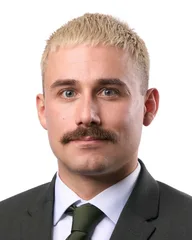
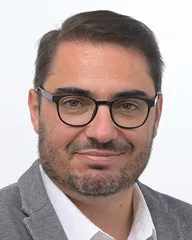
Lukas Sieper | Germany DE | Renew Europe (Renew) | 487 |
| 2 |
|
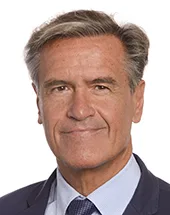
Juan Fernando López Aguilar | Spain ES | Progressive Alliance of Socialists and Democrats (S&D) | 454 |
| 3 |
|
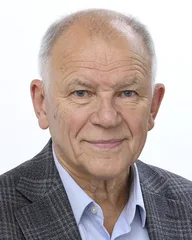
Sebastian Tynkkynen | Finland FI | European Conservatives and Reformists (ECR) | 451 |
| 4 |
|
João Oliveira | Portugal PT | The Left in the European Parliament (GUE/NGL) | 284 |
| 5 |
|
Vytenis Povilas Andriukaitis | Lithuania LT | Progressive Alliance of Socialists and Democrats (S&D) | 273 |
All Speeches (143)
Mr President, Vice-President Mînzatu, ladies and gentlemen! If you listen here, you get the impression: Difficult times, new rules, but old game – if you listen to the speeches here. It shows that sustainable fiscal policy and future investments are now essential if we as Europe can truly give our citizens stability, prosperity and security in uncertain times. We have here as a new element the framework for social convergence, a warning mechanism, and we as Parliament underline this in the report, we will look very closely at how it is implemented. We have seven Member States that are at increased risk when it comes to social protection when it comes to good work, even when it comes to poverty reduction. And that is why it is important to add to this, because all of this – as well as schools, as well as investments in digital infrastructure – strengthens competitiveness, even if the ideological camp, which speaks here of the will of the people, etc., cannot see it. Competitiveness needs a stable social balance.
Cutting red tape and simplifying business in the EU: the first Omnibus proposals (debate)
Date:
10.03.2025 18:04
| Language: EN
Speeches
Mr President, colleagues, who does not like to have simple legislation with a high level of legal certainty? We call it 'the art of doing legislation'. Anyone? I don't think so, even though the Commission is not here. We as S&D support this. We engage in simplification, and we want to better protect SMEs from multinationals putting their obligations on them. But – surprise! – if you really look at the package, you can see that quite a few of these proposals don't deliver on simplification. And Omnibus: I think the term is to maximise people's confusion because they don't know what an 'omnibus' is here. If you look at these four very different legal proposals, you will find out that these are legal proposals we worked on. We found compromises in this House. We found majorities in the last mandate. If you look at two of these four omnibus packages – especially if you look at the due diligence proposals – it is pure deregulation. It is not simplification. And it's not rational proposals for simplification: it affects real people. You're talking about growth and jobs; we are talking about growth and good jobs, also for the fruit picker from Morocco, also for the child that has to dig minerals or the transport worker that works here and delivers our products. These proposals were written by multinationals, by business lobbyists that lobbied for that for a long time. And EPP, Mr Tobé, instead of talking with the other political groups, like S&D, like Renew and the Greens, you cowboy-like march through without any talking to come up with a fast procedure here. But I think the art of doing law in Europe was finding good compromises. It was not the cowboy style of marching through and just push, push, push without having good legislation. Because what good legislation can come out of this – without any consultation, without any legal assessments here – to march through? I have to say, Mr Tobé, but also to Mr Weber, it has consequences if you leave how we did legislation in the past and you want to do it with the far right in this House. You have the choice: to negotiate with us for simplification, for better protecting SMEs, or you march through with the right here, but this will have consequences for the whole legal term. In this sense, I hope you come to your senses.
First of all, Or I can speak German. When I pointed out that the rights do not understand that decarbonisation and competitiveness belong together – this means that if you really want to have an automotive industry in the future, you cannot turn back the wheel now, but must really invest and rely on decarbonisation here. The same goes for the economy. And indeed, one question remains open here, namely: How will the investments be financed? How do we ensure that if, for example, the Recovery and Resilience Facility expires in 2026, we will continue to have resources available in the future? We just have to do that.
Mr President! Mr Executive Vice-President Séjourné! In fact, there is a lot of talk here about the direction of the compass. North Pole, South Pole - where do we really want to go? What's the message? I believe that there is broad agreement on the objectives here in the middle of the House: Combining decarbonisation and competitiveness, as the right will never understand, innovation and reduced dependencies. But the question is how to get there. And I was pleased, Mr Séjourné, that you mentioned the high-quality jobs, which are simply central, which are to be created. But how do we ensure that they are also of high quality? And then when I look at the fact that you're on the 28th. regimes want to involve labour law – this would further destroy the systems where there is existing codetermination. And we know that co-determined companies are more competitive than others. Therefore, I can only advise you very, very urgently to take out the labour law. When we look at the US, with the IRA The United States has given an answer. They didn't publish a compass, and they didn't have big debates, but they really took money into their hands to invest. Because the area of investment, which also remains a void here. Where do the investments and innovations come from? I think there's a need for reconnaissance. The solution less is more helps us zero. It's gonna be a pipe-cracker. We need to do better, and we need to work together in this direction.
Madam President, Commissioner Šefčovič! Listening to the debate, you have such an impression of why perhaps Mrs von der Leyen is not here. Because this work programme really inspires hardly anyone. Bold, fast, easy – write fast. But obviously not so easy to implement. And it has already been said: Simple does not mean too simple. Let me give three examples. If you think that you can do a good job to maintain competitiveness, you look into the program and ask yourself: Where are the measures for good work in AI in the workplace, for teleworking, for the right to disconnect? Bringing children out of poverty, for example, where are the measures? We don't see any. Competitiveness needs the right framework, investment. It has been said that it is a shrinking draghi, which is being presented here because, for example, the parts are being taken up for de-bureaucratisation, but the investments, that is the backbone of this report – misrepresentation! There's nothing. We need a permanent investment capacity. Where do we see something here? The Social Convergence Mechanism? Misrepresentation! One topic drives all people around: Affordable housing, affordable housing. How can Europe support this? homelessness; Help people find a place to live again. Short-term rentals that really evade housing. Where are the bold measures?
The need to address urgent labour shortages and ensure quality jobs in the health care sector (debate)
Date:
11.02.2025 13:07
| Language: DE
Speeches
Mr President! Madam Executive Vice-President! Indeed, the previous speaker just recalled that during the pandemic, millions stood and clapped on the balconies in support. And now exactly the same nurses, nurses, doctors expect us to improve their working conditions. And indeed, when we talk to nurses and carers, we find that it is not only the pay, but it is also the permanent overload – that there are not enough forces that are saved at all corners and ends. That is why it is important that we invest here and that we ensure that good working conditions also serve to ensure that people can really stay in their jobs until the end of their professional careers. That we give better pay, but also that we invest in the education of the people we have here who also provide care services. And if, and we will have to do so, we are actually recruiting carers from other countries, then we must do so on decent terms. And then we also have to make sure that we don't steal the well-qualified skilled workers from others. We have to do it with responsibility.
Challenges facing EU farmers and agricultural workers: improving working conditions, including their mental well-being (debate)
Date:
18.12.2024 16:55
| Language: DE
Speeches
Mr. Chairman! Commissioner! In fact, we are already discussing good work all afternoon, and mental health is very much related to good work. I would like to focus on a group in agriculture that is very important. The Commissioner referred to it, namely, among the 10 million people we have as employees, the 7 million day labourers, the seasonal workers, whom we used to call migrant workers, are a really important group, without whom the tomatoes would not end up on our table, not the lettuce and not the apples. And that's why it's important that we take a closer look. And indeed, social conditionality is an important step, really an important step towards more justice, but we also have the Commission’s reports, for example on mobile seasonal workers from last year. And there it is again, how often the rights are violated, that they work under particularly precarious working conditions and are also often exploited. And that is why it is important that, in addition to the analyses, we actually also take a closer look at how we can better implement this mechanism, and where it has gaps, how we address them. And I want to make this clear again, specifically to the people who, for example, sting asparagus in my area in Germany and who also have to be socially protected so that they do not end up without social protection, just because they come, for example, from another country. But if, as is currently the case every 350 years, the asparagus farmer only has to count on a check, then black sheep can simply hide too easily in the herd – and we have to get there.
Tackling abusive subcontracting and labour market intermediaries (debate)
Date:
18.12.2024 16:09
| Language: DE
Speeches
Mr President! Madam Executive Vice-President! I met a representative of the Berlin City Mission two weeks ago and we talked about the problem of homelessness in my city – more than 80% of the people come from Central and Eastern Europe. And he gave me a sentence; He said: "For many people in Europe, labour exploitation in such subcontractor chains is the start of the descent." They come because they hope that they can earn money with honest work, hope for a better life for their families, fall into the hands of dubious intermediaries. The families are in debt, then they don't get their wages and quickly end up at the bottom. And – Commissioner, you said it – we have different EU legislation. Here a little, there a little. But we really need to tackle this complex and widespread system. And I want to take an example: In the meat industry in Germany, subcontracting has become the rule – we had really brutal circumstances – and we have made a law that just prohibits subcontracting for the core areas. It works, it works, businesses continue to prosper and people have better working and living conditions – that is what we need in Europe. And that is why we are calling for a European legal framework to restrict subcontractor chains and, above all, to prevent the outsourcing of core activities. We must dismantle this systematic network and ensure that everyone in Europe can have a good job. And that will only be possible if we approach it holistically.
Promoting social dialogue and collective bargaining and the right to strike in the EU (debate)
Date:
18.12.2024 15:14
| Language: DE
Speeches
Mr President! Dear Executive Vice-President Mînzatu, welcome to the first exchange here in the European Parliament, in the heart of European democracy, on such an important topic. This is about the foundations for workers in Europe, and I really invite all workers in Europe to listen to what Mrs Tovaglieri or Mr Torselli are spreading here for the patriots and ECR. This is anti-worker. Because – and here I would like to quote an American trade unionist who said: ‘Show me a country where there are no strikes and I will show you a country where there is no freedom’; and that it is essential, indeed – one thing distinguishes autocracies and dictatorships: There is no right to strike. We must be very concerned when we see in Europe that the right to strike is being further and further restricted. Those who want good work – and this Commission wants good work and good wages - do not fall from the sky. Strengthening collective bargaining policy means that you have a right to strike, that people can take to the streets for their demands, so that they can negotiate on an equal footing. Because without such instruments, there is no difference between capital and labour. That is why it is important that we, as a parliament, as a house of democracy, keep an eye on those who want to torpedo the right to strike and indeed collective bargaining, and that we, who protect it, expand and take care when collective bargaining policy and the right to strike come under pressure.
Strengthening children’s rights in the EU - 35th anniversary of the adoption of the United Nations Convention on the Rights of the Child (debate)
Date:
28.11.2024 09:18
| Language: DE
Speeches
Madam President, Commissioner, ladies and gentlemen! Today we are celebrating this anniversary, and it is not an exuberant birthday celebration, because we see what problems there are and that we are also in Europe in a dangerous downward spiral when it comes to child poverty. It is good that the Commission is providing a guarantee for children. They want to strengthen, but they need the means. That is why we are calling for 20 billion euros to finance the guarantee for children in order to lift them out of poverty. But we also need to increase the participation and visibility of children in politics here. That is why, in the last legislature, Parliament proposed that we proclaim a European Children's Capital every year, where we really talk about the rights and protections that are at the heart of it. I therefore call on the new Commission to: Take note of this suggestion. In fact, equip the guarantee for children in such a way that it can work, that we have 5 million children less in poverty, and at the same time set up a European Children's Capital. Let's put the kids first!
The Autumn 2024 Economic Forecast: a gradual rebound in an adverse environment (debate)
Date:
26.11.2024 13:57
| Language: DE
Speeches
No text available
Closing the EU skills gap: supporting people in the digital and green transitions to ensure inclusive growth and competitiveness in line with the Draghi report (debate)
Date:
24.10.2024 09:10
| Language: DE
Speeches
Mr President, Commissioner, ladies and gentlemen! In fact, this transformation will succeed if we take the employees here with us. And the Draghi report actually focuses on the need for further education and training, not only for competitiveness, but also for innovation. And it is good that this builds on the Pillar of Social Rights, which guarantees for the first time a right to further training – we must anchor this, this is a job for the next Commission. I am glad that the Commissioner has highlighted the role of the social partners because it is essential: that both sides that employers like trade unions, like works councils develop concepts together in the companies. And I am also happy – I have just come from a debate on ESF Plus projects, where both social partners in Germany, employers and trade unions, have developed a programme for advice and training. Please do not shorten skillsdebate, but see that we need a good basic qualification and actors in the companies that drive this forward.
Empowering the Single Market to deliver a sustainable future and prosperity for all EU citizens (debate)
Date:
21.10.2024 18:11
| Language: EN
Speeches
Madam President and dear Enrico Letta, I think it is very important that we still keep a vision of what we could do and what is possible, but where we lack the courage so far to do so. Jacques Delors always said that no one falls in love with the common market. That was true in the past, it's also true today, but you show that it's not only a single market, but it is what it does for people, how it enables people. And therefore we really have to boost the common market indeed, but also – in the spirit of Jacques Delors – to always have in mind that this always needs a strong social dimension going for it, if we want to also convince the citizens that it's in their interest to do so. But I also have to say I could comment on many things, because your report is very rich. I want to highlight the fifth freedom, a fair mobility, a new push here for innovation, and to deliver for our citizens.
International Day for the Eradication of Poverty (debate)
Date:
21.10.2024 17:34
| Language: DE
Speeches
Madam President, ladies and gentlemen! In fact: We are now talking about 100 million people at risk of poverty and social exclusion in Europe, one of the richest continents; Madam President has said: More than one in five people here in Europe. And this International Day for the Abolition of Poverty must really be a wake-up call here because we need more. Yes, we need a poverty strategy, but we also need concrete policies, and one of them is indeed that we need a fixed budget of 20 billion in our own ESF+ for the child guarantee to better protect the 19 million children – 19 million who have had the future stolen – from poverty, and we need action. But we must not only remain national, but, according to the Treaties, poverty reduction is also the main objective of European development policy. This must remain so and must be our compass for combating poverty around the world.
Ensuring sustainable, decent and affordable housing in Europe - encouraging investment, private property and public housing programmes (debate)
Date:
09.10.2024 14:34
| Language: DE
Speeches
Mr President, Vice-President Schinas! You can kill a person with an apartment as well as with an axe. That was a winged word 100 years ago. We are seeing housing costs explode in Europe at the moment and in some regions it is no longer possible at all to find adequate and affordable housing, a roof over one's head. Homelessness is growing across Europe and the promise we made to end homelessness remains empty talk. That is why it is important not only to stand by saying that adequate housing is indeed a fundamental social right and that it is also enshrined in the European Pillar of Social Rights, but also to look at what we can do to ensure that people with low and middle incomes can find adequate housing. I would also like to mention in particular young people who are in education and work, who may want to start a family. If they don't have the means to find housing, it encroaches on a lifetime. That is why people are asking themselves, Mr Ferber, what can Europe do to end this crisis? And Enrico Letta, in his report on the future of the single market, strongly recommended that the EU urgently tackle the design and application of all EU rules, funds and policies that have a direct or indirect impact on national housing markets. We've got a lot of stuff. We are proud that we will now have a Commissioner for this, and that we have a special committee here in the House, which we have helped to enforce. It will not regulate the market. We need a coherent Housing‐Plan in Europe. We will put pressure, including on the Commission, to ensure that this happens appropriately. As far as resources are concerned, this has already been mentioned here: If you have REPowerEU, you should also Re-empower European citizens are struggling to find adequate housing.
Taxing the super-rich to end poverty and reduce inequalities: EU support to the G20 Presidency’s proposal (topical debate)
Date:
09.10.2024 13:11
| Language: DE
Speeches
Mr President, ladies and gentlemen! I think Thomas Piketty sums it up very well: Inequality is not the result of pure coincidence or any inescapable necessity. It is always the result of specific political decisions. And that's what it's all about now. Because we are faced with a crucial question of social justice: Why do the richest pay much, much less tax than the middle class? Strong shoulders have to carry more than weak ones. This injustice not only leads to manifold problems, but also undermines trust in democracy. We live in a Europe where families and small businesses like the kiosk around the corner pay their taxes, while super-rich don't make an adequate tax contribution. We can't accept that. It's time for a fair tax system and time to make sure these strong shoulders carry more. This is what the people of Europe demand. They hope that politicians will finally dare to take responsibility for the wealthy worldwide. That is why we are not discussing an abstract issue of justice today. If everyone makes their fair contribution, we will continue to have more resources in the future to make the necessary investments for the future, for example in our infrastructure, and also to better combat poverty in Europe. We can then ensure that we can better equip schools and kindergartens so that all children, regardless of social background, have equal opportunities. Think about climate protection. We urgently need funds for transformation, and the CO2The footprint of the super-rich is a multiple of what ordinary taxpayers pay. We've had a lot of crises in recent years, and that's why it's important that we talk about it and change course. Julia Friedrich argues in her book “Crazy Rich” that we simply need to speak more openly about exorbitant wealth. Brazil's President Lula is doing it, IMF chief Kristalina Georgiewa is doing it, civil society representatives, economists and billionaires are all calling for a billionaire tax. The Brazilian G20 presidency has made a proposal for a global minimum tax of 2 percent on the wealth of billionaires. That could bring in $200 to $250 billion a year, and studies show countries are missing out on up to $4.8 trillion in tax revenue from tax havens. We also need to do more about it. Taxation is a crucial tool to achieve a fair, strong and sustainable Europe. That is why it is essential that nails are made with heads at the summit of the 20 most important industrialised and emerging countries in Rio on 18 and 19 November. We need a concrete roadmap for a mandate at the international level from the UN and OECD to negotiate concrete rules for a minimum tax for the super-rich, so that more tax revenues from the super-rich help to secure the urgently needed investments in infrastructure, climate protection, schools and education. Let's tackle it!
The crisis facing the EU’s automotive industry, potential plant closures and the need to enhance competitiveness and maintain jobs in Europe (debate)
Date:
08.10.2024 13:02
| Language: DE
Speeches
Madam President, dear Commission! It is an essential debate that we are having here, because we are actually talking about the existence of more than 14 million people. It doesn't help that you revel in yesterday's dreams or talk hoarse about having to go back now. Last week we went on a business trip to Audi in Brussels and talked to the people, to the management, to the works councils, to the trade unions. And the last thing – they told us – that should happen to us is to play a role backwards now. Instead, they pointed out how important it is, on the one hand, that the necessary investments are there and that one has a coherent industrial strategy and not individual elements that then do not work together, and that one has to make this huge change – people no longer like this term transformation at all – that one cannot make this giant change against the employees, but must do it with them. This also means that they must be involved at an early stage – which, incidentally, did not happen at Audi – and that democracy in the workplace must also be strengthened in order to involve them in this change. But I want to point out again: Where is Audi shifting its jobs? To Mexico. And why? Because the US, with its Inflation Reduction Act, has hired a giant vacuum cleaner to attract investment, and Europe does not yet have a coherent response, and it needs it very quickly.
The historic CJEU ruling on the Apple state aid case and its consequences (debate)
Date:
19.09.2024 11:05
| Language: DE
Speeches
Mr President, Commissioner! Indeed, this historic judgment is indeed a good message to citizens, to workers, but also to the many small and medium-sized enterprises, and it strengthens trust in democracy, but also in the institutions – and we know this is sorely needed. We really have to put a stop to such dirty tax deals, because they actually prevent us from having well-equipped schools that have digital infrastructure up to date, or from investing accordingly. And we talked about competitiveness here this week – a key factor in that. I would also like to thank the Commission for its tenacity, and of course – it has been stressed – this House has always been the engine behind it. But we need a systematic approach for the next Commission to close loopholes and really ensure that tax justice is everywhere and that we ensure that it further strengthens trust in democracy.
Madam President, What a signal! To come to Parliament, to the Chamber of the Heart of European Democracy, and not to stay in the debate, to hear what the Members have to say, I think it is a great pity, I would like to express here for this House. After Enrico Letta's report on the future of the single market, this report is the second report to provide a basis for the further development of Europe and the economy. Mr Draghi pointed out in his report that a core area for competitiveness is really essential: These are massive, massive investments, both public and private. This is important – as Mr Weber said – at a time when many workers fear for their jobs, where purchasing power has been declining for a long time and many workers are worried. That is why I would like to emphasize once again that we will never be able to cope with these enormous challenges of the socio-ecological, but also of the digital transformation without sufficient investments. We support the number given by Mr Draghi in his report, which ranges from 750 to 800 billion a year. This must be the first step we can take. But the ones behind it trickle-down economy, which shines through, which does not work; This has been shown. That is why we believe that one area is totally underexposed, namely that companies that have strong social dialogue, have employee participation, are more innovative – competitiveness – and that we also need to strengthen that.
Interinstitutional Body for Ethical Standards (debate)
Date:
25.04.2024 09:11
| Language: DE
Speeches
Madam President, ladies and gentlemen, ladies and gentlemen, I would first like to thank Katarina Barley, Daniel Freund and colleague Salvatore De Meo for their work. At the end of the day, seven institutions have come together to ensure greater transparency and to ensure that citizens' trust can grow again, as we know: Transparency, also mechanisms of control, are the breeding ground to ensure this. In the last days and weeks, I believe, there is no one who does not understand that these issues of anti-corruption, of transparency, of integrity are essential security issues. That is why we really see with the ethics body the possibility of strengthening transparency and integrity in the EU, and I wonder what the EPP is afraid of here, because transparency – we wanted to go much further as Parliament. It has been mentioned: We had a much stronger idea of what an ethics body should be. But we also know that we have negotiated with various institutions and this is the compromise. We know that it was Parliament that was the driving force to turn a much leaner proposal from the Commission into at least something that we can definitely improve in this House in the coming years. We also regret that the Council is not there. It is important that we keep the door open, as has been said, in order to have all the institutions here together. We have seen that self-regulation does not work. Therefore, it is important that we also have an independent ethics authority. And Parliament has always emphasised this with a majority here, so that we can actually create trust through it. That is why it has always been important to us that there are independent experts, that it is not used for political games and that we know that where we have experts, independent experts, it works better. We looked around the world, by the way. We discussed in the Committee on Constitutional Affairs with the Canadian Commissioner, whose country has a Commissioner for transparency and conflicts of interest, ethics. And I think: Yes, we are not yet satisfied with what is available, but it is an important step, a step towards more transparency and also towards more trust here. Finally, I would like to emphasise once again: You can always criticize. We know we are much more ambitious. But you, as the EPP, have already voted against the report, in which we set out our ambitious requirements. This gives the impression that you do not want any ethics authority, no transparency at all. That is why I ask you to reconsider this later, because this is the signal we are sending to citizens before the elections: We understood. We have had many headlines in the last few months, in the last few days, in which we could see how important it is that we act here now. Here is my appeal to this house: Agree with this ethics body. It's the first step. We can further improve this, but it is an important signal to the citizens that we are doing everything we can to increase integrity, to increase transparency, to ensure that the security of the European Union is not endangered by corruption and purchaseability.
La Hulpe declaration on the future of social Europe (debate)
Date:
24.04.2024 18:29
| Language: DE
Speeches
Mr President, Commissioner Nicolas Schmit, ladies and gentlemen! With La Hulpe we have raised another pearl on the chain of social Europe, to Gothenburg, to Porto La Hulpe. More will follow in the future. And the message from La Hulpe is: Whatever some neoliberals now dream that the time of social Europe is over, so much has been achieved. I have to tell you, this statement from La Hulpe says: We're gonna go on like this. And as Mr Radtke said, we have created the majorities here in the middle of the House so that citizens know: They will have a good job, they will have a good work and health protection. We also have democracy in the workplace. But I want to use my time again to thank a champion of social Europe, Agnes Jongerius. You've re-entered the world like no one else, and much of it, whether minimum wage or platform, wouldn't have happened without you. Therefore: A thousand thanks, you also drew a pearl on this chain of social Europe.
Amendments to Parliament’s Rules of Procedure concerning the training on preventing conflict and harassment in the workplace and on good office management (A9-0163/2024 - Gabriele Bischoff) (vote)
Date:
24.04.2024 12:22
| Language: DE
Speeches
Madam President, We are now voting on an amendment to the Rules of Procedure to introduce mandatory courses to prevent conflict and harassment in the workplace. The Bureau of the European Parliament had already decided this in July 2023 and mandated us to present a corresponding amendment to the Rules of Procedure in the AFCO Committee. Because the European Parliament is not only a co-legislator, but also an employer of more than 10,000 employees here. As an employer, it is clear that we have a duty of care and are also responsible for the well-being of our employees. And we see very clearly with the increase in reported cases that our previous rules are not enough. That is why I call on all my colleagues to vote in favour of this report. This is not about the left or the right or the middle. It is actually about prevention of harassment and good management in this house. I therefore ask for your benevolent support.
Effective coordination of economic policies and multilateral budgetary surveillance - Speeding up and clarifying the implementation of the excessive deficit procedure – amending Regulation - Requirements for budgetary frameworks of the Member States – amending Directive (joint debate – Economic governance)
Date:
23.04.2024 10:39
| Language: DE
Speeches
Mr President, ladies and gentlemen, ladies and gentlemen, ladies and gentlemen, My previous speakers have already described the importance of this reform of economic governance. But, like Margarida Marques, they have also pointed out that the key issue will also be the scope for investment and, in particular, social investment. And my part in these negotiations was that the old promise already made by the previous Commission, namely that the Pillar of Social Rights should also be the compass for economic governance, will be deposited with an instrument. This sounds cumbersome, a framework for social convergence, but it is an instrument built into governance to give alarm signals when social investment is not enough and when reforms increase poverty rather than reduce poverty, when reforms do not actually work to provide the necessary social investment in the Member States. That is why it is a real success that we have succeeded in anchoring the strengthening of social Europe at the heart of economic governance. And I want to remind you once again that last week's Eurobarometer really highlighted one thing: Europeans are worried. They worry about rising poverty, they worry about the weakening economy, and they worry in particular that there are too few and too few well-paid jobs. It is therefore essential to determine the scope for investment in the future.
Mr President, Commissioner! First of all, I would like to thank all the rapporteurs and shadow rapporteurs, which have been years of hard work here. And it is perhaps one of the most important decisions we will make in this legislature – and it is certainly one of the hardest for many. But in fact, European citizens are looking at us right now and see if, after years of blockades and negotiations, we can really get a grip on this. Does the pact solve all the problems? No. Is it better than the status quo? Yes, and many have already pointed this out. And I know that there are also points in this pact that hurt, and I also have them when I see, for example, that families with young children are not particularly protected in border procedures. But nothing else was possible with the Member States. And if Europe is not able to act in this field, which is a core field because it can only be solved European, then it only fuels the right, only the splitters, only those who want chaos and who insist that Europe is not able to act. In this sense, I ask you to support this pact and to ensure that we implement it properly.
European Semester for economic policy coordination 2024 – European Semester for economic policy coordination: employment and social priorities for 2024 (joint debate – European Semester)
Date:
13.03.2024 14:30
| Language: DE
Speeches
Mr President, dear Commission, Minister Lahbib! Many citizens feel at the moment that we in the EU are like a ship on the high seas – waves are there, storms are approaching, and we must be prepared to really set the political framework for this, so that we can get through these unsettling times well here. And it is therefore good that we have this report, even before we start a major reform. Commissioner Schmit said: We have the Pillar of Social Rights as a compass – it helps when you're in a storm. And that is why it is also important – and I would like to thank Commissioner Schmit, but also the Belgian and Spanish Presidencies – that we have created instruments such as the Social Convergence Framework, so that we can really give certainty in such a challenging time. But the rapporteur, René Repasi, also said: Investments, investments, investments are the order of the day, and that's why I want to close with a former president: It’s the investments, stupid!