
| Rank | Name | Country | Group | Speeches | |
|---|---|---|---|---|---|
| 1 |
|
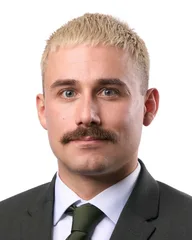
Lukas Sieper | Germany DEU | Non-attached Members (NI) | 390 |
| 2 |
|
Juan Fernando López Aguilar | Spain ESP | Progressive Alliance of Socialists and Democrats (S&D) | 354 |
| 3 |
|
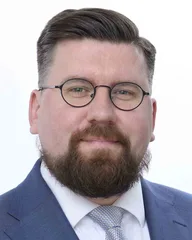
Sebastian Tynkkynen | Finland FIN | European Conservatives and Reformists (ECR) | 331 |
| 4 |
|
João Oliveira | Portugal PRT | The Left in the European Parliament (GUE/NGL) | 232 |
| 5 |
|
Vytenis Povilas Andriukaitis | Lithuania LTU | Progressive Alliance of Socialists and Democrats (S&D) | 227 |
All Contributions (150)
Addressing subcontracting chains and the role of intermediaries in order to protect workers’ rights (debate)
Mr President, Madam Vice-President! Yesterday, hundreds of workers, trade unionists and trade unionists stood in front of this house and drew attention to the situation. They talked to us and there were colleagues from many groups. They have shown us that these forms of exploitation along very long chains are not an isolated case, but that it is everyday life in the fields, in construction, in transport, in many realities of life. And the rapporteur really said it: We draw conclusions from this and say that there must be liability along the entire chain; there must be clear rules for employment agencies; there must be real controls and more enforcement, including across borders. Let me give you an example: We have had unsustainable conditions in Germany in the meat industry, with long subcontractor chains, with dubious employment agencies. In the pandemic, that's been blown up, and we've made a law and hired people directly to decent wages. And look there: Businesses continue to be competitive, workers get decent wages, and it goes. Because one thing is also clear: Good work is not an obstacle to competitiveness, but is often a prerequisite. With this in mind, I ask you all to support the report and give the message to the people outside: We listen and we act.
Developing a new EU anti-poverty strategy (debate)
Madam President, Madam Vice-President! Poverty reduction – as we have known since poverty started – is a mammoth task. I wonder if the right would rejoice if Europe ignored this problem; You get the impression here. We have 20 million children in Europe who expect us to support Europe in finding solutions. I would like to say once again to those who say, yes, people should work: One in ten employees in work is poor despite work, and the children of these parents are poor even though their parents work. That is why it is important that we not only have ambitious goals, which we have had in Europe for over 20 years; we started with the Lisbon Strategy – but what we need with this strategy are tools and tools, and we especially need resources to help these children. For us, therefore, instruments such as a framework directive for a minimum income to set levels here, but also 20 billion for the child guarantee, are absolutely important contributions from Europe to reduce poverty in the Member States and give these children a chance. Because one thing is also clear: that this rampant poverty and inequality is a major threat to our democracy; That's why the right side likes to paint it so black. Poverty can be combated with the support of Europe, but then butter must be packed into the fish.
Urgent actions to revive EU competitiveness, deepen the EU Single Market and reduce the cost of living - from the Draghi report to reality (debate)
As I said, there is a lack of investment in Europe. There is a lack of strategically putting certain sectors together much better. We still have major gaps in our single market, which we need to deepen, in the area of energy and capital markets union. But what is it that fails? It fails because of certain Member States and their national interests. Decisions, if we want to be more competitive, are more complex. You have to have the courage to tackle them instead of focusing on 1%. I can tell you that the buses we have made so far have made zero improvements to competitiveness and will not do so in the future. Investment and innovation are the order of the day.
Urgent actions to revive EU competitiveness, deepen the EU Single Market and reduce the cost of living - from the Draghi report to reality (debate)
Madam President, Competitiveness, the experts know, means optimizing infrastructure, education, promoting innovation, looking at the competition. Draghi tried this in his report because he said: If we want to keep up with China, with the US, we need European players and we need 750 to 800 billion in investments annually. What has come out of it so far? Investment – nothing. And he proposed a coordinated competition strategy. What has emerged from this at the moment is an intellectually poor understanding of competitiveness in which those who create the values do not occur at all. Ms von der Leyen gave a speech in which workers did not appear once. We need a good quality of work if we want to be able to innovate. We need employees on an equal footing if we want to innovate. That's why it's important. Precisely these buses are just an excuse for not wanting to make important, difficult decisions in companies and also in Europe: That must end.
A new action plan to implement the European Pillar of Social Rights (debate)
Madam President, ladies and gentlemen, Madam Executive Vice-President! In fact, some people think that the Pillar of Social Rights is over – is over, and they are more inclined towards the demolition pear. I am very happy, Commissioner and Vice-President, that the Commission sees things differently. It is very important to me because we see that the number of billionaires and millionaires is increasing, poverty remains and people are learning that more and more of their income is being eaten away because they have to pay for rent or for their housing loans – and have to pay much more. That is why it is so important that we focus on the quality of work. That is why this legislation becomes so important, because if I have a good job, I know that if I become unemployed, I will still be able to live on it. I'll find a new job. You also know when you get sick that you have the support you need, and you have a perspective. That is why the Quality Jobs Act so important in this pillar because it delivers on the key promise of improving living and working conditions. This is the pillar. The pillar is not a technical instrument, it's not a blah-blah, it's where the objectives are set, and we have to deliver here now. And that's why, dear citizens: The pillar is all about your quality of life. The majority of the House supports this. I listened very carefully to the patriots who say: “We want the single market. We don't want the rest. And we cannot and do not want to address your reality of life at all”. Here is the message: We want this and we expect the Commission to deliver an ambitious action plan and proposals.
The 28th Regime: a new legal framework for innovative companies (debate)
Madam President, I think we all agree here that credibility is the most important currency in democracy. I think it is very good – as you have heard – that here in Parliament, thanks to the work of the rapporteur, the 28th It proposes a regime that, I quote, should be "not a vehicle for charlatans" by eroding participation and democracy in the workplace. This is important because it is part of the European social model, and we hold it high in many speeches. But this proposal also comes at a time when we are seeing exactly the practice of the European Company, where two thirds of SEs are exactly a belly shop for charlatans, because they are empty and only offered to undermine existing workers' rights. That is why it is so important, in all the proposals that the Commission makes, that we make very clear Safeguards This is necessary for individual and collective labour law. And the best thing would be if you finally closed the loopholes in the SE. This creates credibility.
Presentation of the European Affordable Housing Plan (debate)
No text available
Commission Work Programme 2026 (debate)
Mr President! After the man-in-moon ‑Moment now the moment of independence. But I believe that citizens have not forgotten that one thing has been pursued for decades under the competitiveness label: As much as possible to relocate to other countries, just-in-time production. Many good jobs have been destroyed, and it has led to precisely this dependence. If we now have the Draghi ‑ report and say: Yes, we even want Draghi plus, but then we want the essential part of Draghi, namely that we need a lot more investment – as he put it precisely with figures – and that we also need European players. We're jumping way too short here. If we can't get this part to have the illusion that de-bureaucratisation would create competitiveness, every economist knows that this is nonsense. From digital tax, for example, and tax fairness to financing, I see nothing. I welcome the quality of work package. Here is the commitment, and here I quote the President of the Commission: It's about the speed of artificial intelligence in the workplace. We need specific rules, just as with the right to disconnect, and there still needs to be a lot of detail. We support a Europe that protects. We reject a Europe that reduces rights and takes away protection.
Institutional consequences of the EU enlargement negotiations (debate)
You just need to listen to your speakers that spoke about the European Union as the Soviet Union here, etc. If Europe is not able to reform and is not able to enlarge here – this is the foundation of our Union we are talking about. If you have a different opinion, please convince me that there are also ECR colleagues that have a different position and are standing in the middle of the House. I would appreciate that.
Institutional consequences of the EU enlargement negotiations (debate)
Mr President, ladies and gentlemen. This is an interesting debate that really focuses on the foundation of Europe: Enlargement and deepening of the European Union. And we were able to see in this debate that all rights, from ECR to the far right, want to destroy the foundation of this European Union. And we are trying - and I thank the rapporteur and all the shadow rapporteurs - to make it clear together in the middle of this House that, of course, the EU must also reform if it is to welcome the Member States to which it has long promised and which are really making enormous efforts to be ready for enlargement. In the same way, the European Union must reform itself and be ready. Whether it uses the room for manoeuvre in the Treaties or makes Treaty changes, without these changes the European Union will disappear into insignificance. Because we will either become stronger, more and more able to act, or we will no longer play a role in the globalized world.
International Day for the Eradication of Poverty (debate)
Mr President, Madam Vice-President, dear Roxana! We have 467 billionaires in Europe, and their total assets grew by EUR 405 billion in the first half of the year – almost on their own. At the same time, we have 93 million Europeans at risk of poverty – almost 20 million children are affected. And despite a growing economy and falling unemployment, the gap between rich and poor has widened further. That is why it has been particularly important for us that we really allocate the €20 billion in the budget to combat child poverty. And it is extremely annoying that the EPP did not support this. Indeed, as you have said, poverty does not disappear on its own. We need bold policies here. And that is why I am pleased to hear, Commissioner: You spoke of a new momentum here that we are really getting a good, binding EU poverty strategy – with binding commitments to truly end poverty by 2050. We need clear milestones, national targets, as my previous speaker has also said, public monitoring and also consequences if these plans are missed. Because so far, we have set ourselves goals, but then do not achieve them, because we do not ensure that. And it's also very important to me: We have so many people in Europe who are poor despite work. Working Poor There is no such thing as a rich continent like ours. That's why we need good work. Quality jobs instead Working Poor means: adequate minimum wages, more collective bargaining, ending zero-hour contracts and ending unpaid traineeships. Stopping precarious jobs also helps significantly to reduce poverty. “Your poverty is my concern” was a campaign of the Berlin City Mission. Our message today should be: Your poverty is our concern, and we will ensure that there is such a binding strategy.
Establishment and functioning of European Works Councils - effective enforcement (debate)
Madam President, Commissioner Hoekstra! I want to join the choir. The rapporteur has already said that now is the time to deliver. Tomorrow we will vote. We negotiated for a long time. We have a good result with the Council – 26 Member States have agreed. Now is not the time to have fundamental debates about competitiveness. Anyone who has become familiar with this trilogue outcome knows that we are creating legal clarity, strengthening European Works Councils, information and consultations. But we are also strengthening companies in the transition – Commissioner Hoekstra has underlined this once again. That is why – as my colleague Radtke put it very diplomatically – I would like to ask you again: Dear Members, these letters with fake news from business associations would be detrimental to competitiveness – put them aside. Come along, as in the Council, to say: Here is a balanced result. We now have the chance to send a very clear signal in times of change that information and consultation, that employees and their stakeholders do not learn certain things from the newspaper, but that they are involved. This also strengthens the companies that are coping with this change. It is the employees who create the values in these companies. I would like to repeat this to my previous Spanish speaker, who had given the impression that we are creating bureaucracy here. Commissioner Hoekstra also said: It's total nonsense. So, once again, my plea: Tomorrow it counts. We've worked for years. I would like to thank the Polish Presidency for making it possible for us to reach such a balanced compromise. Support the companies tomorrow with your consent. Support the European Works Councils. We, as social democrats, do this in any case.
Intergenerational fairness in Europe on the occasion of the International Day of Older Persons (debate)
Madam President, Commissioner Micallef, ladies and gentlemen! We have put this debate on the agenda because we think it is time to act. On 1 October there are many warm words, but in Europe, when we look around, we find that Europe does not manage to enable all older people to age in a dignified way. In English there is the term ageism – we do not have this in German – namely that we are dealing with stereotypes, with prejudices and with direct discrimination. We have a recent survey in Germany that shows: 45% have experienced age discrimination and the largest share is in working life – as we must bear this in mind – as well as in health and housing. Women are particularly affected by this. And indeed, it is the case that from the age of 40 they are already marked as too old, for men it starts with 50. And I want to remind you again for the boys here in the room: In your twenties, you're too young to get special tasks and ascend, and from 40 you're too old. There's not that much in between. But aging and how we perceive aging has always something to do with class. Because we see that low-income people, people with simple education end up having it much harder. And we have to take that up as well. We do not only want to talk about older people, but we really need a European package of measures against age discrimination, to ensure that everyone can age with dignity and that we take up the demographic situation and not just lament it.
European Social Fund (ESF+): specific measures to address strategic challenges (debate)
Mr President, Commissioner, ladies and gentlemen! We are talking about the evaluation and, to a certain extent, the realignment of the European Social Fund. Let me remind you once again: This is the oldest instrument. This is much older than I am, for example, and it has always been adaptable, but it was the guarantee to the weaker groups in society; it was the guarantee to workers, who had to cope with major changes, that they would continue to be qualified to survive on the labour market, that Europe would take care of them. European social policy has always been based on three pillars. One was the legislation, the second was the social dialogue, and the third was the European social funds, which also provided funds to help us achieve the objectives we have formulated politically. That is why I am very, very grateful to the rapporteur that she has worked hard for us to find compromises here, but that at the same time you give the Commission guidance and say: Do not pour the child out with the bath; What you are doing is jeopardising Europe's social foundation if there are not really guaranteed funds and – I would like to quote my colleague Sandro Gozi again here – the funds become an ATM for the Member States. That is why I would really like to once again argue that we can continue to guarantee the citizens, the people outside, that Europe remains social and that it not only makes promises – and then see how the crisis is going and whether we are spending the money on something else – but that we really ensure that we give social support, that we support important, innovative projects. And one more thing: It is not about centralization. I do not believe that this is the way forward, but that in the regions, with the countries, with the people on the ground, with the partnership principle, we decide how these funds are used to achieve the goals.
Public procurement (debate)
Mr President, ladies and gentlemen. We agree in this room that two trillion is a lot of money and that with this money, we – and the Commission – now have the chance to promote good work; or you can continue as before, that you can do it theoretically, but because of legal uncertainty, most then take the cheapest offer. We can spend this money on the companies that are renovating schools, on the bus drivers who are supposed to get decent wages to drive our children to school, on the women in the canteens that work there, and on the cleaners. That's why we really need a paradigm shift here. The Commission has it in its hands: a boost for good work through collective agreements – and the IMCO report is cheating on that! He has wonderful memoranda of understanding, but there is really no indication given by the EMPL Committee: that the money should be spent on good work and that it just needs a corresponding mechanism for it. That is why our plea is once again: Support our amendments, including those of the EMPL Committee! Only in this way can empty promises actually send a message to workers that this is also their internal market. And Mr Doleschal's thesis that binding good work weakens the internal market is really a milkmaid bill.
Presentation of the programme of activities of the Danish Presidency (debate)
Madam President, Madam Prime Minister! Indeed, it is a crucial moment in Europe when the Danish Presidency will take over. At a time when geopolitical uncertainties are growing, but also in our society, more and more people are feeling left behind – and at the same time not safe enough. That is why social security is essential for us. And I would like to say that today we have heard many examples where everyone would like to become Danish. I would like to give another example where Denmark is a role model for us – and that is public procurement. You make sure that it is not the cheapest offer, but actually that where good work is created by public procurement – and here we want to learn from you, we are making an own-initiative report, because we want good work and also fair and free mobility – here Denmark is a role model. We need digital methods here to ensure that we really have fair mobility in the future and a point ofincomprehensible words) Enlarging and reforming the EU.
Single Market Strategy (debate)
Mr President, dear Mr Executive Vice-President Séjourné, ladies and gentlemen! When Jacques Delors launched the single market, it was clear to him that the single market and social policy must be closely linked. He was a visionary and European and understood that a market alone does nothing. And the winged saying about it was: Nobody falls in love with a single market. For him, the Single European Act was not only an expression of the internal market, but also of solidarity and economic and social cohesion. He had an understanding of competitiveness where he said: Social dimension, environmental research are the trumps of competition. And that's why it's interesting – the new Commission presented the strategy here – to see what's actually in it in the spirit of Delors. What is the basic narrative? The single market must be freed from its shackles. But intellectual property rights are defined here as bureaucratic obstacles or even denied to certain groups. Pressure on liberalisation without looking at the consequences and costs for consumers and workers – looking at the costs for businesses is good, but the other groups still need to catch up. And that is why our plea is: They have us at their side when it comes to truly mobilising the potential of the single market in Delors' spirit and using it for economic and social progress and prosperity for all. And that we are not reverting to a shortened competitive model. If we want to convince people that this single market strategy works for them too, then it must be broader in scope. And then we need to make sure that workers and consumers know: This is not a strategy for companies, but also for them, for the whole of Europe.
A revamped long-term budget for the Union in a changing world (debate)
Mr President, Commissioner, ladies and gentlemen. First of all, I would like to thank the two rapporteurs for their work. We are sending two very, very important messages, two important messages with this report. One is: We need enough resources. It's a truly dramatically changing world, and we have huge investment gaps. Therefore: Some colleagues have already summoned the Hamilton moment. But also: We really need sustainable resources of our own. And the second message that is given is that we need to spend the money wisely and correctly. And that really means a structural, long-term and, above all, regional way of strengthening social and territorial cohesion. And of course, the money must also be spent in such a way that it corresponds to our goals. And here I would like to mention one more point: child poverty. We need them Child Guarantee It's really because it's an investment in our future, and we'll only have sustainable societies if we make sure of it.
Topical debate (Rule 169) - Social Europe: making life affordable, protecting jobs, wages and health for all
Mr President, ladies and gentlemen! Many at the moment have such a feeling that something is slipping. And you remember that it was great Europeans like Jacques Delors, great Europeans like Jean-Claude Juncker, who knew that Europe has no chance among citizens if it is not a strong social Europe, a strong base, even a soul. And that's why they're looking closely at what's actually happening. In the last period, we have really shown that Europe can make life better for those who bring pizza, because they are now socially insured. We have shown that women have better ways of getting equal wages. We've done a lot. And now they look at the work programme and say: There are many beautiful words in it. A lot is said about what is important. But where are the deeds, the concrete deeds? Whether it is about artificial intelligence in the world of work, whether it is about strong democracy in the workplace. Where are the actions to really strengthen social Europe? And even more: They listen carefully, people, when it comes to competitiveness. Everyone is in favour of greater competitiveness, especially when we look around the world. But you wonder who's going to pay for it? Is the understanding of competitiveness that one should push down wages, that one reduces rights, that one no longer wants to prosecute those who exploit? Or is it a competitiveness where we say: Through good work, through co-determination, through participation, through legal clarity, we strengthen competitiveness, and we show people that Europe makes your lives safer.
Social and employment aspects of restructuring processes: the need to protect jobs and workers’ rights (debate)
Madam President, Vice-President of the Commission, ladies and gentlemen! Wherever you are at the moment in companies, the employees have great concerns about how this change is going and what it means for them. And that is why it is so important that employees are involved in this change and do not do it over their heads, because if they are not properly involved, they will ultimately reject the change completely. And this transition of employees harms companies, harms the economy, harms our competitiveness. I agree with the Commissioner who said: When the voice of employees is heard, it strengthens resilience in companies. And we know from so many studies: Where we have co-determined companies, they are more sustainable, they are more innovative, they are more resilient to crises and ultimately more economically successful – and that is why it is a competitive advantage. And now, when employers send out e-mails and ask all MEPs to vote against the report because they say it harms competitiveness, impairs the speed of decisions, I can only say: Do not listen to these arguments from the mothbox – this is detrimental to us, our economy and also to the European social model.
100 days of the new Commission – Delivering on defence, competitiveness, simplification and migration as our priorities (topical debate)
Mr President, ladies and gentlemen. Indeed, since this Commission has been in office, the international situation has continued to deteriorate, but so has the social situation of many Europeans. We need bold initiatives for the future of Europe. What comes from the Commission? A poorly prepared first omnibus that does not create a single workplace and where you can see that the multis have led the pen there. We – and this is also my reply to Jeroen Lenaers and the EPP – made it clear yesterday with Renew that we want to talk about a package together here. But what does the EPP do? Cowboylike She marches forward with just procedures, without talking to Renew or to us. If you want to go through this with the right, then listen again to yesterday's debate on the omnibus, what a lopsided level this is. And at a time when we need bold steps towards European joint procurement: Parliament has put forward a proposal on this, because the Commission is faltering and does not dare. We need more efficiency, and we can only do it in Europe.
European Semester (joint debate)
Mr President, Vice-President Mînzatu, ladies and gentlemen! If you listen here, you get the impression: Difficult times, new rules, but old game – if you listen to the speeches here. It shows that sustainable fiscal policy and future investments are now essential if we as Europe can truly give our citizens stability, prosperity and security in uncertain times. We have here as a new element the framework for social convergence, a warning mechanism, and we as Parliament underline this in the report, we will look very closely at how it is implemented. We have seven Member States that are at increased risk when it comes to social protection when it comes to good work, even when it comes to poverty reduction. And that is why it is important to add to this, because all of this – as well as schools, as well as investments in digital infrastructure – strengthens competitiveness, even if the ideological camp, which speaks here of the will of the people, etc., cannot see it. Competitiveness needs a stable social balance.
Cutting red tape and simplifying business in the EU: the first Omnibus proposals (debate)
Mr President, colleagues, who does not like to have simple legislation with a high level of legal certainty? We call it 'the art of doing legislation'. Anyone? I don't think so, even though the Commission is not here. We as S&D support this. We engage in simplification, and we want to better protect SMEs from multinationals putting their obligations on them. But – surprise! – if you really look at the package, you can see that quite a few of these proposals don't deliver on simplification. And Omnibus: I think the term is to maximise people's confusion because they don't know what an 'omnibus' is here. If you look at these four very different legal proposals, you will find out that these are legal proposals we worked on. We found compromises in this House. We found majorities in the last mandate. If you look at two of these four omnibus packages – especially if you look at the due diligence proposals – it is pure deregulation. It is not simplification. And it's not rational proposals for simplification: it affects real people. You're talking about growth and jobs; we are talking about growth and good jobs, also for the fruit picker from Morocco, also for the child that has to dig minerals or the transport worker that works here and delivers our products. These proposals were written by multinationals, by business lobbyists that lobbied for that for a long time. And EPP, Mr Tobé, instead of talking with the other political groups, like S&D, like Renew and the Greens, you cowboy-like march through without any talking to come up with a fast procedure here. But I think the art of doing law in Europe was finding good compromises. It was not the cowboy style of marching through and just push, push, push without having good legislation. Because what good legislation can come out of this – without any consultation, without any legal assessments here – to march through? I have to say, Mr Tobé, but also to Mr Weber, it has consequences if you leave how we did legislation in the past and you want to do it with the far right in this House. You have the choice: to negotiate with us for simplification, for better protecting SMEs, or you march through with the right here, but this will have consequences for the whole legal term. In this sense, I hope you come to your senses.
Competitiveness Compass (debate)
First of all, Or I can speak German. When I pointed out that the rights do not understand that decarbonisation and competitiveness belong together – this means that if you really want to have an automotive industry in the future, you cannot turn back the wheel now, but must really invest and rely on decarbonisation here. The same goes for the economy. And indeed, one question remains open here, namely: How will the investments be financed? How do we ensure that if, for example, the Recovery and Resilience Facility expires in 2026, we will continue to have resources available in the future? We just have to do that.
Competitiveness Compass (debate)
Mr President! Mr Executive Vice-President Séjourné! In fact, there is a lot of talk here about the direction of the compass. North Pole, South Pole - where do we really want to go? What's the message? I believe that there is broad agreement on the objectives here in the middle of the House: Combining decarbonisation and competitiveness, as the right will never understand, innovation and reduced dependencies. But the question is how to get there. And I was pleased, Mr Séjourné, that you mentioned the high-quality jobs, which are simply central, which are to be created. But how do we ensure that they are also of high quality? And then when I look at the fact that you're on the 28th. regimes want to involve labour law – this would further destroy the systems where there is existing codetermination. And we know that co-determined companies are more competitive than others. Therefore, I can only advise you very, very urgently to take out the labour law. When we look at the US, with the IRA The United States has given an answer. They didn't publish a compass, and they didn't have big debates, but they really took money into their hands to invest. Because the area of investment, which also remains a void here. Where do the investments and innovations come from? I think there's a need for reconnaissance. The solution less is more helps us zero. It's gonna be a pipe-cracker. We need to do better, and we need to work together in this direction.