
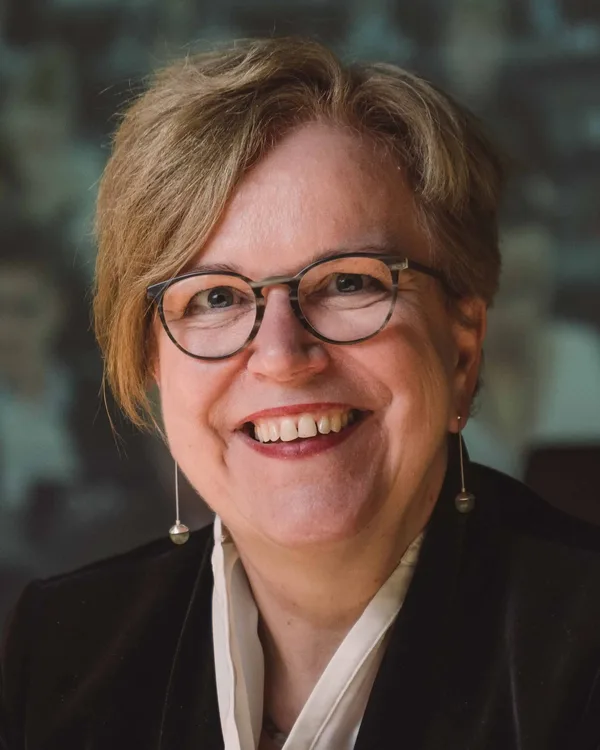

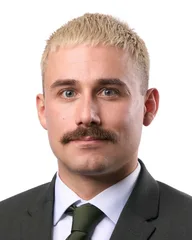
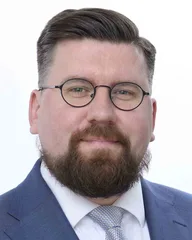
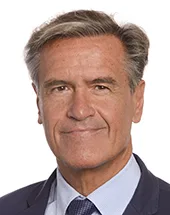
| Rank | Name | Country | Group | Speeches | |
|---|---|---|---|---|---|
| 1 |
|
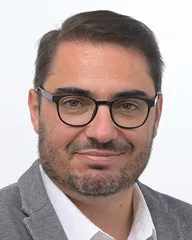
Lukas Sieper | Germany DE | Renew Europe (Renew) | 487 |
| 2 |
|
Juan Fernando López Aguilar | Spain ES | Progressive Alliance of Socialists and Democrats (S&D) | 454 |
| 3 |
|
Sebastian Tynkkynen | Finland FI | European Conservatives and Reformists (ECR) | 451 |
| 4 |
|
João Oliveira | Portugal PT | The Left in the European Parliament (GUE/NGL) | 284 |
| 5 |
|
Vytenis Povilas Andriukaitis | Lithuania LT | Progressive Alliance of Socialists and Democrats (S&D) | 273 |
All Speeches (143)
Conclusions of the European Council meeting of 29-30 June 2023, in particular the recent developments in the war against Ukraine and in Russia (debate)
Date:
12.07.2023 09:08
| Language: DE
Speeches
Mr President! I wanted to talk about a different topic, but I can't help it now. Mr. Weber, you are very much reminiscent of Goethe's sorcerer's apprentice, who called the spirits that he can no longer get rid of. You left the table to work on compromises, instructed your people to just vote against it. I think it's right that we should press a stop button here, reflect together. Because this House lives on the fact that we work together on compromises and then really put forward proposals for the citizens. And you have with the fake news, I mean, your videos, all that – I believe that it is not good for this House, and I believe that we should really return to factual work, including factual debate and content disputes, and see what compromises we find. But I would like to emphasize again that it does not work if you appeal to the common spirit, but then do not change your own behaviors. This is why I also believe in the issue of migration: The issue is too important for us to operate here with fake news and populism. We have to fight for the best compromises. We have to do this in terms of content, because we need to be able to act, but we also need a migration policy that is oriented towards human rights and our values.
Preparation of the European Council meeting of 29-30 June 2023, in particular in the light of recent steps towards concluding the Migration Pact (debate)
Date:
14.06.2023 10:16
| Language: DE
Answers
Human dignity is indivisible. We don't have first-class refugees or second-class refugees. This is the crucial value of Europe. The second is: Poland and Hungary did not agree in the Council to this compromise, which the Council found after eight years of blockade. These are just the facts and nothing more.
Preparation of the European Council meeting of 29-30 June 2023, in particular in the light of recent steps towards concluding the Migration Pact (debate)
Date:
14.06.2023 10:14
| Language: DE
Speeches
Mr President, Vice-President of the Commission Šefčovič and also Mrs Roswall! I would like to thank you again for your presence here. We appreciate it in the house. That's not always the case. But if I listen to the speeches that I have to hear in this house, then you can see that the right side here in the house has been polluting the discourse, spreading lies, stirring up resentment, fear and propagating isolation for years. And then one wonders if this is also reflected in the Council mandate and on the other hand Poland and Hungary wash their hands anyway, because they did not agree to it at all. I would like to underline once again that this House has a broad consensus that we want to support a balanced migration package. But I would like to underline again: Human dignity and international law must be taken into account. This is something that the citizens of the Future Conference have written to us once again. That is why I appeal to the Council to actually enter into negotiations with Parliament on this basis to find a good compromise, a much better compromise. (The speaker agreed to answer a question on the blue card procedure.)
Madam President, Madam Vice-President, ladies and gentlemen. This was just a great example of how we deal with the fact that we are now planning a proposal from the Commission that pretends to establish an ethics body. But if we look at the data, we can say: Yeah, that's a novelty. But if we look at it, it is definitely not an ethics body, which the proposal contains, but a new coordination body. Nor will it establish binding rules for EU institutions. It will not even set really ambitious common standards or that, as Parliament called for in an opinion, we can really launch investigations and also issue sanctions to Sven Simon, who also at least partly worked on the EPP. If we look at this, we have a toothless tiger in front of us, which still requires a lot, a lot of work. I hope that Parliament will be very decisive in the negotiations in order to really make it an ethics authority. It is the same groups that are preventing us from really tightening up our rules, and they are now saying: No, that's actually a good suggestion, you don't have to do much about it anymore, we stick to it. This is about as if car manufacturers were working out the rules for road traffic, and then all motorists can orient themselves, but they don't have to. Or as if football clubs establish rules of the game, but then each team decides for itself what consequences this should have if you hurt them. That is why I believe it is important that we really get an ethics authority that has resources – we really need to improve – that really has the competences to be called an ethics authority. So I think we should look again: What requirements did Parliament make in a joint own-initiative report that received broad support? In fact, when we look at it: We also need such an ethics authority so that not every institution does its own thing again. That is why it is very important for us as S&D Group that we get an ethics body that deserves its name, that we do our homework here in the house, faster than before, also to change our own rules, and that we do not stick our heads in the sand and give the message: Okay, we're building a house here that has a wonderful name. But it is not at all equipped to really be an ethics authority. We will not accept this from the point of view of S&D. That is why we advocate: Yes, it's a novelty, I agree with you. It is a step in the right direction. But it's not enough at all. That is why we have to work hard here.
Foreign interference in all democratic processes in the European Union, including disinformation - Election integrity and resilience build-up towards European elections 2024 (debate)
Date:
01.06.2023 09:40
| Language: DE
Speeches
Madam President, Madam Vice-President, ladies and gentlemen! First of all, I would like to thank the colleagues who have done such a good job here to lift the veil of naivety when it comes to foreign interference. And that was by no means an easy job. But I am also concerned – worried when I hear that the democracy package is being postponed further and further, when we know that the date for the European elections is fixed and we need a stronger shield against interference by then. But I would also like to reiterate the importance of civil society – an independent civil society – for a stable democracy. And that is why I am very concerned that some also want to use this debate to discredit this very independent civil society. We must create the framework so that civil society can also play its role, so that democracy and the rule of law are protected. And that is why I am glad that Mrs Jourová has underlined once again that our approach is different from other autocracies in how we fight disinformation and influence.
Roadmap on a Social Europe: two years after Porto (debate)
Date:
10.05.2023 17:41
| Language: DE
Speeches
Mr President! If we look at the fact that we are talking about the action plan on the Pillar of Social Rights and the years after Porto, we must once again see that without this House, in cooperation with the Commission, this pillar would never have existed. It's like having a child: You want to see that it grows and thrives well. We have a responsibility, and that is what we have here across political groups, because we as a Parliament wanted it to be. That is why it is important to see what we have achieved – the Commissioner has underlined this, others also – but also to see that this child continues to thrive, also in the future, because we have many projects that we need to implement, because we promised that to the people of Europe. That is why another point is very important to me. We have a huge transformation in front of the chest: Green Deal, digitalisation, people are worried about their jobs. You already have less in your pocket due to declining purchasing power. Our signal must also be: We will involve you in this transformation. We are also strengthening your rights to shape this transformation. Not only are you victims and at the mercy of it, but together we will make sure we don't leave anyone behind. And that is why all the projects in the resolution are great, and I thank the rapporteurs – that is exactly the responsibility that parents have.
This is Europe - Debate with the Chancellor of Germany, Olaf Scholz (debate)
Date:
09.05.2023 12:00
| Language: DE
Speeches
Madam President, Mr Bundeskanzler! As the last speaker, you have the privilege of having such a bit of an overview. What remains of the speech here today on Europe Day? I have to say that, apart from roaring and self-reflection, there remains a blunt and clear commitment to enlargement and reform, not a "go on" - and that is what we need. We in Parliament are really working under pressure – you mentioned it, Mr Chancellor – on a proposal for Treaty amendments. This gives us a tailwind once again, and I hope that you will also be in the Council to initiate a Convention, because many have mentioned Schuman today: Europe will emerge through concrete actions and through the solidarity of action. We deliver here in Parliament, we rely on Franco-German initiatives, on broad support, and then we really have the chance to act and not just talk about reforming Europe.
This is Europe - Debate with the Prime Minister of Luxembourg, Xavier Bettel (debate)
Date:
19.04.2023 11:55
| Language: DE
Speeches
Madam President, Prime Minister Bettel, your speech has been good. A year before the European elections – I think some of them are back on the populism booster. Others talk about self-reflection and don't even know how to spell it. They started with a self-reflection, the lessons we learned from COVID: first close borders, then procure vaccines together – that is the way forward. But that also means that we need more skills for future pandemics to tackle them across borders. I also liked the fact that you once again pleaded not to be afraid of the citizens. We had the Future Conference. I don't think anyone in the room is afraid of the citizens' proposals. On the contrary: We are in the process of implementing them. But I would like – I believe it is necessary – to take the fears of citizens’ proposals even more seriously in the Council. We also need a convention to strengthen the heart of democracy. How do you think you can still win a majority?
Safeguarding labour mobility and social rights of striking lorry drivers from third countries (debate)
Date:
18.04.2023 13:58
| Language: DE
Speeches
Madam President, Minister Roswall, Nicolas Schmit as Commissioner! As the European Parliament, we have to wait until something like this has happened, that this is on the agenda, that people are being scammed for their wages, that they have to fear for their personal safety, that, for example, they do not have health insurance coverage, as they then find out here. I had the opportunity to meet with Agnes Jongerius, with Vera Tax yesterday these brave men who are in Gräfenhausen. I really want to convey here their greetings, but above all their concerns and also their hopes that they have come here to work under harsh conditions, but with confidence in Europe that it does what Nicolas Schmit said: It promises that it does not differ, but that everyone who works here has decent working conditions, does not have to worry about their safety and gets paid their wages. That is why it is incredibly important that we do not just look there – it has been said. I really thank the people who live there, who show that we make no difference from which country someone comes from Europe or whether they come from outside, but that they say: These men and also the women who work there make sure that we can live our lives at all, that we get the products that we have, that work can take place. And then we don't manage to ensure really decent working conditions. Mr Radtke also mentioned it: We fought through a mobility package here, with many committed colleagues. But what good is the best legislation if it is not properly implemented at national level, if the Commission does not play a stronger role as guardian of the Treaties, if there are not enough controls and also European approaches to ensure this? That's why we really need to see this as a tip of the iceberg, and it's not just the transport sector where we see this. We have other sectors where we have similar problems, but that we do not stand still as we do now. I would also like to thank the media, who have taken this up, for making it clear that we must not put the spotlight on it and then return to our work, but that from here we must send the message to these truck drivers who are in Gräfenhausen and to all the other millions of workers in this European Union: The Council will now take a closer look. The Commission will also take a closer look at these people's employment contracts. We need to ensure – and we can do this together as co-legislators here – that such a thing is no longer a piece of normalcy in Europe, but that we really ensure – especially when I look to Georgia, a country that also has such high hopes for the EU, and a large part of the drivers come from or come from Uzbekistan: equal pay for equal work in the same place. And we do not tolerate slave labor relations, as this obviously seems to be the case here.
Strengthening the application of the principle of equal pay for equal work or work of equal value between men and women (debate)
Date:
30.03.2023 09:53
| Language: DE
Speeches
Dear colleague, if you had listened to me, you would not have asked this stupid question – I have to say that now. I praised Poland for this and said: For us, it has always been a hope that there are countries where it goes and where it is also shown that the economy does not go down if, for example, there is equal pay for equal work and work of equal value. And I can say: The women in Germany from trade unions, from parties, from women's organisations are fighting for it, and they are happy that Europe is finally giving them what they have been fighting for for so long. And that's why it's a good day for women, for equality, but it's actually a good day for Europe.
Strengthening the application of the principle of equal pay for equal work or work of equal value between men and women (debate)
Date:
30.03.2023 09:51
| Language: DE
Speeches
Mr President! Good morning, ladies and gentlemen, good morning, Commissioner Dalli! Many have already said it here: This is going to be a historic day today. And this Parliament has done a super good job. And why? I believe that the few on the right who have said ‘Oh, God, that only creates bureaucracy!’ have not understood at all the reality of life in which women are diverse. And that's why, women of Europe: Have a look at such a debate, see that we are watching – and that is why I was happy about Ms Rafalska to say: We have countries, that's how it works. We have less discrimination. For me, who come from a country where there has always been high wage discrimination, this was simply a hope. And it also shows that it can be done. And that is why it is good that we lift this veil, this veil, this secrecy, which is one reason why so many women have to go such a tedious way to achieve equal pay. And this creates tools for workers' representatives, for works councils, for trade unions, for those affected. The veil is gone. But then the work has to come to ensure equal pay. And we can do that too. (The speaker agreed to reply to a statement using the blue card procedure)
More Europe, more jobs: we are building the competitive economy of tomorrow for the benefit of all (topical debate)
Date:
15.03.2023 13:39
| Language: DE
Speeches
Mr President, Madam Minister, Commissioner! I was in Athens last week, and that's why I'd like to start with a quote from Pericles, who said: ‘It is not a question of predicting the future, but of being prepared for the future.’ The question is therefore: Are we prepared for this? I believe, on the one hand, that Commissioner Schmit put it this way: We have taken a lot of good steps recently: NextGenerationEU, Fit for 55 – much has been mentioned here. But nevertheless the impression creeps in here – and this is also shown by the debates this morning – that the wake-up call from the US, what we are doing with the Inflation Reduction Act It has not yet been fully understood here in Europe. I agree with many who say: "In fact, what Europe needs to do now is invest, invest, invest!" But not only in green technologies, but also in people. The Commissioner said: skills. There is a group in which, I think, much more should be invested in a labour market where we are desperately looking for strength, and these are women, for example. We have a lot of catching up to do, that's what we should do! For this great transformation that we have here in front of us, we have to take the people with us. In order for this to succeed, it is really important to strengthen democracy in the workplace and to create trust in this change. I think, ladies and gentlemen, it is time for us to finally develop a different, sustainable concept of European competitiveness, which is not just cutting red tape, but also to see that it is good jobs – as the US is doing right now – and that we are linking the ecological and social sides. I agree with Mr Séjourné and Renew who say: Improving opportunities for the future really also means daring more Europe – but in the sense that we actually take everyone with us and not only the elites benefit from it. Then it will succeed.
Conclusions of the Special European Council meeting of 9 February and preparation of the European Council meeting of 23-24 March 2023 (debate)
Date:
15.03.2023 10:23
| Language: DE
Speeches
Madam President, Madam President of the Commission, Mr Vice-President! In fact, you can see here again: The Inflation Reduction Act was a wake-up call for Europe. I listened very carefully to what Mrs. von der Leyen said. It has pointed to the similarities between what the US is doing and what Europe is doing. But she forgot one key point. Because the US has actually succeeded in establishing something like the Justice40 principle in its law, namely a strong social component at a time of great uncertainty. If we now compare both approaches, we can see that the issue of good work of collective agreements is also included in the US guidelines for support services and nothing in our case. niente. This dimension does not occur at all. Instead, there are old recipes, the lyre, as if only cutting red tape would continue and ensure competitiveness; But there is also a real need for sustainable social concepts. This really needs to be reworked.
Adequate minimum income ensuring active inclusion (debate)
Date:
14.03.2023 14:42
| Language: DE
Speeches
Mr President, ladies and gentlemen, Commissioner, Madam Minister! It is true that we are launching this resolution here. But I would like to remind you once again what this is all about. We are not talking about whether we need social systems or not, which some are already questioning, but about the adequacy of these systems and accessibility. Here we see that there are huge problems in Europe. I honestly sometimes ask myself – I do not know how the Commissioner is doing – whether it is a curse or a blessing to have been active in European social policy for so long. How many presidencies, how many resolutions, how many OMC processes, how much voluntary commitment I have seen – none of them work. That's why I can't imagine electing a new President of the European Commission or a new President of the European Commission who is not at the top of the agenda to put a minimum income directive on the way. I will always honour this directive as the Fintan Farrell directive wherever it is now. It is simply time and overdue to act on the directive.
EUCO conclusions: the need for the speedy finalisation of the Road Map (debate)
Date:
15.02.2023 17:44
| Language: DE
Speeches
Madam President, Commissioner, Madam President! Our responsibility here in the house is not to spark populism, but the current challenge is that we agree on a balanced migration package, in accordance with the roadmap. The EU has been incapable of acting here for years, especially because the Council is blocked and blocked. But the recent debates in the Council also fuel the doubts as to whether the Council understands that only a balanced package will find a majority here in the House. I am not surprised when the ID Group or the ECR Group spark here and take Trump as an example; He raved that he would build the best wall, the largest, the strongest, not surmountable. But the fact that the EPP is increasingly cuddling with rights and post-fascists here and is adopting this Trump rhetoric is negligent. Because fears against migration fuel and try to make political capital out of it, that's not bourgeois, that's simply repulsive. And I have seen that the ID has already offered Mr. Weber membership. Why are we as S&D against walls? Because walls and fences don't help. Also the history of the USA, and if you look at the US wall: Walls do not stop refugees, they only increase the number of deaths. Therefore: EU money that can be spent elsewhere is populist, and most importantly, it does not solve the challenges we face in terms of migration. We can only achieve this through a balanced package.
Establishment of an independent EU Ethics Body (debate)
Date:
14.02.2023 17:04
| Language: DE
Speeches
Mr President, Commissioner Jourová, Minister Roswall! It is good that this Parliament has been pushing for an independent ethics body since 2021 and that this is also supported – here in the House – by a broad majority. And I am pleased that the signal does not continue to be outrageous, but that we are really getting signals now that a corresponding proposal is being put forward. Why is this so necessary? If we look again at what the rules look like at the moment, then we can see, we as Parliament, we have our own transparency requirements, our own code of conduct and our own rules of ethics. The Commission has its own procedures and bodies for ethics rules, including for former Commissioners, and other institutions – we have heard – have different rules. To be clear, here again: These rules, which usually only work in-house, where former colleagues are often involved in decisions, cannot really do that. And when we look, what does it look like in other countries; For example, we are looking at Canada, where we have an independent Conflict of Interest and Ethics Commissioner with appropriate staff. In the United States, we have had an independent ethics body since 2008. Why? Because there were corruption cases. Three congressmen ended up in jail at the time, and it was still Trump who actually tried to weaken the rules here before his term, but thank God he failed. Qatar gate now also brings us back into the debate, so that this ethics authority can really be launched again this year. And I would also like to remind you that it was not only Parliament that pushed here, but also the European Ombudsman and the European Court of Auditors. They have pointed out to us that we – or the institutions – have failed to develop effective strategies, especially to prevent conflicts of interest, so that this does not happen in the first place. And they have also pointed out and criticised us for not having a common ethical framework for the EU institutions with very clear procedures. We also need monitoring and enforcement of ethics rules, because the best rules are of no use if they are not enforced and sanctioned accordingly. That is why I am very happy – as they say in football, after a slightly longer warm-up period – that this is happening now. And I'd like to check again, Mrs. Jourová. I heard you said you were going to present something soon. This is what the President of the Commission told us in December. I would like to know something more concrete: When exactly will the Commission present a proposal for an interinstitutional agreement? I think that would be exactly the right signal now so that we can be certain.
Electoral rights of mobile Union citizens in European Parliament elections - Electoral rights of mobile Union citizens in municipal elections (debate)
Date:
13.02.2023 20:06
| Language: DE
Speeches
Madam President, Commissioner Jourová just said: We have a window of opportunity here, a small window of opportunity before the European elections, where we can still act and make sure that the 11 million EU citizens we have in Europe who live in another country love working, that they really participate in the European elections. And yes, theoretically you can. It has been an important step forward, but we still have so many hurdles, be they language hurdles that have been applied here or bureaucratic procedures that sometimes make it difficult for someone who works there but is not familiar with the bureaucracies to actually exercise their right. And that is why it is right that we are now pushing again to strengthen democracy for EU citizens, because the fundamental right to vote in elections also means in practice that it signals: Here I am at home, here I want to have a say in who represents my interests in Europe, in the European Parliament. And that is why there is still a strong need for action here.
Madam President, dear colleagues, who would have thought that, five years after we criticized President Trump for building walls to Mexico, the European Council would propose to build walls in Europe? And who would have thought that two decades and more after the fall of the Iron Curtain, we would have, or even have considered, proposals to build walls around Europe? Okay, they call it, still very technocratic, ‘border protection’. They call ‘armour-like technocratic border protection capability and infrastructure’. But we are not fooled. We know what it is and let us see it straight, therefore. Every euro that will be put into fences and borders is a euro that cannot be used to help someone else and protect the vulnerable. Therefore, we want to hear from the Commission and the Council their points of view about this term and the use of EU funds to build a fortress Europe. This is why we, as the S&D, urge you to support this – especially at a time also where we look, as the President said, with horror to the situation in Türkiye and Syria. So please, I ask you to support this.
Preparation of the Special European Council meeting of February, in particular the need to develop sustainable solutions in the area of asylum and migration (debate)
Date:
01.02.2023 16:05
| Language: DE
Speeches
Mr President, Madam Minister! Disappointment and hope are very close when it comes to migration. Looking back again at the Future Conference, we can see that citizens are extremely disappointed that Europe is not able to act in the field of migration and that many problems arise from the fact that Europe is not able to act. And that is why it is really extremely important to see that only European solutions are possible here. I think that hope is indeed the roadmap here and that Parliament has agreed on a roadmap with five presidencies of the Council. But if I listen like this and watch the pace, then I wonder if this can be achieved at all in the time that still remains for us. And when I see that you always want to pick out raisins here – individual points, one the screening, the other points: This will only work if it is a package that is truly based on international law, our values, human rights. And one thing I would like to say again: I'm from Wall City. Building walls and fences has always been a declaration of bankruptcy, never part of the solution.
Revision of the European Works Councils Directive (debate)
Date:
19.01.2023 09:36
| Language: DE
Speeches
Mr President! Commissioner, ladies and gentlemen! I would like to thank the rapporteur and the shadow rapporteurs for this report. And it shows once again that Parliament is able to work out good compromises together, and that deserves broad support in plenary. Strengthening democracy is the challenge. We have discussed it here several times this week, and we can see that where people can get involved, their working environment can be shaped, democracy will be strengthened. I am not surprised that from the far right here in the House – ID – the strengthening of democracy is not so central and that they equate this with bureaucracy. But that's a mistake. When we look at the directive on the establishment of a European Works Council, one of the great innovations was that we designed these design rights transnationally. Many have already said it: Times have changed since 1994, and even the last adjustment has not been enough. We have huge transformations ahead of us, huge transformations. It is about the Green Deal – implementation – and digitalisation. And that is why this is now the opportunity to actually strengthen democracy, to strengthen the champions of democracy in the workplace, who act transnationally, and here, as the report suggests, to close loopholes and strengthen social rights. I would also like to take a look at the Commission: take note of this report. So, to see the report, that's just not enough. We need a Commission that delivers here and that actually takes up and not only takes note of this broad desire to actually strengthen democracy in the workplace. One more note: I can only recommend to all who have doubts here and say: “What are these European works councils anyway? This only creates new bureaucracy’: Look around at home in your city, in your region where you live, talk to the European works councils. I did this yesterday with some, and they expect us to deliver here so that we can really say: We are equipped to meet the challenges. And we do not allow a substantial part of it to be deprived of democratic rights.
Revelations of Uber lobbying practices in the EU (debate)
Date:
18.01.2023 18:32
| Language: DE
Speeches
Mr President! Ladies and gentlemen, many of us have recalled the hearing that took place in this House's Committee on Employment and Social Affairs. It was really a stellar moment for Parliament, and every now and then our breath stalled when we heard what methods Über works with. And that's why it's right: Whistleblowers need our special protection. They take risks because they realize that something is going wrong in their company to make sure that this is stopped. And also thanks to the journalists. They've worked their way through thousands of these files. This was actually only possible in a consortium to inform the public and to ensure that we shed light on this darkness and know what is actually happening in the backrooms and backrooms, as About European governments has led to deregulation of their markets in order to establish and expand its business model, at the expense of employees. And if the compromise on the negotiating mandate is confirmed, then for me it is also proof that this House, this Parliament - unlike some governments - cannot be impressed by this massive lobbying, which takes place directly or indirectly. And what is this about? This is not just about a company or platforms. In reality, it is also a question of having a choice between good working conditions and social protection for all those who are employed and offer their labour power, and the establishment of new forms of Wild West capitalism, which are also spreading further and further. That's why we have the choice, we have postponed the vote. This may give some people time to think again. We have the choice to make a decision on whether to leave millions of platform workers in the rain or whether to make sure that they also know – not only today – how much money they are getting so that they can pay their rents, that they can plan and that they have access to the labour market and good employment.
Terrorist threats posed by far-right extremist networks defying the democratic constitutional order (debate)
Date:
18.01.2023 16:35
| Language: DE
Speeches
. – Madam President, Minister Roswall, Commissioner Johansson! Thank you for the clear words also regarding the dangers that threaten our democracy here. We have known for a long time that we really need a defensive, a contentious democracy. With us in Germany, this discourse and the awareness of it have really arisen from the experiences of National Socialism, and it is important for us that democracy defends itself against the enemies. However, it also depends on the citizens who really play a very active role here. It is therefore good that we discuss what we can do here at European level and how we can counter these right-wing terrorist threats. It has already been said: We don't just have to look at countries like the US or Brazil. We can see what is happening in Europe here, and we have seen that the pandemic, but also the war, is really contributing to the radicalisation of certain groups, far-right movements, foundations and citizens. That must make us think. We've also heard that we need to take a closer look: Who is funding these groups? Russia is indeed one of them. We must and can build stronger hurdles here in Europe, as the European Parliament, so that this will no longer be possible in the future. We have had terrible experiences in Germany. We have had the NSU, a group that has roamed murderously through Germany and murdered citizens for racist reasons. We have had long blinkers – including the authorities – as it really came to light that it was not just any ‘donor murders’, as was transported in the media, but really relevant groups. We have now, and this has already been mentioned, actually had this raid on the Reich citizens and must state that in Germany, according to the constitutional report, we have 21,000 people who are attributable to this environment. We really need to do more to get into these groups. The Commissioner said: It is not the abandoned losers of globalization who go into such groups, but it is precisely the middle of society, it is academics, it is nobles, it is doctors. We need to find the right answers. If we look into research, we see a point that more needs to be done, because the normalization of such movements, which we find, in Europe also contributes to these movements gaining stronger support. Again, there is a lot to do for us here in Parliament to ensure that this fourth wave of right-wing extremism and terrorism does not spread further, but we stop it – together.
Conclusions of the European Council meeting of 15 December 2022 (continuation of debate)
Date:
18.01.2023 10:04
| Language: DE
Speeches
Madam President, Happy birthday from my side as well. Six out of ten Europeans are satisfied with the cooperation of the Member States in addressing the social and economic consequences of the war. On the one hand, this is good, but it also shows that there is still room for improvement and that everything stands and falls with it, that we give citizens the confidence that Europe is able to meet these challenges. And indeed: We have inflation, and purchasing power is under threat, which worries many people in Europe. The high raw material prices pose major challenges for our companies. And that's why it's not enough to just talk about competitiveness, but when we talk about competitiveness, we're always talking about jobs in Europe. And indeed, it is extremely important that we secure the economic and industrial base, all the more so since we have the U.S. Inflation Act But it also has a big climate and a big social package. And that's why I'm not just asking for the old lyre, but that we really develop new concepts here to give confidence. And allow me to say one last sentence about Iran: The Iranian Revolutionary Guards must be placed on the EU sanctions list. That's very clear, and it's overdue.
Tackle the cost of living crisis: increase pay, tax profits, stop speculation (topical debate)
Date:
14.12.2022 13:29
| Language: DE
Speeches
Madam President, 2022 will be a year that will be specifically mentioned in the history books, including whether it is a crucial year for stabilising democracy or weakening it. We can see that rising energy prices and rising inflation are simply causing many people to have less money in their pockets and that the conversations before Christmas revolve around: Where can you save, where can you limit yourself? The hardest hit is, of course, poor families, who had to turn around every euro before and wonder whether to eat or heat. When we look at food prices, we see that they are rising more than energy prices actually give. Therefore, it is obvious that we have to take action here and that we do not allow companies to enrich themselves here and actually only increase their profits at the expense of the people. That is why it is important, as the Commissioner has said, that we have to absorb the excess profits and that we have to support the vulnerable groups much more than before – those who need it most – so that this crisis does not turn into a crisis of democracy. This also means that we need to increase wages. But in addition to rising wages, we need supportive measures for these groups, because this alone cannot be achieved. That's why it's important: We need an initiative that the directive on the minimum wage, which has two years to transpose, is implemented earlier so that we really give more money to those who need it most. Let's do it!
The recent JHA Council decision on Schengen accession (debate)
Date:
13.12.2022 18:03
| Language: DE
Speeches
Mr President, Commissioner, Minister! We all welcome the fact that Croatia will actually be there from 1 January. That was a good decision and I really congratulate everyone who contributed to it. But it has already been said by the Commissioner, by everyone: It was really a serious mistake on the part of Austria and the Netherlands, Bulgaria and Romania, who have met all the criteria for years, and who have even agreed to accept these additional requirements. fact-finding missions To show good will, to deny it. This will only strengthen the anti-European, populist forces in these countries. That's why I heard a little glimmer of hope. But that's not enough, because we always do it like this: It does not work – Promise, it does not work – Promise. We must deliver that these two countries are really included, because rules must apply to everyone, in every club. Otherwise, the base here will erode us. That is why we need a clear signal here.