
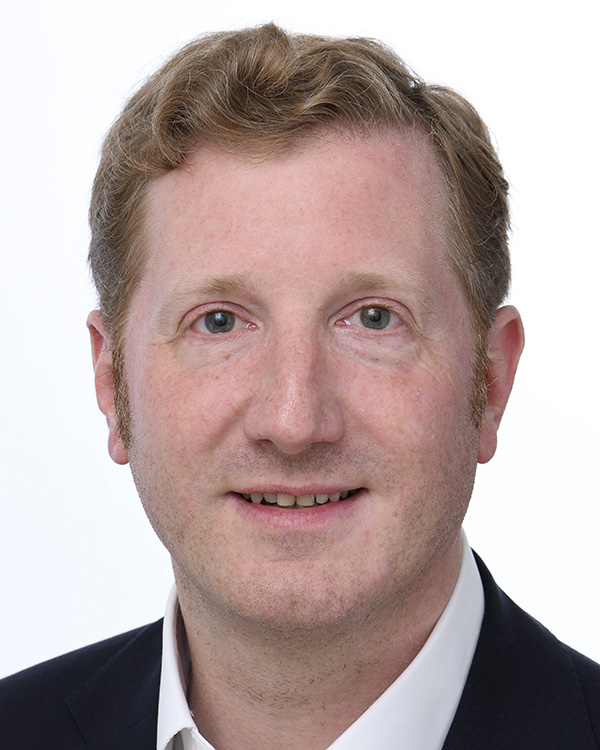


| Rank | Name | Country | Group | Speeches | |
|---|---|---|---|---|---|
| 1 |

|
Lukas Sieper | Germany DE | Renew Europe (Renew) | 487 |
| 2 |

|
Juan Fernando López Aguilar | Spain ES | Progressive Alliance of Socialists and Democrats (S&D) | 454 |
| 3 |

|
Sebastian Tynkkynen | Finland FI | European Conservatives and Reformists (ECR) | 451 |
| 4 |

|
João Oliveira | Portugal PT | The Left in the European Parliament (GUE/NGL) | 284 |
| 5 |

|
Vytenis Povilas Andriukaitis | Lithuania LT | Progressive Alliance of Socialists and Democrats (S&D) | 273 |
All Speeches (173)
Package travel and linked travel arrangements: make the protection of travellers more effective and simplify and clarify certain aspects (debate)
Date:
11.03.2026 16:33
| Language: DE
Speeches
No text available
Post-election situation in Uganda and threats against opposition leader Bobi Wine
Date:
11.02.2026 20:40
| Language: EN
Speeches
Mr President, Commissioner, colleagues, what happened on 15 January in Uganda – the so-called elections – was not an election. They were a military operation and the facts confirm it. Soldiers acting on direct government orders raided the home of opposition leader Bobi Wine, assaulted his family and forced the family into exile. Opposition supporters were arrested, disappeared or were killed, including Mesach Okello, who was fatally shot while attending a peaceful rally. We are deeply alarmed by reports that the regime has publicly threatened to kill the opposition leader Bobi Wine. All these are not isolated incidents. They are acts of terror which are meant to silence an entire opposition. We call for the immediate and unconditional release of all political prisoners and an end to the military trial of civilians, full accountability for the crimes committed and real electoral reform. Today we, as the European Parliament, say clearly: we stand with Bobi Wine, Uganda's opposition and civil society and all those who risk everything to demand freedom.
Spain’s large-scale regularisation policy and its impact on the Schengen Area and EU migration policy (debate)
Date:
10.02.2026 19:09
| Language: DE
Speeches
No text available
Urgent need to address the humanitarian catastrophe in Sudan and to achieve a sustainable peace (debate)
Date:
10.02.2026 16:25
| Language: EN
Speeches
Mr President, Commissioner, colleagues, with 11.8 million displaced people, including 7 million IDPs inside Sudan, this remains the world's largest displacement crisis. The number of refugees in Darfur and Kordofan are still rising and violence continues to escalate. Millions are facing acute hunger and famine‑like conditions. However, there are more than 3 million people that have returned, notably to Khartoum. That doesn't mean that they are turning to safety or stability; they are returning to destroyed homes. Children are dying from severe acute malnutrition, health systems have collapsed and humanitarian access is systematically blocked. Hunger is used as a weapon of war. It is a threefold challenge, and from my understanding, we need to continue to provide humanitarian assistance for those returning to Khartoum. We need to sustain funding for refugees within and outside of the country, and we also need to push our partner countries like Egypt to live up to their commitments. We need to scale up humanitarian funding but also ensure safe, unhindered access on the ground. I wish that the Commission pushes as well for stronger diplomatic pressure, including targeted sanctions against those obstructing aid and those enabling the conflict from outside. This would be the right response from the European Union and this is what we have to push for.
Restoring control of migration: returns, visa policy and third-country cooperation (topical debate)
Date:
21.01.2026 14:41
| Language: DE
Speeches
Mr President, Madam Executive Vice-President of the Commission, ladies and gentlemen! The European Asylum and Migration Pact – it works. The number of arrivals is at its lowest level in years – last year the numbers fell again by 26%. This is a good sign and shows that European policy is working, that we made a good decision in 2024. And now it's about improving our migration system even further. It is about improving returns in particular. We did not have a return directive in the Asylum and Migration Pact – we are working on it now, and I am sure that we will be able to achieve good results there. But it is also about simplifying, improving and accelerating immigration into the labour market – these are rules that we have not touched either. We have the talent pool put on the way. It is part of a common asylum and migration pact that on the one hand we ensure that borders are safe, on the other hand we ensure that rejected asylum seekers are returned, but that we also facilitate migration into our labour market. A good tool for this is visa policy, Commissioner, and we support the fact that you are making changes here, which involve both. Firstly: Easier mobility for people who want to join us in the labour market – but also only for those Member States that actually cooperate on asylum and migration policy. This is the path we should take here.
Madam President, Commissioner, colleagues, Renew stands with Europe's travellers. We defend strong, enforceable rights in case of delay, cancellation, denied boarding, tarmac delays and missed connections. At a time when the Council is trying to weaken protections, Renew supports the Parliament's position and wants to strengthen them – in this we are united here in Parliament. We want faster and simpler compensation; passengers should not have to fight for what they are owed. We support a clear three-hour deadline threshold, compensation between EUR 300 and 600, and a pre-filled claim form sent within 48 hours. This makes enforcement real and not only theoretical. We want to end unfair practices. We want to ban the no-show rule and ensure families are seated together. We want to oblige airlines to give immediate information and care when disruption occurs. This is the strong protection of passengers that they deserve. Please vote in favour of Parliament's position in tomorrow's vote.
Presentation of the programme of activities of the Cyprus Presidency (continuation of debate)
Date:
20.01.2026 12:21
| Language: DE
Speeches
Madam President, Dear Mr President, Your Presidency will be full of geopolitical challenges. We want Europe to be strong and united. Quickly, strengthen your back to the institutions as a council, this is the right answer at this time. But I also want to tell you: Geopolitical strength arises in particular from economic strength. That is why it is right that you put this emphasis on making ourselves independent as Europe, that we are sovereign, that we strengthen our economy at this time. Simplification and deregulation are the right tools. Accelerate this process, Mr President. Be brave. Go beyond what the Commission proposes. Because we have unimagined leeway to continue there. Get trade agreements off the ground. Mercosur is a real step. India is the next right step to follow. This strengthens our economy and strengthens Europe as a whole. And: Give nuclear industries space for the future so that you are autonomous and independent and we can maintain our thousands of jobs that are there in this area. For the automotive industry in particular, this is an important step that is now on the way. It could go even further than what is presented. But make sure that quick decisions are made, because we don't have time to lose.
No text available
Development of an industry for sustainable aviation and maritime fuel in Europe (debate)
Date:
27.11.2025 09:15
| Language: EN
Speeches
Mr President, colleagues, maritime and aviation are hard‑to‑abate sectors – difficult and partly impossible to electrify. That is why we need liquid fuels. Obviously, the mandates that we have put in place are not sufficient to kick‑start the investment in those liquid fuels. From my point of view, we need to keep the mandates and not lower ambition, but we need to help the industry to de‑risk the investments that are needed, and we need a holistic liquid fuels strategy that covers all of the modes of transport. You propose the double‑sided auction system. This is a good first step, I think. Please put the money in order to make it possible. But we also need a book‑and‑claim system – a European book‑and‑claim system – especially for the eSAFs, in order to kick‑start the investment. The de‑risking investments by EIB is an important tool, but we need as well the money and the help from the Member States because from the European side alone it is not possible. We have the aim of the industry being competitive on the one hand and sustainable on the other hand. Therefore, we need a holistic approach for the whole ecosystem, for investments, so that those European champions that we have in the aerospace sector can thrive and have jobs. That is why we need help for investment in R&D as well, so that the future European aviation sector is sustainable, European and competitive.
Rule of law and human rights situation in Tunisia, particularly the case of Sonia Dahmani
Date:
26.11.2025 20:53
| Language: FR
Speeches
No text available
Post-election killings and the deteriorating human rights situation in Tanzania, including the case of imprisoned opposition leader Tundu Lissu
Date:
26.11.2025 20:23
| Language: EN
Speeches
Mr President, colleagues, what we are witnessing in Tanzania is not just the erosion of democracy, it is a systemic assault on the rights of citizens to speak, to protest and to choose their representatives. The elections were neither free nor fair. Tanzanians took to the streets peacefully. However, the government responded with bullets and reportedly killed hundreds of civilians. At the centre of this repression stands the case of Tundu Lissu, who survived an assassination attempt and is now imprisoned under treason charges simply for challenging a system that fears accountability. He is held in degrading and life‑threatening conditions without proper access to legal counsel or medical care. We demand that he be released immediately and unconditionally, along with all others detained for exercising basic political freedoms. And we call for strong and coordinated EU measures, including the suspension of direct financial support to the Tanzanian authorities. But beyond condemning, we must push for inclusive political dialogue, credible reforms and a genuine return to democratic governance where citizens' rights and freedoms are at the heart of the process. Only then can Tanzania be a good partner for the European Union.
Escalation of the war and the humanitarian catastrophe in Sudan (continuation of debate)
Date:
25.11.2025 17:28
| Language: DE
Speeches
Madam President, how many more mass graves? How many more starved children? How many more raped girls must the world see before we act? We condemn in the strongest possible terms the mass atrocities, ethnic cleansing, sexual slavery and the deliberate use of starvation as a weapon of war in Sudan. These crimes against humanity cannot go unanswered. Therefore, we, the EU, must act now. We need stronger targeted sanctions, not only against field commanders but also against those who fund, supply and enable those crimes. But sanctions alone are not enough. In the European Union, we must support full international accountability through the ICC and UN mechanisms to ensure that perpetrators nor their bakers can hide behind borders or impunity. And at the same time, we demand immediate and unhindered humanitarian access to populations deliberately trapped by siege and famine. But I would also like to say: There are millions of people fleeing to neighbouring countries. We need to ensure that these refugees are properly supported. Otherwise, they will continue on their way. We have an agreement with Egypt. We are making sure that hundreds of millions of euros are transferred there, but today we see that there is no access to services in Egypt, for example. I believe that we need to get the Egyptians to actually support the refugees.
Mr President, Commissioner, ladies and gentlemen, The President of the Commission announced here today in plenary a new fleet of buses, i.e. a series of new proposals for de-bureaucratisation. Well, finally, I would say. I call on you, Commissioner, because you are responsible for this: Be brave in your suggestions! Go further than what the bureaucrats tell you. You see here in the House that there are political majorities to go further than what comes from the Commission series. At the end of the day, we also get the Member States to take the issue of de-bureaucratisation seriously. The same goes for the Draghi report. "Draghi Plus" as a headline sounds good, but I would also like to say at this point: In the Draghi report, we have good proposals that we now need to implement. Because today, at the heart of decarbonisation, we are running into a dead end. This is about the use of alternative fuels, ladies and gentlemen. We need a better framework for investing in these alternative fuels, which we need in the maritime sector, which we need in aviation, in order to achieve the decarbonisation targets. We need better framework conditions, ladies and gentlemen, so that we can use all technologies to actually achieve these climate goals.
Europe’s automotive future – reversing the ban on the sale of combustion cars in the EU (topical debate)
Date:
08.10.2025 13:42
| Language: DE
Speeches
Mr President, Commissioner, ladies and gentlemen, The automotive industry is in crisis, and I believe we agree that we need to act quickly. And as Free Democrats, we have been fighting for a long time to use all technologies to advance decarbonisation in Europe and other parts of the world, including China, are also relying on hybrid solutions. range extender and alternative fuels. And I believe that we should do the same in Europe and that CO2-Adjust standard regulation, Commissioner. I would like to emphasise here that this is expressly not directed against electromobility. On the contrary: I agree with Commissioner Hoekstra that we must do everything we can to lead the world in the field of electric mobility and autonomous driving. And that is why action is urgently needed now. But to be the best, ladies and gentlemen, and because you mentioned the company car regulation, Mr Hoekstra: I do not believe that coercion towards people is the right way forward, but we should incentivise alternative fuels, hybrid solutions, electric vehicles and not people to their happiness.
Madam President, Commissioner, ladies and gentlemen, It is good that we are talking today about the visa policy of the European Union. And it is good that we will adopt the new visa suspension mechanism. This new visa suspension mechanism allows us to react faster and more flexibly, to suspend quicker and more flexible access to visas when necessary, for example in the absence of readmission cooperation from third countries that have visa-free access. But I would also like to take this opportunity, Commissioner, to promote that at the same time we make Europe more attractive for the access of people who want to become reality in Europe – who are researchers, scientists, founders. After Trump made the H-1B visa more expensive, these people are looking for a way to Europe. I believe that the new visa strategy should also be used to show that we are open to these people, that we are open to people who want to get involved with us. I hope that the Commission will soon come up with good proposals in this sense, which will enable us to draw the heads of this world to Europe, which we really want to have with us.
Case of Abdoul Aziz Goma, arbitrarily detained in Togo
Date:
10.09.2025 22:29
| Language: FR
Speeches
Mr President, Commissioner, ladies and gentlemen, today we are talking about the case of Abdul Aziz Goma, an Irish citizen arbitrarily detained in Togo since 2018. After six years of inhumane pre-trial detention, he was sentenced in an expeditious trial, which lasted only one day, to ten years in prison: a flagrant violation of international law. This is also the view of the UN Working Group on Arbitrary Detention. Mr. Goma was tortured, ill-treated and denied medical care. His health seriously deteriorated and on 27 August he began a hunger strike to protest against these unbearable conditions. His case is not isolated. It reflects a broader democratic regression in Togo and the use of arbitrary detention to silence the opposition. We in this Parliament are sending a clear message: Mr. Goma must be released immediately and unconditionally. His conviction must be quashed and his medical evacuation must be put in place as a matter of urgency. I call on the European Commission and the Member States to use all diplomatic channels to secure his release and defend democracy, the rule of law and human dignity in Togo.
Mr President, Commissioner, colleagues, today we must speak for Victoire Ingabire, a woman whose only crime is demanding peaceful democracy in Rwanda. She is the opposition leader and a laureate of the 2024 Liberal International Prize for Freedom. On 19 June, Victoire was unlawfully re-arrested in Kigali. She is now held in solitary confinement, denied contact with her family and international lawyers and exposed to dangerous and inhumane detention conditions. These abuses come on top of a history of persecution: Victoire has already endured years in prison, an unfair trial and repeated threats. Yet she continues to stand for freedom and justice. Her case shows the true face of Rwanda's repression: a judiciary weaponised to silence one courageous woman and, through her, an entire democratic opposition. We must be clear. Victoire Ingabire must be released immediately and unconditionally. Her safety is non-negotiable and the world is watching. This House stands firm with those who risk everything for democracy and freedom, and so we stand with Victoire.
Serious threats to aviation and maritime transport from Global Navigation Satellite System interference: urgent need to build resilience against spoofing and jamming (debate)
Date:
10.09.2025 19:54
| Language: DE
Speeches
Madam President, Commissioner, ladies and gentlemen, Aviation is a strategic sector in Europe and one of the backbones of our economy. Many people fly, connect cities in Europe, and since 2018/2019 navigation data has become more and more disruptive – navigation data is disrupted by simple attempts to disrupt radio signals. But now things are getting worse, because Russia in particular is trying to deliberately dislodge aircraft in hybrid warfare; Attempts to deliberately deflect aircraft from a different navigation position. This is called spoofing. I think it is very good, Commissioner, that you acknowledge that this is a growing problem and that we have to do something, that we as Europeans have to invest in defending ourselves in order to protect aviation as a strategic sector, but also because many people are affected by it. This is an attempted targeted mass murder of European citizens by Russia, and it is important to counter this! We need to invest in research. I think it's good that you mentioned it: Next week, the ICAO Assembly will be in Montreal, where there will be a delegation from the European Parliament. We need to address this issue there so that we can get international rules and make Russia clear: We must not allow this hybrid warfare.
Package travel and linked travel arrangements: make the protection of travellers more effective and simplify and clarify certain aspects (debate)
Date:
10.09.2025 17:59
| Language: DE
Speeches
Mr President, Commissioner, ladies and gentlemen, As draftsman of the opinion of the Committee on Transport and Tourism on the Package Travel Directive, I would first of all like to say that for us consumer protection was the highest objective. It must be clear to the consumer when he is booking a package and when he is not booking a package. This is extremely important, because sometimes customers have the impression that they have a right, a protection, which is actually not there. Therefore, the topic of clarity and information for the consumer is at the centre of our attention. The package tour is a great product and offers additional protection for consumers who do not book all sorts of individual services, and so we want to strengthen the package tour. At the same time, many people think of the flight to the sun as a package trip, but package travel is much, much more than that. Many holiday packages are by bus, for example to the Black Forest. This is a package tour that is often offered by small and medium-sized businesses. In Germany in particular, there are travel agencies that do a great job of advising customers on how to do it, how they are secured. And our goal is not to hinder this work or even turn it into tour operators by detours. In any case, we should always keep this in mind in the deliberations. I look forward to these discussions and to continuing the discussions with the Council.
Circularity requirements for vehicle design and management of end-of-life vehicles (debate)
Date:
08.09.2025 19:23
| Language: DE
Speeches
Mr President, Commissioner, ladies and gentlemen, This end-of-life car regulation is a super example of why it is so important that we as a Parliament are deeply involved in the legislation here at the European level. There was much, much excitement because the Commission put forward an unfortunate, bureaucratic, unrealistic proposal. Not that you misunderstand me: Circular economy is very important, but it has to be applicable; it must be practicable for businesses, and it must not be accompanied by too much bureaucracy. That's what we did. We have ensured that there is now an end-of-life car regulation here that enables and promotes innovation, but without being unrealistic – as initially proposed by the Commission, in particular with regard to recycled material. Unbureaucratic, more flexible - this strengthens our competitiveness here in Europe, and the automotive industry, which is already in a difficult situation, is not further burdened. This is the path we want to support, and this is the path we are taking here with the Automobile Ordinance. This is also supported by the Free Democrats.
Democratic Republic of the Congo-Rwanda peace deal agreement (debate)
Date:
09.07.2025 19:39
| Language: DE
Speeches
Mr President, ladies and gentlemen, Glad the war is over. It is good that there is an end to the operation of the M23 militias from Rwanda in the Congo. It is good that Rwanda stops plundering Congo's resources. All right, then? No. In Rwanda, the opposition continues to be suppressed. We do not have freedom of expression in Rwanda. And I would like to point out that on June 19, the opposition leader in Rwanda, Victoire Ingabire, was arrested. And yesterday was the first trial of her trial. A political trial in which she is accused of founding a criminal organization, and it is unclear whether she will be released from prison, ladies and gentlemen. And I would like to say at this point: The Commission must take action here, stay on the ball, ensure that human rights, freedom and fundamental rights are also enforced in Rwanda. And it is precisely the case of Victoire Ingabire that our Commission should address to the government there.
Rise in violence and the deepening humanitarian crisis in South Sudan (debate)
Date:
18.06.2025 19:12
| Language: DE
Speeches
Madam President, ladies and gentlemen, Sudan is a crisis-ridden country, one of the poorest countries in the world, and since the independence of South Sudan, after a short period of calm, there has actually been only a very, very bad humanitarian situation there. We must bear in mind that people are being displaced, that people are starving and that there is no access for aid organisations to the affected regions, which can ensure that people are helped. I would like to express my thanks to the Commission for finding such clear words about the situation in South Sudan. I believe that we, as the European Union, must do everything we can to ensure that what was set out in the 2018 peace agreement is actually further supported and regains new traction so that this country can come to rest. At the same time, we as Parliament want to call on the South Sudanese government to finally refrain from all attacks against the civilian population, to ensure that humanitarian aid organisations come to the appropriate areas, that those who have been politically captured get a proper trial and that, if they have simply been arrested in this way, they are also released. The rule of law must also apply in South Sudan, even in the harshest times of crisis. As the European Union, we want to do everything we can to improve the situation – with the help we can provide – but the most important first step must be taken by the local government itself.
Latest developments on the revision of the air passenger rights and airline liability regulations (debate)
Date:
17.06.2025 19:50
| Language: DE
Speeches
Madam President, ladies and gentlemen, It took 12 years for Member States to finally respond to what the Commission presented in 2013. And what comes out of it? Instead of strengthening passenger rights, passenger rights are being weakened. Instead of being compensated after three hours of delay within a European flight, it should only be the case after four hours in the future. This attack on passenger rights, which we are not going to take part in here in the European Parliament, is quite clear. And the whole thing still connects you with such a trick that for the first time again such a First reading position Here in the Council, and thus in the European Parliament, there is little opportunity to give a very narrow corset of how we are responding to this proposal. Let's look at the passenger situation: Where are the problems? The problem is that there are some airlines nowadays, not all of them at all, but some that hide how to get compensation. We have problems with hand luggage. Instead of addressing these issues, you are deteriorating passengers' rights. I believe that we as a Parliament should do the opposite and urge in the negotiations that we get improvements, for example in the standards for hand luggage, for example in the standards for compensation. This would be a step forward for passenger rights, and we will demand it in the negotiations with the Member States as Parliament.
EU framework conditions for competitive, efficient and sustainable public transport services at all levels (debate)
Date:
17.06.2025 18:45
| Language: DE
Speeches
Mr President, ladies and gentlemen, Commissioner, of course, local public transport is the most widely used means of getting people from A to B. Especially for people who go to work every day, this is, so to speak, the means of choice. You are right that it is actually necessary to decide on the spot how exactly the structures are set up. It is good that the European Union – and you have promised to continue to do so – wants to help strengthen infrastructure, including the purchase of modern means of transport. All this is good, but I believe that what would really take a step forward and where we as the European Union can also help make things better is when we finally simplify this ticketing and when we finally make multimodal transport services possible. I think we still have a big step that we can take forward, because today this is only part of the transport routes, because people just drive to the station by car and then go on. It would be much, much better if they left the car at home. But of course, this only works if public transport is reliable, comfortable, and if it is used in practice. I hope that the Commission will finally make a proposal on how we can simplify this ticketing so that people can book the ticket in an app with one click on their mobile phone, from where they start to where they want to go. If we have succeeded in supporting in Europe that the transport modes organise such journeys across all modes in the future, then a giant step forward has also been taken for public transport.
Arrest and risk of execution of Tundu Lissu, Chair of Chadema, the main opposition party in Tanzania
Date:
07.05.2025 20:47
| Language: EN
Speeches
Madam President, Commissioner, colleagues, we talked today about Tundu Lissu, who is the opposition leader in Tanzania. He got arrested after having advocated for free and fair elections. We had high hopes here in the House after Samia Suluhu Hassan became President of Tanzania, and we hope for reforms in the country. But it appears that it's not a positive way that Tanzania is taking at the moment. We request that the Tanzanian authorities free Tundu Lissu, organise free and fair elections, and let the opposition party participate equally in those elections. We request that Tanzania cherish democracy, because we want Tanzania to be a good partner for the European Union, so that we can continue our cooperation.