
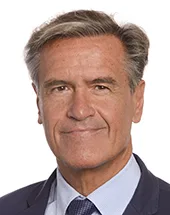
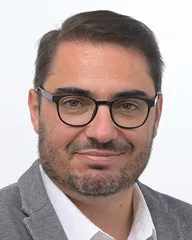
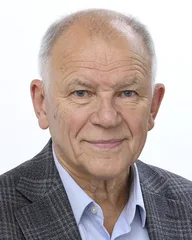
| Rank | Name | Country | Group | Speeches | |
|---|---|---|---|---|---|
| 1 |
|
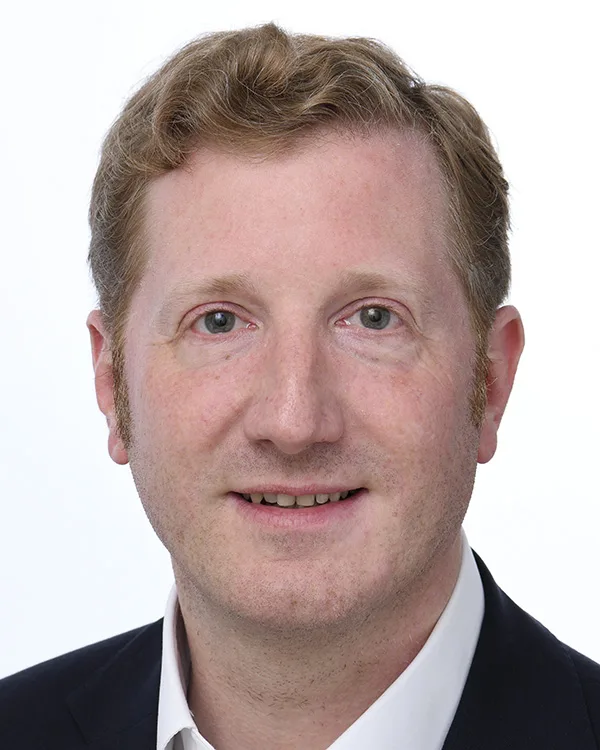
Lukas Sieper | Germany DEU | Non-attached Members (NI) | 390 |
| 2 |
|
Juan Fernando López Aguilar | Spain ESP | Progressive Alliance of Socialists and Democrats (S&D) | 354 |
| 3 |
|
Sebastian Tynkkynen | Finland FIN | European Conservatives and Reformists (ECR) | 331 |
| 4 |
|
João Oliveira | Portugal PRT | The Left in the European Parliament (GUE/NGL) | 232 |
| 5 |
|
Vytenis Povilas Andriukaitis | Lithuania LTU | Progressive Alliance of Socialists and Democrats (S&D) | 227 |
All Contributions (197)
Multilateral negotiations in view of the 13th WTO Ministerial Conference in Abu Dhabi, 26-29 February 2024 (debate)
The next item on the agenda is the debate on the Commission statement on the multilateral negotiations with a view to the 13th session. WTO Ministerial Conference in Abu Dhabi from 26 to 29 February 2024 (2024/2527(RSP)).
Composition of political groups
Before entering the agenda, however, I have to make a statement: Mr Fabio Massimo Castaldo is a member of the Renew Europe Group with effect from 8 February 2024, i.e. as of today.
Approval of the minutes of the sitting
The minutes of this meeting will be submitted to Parliament for approval tomorrow at the beginning of the afternoon session.
Agenda of the next sitting
The next meeting will take place tomorrow, Tuesday 6 February 2024 at 9 a.m. The agenda has been published and is available on the European Parliament's website.
One-minute speeches on matters of political importance
This item is therefore closed.
One-minute speeches on matters of political importance
The next item on the agenda was one minute (Rule 172). I would like to draw your attention to the fact that you can take the floor for the one-minute speech from your seat.
Situation in Haiti on the eve of the deployment of the United Nations Multinational Security Support Mission (debate)
The debate is closed.
Improving the socio-economic situation of farmers and rural areas, ensuring fair incomes, food security as well as a just transition (debate)
Madam President, Commissioner, ladies and gentlemen, It is an individual decision in Germany on agricultural diesel that has caused the barrel to overflow for the farmers. The barrel of overflowing because they are simply fed up with decisions being made over their heads – fed up with the fact that over decades, politics at national and European level has always launched new regulations that have brought bureaucracy. And many of these proposals have also now been put forward by the Von der Leyen Commission. Clearly, we need uniform European rules on plant protection. But do we really need a phytosanitary regulation that makes it impossible to manage 80% of the land? Do we really need new difficulties in terms of emissions protection, as is currently being discussed? Ladies and gentlemen, I do not think so. What we need is a culture of trust in our farmers rather than a culture of mistrust. And you can see very well here in the European Parliament who stands with the farmers, who votes how in the votes here on this law in the European Parliament. And I invite everyone to actually do that, because that's very revealing. In any case, we Free Democrats see the path we want to take – one of less bureaucracy and confidence in agriculture.
Commission Work Programme 2024 (debate)
Madam President, Commissioner, ladies and gentlemen, I would like to speak today not about a file included in the 2024 work programme, but about one mentioned in the 2022 work programme. It is about MDMS – multimodal digital mobility services – a dossier that would actually be able to finally give European citizens more information about when they travel across borders when they use different modes of transport. But it seems that the Commission is incapable of presenting a proposal. In doing so, I would like – sometimes – instead of constantly proposing new regulations that nobody needs, to finally focus on where a real advantage, a real European added value, could actually be offered to citizens. Because even today, travelers in a free Europe still have problems with booking, with connecting trains, if something fails. To actually intervene here would be a real step forward that we would be making on the European side. Unfortunately, the Commission seems incapable of presenting a proposal.
Schengen area: digitalisation of the visa procedure - Schengen area: amending the Visa Sticker Regulation (Joint debate – Schengen area)
Madam President, ladies and gentlemen, Mr Vice-President. First of all, I would like to say that the Schengen area is certainly one of the greatest achievements of this European Union, and we should defend and protect it so that people can continue to move freely in Europe. Since many of the Romanian and Bulgarian colleagues here have expressed their regret that they are not yet part of the Schengen area, I would like to say at this point, especially as a German: We hope that Bulgaria and Romania will join the Schengen area as soon as possible. The proposal, which is now being voted on today on the digitalisation of visa procedures, is certainly a good one, because it is important that digitalisation is introduced in this area. Above all, however, he makes the procedures better, ladies and gentlemen! People who apply for a visa no longer need to hand in their passports, forgeries of visas are prevented and our consulates are relieved, and hopefully this will shorten the often far too long duration of visa procedures. Overall, a very, very good proposal that makes the abuse of visa procedures more difficult and simplifies and standardises procedures. This brings Europe even closer together, and we therefore agree with that.
Egypt, in particular the sentencing of Hisham Kassem
Mr President, Commissioner! Unfortunately, once again Egypt, we almost have to say, ladies and gentlemen. And indeed, under President Al-Sisi, Egypt does not come to rest. Today we are talking about Hisham Kassem. He is one of the leaders of the , a coalition of liberal opposition parties to be silenced. He is accused of being politically motivated, and his appeal is on October 7, so in a few days. We here in the European Parliament call for the immediate and unconditional release and the suppression of all politically motivated accusations. He joins in. We had an emergency resolution a few months ago regarding Alaa Abdel Fattah, who is still in prison and has not been able to see his autistic son for two years. A thousand others are in prison for freely expressing their opinions. Elections are soon to be held in Egypt, and the opposition is on the rise. We call on the Egyptian authorities to stop harassing potential presidential candidates, such as Ahmed al-Tantawi, and to ensure that elections can actually be held freely and fairly.
Need for a speedy adoption of the asylum and migration package (debate)
Mr President, ladies and gentlemen, In 2015, there was a major migration crisis in the European Union. We are now eight years later, and we are holding the debates as we did eight years ago. I believe that the citizens of the European Union do not understand why it takes so long for politics to regulate such an issue and find solutions. I believe that we have a responsibility to move forward now and actually do nails with our heads before the European elections. And we are not far from it. But on the other hand, it is unacceptable for the crisis regulation to be taken hostage in the Council for political reasons in order to play political games. I don't care if it comes from the left or the right side of the political spectrum. It is unacceptable if a debate is blocked and progress on this migration pact is blocked, only to somehow gain benefits for oneself in elections. There is too great a risk that we will fail with this migration pact, and we must not allow this to happen under any circumstances. I believe that we must act quickly now, and the Council must act quickly. Incidentally, I also believe that many of the points we have in the debate could already be implemented by the Member States today. If we succeed, then we will also get back in control of migration, then we will get the procedures at the external borders, high rule of law and humanitarian standards and a crisis mechanism that actually helps in the crisis.
Corrupt large-scale sale of Schengen visas (debate)
Thank you, colleague. First of all, I trust the Commission. And I heard what Commissioner Schinas said at the beginning. He said that there are questions that have not been answered. And we, as European Parliamentarians, we request from the Polish Government that all the questions that the Commission has sent are answered correctly. This is the reason why in Germany there is no trust anymore in the situation in Poland – because the Polish Government has sold visas to foreigners and they have entered the Schengen Area without any allowance normally. So please make sure that this Polish Government is working on replying to all questions and then freedom of movement in the European Union will be reinstated.
Corrupt large-scale sale of Schengen visas (debate)
Mr President, Commissioner, ladies and gentlemen, Freedom of movement is undoubtedly the greatest achievement of the Schengen area. But this freedom of movement is now in doubt - unfortunately - on the border between Germany and Poland. The German government has been forced to reintroduce border controls due to the visa scandal in Poland. Ladies and gentlemen, do you think that a German government makes this fun to annoy the Polish people? On the contrary: We would be happy if we could rely on the Polish government and maintain freedom of movement in the Schengen area. But your government, the Polish government, which pretends to care about migration issues, but in reality in the past has always delayed any progress at the European level on migration - your Polish government has sold visas to other people who are not actually allowed into the Schengen area. This is why the Polish population today has to suffer from border controls. Dear colleagues, instead of throwing fog candles here, you should rather be involved in clarifying this scandal. That would be your duty to the Polish people and to all Europeans, so that borderless travel in Europe is possible again. (The speaker agreed to respond to a question about the "blue card" procedure.)
Reviewing the protection status of wolves and other large carnivores in the EU (topical debate)
Madam President, Commissioner! I have followed the debate here and it is exciting to hear how different the views on the subject are, depending on whether you come from a region where there is a wolf or not. I come from Lower Saxony, in the north of Germany, and at the end of August in Gräpel, which is about 60 kilometers from me, 55 sheep were torn and 50 more injured from 112 in total who have been on this pasture. It's south of Hamburg. This is not a flat and this is not an uninhabited area. After the official wolf monitoring in Lower Saxony, we have 50 packs, plus individual animals, plus couples. Lower Saxony is a country with about 8 million inhabitants and slightly larger than the Netherlands. Just so you can visually imagine how great the pressure on grazing animal husbandry is at the moment with us. Because the wolf is a cultural follower. He walks through our villages and he prefers to tear pasture animals, because this is the easiest prey. A few years ago, we also said: Yes, you have to shoot individual animals. Yes, you have to raise the fences. We need to improve monitoring. But that's no longer enough for the stock of wolves we have today. We finally need a lowering of the protection status, even if it is only regional for individual areas. But we need this lowering of the protection status so that we can finally get into active wolf management.
Sustainable aviation fuels (ReFuelEU Aviation Initiative) (debate)
Madam President, Commissioner! Alternative fuels are undoubtedly the key to decarbonising aviation. Also the only key we have, because electrification, as other colleagues have already said, will take some time. Now it's time to build up production capacity. And we are setting the right framework conditions for this with this law. As the European Union, we are at the forefront of decarbonisation and must ensure that other regions follow suit in this global sector, otherwise there will be distortions of competition to the detriment of European industry. In my view, it is now important that the Commission swiftly Book&Claimimplementation of the system and, if necessary, the SAF allowances to set the right framework conditions to ensure that the market take-up of alternative fuels – and, by the way, many different alternative fuels – is then also ensured, so that the industry actually becomes greener and we can say in the future: Flying is no longer the difficult means of transport, but we can board the plane with a clear conscience.
EU-Tunisia Agreement - aspects related to external migration policy (debate)
Mr President, ladies and gentlemen, Yes, we need migration agreements with third countries. And the sections in the Tunisia agreement on the economic stabilization of the country are not at all bad in terms of content. But I wonder: Why now? Why now that President Kais Saied is turning the country into an autocracy? Why not when we had democratic structures in Tunisia? Is Kais Saied really a reliable partner for us in the European Union? I don't think so. Just six days ago, opposition activists were arrested again in Tunisia, judges are simply dismissed without further ado, and on migration issues, is he a good partner? Can someone be a good partner who simply exposes migrants in the desert to Libya without water? I don't think so. In the six weeks following the conclusion of the agreement, the number of migrants from Tunisia to Europe increased by 70%. I don't think this agreement works that way. For me, it must be clear: No human rights, no democracy – no agreement.
Greening transport package (debate)
Madam President, Commissioner, ladies and gentlemen, I think it is good that the proposal for the greening of transport is finally here. The issue of emissions measurement in particular is, I believe, one with which we can achieve greater transparency for citizens. We as Free Democrats will fight for this report to uphold technological neutrality. I believe that in order to transport goods in a CO2-neutral manner, we need as much technology as possible that is available to us. Because forwarding companies are usually medium-sized companies, and they need the right vehicle with the right infrastructure for their business model, dear colleagues! I would like to say at this point, because this is how the fear of the giant trucks is opened up: Larger trucks, longer trucks are more ecological because they emit less CO2 per tonne of freight transported. They also have a lower axle load per axle and are therefore quite good to use for road traffic. And they can be used well on defined routes and are therefore a good contribution to the decarbonisation of transport.
Preparation of the European Council meeting of 29-30 June 2023, in particular in the light of recent steps towards concluding the Migration Pact (debate)
Mr President, Madam Minister, Commissioner! It is good that the Member States have now agreed. Das ist ein Zeichen der Handlungsfähigkeit in einer Frage, in der Europa viel zu lange nicht handlungsfähig gewesen ist. Now we can finally begin negotiations between the Council and Parliament. As Free Democrats, we support the paradigm shift towards more order in migration and the introduction of border procedures, of course with high humanitarian and rule of law standards. In addition to reducing irregular migration, we also need to broaden the pathways of migration to the labour market. Because we need immigration into our labour market if we want to maintain prosperity in Europe. We Liberals are proposing a European talent pool for this. However, it is now important that Member States also find a position on the crisis mechanism. The rules for normal times are important, but it is crucial that we as Europeans also have an answer for times of crisis. The Member States must now deliver.
Situation in Lebanon (debate)
Mr President, Commissioner, ladies and gentlemen! Lebanon is in a dramatic economic and financial crisis. In particular, the galloping inflation makes the population to create. You have to imagine from an exchange rate of 1 to 1,500 they are at an exchange rate of 1 to 90,000 to the dollar. This has an impact on the population for all areas of life. The reforms demanded by the International Monetary Fund cannot be implemented, because we have in Lebanon a corrupt political class that puts self-interest before that of the country, and also the political arm of Hezbollah, which makes any majority-finding impossible. In this difficult situation, we have about one and a half million Syrians in Lebanon. And I think it is good, Commissioner, that you mentioned the Syria conference, because it is also important for Lebanon. I believe it is important that we give an international signal that we support Lebanon in this situation. Many Syrians have always been in Lebanon and have worked there. You have to tell the truth. It is not a question of bringing these Syrians back to Syria, because there, in particular, the men must fear never to see their families again, never to reappear. We must not allow this to happen, but we must ensure that people who have fled the war and the dictator are further protected. But we must, of course, help Lebanon to support these refugees in their country.
Externalising asylum applications and making funding to third countries conditional on the implementation of return agreements (topical debate)
Madam President, ladies and gentlemen. Yesterday we celebrated Europe Day. This European Union is a direct response to what happened in this Second World War. We've decided to work together so that something terrible like this can't happen again. We learned a second lesson from the Second World War, namely that the Nazis persecuted people – because of their sexual orientation, their religion, their nationality, their origin – there is a right to asylum. This European Union is a place of freedom and democracy and human dignity for all those in the world who are persecuted for the very reasons why the Nazis persecuted other people in Europe. Therefore, this right to asylum is also non-negotiable. If you want to negotiate it, ladies and gentlemen, as today's fascists no longer want the right to asylum, you are leaving the European consensus on values. It is clear to me that this asylum and migration pact must defend the European consensus on values. With the immigration of qualified people, Madam President, with the repatriation of those who do not have the right to asylum, but also with the help of those who ... (The President withdrew the floor from the speaker.)
The need for European solidarity in saving lives in the Mediterranean, in particular in Italy (debate)
Mr President, Commissioner! It is, of course, unbearable that people drown in the Mediterranean Sea. I would like to say again at this point that it is a state task to rescue people from distress at sea. I call on the Member States and the Council to finally relaunch a state rescue mission at sea. The fact that we are discussing this at this point is because Italy has declared a state of emergency because of 30,000 refugees who have arrived, ladies and gentlemen. In Poland there are one million Ukrainian refugees, in Germany there are one million Ukrainian refugees. I think we should put this in relation, ladies and gentlemen. There's no reason to declare a state of emergency, it's about making work better. We here in Parliament are doing the work on migration policy. We have just adopted the negotiating mandates for the migration pact in the Committee on Internal Affairs, ladies and gentlemen! It can go on because, of course, we have a duty to deliver that we actually make regulation better in the European Union. That is what we want to do, ladies and gentlemen. I hope that the Member States will soon be able to launch a negotiating mandate so that we can enter into these negotiations. I believe it is about keeping a cool head, that we do factual work, ladies and gentlemen, that is what people expect of us. And, of course, we need solidarity with the Member States where refugees arrive first, but we also need humanity and the rule of law in this matter. If we let ourselves be guided by it, then we will also produce good results.
Revision of the EU Emissions Trading System - Monitoring, reporting and verification of greenhouse gas emissions from maritime transport - Carbon border adjustment mechanism - Social Climate Fund - Revision of the EU Emissions Trading System for aviation (debate)
Mr President, Commissioner, ladies and gentlemen, I think it is good that we are taking the big step today when it comes to voting on the main dossiers today. It is important that we strengthen emissions trading as an essential market-economy instrument in this area, because this will ensure, ladies and gentlemen, that CO2 savings are made where they are most favourable. That is a good principle, ladies and gentlemen, that we use the market mechanisms here. As rapporteur in the Committee on Transport for the ETS in aviation, I am also particularly proud that we have managed to SAF allowances keep it in the file, because that will ensure that the market will absorb alternative aviation fuels much faster, and that will ensure that it will be even faster that we will be climate neutral by flying. But I would also like to say in the end, as a Free Democrat, that it is important that we do not lose sight of one thing in this legislative package, namely that we need all technological options if we are to achieve the climate goals. Some people don't want to hear that, but that applies to nuclear energy as well as to alternative fuels. carbon capture and others. We need all of this if we are to achieve our climate goals.
Tunisia: Recent attacks against freedom of expression and association and trade unions, in particular the case of journalist Noureddine Boutar
Mr President, Commissioner, ladies and gentlemen, The European Parliament stands with the Tunisian people. We stand with those who fight for democracy, who fight for their country not to continue on this path towards dictatorship. Tunisia is currently on this path. It has been on the way since President Saied basically abolished the Constitution. There were questionable elections with 11% turnout, which show what the Tunisian population thinks of these elections, ladies and gentlemen! But things are getting more and more dramatic in Tunisia. Journalists can no longer do their job. Noureddine Boutar, the head of the largest independent radio, has been arrested. The judges who oppose the system are raised to their posts and, ladies and gentlemen, these are not all signs of democracy, they are signs of autocracy. We can't accept that. We expect the constitutional order to be restored, freedom of expression to be guaranteed, people to be able to gather, to form associations, to be able to participate actively in civil society. We stand with these people and we are fighting for them here in the European Parliament.
Deaths at sea: a common EU response to save lives and action to ensure safe and legal pathways (debate)
Mr President, ladies and gentlemen, Maritime rescue is, of course, a state task, and for far too long we have been counting on non-governmental organisations to take on this task. In this respect, what is happening in the Mediterranean is dramatic, and it is all the more dramatic if it is also happening in European waters – in Italian waters, as in this case. But, ladies and gentlemen, what we really need is not just a solution to the issue of rescue at sea – where, of course, we need a solution – but what we really need is the big throw, ladies and gentlemen. This month, here in the European Parliament, in the Committee on Internal Affairs, we will vote on all the migration files and finally find a position for ourselves as the European Parliament. So that we can deliver, so that citizens get what they expect of us, namely finally a solution to the migration and asylum question, which is European, which gives European answers, ladies and gentlemen, the Council must also, and the Member States must also move. It is not possible for everyone to withdraw to maximum positions, but everyone must be willing to compromise. We need a solution to the crisis, we need a solution to the Dublin succession and to solidarity within the European Union. If we fail to come up with solutions here, proposals that we can then negotiate, where we finally actually pass laws, ladies and gentlemen, citizens will rightly say: You didn't get it!