

| Rank | Name | Country | Group | Speeches | |
|---|---|---|---|---|---|
| 1 |
|
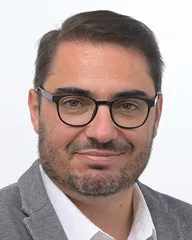
Lukas Sieper | Germany DEU | Non-attached Members (NI) | 390 |
| 2 |
|
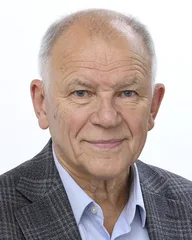
Juan Fernando López Aguilar | Spain ESP | Progressive Alliance of Socialists and Democrats (S&D) | 354 |
| 3 |
|
Sebastian Tynkkynen | Finland FIN | European Conservatives and Reformists (ECR) | 331 |
| 4 |
|
João Oliveira | Portugal PRT | The Left in the European Parliament (GUE/NGL) | 232 |
| 5 |
|
Vytenis Povilas Andriukaitis | Lithuania LTU | Progressive Alliance of Socialists and Democrats (S&D) | 227 |
All Contributions (197)
The importance of trans-European transport infrastructure in times of stalling economic growth and major threats to Europe’s security (debate)
Madam President, ladies and gentlemen, dear Commissioner! Infrastructure is the lifeblood of our economy, and that is why we obviously need to complete the trans-European transport networks. I would like to say at this point that, of course, we need finances for this, but we also need the willingness of the Member States, especially the Member States, to bottlenecks, which are present in cross-border situations. In this respect, I invite you to talk to the Member States about the fact that this must also be a priority. I would also like to stress that I believe that we indeed need our own financing instrument for infrastructure, because we know that otherwise infrastructure measures will fall behind and the money will rather be spent on consumer spending. That is why I would also like to advocate that we have our own instrument in the next multiannual financial framework, which is sufficiently financed so that we can also move forward, in particular, military investments in military infrastructure, in dual-use infrastructure. I believe that this is also a good argument that plays on our side for this, and that we can use these lifelines for the economy just then also for the military sense in an emergency.
Action Plan for the Automotive Industry (debate)
Madam President, Commissioner, Minister! It is prudent to react to a regulation that has fallen from the time when the world was still another by revising that regulation. That is why it is right, Commissioner, that we should now address this regulation and prevent the payment of penalties to car manufacturers, or even that these car manufacturers should have to transfer money to their Chinese or American competitors – that would be ludicrous in my view. This flexibility, which you introduce, therefore finds my full support. However, I would also like to ask you to create flexibility in regulation in order to achieve the climate targets. Because I do not want to weaken the climate targets, but I want us to be able to achieve these climate targets also through alternative fuels, because this also aims at CO2 emissions.2Reduction, Commissioner. In my view, therefore, preferring the revision would be correct. And then all alternative fuels available on the market should also be able to be used in the automotive industry. And a request: Please do not only chew on the cars, but also attack the truck area, there is also a need for action.
Clean Industrial Deal (debate)
Madam President, Commissioner, ladies and gentlemen, Europe is not competitive. In my view, the Commission makes correct findings in the analysis. Energy costs are too high and need to be reduced for industry and consumers. The cost of bureaucracy needs to be addressed, and I would go much further than the Commission's proposals today. We need to become more innovative in Europe to get the best products off the ground. It has already been said that we can only achieve the climate goals with a competitive economy. But the truth is that the jobs created in this economy will only be there in the long term if the economy is competitive. Competitiveness is not achieved through more subsidies or additional regulation, but by attracting direct investment to Europe, competitiveness is achieved through the production of innovative products by European companies and the reduction of the tax burden. I would be happy if we put a much, much stronger focus on this point: How can we get the costs down? How can we keep companies competitive in the long run, and not: How do we create new regulations and new subsidies?
Presentation of the proposal on a new common approach on returns (debate)
Madam President, ladies and gentlemen, Commissioner! Repatriation was not part of the migration package. In this respect, it is right, and I would like to thank the Commission for finally having a paper on the table on this subject. It has already been mentioned, and I would like to emphasise here: A well-functioning rule of law includes well-functioning and good asylum procedures, but it is of course also part of the fact that an asylum procedure that is decided negatively has consequences that people have to leave Europe again. And we are not good enough, Europe is not good enough, and especially in Germany we are not good enough. I think it is right that you are now presenting a proposal that promotes the harmonisation of standards. We have already said in the migration package that we need more uniformity in asylum procedures. If we have uniformity in asylum procedures and if we now also have uniformity in return procedures, then the consequence must be that there is also a common recognition of these decisions between the Member States. Ladies and gentlemen, secondary movements between countries are a problem. We can also address this by actually harmonising these decisions between states and by mutually recognizing the decisions. Then repatriation will also be efficient, and that is what we want to achieve here.
Escalation of violence in the eastern Democratic Republic of the Congo (debate)
Mr President! Ladies and Gentlemen! For more than two decades, a civil war has raged in eastern Congo, hundreds of thousands of displaced people. This war is sometimes in the media, sometimes it is not, but it is always there. This war – where young women and children are used as human shields, in a conflict involving not only Congolese but also supported fighters from neighbouring Rwanda. I would like to say here that it is unacceptable for one country to invade another country, no matter where in the world. As the European Parliament, we should always make it clear that we stand with those who are being attacked. That is why I believe that we should use targeted sanctions to punish the people who commit crimes against humanity, together from within the European Union. Above all, we should stop increasing trade with Rwanda, but we should intensify it with the Congo and put forward our support for the Congo.
Restoring the EU’s competitive edge – the need for an impact assessment on the Green Deal policies (topical debate)
Mr President! Commissioner! It is already an exciting debate because one side of the House says that there is no competitiveness without climate protection, and the other side says that there is no climate protection without competitiveness. Somehow, both are probably a bit right. And I believe that we should be careful not to actually change the climate goals we have set ourselves. But what we should change is possibly how we achieve these climate goals, how we get more flexibility in the regulations we have given ourselves. I am therefore convinced that the Commission should check whether it makes no sense to prefer the revision of individual legislative proposals, which we have planned in the context of legislative deliberations. And we talk a lot about the Draghi report, and I would invite you all to read through what the Draghi report actually says about the ban on combustion engines. But regardless of how to possibly come to a decision on this very critical issue, I believe we need a strategy on how to produce alternative fuels. We need alternative fuels to decarbonise transport. Regardless of the car, we need it for the maritime sector, we need it for aviation, and we do not have enough investment in this area today. If we want to become climate neutral in all areas, then we need alternative fuels. And I think the Commission should develop a strategy on how to increase production in this area.
Use of rape as weapon of war, in particular in the Democratic Republic of Congo and Sudan (debate)
Madam President, ladies and gentlemen! War is terrible. But if we imagine what these young women, children in part, are going through, it is even more terrible – that is hell on earth. Imagine soldiers coming to your village, to your home, raping your mother, raping the children, one by one. Girls are kidnapped, forcibly married, traded as slaves. This is what happened yesterday Human Rights Watch It was presented in a report on Sudan, and unfortunately that is the daily reality there. Ladies and gentlemen, we must not look the other way, but we must introduce targeted sanctions as the European Union against those responsible for such horrific acts. And we must ensure that the International Court of Justice is able to effectively investigate such war crimes, such crimes against humanity, and put the perpetrators behind bars.
Implementation of the Single European Sky (recast) (debate)
Mr President, Commissioner, ladies and gentlemen! It took us ten years to get this law, this single European sky, off the ground. Not because it would have taken us a long time here in Parliament, but because it was up to the Member States, which have been hiding behind national competences for a very long time. These national competences have served to conceal the fact that there are state monopolies in air traffic control in the Member States, which they do not want to see affected. And the truth is: We don't really touch them now either. What we are doing is not a reform, but a reframing, but it addresses important issues. We finally get this performance review, that is finally a benchmark for air traffic control – whether they work well, whether they have enough people, how it works with the delays, which – not always, but very often – air traffic control is also to blame. We have a capacity issue that can be addressed by this, and therefore we can agree at the end of this reform. But it is far from what we actually hope for and what we need so that we can finally manage the delays in Europe.
Strengthening the security of Europe’s external borders: need for a comprehensive approach and enhanced Frontex support (debate)
Mr President, Commissioner, ladies and gentlemen! Protecting the external borders is a very, very important concern for us Free Democrats, for two reasons: On the one hand, we have the objective that we do not need internal border controls, that we have the free movement of goods and persons in the Schengen area. And secondly, we have the goal of bringing order to migration, because for far too long we had too little order. That is why it is so important that we are the first to properly finance Frontex. That is why it is important that the Commission makes its proposal and says: Frontex needs to be increased. But the funds must also follow, ladies and gentlemen! And in the budgetary discussions we will have to make up the money, and there is the wrong signal from the Member States who say we want to spend less money on Frontex. And the second is that we must finally implement the Asylum and Migration Pact. We decided on it this year. That was a good move. I myself co-negotiated on the screening regulation, which the Commissioner also mentioned earlier. And it is precisely this screening regulation that must be implemented as quickly as possible at the beginning, so that we have a clear procedure at the external borders on how we deal with people who want to come to us in Europe. This also means that our borders are properly protected.
The crisis facing the EU’s automotive industry, potential plant closures and the need to enhance competitiveness and maintain jobs in Europe (debate)
Madam President, Commissioner, ladies and gentlemen! For us as liberals, the goal is to keep the European automotive industry competitive – competitive in order to secure jobs and create value for the future. That is why, in my view, it is important that we do not put the automotive industry under further pressure in the short term with impending fines. This applies not only to manufacturers, but also to the supplier industry in particular. In the medium term, however, we must do more, and I do not believe that subsidies and tariffs are the answer, ladies and gentlemen. I believe that we now urgently need a revision of the CO2fleet limits and I expect the Commission to bring forward the revision foreseen for 2026 to 2025. We should ambitiously use all technologies to achieve decarbonisation. We don't want to change goals. We want climate-neutral mobility, but we want to change the way we achieve this goal, ladies and gentlemen! It is already quite obvious that two thirds of the electric cars sold today are hybrid. But that we exclude precisely these hybrid models in our European market by our CO2Fleet regulation is insane. That is why we urgently need to change that.
The reintroduction of internal border controls in a number of Member States and its impact on the Schengen Area (debate)
Madam President, Commissioner! For us liberals, for the Renew Europe Group, the Schengen area is one of the most important achievements in this European Union. And that has also been one of the driving forces behind why we here in this House have given so much thought to the European Pact on Asylum and Migration in the last legislative period and have finally adopted it. And now it is a matter of putting it into effect and implementing it in the Member States, ladies and gentlemen. Because it is a basic requirement for us to be able to do without internal borders in the Schengen area. They have now been introduced by Germany at short notice, and I would like to make it clear at this point that this can of course only be a temporary solution. It can only be a short-term solution that must come to an end soon. Of course, we want to defend freedom of movement in the Schengen area. But for this we need good protection of the external borders. To do this, we need to strengthen Frontex. And for that, by the way, we need more resources for Frontex and not less resources for Frontex, as proposed by the Member States. To achieve this, we need the Asylum and Migration Pact, which is being implemented. And for this we need better police control and cooperation, which was already initiated in the last legislative term. These are basic prerequisites for the Schengen area to be able to live. And then we don't need border controls, ladies and gentlemen!
The Hungarian “National Card” scheme and its consequences for Schengen and the area of freedom, security and justice (debate)
Madam President, ladies and gentlemen! What is happening right now in Hungary is that the Hungarian government, Viktor Orbán, is trying to destroy the Schengen area from within – this greatest achievement, one of the greatest achievements of the European Union – that many of our citizens are experiencing, using and appreciating. I believe that with this single-handedness that the Hungarian government is doing there, with the possibility for Russians and Belarusians to enter the Schengen area, Orbán may become the biggest smuggler of the European Union. This is an unacceptable process that we must not allow. We must make it clear that this Hungarian government must urgently withdraw this regulation. Because I do not want to jeopardise the fact that the Hungarians, this people who fought for freedom from socialism, that this people will need passports again in the future if they want to travel in Europe, that there will be border controls with Hungary again - I do not want all this. But that is exactly what Orbán is putting at risk, and that is why this regulation must be withdrawn in order to preserve the Schengen area for the future.
Need to prevent security threats like the Solingen attack through addressing illegal migration and effective return (debate)
Madam President, Commissioner! Our thoughts are with the victims of Solingen, of course. But at such a moment it is important to remember that in Europe security can only be guaranteed if we all work together, because attacks such as those in Solingen have also happened in various other places. And that is why I want to remind you at this point that we have made a lot of progress in the joint fight against terrorism, in the cooperation of the security authorities in Europe, and that we have taken a big step just before the summer, including with the Asylum and Migration Pact. But I would also like to point out that the fight against radicalisation is a crucial one, because many of them are radicalising in Europe and are not coming to Europe as terrorists. But those who might want to come to Europe as terrorists, as criminals, we have laid a good foundation for this with the European Asylum and Migration Pact – with the screening regulation, where we check what these are for people, with border procedures at the European external border. And it must now be a matter of putting this European Pact on Asylum and Migration into practice, implemented by the Member States, because the truth is that this is not yet the case. During the European Championships in Germany, border controls were already carried out in Germany and about 30,000 people were prevented from entering Germany who wanted to enter irregularly. How can it be that people can come to Germany, to a country that is in the middle of Europe, that has no real external borders? If we fail to ensure that the Member States actually implement the Pact, we will not solve the problem either. That's why it's now about implementation: The Commission needs to put pressure to make this happen as quickly as possible.
Framework of measures for strengthening Europe’s net-zero technology products manufacturing ecosystem (Net Zero Industry Act) (debate)
Mr President, ladies and gentlemen, I am travelling a lot at the moment – as many of you probably are – and I visit many establishments: small farms, large farms. It should be noted that the willingness to invest in European industry, and German industry in particular, is declining significantly. If no investments are made, this means: We will not keep these companies competitive in the long run. Uncompetitive means that jobs are being cut, jobs are being lost, tax revenues are being lost, and so is the money we need to pay for the welfare state and invest in education. There is an urgent need to strengthen competitiveness in the European Union. Unfortunately, this was not Ursula von der Leyen's priority in this legislature. In my view, we need a European economic turnaround. Energy costs must be reduced, red tape costs must be reduced, investment and innovation must be promoted, and above all there must be a risk reduction of investments in order to finally reinvest in businesses. Because the Net-Zero Industry Act In my view, this falls short of expectations. We must finally put competitiveness at the heart of European policy for the next parliamentary term, which is coming up.
Advance passenger information: enhancing and facilitating external border controls - Advance passenger information: prevention, detection, investigation and prosecution of terrorist offences and serious crime (joint debate - Advance passenger information)
Mr President, ladies and gentlemen, I'd say: Everything is done right, isn't it, dear colleague Assita Kanko? We have the Commission which says: Man, what is being decided now is better than our own proposal. We have the Christian Democrats who say: Great idea or great result, because we can now fight crime better. We have the Greens who say: Yes, we have concerns, but we are implementing the judgment of the European Court of Justice. And we set clear rules and strengthen data protection. So, ladies and gentlemen, I think that's a good result. And that also shows how to make European policy. That is to say, by seeking a consensus, taking the good points from the different groups and forming a compromise that can then be supported by all. I think that is, in the best sense of the word, what we are doing here in the European Parliament, namely to argue about the matter, but then find a result, find a compromise, implement it. And if the Member States - which unfortunately are not represented by the Council at the moment, but the Belgian Presidency of the Council has done a good job, that must be said at this point - implement it quickly, then the whole thing will also be done. And we have a good result, which is then also implemented legally quickly.
Advance passenger information: enhancing and facilitating external border controls - Advance passenger information: prevention, detection, investigation and prosecution of terrorist offences and serious crime (joint debate - Advance passenger information)
Mr President, Commissioner, ladies and gentlemen, What is the purpose of this pre-submitted passenger data? The point is that we all provide data at the moment we travel, especially when we travel by air. Data about our name, date of birth and the like, which are then passed on by the airlines to the authorities of the countries to which we want to travel. This is a normal procedure that exists all over the world. What we are discussing here in the European Parliament is: What rules do we actually give ourselves for this processing of this data? Because, ladies and gentlemen, we naturally need rules for data processing, because without rules there is no proper data protection. What the Commission has presented here is a standardisation of these datasets on the question: What data can actually be shared, how will it be shared, where will it be shared? processedHow do you say German at this point? eu-LISA has been selected as an external authority. I think that's good, because I believe that we have a good partner with eu-LISA at this point. But it is also about the question of how other data, that is the so-called PNR data, such as this data, which is partly the same as the API data, how these data flows can be launched at the same time. As a Parliament, it was particularly important to us that passengers travelling within the European Union could continue to do so without any problems. Because it was to be feared, or at least we were afraid, that when taking this data, which should take place automatically, in the future queues at the airports must be provided or even processes that lead to the fact that you no longer simply check in online, then go to boarding, fly to another country and in principle can experience the borderless Europe as we like to experience it, but that you have processes, as if you travel to a country that is not part of the Schengen area, and we wanted to prevent that. We succeeded in doing so in this debate, because in the end we now have a good compromise, which also ensures that this online boarding is still possible, and that was particularly important to us as a Parliament. I would like to say at this point that we have found a good compromise, which, for example, also excludes biometric data, which guarantees a high standard of data protection. And I would like to take this opportunity to thank my co-rapporteur, Assita Kanko, for two reports that we are discussing here, one for which I was responsible and the other for which my colleague, Mr Kanko, was responsible, and all the shadow rapporteurs. Because that was a good, productive work, always oriented to the cause. Above all, from both the point of view of the Committee on Civil Liberties, Justice and Home Affairs here in the House and from the point of view of the Committee on Transport and Tourism, we have succeeded in bringing the ideas together, so to speak, and thus achieving a good result. That is why I am glad that we are still able to complete this in this parliamentary term, and I would then ask you all to support this report.
The proposed repeal of the law banning female genital mutilation in The Gambia
The next item on the agenda was the debate under Rule 144 of the Rules of Procedure on the proposed repeal of the law prohibiting female genital mutilation in The Gambia (2024/2699(RSP))*. ______________ * See Minutes.
Azerbaijan, notably the repression of civil society and the cases of Dr Gubad Ibadoghlu and Ilhamiz Guliyev
The debate is closed. The vote will take place on Thursday 25 April 2024.
Azerbaijan, notably the repression of civil society and the cases of Dr Gubad Ibadoghlu and Ilhamiz Guliyev
The next item on the agenda was the debate on cases of violations of human rights, democracy and the rule of law (Rule 144). The first item on the agenda for these debates was the debate on Azerbaijan, in particular the repression of civil society and the cases of Dr Qubad İbadoğlu and İlhamiz Quliyev (2024/2698(RSP))*. ______________ * See Minutes.
Recent attempts to deny dictatorships and the risk of Europe returning to totalitarianism (debate)
The debate is closed.
Recent attempts to deny dictatorships and the risk of Europe returning to totalitarianism (debate)
Thank you, ladies and gentlemen, also for your commitment.
Amending Directive 2013/36/EU as regards supervisory powers, sanctions, third-country branches, and environmental, social and governance risks - Amending Regulation (EU) No 575/2013 as regards requirements for credit risk, credit valuation adjustment risk, operational risk, market risk and the output floor (joint debate - Banking Union)
Yes, in this debate there are blue-cards and catch-the-eye.
Amending Directive 2013/36/EU as regards supervisory powers, sanctions, third-country branches, and environmental, social and governance risks - Amending Regulation (EU) No 575/2013 as regards requirements for credit risk, credit valuation adjustment risk, operational risk, market risk and the output floor (joint debate - Banking Union)
The next item on the agenda is the joint debate on the Banking Union with: – the report by Jonás Fernández, on behalf of the Committee on Economic and Monetary Affairs, on the proposal for a directive of the European Parliament and of the Council amending Directive 2013/36/EU as regards supervisory powers, sanctions, third-country branches and environmental, social and governance risks and amending Directive 2014/59/EU (COM(2021)0663 – C9-0395/2021 – 2021/0341(COD)) (A9-0029/2023) and – the report by Jonás Fernández, on behalf of the Committee on Economic and Monetary Affairs, on the proposal for a regulation of the European Parliament and of the Council amending Regulation (EU) No 575/2013 as regards rules on credit risk, credit valuation adjustment risk, operational risk, market risk and the output floor (COM(2021)0664 – C9-0397/2021 – 2021/0342(COD)) (A9-0030/2023).
The attack on climate and nature: far right and conservative attempts to destroy the Green Deal and prevent investment in our future (topical debate)
The debate is closed.
The attack on climate and nature: far right and conservative attempts to destroy the Green Deal and prevent investment in our future (topical debate)
Thank you very much, Mr Nienaß. I would like to draw your attention to the fact that, under Rule 162 of our Rules of Procedure, all debates requested under Rule 162 of the Rules of Procedure, regardless of which political group requests them, do not allow blue cards and spontaneous interventions under our Rules of Procedure. This is basically the case, and the Bureau has no room to do it differently, because these are the rules that this House has given itself. If the House itself changes its rules, then we can also change that for the debates, but the rules for debates under Rule 162 are clear here, and therefore spontaneous interventions and blue cards are not allowed, and I am not giving you the floor again now.