

| Rank | Name | Country | Group | Speeches | |
|---|---|---|---|---|---|
| 1 |
|
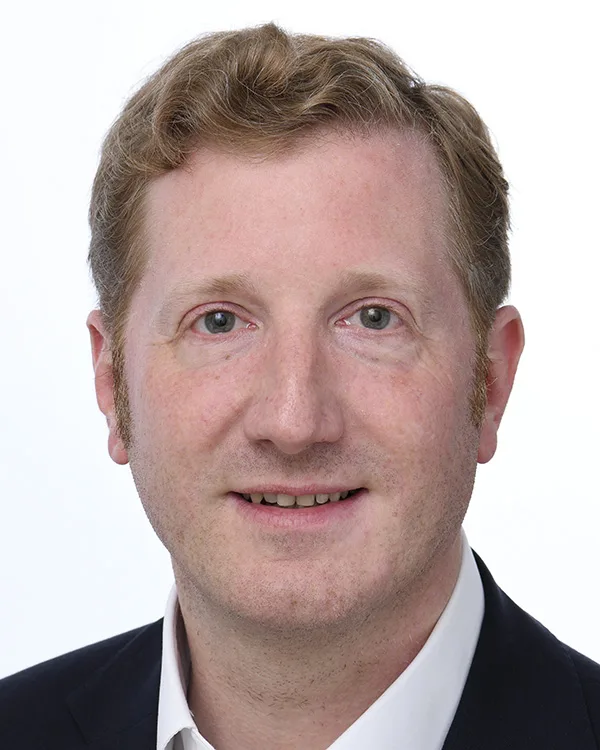
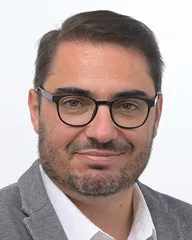
Lukas Sieper | Germany DEU | Non-attached Members (NI) | 390 |
| 2 |
|
Juan Fernando López Aguilar | Spain ESP | Progressive Alliance of Socialists and Democrats (S&D) | 354 |
| 3 |
|
Sebastian Tynkkynen | Finland FIN | European Conservatives and Reformists (ECR) | 331 |
| 4 |
|
João Oliveira | Portugal PRT | The Left in the European Parliament (GUE/NGL) | 232 |
| 5 |
|
Vytenis Povilas Andriukaitis | Lithuania LTU | Progressive Alliance of Socialists and Democrats (S&D) | 227 |
All Contributions (197)
EUCO conclusions: the need for the speedy finalisation of the Road Map (debate)
Madam President, ladies and gentlemen. Why can't we get any further, citizens ask themselves when it comes to migration policy. And you are right to ask yourself this question. Since 2015/16, since the great migration crisis, Member States have been blocking any legislative progress on this issue. And now the pressure is particularly high due to a large number of additional refugees from Ukraine; At the local level, we see this. And we need answers, and citizens expect answers. And the Council is working now, addressing these current issues. But I think sometimes we forget the long-term goal. Of course, we need to address short-term problems. Of course, we also need to improve on deportation and to do so we need agreements with third countries. But what we really need is finally a common European asylum system. What we finally need is an answer to the question of how solidarity between Member States in Europe can be organised. What we finally need is faster asylum procedures, and what we finally need is easier and better access to the European labour market so that people do not end up in the asylum system. That is what we need, and I expect the Council to finally move forward.
Response to the situation in Tunisia (debate)
Mr President, ladies and gentlemen, I am shocked at the weak perception that the Commission and the Council are giving here. I do not know who prepared yours for you, ladies and gentlemen, but this does not reflect the reality that is currently prevailing in Tunisia. In Tunisia, there is a president called Saied, who has eroded democracy, abolished parliament, then rescheduled elections later, in which not everyone could participate freely, in which most parties did not participate, with an electoral turnout of 11.4%. And you are talking about the fact that we should move on to the agenda, that we should acknowledge this, ladies and gentlemen? You really can't be serious about asking us to do this. We must do the opposite, ladies and gentlemen. Because what is happening in Tunisia right now is that next to the coup d'état of democratic institutions, the judiciary is next. And we have, as the colleague has already said, 57 judges who have been removed from office, and now it's the press' turn. Il faut le dire très clairement, chers collègues, à cet instant: Le Parlement européen se tient aux côtés du peuple tunisien. Nous luttons avec vous pour la démocratie, nous luttons avec vous pour l’état de droit et nous luttons avec vous pour la liberté de la presse. Aujourd’hui, le directeur d’une station de radio, Noureddine Boutar, a été arrêté. Cette arrestation est inacceptable: il faut une réaction ferme et forte de l’Union européenne contre ce régime tunisien.
CO2 emission standards for cars and vans (debate)
Mr President, ladies and gentlemen. We all have the goal of achieving the Paris climate goals. And, of course, the transport sector must contribute to this and also be decarbonised. For this, I think we need innovation and inventiveness. We have therefore always fought for this transformation to be open to technology. Because even the combustion engine can drive climate-neutrally with alternative fuels. The combustion engine is not per se harmful to the climate, but it is the question of how it is refueled. And that is why we have asked the Commission to make a new proposal on how the combustion engine can continue to be used in the future with only climate-neutral alternative fuels. Unfortunately, this proposal is waiting. There is no reasonable reason to ban the incinerator per se. That is why I will not agree with this proposal either, because those who want to ban are only afraid of one: Innovation and competition. This is exactly what will bring us forward on the subject of decarbonisation.
Preparation of the Special European Council meeting of February, in particular the need to develop sustainable solutions in the area of asylum and migration (debate)
Mr President, ladies and gentlemen, I think I hear the words of the Christian Democrats here in the hall, that we should move forward on the migration pact. However, I now lack the belief that they really want it. Have you seen this ugly face of the extreme right in the speeches here in this room today? Do you really want to imitate this, ladies and gentlemen of the EPP, and dwarf yourself, as the French Conservatives did, because they emulated the extreme right? Ladies and Gentlemen! We have agreed a roadmap here in this Parliament, together, to move forward on the Pact on Asylum and Migration. Be willing to compromise! Go to the middle and do not try to fish at the right edge and collect votes there, because you will not succeed. Let us work together to ensure that we have a single European system. If you really want fewer people to drown in the Mediterranean, don't make sure that NGOs are somehow thrown between their legs here, but make sure that there is a state maritime rescue mission so that we don't have to leave this to the NGOs. Ladies and gentlemen, I really think you have to ask yourself where you want to go. Let me tell you: In the middle, we are ready to work with you and find compromises to get a good European solution off the ground. But we won't chase you if you run to the extreme right.
Criminalisation of humanitarian assistance, including search and rescue (debate)
Mr President, Commissioner, ladies and gentlemen, Why are we discussing this question today? We are discussing this issue because in Italy, once again, the government is trying to make life difficult for sea rescuers with flimsy reasons. And that is a scandal, ladies and gentlemen, and that is what we must call it. But we are also talking about it because NGOs have to step in in the Mediterranean to save people from distress at sea, because there is no state maritime rescue mission. I would like to make it clear at this point: I think that's a state task, that we take care that people who are in distress at sea are saved. And that is why I also call on the Member States to finally launch a sea rescue mission again and to ensure that NGOs no longer have to step in and do the work of those who should actually do so, namely the states of the European Union. At the same time, however, we must do everything we can to ensure that people no longer have to set off on this dangerous route. And that, in my view, means that we need to create more legal pathways to Europe, legal pathways, for example, in the field of resettlement – this has just been mentioned – where, as a Parliament, we finally have an agreement with the Council. But we also need legal pathways into the labour market, ladies and gentlemen. And as liberals, we have also put forward a good instrument for this. This is the Talent pool, on which people from third countries should be able to apply to come to Europe to work with us. Then we finally have fewer people who have to go on this dangerous route and fewer people who die in the Mediterranean. That would be an important contribution to more human rights in Europe.
Human rights and democracy in the world and the European Union’s policy on the matter - annual report 2022 (debate)
Madam President, ladies and gentlemen, Human rights are indivisible and belong to all people, regardless of gender, age, religion, origin, sexual orientation or political attitude. Anyone who criticizes human rights violations elsewhere must, of course, be exemplary. That is why it is important that we also attack human rights violations within the European Union. There are plenty of examples of this, ladies and gentlemen: Abortion bans and LGBTI-free zones in Poland, spying on political opponents in Greece, ill-treatment of migrants, for example, in Croatia and much more. But of course we can also do more outside, ladies and gentlemen: It is important that the External Action Service of the European Union stands even more closely with human rights defenders, supports them and does not cuddle with authoritarian regimes. And we finally need the abolition of the unanimity principle, ladies and gentlemen, on foreign policy issues, so that sanctions can finally be imposed more quickly on those who commit human rights violations. A final sentence, ladies and gentlemen, because I am tired of the conservative side saying: “Religious freedom is restricted if we represent LGBTI rights and such rights.” – No, that's not the point! It's just that everyone has the right to be what they are, to make the decisions they want to make, and that no religion in this world can forbid these people to do so.
Turkish airstrikes on northern Syria and the Kurdistan Region of Iraq (debate)
Mr President, Commissioner, ladies and gentlemen, It is clear, of course, that terrorist attacks such as the Istanbul attack must be condemned. I think there's no doubt about that. In my view, however, it is also clear that the military strikes that were subsequently carried out, so to speak, in retaliation by Turkey in Syria and northern Iraq must be condemned in the same way, because these military strikes affect the Kurdish civilian population in particular, and this is unacceptable. I expect Turkey to give priority to de-escalation. This is because the region is not only about Turkey, but also about the stability of neighbouring countries. And the territorial integrity of Iraq in particular must not be negotiable. It is also a setback in the fight against Islamist terrorism. Because let's remember: When the war in Syria was in its peak, it was the Kurdish fighters who fronted the fight against Islamist terrorism in Syria and fought alongside us against Islamist terrorists. We must not negotiate this at this point. I call on Turkey to be moderate. Such behavior, as it is shown, is unacceptable.
The recent JHA Council decision on Schengen accession (debate)
Mr Colleague, I would like to thank you for clearly stating that there are no reasons under the rule of law for Romania and Bulgaria to be rejected by the Austrian Government, but that there are other reasons why you are clearly breaking a rule of law procedure on the part of Austria at this point. Thank you for this openness. You said that migration policy is the issue. Are you aware that it is easier to control migration movements when Romania and Bulgaria are part of the Schengen area and not outside the Schengen area? Do you realize that yesterday in the LIBE Committee we decided on the Eurodac mandate, so that we are taking clear steps towards a common asylum and migration policy? That's why I urge you to: Stop blocking this because it's going ahead, even in the sense you want it to.
The recent JHA Council decision on Schengen accession (debate)
Mr President, Mr Minister, Commissioner! Schengen is undoubtedly one of the greatest achievements of the European Union. It inspires trust, it is a zone of freedom and prosperity. The fact that Austria has led this movement, which has led to Bulgaria and Romania not being admitted, for domestic political reasons – and exclusively domestic political reasons – is shabby, ladies and gentlemen, it is shabby and unjustifiable with nothing. Because the truth is that Bulgaria and Romania already have the SchengenAcquis partly better than Member States that are already in the Schengen area. That is the truth, and it must be said at this point, ladies and gentlemen! Therefore, I expect that this blockade attitude will be urgently, urgently abandoned. Ladies and gentlemen, we even have the opportunity to do so. The Council is meeting again, and the Heads of State and Government must correct what has been screwed up by the Ministers of the Interior at this point. I want to make that very clear here. We are, of course, pleased that Croatia, which has already met all these criteria, is now being included in the Schengen area. But that is only half the way, ladies and gentlemen. The Commissioner is right. It is not just a question of the trust of the people of Romania and Bulgaria, who must trust that we keep our word, but it is a question of the rule of law and of principles. Romania and Bulgaria comply with all the criteria on their way to the Schengen area, which is why they are entitled to be included in the Schengen area. I call on the Austrian People's Party, which led the whole thing, to abandon the blockade and finally clear the way for Romania and Bulgaria.
Addressing persistent challenges in the aviation sector and the impacts on passengers, workers, capacity and safety (debate)
Madam President, we’re talking about persistent challenges and one of those persistent challenges is not well addressed, from my point of view, and this is the change of legislation that we do in this House very regularly, dear colleagues, and this is challenging for the aviation sector because it is a global business, and in this global business we are addressing, on a European level, policies that are changing the market. We have ReFuelEU aviation with the blending mandate. We have, possibly, a kerosene tax and we have now the deal for ETS aviation. So all this is raising the prices, and it’s rightly so, because the prices do not reflect the CO2 emissions from the sector. But this has consequences as well on the level playing field, on connectivity and on market distortion. So I am happy that in the ETS aviation file we included the CEF allowances that have been developed and in my office in order to address some of those challenges. But one last sentence as well. As we talk about CO2 emissions, there’s no, and I repeat no, single good argument for not doing the single European sky. And you said to us, Madam Commissioner, you count on us in order to deliver the single European sky. We are ready to do so. But please convince with us the Member States that are blocking this. We can solve up to save up to 10% of CO2 emissions if we realise the single European sky. We cannot wait for this. We have to use it.
Forced displacement of people as a result of escalating conflict in Eastern Democratic Republic of Congo (DRC)
Mr President, ladies and gentlemen, a humanitarian disaster is taking place in the Congo. Six million people have been internally displaced. Two and a half million children are malnourished. Colleagues, we cannot close our eyes to this. And all because an armed conflict is taking place in Congo, which is sometimes supported by external forces, which has just been said. This violence must stop. The rebels, who are supported by other countries, must be disarmed. But above all, ladies and gentlemen, the atrocities committed in this country – especially with regard to sexual violence against women, which is used systematically and as a weapon of war – must stop and all those who commit such crimes must be brought to justice and brought to justice.
Human rights situation in Egypt (debate)
Mr President, colleagues COP 27 has shed a light on the dire situation of human rights in Egypt, and COP 27 could have been an opportunity to bring a better situation for human rights, for the government to show that Egypt is committed to human rights. But all they’re doing is just the contrary. Yes, they have put in place a presidential pardon committee. But let’s be honest colleagues, they pardoned people that never should have been detained. They detain arbitrarily people that are against the regime. No opposition is allowed. And so then afterwards, they say, ‘OK, we do a presidential pardon’. Sorry, colleagues, this is not a step forward for human rights. This is just nonsense from my point of view. And we should be very clear: there are hundreds and thousands of people detained arbitrarily that have no access to fair trials. These are lawyers. These are journalists. These are human rights defenders, bloggers, etc. So all those people, we want them to be free, to be able to speak out loud what’s happening in their country at the moment. And I want to name personally Alaa Abd El—Fattah. He is in prison since a long time, and he was close to death only a couple of days ago during COP 27. And I call on the European Commission and the Member States to step up for Alaa Abdel Fattah. I call on the Egyptian Government to free him because he should be free and he should go back to UK, to his family.
The need for a European solution on asylum and migration including search and rescue (debate)
Mr President, dear representatives of the Commission and the Council, ladies and gentlemen! Actually, I am tired of having these debates; I say this very clearly at this point. We have nothing new that we are debating here. The Council gives us a lukewarm speech that does not even take advantage of speaking time because you have nothing to say. The Commission presents us with a 20-point programme, but this is actually just old wine in new tubes. Ladies and gentlemen, we have no problem with knowledge; We have a problem with action, and that is what we need to address here. Then there is the request from the EPP to have the debate here, and the Council is quite weeping and says: Yes, we must finally make progress on the Migration Council. Yes, of course we need progress on the migration pact, of course we need the pact. But it is not because of this European Parliament that we are not making any progress at all in the area of migration and asylum, but because there are no majorities in the Council in favour of constructive policies. That's the problem. And you could act. Why do we have non-governmental organizations that rescue at sea in the Mediterranean? That's because we don't do state sea rescue in the Mediterranean. And the Malta Maritime Rescue Zone isn't even working properly; People are drowning while we're discussing this. I am tired of having these debates. I am tired of waiting for progress to finally be made in the Council. And, ladies and gentlemen, you can act in the Council. You can make progress, because we even have points where we agree. Put them into effect at last! Put it into effect, and we'll have progress. And one thing to finish: If we fail, if the Council fails to find a solidarity mechanism and organise majorities in the Council for it, then we will not make any progress at all on the migration pact.
Full application of the provisions of the Schengen acquis in Croatia (debate)
Mr President, Vice-President of the Commission, ladies and gentlemen. Croatia has made a real effort and has managed to meet the criteria for joining the Schengen area within a very short period of time. And I am very, very happy that we can make this decision today, that the four million Croats can become part of the Schengen area and that Croatia will become part of the Schengen area. This means not only that four million Croatians can travel to the Schengen area, but also that Europeans can travel to Croatia visa-free. And if you know the traffic jams at the border in summer, you are happy that this is now easier to do in Croatia. And this step of not only having Schengen freedom with 1 January 2023, but also getting the euro, is really a big decision for Croatia, is also a big decision for Europe and an important, a big success. Freedom of movement is the greatest asset we have within the European Union. And that is why it is so important that we comply with the rules we have in Europe at this point. And one of these rules is that fundamental rights are respected in the European Union. And what we have sometimes criticised about Croatia – namely that there have been fundamental rights violations against migrants at the border – we can even better control in the Schengen area at this point. And that is why it is good that Croatia becomes a member, and the next step is that Romania and Bulgaria also become members of the Schengen area, because they also meet the criteria.
Political situation in Tunisia (debate)
Madam President, Commissioner! There is no doubt that Tunisia is one of the European Union's most important partners in the region. But Tunisia has unfortunately taken the wrong path since President Saied came to power, namely the path to a dictatorship. The constitution, which has just been adopted – with a participation of less than 30%, if official figures are to be believed at all – is illegitimate and equips the president with a wealth of power that only exists in dictatorships. What happens afterwards? As a result, just 57 judges were removed from office because they were unwilling to investigate and judge political opponents. Against politicians fighting for democracy in Tunisia. I stand in solidarity with these judges, ladies and gentlemen, and it is a shame that a president can simply dismiss these judges. The rules for the elections, which are to be held in December, are changed by decree by the president so that political parties can no longer participate properly, can not put up their candidates and the elections become a farce by the fact that in principle only puppets of the president can be elected. Ladies and gentlemen, we must support Tunisia. Yes, we are in solidarity with the Tunisian people. We must not, however, support Tunisia's path to dictatorship.
Impact of Russian invasion of Ukraine on migration flows to the EU (debate)
Mr President, Commissioner, ladies and gentlemen! Ukraine was attacked on 24 February, and the European Union's response was very quiet thereafter. With the TPD, the Temporary Protection Directive, we have used a good tool, Commissioner, to help Ukrainians. That was a success. The Europeans have opened their hearts and their homes. Now come Russians, more Russians who refuse Putin. And ladies and gentlemen, as Europeans, we also have a responsibility towards these Russians who oppose the system and must offer these Russians a safe haven, a safe haven. And these people must also be able to find protection in Europe, as well as the people who have fled Ukraine. Finally, I would also like to say a sentence on the migration pact. Because, of course, the TPD is not a response to the migration pact, and I would like to say in particular to those Member States that are now calling for the European Union to help: Yes, the European Union must help, but these Member States must also give up their blockade against the migration pact.
UN Climate Change Conference 2022 in Sharm-el-Sheikh, Egypt (COP27) (debate)
Mr President! The world looks to Sharm el-Sheikh, the world looks to Egypt. And I don't want to talk to you about climate, but about human rights. Because Egypt is a country where people who criticize the system, who are critical of the government, simply disappear from the streets, are put in prisons and then do not come out again, who are tortured and sometimes never see the light of day again. Ladies and gentlemen, COP27 will take place in a country where human rights are trampled underfoot. And I believe that we, as the European Union, must not turn a blind eye to this, but address it to those who are responsible in Egypt. And that is why I believe that in the resolution we are adopting here in this Parliament we must also find strong words on the human rights situation in Egypt, on political prisoners. And I would like to name one of them personally: This is Alaa Abd El-Fattah. He has been on a hunger strike for many weeks. He threatens to die in the oppression of this Egyptian regime. And I believe that we, as the European Parliament, must raise our voices for these political prisoners who are oppressed by this regime.
Continued internal border controls in the Schengen area in light of the recent ruling by the Court of Justice of the European Union (C-368/20) (debate)
Mr President! The decision of the European Court of Justice is a slap, a slap for the Member States that have introduced border controls. But he is also a slap in the face for the Commission. It is actually the Commission's task to check whether border controls are really used as a last resort, whether there really has been no other alternative to border controls. The Commission does not do that. And the Member States do not do it either, because it is convenient to have introduced border controls once and then difficult to get away from them politically. That is the truth, ladies and gentlemen. That is why, after this judgment, I expect exactly what the Commissioner has said to happen now, namely that the Member States critically review: Is that really necessary? This applies to my own country, namely Germany, as well as to France, Sweden, Austria and all the other Member States which have introduced these border controls. Otherwise, the Schengen promise is a hollow promise. We want Schengen to live. That is why we want Bulgaria, Romania and Croatia to become part of this Schengen area. But for this, the Schengen area must work, and this includes the absence of border controls.
Sustainable maritime fuels (FuelEU Maritime Initiative) - Deployment of alternative fuels infrastructure (debate)
Dear Mr President, Commissioner! The decarbonisation of the transport sector is certainly one of the most exciting tasks we have to face right now, because it is necessary if we are to achieve the climate targets. But at the same time it is really difficult, this task, because, on the one hand, we must strike a balance between the competitiveness of our economy, between the prices that consumers have to pay and, at the same time, ambitious climate targets that we want to achieve. I think that, by and large, we actually have a good compromise package on the table here, which we also support. However, I would like to express two thoughts here. One is: We are very, very committed to electrification. In the case of cars, everyone is aware of this and has somehow gone over into the self-image of the citizens. But electricity will also play a major role in the maritime sector when it comes to actually supplying ships with electricity in ports, for example. However, we have networks that are not designed for this purpose. Throughout Europe, we do not have these networks that are designed to do so. I firmly believe that one of the most difficult challenges is not to build charging stations, but to align the grids for electricity with the fact that these power capacities are actually available. The second is: For the maritime sector, we do not yet know which will be the best solution. And we will get different best solutions depending on the usage situation, depending on the size of the ship, depending on the application, depending on the region. I think we have to be careful that we approach this story with greater openness to technology. LNG will play an important role, but of course also hydrogen and other alternative fuels. And for that, we probably need to set even more ambitious goals.
FRONTEX's responsibility for fundamental rights violations at EU's external borders in light of the OLAF report (debate)
Mr President, Commissioner! In fact, Frontex has an important job. Protecting European borders is an important task. As a European authority, Frontex must of course protect fundamental rights. And the question we must ask ourselves, I believe, ladies and gentlemen, is: Why can such a thing actually happen? Sometimes I get the impression – when the EU Home Affairs Ministers talk about Frontex having a robust mandate – that some feel confirmed in the way Frontex is acting. It has now emerged from this OLAF report that there has been personal misconduct by three persons. Okay, the OLAF report on Frontex is indeed shocking, and Frontex needs to reposition itself now. But I doubt that it is a kind of individual case, but it is a system that we must change, ladies and gentlemen. I believe that a new Executive Director must ensure that Frontex is put on a new footing so that this important task of border management can indeed be carried out well, in compliance with human rights, ladies and gentlemen, with transparent rules, and so that Frontex sees itself as supporting the Member States, but I say this quite clearly, also as an organism that controls the Member States in their task of protecting the borders. Border protection, ladies and gentlemen, is not incompatible with the observance of fundamental rights.
The recent humanitarian and human rights situation in Tigray, Ethiopia, notably that of children
Mr President, ladies and gentlemen, For over two years, the conflict in Ethiopia, especially in Tigray, has been smoldering and has also spread to neighbouring regions. But there is light at the end of the tunnel, because the two warring parties have agreed that they want to finally hold peace talks, peace talks that will be started in South Africa. As the European Parliament, we can only support the fact that these peace talks also lead to a real result. Because the result of two years of war in Tigray and the neighboring regions is devastating for the population. It is the most vulnerable who suffer the most, especially children. In a situation where the war has meant that humanitarian aid could not be delivered, children suffer the most. Children are abused as child soldiers to fight in this war, as teenagers, as little ones with guns in their hands. It's a terrible idea that such a thing is allowed. Women are systematically raped and sexual violence is used as a weapon of war – something we cannot tolerate. And we have to be clear here: These are war crimes, these are crimes against humanity that must definitely be punished. That is why it is very, very important that we make it clear here in this resolution that it is precisely these war crimes that must be dealt with. It is true that a peace process is now underway. But any peace process must also include holding those who have acted inhumanely on both sides of the conflict accountable. And we wish the Ethiopians that they can walk this path together as one country.
The urgent need for action at EU level to ensure humane treatment of migrants in Europe, including at the borders (debate)
Madam President, Commissioner, Minister, colleagues, ladies and gentlemen! The EU is strong if we abide by our own rules, if we respect human rights and uphold the rule of law. Of course, not everyone who applies for asylum in Europe also has the right to receive asylum. But everyone has the right to submit their application for asylum and the right to a fair trial. That, ladies and gentlemen, means the rule of law. And everyone has the right to decent housing, to medical care. That means respecting human rights, ladies and gentlemen. Push-backs are illegal because they prevent respect for human dignity and run counter to the rule of law. EU Member States, and in particular those that are part of the Schengen area or want to be part of the Schengen area, must not allow push-backs. And if the Commission becomes aware of this, it must act. Unfortunately, she does not. This does not make Europe stronger, it makes Europe weaker. Please change that, Commissioner.
Sustainable aviation fuels (ReFuelEU Aviation Initiative) (debate)
Mr President, ladies and gentlemen, Commissioner! First of all, congratulations to Mr Gade for his excellent report. Three thoughts from my side. Firstly: We want to use alternative fuels in aviation even faster. Alternative fuels are the only way we can decarbonise air travel. Therefore, there are higher targets for admixture, but the basis for production is also to be broadened. I think it makes sense for one reason: The sustainability criteria that we set are being further and further secured, as these are regulated in the Renewable Energy Directive. Therefore, no one needs to worry that these sustainability criteria will be torn. Second thought: Mr Gade's report proposes to extend it to all airports and thus to more airports than foreseen by the Commission. However, this also requires a flexible system, as these fuels are supposed to be, and therefore it is proposed that: Book and Claim to be introduced. I think this is a good solution that Mr Gade is proposing here, because it brings flexibility to the system. Third thought: This is the issue of competitiveness. We must be careful not to throw out the child with the bath with the proposal and to create a distortion of competition for European airlines that... (The President withdrew the floor from the speaker.)
The Commission's proposal for "Attracting skills and talent to the EU", particularly the Talent Partnerships with North African countries (topical debate)
Mr President, Commissioner! When I drive through the country and visit companies, they tell me that we are looking for desperate people. We are looking for people who can work with us, who can train with us. And I believe that all those who say here: "No, we have far too many unemployed people and we don't need people at all", they close their eyes to reality. I believe that the Talent partnerships, which are proposed, are exactly right, because a training cooperation can benefit both countries. It can be a win-win situation for both countries. And I believe that in the long run we will have a Talent pool need – one Talent pool, to which migrants can apply. And the Member States can say: "Yes, we need a certain skill, a certain amount of labour in our labour market, and then we bring it to us, and we integrate it in our country." I believe that we need to focus on organising these legal pathways to labour migration if we are to manage to reduce illegal migration to Europe. A word about Mr Zimniok: I would ask you to deal with the content of the topics, to deal with the content of the proposals. This nasty blue-brown sauce you spill here has nothing to look for in this house.
Revision of the EU Emissions Trading System - Social Climate Fund - Carbon border adjustment mechanism - Revision of the EU Emissions Trading System for aviation - Notification under the Carbon Offsetting and Reduction Scheme for International Aviation (CORSIA) (joint debate – Fit for 55 (part 1))
Mr President, Commissioner! Today we are discussing a milestone on the path to climate neutrality. And we Free Democrats, of course, stand by the Paris Agreement and want to take these necessary steps. But we also stand for openness to technology and climate neutrality. And of course, this can also be achieved with alternative fuels in the combustion engine. We Free Democrats will therefore vote against the ban on the internal combustion engine. As rapporteur for the opinion on ETS aviation I would also like to talk about air transport in the Committee on Transport. We all know that alternative fuels are the only way to decarbonize aviation. However, today we have too little production capacity and too high a price. In order to solve this hen-and-egg problem, I have therefore used the SAF allowances Developed to provide more incentives for the use of alternative aviation fuels. The aim is to bridge the price range by allowing airlines to refuel with alternative fuels, thereby investing in the production capacity of alternative aviation fuels. Please accept the amendments that I have tabled together with colleagues from the Committee on Transport, so that we can put air transport on a green path as quickly as possible!