
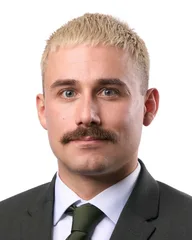
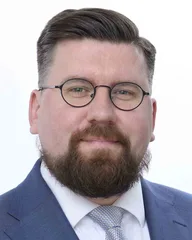
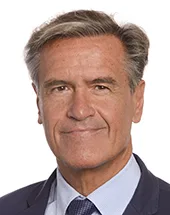
| Rank | Name | Country | Group | Speeches | |
|---|---|---|---|---|---|
| 1 |
|
Lukas Sieper | Germany DEU | Non-attached Members (NI) | 390 |
| 2 |
|
Juan Fernando López Aguilar | Spain ESP | Progressive Alliance of Socialists and Democrats (S&D) | 354 |
| 3 |
|
Sebastian Tynkkynen | Finland FIN | European Conservatives and Reformists (ECR) | 331 |
| 4 |
|
João Oliveira | Portugal PRT | The Left in the European Parliament (GUE/NGL) | 232 |
| 5 |
|
Vytenis Povilas Andriukaitis | Lithuania LTU | Progressive Alliance of Socialists and Democrats (S&D) | 227 |
All Contributions (160)
Preparation of the European Council meeting of 21-22 October 2021 (debate)
Madam President, President von der Leyen, in the same way as Mrs Lange's colleague, I would like to begin, of course, by referring to a debate that we had yesterday in this House and which shows the concern of the vast majority of European democrats with regard to what is happening at the moment with the defence and guarantee of the rule of law in Europe. Yesterday we were demanding that the Commission act on this matter. Today we are doing so with the Council, too, so that it incorporates into its debates the need to make progress on this issue and not to allow the future of the European project to continue to be jeopardized. We are increasingly facing a cascade of challenges and challenges in our lives and there is no shortage of reasons for the European Union to act from within, but also from outside its borders. Striking electricity prices pushes us into energy poverty, destabilizes governments, slows economic recovery, disrupts political and social support for the green transition and exposes our vulnerability in relations with our partners. President von der Leyen, two weeks ago you said that the Commission was ready to explore ways to decouple the price of gas from energy. Last week the Commission presented a package of measures which, it is true, may be a first step, but they are still totally insufficient. Winter is approaching and we cannot accept that millions of citizens of the European Union are condemned to choose every day between eating or warming up. That cannot happen in the European Union. It is time to address the exceptionality of the situation with exceptional measures. We need a battery of tools to act on different fronts, from the reform of wholesale electricity market rules to the fight against speculation in CO2 emission rights markets, to the launch of a centralised European natural gas purchasing platform that facilitates the creation of strategic reserves. And we must also improve our energy security by diversifying energy sources, suppliers and routes, as well as by supporting third countries to accelerate their own energy transitions. The success or failure of global vaccination will also decide the European Union's place in the world. Global vaccination has accelerated, but the North-South gap remains very wide. While the European Union has managed to vaccinate more than 70% of its population, less than 3% of the population in the poorest countries is protected from the disease. Of the 2 billion doses to low-income countries that COVAX planned to distribute by the end of this year, only 300 have been distributed. If the pandemic has taught us anything, it is that global challenges must be addressed from a global perspective. To overcome this pandemic and the threat of disease, it must be eliminated in every corner of the planet. Turning the vaccine into another indicator of inequality is, in addition to immoral, confirmation that we have not understood anything. The more the virus is allowed to spread, the more likely it is to mutate into new vaccine-resistant variants. Now that we have successfully moved forward with vaccination, we have this important challenge. And the next European Council cannot forget one of Europe's Achilles heels either: migration. There will be no solution to the humanitarian drama our borders are experiencing until an immigration agreement based on the principles of responsibility, solidarity and humanity is reached. As our group reminded the European Commission in a letter today, the intention of several Member States to erect walls and allow hot returns violates the most fundamental rights of human beings. The European project was not born to build walls but to tear them down. Willy Brandt said that mental barriers survive longer than concrete ones. In the face of nationalist populism and Europhobic proclamations, we must use the legal instruments at our disposal, applying the mechanism of conditionality, resorting to legal abuses and defending judicial independence. Faced with this situation of urgency due to energy prices hitting the most vulnerable, with the inequality in the distribution of vaccines in the world and with the loss of human lives at our borders, we cannot limit ourselves again and again to not reaching nothing. We need compromises to be turned into results, and to achieve that we must not forget to listen to the voice of this Parliament as well. (Applause)
The Rule of law crisis in Poland and the primacy of EU law (continuation of debate)
Mr President, first of all, I believe that many here would have to learn lessons. The first, of parliamentarism. That Members of the extreme right applaud Mr Morawiecki is normal, but that the Prime Minister brings a clap of officials to applaud him in a speech in plenary seems to me little respect for this House. In any case, I'm going to the content. I'm going to the contents. Europe is rich. And Europe is rich because it is diverse, because we are different, because we have different ideologies, because we have different beliefs, because we have different cultures, and that is what makes us rich. It makes us rich to be able to agree on so much difference, as we have shown here today. But, let me have one thing. It is not patriot who puts his country on the edge of the abyss, as this government is doing. Those aren't patriots. Patriot is the one who defends his country so that it continues to be part of the European project, as we have heard today from many comrades from different political groups in Poland. And that's what we're going to do. From the difference continue to understand us. It is much more that unites us. A red thread that unites us all. It looks invisible, but it's strong. And it is respect for the fundamental values of the European Union: solidarity, justice, tolerance, respect. That's what makes us strong. Drodzy przyjaciele! Solidarność naszą bronią.
The Rule of law crisis in Poland and the primacy of EU law (debate)
Mr President, Mrs President von der Leyen, Prime Minister Morawiecki, it is important to hold this debate today, and we have done a great exercise in parliamentarism by listening to your speech, and I am sure that you will now do the same by listening to what the Members of this House have to say to you. And let me start with a statement: we are well aware of the importance of votes; who are here, we are representing those citizens who with their vote have trusted us and us, but let me remind you one thing that you as a Democrat should know, and that is that the votes do not give the legitimacy to overthrow democracy. We have to do this debate for the sake of the European Union and for the sake of Poland, because the ruling of the so-called Constitutional Court has created an unprecedented crisis. It is an unfortunate situation that I feel very much: I am sorry for the millions of Poles who want to be in the European Union, who feel like members of this family, and who now do not know what will happen to their future. You say you don't want a Polexit; I assure you that my political group does not either, but you will understand that this is a serious organisation based on legal certainty: unlike dictatorships or absolute monarchies, in the European Union the rule of law, which is equal for all and guarantees peace, is the rule of law; precisely because it is fair, because it is predictable and because it is fulfilled. You ask for respect for diversity. I would miss more, that is the wealth of our Union! But what makes it possible for us all to decide, to agree, are precisely rules of the game that guarantee equality for all; Therefore, when one threatens not to respect the rules, he puts himself alone before the exit door: No one's kicking him out, he gets lonely. Let me tell you that it seems to me that we are missing the focus of the debate: When you and the PiS party present a confrontation between Polish sovereignty and European sovereignty, you have not understood what the Union is. Seventy years ago the founders understood that, in an interdependent world, the best way to exercise sovereignty in certain areas is to share it because together we can better solve problems, together we are stronger. Here we come voluntarily because we trust one another, because we believe in a better future; nobody forces us to be here, nobody snatches anything from us for being part of the European Union, but to be able to share that sovereignty there are some basic principles that are assumed: the separation of powers, the independence of the judiciary, respect for freedom of the press ... And it seems to me that this is where the problem lies, that governments like yours have embarked on a path of regression and authoritarianism. That is why their problem is not with the legal order of the European Union, it is with the principles of democracy and the rule of law, and that is even more worrying. Is annoyed by the fact that the European institutions remind him of this; I am sorry, we cannot be silent, precisely because of loyalty to the European project. The Commission is obliged to act, Mrs von der Leyen, the waiting times are over: the Commission is the guardian of the Treaties. Because, when it is accepted that one cheats and trust is lost, we stop being partners to finally become competitors. And neither in this Parliament can we therefore be silent because this is the seat of European democracy, because this is where we are reflecting what Polish citizens also want: We have heard what they are asking in the streets and they are asking us to support them, just as the judges and prosecutors in their country are asking us to do, Mr Morawiecki. In all this sad and unfortunate crisis there is something good: Beyond laws and beyond economic plans, the Union is a family, and that is being seen these days on the streets of Poland. Poland is much more than PiS, as Hungary is much more than Orbán and Slovenia is much more than Janša; and the citizens of these countries, who are suffering from the authoritarian drift of their governments, trust the Union, and we will be their voice and we will accompany them and we will not leave them alone, nor will we leave Polish women alone, we will continue to work with them to guarantee their rights and that no one decides on their behalf. We're in this together! A few weeks ago I was in Warsaw and I felt the affection of many people who have put their trust in Europe; We're not gonna let them down. I too am aware of what these people think and we know that we will continue to dialogue, and we will always listen to you, Mr Morawiecki, we will listen to you with all due respect, but you will also listen to the vast majority of Europeans who want to work together. (Applause)
European solutions to the rise of energy prices for businesses and consumers: the role of energy efficiency and renewable energy and the need to tackle energy poverty (debate)
Madam President, ladies and gentlemen, this debate on the energy price crisis is fundamental. Fundamental and urgent, because the situation is already unsustainable for many families. And that is why I do not sincerely understand that we have not been able to agree in this House to, in addition to the debate, be able to move forward with a resolution. In any case, my group, the Socialists and Democrats Group, has a clear proposal on this and we are going to propose specific issues and work hand in hand with the Commission and the Council to move them forward. Because the price of energy is not just a national issue, it has a clearly European dimension. We welcome, Commissioner, the package of measures you have announced, which we are very curious to see if they are really as demanding as the moment demands. He referred to direct aid and perhaps later, in his next speech, he could insist a little more on the content, because there are really issues that are worth knowing in depth, but we will have time to see it and to see if the Commission acts up to the circumstances. We need short-term solutions because winter is approaching and a cluster of circumstances makes it foreseeable that prices will not fall on their own. As the market stands, there are abuses and a mismatch between supply and demand. But we also need medium-term solutions that enable energy markets to function more efficiently. Experience tells us that each state, on its own, is weaker and that, individually, governments are at the mercy of price speculation, even going so far as to compete with each other. Precisely the first of the European communities was born to jointly manage coal and steel, two critical raw materials for post-war economic development. It is time to act and for that we propose three measures. The European Commission must present a concrete plan to enable states to coordinate and react in periods of high energy market stress as a first step towards a true Energy Union. We must negotiate together, as we have done for the purchase of vaccines and establish a platform for the distribution of resources according to needs. What is unacceptable is that it is the most vulnerable who pay the abuse of the receipt while the big energy companies make millionaire benefits. The Fit for 55 package has to be an instrument that accelerates decarbonisation, but at the same time secures supply and autonomy and frees us from unacceptable political blackmail from some countries in our neighbourhood. It is an opportunity to invest in energy efficiency and renewable technologies, to invest in the future, overcoming a model based on outdated fossil fuels, unsustainable and responsible for the current price crisis. If the rules of the game are set at European level, the remedies must also be European. Second, steps must be taken to curb speculation in the carbon market. The European Union's carbon market has been breaking records for months due to speculation movements. This speculation must be stopped and a transition to a sustainable model must be ensured, because it is a path of no return. We have no choice, because we have no other planet. The European climate strategy, together with the recovery plan, make economic growth and sustainability compatible. The problem is speculation and those who want to take advantage at the expense of the most vulnerable. And thirdly, there is a need to revise the operating rules of electricity markets to make it easier for them to be incorporated into the market. mix cheaper energies such as renewables, while curbing price volatility. For years we Socialists and Democrats have been working to eradicate energy poverty in Europe. Every year we see families having to choose between eating or warming up and that is totally unacceptable. It's all right now. It is the responsibility of the institutions to ensure minimum welfare for all Europeans. Unfortunately, today we are forced to talk about it because the crisis in the price of energy and energy poverty is a major concern for a large part of European citizens. All eyes are on Brussels because citizens expect a European response. It is our duty to act. (Applause)
State of the Union (continuation of debate)
Mr President, it is difficult, in a minute, to make an assessment of this whole debate, so I will be allowed to focus on one issue. I have heard the far right in this House hold the European Union's climate policy accountable for the rise in electricity prices. I have to tell you one thing: Make no mistake. You can't be more wrong. That's not the problem. The problem with rising electricity prices is that there are those who triple their profits at the expense of citizens and users and, therefore, what needs to be done is to be firm in defending the fight against climate change with the policies we have to put in place, but also to look for measures to balance the profits of companies with the real cost of electricity on the market. Mrs von der Leyen, in conclusion, I believe that we have faced this COVID crisis with courage. And courage is necessary, but not only in times of crisis. Courage is needed to build a Europe that is truly on the side of citizens. If you think we need to keep betting, you have the Socialists and Democrats Group on that path.
State of the Union (debate)
Madam President, Madam President von der Leyen, ladies and gentlemen, a year ago we held this debate in exceptional circumstances. We faced important challenges: curbing the spread of the pandemic, ensuring vaccination in Europe, historic investments to mitigate the economic effects of the crisis, accompanied by social measures that leave no one behind, and, at the same time, strengthening our democracies in the face of attacks that weaken the rule of law. Looking back, we can take a positive balance: 70% of the European population is vaccinated, the digital certificate has restored one of our Union’s fundamental freedoms – freedom of movement –, we have approved the Next Generation EU and money is starting to reach people, families and businesses. From the Social Democratic family, we have not stopped insisting that these investments must be made with the future in mind. They must be the beginning of a transition towards a more sustainable economic and social model, a true Pact for Sustainability. The Climate Law is an important milestone for achieving climate neutrality by 2050, and this Parliament managed to raise greenhouse gas reductions above 55% by 2030. But we cannot fall into complacency. We've done a lot, yes, but we're only halfway there. One of the most important aspects of the European Union needs to be strengthened: the Health Union. President von der Leyen, when she presented the political orientations of her mandate to this House, promised to make a transition to a green social market economy. But let me tell you that these three elements are far from balanced yet. Undoubtedly, it is in the area of environmental sustainability where the European Commission's agenda has advanced the most, with a whole battery of laws, with the "Fit for 55" package of measures. It is a team effort led by Vice President Timmermans and a sign that collegiality works when all the ideas and energies of the entire College are added together. Among them, socialists miss a law to protect biodiversity. This summer's fires and floods are a clear example of that need and you have referred to it. But what worries me most is that there is an imbalance between the three pillars of this new economic and social model that we want to build, a resilient model that guarantees the well-being of people. To avoid a social divide as we move forward in environmental policies, it is imperative to strengthen the Social Climate Fund. And when I say strengthening the Social Climate Fund, I mean providing it with more economic means and clear criteria in its distribution. In its foresight report a year ago, the Commission said a resilient Europe will come out sooner and come out stronger in the face of any crisis to implement the Sustainable Development Goals. Let us not forget that this is the ultimate goal of any policy, of any strategy: the well-being of people. That is what we must devote our time, our effort to. I think we have not done enough yet, because the pandemic has exacerbated the difficulties and inequalities of an unjust economic model. The most vulnerable groups are those who have suffered the most and who continue to suffer: elderly, children, health and care workers, people with fewer resources and less training, immigrants, who, moreover, let us not forget, are at risk of being scapegoats for populist and xenophobic messages. Further reforms are needed to reduce the level of uncertainty. But this people-centred economy also requires governance reforms, with indicators that take human development into account, and it requires a real social pillar. The Porto Summit was a first step, but we need clear objectives to continue its implementation. I would also like to reiterate a fundamental point: the gender dimension. You made a lot of announcements, Mrs. von der Leyen, this morning. Let me tell you that, for my group, the announcement of the Commission's commitment to present a law against gender-based violence in Europe is undoubtedly great, excellent news. We have been asking for years for this European law to fight against the greatest scourge that exists at the moment, because in the world, in Europe, there are women who lose their lives, who are killed for the mere fact of being women, and we cannot remain impassive in the face of this reality. And let me tell you that I still do not understand how there can be groups in this House that are not willing to incorporate gender-based violence into the European legal order. Let's work to make this so. Migration and asylum policy is also a moral duty – speaking of moral duties – because it is fundamental, because we are seeing what is happening in Afghanistan, and also the need for Europe to speak with one voice in foreign policy. Let's be brave, it's time to overcome unanimity to decide on foreign policy. And the rule of law is fundamental. The European Union is values, it is a defence of the rule of law, and we must be firm. The Commission has taken steps, but it has to be even braver. The Socialists and Democrats Group is going to be on it. Finally, reflecting on the great upheavals with which we began the 21st century, said Jorge Sampaio, a great European and a great socialist, who did not know what the world would be like in a few years, who only hoped to look back and see that we have managed to preserve the values of democracy, fundamental rights, freedom and tolerance. He is no longer with us, but his struggle for those values is also ours, for today's Europe and for future generations. (Applause)
Situation in Afghanistan (debate)
Madam President, it breaks my heart to see how the Taliban have destroyed our country in one day. These words are from Nilofar Bayat, an Afghan Paralympic athlete who was evacuated from Afghanistan to Spain last August, but they are also the words of thousands of Afghan women and girls who do not remember what it is like to live in subjugation. The first lesson to be learned is to accept that a country cannot be transformed without the strong support of the local population. The military intervention – let’s face it – has been a failure, but there is still time for the humanitarian response and for it not to be a failure. It is not time to seek culprits now among allies, but to work together for the stability of the country and the region and for the protection of the rights of the Afghan population. The launch of a reception centre in Madrid by the Government of Pedro Sánchez for the Afghan collaborators of the European Union and their families is a commendable gesture of solidarity. It is now necessary to strengthen a humanitarian corridor, coordinated by the European External Action Service, to repatriate the thousands of people left behind, and allow all governments to grant humanitarian visas and shelter to people fleeing Taliban terror. We cannot proclaim on the air respect for human rights while millions of people sink into despair before our eyes. Let us now abandon double language, turn words into deeds and reach an agreement on migration in the European Union, a pact endowed with sufficient material means and based on the principles of solidarity and humanity. Let us never forget that Europeans are the children and grandchildren of refugees who also fled persecution in search of a better future. The effort made in Afghanistan over the past twenty years cannot become a nostalgic memory. In addition to building schools and hospitals, freedom and equality flourished, particularly for a new generation of Afghans. The Taliban have not changed: They still consider women inferior beings and continue to consider that they have fewer rights than men. Women of the world: let us unite to help Afghan women and girls with all our strength; The brave protests in the streets show that they are full of energy, hope and dreams. The Taliban will be able to conquer the territories, but they will never conquer hearts and minds. I call for the support of this House for Afghan women to be awarded the 2021 Sakharov Prize. The return of the Taliban also marks the beginning of a new geostrategic reality in which the European Union must begin to fend for itself. The time for Byzantine discussions about whether we need strategic autonomy must come to an end. Let us develop a genuine common foreign and security policy that will enable us to equip ourselves, as soon as possible, with the instruments necessary to guarantee the Union's sovereignty. Creating an international operational force that circumvents the unanimity trap would prevent anyone from giving lessons to the European Union again. The fall of Kabul has been a severe defeat for those of us who believe in the progress of humanity. In a world still torn between civilization and barbarism, it is time to show that our European dream has not only made the greatest period of peace and prosperity on our continent a reality, but that it must also be a great legacy to give human response to the global challenges of today and tomorrow.
Breaches of EU law and of the rights of LGBTIQ citizens in Hungary as a result of the adopted legal changes in the Hungarian Parliament - The outcome of 22 June hearings under Article 7(1) of the TEU regarding Poland and Hungary (debate)
Mr President, last Friday, in Spain, Samuel was murdered at the age of 24; They beat him to death while yelling "faggot." This latest victim is the horrific realization of where hate speech and anti-LGBTI are leading us; Discriminatory discourses and policies promoted across Europe by far-right movements and their complicit governments, in a homophobic and anti-human rights crusade. Because yes, LGBTI rights are human rights. And, in the European Union, acting against them is illegal. That is why the new law in Hungary must be repealed for violating human rights and for being an indecency and an embarrassment. Because these retrograde laws are a germ of hatred and violence, to discriminate according to who you love, to insult at a Pride march in Zagreb, as happened on Saturday, or to kill a 24-year-old boy. Let me be clear: in the European Union anyone should have the same rights and opportunities to love whomever they love. The Council reacted against the Hungarian government, but action needs to be taken, from the use of the conditionality mechanism to sanctions via Article 7, and once and for all unblocking the Anti-Discrimination Directive. This House cannot accept the whitewashing of anti-LGBTI speeches that are launched from the grandstands that incite hatred, nor did municipalities, stadiums and public places that were illuminated with the rainbow, in the face of the gloomy and dark politics of the Hungarian Government; even Budapest. Let's be clear: Hungary is not Orbán. Finally, let me send a message to all those LGBTI people who may be listening to us, who are afraid to say who they love, who suffer because they feel alone and threatened: We are at your side, we love you and we defend you. Never doubt your dreams or your rights. Those who have no place are the governments that hate and discriminate, not you and you, because you make a Union proud of itself, a Union proud of your freedom and your love.
Conclusions of the European Council meeting of 24-25 June 2021 (debate)
Mr President, the discriminatory law of the LGTBI community approved by the Hungarian Parliament requires a firm reaction. And I am glad to have heard today from Mr Michel and Mrs von der Leyen a clear position in defence of the rule of law. We know that Mr Orbán is not alone, as evidenced by Poland's infamous "LGBT ideology-free zones" or the regrettable attunement to that ideological drift of the Slovenian government. It's all right now! We are part of a community of core values and principles. It must be borne in mind that the solution is not to signal the exit door to Hungary - we must also say so. Hungary is not your government. Let's not forget. We have other instruments: Let us speed up the Article 7 procedure and move forward with the suspension of funds due to deficiencies in the rule of law. We must also be able to improve our ability to react in an increasingly turbulent neighborhood. The latest act of Belarusian state piracy, Russia's run-ins with illegal annexations of territories, poisonings, cyber-attacks and propaganda, Turkey's defiant attitude in the Mediterranean waters and the use of people on the southern shore to give a pulse to the Union's borders require quick and precise responses, and for this we need to thoroughly explore the possibilities of acting without unanimity with the margin offered by the Treaty. The European Union is not only an economic giant, but has already demonstrated its ability to exercise geopolitics when circumstances require it. Sanctions against Russia following the illegal annexation of Crimea in 2014 have dealt a significant blow to Moscow, made possible by a remarkable example of unity. Precisely, the relationship with Russia has shown another dividing line between the Member States. While some partners' mistrust of Russia is justified, they are wrong to reject a high-level dialogue with the Russian authorities. Dialogue itself is not a concession. A global power like the European Union has to talk to all actors, even those with whom it has deep disagreements. With neighbors like Putin, Lukashenko or Erdoğan, we need a strategy that combines maximum firmness in response to their abuses with dialogue to defend our interests in the face of common challenges. Indeed, the pandemic continues to transform the global balance of power. The huge gap between the least resourced countries and the most advanced economies has repercussions worldwide: economically and socially, with increasing inequalities, and in the health field, with the risk of new variants of the virus. The European Union must lead both global vaccination and the mobilisation of public funding to ensure access to international liquidity for developing economies. Because a rapid global economic recovery will not only result in the well-being of European citizens, but also in Europe's influence in tomorrow's world.
Presentation of the programme of activities of the Slovenian Presidency (debate)
Mr President, ladies and gentlemen, believe me if I say that I wish the Slovenian Presidency every success, because its success will be the success of the entire European Union. I have no doubt that Slovenia has the capacity and experience to do a great job, provided that you, Mr Janša, opt for collaboration with this Parliament, with the Commission and with the fundamental principles of the Union. This Parliament is directly elected by citizens. Here you see representatives of very diverse political ideas, and we can only serve citizens if we all make an effort to respect and listen to each other. Only by reaching agreements, without ever renouncing the fundamental values of the Union, can we take forward the necessary laws or policies, such as the Recovery Plan, the reform of the common agricultural policy or the purchase of vaccines. The rule of law is a fundamental element in such cooperation. And let me tell you that it is not a good sign what happened last week in a meeting you had with the European Commission to discuss the rule of law, a meeting that was used to attack the opposition in your country. You know that respect is fundamental in our task: respect for differences of opinion, so that we can move forward together in diversity – this is the only way to build Europe; and respect for the truth, protecting freedom of the press as an indispensable pillar of democracy. The six-monthly presidency of the Union coincides with the 30th anniversary of Slovenia's independence, which has been a model of transition in a country with great capacities and contributions to the common project. All the more so that Parliament has a responsibility to ensure that this legacy is not lost. We will not only be vigilant with the rule of law, judicial independence and freedom of the press. We also have an obligation to ensure the proper use of European funds and, therefore, you should leave here today with the commitment to appoint a delegate to the European Public Prosecutor's Office. You have warned of the problems in the delays of justice, because it is in your hands to be able to resolve this issue. So don't wait until tomorrow to announce the appointment. Do it today, right here, and it will give peace of mind to the Slovenes and the Slovenes, and also to this Chamber. Because what we want here is for no one to be left behind, nowhere in Europe. Because we are in this together, the presidency's motto says it: ‘Together. Resilient. Europe”. That's what we want. I agree with the statement of your priorities: recovery and resilience, strengthening the rule of law and European values. Are you really committed to this? On that path he will agree with us. We European socialists share the priority of advancing enlargement in the Western Balkans and we hope that significant steps can be taken in this regard. But don't forget about immigration reform, which is urgent and must be supportive, balanced and fair. And another priority is the future of Europe: the Conference on the Future of Europe ⁇ I applaud it ⁇ . In September, the first citizens' panels will finally be organized and all voices must be heard. By the way, you talked about how we can improve Europe's voice abroad. I'm telling you: ending the unanimity rule. Mr Janša, you have the opportunity to exercise service leadership not only for the two million Slovenes and Slovenians, but for 500 million Europeans and Europeans. It's a big responsibility. Do not waste it, for the sake of your country and, above all, for the sake of the Union.