
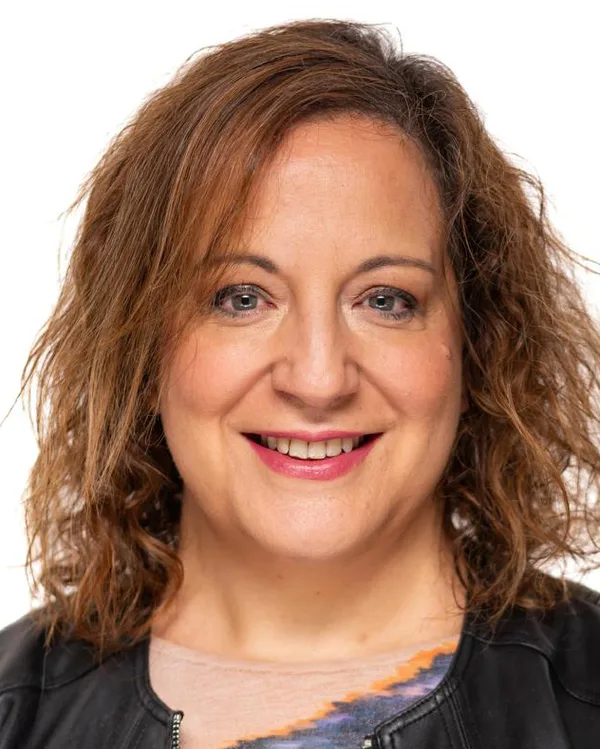
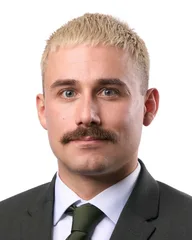
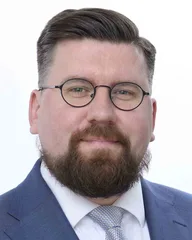
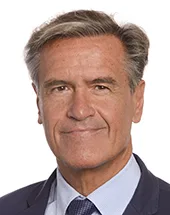
| Rank | Name | Country | Group | Speeches | |
|---|---|---|---|---|---|
| 1 |
|
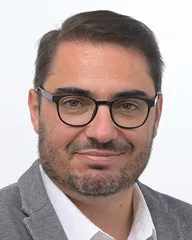
Lukas Sieper | Germany DEU | Non-attached Members (NI) | 390 |
| 2 |
|
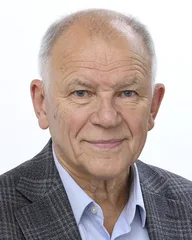
Juan Fernando López Aguilar | Spain ESP | Progressive Alliance of Socialists and Democrats (S&D) | 354 |
| 3 |
|
Sebastian Tynkkynen | Finland FIN | European Conservatives and Reformists (ECR) | 331 |
| 4 |
|
João Oliveira | Portugal PRT | The Left in the European Parliament (GUE/NGL) | 232 |
| 5 |
|
Vytenis Povilas Andriukaitis | Lithuania LTU | Progressive Alliance of Socialists and Democrats (S&D) | 227 |
All Contributions (160)
This is Europe - Debate with the Prime Minister of Italy, Mario Draghi (debate)
Madam President, Mr Prime Minister, welcome to this House, which is the House of European Democracy. Thank you very much for your words about our dear President Sassoli who, as you well said, represented the best of the European spirit and, therefore, we will work on continuing his legacy, well aware of how important that work was. As you well described in your speech, we are facing a series of crises that we have been shackled for several years and which are now exacerbated by the war in Ukraine. They are not easy challenges, but our best weapon right now is unity and determination. We have already seen this in the response to the pandemic, both in its health dimension and in its economic and social effects. With unity and solidarity we were able to take forward the NextGenerationEU and now the key to facing the consequences of Russia’s war against Ukraine is once again unity and determination. Almost ten years ago, when you presided over the European Central Bank, in the midst of a sovereign debt crisis, and when some predicted the collapse of the euro, you spoke three words that have made history: ‘whatever it takes’ (whatever it takes). And that same spirit is what we must now demonstrate in the face of Putin's threat to our values. Just as ten years ago, the answer to overcoming this crisis must be more integration, because sharing our sovereignty is how we are stronger and more masters of our own destiny. But to continue building this House we need to put more bricks. We urgently need an Energy Union, a Fiscal Union, a Health Union, a Defence Union. And we must move forward and work for it, because this project of peace and freedom, which has been growing over the last decades and has established friendship and solidarity among our countries and among our citizens, is still not enough. Since that Schuman declaration, the Union's objective has also been to contribute to peace and the development of our values and to international relations based on law, human dignity and multilateralism. Unfortunately, the desire of Ukrainians to be part of this project has cost them dearly. Unlike the Soviet Union, the European Union does not impose itself. The European Union does not oblige, the European Union does not dominate, but attracts by its promise of the future, by its values of freedom and human dignity, as claimed by the Maidan protesters in 2013. That is why we cannot close the doors to any European country. Supporting Ukraine’s self-defence and legitimate aspirations compels us to rethink our internal policies in the Union, our aim to advance a transition towards more ecologically and humanely sustainable economic development. We cannot give up on this objective. It is urgent to agree on an energy policy that frees us from fossil fuel imports and that bets on renewable energies by diversifying sources, which must be accompanied by measures that also guarantee affordable prices for companies and families. Let us not forget that we also need to think about the future of young people, who need decent jobs and access to housing, who need to think that their future can be better than that of their parents and that of previous generations. We need to give a message of optimism to these generations of young people who are waiting for more and better Europe. Citizens told us very loudly and very clearly during the Conference on the Future of Europe process: They want more social policies and they want to reduce poverty. And for this it is essential to extend the suspension of tax rules over time, because without public investments we will not be able to comply with our proposals, nor with our support for Ukraine, nor with the support for refugees, nor with the sanctions that we have agreed, nor will we be able to comply with our roadmap for a just transition and phase out fossil fuels. Mr Draghi, we are counting on you in the Council to defend realistic fiscal policies with the moment in which we live. And we also need to address an issue that is totally unacceptable right now: There are those who are getting rich at the expense of the suffering of families. There are companies that with the rise in the price of energy are having exorbitant benefits at the expense, I insist, that many families fall into poverty and can not even pay the electricity bills and, therefore, something must be done with those benefits fallen from the sky to not allow this injustice. We can and must move forward with our project, but always with dignity and well-being at the heart of our policies. Because our Union is against no one, it never has been. We will say it again and again for Putin to hear, but above all for the Russian people to hear. Let's all say it loud and clear: We will do everything we can to ensure the future of our European Union.
Order of business
Madam President, over the weekend we had the opportunity to hold the last plenary session of the Conference on the Future of Europe, the conclusions of which were very clear as to what the next steps should be. That is why it is important for this Parliament to hold a debate on this matter and, in addition, for that debate to be accompanied by a resolution where we can express the position of this institution on the fundamental issues to be taken into account in that Conference. There is agreement on the part of a significant number of groups in this House on the resolution and it should therefore be placed on the agenda for a vote on the day after the debate, that is to say on Wednesday.
Conclusions of the European Council meeting of 24-25 March 2022: including the latest developments of the war against Ukraine and the EU sanctions against Russia and their implementation (debate)
Madam President, ladies and gentlemen, the summits of NATO, the G7 and the European Council have served to strengthen the international coalition against Putin's criminal war and to strengthen our mutual defence and expand sanctions. In particular, the EU Summit reached a key agreement to start also alleviating the impact on families and businesses on energy prices. The achievements of the Summit show that when we act with solidarity and unity there are never losers, there are always winners. On the one hand, we are making progress in ensuring the energy supply that, of course, is of particular concern to partners in the north and east through joint purchases of gas and storage capacity. On the other hand, we adopt measures aimed at counteracting the increase in energy prices in the Iberian Peninsula partners, recognizing the energy island, which is a very important step, but we must also understand that it is only a first step, because we need to adopt measures to be able to cushion this increase in the price of energy in all the countries of the European Union. The agreement of the European Council should be the first step to put in place a plan inspired by the Next Generation to finance the triple additional effort required by the war in terms of energy, defence and reception of refugees, as well as the survival of the Ukrainian government itself. Putin's criminal attack forces us to accelerate the energy transition, improve interconnections in Europe and improve energy savings. Accelerating the energy transition will allow us to lower our energy bill, reduce our external dependence and combat climate change. There is no better way to guarantee our energy sovereignty than to stop relying on tyrants who use their fossil fuels as an instrument of blackmail. Now that our security is openly threatened, the plans for a defensive autonomy of the Strategic Compass project also force us to spend more and better with the obligation to invest in technological and human systems. The welcome of more than four million human beings fleeing war crimes reconciles us with the values of the European Union, with the values we espouse. But our successful response to the human tragedy does not absolve us from achieving a new migration and asylum pact to deal equitably among the EU-27 with the reception of refugees – of all refugees – wherever they come from. Neither history nor our consciences will forgive us for looking the other way at the corpses left in the streets and houses of Bucha. The fifth package of sanctions should ban the import of coal, oil and gas from Russia, cut off the Kremlin's access to cryptocurrency exchanges, take action against oligarch facilitators and take more aggressive measures against Russian banks and energy giants. War has taught us that there is no victory without unity and sacrifice. Only with unity and sacrifice between institutions, between governments and between political families will we achieve the end of Putin's regime.
Question Time (Commission) - von der Leyen Commission: Two years on, implementation of the political priorities
Madam President, President von der Leyen, of course, the European social model is a model of success if we are really able to ensure a balance between economic growth and social justice. That means that we are able to take advantage of the fact that this economic growth translates into people being able to live better. I would therefore like to know where the European Commission's proposal to introduce minimum income legislation in the European Union is that can be implemented by the Member States.
Question Time (Commission) - von der Leyen Commission: Two years on, implementation of the political priorities
Madam President, President von der Leyen, the pandemic and the war in Ukraine have given another face to the European Union. The Union has shown that the European project can also be a powerful shield for people's health, also to defend the safety of European citizens and to improve their living conditions. The Porto Social Summit was an opportunity where leaders took a number of actions and committed to continue working for the European Pillar of Social Rights, supporting urgent proposals and targets in this regard. However, it is time to know what the Commission is doing on this issue. The pandemic and the war can only justify more ambition than ever to be able to advance in the social field of the European project. In 2019, the Commission presented us with a social agenda that is more urgent than ever and I therefore ask you: Where are we with regard to the proposal for a European unemployment benefit reinsurance scheme or with regard to the target of reducing by 15 million people living below the poverty line?
EU Protection of children and young people fleeing the war against Ukraine (debate)
Madam President, ladies and gentlemen, every day that passes the news that comes to us from Ukraine is more bleak. I do not mean the advances on the front, no, what is terrible and bleak is to see that in 2022 atrocities like those we have seen during these days in Bucha can occur. Those maniated bodies, that macabre scenario on the road. Every day that passes seems more to attend to a duel between civilization and barbarism, between humanity and cruelty. We still have in our retinas the images of the bombing of the mother-child hospital in Mariupol, where a girl, a pregnant woman and her baby died. These crimes will be investigated, because we will not stop until the culprits pay for it. But now we have the responsibility to mitigate as much as possible this madness provoked by Putin. And the first thing is to protect childhood. No boy or girl should ever know war. We are doing everything we can to get this over with as soon as possible. But there are already seven and a half million children who lived in Ukraine and have left their homes. They've had to get out of their lives overnight. Some live in hiding, others have had to move away from their cities and other countries, even leaving behind their families, their parents, their grandparents. The European Union can and must help them, they are in the situation they are in. And this requires a package with a battery of measures to be worked out and negotiated between the Commission and the Council, with an urgent proposal coordinated with the Government of Ukraine. Emergency aid is urgently needed to ensure shelter, drinking water, food and hygiene products for children and their families. But let's not forget that they are boys and girls and they also need places to play, continue with education and also psychosocial help. Let us continue to insist on humanitarian corridors. Let us not allow those who try to flee to be coldly murdered again. The Union must work with international organisations to ensure evacuation and that these people can be protected. These people are also particularly vulnerable to mafias. Along with so many volunteers waiting for them at train stations in so many European countries, they also sneak in undesirables that only intend to exploit and sexually abuse women and children. That is why it is so important that public authorities are involved. This is how we can channel all that torrent of solidarity, which is important, which we must value, but which we obviously need to enable and ensure that not a single child or a single woman falls into the hands of the child trafficking network. There are already more than four million people arriving from Ukraine to the European Union. An important step for common management has been the solidarity platform that facilitates the exchange of information between Member States and agencies. But we also need to make further progress on the migration pact. The United Nations Convention on the Rights of the Child, which was also ratified by the Russian Federation, commits signatories to ensure protection and care for the well-being of every child. For some, these human rights conventions may be a utopia, an unattainable ideal. They're not for me. For my group, they are not. They are a guide for the world, to build a more advanced society, a project of peace, democracy and solidarity that shows that it is possible. Hopefully one day the leaders in Russia will understand that too.
Statements by the President
Madam President, also on behalf of the Socialists and Democrats Group, I would like to join that message of thanks for your presence in Kiev this weekend. All of us who have been able to see the images during these days of the atrocities that are happening in Ukraine, the images of Bucha, with what the Putin regime is doing, have evidently become more aware than ever of the importance of defending freedom, defending democracy and everything that this institution, the European Parliament, represents. Thank you very much for your presence there, because your presence there is also a sign of the commitment of this whole House to freedoms.
Need for an urgent EU action plan to ensure food security inside and outside the EU in light of the Russian invasion of Ukraine (debate)
Madam President, the tension and uncertainty we are experiencing in Europe these days are unprecedented in half a century. And yet today I want to send a message of reassurance to Europeans. The European Union stands ready to face the effects of this war and ensure that there will be no shortage of food. And this is because we have been preparing for a long time. Who was going to tell us that sixty years after the creation of the common agricultural policy we would find ourselves in this situation? The CAP has undoubtedly been one of the European Union's greatest achievements. During the COVID-19 crisis we already saw the resilience and capacity of the European food sector, despite the nervousness of some initially trying to stockpile food. However, COVID-19 has already put the food sector and the distribution chain under severe pressure. They made a huge effort to secure supply across the Union and now they need our full support. The agricultural, fisheries and livestock sectors face high fuel prices and difficulty importing feed and fertilisers. This is not a new debate, ladies and gentlemen. In this House we have already spoken for several years about the necessary measures. Precisely, the European Green Deal and the Farm to Fork Strategy aim to help us produce sustainably, reducing our dependence on oil, gas and fertilisers. The war in Ukraine only confirms the decisions we had already taken and obliges us, on the one hand, to speed up the pace and, on the other hand, to strengthen the sectors affected. It is time to assess the impact of the war on policies and adjust them to ensure that production is maintained, but also that farmers, fishermen and ranchers maintain their incomes. Some farms will soon have trouble feeding their animals. We urgently await this Commission proposal to secure feed. The big challenge for our agriculture will be to cut dependence on the fertilisers we import from Russia and Belarus, which we can hardly do without in the short term. We must intensify the search for alternatives. At the same time, we must ensure liquidity for farmers and ranchers with the flexibility that the common agricultural policy already allows. Let us make use of the crisis reserve, but at the same time think about the future. We must use all the mechanisms available in the common organisation of agricultural markets to stabilise prices, prevent speculation and ensure a decent price for both producers and consumers. And, in addition to the carriers, the high price of fuel also affects the fishing sector and for both it is necessary to find support. As I said at the beginning, we make a great collective effort, but we have all the instruments to deal with this crisis. Others don't, let's not forget. Putin's irresponsibility not only forces us to stand in solidarity and ensure food for Ukraine and the refugees, but we must also be aware of the global consequences. We cannot simply resign ourselves to Putin's brutality derailing the United Nations' second Sustainable Development Goal: eradication of hunger. Ladies and gentlemen, there are no shortcuts to challenges of this magnitude. Looking the other way doesn't move us forward. Only firm step, unity and confidence to be doing the right thing.
Address by Justin Trudeau, Prime Minister of Canada
Madam President, Prime Minister Trudeau, welcome to the European Parliament. You stand at the heart of a European democracy that can and should feel yours, because it was also built with the courage of Canadians who eighty years ago sacrificed their lives on this continent to bring democracy and freedom back to Europe. It was some time later, with the fall of the Berlin Wall in 1989, when we entered a horizon of hope that we believed would never go back in time. We felt that we would always live in peace, based on multilateralism and without satellite countries or nuclear threats. Today, Putin's criminal war over Ukraine has changed the civil and political order. This imperialist barbarism takes us into the struggle between the democracies and autocracies of the previous century, as if we had learned nothing from the suffering of that "world of yesterday" of which Stefan Zweig spoke. The tragedy in Ukraine has propelled an unthinkable common response in Canada, the United States and the European Union, with which we are walking further than we did in 2014 after the annexation of Crimea. Together we have turned Putin into an international pariah with serious damage to his economy. And together we must and can do much more: cut off Russia's access to cryptocurrency exchanges, pursue tax havens that protect oligarchs and strengthen our cooperation. Because if we want to free ourselves forever from tyrannies, together we must lead a global transition, based also on renewable energies. The outbreak of war in Europe has exposed the need to equip the European Union with its own resources. For the first time we have agreed to provide one billion euros in military aid for a third state, whose democratic values are the last frontier with the aggressor. To stop Putin, Canada and European allies we must also make our commitments to NATO, including spending on defence of 2% of GDP. Building a better future requires promoting democratic values not only with words, but with deeds, demonstrating that our values offer a more dignified life than autocracies. One of the transatlantic values is solidarity, a spirit of welcome that we must now strengthen in the face of the exodus of refugees fleeing terror. This situation requires us to live up to and fight inequalities at the heart of the transatlantic agenda. Because only a social model based on equal opportunities will be able to defuse the far right that Putin holds on both sides of the Atlantic. Mr Trudeau, if on this long and difficult road we maintain transatlantic unity, Putin will give up and spend his last days, we hope, before the International Criminal Court. History has taught us that no war of occupation is won, however powerful the invading army may be. The spirit of 1989 will live on thanks to the transatlantic strength and courage of the Ukrainian people.
Debriefing of the European Council meeting in Paris on 10 March 2022 - Preparation of the European Council meeting 24-25 March 2022 (debate)
Madam President, a month after Putin's criminal invasion, the strength of our unity has turned Russia into an international pariah, with serious damage to its economy. But if we want to resist and support the admirable Ukrainian resistance, we must direct all our efforts on two fronts: maintain pressure on Putin and strengthen the European Union's strategic autonomy in energy and defence. Sanctions have lived up to this moment, but we must – and can – do much more: Cut off Russia's access to cryptocurrency exchanges, pursue tax havens that protect sanctioned oligarchs, further isolate Russian banks and energy giants, and end our dependence on Kremlin gas and oil. The weakness of our energy system was always a known truth that Russia's war has laid bare. Today we must face the challenges we have: free us from Russia's energy dependency, speed up the energy transition as much as possible and manage prices. Russian gas must be supplied by diversifying the sources of origin of the gas and increasing interconnections. Building strategic reserves and joint purchasing would also increase our energy resilience. And, if we really want to realize our strategic autonomy and lead a global transition, we must accelerate the pace of renewables installation. Let's be honest, the defense, which is the price of freedom and democracy, is causing the price of fuels, fertilizers, cereals, and this pushes us to make urgent decisions. Taxation must remain an indispensable tool to address the cost of the crisis: the design of a mechanism to reduce the most vulnerable families and companies and, at the same time, increase taxes on electricity companies for profits fallen from the sky, would allow us to balance the social costs of the crisis. It is also essential to completely reform the marginalist system governing the price of the EU electricity market. It is time to decouple the price of electricity from the price of gas. We can't keep looking the other way: We know that the price of gas causes uncontrolled increases in prices, despite assuming a very small fraction of total electricity generation. Putin's cowardly attack also makes it inevitable that we will increase our defense spending. But it's not just about spending more; It's all about spending better. And, therefore, the strategic compass designed by Mr Borrell gives us the opportunity to use our capabilities efficiently. In these tragic hours, almost four million men, women and children have knocked on the doors of the European Union. The adoption of a protection package covering the basic needs of children is urgent. They are the future of an admirable people who now fight for their freedoms and also for ours. Mobilization and gestures of solidarity with refugees must not only be maintained for the duration of the war, but must lead us to a new pact of migration and asylum that can no longer wait. The images of the monstrous attacks on the civilian population are testimony to the war crimes committed by Putin. The International Criminal Court cannot leave the barbarism of this man, Putin, unpunished. The European Union must also comply with: the sacrifices that each state can make for joint action by the European Union will allow civic and democratic consciousness to prevail.
Order of business
Madam President, since we are starting a new stage by normalising parliamentary activity, what I would ask the Presidency to do is to stick to our usual procedures. In order to raise an issue of compliance with the Regulation, it is first necessary to indicate the article to which it refers, to see if we have not complied with any article. A matter of compliance with the Regulation is not so that everyone here can pick up the microphone and say the first thing that comes to mind. Therefore, if there is a question of compliance with the Rules of Procedure, let it be said to which article is referred and in what way the Rules of Procedure of the House are being violated.
Debate with the Prime Minister of Estonia, Kaja Kallas - The EU's role in a changing world and the security situation of Europe following the Russian aggression and invasion of Ukraine (debate)
Madam President, Prime Minister Kallas, welcome to the European Parliament, to your home. Putin's criminal attack has put us in the mirror of our own strengths and weaknesses as a Union. The faltering position we traditionally held towards the Kremlin contrasted with the crackdown after the outbreak of war, in particular the agreement on economic sanctions and the change of an asylum policy that takes us away from the shameful closure of borders to Syrians in 2015. In just a few days, we have taken a giant step in our construction as a global player. Once again it is shown that the European Union is forged at the stroke of a crisis. And the time has come also to do self-criticism to learn from our mistakes: We must never again sacrifice human rights for gas. The creation of strategic gas reserves, the joint purchase of gas and the interconnection of the Iberian Peninsula as a storage and distribution center are an urgent strategic imperative. Taxing electricity companies that do not invest in renewable energy is also an imperative, because every euro we invest in green energy will reduce our strategic vulnerability. We also need a roadmap to rectify the mistakes made in the 2015 refugee crisis. The activation of the Temporary Protection Directive obliges Member States to provide food, education, health and work. We must now agree on a solidarity-based distribution system and establish a reception structure. The protection of war victims represents an opportunity to think about a new migration policy based, this time, on responsibility and solidarity. And we must also prepare to support the Ukrainian people. We never wanted a war; Putin is solely responsible. Today, the weapons for the survival of a free Ukraine are those that the Second Spanish Republic did not have eighty years ago due to the inaction of European democracies. In this tragic hour, the Ukrainian army needs military means to defend men, women and vulnerable people. Their security is also ours, because no one will be safe in the rest of Europe if we allow Putin to prevail. The unpunished killing of the population violated the very laws of war enshrined in the Geneva Convention, and it was urgent that the United Nations should be able to organize humanitarian corridors. Likewise, the International Criminal Court must advance the investigation of Putin as a war criminal. And, in its mediation role, China must abandon its ambiguity and offer tangible steps to ensure peace. The solution to Putin's cowardly aggression must not be the surrender of Ukraine or the amputation of its territory. Let's speak loud and clear to Putin: Every democratic European state has the right to be part of the European Union, including Ukraine. Today it is also important for this Parliament to express its absolute support for the Baltic countries and all the countries that have borders with Ukraine and Russia. A few days ago I was able to see the strength of solidarity on the border between Ukraine and Hungary. The work of the Red Cross and the organizations and volunteers who are serving the needs of refugees is admirable. Let us use the support of citizens to strengthen European identity, to reaffirm our values, to move forward in a stronger Europe. In the fight against tyrants like Putin, the time has come to stop thinking about what the European Union can do for us and to think about what we can do for the Union.
International Women’s Day – Address by Oksana Zabuzhko
Madam President, thank you very much, Oksana Zabuzhko, for being today the voice of millions of women who are being attacked in their fundamental principles; refugee women fleeing Ukraine with their children, with their daughters; Ukrainian women who stay in Ukraine having to care for the most vulnerable, because it is always us, the women, who are the most vulnerable in these situations. And that is why listening today to Oksana's voice in the house of European democracy is so important. This 8th of March is important; This March 8th is different. But you are also going to allow me to make a reference today to the feminist movement in Europe and in the world. Feminism does not understand borders. Women have a common struggle for our rights, for our freedoms and that is why today I also want to highlight the value of women in Ukraine, the value of women in Afghanistan, the value of women in so many places in the world where speaking out means putting their lives at risk. Today we stand with all the women who suffer, with all the women who are raising their voices for a more just, more equal world, where we have equal rights. This 8th of March is important and we European women cannot resign ourselves or cross our arms. There are many of us who have to be able to move forward in this world, in this more egalitarian society. Long live the feminist struggle! Long live March 8th!
Russian aggression against Ukraine (debate)
Madam President, Putin's war against Ukraine marks the beginning of a new stage in Europe and in the world. In historical times we need historical decisions. The financial and military support to Ukraine, the disconnection of the main Russian banks from the SWIFT platform, the activation of the International Protection Directive to help Ukrainian refugees and the banning of the Kremlin media machinery represent a qualitative leap for our response capacity. Western democracies have achieved admirable unity in meeting this challenge and it is essential that we maintain unity in the face of the serious challenges that we will have to continue to face. The four sanctions packages led by Mr Borrell are a first step in the face of a long crisis that will raise new dilemmas; These include how to continue supporting Ukraine or how to react to likely Russian retaliation. Unity requires courage and sacrifice. Only with courage and sacrifice will we achieve energy autonomy to bend Putin. Our unwavering commitment to a global energy order grounded in long-term renewables must be complemented by the creation of short-term strategic gas reserves. And we also need courage and sacrifice to welcome all refugees fleeing war with an effort of shared responsibility. Putin's cowardly attack shows his true fear: democracy. A successful democratic transition in Ukraine should inspire those who bravely took to the streets in Russia today as well. The struggle for peace and freedom of the Russian and Ukrainian peoples requires our commitment. We will not rest until Putin is tried as a war criminal by the International Criminal Court. (Applause) Putin's aggression also exposes his far-right accomplices and a model of coexistence that represses opponents, censors the media and denies individual rights. At this time, in the cities and towns of Ukraine, not only the security and territorial integrity of this country are at stake, but also the world in which we want to live. It can be a democratic one, supported by international law, diplomacy and human rights; or it may be another, based on brute force, spheres of influence and the violation of rights that must be universal. No tyrant will make us renounce our desire to forge alliances around a peace project that protects the sovereignty of nations, the progress and freedom of peoples and the integrity of borders. History is never wrong. We cannot leave Ukrainians behind, alone, as we Spaniards felt at the time in the first half of the 20th century in the struggle between fascism and democracy. The resistance of the heroic Ukrainian people will be the triumph of Western democracies. And let me formulate one last personal reflection: I am proud of Europe, of the Europe of today, of the Europe that does not give up and does not resign itself, of the Europe that looks back to learn from history, but, above all, looks forward to continue defending what is most precious: democracy and peace. (Applause)
The Rule of Law and the consequences of the ECJ ruling (debate)
Madam President, I am sure that many of us share that today is a day of victory for this Parliament. Justice has been on our side, on the side of those who work, defend and bet on an instrument of conditionality between the budget and the rule of law in Europe, because we defended that the one who supports the European project is not the market, but the common values that we share and the defense of the rule of law. Unfortunately, history has taught us that where law does not rule, tyrants rule. Without the rule of law, democracy becomes the dictatorship of the majority, which feels legitimated to oppress minorities, those who think differently, and thus establish unique thinking. This, which is unfortunately happening in some member countries, is a recipe for disaster: a disaster for democracy and a disaster for the European project. The first responsibility of the European Commission is to be a guarantor of the Treaties. So far the Commission has not wanted to activate the conditionality mechanism because it wanted to wait for the judgment of the European Court of Justice. Well, we already have a sentence. It's not time to wait any longer. Mr. Hahn, act at once. I would have liked to have been able to say this to the President of the European Commission, Mrs von der Leyen, who should be here in this House today. So I tell you in the distance but with the same emphaticness: Act now! Over the last decade Viktor Orban has used his power to control the opposition, the judiciary, the media, religious groups, universities... For too long the Union has allowed such behaviour, which is incompatible with European values. And too long, too, the EPP Group gave him shelter in its group, allowing him to grow and grow stronger. This has given wings to ultraconservative and anti-European groups. These groups intend to use institutions to denigrate groups such as refugees and asylum seekers or the LGBTI community, attack women and scapegoat anyone who criticizes their policies. Faced with the inaction of the European Union, little by little they have been conquering more land, every day with fewer complexes, with more insolence. Every day lost is one more step that we will then have to recover. It will also have to be recovered by all those who from Poland and Hungary defend freedom, democracy, equality, respect for difference ..., in a word, all those who also defend the European Union in Hungary and Poland. The latest example is the suspension of Polish judge Joanna Hetnarowicz-Sikora, who has been treated as a criminal, violating her dignity and that of her office. We found ourselves in an unimaginable situation just a few years ago: that some of the members of the European Union suffer a regression in rights and become an autocracy. It is a new phenomenon, for which we were not prepared, and we had to create this instrument of conditionality, these tools. Let us use them, now that we have them, because we cannot allow European taxpayers' money to end up in the pockets of those who undermine common European values. The Commission cannot be looking the other way. We've had this mechanism for a year now. No one in this House wants to harm Hungary and Poland. On the contrary. People trust the European Union, that being European citizens means something. Trust us to stop this authoritarian drift. This nightmare must end. It is unacceptable for these things to happen in the European Union. Mr. Hahn, Mrs. von der Leyen, act now!
EU-Russia relations, European security and Russia’s military threat against Ukraine (debate)
Madam President, it has been more than eight years since the Maidan Square Revolution of Dignity, since the Ukrainian people began their struggle to approach the project of freedoms represented by the European Union. We have been its most loyal partner in economic integration, supporting the reform process and defending Ukraine’s sovereignty and territorial integrity. Today, the European Parliament reaffirms its commitment and support for Ukraine. The challenge that Russia poses to all Europeans, in the end, is to give us the opportunity to strengthen our unity and our determination, and also to defend our interests and those of the continent as a whole. But let us not forget that, in order to stop Putin's imperial spirit and his hostility to human rights, Ukraine and the European Union must also fulfil their own obligations. For our part, we must continue to support all diplomatic forums for the resolution of the conflict in Ukraine, such as the Normandy Quartet and the Trilateral Contact Group. In order to reach a negotiated solution, the European Union must be effectively represented in the negotiations because, as Mr Borrell rightly argues, we cannot be a neutral bystander on those issues that directly affect our own security. No region in the world has a security system as fair as the European one. The basic principles enshrined in the Charter of Paris and the Helsinki Final Act, all signed by Russia, are the only ones capable of ensuring security in Europe. The territorial integrity and sovereignty of states, the inviolability of borders, the right of states to choose their own alliances and the peaceful resolution of disputes are inalienable achievements, because the progress of Europeans will only be a reality if there is security. No one in the European Union can deny the need for greater strategic autonomy and our leading role in the world. Let us not allow Putin and his blackmail to bring Europe to its knees. Let us develop our capacities to respond to new threats, move forward in the short term in the creation of strategic reserves and joint purchases of gas and continue to lead as a final destination the construction of a new world energy order based on renewable energy and socially just. It's time for diplomacy, yes, but so is deterrence. Any further aggression against Ukraine will have enormous consequences for Russia. Until a war begins, it can be avoided. The rejection of war and the will to build peace is the essential basis of the European project. We cannot give up the most admirable thing we have conquered: freedom and democracy, which have dignified the lives of millions of human beings. President Zelensky must also remain committed to the path of democracy. Eradicating corruption, reforming the judiciary and consolidating democratic institutions are the best weapon against Russia. Because Putin's only fear is that democracy and our social model will reach Moscow's Red Square. We must all have something clear, and that is that to overcome with force is not to convince, and in life we must convince. Putin won't convince because convincing means persuading and to persuade he needs something he's missing right now: You need reason and right. So, we have a lot of work to do. Ukraine can be sure that the Social Democratic family will be at its side. The greatest tribute we can pay to the people who lost their lives in Maidan Square and the Donbas Valley is our commitment to a stable, prosperous and democratic neighbourhood.
Sexual and Reproductive Health and Rights in the European Union (topical debate)
Madam President, health – and we know this in full knowledge today – is one of the main concerns of European citizens: we all defend the right to health protection and access to health care and appropriate treatment; However, when we talk about sexual and reproductive health, some already take a step back and deny this right to citizens, especially denying it to women, to those most affected. Human sexuality remains taboo, although it is essential to ensure the preservation of humanity; Unfortunately, there are many who, short-sighted, equate sexual and reproductive health to abortion and completely deny the term. Sexual and reproductive health goes much further: It covers regular health checks to ensure the health of women and men, health care for pregnant women and mothers, treatments for sexually transmitted diseases... Also, reproductive treatments for women and men, fertility treatments and assisted reproduction techniques, as well as contraceptives. Also, I do not deny it, it understands the voluntary interruption of pregnancy, because no woman should be forced to be a mother if she does not want it, whatever the reason she alleges. Prohibiting abortion does not mean that more children will be born, it means that more women will die, who will have to resort to clandestine abortions in unsafe conditions; women without economic resources, because those who do have them will go to other countries where it is allowed to do so. It is unacceptable that in the 21st century women will die in Europe because of this, and – believe me, because it is a blatant reality – if we ban abortion, women will die. The World Health Organization estimates that 25 million unsafe abortions occur every year, the vast majority in developing countries, and thousands upon thousands of deaths from these causes are estimated. The only thing that really works to prevent unwanted abortion is ensuring access to affordable contraceptives and age-appropriate sex education for learners from an early age: only then will the abortion rate be reduced. As an important Argentine campaign advocated, "sexual education to decide, contraceptives not to abort, legal abortion not to die." The social need to advance the complete decriminalization of abortion is a public health issue that must be addressed, that of equal universal access to health. Sexual health and rights are essential services. I reiterate the request of the Socialist Group - which, moreover, President Macron recovered yesterday - to include sexual and reproductive health and rights in the Charter of Fundamental Rights and in the public health strategy of the European Union. And I also want to call on governments to apply reduced VAT to feminine hygiene products, which are not luxury goods, they are indispensable products for women: Unfortunately, many women without resources have difficulty accessing them. Remember before you vote "no" on sexual and reproductive health and rights: They are denying health care to pregnant women, mothers and people with sexually transmitted diseases and are also depriving men and women, young people, of access to contraceptives to choose from. Therefore, let us be aware of the work ahead of us, let us be aware that this struggle requires not taking a step backwards, that sexual and reproductive health and rights are citizenship rights in the European Union and that from the Group of Socialists and Democrats we will not allow us to take a step backwards in the defense of women's rights.
Presentation of the programme of activities of the French Presidency (debate)
Madam President, given the ideological difference that we all obviously have here, I ask that we be respectful of today's debate in this House: out of respect for Europe, out of respect for our citizens. We will all have the opportunity to campaign to support our colleagues from the various political groups, of course I will too. But this is not the time. Whenever we want, we meet our teammates from every match in the campaign. A little respect for Europe: I think he deserves it. (Applause)
Presentation of the programme of activities of the French Presidency (debate)
Madam President, President Macron, welcome to the European Parliament. This rotating presidency of the Council comes at a time when the pandemic has allowed the Union to take historic steps in advancing the integration project. In his New Year speech he promised a change of course in 2022 to achieve a powerful Europe in the world, fully sovereign, free in its elections and in command of its destiny. Europe will only be powerful in the world if it is able to eradicate poverty and inequalities. European democracy needs to build a social Europe that curbs the most damaging instincts of right-wing populism. We must conclude the reforms on the table, such as the establishment of minimum wages across the European Union, the regulation of working conditions for platform workers, the creation of vital minimum incomes or the launch of the Social Climate Fund. Our power in the world will also depend on whether we are able to live in equality. Unlock the Anti-Discrimination Directive, support the Gender-Based Violence Directive and push for the necessary agreements to close the pay gap and break the glass ceiling that limits the presence of women on boards. Europe will have no future if it leaves out millions of women who make up half of its population. Nor will there be a present or a future if we do not defend the only tool capable of protecting the values that unite us: the rule of law. We must implement the conditionality mechanism and remain committed not to approve the recovery plans of Poland and Hungary until their governments return to the path of democracy and comply with the rulings of the Court of Justice. A powerful Europe will be one that leads a fairer and more sustainable energy transition, avoiding catastrophic climate change. We are aware of the special circumstances of France or Germany, but the Commission's proposal on nuclear energy and gas cannot weaken our global leadership in renewables, the only green ones. France must sincerely exercise powerful leadership that takes advantage of the pattern of European response that has been created during the pandemic. Together – and we did it together – we put together an ambitious recovery plan, the most ambitious in the Union’s history, with more than €750 billion backed by a pooled debt. Now we must prevent a premature adjustment that kills growth. Austerity hurt the poorest and enriched the richest. We need a reform of tax rules that fosters fair growth and supports the public investment needed to drive forward the policies and priorities we are setting from the European Union today, such as the green transition and the digital transition. The time has come for Europe's defence to step on the accelerator. The withdrawal from Afghanistan, the AUKUS and the crises with Russia and Belarus must serve us to accept the development of strategic sovereignty. But the European Union cannot grow within a fortress, but through solidarity with the world. This Parliament is still waiting for the Council to agree on the only possible instrument to prevent the death of human beings at our borders: a migration pact based on solidarity. Mr Macron, your presidency will not go down in history because of your great oratory skills, but because of the set of laws that together we are able to carry forward. The times we live in require us to make a big leap and, therefore, we also need to be aware that the motto of your presidency ends with the feeling of belonging. And so I want to end. Membership requires popular conviction. Put young people and the most vulnerable at the heart of your presidency and you will never again be asked to remove the European flag from the Arc de Triomphe in Paris. I extend my hand to this House, because we in the Social Democratic family also want every citizen to be delighted to see the European blue light up the monuments of the towns and cities of our Union. As Jean Monnet taught us, "Let's not coalesce states, let's unite people."
Election of the President of Parliament (announcement of results)
Madam President, congratulations, President. It is an important day for this institution, for this House and for those of us who believe that the European project needs dialogue, it needs understanding, it needs to build bridges with those of us who think differently, but we want to work for the common good of European citizenship: That's what we've been chosen for. I am therefore going to keep the words we shared yesterday at the commemorative ceremony in honour of our dear President David Sassoli and ask him to keep that legacy, the legacy of a man, a president, who worked for a more supportive Europe, for a fairer Europe, for a Europe that was close to those who need us most: I am sure that, if that is your idea, if you work in that direction, you will have the support of the Socialists and Democrats Group for that. There is another issue, which is also important for us. Dear President, you know that today you are no longer a Member of a parliamentary group but the President of this whole House; today you become the President of all MEPs in this institution and it will therefore be up to you – as I am sure you will – to defend the positions of this House that result from our debates and our votes: is democracy, and we need, today more than ever, to defend European democracy. I wish you every success because the personal successes of your work will be the collective successes of our institution and of our European project.
Memorial ceremony for President David Maria Sassoli
Madam President, Alessandra, Giulio, Livia, ladies and gentlemen, Jacques Delors said that Europe lacks a soul; David Sassoli embodied precisely that soul of Europe. This is perhaps the most difficult, the most painful speech, because we haven't lost just one great president: We have lost a comrade, a friend, and Europe has lost an exemplary politician. Politics as a service to the common good, as a collective effort to improve people's lives, and all always with a smile, with a kind look and a sincere will to build bridges, to move forward together without leaving anyone behind, and, above all, worrying about the most vulnerable, about those who need politics to get ahead, because the value of the person, his dignity, is the measure of our policies, as David said. In the opening speech of his presidency, in this very House, he listed the founding values of our Union – freedom, dignity and solidarity – for which we must work inside and outside Europe, and to this David dedicated his life, this noble goal, and his family, and his friends. For the last two and a half years he devoted himself entirely to this House, which is the house of European democracy. He had to face the worst crisis the continent has known since the post-war period: We must thank him for his efforts to keep this Parliament open and operational, even if that meant living away from his family and standing at the foot of the canyon during the worst of times. In very difficult circumstances we learned to work together, always with that wide smile and that outstretched hand that really made everything easier. He raised the voice of this Parliament to call for a European solidarity response, with a jointly financed recovery fund to be able to offer that European response, but, in addition, David did not forget the most urgent needs: when everything was closed at the worst of times - many of you have already remembered it - he set up a soup kitchen here in Parliament and a reception centre for women victims of gender-based violence in these facilities. In his last video, in December, he reminded us again of the obligation to take care of the weakest, and that social protection is our hallmark as Europeans and Europeans. There are many people who keep an endearing memory of David because he made himself loved: From all political groups and from all corners of Europe there are signs of affection for the loss of a good, committed, passionate Europeanist man, capable of dialogue and at the same time standing firm in his principles of freedom, democracy and solidarity. Therefore, the best tribute we can make to him today is to continue with his legacy: building a social Europe and a migration policy that puts people at the centre; working together to make the Europe to which he dedicated his life a reality. As you know, David was also a very generous person, so today I'm going to ask him one last favor: I am going to borrow a little of that Christian faith that he had, and that I lack, to think that wherever he is he will be able to see the affection and respect that he has left among all of us. Amic expensive, expensive President, rimarrai sempre with noi. (Applausi)
Preparation of the European Council meeting of 16-17 December 2021 - The EU's response to the global resurgence of Covid-19 and the new emerging Covid variants (debate)
Ladies and gentlemen, President, President, we have reached the equator of the pandemic-stricken legislature and we cannot yet say that it is over. We already see that with COVID we cannot let our guard down, but neither can we be distracted from the reforms necessary for the transformation of our European project. Over the next two and a half years, we must lay the foundations for a Europe that is more resilient to future crises and reduce instability in areas such as energy supply or migration management of our borders. This crisis challenges us because it is precisely in difficulties that convictions are demonstrated, and I hope that we can resolve all these issues with respect for our values. The EU has been able to react quickly to the new wave of COVID and, fortunately, the vaccine contracts signed by the Commission include updates for the new variants. We see that the vaccination rate in the Member States varies greatly. The vaccine is the best weapon we have to deal with the virus; But, in the absence of competences, we can only ask the Commission to report transparently to citizens and governments and to boost communication and vaccination campaigns. In my country the vaccination rate is 96% of the target population, while in other countries it does not reach 40%. The discussion of mandatory vaccination is necessary, but there is no one-size-fits-all solution. President von der Leyen, you said that this would be a geopolitical Commission and now is the time to show the world that we are loyal, supportive and effective partners. Today, the only way to ensure that everyone has access to an effective vaccine is with the exception of Trade-Related Intellectual Property Rights (TRIPS). If we limit ourselves to COVAX, we will not be able to exceed the production limits imposed on pharmaceutical companies. Much is still unknown about omicron, but what the global alert has shown is the enormous danger of the current inequality in access to vaccines. Another more lethal or vaccine-resistant variant may appear at any time and this is more likely to occur in places with high virus circulation and low vaccination rate. Despite the support of more than one hundred of the one hundred and sixty-four countries of the World Trade Organization and also that of this Parliament, it is intolerable that the proposal is blocked by the European Commission and some countries. After a year, it is time for the Commission to recognise that the current regulation on voluntary licensing has not been a real alternative. Neither does altruism. The COVAX programme has distributed just 550 million doses out of the 2,000 that should be delivered before the end of this year. Insufficient figure. Reality is a failure. G20 countries account for 80% of the vaccines now produced. While Europe has 70% of the vaccinated population, Africa has only 7%. What is the solution? Do we want Africa to become the continent of COVID? Are they also willing to build walls in front of the countries that we are vaccinated? If we continue to accumulate vaccines and prioritize the interests of pharmaceutical companies, people will continue to die in the poorest countries. We put human rights at the heart of our response to the pandemic by ensuring universal access to vaccines, medicines and technologies. I told them that the world needs union, a stronger, more autonomous union; not to isolate ourselves, but to lead fairer international relations that seek the dignity of all people. And for that we have to improve our strategic autonomy, reduce our dependence not only on autocratic governments that do not hesitate to use refugees as a political weapon, but also on markets and speculation, which only seek economic benefit. This cannot be achieved overnight, but in the remaining two and a half years of the legislature we have an obligation to invest in new structures, both in strategic industry and in vaccine production. The proposal to launch a centralised natural gas purchasing platform, for example, to facilitate the creation of strategic reserves would be a step in the right direction. We know that Putin conceives his relations with Europe as a geopolitical chess game to recover the lost squares with the end of the Soviet Union. Neither NATO nor the European Union can allow Moscow to impose its law, destroy the fledgling democracy in Ukraine and intimidate neighbouring countries. Putin's pretensions to achieve a formal guarantee that a new NATO enlargement will never occur cannot be acceptable; not only the sovereignty of Ukraine is at stake, but also the project of European integration. I wanted to end by assuring my group's willingness to continue to work loyally in the second half of the legislature so that the Commission, the Council and Parliament can move forward in this Europe that we want and need. But I ask you one thing: to act with the same diligence. Mrs von der Leyen, in the State of the Union debate speech, promised a directive against gender-based violence before the end of the year. There's two weeks left. I hope it wasn't just an announcement, but a reality. And I wish all of you happy and caring parties.
Outcome of the COP26 in Glasgow (debate)
Mr President, ladies and gentlemen, Vice-President Timmermans, after four years of uncertainty about the departure of the United States from the Paris Agreement, it seems that in Glasgow the international community is returning to the path of responsibility and solidarity: solidarity with future generations who want to live on a planet in good health. Four years ago, we already knew that we could not exceed the limit of the degree and a half of temperature warming above pre-industrial levels. We gambled a lot. And finally, in Glasgow, the Parties have confirmed this objective. For some, of course, it's not enough, and I get it. I understand that because we must always aspire to more. But, as we Europeans know, every big company is built step by step, and this is a very important step. The Parties have agreed on the technical details of the Paris Agreement Rulebook and agreed to review their commitments by the end of 2022. In addition, developed countries will double their contribution to the Adaptation Funds. To some it may seem little, but two years ago this would have seemed impossible. The European Union has done a great deal of diplomatic work, because we know that for this global challenge we need to mobilise everyone. And for that, I want to congratulate Frans Timmermans for the difficult negotiations, for his discreet and effective work. And we are going to show that we cannot wait any longer and that the European Union needs to be an example. It has been with the Green Deal, with the Climate Law and it will be with the Fit for 55 package. But we don't want to stay here and now we go back to work to take another step forward. From our political family we will continue working so that this transition takes people into account. For the first time in Glasgow, there is talk of the 'Just Transition', something we have been discussing for a long time. We are going to fight for social conditionality to be in each of the reports, in each of the legislations, because we will not be able to change our habits if we are not also able to prevent the most vulnerable classes from paying the bill for the ecological transition. Our entire economy must be consistent with this great goal: leave a habitable planet for future generations, because we need a green future with a red heart.
Conclusions of the European Council meeting of 21-22 October 2021 (debate)
Mr President, I would like to start intervening with this situation regarding the new wave of COVID-19. Obviously, the impact of this new wave in Europe is worrying and, in addition, it also shows the differences depending on the level of vaccination of citizens. That is why, today more than ever, it is essential to also send a message from here that is not exclusively a political message; is a message based on the knowledge of science. And we will only end this pandemic when we have vaccinated the entire population: the population of Europe and the population outside the European Union as well. The following are obvious facts: Those who are now occupying most of the intensive care units in hospitals are citizens who have not yet been vaccinated. Therefore, today we can say that the vaccine has saved millions of lives – millions of lives – and therefore we have to keep striving, I insist, to ensure the highest levels of vaccination within the European Union, also by making progress on the third dose, but that cannot be incompatible with ensuring that outside the European Union citizens also have access to this vaccine. It is essential that we talk about instruments such as COVAX, but also to guarantee other types of instruments that make it possible for all citizens outside the European Union to have this access. Moreover, the force of events at our borders also compels us to act swiftly. If the European Union is able to assert its full international weight, the transfer of migrants to Belarus can be stopped. Sanctions against the Lukashenka regime and the veto on airlines and travel agencies involved in human trafficking are important instruments, such as stepping up pressure on Russia and engaging countries of origin and transit to end the instrumentalisation of human lives; put an end to organized mafias. Our response to the dictator Lukashenka cannot be incompatible with the obligation of the Polish Government, too, to alleviate the suffering of those trapped at the gates of the European Union and to respect their right to asylum. Demand that the Polish authorities allow the entry of the media and humanitarian organisations, as well as UN and EU agencies, to ensure the necessary humanitarian assistance. Let us not get caught up in the agenda of the extreme right that identifies immigration with invasion, war or substitution of ethnic population. Decide which Europe you want to build: the Europe that broke down walls or the Europe that wants to raise new barriers. You have to choose. Clearly, our political group stands with that Europe that broke down walls. We must choose between the Europe that promoted free movement or the Europe of extremist governments that are destroying their democracies. Ultimately, we have to choose between building a Europe of indifference to the suffering of migrants or a Europe of solidarity with those who need us. Clearly, our group stands with that Europe of solidarity. Also, from the Aegean to the Strait of Gibraltar, the Mediterranean tragedy repeats itself over and over again. Understand once and for all that only a common policy on immigration, asylum and borders, consistent with international legality and respect for human rights, will prevent us from being held hostage by autocratic regimes. Prime Minister Morawiecki appeals to the solidarity of the European Union while despising its founding principles. Mrs von der Leyen, maintain your commitment to the rule of law and also not to approve the recovery plan and activate the conditionality mechanism if governments such as Hungary and Poland continue with this extremist drift and do not return to the path of the division of powers and the independence of the judiciary. Let us take advantage of the crisis in Belarus to deal more effectively with the new threats. We have to be aware that we are not only part of a union of interests, but also of values. And there is no greater threat to our security than that which pushes us to adopt the ideas and principles of the adversary. The strategic compass to succeed will need a good moral compass, because human dignity does not belong to any culture nor is it a geopolitical weapon. It belongs to all of us and it is our obligation to defend it.
The escalating humanitarian crisis on the EU-Belarusian border, in particular in Poland (debate)
Madam President, the use of migrants by dictator Lukashenka for political purposes is, in addition to being inhumane, criminal. Given the gravity of the situation, the European Union must give a firm response, without confusing the reality of the facts. The approximately two thousand men, women and children abandoned to their fate, with sub-zero temperatures and no access to water, food and shelter, do not represent a danger to our security, they are only victims of a cruel tyrant. Do not be ambiguous in the search for solutions: publicly affirm before this House that the European Union will never finance walls! We have other instruments to stop the drama of the Polish-Belarusian border: adopt without delay new sanctions against the Lukashenka dictatorship, including measures against individuals and companies; prohibit airlines that assist in the transfer of migrants from third countries from flying to European territory; and propose an appropriate financial plan to allow Poland to have an immediate response. In turn, the Polish Government should allow access for UN agencies and NGOs to ensure the necessary humanitarian aid, as well as for the media to know the reality on the ground. Take any action you deem appropriate, but do so in line with EU law and international obligations, i.e. with respect for human rights. The Lukashenka regime cannot exempt us from the law that the tyrant strives to despise: hot returns are illegal and the right of asylum must prevail over all circumstances. The migratory drama is repeated before our eyes day by day, without pause, with the same suffering, although by different paths. Not only between Poland and Belarus, but also between Greece and Turkey, between Italy and Libya and between France and the United Kingdom, with six thousand people living in subhuman conditions in Calais. We cannot resign ourselves to the fact that the only solution of a democratic and civilized Europe is a state of mind united in impotence. We can't afford it. Yesterday marked the 32nd anniversary of the fall of the Berlin Wall. A historic milestone in our integration project that always reminds us that walls never alleviate suffering, they only aggravate it. Mr Michel, Mr Weber, do not use your efforts to build walls that have so often buried the dignity of people on European soil. Let us work together to overcome the unfulfilled promises of a common migration policy that respects human dignity. The suspension of fundamental rights on our border would only lead us to that state of savage nature in which human beings were imprisoned, expelled and humiliated. We cannot allow the rights of migrants and asylum-seekers to sink into the very places where they must be respected, which is at the borders. Recent Presidencies have missed the opportunity to reach a consensus in the Council to adopt a new pact on migration and asylum. If France does not achieve a common position during its presidency, the extreme will be achieving its objectives and its xenophobic programme will be the only beneficiary of the migratory tragedy. And, in the meantime, we will continue to cry helplessly that human beings continue to risk their lives on our borders by land, sea and air.