
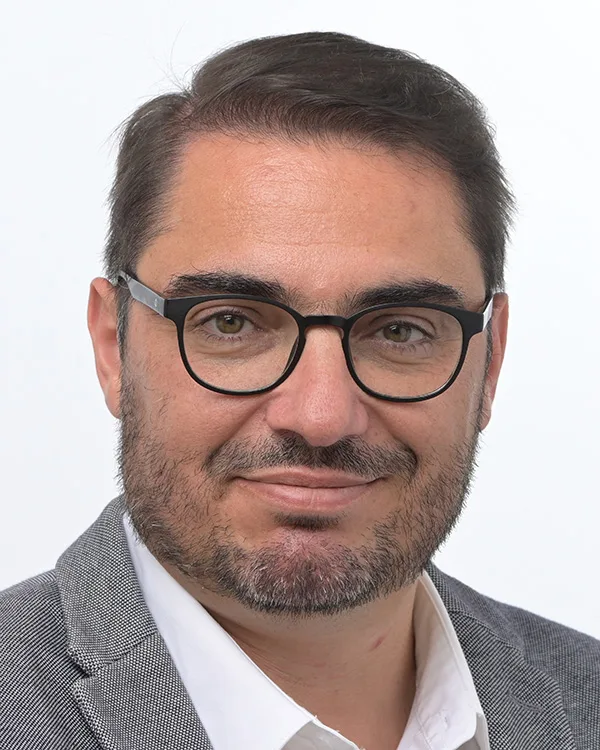

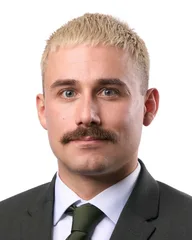
| Rank | Name | Country | Group | Speeches | |
|---|---|---|---|---|---|
| 1 |
|
Lukas Sieper | Germany DE | Renew Europe (Renew) | 494 |
| 2 |
|
Juan Fernando López Aguilar | Spain ES | Progressive Alliance of Socialists and Democrats (S&D) | 463 |
| 3 |
|
Sebastian Tynkkynen | Finland FI | European Conservatives and Reformists (ECR) | 460 |
| 4 |
|
João Oliveira | Portugal PT | The Left in the European Parliament (GUE/NGL) | 288 |
| 5 |
|
Vytenis Povilas Andriukaitis | Lithuania LT | Progressive Alliance of Socialists and Democrats (S&D) | 276 |
All Speeches (301)
Old challenges and new commercial practices in the internal market (debate)
Date:
08.05.2025 11:43
| Language: PT
Speeches
Mr President, the policy that the peoples need is a policy of boosting the internal market that increases purchasing power by increasing wages and pensions; to gear the economy towards job creation and meeting social needs rather than the profits of economic groups; to stimulate productive development and the incorporation of science and technology into production; and to take on the objective of eliminating asymmetries and inequalities between the levels of development of the different States. The European Union's single market is the opposite of all this. Its extension to the capital market and the technological areas of telecommunications and data spaces will serve the interests of economic groups and speculators, but not those of the peoples. This deepening of the single market is designed for the profits of large companies and multinationals and designed so that the major powers continue to take care of the weakest and most fragile economies. It insists on a policy of destroying public services, liberalising and privatising strategic sectors, particularly in the area of capital markets and, in particular, with regard to public social security systems. That is why it does not serve the interests of the people.
80 years after the end of World War II - freedom, democracy and security as the heritage of Europe (debate)
Date:
08.05.2025 10:00
| Language: PT
Speeches
Mr President, the remembrance of the 80th anniversary of the day of the victory over Nazifascism must serve to recall the hard lessons learned by humanity from the tragedy of that war, so that the peoples can avoid its repetition. The legacy of Nazi-fascist barbarism is unprecedented destruction – genocide, concentration camps, tens of millions of deaths. With 20 million dead, it was the Soviet Union that endured the greatest sacrifice of the entire coalition of allied countries formed during the war. Democrats from various quarters built the resistance struggle. The prominent role assumed by the communists was decisive and, therefore, even today, the heirs of the Nazi-fascist forces and their accomplices distill anti-communist hatred. In the 80 years of the day of victory, it is essential to remember that the fight against Nazism and Fascism, against reactionary and obscurantist forces, is also a response to the problems of workers and peoples, with the improvement of their living conditions, the guarantee of social rights, respect for the right of States to their development, with the uncompromising defense of peace and cooperation. The trail of death and destruction of Nazi-fascist barbarism must be enough for us today to do everything we can to defend peace, collective security and the political resolution of conflicts. These are struggles that we share with previous generations and, like 80 years ago, the communists will continue to fight them.
High levels of retail food prices and their consequences for European consumers (debate)
Date:
07.05.2025 18:09
| Language: PT
Speeches
Mr President, a lady interviewed in Portugal about rising prices told Portuguese television that the worst thing is that you run out of money to buy a book. This sentence reflects well the consequences of the increase in the cost of living. It's not just what you stop buying in basic necessities, it's the rest of people's lives that gets compromised. And, speaking of the increase in the cost of living and, in particular, the increase in food prices, it is absolutely essential that we have in this debate the two lines of solution and response to this problem: increasing wages and pensions, improving purchasing power, on the one hand; on the other hand, intervention and price control, so that speculation and the increase in profits of economic groups do not lead to worsening difficulties for those who live from their work, worsening difficulties in the living conditions of the people. It is the combination of these two elements, increasing purchasing power and controlling price caps, which can effectively address this problem of rising living costs, bearing in mind that part of the problems that remain unanswered is precisely that of supporting those who produce. Because, if today the prices of food increase for those who buy it, unfortunately they do not increase for producers, because the distribution chains crush the prices of production and there also needs to be a line of intervention.
High levels of retail food prices and their consequences for European consumers (debate)
Date:
07.05.2025 17:34
| Language: PT
Questions
Madam President, Mrs Miranda, you have indeed referred here to a circumstance which is contradictory, or apparently contradictory. Because, while it is true that distribution groups crush the prices they pay to producers, the truth is that they have not stopped increasing prices in the sale to the public, particularly in essential goods. And when we question this, what we are told from the European Union is that it is not possible to change prices, because that would call into question the rules of the functioning of the market, it would call into question the rules of competition. And the question I ask you is: What, after all, weighs more? Are the rules of the market and the rules of competition, and the accumulation of profits of the distribution group? Or is it the need for a policy that intervenes to bring down prices, particularly food prices?
Resilience and the need to improve the interconnection of energy grid infrastructure in the EU: the first lessons from the blackout in the Iberian Peninsula (debate)
Date:
07.05.2025 16:36
| Language: PT
Speeches
Madam President, Commissioner Jørgensen, the problems that caused the blackout of 28 April may happen regardless of how the electricity sector is organised and operates, but their scale and consequences are the result of the policies of liberalisation and privatisation of the energy sector by national governments under the patronage of the European Union. These policies cut the electricity sector to slices, as the interest of the market business, removed coherence to the electricity system, left it more fragile and vulnerable, and its operation with less security. The electricity sector today operates on a profit-driven basis and puts in the background the conditions for universal access to electricity, concerns about security of energy supply and distribution. The problem is not getting electricity from renewable sources. The problem is the crushing of electricity production costs at the expense of the security of the electricity system, not to lower prices for consumers, but to increase the profits of economic groups in the sector. Liberal policies in the energy sector have left people in the dark. It is the recovery of public control of the energy sector and its companies that can bring us back to the light, with security, prices and conditions of service (...)
Madam President, Commissioner Ribera, there are two central ideas in this debate. The first central idea is that competition only serves the European Union when it suits economic groups and multinationals. When it serves to limit public investment, the operation of public enterprises or to impose their privatisation, the pretext of competition is useful. When competition rules limit the interests and profits of economic groups and multinationals, competition no longer serves. In fact, proof of this is the European Commission's guidelines, with its policy of concentration and mergers, under the pretext of the competition of the large European multinationals with the Americans and the Chinese. The second central idea of this debate is that the report we are discussing confirms the bankruptcy of competition policy, but it is above all people's lives that confirms this. When distribution groups collude to raise prices for essential goods while crushing the prices paid to producers, it is competition that is bankrupt. When communications companies raise prices and agree on the terms of contracts they impose on consumers, it is competition that goes bankrupt. When energy prices rise, because multinational companies in the sector abuse their market position, it is competition that fails. It is not through the farce of competition that the problems of the peoples are solved.
Madam President, Mr Andrus, competition has served as a pretext to limit or even prevent public investment and the strengthening of state-owned enterprises. The Portuguese State had to face a thousand and one difficulties to recapitalize the public bank, Caixa Geral de Depósitos, and has suffered a thousand and one forms of pressure to sell the public airline, TAP. This means that competition serves as a pretext to prevent, limit and even degrade the provision of public services and the operation of undertakings. I ask you: How can competition serve the interests of the peoples if it limits and conditions the provision of public service, the real aim of which is to satisfy the needs of the peoples?
An urgent assessment of the applicability of the Political Dialogue and Cooperation Agreement (PDCA) with Cuba (debate)
Date:
06.05.2025 18:26
| Language: PT
Speeches
Madam President, it is absolutely essential that there be respect for the sovereign will of the Cuban people and that there be channels of relationship, cooperation and dialogue with Cuba so that, in relations based on these principles, solutions can be found to overcome the problems facing the Cuban people, particularly the truly criminal consequences of the blockade that the United States continues to impose on Cuba, which prevent the Cuban people from having access, under the same conditions as the peoples of the rest of the world, to medical care, dignity in their living conditions, which are denied by that blockade. And it is symptomatic that, in this European Parliament, those who today raise their voices against Cuba's Cooperation and Dialogue Agreement with the European Union are exactly those who continue to support the European Union's Association Agreement with Israel. Cuba sends doctors to solve the health problems of other peoples. The European Union – and those who advocate this association agreement with Israel here – continues to advocate sending arms so that the Palestinian people are subjected to the genocide that Israel is carrying on. Be embarrassed in your face when you defend these kinds of absolutely contradictory and double positions.
A revamped long-term budget for the Union in a changing world (debate)
Date:
06.05.2025 13:17
| Language: PT
Speeches
Mr President, the proposals we have put forward for this multiannual financial framework report state an alternative with clear priorities: prioritising economic, social and territorial cohesion and considering it as a cross-cutting principle of the multiannual budget of the European Union; prioritising objectives such as full employment, raising the living conditions of workers or eradicating poverty; prioritising addressing social issues, such as financing policies for access to housing, investing in public services, strengthening the child guarantee; priority should be given to supporting national policies for developing and exploiting productive resources and capacities, with a focus on the need for a policy of reindustrialisation and support for productive sectors, family farming, small-scale artisanal and coastal fishing. On the contrary, this report points to European funds, options which accentuate the subordination of the needs of the peoples, which do not guarantee the States conditions for the development and correction of the asymmetries of the least developed countries vis-à-vis the most developed countries, which drag the peoples to priorities contrary to their interests and rights, such as militarism and war, which deepen the mechanisms of imposition and political conditioning of the Member States by the European Union. The European Parliament's report calls for an increase in the European Union's budget, but the areas specifically called for are defence, security, border control and competitiveness. By prioritising this militaristic and security agenda and the interests of multinationals, everything else is left behind. This is not the path people need. These are not the options for a multiannual financial framework that serves the interests of the peoples.
A unified EU response to unjustified US trade measures and global trade opportunities for the EU (debate)
Date:
06.05.2025 11:35
| Language: PT
Speeches
Mr President, Commissioner Šefčovič, the response to Trump's tariff policy must be based on three essential elements. First, strengthening the internal market by increasing purchasing power, supporting policies to increase wages and pensions. By strengthening our internal market, we have an economy that is less dependent, less vulnerable, less exposed to the decisions that others make, especially when they are detrimental to us. Secondly, we need to develop our productive capacities, particularly with a policy of reindustrialisation and incorporating science and technology into the production of our businesses to ensure that we are also less vulnerable and less dependent on the economic and trade policy decisions that others make, particularly when they decide to raise tariffs not only on goods but also on raw materials. Thirdly, it is absolutely essential to have a diversified trade policy, with trade agreements which do not sacrifice the economies and interests of small countries to the interests of the great powers and which, above all, make it possible to find appropriate forms of economic development on the basis of cooperative international relations. This is the path that must be followed, not that of subservience to the United States and the Trump administration.
A unified EU response to unjustified US trade measures and global trade opportunities for the EU (debate)
Date:
06.05.2025 10:46
| Language: PT
Questions
Mr President, Mrs Pereira, you spoke about the need for diversification of markets and a broader trade policy. Unfortunately, this is one of the competences that has been transferred to the European Union and in which the national states today have no possibility of developing their action – the case of Portugal is a blatant example of this. But the question I want to ask you has to do with another dimension: the Honourable Member does not think that the dynamisation of the internal market, increasing purchasing power, increasing wages and pensions, is even more important, so that, with the dynamisation of the internal market, we are less vulnerable and less exposed to the consequences of decisions such as those that Donald Trump has taken in the United States? Don't you think that should be the way to go, especially in Portugal, contrary to what the current PSD-CDS government has done?
Ninth report on economic and social cohesion (debate)
Date:
05.05.2025 21:18
| Language: PT
Speeches
No text available
Ninth report on economic and social cohesion (debate)
Date:
05.05.2025 21:13
| Language: PT
Questions
No text available
Delivering on the EU Roma Strategy and the fight against discrimination in the EU (debate)
Date:
02.04.2025 20:04
| Language: PT
Speeches
Mr President, Commissioner Lahbib, on 28 March I took part in an initiative of the European Anti-Poverty Network, where I heard the report of a young gypsy who explained how the door to a job is always closed to him when it is known that he is a gypsy. And on March 14, I contacted in Portugal, in the municipality of Moita, a couple of young gypsies in the tent where they live with a four-year-old son and a one-month-old son, after being evicted from the house where they lived. They live in that tent with those children in the cold, in the rain, in completely inhuman conditions, which only do not squeeze the heart of those who do not have the least compassion for their neighbor. And this is what we talk about when we talk about discrimination against Roma communities. On top of discrimination, marginalisation, racism, xenophobia and prejudice, Roma communities experience all the other problems that affect other minorities and other classes and sections of the population. And the best contribution we can make in this debate is to support policies that solve problems for everyone, leaving no one behind. To everyone, leaving no one behind in solving these problems, including Roma communities, so that, as a well-known Portuguese song says, "we can live in a land where everyone treats everyone equally".
Delivering on the EU Roma Strategy and the fight against discrimination in the EU (debate)
Date:
02.04.2025 19:50
| Language: PT
Questions
Mr Francisco Assis, Portugal has not had a national Roma integration strategy since 2022. It is, moreover, the only country in the European Union in this situation. Not even the evaluation of the previous strategy, which ended in 2022, was completed. And the questions I ask you are simple. How is it possible to ensure the integration of Roma communities if we do not even have a strategy for that goal, addressing the issues of social, economic, labour, cultural integration for these communities? Who does this situation and the marginalization of these communities serve? Is this not a contribution to the far right's hate speech against Roma?
Outcome of the recent COP16 biodiversity negotiations in Rome (debate)
Date:
02.04.2025 19:20
| Language: PT
Speeches
Mr President, Commissioner Roswall, reversing biodiversity loss while ensuring progress and social justice requires a profound change of policy and economic model. Defending biodiversity and preserving the environment requires policies for the rational use of energy and increasing energy efficiency, as well as an effective promotion of public transport, reducing dependence on fossil fuels by promoting energy alternatives in the public domain that serve everyone and not the business of multinationals in the energy sector. Biodiversity is not defended with the Common Agricultural Policy and the forestry policies of the European Union, which concentrate ownership and taper production in monocultures, throwing into the nettle practices that, over centuries and millennia, have ensured the preservation of biodiversity and the harmonious coexistence of human beings with nature. Biodiversity is not defended with EU trade policy that determines practices contrary to the principle of chain reduction – production, distribution, consumption – making production practices and even consumption patterns irrational. All this needs to change to defend biodiversity.
Outcome of the recent COP16 biodiversity negotiations in Rome (debate)
Date:
02.04.2025 19:11
| Language: PT
Questions
Mr Sérgio Humberto, the theory that you have brought here is a good one. The question you ask him is: Why don't you practice it? Why, for example, in Portugal, the government, which is from the same party as the honourable Member, is pursuing a policy exactly contrary to that which you have advocated here. For example, when it does not support traditional agriculture, smallholders, productive practices that directly link production and consumption. Why is it that in Portugal the government of the honourable Member's party does not promote a forestry policy to diversify the Portuguese forest and allows it to merge, for example, with the eucalyptus policy? It would be good if the honourable Member could explain why, in practice, the theory is, after all, different.
The importance of trans-European transport infrastructure in times of stalling economic growth and major threats to Europe’s security (debate)
Date:
02.04.2025 18:41
| Language: PT
Speeches
Mr Tzitzicostas, we should in fact be discussing transport networks not on the basis of war and security issues, but on the contribution that transport networks have to make to territorial, economic and social cohesion within the European Union, to ensuring the mobility of people, to supporting economic activity. What support should the European Union give to national transport infrastructure investment policies that address these asymmetries? What support should you give to investment in the mobility of populations and to support economic activity from the investment that has to be made in national networks, in order to structure rail, maritime and inland waterway transport at national level, linking the provision of public transport with existing infrastructure? What support should the European Union give, for example, to countries such as Portugal, where this investment is needed so that we do not just see trains passing through the trans-European delegations, without them serving the populations, national development and regional cohesion that we need them to ensure? And it is necessary, by the way, for the European Union to abandon the options of liberalisation, as was the case with the implementation of the single agent in Portugal.
The importance of trans-European transport infrastructure in times of stalling economic growth and major threats to Europe’s security (debate)
Date:
02.04.2025 18:27
| Language: PT
Questions
Mr Muşoiu, the question I would like to put to you is simple. Do you not think that the priority in the discussion of transport policy should be how the European Union can support the development of transport infrastructure to ensure the mobility of people, to guarantee territorial, economic and social cohesion within the European Union and, more than defence issues, should it be the satisfaction of people's needs, economic development and cohesion that should be placed here as a priority?
Mr President, this discussion on the Ocean Pact should enable us to discuss a strategy that takes into account that the sensitivity of marine ecosystems and the environmental, ecological and social functions of the seas and oceans require a strong role for the State in the sustainable management and safeguarding of resources, as a way of ensuring that the common interest, the public good, prevails over individual or sectoral interests. In this regard, it is important for the European Union to support integrated national policies that enable the management, safeguarding and exploitation of marine resources; investment in knowledge, research and development and other scientific and technical activities, with the important role of public structures and national scientific capacity in cooperation with other countries; investing in the monitoring, patrolling and security capacity of territorial waters and promoting a broad spectrum of sectors of economic activity linked to the seas and oceans – in some cases emerging sectors; in other cases, traditional – such as fisheries or aquaculture.
Mr Paulo do Nascimento Cabral, one of the ways to respond to concerns about the environmental preservation of the oceans is precisely to support economic activities, which also have their place in the ocean, in a sustainable way, and, in particular, in relation to artisanal and coastal fishing, this is one of the absolutely essential elements to ensure that all these concerns are articulated. However, we do not see, either from the European Union or from the current Portuguese Government, the correspondence with this concern beyond the proclamations. Small-scale artisanal and coastal fishing had to be supported in relation to the increase in input costs or, for example, in relation to the crushing of prices paid to fishermen by large-scale retailers. What perspective do you think these things should have?
Topical debate (Rule 169) - Social Europe: making life affordable, protecting jobs, wages and health for all
Date:
02.04.2025 14:44
| Language: PT
Speeches
Mr President, better jobs, better wages and pensions, access to housing, health, education, better social protection, a better distribution of wealth, eradication of poverty. Here are the priorities of the people, but they are not the priorities of the European Union. The petition we promote in Portugal for the increase of wages and pensions shows this demand of the people in the more than 100,000 signatures demanding a better life. But when Social Europe is proclaimed here, it does not correspond to the choices made by the European Union. In fact, some of the Members who are now talking about social cohesion and a social Europe in this debate have just rejected proposals that went precisely in this direction, embedded in the guidelines for the European Union's budget for 2026. That is what needs to be reversed urgently. We need the European Union to support, in fact, better policies to respond to the economic and social problems of peoples, guarantees of development with the focus on economic, social and territorial cohesion that must guide and guide political choices.
Mr Bruno Gonçalves, my question to you is simple: does the honourable Member agree with this approach taken by the European Commission to energy-intensive industries, disregarding the strong elements of social conditionality that should be present? This approach leaves workers, their jobs, their wages, their working conditions, sound collective bargaining processes, which should be safeguarded, completely disregarded. Workers in these industrial sectors need to be considered and their needs and rights must be taken into account as a criterion and reference for the decisions to be taken in this context.
Madam President, Mrs Matthieu, you referred to an important aspect that has to do with social impacts, but I would like to ask you another question, which is whether you do not see with concern the concentration of political decision-making on these issues in the European Commission on competences that are the responsibility of the Member States. When we cross-reference this action plan with the Critical Raw Materials Act, for example, we realise that the European Commission can impose on states and populations the extraction, exploitation and processing of resources, even against their will, even against the interest of national development, even against prevailing interests, notably from the environmental and social point of view. Does that not concern you in this Commission proposal?
Madam President, Commissioner Lahbib, this debate on so-called crisis preparedness is the debate on escaping responsibility, promoting fear and the ideology of war. The European Commission underscores the role of states and essential public services and structures, and sees crisis preparedness as an individual responsibility of citizens. While dealing with situations that justify genuine concern for civil protection or critical infrastructure, the Commission promotes fear, because fear is the Trojan horse of the people, so that they assimilate and accept what they would naturally refuse because they oppose their interests. The reason for this promotion of fear is found in the words of the writer Mia Couto when he said: To make weapons, you have to make enemies. To produce enemies it is imperative to sustain ghosts. The promotion of crises hides the ghosts and fear with which they want to accommodate peoples to the ideology of war. They won't pass us by.