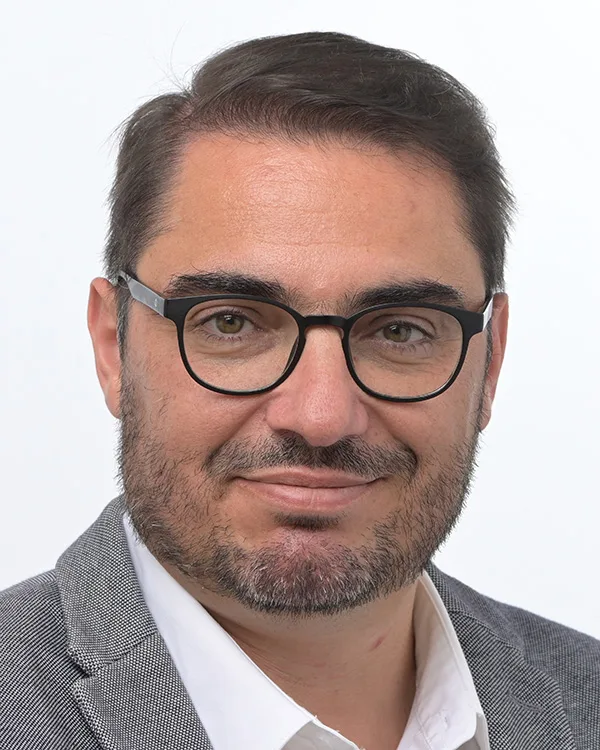

| Rank | Name | Country | Group | Speeches | |
|---|---|---|---|---|---|
| 1 |
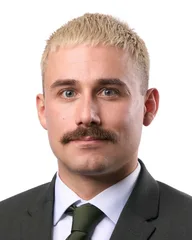
|
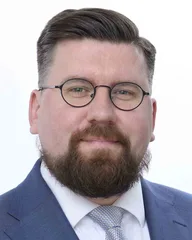
Lukas Sieper | Germany DEU | Non-attached Members (NI) | 390 |
| 2 |
|
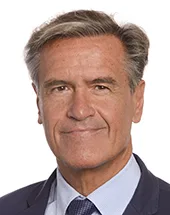
Juan Fernando López Aguilar | Spain ESP | Progressive Alliance of Socialists and Democrats (S&D) | 354 |
| 3 |
|
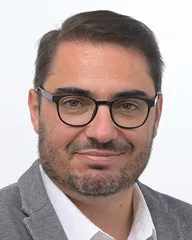
Sebastian Tynkkynen | Finland FIN | European Conservatives and Reformists (ECR) | 331 |
| 4 |
|
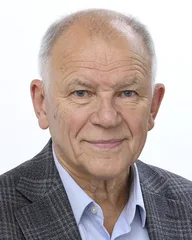
João Oliveira | Portugal PRT | The Left in the European Parliament (GUE/NGL) | 232 |
| 5 |
|
Vytenis Povilas Andriukaitis | Lithuania LTU | Progressive Alliance of Socialists and Democrats (S&D) | 227 |
All Contributions (365)
Time to address economic inequalities in the EU and worldwide (debate)
Mr President, Commissioner Kos, the situation we are experiencing is, in fact, a situation of worsening economic and social inequalities within the European Union, with economic growth accompanied by the concentration of wealth. Contrary to what liberal dogmas tell us, it is not enough to create more wealth to overcome the problem of inequalities, it is necessary that wealth be distributed more fairly. And it is precisely because wealth is not fairly distributed that economic and social inequalities grow, become more acute and we are witnessing a phenomenon of growing impoverishment of broad popular strata. This is the result of concrete policies: policies of market liberalisation, privatisation of strategic companies and sectors, policies favouring economic groups and multinationals, such as those proposed in the Draghi report and supporting the strategic orientations of the policies advocated by the European Commission. It results from the policies of degradation and liquidation of important social and labour rights, which result from processes of changes to labour legislation, such as the one currently being done in my country, promoted by a PSD/CDS Government, weakening workers' rights, imposing precariousness, creating objective conditions for wages to go backwards and regress instead of advancing and increasing. All this is also the result of an increase in the cost of living, with the combination of rising prices and lowering or containing wages. And this is also the result of political choices that are made, choices that are made when refusing to intervene in prices to control and fix prices, particularly for essential goods and services: energy, transport, housing, water, in so many other circumstances absolutely decisive for the life of peoples. In order to counteract this situation, to counteract this path of worsening economic and social inequalities, it is absolutely essential to place a fairer distribution of wealth as a political priority and reference. And this is done with policies to increase wages, it is done with policies of fiscal justice, taxing large incomes and fortunes more significantly and alleviating taxes on labor. It is done with policies of valorization and strengthening of social policies, benefits and social support that guarantee, also in this way, a redistribution of wealth. It is made with investment policies of public services that guarantee universal access to health, education, culture, social protection. It is done with housing investment policies, particularly with the increase in the supply of public housing through the requalification and increase of the public housing stock. All this, Commissioner, is an option that is required today, in the face of the tragedy that more than 93 million citizens are experiencing, in the situation in which they are, pushed into poverty within the European Union, but which is also required in the face of what is the increasingly difficult situation of intermediate popular strata who, not being in poverty, are finding it increasingly difficult to cope with the circumstances of their lives. It is in the face of the living situation, the living conditions of the peoples that this change of policies is required.
Cooperation among enforcement authorities regarding unfair trading practices in the agri-food supply chain (debate)
No text available
Cooperation among enforcement authorities regarding unfair trading practices in the agri-food supply chain (debate)
No text available
Cooperation among enforcement authorities regarding unfair trading practices in the agri-food supply chain (debate)
No text available
Developing a new EU anti-poverty strategy (debate)
No text available
Developing a new EU anti-poverty strategy (debate)
Madam President, Commissioner Mînzatu, eradicating poverty is a political choice and that is the choice we make. The report we are now discussing gives a strong political signal that the response to the economic and social problems affecting the lives of peoples must not take a back seat to political priorities. Poverty reflects an unfair and unequal distribution of wealth. To eradicate it, it must be tackled at its root causes with policies that ensure a fair distribution of wealth. Poverty undermines human rights as political, economic, social and cultural rights. To eradicate it, these rights must be realized as universal and indivisible rights. The eradication of poverty calls for a comprehensive and integrated approach that tackles poverty in its multiple dimensions, without compartmentalising or segmenting the response. Calls for the objective of eradication to be taken into account as a cross-cutting criterion in sectoral policies. Calls for action to combat economic and social discrimination which makes women, the elderly, people with disabilities, migrants, ethnic communities and minorities, people discriminated against on the basis of their identity or sexual orientation, people living in rural areas, people excluded from access to education or technological and communication means, more vulnerable to poverty. It calls for political responsibility to be properly articulated at EU, national and regional and local level, where the effectiveness of policies is put to the test. Calls for the strategy to be adequately funded so that it is effective in achieving the objective of eradicating poverty by 2035, either by mobilising financial resources from the EU budget or by mobilising national budgets. Calls for the political participation of people living in poverty in the definition of policies addressed to them, but also in their evaluation, so that they can be properly implemented and adjusted. When we talk about poverty in the European Union, we are dealing with the lives of 21% of the population, more than 93 million people, including more than 24% of children. The comprehensive integrated approach proposed in this report to eradicating poverty comprises a broad and diverse set of instruments to achieve this goal. It covers policies to promote full employment, fair wages, improved working conditions, links between family and professional life, tax justice. It covers the universal right to housing, considering the urgency and specific measures to eradicate homelessness, not forgetting the solutions needed by broad popular strata who today face the drama of not being able to find affordable and decent housing that they can afford. It covers investment in quality and universal public services that guarantee access to healthcare, education, social protection, culture, transport and communications, energy, and an ecologically balanced environment. It covers robust social policies that develop social protection and integration mechanisms, such as minimum income, and tackle child poverty by refusing child institutionalisation solutions and giving a prominent role to child guarantee. These are some of the most relevant instruments in this report on the first European Union strategy to combat poverty. We expect the Commission to adopt them as benchmarks for the policies to be implemented to this end.
International Day of Education, fighting inequalities in access to education (debate)
No text available
International Day of Education, fighting inequalities in access to education (debate)
No text available
Extreme weather events in particular in Portugal, southern Italy, Malta and Greece: European response in strengthening readiness, preparedness and solidarity mechanisms (debate)
No text available
Extreme weather events in particular in Portugal, southern Italy, Malta and Greece: European response in strengthening readiness, preparedness and solidarity mechanisms (debate)
No text available
Extreme weather events in particular in Portugal, southern Italy, Malta and Greece: European response in strengthening readiness, preparedness and solidarity mechanisms (debate)
No text available
One-minute speeches on matters of political importance
Mr President, it is time to express solidarity with Cuba and the Cuban people and to denounce and combat the escalation of aggression by the United States against Cuba, which is an affront to the principles of the United Nations Charter and international law. It is not Cuba, but the United States that has been practicing a policy of interference, aggression and state terrorism against other countries. It is not Cuba, but the United States that poses the most serious threat to the peace and security of the peoples of Latin America and the Caribbean and other regions of the world. It is not Cuba, but the United States that violates and attacks human rights and the rights of peoples and their sovereignty. Under the pretext of a list of falsehoods, Donald Trump has unilaterally and coercively imposed, extraterritorially, coercive measures on countries that sell or supply, directly or indirectly, oil to Cuba, with the aim of imposing an oil blockade to hit even harder Cuba's economy and the living conditions of its people. This intensification of US aggression against Cuba is part of US imperialism’s broader plan to impose its dominance in Latin America and the Caribbean, and also represents an increased threat to the sovereignty and rights of other Latin American peoples around the world, which is why the European Parliament must condemn this escalation of aggression.
Motion of censure on the Commission (B10-0063/2026)
Madam President, first of all, I want to say that we voted in favour of this motion of censure, because we believe that the European Commission deserves censure - and Mercosur is one of the reasons for that censure, because the European Commission disregards the national parliaments, refusing to listen to their opinion and refusing to take account of that opinion that must be given, and, moreover, harming farmers and national production. Secondly, we want to stress that we have been on the side of farmers and voted in favour of this motion of censure - because it is not because of the absence of the PCP vote that the European Commission is not sidelined and, in particular, that this contribution is not made so that the path towards Mercosur can be another one. But here too, thirdly - and that is what I wanted to make explicit - we want to emphasise the far-right parties that put forward this motion of censure. Because those who today in this European Parliament want to give an image that they are on the side of farmers are those who have betrayed farmers in the national governments they influence by approving the agreement with Mercosur from the governments, as happened with the flagrant case of the Italian Government. So, let there be no illusions, the far-right is not on the side of the farmers, it is just setting up a political staging to capture their support, despite betraying their interests at the level of national governments.
Joint action addressing the increased use of death penalty (debate)
Madam President, Commissioner Mînzatu, we agree with the idea that criminal justice systems should evolve in their modern conception, in order to place the resocialisation of individuals at the centre of their choices - meaning the use of the criminal justice system as an instrument for all citizens to comply with the rules and norms of community life - and, of course, we support the idea that the death penalty should be rejected and abolished, because it is not compatible with this modern and humanist conception of criminal justice systems. We even consider that the Portuguese experience (Portugal was one of the first countries in the world to abolish the death penalty in 1867) is quite significant and revealing of this humanist conception that we share. We believe that every effort must be made towards the abolition of the death penalty at international level, not only with the national decisions that must, of course, be taken in this direction, but with initiatives that, at international level and, in particular, within the framework of the United Nations, can also be developed in this direction, namely by raising the awareness of the countries that are part of the United Nations Organization to sign and accompany the Second Optional Protocol to the International Covenant on Civil and Political Rights with a view to the abolition of the death penalty, which was adopted by the United Nations General Assembly. We also believe that there can be initiatives on the part of the European Union to this end. There have been resolutions with this intention in the past, and we believe it is important that these policy initiatives can be developed. It seems to us absolutely essential that, in order for such initiatives to be successful, there should not be a double standard in the assessment of the international situation, which unfortunately makes it possible to note that several countries around the world continue not only to provide for the death penalty, but also to apply the death penalty, including the United States of America - which, incomprehensibly, are not mentioned in many of the speeches made in the plenary of the European Parliament, but which, of course, being one of the countries which not only provides for, but also applies (in a very significant way) the death penalty, should not also be removed from the list of countries to which such initiatives should be addressed, with a view to the effective abolition of the death penalty. And we believe that, in addition to initiatives aimed at abolishing the death penalty, with its withdrawal from the provision of penal systems, initiatives should also be developed towards a universal moratorium on the execution of capital punishment in the countries that have provided for it for those who have been sentenced to it.
A new action plan to implement the European Pillar of Social Rights (debate)
Madam President, Commissioner Mînzatu, on the European Pillar of Social Rights action plan, three issues are absolutely decisive. Firstly, to ensure that the necessary measures are in place to address the social problems affecting workers and peoples within the European Union; secondly, to ensure that they are effective measures and that they do not stop at proclamations of intent; and, thirdly, to ensure proper coordination with policies at national level, which are the responsibility of the Member States, to ensure that they are implemented and that social problems are tackled. Valuing work and workers, their living conditions, their wages, the regulation of their working hours, issues related to ensuring access to housing - affordable housing - by expanding public supply, and ensuring measures to combat poverty towards its eradication are three of the essential aspects that this action plan must contain, and it cannot merely point out the path that needs to be taken. It should identify effective measures to address the various needs that exist in these dimensions and ensure adequate financial resources, either through the Multiannual Financial Framework or through the use of other financing instruments, including the Recovery and Resilience Facility, the timeframe of which should be extended, particularly to address housing needs.
A new action plan to implement the European Pillar of Social Rights (debate)
Mr Vicent, you spoke about housing and the need for effective measures to address the housing problem. That is one of the dimensions that is specifically mentioned in this oral question on the European Pillar of Social Rights. And the question I ask you is this: was it not important for there to be additional and targeted funding in the next Multiannual Financial Framework to address housing issues, particularly to increase the supply of public housing? And do you not also consider it important that the RRP funds - from the Recovery and Resilience Plan - could be expanded so that, with their use, with a longer timeframe for their use, they could also be mobilised to address the housing problem?
European Council meeting (joint debate)
Madam President, Mr Costa, the conclusions of the last Council meeting - a meeting that was just over a month ago, but it seems that it was an eternity ago - are, in fact, conclusions of a meeting disconnected from the reality of the peoples living within the European Union. We continue to see that neither the difficulties in housing, nor the difficulties in accessing health, education, social protection, nor the problems of deteriorating living conditions or rising prices, none of this continues to be of concern to the European Council, which continues to relegate to the background the economic and social problems that mark the lives of peoples. On the contrary, we see militarism and war, Mercosur, measures related to the so-called competitiveness policy, all pointing towards more and more measures to favour multinationals and economic groups, to the detriment of small and medium-sized enterprises, to the detriment of the exploitation of the countries' productive capacities, to the detriment of national development. And, once again, the insistence on obstacles to a peaceful solution, a political solution to the war in Ukraine, with the European Union insisting on its prolongation, with a further EUR 90 billion to prolong the war. These are completely wrong choices, Mr. Costa.
European Council meeting (joint debate)
Mrs Riba i Giner, you spoke in your speech about the damage that has resulted from options being made for dismantling production, dismantling the response to some of the people's needs, particularly in relation to food issues. And my question to you about the conclusions of this last meeting of the European Council is whether you do not think that it is dramatic that there is no reference to the response to the economic and social needs of peoples, whether in food matters, housing, access to health or other issues that mark such great difficulties in the lives of peoples.
The 28th Regime: a new legal framework for innovative companies (A10-0269/2025 - René Repasi)
Madam President, the report on the 28th legal regime that Parliament discusses and approves is a report that leaves us with many concerns. The 28th Law is an offshore Federal law addressed to multinationals to create a set of facilities in relation to tax matters, in relation to administrative matters, including in relation to labour legislation, jeopardizing not only workers' rights, which will be weakened through the 28th legal regime, but also jeopardizing the survival conditions for micro, small and medium-sized enterprises, which will continue to deal with a set of difficulties for their activity - which, of course, multinationals will no longer have to deal with. This proposal for a 28th legal regime is a federal solution to guarantee multinationals a green path that allows them to move beyond national laws, disregarding what are absolutely essential parameters, not only of an economic nature, but also of a labour nature, and is therefore unacceptable to us.
Framework for strengthening the availability and security of supply of critical medicinal products as well as the availability of, and accessibility of, medicinal products of common interest (A10-0272/2025 - Tomislav Sokol)
Madam President, this report on critical medicines raises a number of concerns, first of all, that we are dealing with an issue that is absolutely fundamental to the defence of citizens' rights, which is the accessibility of medicines, particularly critical medicines. And the key issue in this regard is to enable each Member State, in accordance with its productive capacity and by developing that productive capacity, by developing the science and research that is needed, to be able to ensure access to medicines for its citizens. This report is based on a completely different basis from that, which is the basis on which, today, the Member States are held hostage by the pharmaceutical industry - particularly the multinationals, which decide at will what profit margins they want to make, using an issue that is absolutely fundamental for any country, which is to guarantee access to medicines for its citizens. We have had the dramatic example of this with the COVID-19 pandemic and, unfortunately, the path that this report points out is not to free the states and peoples of the European Union from those shackles that make access to medicines difficult.
Situation in Venezuela following the extraction of Maduro and the need to ensure a peaceful democratic transition (debate)
No text available