
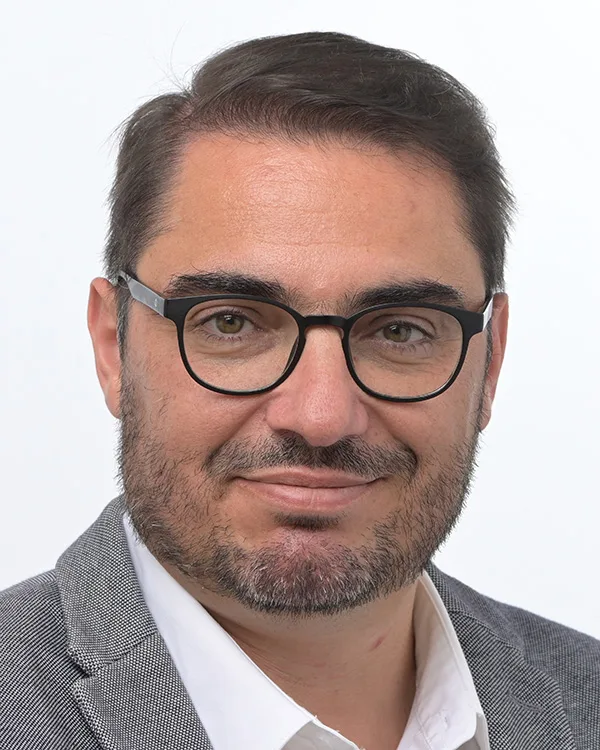






| Rank | Name | Country | Group | Speeches | |
|---|---|---|---|---|---|
| 1 |
|
Lukas Sieper | Germany DEU | Non-attached Members (NI) | 390 |
| 2 |
|
Juan Fernando López Aguilar | Spain ESP | Progressive Alliance of Socialists and Democrats (S&D) | 354 |
| 3 |
|
Sebastian Tynkkynen | Finland FIN | European Conservatives and Reformists (ECR) | 331 |
| 4 |
|
João Oliveira | Portugal PRT | The Left in the European Parliament (GUE/NGL) | 232 |
| 5 |
|
Vytenis Povilas Andriukaitis | Lithuania LTU | Progressive Alliance of Socialists and Democrats (S&D) | 227 |
All Contributions (365)
Protecting the system of international justice and its institutions, in particular the International Criminal Court and the International Court of Justice (debate)
Madam President, Commissioner McGrath, there is no international justice without compliance with international law and the United Nations Charter. And there is no respect for international justice when the interim measures ordered by the International Court of Justice for Israel to put an end to the genocide in Gaza have simply been ignored. When Donald Trump announces to the world his intention to occupy the Gaza Strip and expel the Palestinian people, it not only reveals the sense of impunity of those who deliberately decide to flout international law and international justice. These statements by Trump are the clearest revelation of what the rules-based international order means. That rules-based international order means a world that functions not according to international law, but according to the rules imposed by the force of whoever wields that force to impose them. The constitution of the Hague Group by nine countries, which have decided to act to comply with international law, is an example to follow, so that we do not remain in the moral quagmire of inaction in the face of barbarism and inhumanity. That should also be the way forward for the European Union.
Protecting the system of international justice and its institutions, in particular the International Criminal Court and the International Court of Justice (debate)
Mr Asens, you spoke of Israel's disrespect for the measures ordered by the International Court of Justice to stop the genocide of the Palestinian people in Gaza. He also spoke of Donald Trump's statements that are the revelation of what a rules-based international order means, which is a world functioning according to the rules that imposes who has the strength to enforce those rules. The question I ask you is: what should be the position of the European Union in the face of disregard for international law and international justice? Is it possible to live in the moral quagmire of inaction in the face of disregard for international law and the decisions that result from international law?
Wider comprehensive EU-Middle East Strategy (debate)
Mrs Miranda, in fact, the European Union's position has been one of complicity with Israel's policy and one of double standards, because, truly, the European Union, which intervenes so much and is so attentive to other conflicts, has closed its eyes to what has been happening in Palestine with Israel's genocidal policy. And this double position, this double criterion, this complicity of the European Union comes into conflict with what is popular sentiment, not only in Portugal, but in practically all the countries of Europe, which is a popular feeling of solidarity, of solidarity with the Palestinian people, with their struggle, and of denouncing and combating the genocidal policy that Israel is pursuing. We will continue to bring to the European Parliament that voice from the streets that speaks in the name of solidarity with the Palestinian people and the cause for the fight for their rights.
Wider comprehensive EU-Middle East Strategy (debate)
Madam President, a just and lasting peace in the Middle East requires an end to the genocide and criminal policy of Israel against the Palestinian people. It demands full compliance with the ceasefire in place, which must be permanent, and urgent access to humanitarian aid, which remains limited. It demands the full withdrawal of Israeli forces from the Gaza Strip and an end to their attacks on the West Bank and East Jerusalem. It demands the fulfilment of the national rights of the Palestinian people with the end of the occupation and the establishment of the State of Palestine, as determined by United Nations resolutions. It demands an end to Israel's aggression against Lebanon and Syria, and the withdrawal of the territories it illegally and militarily occupies in those two countries. Trump's unacceptable statements about the intention to occupy the Gaza Strip and the expulsion of the Palestinian people reveal the complicity and support of the United States for Israel's genocidal policy. The deafening silence in the face of these statements and intentions reveals the European Union's complicity with the policies of the United States and Israel, which obstruct peace in the Middle East.
Boosting vocational education and training in times of labour market transitions (debate)
Madam President, Mr Sérgio Humberto, in Portugal, the most qualified generation ever is also one of those who leave the country most in search of other places, where their qualifications are recognised and better working conditions and better wages and better life prospects. And the honourable Member has spoken here about qualifications and vocational training, solely on the basis of the criteria of competition, competitiveness and the ability of companies to generate profits. And my question to you is whether the Honourable Member does not see the need to look at the issues of training and professional qualification from the perspective of workers, improving their working conditions, reducing working hours and improving their wages. That was the perspective that needed to be discussed here.
The need to address urgent labour shortages and ensure quality jobs in the health care sector (debate)
Mr President, Commissioner Mînzatu, in order to solve the problem of the lack of health professionals, we need to invest in public health services and create the conditions for retaining and attracting professionals to those careers. Careers and salaries need to be valued. It is necessary to combat the overload of work and to value the public service with a regime of exclusive dedication. That is the way to go. And it is important that the European Union removes the obstacles and limitations that it places today on these measures that need to be taken, namely obstacles and barriers of a budgetary nature, which restrict the ability of states to implement policies such as these. In Portugal, we have a government that accepts these limitations and these restrictions. We have a government that accepts this, because this lends itself to the strategy of weakening public health services to open the space to the disease business with which economic groups accumulate millions of euros of profits. The problem is that this policy leaves users without health care and undermines the right to health. Change the policies and change the consequences and outcomes.
The need to address urgent labour shortages and ensure quality jobs in the health care sector (debate)
Mr President, Mrs Tomc, you referred to poor working conditions, low wages, overload of work, as some of the problems leading to a lack of health professionals, unattractive health careers. That, of course, to solve it, requires public investment, investment in public services, resources from national state budgets to respond to these problems. And the question I ask you is how this is compatible with the budgetary constraints that the European Union imposes, for example, with the new rules of economic governance that make it difficult to hire workers, make it difficult to enhance their careers, make it difficult to invest in improving working conditions in public health services.
Preparedness for a new trade era: multilateral cooperation or tariffs (debate)
Mrs Lídia Pereira, the first question I would like to ask you is whether you really think there is an incompatibility between deepening multilateralism and using trade policy, including tariffs, to protect strategic sectors? It seems to us that there is no contradiction, because both can be instruments for the development of commercial relations, naturally protecting what is relevant in each circumstance, for each space. And the second question I wanted to ask you is precisely that. After the PSD, PS and CDS have handed over to the European Union the exclusive competence of trade policy, leaving our decisions and the protection of our strategic sectors in the decisions of the great powers of the European Union, how do you assess the profoundly negative consequences that this has had for Portugal?
The Universal Declaration of Human Rights: the need for the European Union to contribute to resolving the humanitarian crisis of persons missing in wars and conflicts (debate)
Mr President, ladies and gentlemen, the Universal Declaration of Human Rights has the greatest significance of focusing the values of the social progress of peoples and encouraging the development of friendly relations between nations. And when we discuss the value of this statement in the face of the barbarity of the war and the consequences for its victims, it is worth questioning what the institutions of the European Union have done in the face of the barbarity of Israel's genocidal policy against the Palestinian people. And I ask you directly, Commissioner Albuquerque, where are the institutions of the European Union when we hear the President of the United States make statements such as those he has made in recent days which point towards ethnic cleansing, genocide of the Palestinian people, assuming the intention of occupying the territory of the Gaza Strip and expelling the Palestinian people from their land, preventing their return? Where are the institutions of the European Union when the intention to violate international law is so openly assumed? Let there be courage to confront these conceptions and these assertions and these policies. Let there be courage to stand up for international law and to stand up for the national rights of the Palestinian people.
The Universal Declaration of Human Rights: the need for the European Union to contribute to resolving the humanitarian crisis of persons missing in wars and conflicts (debate)
Mrs Ana Catarina Mendes, you referred in your speech to the situation in Palestine and the Gaza Strip and I would like to ask you a question precisely about that. A few days ago, we heard statements by US President Donald Trump that he intends to buy and occupy the Gaza Strip, expel the Palestinians, prevent their return and find somewhere where they can be forcibly pushed. And my question to you is whether or not you understand that this European Parliament should take a firm stance of denouncing, condemning and rejecting these statements and repudiating what they constitute, of violating international law, of denying the national rights of the Palestinian people and of an attitude that is truly an attitude of ethnic cleansing and of contributing to the genocide that Netanyahu has been carrying out.
European Central Bank – annual report 2024 (debate)
Mr President, Mrs Lagarde, your policy of combating inflation from the European Central Bank is wrong, it is unfair and it must be changed. It is wrong because it wants to fight inflation by crushing the purchasing power of the people instead of intervening in prices. It is unfair because it ruins the lives of workers and small and medium-sized enterprises, but it guarantees scandalous profits to banks and economic groups. The speed of interest rate rises has not been the same as in the fall, and the situation is unsustainable. Households continue to be suffocated by the costs of housing loans. Small and medium-sized enterprises face difficulties with rising credit costs, but the cost of living continues to rise because economic groups continue to set prices 'at Lagardère' as they wish and as they wish. Banks’ profits in 2024 yielded EUR 123 billion in dividends for their shareholders. In Portugal alone, in 2024, the largest economic and financial groups made 32 million profits per day. Mrs. Lagarde, change politics because with this policy you ruin the lives of the people. The right and fair way is for interest rates to fall rapidly to relieve households and small and medium-sized enterprises. The right and fair way is to combat inflation, with measures to control, fix or list prices, especially for essential goods, whose prices have risen speculatively in recent years. That's the challenge we're giving him.
Combating Desertification: 16th session of the Conference of the Parties (COP16) of the United Nations Convention (debate)
Honourable Member, the Portuguese Government has recently put forward a law called the Soil Law, which aims to allow construction on land where up to now such construction was not allowed. This decision, of course, favours property speculation, but also creates problems of disorder in the territory. The honourable Member comes from the Valencia region - where there was a tragedy recently following floods - so I would like to ask him a question from his own experience. In the light of the experience in the Valencia region, do decisions such as those taken by the Portuguese Government to disrupt the territory and encourage property speculation allow a solution to be found to any problem, for example the problem of housing, which is the pretext used by the Portuguese Government, or the fight against the desertification of territories? Or, on the contrary, do these options of disorder of the territory further aggravate the consequences of natural disasters, such as those that hit the region of Valencia?
Combating Desertification: 16th session of the Conference of the Parties (COP16) of the United Nations Convention (debate)
Mr President, the problem of desertification is an environmental or climatic problem, but it is essentially a problem of the relationship between human beings and nature, it is a human, social and economic problem. The conclusions of COP16 contain many of the elements relevant to the debate on combating desertification, but they also reveal the many difficulties that still need to be overcome. There is much to be done to ensure that there are genuine solutions regarding the efficient use and management of water and water resources, regarding the occupation and balanced planning of the territory, regarding the promotion of sustainable, balanced production practices, whether in agriculture, livestock farming, forestry. There is much to be done in the public investment that is needed in rural areas to stop the abandonment of the population and the consequent desertification of the territory. Let me bring here an aspect that is relevant in Portugal, which is the cork oak and holm oak dehesa, which is characteristic of my country. The cork oak forest is not just a collection of trees that retain carbon and resist fires better. The montado is an agrosilvopastoral system that has to be seen as such in all its dimensions, not only for its environmental value, but for the enormous social value it has, because it creates jobs, fixes populations, allows sustainable and balanced productive practices, ensures adequate spatial planning in the compatibility of its use for productive purposes, but also has environmental concerns. This is an example of the investment we need to make in areas and resources that, being natural to each country, naturally allow a more effective response to combat desertification.
Addressing EU demographic challenges: towards the implementation of the 2023 Demography Toolbox (debate)
EnglishMadam, you have made a speech of hatred against immigrants and contempt for the difficulties that young families have, which do not allow them to make the decision to have children. And the question I ask you is simple: Does the far right really have a solution to any problems in society? Can the far right come up with a proposal, a solution that is not one of hatred towards others, that is not one of contempt for the difficulties of the peoples? It seems to me that the honourable Member may have some difficulty in giving that answer, but her difficulties will also be a good answer for anyone listening to this debate.
Addressing EU demographic challenges: towards the implementation of the 2023 Demography Toolbox (debate)
EnglishMadam, one of the essential issues in combating the demographic deficit is, in fact, the guarantee of employment and the guarantee of the ability to organise the life of each family on the basis of this essential condition. We need a job. And policies such as these – promoting eucalyptus, for example – which are disconnected from the reality of the territories and which do not allow the populations to settle in the territories from which they come, nor the organisation of the lives of young families in those territories, naturally lead not only to the demographic deficit, to decisions to postpone family formation, but also to decisions to emigrate and abandon these territories. Of course, this is also one of the issues that must be considered in order to combat the demographic deficit.
Addressing EU demographic challenges: towards the implementation of the 2023 Demography Toolbox (debate)
Mr President, the demographic deficit is a serious problem and is directly related to the deterioration in living conditions, to the obstacles to the autonomy of young people, to the difficulties in making decisions to start a family, which result from job instability, deregulated working hours, difficulties in finding a house that can be paid for. It is therefore absolutely necessary to reverse the policies that have imposed these difficulties. The European Union must support national policies that promote wage growth, the reduction and regulation of working hours and stability in employment; policies that enhance the social function of motherhood, deepen the rights of motherhood and fatherhood, and guarantee the rights of children and fathers. EU support is needed for national policies to invest in public services, including public networks of universally accessible and free crèches. EU support for national investment policies in increasing public housing supply is needed. All this requires the abandonment of the neoliberal policies that have been one of the pillars of the European capitalist integration process. And the question we leave is simple: Is there really a desire to change these policies to combat the demographic deficit, or is this debate just to ease consciences?
Composition of committees and delegations
Madam President, we raise this point of order on the basis of Rule 123 of the Rules of Procedure on the violation of human rights. And we are doing so in order for the European Parliament to take a position of denouncing and condemning the violation of human rights and international law by the Netanyahu Government, which yesterday launched a military operation against the Palestinian people in the West Bank. On Monday, we denounced the difficult situation in the West Bank. On Tuesday, Netanyahu decided to bomb the Jenin refugee camp, killing at least ten people. On the first day of Donald Trump's term as President of the United States, Netanyahu decides to pursue his genocidal policy. And this European Parliament must reject this policy, denounce its consequences and demand respect for international law.
Presentation of the programme of activities of the Polish Presidency (debate)
Madam President, the motto of the Polish Presidency is ‘Security, Europe!". This proclamation conceals an appeal to militarism and war and a policy of privileges for the great economic and financial interests, and contempt for the economic and social problems affecting the peoples. In the programme of this Polish Presidency there is no reference to workers and their rights, and a magnifying glass is needed to find some reference to social issues that are, today, decisive in the lives of peoples. Housing is a sad caricature of that. There are millions of people who cannot find a house they can afford, but in the Polish Presidency's programme the housing problem is referred to only as a statistical problem. In contrast to this contempt for the problems of the peoples, the Polish Presidency insists on the supply of weapons and military equipment to prolong the war in Ukraine, on the increase in military spending in the EU space, on the arms race and on the policy of sanctions, the consequences of which continue to weigh on the living conditions of the peoples. This is not the way to serve the peoples of the European Union.
Conclusions of the European Council meeting of 19 December 2024 (debate)
Madam President, Mr Costa, the conclusions of your first meeting as President of the Council are a cause for concern. Anyone who has raised expectations of his election will certainly be disappointed today to find that, after all, nothing has changed in the policies of the European Union. Concerns about social inequalities only take the place of footnotes. The Council conclusions and your speech today in this debate insist on militarism, war, the arms industry, the diversion of budgetary resources for the production of arms and ammunition. None of this serves the people. None of this corresponds to the needs and priorities of the peoples and none of this contributes to building a better future. So the challenge we leave you with is clear: puts increasing wages and pensions, the right to decent and affordable housing for all, public investment in services to ensure health, education, culture, social protection, high on its agenda. Put on your agenda the priority of putting the brakes on increasing the cost of living and building peace, rather than insisting on war. If you make those choices and put those priorities on your agenda, you will certainly be able to respond effectively to the needs and priorities of the peoples of the European Union.
Situation in Venezuela following the usurpation of the presidency on 10 January 2025 (debate)
Mr President, the same staging has been repeated in this European Parliament for more than 20 years. There are more than two decades of interference, destabilisation and economic war against Venezuela, always accompanied by covert and ephemeral ‘democratic enthusiasms’ – in quotation marks. There are many who proclaim democracy, but who were responsible for, complicit in or conniving with the various attempts of coup d'état, of discrediting electoral processes by the fascist far right, of imposing a cruel economic and financial blockade against Venezuela. The conception of democracy that is defended here for Venezuela has had a direct expression in the attack on the Venezuelan Consulate in Lisbon in recent days. The Venezuelan people don't need lessons on what they should do. It needs respect for its sovereign decisions and an end to external interference and aggression. It needs an end to the blockade and the sanctions that have imposed, from the outside, the degradation of living conditions. It is on the side of respect for the Venezuelan people that the democrats must be, and it is on that side that we will continue to be.
Situation in Venezuela following the usurpation of the presidency on 10 January 2025 (debate)
Mr Moreira de Sá, you made an intervention here today that brings together Chega, the PS, the PSD, the Liberal Initiative and the CDS, in a chorus against the decisions that the Venezuelan people have been taking for more than 20 years. We realize the inconvenience of the far right with the decisions that the Venezuelan people have taken in the last 20 years. The far right does not conform to the social transformations that Venezuelans are going through and the question I wanted to ask them is whether they do not have a word of respect for the decisions of the Venezuelan people. A word that respects the sovereign decisions that those people have taken, against coups, against blackmail, against the degradation of their living conditions, imposed from the sanctions that are imposed on the Venezuelan people? Is the Honourable Member not able to do an act of contrition in the name of the far right for the damage he has caused to the Venezuelan people?
Geopolitical and economic implications for the transatlantic relations under the new Trump administration (debate)
Mrs Temido, you referred in your speech to two points on which I would like to ask you: security and defence and matters relating to international organisations. One of the first news of Donald Trump's decisions is precisely the withdrawal of the United States from the World Health Organization. We will certainly agree that this is a bad decision, because, of course, global health issues require consultation in organisations such as the World Health Organisation. But with regard to the defence in particular, I would like to ask you what, in your opinion, the European Union's direction should be. It is going after the militaristic logic and the arms race that Donald Trump is seeking to impose through NATO – not only, but also through NATO – or, eventually, the path that the European Union must take is the rejection of militarism and war that can only lead people to disaster.
Geopolitical and economic implications for the transatlantic relations under the new Trump administration (debate)
Mr Cotrim de Figueiredo, you spoke saying that the European Union must distance itself from the Trump administration. And my specific question to you is how does the European Union have to distance itself? Should it give priority to increasing wages, pensions and improving the living conditions of peoples? Should the European Union prioritise support for productive sectors and the use of national productive capacities? Should he distance himself from the Trump administration by refusing the arms race and militarism? Should he distance himself from Trump by investing in public services, in ensuring affordable housing? Or is this distancing from Trump merely rhetorical, so that the same policy of satisfying major economic and financial interests can continue to be pursued within the European Union?
Need to enforce the Digital Services Act to protect democracy on social media platforms including against foreign interference and biased algorithms (debate)
Honourable Member, the far right argues that the tycoons who dominate the media space and the communication space should be able to use the power they have freely, without any limits. He believes that the media and communication space should function like any market where a commodity is bought and sold, even if it means manipulating people's consciousness, and considers that any limit to such action is an attack on democracy. Honourable Member, you can continue to defend all this, you cannot say that this is democracy. And that Nazi salute, which we saw yesterday, shows what they are coming for.
Need to enforce the Digital Services Act to protect democracy on social media platforms including against foreign interference and biased algorithms (debate)
Honourable Member, the media and communication space is too important for democracy to function. And the question I ask you is whether the path should be one of imposing limits on democratic functioning or whether, on the contrary, it is one of deepening democracy. Today, one of the proposals we have on the table is to strengthen measures to control content. And the question I ask you is: If disinformation feeds on ignorance, why not invest in education, training, access to science, culture? If disinformation feeds on obscurantism, why not invest in the critical awareness of citizens and the ability to guarantee all citizens access to higher levels of education? Perhaps this was a more robust response to defending democracy.