

| Rank | Name | Country | Group | Speeches | |
|---|---|---|---|---|---|
| 1 |
|
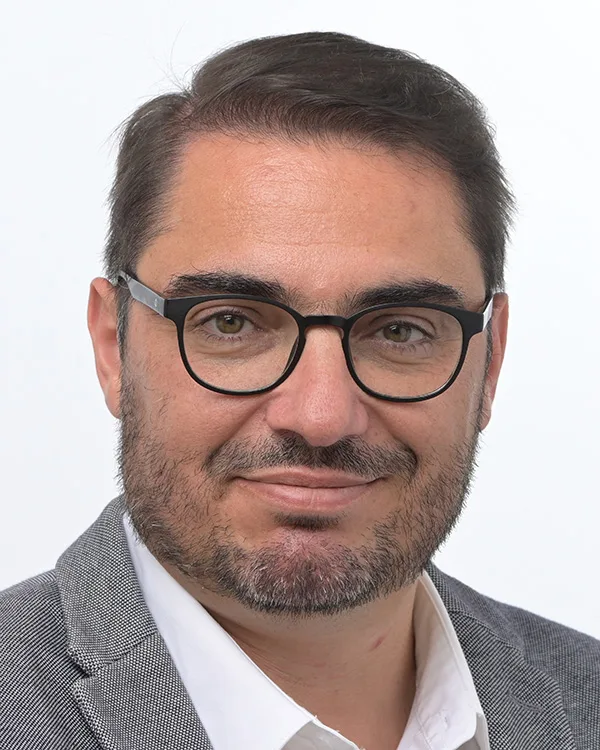
Lukas Sieper | Germany DEU | Non-attached Members (NI) | 390 |
| 2 |
|
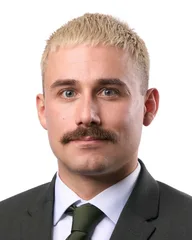
Juan Fernando López Aguilar | Spain ESP | Progressive Alliance of Socialists and Democrats (S&D) | 354 |
| 3 |
|
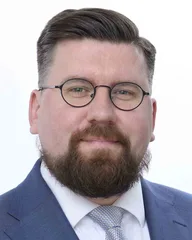
Sebastian Tynkkynen | Finland FIN | European Conservatives and Reformists (ECR) | 331 |
| 4 |
|
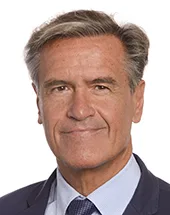
João Oliveira | Portugal PRT | The Left in the European Parliament (GUE/NGL) | 232 |
| 5 |
|
Vytenis Povilas Andriukaitis | Lithuania LTU | Progressive Alliance of Socialists and Democrats (S&D) | 227 |
All Contributions (365)
Need to ensure democratic pluralism, strengthen integrity, transparency and anti-corruption policies in the EU (debate)
Madam President, the root of corruption lies in the nature of the policy that is being pursued and the interests that it serves. A policy that is at the service of workers and peoples leaves no room for corruption. On the contrary, it is politics that serves economic and multinational interests that is the root of corruption, promiscuity, influence peddling, the links between political and economic power that undermine the foundations of democracy and the credibility of its institutions. The answer to be given to corruption cannot be the launching of widespread suspicion, as if all elected officials and politicians had the same options and behaviors. This is a wrong speech, which is the speech that serves the far right. No, not all politicians are the same. There are some who put themselves at the service of economic power and multinationals, including the far right. As much as they try to disguise it, the far right is the shock troop of corrupt political power in the service of economic groups and multinationals. And we will continue to denounce them and fight them. The answer to corruption must be this: That of denouncing the struggle against those who distort the people's vote to put themselves at the service of economic power.
Need to ensure democratic pluralism, strengthen integrity, transparency and anti-corruption policies in the EU (debate)
Madam President, Mrs Ridel, every time there is a problem of corruption, there is a temptation to put the whole Parliament and all Members under suspicion. Moreover, a situation that is taken advantage of by the extreme right to make its circus. And the question I want to ask you is this: does the honourable Member not consider that, in the face of any circumstance of suspicion of corruption, it is the economic power, the multinationals and those who serve these multinationals from political power that should be in the dock? Instead of throwing mud and suspicion at everyone, should we not focus on those who are truly the promoters and beneficiaries of corruption, who are the big economic interests?
Savings and Investments Union (debate)
Madam President, Commissioner Albuquerque, banking concentration in megabanks does not serve the interests of depositors, just as privatisation or the destruction of public social security does not serve the interests of workers. Public Social Security is a guarantee for workers as to their social protection, including their current and future pensions. We must defend it, strengthen it, including financially. Favouring the business of private pension funds, weakening public Social Security, leaves workers and pensioners unprotected. Allowing Social Security money to be thrown into the roulette of pension fund speculation is the same as uncovering a drain through which future pension money will flow. Look at what has happened in successive bankruptcies of private pension funds around the world. The future is built with the strengthening of public Social Security and not with its destruction or privatization.
Savings and Investments Union (debate)
Mr President, Mrs Lídia Pereira, the Commission's plans in this area are dangerous plans and you, moreover, have not referred to one of the most dangerous aspects of these plans and that is precisely what I want to ask you several questions about, which have to do with mobilising resources to finance the economy from public social security systems, favouring the business of private pension systems at the expense of public social security systems, not only with the use of these funds, but, of course, with the creation of a business field in this area. And the question I ask you is this, Honourable Member: in view of the scandals of bankruptcies of private pension funds all over the world and the damage to workers, do you really think that this is a safe way to guarantee workers' rights?
Guidelines for the 2026 budget - Section III (debate)
Mr President, Commissioner, a budget is always a test that makes it possible to separate real political intentions from empty political proclamations. Discussion of the guidelines for the 2026 budget of the European Union is one such test. The amendments we have tabled give a clear answer: it is possible to have a budget that gives centrality to the solutions to the problems of the peoples. That is why we have put forward proposals that respond to the rising cost of living and support convergence in economic and social progress. Proposals that promote the full exploitation of the productive capacities of each country, investment in the productive sectors and the creation of jobs with rights. Proposals providing adequate funding for combating poverty, including child poverty, public investment, strengthening the responsiveness of public services, including in health, education and social security, access to decent and affordable housing for all. Proposals for the defence of peace, respect for the United Nations Charter and the principles of international law and the strengthening of official development assistance to other countries and peoples. The proposals we have put forward are essential in order to reverse orientations that go in the wrong direction, in the direction of militarism and the arms race, in the direction of favouring large companies and multinationals – under the pretext of competitiveness – in the sense of contempt for the problems that affect peoples, their living conditions and their future. The challenge for this Parliament is to use the European Union budget for what it can be useful to the peoples and their future and not to harm them.
Action Plan for Affordable Energy (debate)
Mr Gonçalves, this action plan for affordable energy prices announces the intention to decouple the price of energy from the price of gas, as you mentioned in your speech, but it makes this announcement very timidly and does not introduce any substantive change to the price formation mechanism. And so what this means is that energy produced from renewable sources – and cheaper – continues to be paid at the higher, volatile gas prices. And my question to you, therefore, is whether it is possible, under these conditions, even to expect energy prices to fall for households and businesses or whether, on the contrary, they will remain high, fuelling the profits of economic groups in the energy sector.
A Vision for Agriculture and Food (debate)
Mr President, Commissioner, what the European Commission is proposing is to accentuate a wrong path of concentration and intensification of production. The path should be another. It should be support for small and medium-sized production, family farming, promoting a quality – and sustainable – production model that ensures social and territorial cohesion. The path should be the defense of food sovereignty and security within each country, applying a principle of national preference, creating and using a system of mandatory quotas for the marketing of national production, to combat external dependencies and productive deficits. It should be the shortening of production, distribution and consumption chains, and an agricultural policy that intervenes in agricultural markets, guaranteeing the disposal of production and fair prices to producers, facing the interests of the large commercial distribution that crush these incomes. The path should be one of a common agricultural policy that links support to production, putting an end to the shameful principle of payments without an obligation to produce. That path is rejected by the European Union, but we will continue to fight for it, which is what serves farmers and development.
A Vision for Agriculture and Food (debate)
Mr Rodrigues began his speech by talking about the income that must be guaranteed to farmers, and the two questions I wanted to ask him are these: The first is whether or not it agrees with an agricultural policy that intervenes in agricultural markets, ensuring not only the disposal of production, but the guarantee of fair prices for those who produce, ending the dictatorship that is imposed by the distribution sector, crushing the prices and incomes of farmers. And the second question is whether it finally recognizes the mistake that the PS made in contributing to the end of milk quotas, with all the negative impacts that this had on the dairy sector, particularly in Portugal.
100 days of the new Commission – Delivering on defence, competitiveness, simplification and migration as our priorities (topical debate)
Mr President, the first 100 days of the European Commission's term of office are marked by three 'plus': more militarism and war, more neoliberalism, more federalism. The European Commission has found neither the time nor the will to denounce the genocide of the Palestinian people, to distance itself from Netanyahu's genocidal regime in Israel. It has found neither time nor resources to invest in peace and solutions that ensure collective security across Europe. It found neither time nor resources to allocate to tackling the housing problem, to improve access to health and education, supporting Member States’ national policies. It found neither time nor resources for any of this, but it found EUR 800 billion to run the arms race and to point to the prolongation of the war in Ukraine. The European Commission, in these first 100 days, has not found solutions for small and medium-sized enterprises, solutions to support the exploitation of the productive resources of each country, but has found a compass for competitiveness, to open a highway to large multinationals. Just as it has not found the time to respect the Member States in their own competences, either in relation to the Mercosur agreement or in relation to the 28th legal regime, and wants to move towards federalism. This is not the right path for the peoples within the European Union.
Action Plan for the Automotive Industry (debate)
Madam President, 'Tanks instead of cars': this is the slogan It thunders the drums of war in Germany and the European Union. Turning automobile factories into armaments factories is what the plan for the conversion of factories of Germany's largest armaments company points out. For multinationals, there are multi-million dollar support and plans, such as Rearmar Europe; for workers, there are redundancies, training and retraining, subsidies. To the exploiting classes, privileges are served on silver trays; The workers, the working class, are served bullets and palliatives. The priorities and policy options have to be different, and also the workers in the automotive sector in Portugal need another answer. Securing jobs and defending and deepening workers' rights, strengthening and developing industrial production capacity, orienting economic policy and industrial production towards meeting social needs and national development rather than the profits of multinationals, combining industrial production, mobility and transport policy and environmental protection, promoting the improvement of public transport. These are some of the references to an alternative policy that we continue to fight for.
European Semester (joint debate)
Mr President, this discussion on the European Semester shows that the needs of the people are second to the choice of a war economy and the diversion of funds into profits and capital accumulation. Especially at a time of economic stagnation, the priorities in the discussion of economic, social and fiscal policies should be to strengthen public services and the social functions of the state, to increase wages and pensions, to invest in housing, to regain public control of strategic sectors of the economy. Public investment could serve economic and social development, but unfortunately that is not the option here. The European Semester and the country-specific recommendations remain focused on the liberalisation and privatisation of economic sectors, the settlement of labour rights, wage restraint and reduction, lower spending on social protection, social support, health and education. For militarism, the increase in military spending and the arms race, the red carpet is being extended with the announcement of the Rearmar Europe programme, unfortunately leaving behind these important social priorities.
European Semester (joint debate)
Mrs Toussaint, I would like to ask you, in this discussion we are having on the European Semester, if you do not think that there is a contrast between the secondaryisation of social issues, such as poverty, such as the need to combat poverty and social exclusion, the need to improve the living conditions of workers, and, on the other hand, the favouring of policies such as military spending or measures that favour large companies, such as the liberalisation of strategic sectors or support, even from a fiscal point of view. Does it not think that this secondaryisation and contrast undermine a response which was necessary to improve the living conditions of the peoples within the European Union?
White paper on the future of European defence (debate)
Mr Sousa Silva, do you really think that it is with the arms race that peace and collective security are guaranteed? The European Union already spends three and a half times more on military spending today than Russia and 1.3 times more than China. What is the signal given to the rest of the world with this arms race? How can diverting money from cohesion funds to military spending meet people's needs and expectations? Does the honourable Member not think that not only is what was a priority for peoples' lives at risk, but that the threat and risk of confrontation and war becoming more global is also heightened?
Presentation of the proposal on a new common approach on returns (debate)
Mrs Ana Catarina Mendes, it goes against any consideration of fundamental rights. This is a proposal that deepens the Pact on Migration and Asylum in the worst way, violating and disrespecting the fundamental rights of migrants. It is obvious that it assumes and recognises detention measures, particularly in relation to minors, which have hitherto been denied, but which appear in the text of this proposal for a regulation well-understood. But unfortunately there is one thing that I cannot agree with you on: Unfortunately, in Portugal, we already had an approach to this. Because, when the current Portuguese Government decided to introduce the legislative changes it introduced in the migration policy, it was precisely to prevent the recognition of the situation of migrants who are undocumented, and this proposal for a regulation, unfortunately, also covers these bad practices of the current Government in Portugal, which, if all goes well, will come to an end today.
Presentation of the proposal on a new common approach on returns (debate)
Madam President, Commissioner Brunner, go out to migrants, ask them whether they are fleeing war, hunger, disease or just looking for a better life, and if you have the courage, look them in the eye and tell them that the only thing the European Union has to offer them is a policy of living underground, a policy of mass detention, expulsion and deportation, a policy of violation of fundamental rights, including the right to asylum. This proposal for a regulation is the racist far-right project that gives far-right governments legal cover they have not had so far. It is a policy that makes the expulsion of migrants the rule, that makes systematic the mass detention of undocumented people, that admits the forced deportation of migrants to third countries where they have never been and with which they have never had contact. A policy that allows for the detention and expulsion of minors, including unaccompanied minors, only saving them from being sent to those third countries that are unknown to them. This is a policy that will lead migrant people to continue to be exploited, hidden from those who persecute them and those who want to stop them. There are alternatives that the Commission did not want to consider, and so it will count on our opposition.
European Council meetings and European security (joint debate)
Madam President, Mr Cotrim de Figueiredo, the honourable Member thinks it is a good idea to ease the budget squeeze for military spending, the Stability Pact squeeze for military spending, but he does not think it is a good idea if it is for spending on housing, health, pensions. The honourable Member believes that public resources cannot be used to invest in housing, to solve the problems of access to housing, because they are public resources, but to divert EUR 800 billion to military spending is already, from the liberals' point of view, right. And you think that it is with the global arms race, increasing the risks of confrontation, war and destruction, that we achieve peace and collective security. Explain this liberal illusion to us there, because we do not find in it any reference that serves any people, including the Portuguese people.
Cutting red tape and simplifying business in the EU: the first Omnibus proposals (debate)
Mr President, Mrs Lídia Pereira, if bureaucracy is the problem, why not fight bureaucracy instead of allowing the rules on environmental requirements and pollution control and prevention to be overridden? If the problem is the red tape affecting small and medium-sized enterprises, why not make life easier for small and medium-sized enterprises and, on the other hand, choose to allocate it to enterprises that are not small and medium-sized enterprises, namely the so-called small and medium-sized enterprises? small mid‐caps, the same treatment as SMEs? These are wrong choices, which hide a fundamental problem that the honourable Member should explain: how this Omnibus package truly benefits large multinationals and large companies, rather than contributing to the objectives it serves as a pretext.
EU-Mercosur Trade Agreement (debate)
Mr President, the Mercosur agreement is good and bad. It is a good deal for agribusiness multinationals, but it is a bad deal for small and medium-sized farmers and consumers. It is a good agreement for the major industrial groups of the European Union powers that are now opening up markets in Latin America, but it is bad for the other countries, which will still not be able to develop their industrial production. The Mercosur agreement is good for the large groups in the services sector that have now opened up the public procurement market in Latin America. But it is bad, in general, for micro, small and medium-sized enterprises, for small and medium-sized farmers, for all those who, producing according to traditional rules and practices, will be faced with unfavourable competition with the flooding of lower-cost product markets, because they are produced under conditions different from those imposed on them. If this agreement is good and bad, it is obviously good for a minority and bad for an immense majority. And that is why the Commission does not want states to do their national scrutiny and is seeking to split the agreement in two to prevent that scrutiny. This is an option that we do not agree with and will not accept.
EU-Mercosur Trade Agreement (debate)
Mr Assis, if this agreement is so good, why is the Commission trying to prevent Member States from having their national scrutiny? Why is the Commission wanting to split the agreement in two in order to prevent national scrutiny by Member States that might prevent the entry into force of this agreement? Do you not think that this is confirmation of the damage that can result from this agreement in environmental terms, in economic terms, in social terms? The concerns that have been raised by farmers about the destruction of their economic activity by unfair competition, with production at lower costs but with risks for consumers, are objective concerns, Honourable Member. Don't ignore them.
Silent crisis: the mental health of Europe’s youth (debate)
Mr President, it is essential to break the stigma barrier that mental illness represents for young people, but not only for young people. It is necessary to raise awareness in identifying signs and symptoms of young people themselves so that they can ask for help, but also to raise awareness among parents, schools, public universities, where it is necessary to ensure the ratio of one psychologist to every 500 students, so that appropriate follow-up can be given to each case. The priority should be prevention, which can mitigate the development of various diseases, with timely identification, appropriate follow-up and reintegration programmes when needed. It is necessary to strengthen the response capacity of the National Health Service in mental health, so that it is not dependent on the economic capacity of each one. The appropriate public response calls for the hiring of professionals and the strengthening of the response of mental health services, avoiding institutionalization in favour of monitoring in the community. Today, there is no option in the policies of the European Union in this regard. That's why we're fighting for it.
US withdrawal from the Paris Climate Agreement, the World Health Organisation and the suspension of US development and humanitarian aid (debate)
Mrs Marta Temido, the question I want to ask you is very direct, whether or not you understand that distancing from these decisions of Donald Trump requires, in essence, distancing from these policies, including in cases where the European Union itself takes them on. With regard to environmental issues, for example, I wonder whether you do not agree that distancing yourself from Donald Trump's decisions also entails reconsidering the production paradigm and reconsidering what, in environmental terms, have been the parameters considered, but which must also be accompanied by social parameters. And with regard to health issues, do you not understand that the commitment to multilateralism also requires that in the European Union itself there be consideration of other solidarity mechanisms in relation to an issue as important as this and which, unfortunately, has been so mistreated with regard to the COVID situation?
Competitiveness Compass (debate)
Mrs Ana Catarina Mendes, you asked the Commission about the means that the Commission intends to allocate to the achievement of these objectives. The question I ask you is: is it really in line with the objectives of this competitiveness compass? Is it really in line with the objectives, for example, of introducing into the roulette of speculation pensions and workers' contributions to their pensions, with the logic that is pointed out of privatization of public social security systems? Do you agree with the priority given to militarism and the war economy behind this competitiveness compass proposal? It is not just a question of resources, Madam, it is a question of wrong choices.
Competitiveness Compass (debate)
Madam President, Commissioner Séjourné, this compass of competitiveness has the North pointed to the interests of economic groups and does not serve to steer the economy in favour of the peoples. It does not point to a single measure to combat the increase in the cost of living, but extends a sheet of facilities and favouring measures to large transnational companies. It simplifies requirements and reduces regulation with concessions on taxation, insolvency, environmental protection, weakening of labour and social protection. It facilitates mergers and funnels more public money into the profits of economic groups with State aid rules, the Omnibus Package or the 28th legal regime. It feeds militarism, selling it as the engine of salvation of the economy, conceived as a war economy, so that wealth is even more appropriated by capital, rather than being distributed more fairly among the workers. There are no references to public services or social functions of the state. The anti-poverty strategy is not planned for 2025. But there is another instrument to force states to align policies according to the constraints of the European Union, an instrument called the instrument of coordination and competitiveness. This compass has none of the cardinal points aligned with the needs of the peoples.
Commission Work Programme 2025 (debate)
Mr Cunha, you have spoken about industry and there are, in fact, many measures in this work programme to strengthen the industrial capacity of the major powers of the European Union, especially to project themselves internationally. But there is no measure to recover industrial production capacity in countries such as Portugal, which have seen their industry sacrificed over decades with the imposition of European Union policies. The question I ask you is precisely this: is the Honourable Member comfortable with a work programme that does not point to any prospect that, for example, in Portugal, we can regain our industrial capacity, particularly in strategic sectors and in areas absolutely essential for meeting our country's needs and ensuring our development?
Commission Work Programme 2025 (debate)
Madam President, Mrs Lídia Pereira, you spoke in your speech on competitiveness, and when we look at the Commission's work programme, we find competitiveness dealt with in that perspective of competition between companies. But it's not just any competition. This work programme eases the responsibilities and demands of large transnational companies, eases regulation and facilitates the action of large transnational companies. The question I want to ask you is: what is in store for small and medium-sized enterprises and what are the consequences for a country like Portugal, whose economy is essentially based on small and medium-sized enterprises that will naturally be crushed by the freer action of transnational corporations?