
| Rank | Name | Country | Group | Speeches | |
|---|---|---|---|---|---|
| 1 |
|
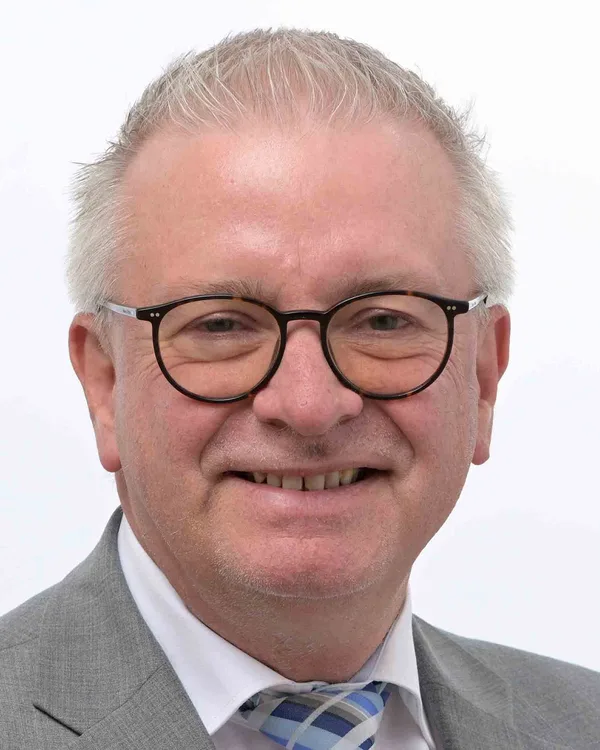
Lukas Sieper | Germany DEU | Non-attached Members (NI) | 390 |
| 2 |
|
Juan Fernando López Aguilar | Spain ESP | Progressive Alliance of Socialists and Democrats (S&D) | 354 |
| 3 |
|
Sebastian Tynkkynen | Finland FIN | European Conservatives and Reformists (ECR) | 331 |
| 4 |
|
João Oliveira | Portugal PRT | The Left in the European Parliament (GUE/NGL) | 232 |
| 5 |
|
Vytenis Povilas Andriukaitis | Lithuania LTU | Progressive Alliance of Socialists and Democrats (S&D) | 227 |
All Contributions (162)
EU enlargement strategy (debate)
Mr President, Commissioner, colleagues, just to the previous speaker, if the Ukrainians think that the president does not fulfil his purposes, in Ukraine, you can change your president, contrary to Russia. That's the reality. It is in our strategic interest, if not to say geopolitical interest, to enlarge the area of peace, stability, prosperity, rule of law and democracy in Europe. So, credible will to enlarge is required from existing Member States. Sometimes 20 years of negotiations do not indicate such credibility. On the other hand, will and concrete efforts by candidate countries to work on this goal is also required. Countries, as the Commissioner rightly said, who would undermine us from within have no space in the European Union. With regard to the fulfilment of the political criteria, there cannot be flexibility – they must be fulfilled. But for the economic criteria, such as access to the single market, we have already practised transitional periods, which would enable us to take a country in without having the full effects, either on the existing Member States or on the new Member State. So I think there is flexibility possible for the enlargement process.
Four years of Russia's war of aggression against Ukraine and European contributions to a just peace and sustained security for Ukraine (debate)
Madam President, colleagues, this is a day of collective mourning, outrage and resolve. We commemorate all Ukrainian victims of this senseless war: the soldiers defending their country, the aid and relief workers, and railway staff who kept the country running. We mourn tens of thousands of civilians who were killed, abducted, raped by the aggressor's soldateska and the millions of refugees inside and outside Ukraine who fled Russian occupation. We think of the Ukrainian prisoners of war – some families are sitting in the gallery. Welcome. All this is the sole political responsibility of the ruthless dictator in the Kremlin, who started the second fascist attack following the Nazi occupation from 1941 to 1944. Our outrage is not only about Putin, but also his admirers, sycophants and war profiteers inside the EU, such as Orbán and Fico. Your disgraceful attitude will go down in European history books, labelling you as Quislings even without occupation. The Ukrainians are the first to want to end this war immediately. Yet Putin doesn't feel under military pressure – the only argument that would bring him to serious negotiations. Trump's attitude is regrettable. Exerting pressure on the victim rather than the aggressor emboldens Putin. We Europeans need to strengthen Ukraine's civil resilience and defence capabilities. We need to deliver more air defence systems and deep strike capabilities to paralyse Russia's weapons production and strategic transport infrastructure. We need to prevent these oil tankers, with flags mostly from small island states, from passing unhindered through the Danish straits, as the Copenhagen Convention of 1857 only provides free passage for ships of the signatory states. Our security guarantees for Ukraine must be crystal clear, entering into force immediately after the end of the state of war, fully encompassing the substance of Article 42(7) of the EU Treaty. That must go hand in hand with a credible process of integrating the country into the European Union. Ukrainians, you are not alone. The traitors are with Moscow. We are with you. Slava Ukraini!
Regulation implementing enhanced cooperation on the establishment of the Ukraine Support Loan for 2026 and 2027 (vote)
Madam President, ladies and gentlemen. Russia is the aggressor, Russia must pay for its crimes. Russia has a lot of money, even in Europe. We would have liked to have secured a reparation loan with the frozen Russian state funds. (Applause) Since this was not possible, 90 billion were raised on the capital market. Above all, Ukraine needs two things: The means to be able to defend itself – 60 billion is earmarked for this – and the means to keep the state running, while continuing the reforms that will advance the country on its way to the European Union. I welcome the Commission's statement; I think it will also be presented, we already have it in writing. This allows us to vote in favour of the proposal for a regulation without amendments. As a rapporteur for Ukraine, I also welcome this very much. Slava Ukrajini!
Urgent need to address the humanitarian catastrophe in Sudan and to achieve a sustainable peace (debate)
Mr President, Commissioner, colleagues, we discuss this forgotten war: Sudan's unbearable humanitarian catastrophe – hunger, displacement, despair. I welcome, I acknowledge, that we, as the European Union, are doing what we are always best at: that is delivering humanitarian aid. It is the least that we can do and what the people expect from us. And it is good to hear the figures and all our efforts. And I also welcome that we are, as the European Union, co-hosting this Sudan conference in April. It is a due effort that needs to be undertaken. But the Sudanese people are trapped in a conflict that would collapse without foreign weapons, financing and political sponsorship. This is not a war fought only by Sudan's own factions. It is a proxy struggle in which regional and global actors compete for influence, resources and strategic corridors, and they do so with Sudanese lives. Behind every air strike and every massacre stand supply chains of arms, cash and political cover that cross borders and continents. The Rapid Support Forces are armed and funded through networks linked to the United Arab Emirates, while remnants of the Wagner network continue to exploit Sudan's gold and navigate ties with both sides. The Sudanese Armed Forces rely on drones and material from Iran and receive military and logistical support from Egypt, Türkiye and Saudi Arabia. So let us be clear: this war endures because outsiders feed it. If we truly care about Sudan's people, our call must be for accountability, not only for the generals, but also for those states that sustain their fight. So let's use this conference that is planned, and get all the relevant people on board and come to a solution.
European response to the attacks on the Ukrainian energy system causing a humanitarian crisis (debate)
Mr President, ladies and gentlemen. What the Russian aggressor cannot achieve militarily on the ground, he tries to force by destroying vital infrastructure: Ukrainians are bombed in the coldest winter since the beginning of the full-scale war of aggression. The whole inhuman character of the Putin ‑ regime, even in violation of international martial law, is revealed here. Cogeneration plants, waterworks, substations are just some of the goals. We see pictures of schools, hospitals and a myriad of residential blocks and private homes being destroyed. I admire the Ukrainian rescue workers who, despite the danger of a perfidious second strike on rescue workers, are doing their life-saving work, doing repair work day after day, night after night in the destroyed power plants, on the pipeline network, in other destroyed infrastructure and saving people from the rubble. Thanks go to the EU ‑ Commission, the Member States and the countless private initiatives from all over Europe, which support Ukrainian citizens in great solidarity, from generators to winter clothing. How do you get the war criminal in the Kremlin not only to stop bombing, but to come seriously to the negotiating table? Only if he feels under greater military pressure and no longer believes he will win this war. I call on all Member States that have air defence capabilities, such as Patriot ‑ systems and similar, to deliver them to Ukraine now. And yes, countries like Germany, which have Taurus and other far-reaching missiles, should now finally deliver them to paralyze Russian weapons factories and stationary launch pads, military airports and render important transport infrastructure, bridges and railway hubs unusable for military transport. This increases the likelihood of ending the war. Slava Ukrajini!
Order of business
Madam President, colleagues, as I'm the Ukraine rapporteur, you can imagine that under normal circumstances, I am always in favour of discussing Russia's war of aggression and the situation in Ukraine. In these special circumstances, I ask you in this case not to vote in favour, and that is for three reasons. One formal reason is, I mean, these attacks have been ongoing for weeks, so it is nothing that has emerged since the Conference of Presidents' sitting last Thursday. It could have been introduced then, in time. That is the formal thing. On the substance itself, I think we have the most important issue in an urgent procedure about the Ukraine Support Loan package this week. That is the clearest signal of support to Ukraine – EUR 90 billion – that we can give. That is, I think, the key issue. And the third point is: in two weeks' time, as the President has already said, we have the special session where we will not only have a resolution, but in extenso can debate these issues as well. And I think that is the reason why I would say, please, let's not overdo it and not have it as a point today.
CFSP and CSDP (Article 36 TEU) (joint debate)
No text available
EU position on the proposed plan and EU engagement towards a just and lasting peace for Ukraine (debate)
No text available
European Defence Industry Programme and a framework of measures to ensure the timely availability and supply of defence products (‘EDIP’) (debate)
Madam President, colleagues, Russia's brutal war of aggression takes place in Ukraine, but the ultimate target is our way of life. Deterring Russia from further aggression beyond Ukraine and protecting our citizens requires us to take a more common, a more European approach to defence. And the current US Administration, unfortunately, gives more and more the impression that they are – mentally at least – departing from the NATO framework, so the need is even more urgent. The EU's first comprehensive defence industry programme, upon which we will vote today, marks an important first step in that direction. It will provide powerful tools for strengthening our defence industry, establish a framework for deeper cooperation of EU Member States for developing and maintaining joint capabilities, and improve our security of supply and strategic autonomy. It will also reinforce our cooperation with Ukraine, further supporting the country, but also allowing us to benefit from the hard lessons Ukraine had to learn in its brave, relentless fight for freedom. However, EDIP's success will ultimately depend on Member States making full use of its potential, as well as on closing the gap between EDIP's high ambition and its very limited budget of EUR 1.5 billion. Achieving defence readiness by 2030 requires joint and bold steps now – not in 2028. Instead of national approaches driven by industrial policy considerations, we need a coordinated, strategic and sufficiently funded European approach, enabling our armed forces to act effectively together and making the most of European taxpayers' money. Now is not the time to think 'Well, on the national level, now there is so much money available, let's look inward.' No – the opposite is necessary. Let us make use of the potential that we have here. Let's join forces. Let's make use of economies of scale and more interoperability to get the things right that we need to do now.
Order of business
Madam President, you have said it all. I think it is obvious that we need to position ourselves given this American proposal, or the original one and the amended one. We have had, as Parliament, a broad majority in a consistent policy of supporting Ukraine. That has to go on and I think that is why we need to have not only the debate, but a resolution in this regard.
The need for a united support to Ukraine and for a just and durable peace concluded on Ukraine's terms, with Europeans and without surrendering to Vladimir Putin's conditions ahead of the foreseen Budapest summit (debate)
Mr President, what has been said thus far by the Council and the Commission, I fully subscribe to. The large majority of this Parliament fully subscribes to it. It is indeed about a just and durable peace for Ukraine, as the title says, and nothing will be decided about Ukraine without Ukraine. But while Putin has always had the same maximalist positions, which are all unacceptable and infamous, even when it comes to the alleged need for 'denazification' that he always talks about, I think the Nazis here in the House support him. It cannot be about the denazification of Ukraine, with a Jewish President at the top. The other unfortunate thing is that on the American side we see an almost daily shift of positioning. That requires, finally, that we really also get our acts together when it comes to the peace project – not only the ongoing programmes, but there is talk about an alleged 12-point plan that is being worked on with Ukraine that is right and good – so we find a way forward to strengthen Ukraine's position for the time when it comes. Well, the American positioning changed so quickly that even our title with a reference to Budapest is outdated. On the substance, it's right that there is no such thing. It was, as such, already an unfriendly act, be it initiated from the Russians or the Americans, to hold it in Budapest. They should have done it in in Türkiye, in Istanbul, where we have had previous rounds of such talks. But the real point is, in my mind, that we need to make it very clear that if the ceasefire is the first point where apparently the United States President is now back to this position, ceasefire first and then negotiations, it must be something that Ukraine can live with. And that means that we will never accept any legal transfer of Ukrainian territory to Russia. De facto, something can temporarily be accepted, but never in a position that we would legally agree to it.
Renewing the EU-Africa Partnership: building common priorities ahead of the Angola Summit (debate)
Mr President, ladies and gentlemen, Commissioner! I hope that we will use this EU-AU Summit – that we will use it to take stock, to take stock, and that we will once again make our extensive offers to the African friends and partners in our neighbourhood. You mentioned, Commissioner, where we are leaders in contacts with Africa compared to other continents. We need to build on that and make it better where it is needed. Of course, we know where the problems are. Sudan has been mentioned. We have countries like Tanzania, where the opposition leader is in prison, or in Côte d'Ivoire he is not allowed to vote. These are things that we cannot like either, but we as Europeans should make a reasonable, comprehensive offer, because we are not alone. We need to offer our way of helping Africa develop, how we want to help Africa play a stronger economic and political role on the world stage. We are not alone – Russia is there, China is there. But I'm confident. If we do it right, the vast majority of Africans will also recognize that we are the better partners in the long run. Let's make the best of it, too.
General budget of the European Union for the financial year 2026 – all sections (debate)
Madam President, ladies and gentlemen, Commissioner, the Presidency of the Council! From the point of view of the Committee on Foreign Affairs, we must point out that the international situation is becoming increasingly complex and is characterised by geopolitical tensions, strategic competition and global challenges. The EU is increasingly called for in the immediate European neighbourhood. However, the cuts in global external aid from the United States and other countries provide an opportunity to play a stronger role globally as the EU. In particular, we need to improve the financing of the policy for the Eastern and Southern Neighbourhood, given the proximity and geostrategic importance of these regions for the security of the EU itself. Our efforts to support the Republic of Moldova should receive a specific budget line. They should increase the transparency of the budget and improve parliamentary scrutiny. Overall, we need 110 million euro more for Heading 6 of the budget – Neighbourhood and the World – than the Council has set for these challenges.
Stepping up funding for Ukraine’s reconstruction and defence: the use of Russian frozen assets (debate)
Madam President, ladies and gentlemen, As we haven't seen in the last few days, Russia's activities extend beyond Ukraine. The idea that Vladimir Putin could direct his aggression towards countries of the European Union if he won his war is not a far-fetched theoretical possibility. This is an existential risk for Europe. Fortunately, there is another unique way to help Ukraine, in addition to the many support measures that have been implemented so far. And that is to use Moscow's assets against Russia itself by using them for a reparation loan to Kyiv. My call to the Member States is clear: Even if you're not sitting here now, you're doing the right thing. Do it fast. Ukraine needs further support, and the reparation loan provides a safe and solid way to finance it. This loan is practically an advance on the Kremlin's obligation under international law to make reparations payments. If Russia refuses to do so, it will not get the money back. And if they were actually willing, then the money would be offset against the reparations to be paid. There is therefore no risk of liability for us.
Recent peace agreement in the Middle East and the role of the EU (debate)
Madam President, ladies and gentlemen. Thank you, Commissioner, for the overview of all that we as the EU can and will do. It all fits into the 20-point plan. Of these 20 points, the release of the hostages has actually taken place so far, which we are pleased about with those affected, their families and all of Israel. As agreed, Palestinian prisoners have also been released, and Israel has withdrawn to the agreed line. Now what? In addition to our own possibilities, we must make it clear to the US that it is not done with large appearances in the Knesset and Sharm el-Sheikh. Are there any ideas on how Hamas can actually be disarmed? Is a Security Council resolution being prepared to deploy the necessary international stabilization forces? Is unhindered access ensured for all humanitarian organisations, the United Nations and the Red Cross? I expect our executive to stay in touch with the U.S. on all these issues and ensure that there are answers to these questions.
The EU’s role in supporting the recent peace efforts for Gaza and a two-state solution (debate)
To our German extremists I don't give extra speaking time.
The EU’s role in supporting the recent peace efforts for Gaza and a two-state solution (debate)
(start of speech off mic) ... floor cannot ask a blue card.
The EU’s role in supporting the recent peace efforts for Gaza and a two-state solution (debate)
Mr President, colleagues, on the second anniversary of Hamas's terrorist attack on Israel, we strongly support the ongoing efforts to put an end to this war, to liberate the remaining hostages, to finally end the grip of Hamas on Gaza for all future time to come and to stop the suffering of the innocent civilian population in the Gaza Strip. We need immediate access for all available humanitarian assistance by all those organisations that have proven that they can deliver on the ground. Disarming Hamas, dismantling its structures will secure that humanitarian aid will reach those in need. But our EU role must go beyond providing humanitarian assistance. We must, on the one hand, be prepared to agree to participate in an international administration that organises security and reconstruction in Gaza. I cannot suggest to Israel to continue its military presence inside Gaza, but suggesting that also requires a robust international presence and mandate, including us. In parallel, we need to push for an inclusive peace process that ultimately leads to a two‑state solution, a secure state of Israel and a viable Palestinian state. On the way, Israel must stop its settlement policy in the West Bank, and I hope that also in this regard Donald Trump and the European Council will find proper arguments to convince the Israeli Government that this is also in the long‑term interests of Israel. I also wish the Palestinian population to get the chance to elect a legitimate leadership, after the last elections dating from 2005 and 2006. Together, they can find a solution, hopefully.
Negotiations ahead of Parliament’s first reading (Rule 72) (action taken)
Madam President, I rise on the basis of Rule 194 of the Rules of Procedure. During yesterday's vote, a widespread human error and irritation in the voting procedure caused a mistake which leads to the international irritation and questions for clarification addressed to our House by other parliaments and diplomatic missions. An amendment originally tabled by The Left Group was adopted, accusing the European Union of pursuing a militaristic policy towards Ukraine. This is now paragraph 2 of the adopted Ukraine text. I speak on behalf of the 70 % majority having adopted the Ukraine report yesterday, coming mainly from the political groups of EPP, S&D, ECR, Renew and the Greens, and I declare the language of paragraph 2 does not represent the position of the European Parliament as expressed in all other paragraphs of the Ukraine report. We have not changed our position on Ukraine. We stand with Ukraine and we will continue to do so. The incoming corrections of the votes from the Members of our political groups will clearly show there is no majority support of paragraph 2 in this House. The Ukraine report should, in future, be considered as having been adopted without paragraph 2.
Strengthening Moldova’s resilience against Russian hybrid threats and malign interference (debate)
Mr President, colleagues, Commissioner, I was the head of the EP election observation delegation last year for the presidential election and the referendum, and what we saw of malign influence from Russia and the proxies was already incredible. The President here today illustrated what had happened last time, and we need to be aware of what will happen next time on the 28th, when we have the next election. That is why it is so important to support all ways, means and measures that the Moldovans can take to get their own voters in a position where they can make an informed vote, and not one where we find that they are informed through the social media in a way that they are irritated and confused about what the European Union is actually all about. That is our task, and I think we will be able to fulfil it.
Ukraine (joint debate)
Madam President, A preliminary remark: I think it is a disgrace if, after two failed German dictatorships, there are still people in the house who want a third dictatorship. Shame on you! We could note the usual coalition of the willing of five political groups and additional individual members that send a clear message: Ukraine's future is in the EU. On the way, we are supportive of the reform process and as Putin does not want peace, not even a ceasefire, we agree to demand from our governments to strengthen Ukraine's ability to defend itself. Everyone must deliver what they can provide. For the German part, to fulfil their task, we should start training Ukrainians on the Taurus missile and deliver it as soon as possible to make a difference, hitting production sites of weapons, launch sites of missiles and important logistical infrastructure that transport the lethal weapons and soldiers to the frontline. Contrary to certain claims, no German soldiers are needed to install it all. And there is one aspect that has not been addressed, and I think that is one of the motivations why the Ukrainians continue to fight and we should support them: It is about the Ukrainians, millions of them, who live in the Russian occupation zone. Their daily fate is incredible: Torture, arrests, no rule of law at all. I think that is the population that is at risk especially, and that is why this motivation is so strong to regain these occupied territories. It's about the people and not about the territory that is in the focus, and I think we have all reason to support Ukraine in these efforts as well. And in so far, I thank you once again, dear greetings from these five groups and additional members, for this solidarity that we have offered over the years. I am confident that we will succeed with our efforts. Thank you very much. Once again, Slava Ukraini!
Ukraine (joint debate)
Madam President, ladies and gentlemen, dear High Representative, Commissioner for Enlargement! We have a related debate today, and I would first of all like to thank the High Representative for her clear statements regarding the recent Russian terrorist attacks. Putin wants nothing less than to force Russia's final victory over Ukraine. The illegitimate, unjustified and unprovoked war of aggression has not only brought death and destruction to a sovereign country, it is also an attack on the fundamental values of peace, freedom and democracy in Europe. This war must be ended, but peace does not come from words alone. Russia has shown in recent months with dubious proposals and dishonest negotiations that it wants to continue its war. Therefore, we emphasize: An unconditional ceasefire is a prerequisite for any serious peace negotiations! As long as this is not the case, we must step up our military, material and financial support to Ukraine so that the country can uphold its right to self-defense. Ukrainians defend not only their territory, but also their European path. Never before has it been so clear to all citizens and political actors why they are under attack – namely because they want to successfully complete this European path to the rule of law and democracy. The alternative is obvious: Either you become part of free Europe or you are forced back into the Soviet gulag. We support Ukraine in its reform process, which is detailed in the annex to the Ukraine Facility on a quarterly basis. We also have a lever here, because the payments are tied to the fulfilment of these quarterly homework, and if they are not fulfilled, the payments are also reduced. On this path of reform, there can also be regressions or missteps. But it should also be emphasized that the maturity of society is now so advanced that such missteps can also be corrected by the pressure of society. I was impressed by the reaction of civil society to the attempt to put the National Anti-Corruption Bureau of Ukraine, NABU, and the Special Prosecutor's Office SAPO for Anti-Corruption under the control of the Prosecutor General. Many took to the streets despite the war, and we also saw it as an attempt to get independent investigators under the control of the government. The original state has been restored – that is good. We also see considerable progress, often with the help and perseverance of the international community. Ukraine must continue to use its reform momentum: strengthening its democratic institutions, aligning with the EU's common foreign and security policy, fighting corruption and maladministration in the judiciary. These steps are not only crucial for EU accession, they are also a foundation for the confidence of one's own people in the state and the legal system. That is why we also call for political diversity, independent judiciary and transparent procedures to be protected and strengthened. We call for an end to untimely and politically motivated judicial proceedings and sanctions against representatives of the opposition, for the preservation of parliamentary pluralism and for the promotion of constructive dialogue between political groups in the Verkhovna Rada; also remove all restrictions on mandate-related and political travel abroad for members of the Verkhovna Rada. The European Council took the historic decision to open accession negotiations in December 2023. The first Intergovernmental Conference took place in June 2024. Now it is time to move forward decisively – without blockages or pretexts. We call on all Member States to act constructively and pave Ukraine's path towards EU membership. It is important to start cluster negotiations in a timely manner so that as much rapid progress as possible can be made with regard to the country's accession to the EU. Let's send a clear signal together! Ukraine is part of the European family and we will do everything we can to ensure that it takes its place in the European Union as soon as possible. With good reforms, Ukraine can achieve this goal faster. Slava Ukrajini!
2023 and 2024 reports on Albania (debate)
Madam President, colleagues, Commissioner, dear Andreas Schieder, thank you for your report where you highlighted a broad range of issues that are of relevance for the accession of Albania to the EU. You also highlighted some positive developments, like SPAK, this body that is combating corruption. Indeed there is a need for that. The Commission has also said that efforts to combat corruption at the highest level must be maintained. Now, I was in Albania on occasion of the latest election. Technically, that went well, but indeed we as observers and the OSCE concluded that there was not a level playing field, that there was an abuse of incumbency, meaning that, for instance, they afforded to pay an extra EUR 100 to pensioners just short of the election and traffic fines were abandoned two days before the election. So these are issues that should not happen and that will have to be addressed, including also with the recommendations that had not yet been implemented. Indeed, I have to say, the stories that you hear apart from the election observation, about the structures that relate to money laundering: that is a fact. There are 30 000 apartments standing there empty because there have been built with laundered money and people looking for flats they cannot afford. There are also drug trafficking schemes. We have to see – and I'm confident we will manage this – that these structures will not profit from entry into the European Union. They must be crushed before this country enters.
Situation in the Middle East (debate)
Madam President, ladies and gentlemen. What has been said about Iran, I underline, I do not need to repeat. I am concentrating on Gaza, and I have the impression that there is already quite a broad consensus in the House on what has to happen there. First, there is an urgent need for a ceasefire. The people of Gaza and the hostages still alive have suffered long enough from the fighting between the Israeli army and the terrorist Hamas, the hostages in addition by the captivity under terrible conditions. Second, the remaining hostages must be released. They must not be further abused as a pawn by Hamas and must also be a priority of the efforts of the Israeli government. Thirdly, all aid organisations waiting at the border with their supplies must have unhindered access. The UN and Red Cross organizations can do that, the Gaza Humanitarian Foundation can't. It has neither the capacity nor the mandate to unload about 600 truck loads per day there. Fourth, it must be clear that there can be no future of any kind for Hamas in Gaza. The organization was also a repressive organization to the people of Gaza before October 7 and continues to target the destruction of Israel. Fifth, it must be clear: The people of Gaza have a future there. I found the lunch or dinner talk between Trump and Netanyahu, which was broadcast publicly yesterday, almost ghostly – how two million people were chatting about the future between salad and filet steak. Against the will of the people there and against the will of Arab neighbours and Europeans, there will be no resettlement, expulsion or deportation. A just peace in a future without fear and violence for both peoples can only exist in a two-state solution negotiated by both sides.
Rise in violence and the deepening humanitarian crisis in South Sudan (debate)
Madam President, colleagues, while the world's attention primarily focuses on the Israeli-Iran war, on the situation in Gaza and Russia's continued aggression against Ukraine, South Sudan, the youngest nation in the world, is at the brink of yet another civil war. Political and ethnic tensions have flared up in recent months, leading to direct military confrontations between the South Sudanese army, under President Salva Kiir, and the White Army, linked to First Vice‑President Riek Machar and his opposition force. The Commission has said 9.3 million South Sudanese are in need of humanitarian assistance, while around 2 million are already internally displaced. And yet, while war is already raging in the countries neighbouring South Sudan, a full-scale war could still be prevented in South Sudan. Measures taken or not taken now by the South Sudanese leaders, by regional international actors and the EU will decide whether South Sudan goes down the path of its neighbours or embarks on a road towards peace and stability. In order to stabilise the country, first, South Sudanese leaders must return to the 2018 peace agreement, which is at serious risk of collapse. Arbitrarily detained opposition figures – above all, Vice‑President Machar – must be released, military operations by the South Sudanese army and opposition forces must be stopped, as a prerequisite for both warring parties to engage in dialogue. Second, foreign actors must stop fuelling the conflict and fully retreat from South Sudanese territory. At the request of President Kiir, Ugandan forces have fought alongside the South Sudanese army, providing heavy military equipment for aerial bombardments, as well as 2 000 soldiers for ground offensives. While thanks to the pressure of the international community, particularly the African countries and the EU, Ugandan forces have become less visible in the country, they must fully retreat. At the same time, the recent rapprochement of President Kiir with the Sudanese paramilitary and its regional sponsor, United Arab Emirates, presents a risk of regionalisation of the Sudanese civil war. Let us not let it happen, but do the utmost diplomatically for a peaceful way forward.