
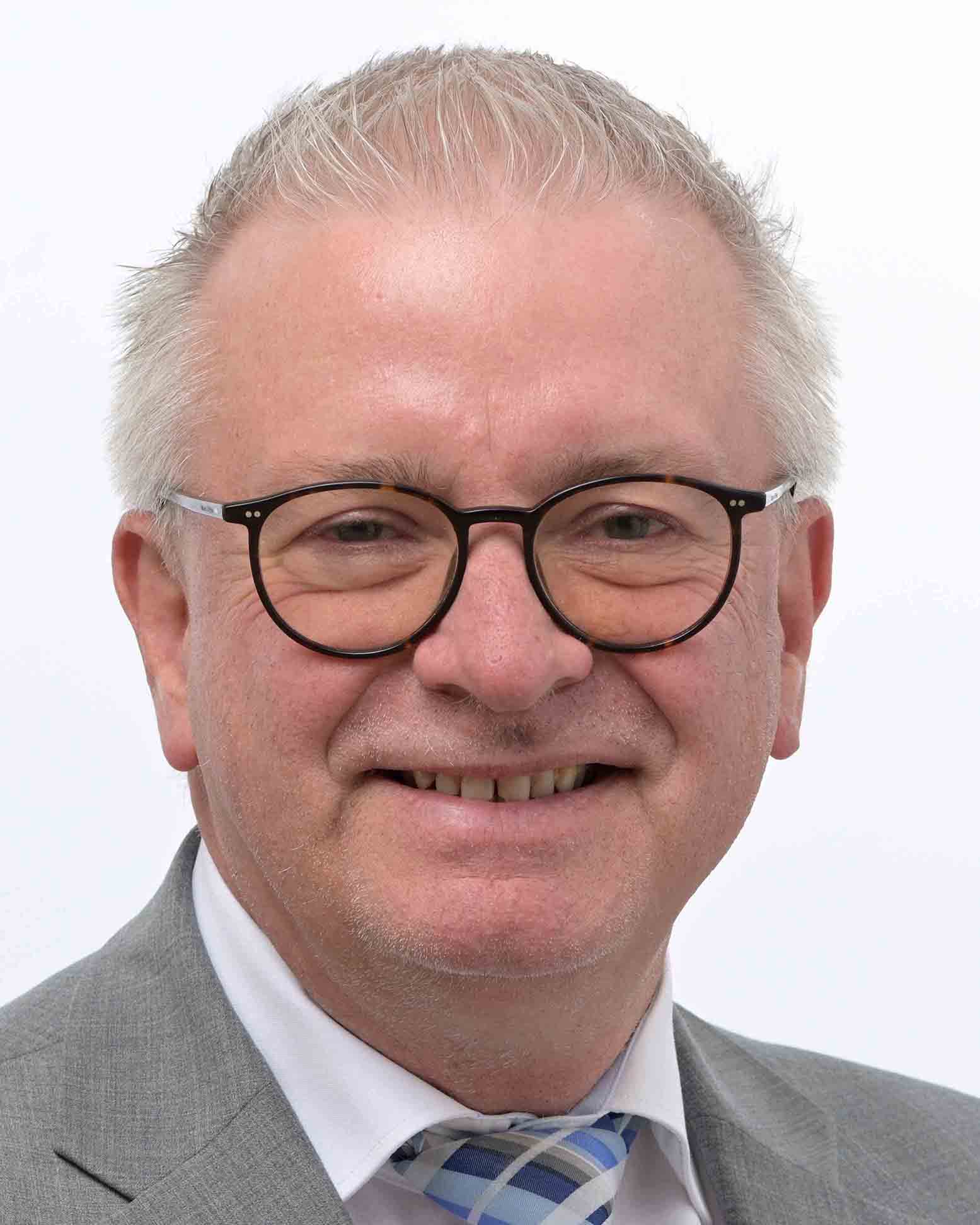






| Rank | Name | Country | Group | Speeches | |
|---|---|---|---|---|---|
| 1 |
|
Lukas Sieper | Germany DEU | Non-attached Members (NI) | 390 |
| 2 |
|
Juan Fernando López Aguilar | Spain ESP | Progressive Alliance of Socialists and Democrats (S&D) | 354 |
| 3 |
|
Sebastian Tynkkynen | Finland FIN | European Conservatives and Reformists (ECR) | 331 |
| 4 |
|
João Oliveira | Portugal PRT | The Left in the European Parliament (GUE/NGL) | 232 |
| 5 |
|
Vytenis Povilas Andriukaitis | Lithuania LTU | Progressive Alliance of Socialists and Democrats (S&D) | 227 |
All Contributions (162)
Recent developments in the Serbia-Kosovo dialogue, including the situation in the northern municipalities in Kosovo (debate)
Mr President, ladies and gentlemen. It is time for us to be honest in our efforts to regulate the relationship between Serbia and Kosovo: What was done with heavy weapons on 24 September by Serbian paramilitaries led by Milan Radoičić cannot have taken place without the knowledge and at least tolerance of the Serbian leadership. Radoičić too often sits on Vučić's lap. Fortunately, the Kosovar police prevented worse. This was not the first provocation: In May, there were intensified violent demonstrations from Serbia with dozens of injured, Italian and Hungarian soldiers - hardly any reactions from the EU. Vučić and Radoičić had to feel encouraged! When will we learn the lessons of our failure in the 1990s? What matters is not what politicians say in English in Brussels, but what they speak to their own people, what campaigns they run in the controlled media and, above all, how they act. Vučić learned from his fathers Šešelj and Milošević: Let any green male do something, just don't act directly as an instigator. There can be no return after September 24th. business as usual where we have a fundamental agreement of 27 February, which Vučić does not sign. He has no obligation to Kosovo, but we are pushing Kosovo exclusively to comply with Article 7 with this association of Serbian cities. If it goes according to Serbian wishes, then we will soon have a Republika Srpska 2.0. It can't be that way. If now the EU and the US make it clear to Belgrade that the troops are to be withdrawn there and otherwise pre-accession aid will be stopped, then there is a chance for a return to a real dialogue.
Situation in Nagorno-Karabakh after Azerbaijan’s attack and the continuing threats against Armenia (debate)
Madam President, colleagues, we are where we are: Azerbaijan’s unilateral violent action has been widely condemned and rightly so. Let us now take a people-centred approach: helping Armenia to address the humanitarian challenges resulting from more than 100 000 refugees, demanding the establishment of an international presence of observers to reassure the remaining population of their safety – the framework could be the UN, the OSCE, the Council of Europe or the Red Cross, all renowned organisations where Azerbaijan is a full member – and engaging President Aliyev by his own promises that those citizens can live safely in their homeland. An international presence would be a prerequisite for that, and this guarantee must not apply only to those few who remained. We must demand that those who fled in panic are encouraged and reassured that it is safe to return home. Ethnic cleansing must not be the lasting and final result of this violent action. Let us also signal to the democratically elected government of Prime Minister Pashinyan that if Russia abandons them, we will not. I think we should start negotiations on a visa-free regime. That could be a sign of hope that they are not alone.
Resumption of the sitting
Mr President, it is with deep regret and outrage that I have to inform the plenary of the decision of the Tunisian authorities yesterday evening to refuse entry for a delegation of Parliament’s Foreign Affairs Committee to the country. We should have left today and would have arrived in Tunis this evening. This conduct is unprecedented since the democratic revolution in 2011. We continue to be ready for, and we insist on, a dialogue also on critical issues and remind that this Parliament has always approved the comprehensive cooperation agenda, including the strengthening of democracy and financial support, as agreed in the association agreement. (Applause) So I ask the President to take appropriate measures. I have also communicated this to the High Representative and to further institutions. I think we should not accept this whole handling by the authorities.
Ukrainian grain exports after Russia’s exit from the Black Sea Grain Initiative (debate)
–Madam President, colleagues, I’m aware of the problems of our farmers and we need to address them. But I still expect more creativity from the Commission and the Member States primarily concerned. As the Ukraine rapporteur, I hope that the Commission does not prolong the measures blocking Ukrainian exports. It ruins Ukraine’s internal market, adding further difficulties to the country. But how can we overcome the problems on our side? The Polish border currently is the biggest bottleneck. There is an election upcoming and nothing moves. Commissioner, having listened to you, am I right in thinking that you would take up proposals and suggest to the Polish Government to open the border for sealed trains and trucks heading for the ports in Poland and the Baltic States? Could we apply the same as you indicated to Adriatic ports? And could one, in concrete, allow the sanitary and phytosanitary checks to be done in these ports prior to export and not at the Polish border? The seals would secure that nothing in between stays in the EU and more could then be made available for the global market. And are you concretely preparing subsidies for the transports that you mentioned and also for the storage costs in these ports? Simply prolonging the blockade should not be our level of ambition both towards Ukraine and our farmers. Slava Ukraini!
EU-Tunisia Agreement - aspects related to external migration policy (debate)
Mr President, ladies and gentlemen, Commissioner! If we look at the situation in Tunisia only from this point of view of migration, then indeed the description of what the situation is at the moment is correct on your part. But we have to see the whole picture, not just now, since today, when the situation is changing dramatically, but in the last two years since the presidential coup. And what did we do there? In my view, we would not have needed this present Memorandum of Understanding, because we should have done all this within the framework of the Association Agreement. Only then are other aspects of democracy and the rule of law relevant. And if we had offered the money we now offer conditioned two years ago, you would return to constitutional order and then we would support you in a situation where the country is going down the drain right now. Now we have a situation where Tunisians also got on the boats. We didn't have that two years ago. Through injunctive sins, because we let it happen, and because we are only interested in migration, we totally ignored internal development. And this has contributed to the fact that the situation within the country has become so dramatic. As I said, Tunisians go in, those who are threatened by presidents because they come from Africa, that has already been mentioned, and therefore injunctive sins in the last two years. And now we're just trying to fix that one aspect. That's too little.
European Defence Industry Reinforcement through common Procurement Act (EDIRPA) (debate)
Madam President, ladies and gentlemen, There is a German proverb, that is: The most pious can't live in peace if the evil neighbor doesn't like it. We have a bad neighbor. He's not only evil, he's criminal. He kills men, women, children every day. And workers in Ukraine would also rather do their job than defend their country. But they don't feel like coming back to the Gulag. That's why they have to pick up weapons. That's why it's right that we support them. And if we have a bad neighbor, then it is also right that we defend ourselves. And because we have limited resources, it makes sense that we use economies of scale. Because if we procure together, if we also plan together before and then also practice together and then are also interoperable together. It is therefore good that we have now introduced this regulation here and that it is now being adopted. It is part of a policy that is being imposed on us. None of us had any intention of permanently increasing defence budgets here. But we do not see that this Russia behaves in any way, that it becomes compatible with Europe in a sense that it accepts its neighbours and their rights. And we can't accept that. That is why I am grateful that we will have a very broad consensus here tomorrow, apart from the margins. Once again, the old French saying is true: Les extrêmes se touchent – The extremes are touching. Unfortunately, they touch each other with the help of a war criminal sitting in the Kremlin. It is very important that we stand here together and support Ukraine. I was in Kiev this weekend. I have seen the many thousands of flags on the Maidan, all representing a dead man. It's awful to look at that. This must be ended by the fact that Ukraine wins this war and Russia is expelled from this country. Slava Ukraini!
European Defence Industry Reinforcement through common Procurement Act (EDIRPA) (debate)
Madam President, ladies and gentlemen, The Commissioner responsible is not here yet. Tomorrow's vote on EDIRPA, the regulation establishing the instrument to strengthen the European defence industry through joint procurement, marks a historic moment in European defence as, for the first time, EU budget funds will support Member States in jointly procuring defence products. But no EDIRPA without Putin, no ASAP without Putin, it is about accelerating the production of ammunition, and probably because he started his war in 2014, without Putin there would not be the activation of PESCO or the defence fund, which we all had to set up from this point of view. It is truly unfortunate that this criminal and also the brutal attack on Ukraine are needed to finally launch this instrument and others. Because we could and should have acted much earlier. We had already made the situation possible, actually 25 years ago, when the British and French agreed in Saint-Malo that we could do anything at all in this policy area. A lot has happened since then. We have written many papers, created structures, instruments and just the mentioned defence budget. But if we look at it rationally and soberly, not much has happened yet, for example, of the more than 70 PESCO projects, which is the constant structured cooperation, nothing has really been launched, none has been changed accordingly and the capability gaps continue to exist. Joint procurement of armaments at European level is not only the logical consequence of funding research and development projects in the Defence Fund, because what is developed together is then also achieved together, but it is the key to a truly common European defence in which the European armed forces can cooperate effectively on the basis of common equipment and also allow economies of scale and a more effective use of European taxpayers' money. We must finally overcome petty statehood and the dominance of national-industrial policy considerations. EDIRPA, as a short-term instrument, is of course clearly set against the background of the war in Ukraine. For this reason, in the negotiations, the EP has been very active and successful in enshrining defence procurement for Ukraine and Moldova in the EDIRPA Regulation and in particular in promoting it. However, the budget of 300 million can only be a start to help Member States replenish their stocks and further supplies to Ukraine. However, in view of 30 years of neglecting our defence, we will need significantly more resources, so I hope that the Commission will swiftly present the announced proposal for a comprehensive European defence investment programme. In addition to the continuation of EDIRPA in this programme, it will be crucial that this programme also has the appropriate means to meet the objectives and requirements. I would also like to take this opportunity to thank all the rapporteurs and shadow rapporteurs for their constructive cooperation, as well as the Commission and the Swedish Presidency and all the staff involved. We managed to make $40 million. Unfortunately, one thing happened: According to the Commission's proposal of 500 million, 240 million of these were then derived for the ASAP programme, i.e. for the promotion of ammunition procurement. This should not happen to us in the future. I hope that we will make very good progress in this cooperation.
Relations with the Palestinian Authority (debate)
Mr President, ladies and gentlemen. First of all, I would like to thank the rapporteur for the way in which this intergroup dialogue on this difficult report has been handled. The common starting point is the goal of a two-state solution, which we must also work towards with this recommendation. The report is difficult because it mainly criticizes, but one has to calibrate this criticism constructively in order to achieve the desired effects. On the one hand, this criticism applies to the main addressee of this recommendation, the Palestinian Authority. Their legitimacy vis-à-vis their own citizens is now difficult to justify because the last elections took place in 2005 and 2006. That is why we demand that the PA create the conditions for democratic elections. As one of the main financiers of the Palestinian Authority, we demand that this authority fight corruption and nepotism, that it does not promote any form of anti-Semitic rhetoric and violent behaviour towards Israelis, despite the circumstances of the occupation, and that it respects the independence of the judiciary and Palestinian civil society, leaving all minority groups, including Christians, the freedom that is commonplace in a democratic society. We also have demands and expectations for Israel arising from the daily practice of the occupation. If Israel is serious about a peace settlement, then the approval of 5,000 additional housing units on June 26 does not fit into the picture. It applies to both sides: He who wants peace must not pour oil into the fire. We must clearly tell Israel, the government, that it is responsible for ensuring that the radical settlers do not behave as if they were in the country. West Bank at home. That's not what they are. And maybe we can get the states that are in the Abraham Accords to engage in the dialogue that the Commission has with these countries in this peace process.
Order of business
Madam President, the EPP Group would like to support the suggestion from Renew and the ECR. However, as already slightly indicated by colleague Auštrevičius, we would prefer to have it in June – also with one argument, which is that it is a bit closer to the debate that will be held anyhow ahead of the summit in Vilnius in July. So we think it’s better to have it then. I was also informed that the Swedish Presidency will not be present at a later stage today, but will certainly be present in Strasbourg. So we would support the suggestion of the Renew Group to have it in June, and the title.
Establishing the Act in support of ammunition production (debate)
Mr President, for 438 days already we have been witnessing Russia’s war of aggression against Ukraine. Putin endangers the foundations of our international order, which, if successful, would set a dangerous precedent for other authoritarian regimes. Therefore, we are called upon to stand united and with resolve on Ukraine’s side. This Commission proposal is an urgent matter and a necessary step in light of the atrocities Ukraine is facing and the threat from Russia we are facing. ASAP provides a set of measures that will enable the EU and its Member States to live up to this challenge, primarily by increasing the production capacities for ammunition in Europe. The urgency to boost our production becomes obvious when looking at the numbers for artillery and ammunition. Currently, Ukraine is using about 3 000 shells, sometimes more, each day. The current annual production capacity in Europe is at 300 000. Given these figures and the pledge of EU Member States to provide a million shells to Ukraine, the urgency for ASAP is evident. I therefore fully support treating that file with the highest priority in our House. However, the urgency also requires that the initiatives launched in support of Ukraine and for replenishing our depleted stocks be provided with the necessary financial means. In that regard, and despite the urgency for implementing ASAP, we should not reduce the financial envelope for joint procurement as foreseen for the EDIRPA instrument or for the European Defence Fund. Both proposals and the EDF are equally important, and we need to make all of them a success ASAP, as soon as possible. In effect, we need a full revision of the Multiannual Financial Framework to properly adjust our budget in order to be able to adequately address this war. However, as long as such a revision is not taking place, EDIRPA and ASAP as new instruments should be the focus of our efforts. Saving some breadcrumbs that will not make any substantial difference for the envisaged long—term European defence investment programme would only deny us the necessary difference we need to achieve now with EDIRPA and ASAP. So let’s therefore address first things first.
Order of business
Madam President, dear colleagues, I would like to bring to the attention of the House a not only unfortunate, but unacceptable incident last Saturday. My dear colleague Andrey Kovatchev, travelling on a diplomatic passport at the Zlatarevo - Novo Selo border crossing between Bulgaria and North Macedonia, was refused entry. There were also four other persons whom I don’t know, but he was refused entry without being given any reasoning, and later the Ministry of Interior argued that any person who disturbs the order and peace of the country and to harm and belittle the citizens and the country shall not be allowed to enter into the territory. I know Andrey Kovatchev as a very decent colleague who supports the accession and the negotiations with North Macedonia, and he is definitely not one who is by any means endangering this country. I think this unacceptable behaviour by a candidate country should be brought to your attention, and perhaps the President could also take appropriate measures.
Children forcibly deported from Ukraine and the ICC arrest warrant for Vladimir Putin (debate)
Mr President! I am very grateful to the International Criminal Court, and in particular to Karim Khan, for carrying out his task of registering Russian war crimes and naming those responsible. Vladimir Putin and Marija Lvova-Belova are also personally and politically responsible for the crimes that we are discussing here today. It is infamous when the aggressor wants to give the impression of saving children through illegal deportation. We see TV reports where Ukrainian children are solemnly naturalized or otherwise Russianized. Some of the 361 children who have been returned to Ukraine so far have reported details. Russification today – as a German, I remember with shame the time of the German occupation – not only in Ukraine – where similar practices were applied, ‘arizable’ children were deported and then turned into Germans or at least tried to do so. It's terrible that history repeats itself. I expect that all states that have ratified the ICC Statute will also implement arrest warrants issued. But before that becomes possible, we must do our part to prevent impunity, and that is to support the competent Ukrainian authorities and the investigators of the International Criminal Court in registering the cases of deportation and other crimes and in securing evidence. I also hope that many of the 141 UN states that have spoken out against the war of aggression will actively contribute to this.
The need for a coherent strategy for EU-China Relations (debate)
Mr President, ladies and gentlemen. With regard to relations with China, the often described relationship triangle remains valid: Partner, competitor and increasingly systemic rival. I think we should regulate economic relations with China within the framework of a functioning WTO if the bilateral agreement is finally not concluded. However, in any case, all parties involved must abide by the respective rules. At the same time, we must ensure that one-sided dependencies on sensitive raw materials and products are reduced. It's not about decoupling. The interdependence is too great for that. And this aspect of reciprocity should lead pragmatists in the Communist Party apparatus to realistically assess the risks of a confrontational policy – towards us, but also towards their neighbours in the east and south, and in particular towards Taiwan. Our message must be clear: There is no unilateral, violent change in the status quo vis-à-vis Taiwan. Xi Jinping must come to the conclusion that the risks and consequences of violent action against Taiwan are too great and incalculable. And as true as it is that we as Europeans need to define our interests together, including with China, and as true as it is that we do not have identical interests with the US on all issues, we cannot lean on issues of war and peace and fundamental values and say: If Taiwan is attacked, it's only a matter for the United States, and we're doing it. business as usual. We need to work together to prevent the worst case. This requires a constant dialogue between all stakeholders and China. Our message is best then a unified message, Monsieur le Président.
Order of business
Madam President, yes, thank you very much, colleagues, after consultation also with the S&D and Renew, I would like to add this debate entitled ‘Repression in Russia, in particular the cases of Vladimir Kara-Murza and Aleksei Navalny’.
Tunisia: Recent attacks against freedom of expression and association and trade unions, in particular the case of journalist Noureddine Boutar
Mr President! Tunisia, ladies and gentlemen, is on a disastrous domestic political course. Responsibility for this lies solely with the President. He has been certified by the Court of Justice of the African Union that everything he has done since 25 July has been done unlawfully and in violation of the Constitution: dismissal of the government, dissolution of parliament, abolition of the 2014 constitution of the independent electoral authority and the High Judicial Council, dismissal of 57 judges, dissolution of all municipal representative bodies. With a turnout of 11% in the so-called elections, the population has certified the president with a corresponding level of legitimacy. Attacks on freedom of expression and assembly and on civil society organisations, including the trade union umbrella organisation UGTT, are unacceptable. The arrest of journalist Noureddine Boutar on 13 February is pars pro toto. He is the director of the largest independent radio station in Tunisia. Other critics were arrested and convicted, trade unionists were charged, and the head of the European Trade Union Confederation was expelled. All this is unacceptable! We demand the immediate release of Noureddine Boutar and all those who have been arbitrarily arrested or convicted. All illegally dismissed judges must be reinstated; Military courts are not allowed to sentence civilians. I expect the EU Council of Foreign Ministers to show more than just concern on 20 March. It must make a difference whether we are dealing with a democratic Tunisia or an undemocratic Tunisia. I expect our ministers to embrace Parliament's demands that we stop cooperating, for example, with repressive structures under the control of the Ministry of the Interior and the Ministry of Justice. I expect that our EU delegation and our embassies will regularly present themselves to the authorities and call for an end to the unconstitutional practices of the authorities. I expect that we will demonstratively seek contact with independent media, political parties and civil society organisations and demand that the government fulfil its international obligations.
Strengthening the EU Defence in the context of the war in Ukraine: speeding up production and deliveries to Ukraine of weapons and ammunitions (debate)
Madam President, Commissioner, Minister, indeed, time is of the essence to effectively counter the aggressor and for the Ukrainians to push him back from Ukrainian territory. And we have lost time. Too much time last year because the reality was that many Member States, including my own, remained too passive for too long, in spite of strong verbal commitments. The Netherlands – to name one positive example – in 2022 purchased twice as much ammunition in Germany than the German army itself. While Denmark, already in June last year, refurbished M113 transport tanks in a German company in Flensburg for Ukraine, the German government did not give the order to start the refurbishing of 100 Leopard 1 tanks that were stocked in the very same factory, FFG, where the Danish tanks were already refurbished. That practice must end. I hope that last week’s Stockholm informal discussion will lead to decisions that are swiftly implemented, especially for the ammunition that is so desperately needed. And I hope that our industry is really pulling all strings, ramping up capacities and not waiting until they are tasked by whatever government. I can assure them your products will be needed and therefore be purchased for a long period because we cannot assume that the evil empire will perish soon. And we need to deliver to Ukraine as long as it takes for Ukraine to win. And we need to replenish our stocks in time as soon as possible in order to be able to defend ourselves. Last year, already with a colleague, Sven Simon, we published an article in the German Handelsblatt suggesting we should think of a European Lend-Lease Act, the one that the United States had already in the Second World War to be able to swiftly supply Britain and other allies with the needed weapons. Perhaps you might embark on such a reflection again, a European Lend-Lease act, which would facilitate enormously the purchasing. We need to do what we can as long as it takes. Slava Ukraini!
Deterioration of democracy in Israel and consequences on the occupied territories (debate)
Mr President, dear colleagues, our support for Israel as a functioning, vibrant democracy in the Middle East is, to a large extent, dependent on this very fact – that it remains a functioning democracy, where the separation of powers between the executive, parliament and the courts prevails. The legislation that is currently passing the Knesset seeks, among other issues, to enable the Knesset to overrule Supreme Court decisions. Such legislation must be a no go in a functioning democracy. But there is hope and protest. Israeli President Yitzhak Herzog last Thursday said that the government should abandon proposed legislation to overhaul the country’s judiciary, in favour of a model with broad national support. I also put my trust in Israel’s vibrant civil society. Hundreds of thousands of citizens are demonstrating every day against this onslaught on a liberal democracy, and they will not let it happen. Israel, with its founding legacy, must remain on moral high ground. The prime minister has to guarantee that hate speech against political opponents and extremist positions expressed by cabinet ministers do not further encourage a circle of violence, such as the radical settlers attacking Palestinians in Huwara. He is also responsible not to implement those parts of the coalition agreement where the signatories claim, ‘Israel has a natural right over all of the land, and a fundamental purpose of the new government will be to promote Israeli sovereignty over the West Bank’. We want to defend Israel’s legitimate right to exist as the Jewish state, but we cannot defend what is illegitimate.
The functioning of the EEAS and a stronger EU in the world (debate)
Mr President, ladies and gentlemen, Commissioner! In absentia, thank you very much to the rapporteur, Urmas Paet. Ich hoffe nicht, dass ihm die Russen in einer dunklen Ecke aufgelauert haben, damit er jetzt nicht hier sein kann. We agree to a large extent. We need to become more relevant in foreign and security policy. This has long been the view of Parliament and, in fact, of most governments. We all know: Only together are we strong. Only together can we impress third parties. Only if you know that we are traveling together, third parties will turn to us in the hope that we will make the difference together. If we act powerfully, collectively and permanently, for example, in the matter of Ukraine, then a war criminal knows that he has underestimated us. The rest of the world is watching us – all those who would like to engage with us as good partners in the long term, but who perceive when the West withdraws. This must not happen to us after Afghanistan and the Sahel in our core area of interest. Then we come to the crucial point: It's good for everyone to be unanimous. But I think it would hardly make any difference for the addressee of a measure or for observing third parties if one of the 27 were missing. So for current reasons, for example, if we have to convey a certain message to the Georgian government, then this government could not buy anything for it if Mr O from U does not agree with it. But if we can't say anything on the ground because of a unanimity requirement, then the wrong people benefit. If such local statements do not even result in a blockade minority, then there is a lot of evidence that the majority is correct. I would also find it rather weird, for example, if the former colonial rulers could prevent unanimity in statements or measures against certain states. Therefore, one of our key recommendations in Article 1(g) is that we limit the unanimity principle to decisions on the creation and deployment of military missions or operations with an executive mandate and that we can adopt sanctions and other measures or simply verbal notes by qualified majority. I think it would make a difference.
Order of business
Madam President, that has been dealt with, as the other issue has already been approved, on the Silicon Valley bank. So, thank you. I’m supportive of the suggestion.
One year of Russia’s invasion and war of aggression against Ukraine (debate)
Mr President, ladies and gentlemen. In nine days, the criminal, full-fledged Russian war of aggression against Ukraine will be celebrated for the first time. We should first commemorate the innocent victims of this breach of civilisation, the children, women and men who were killed, raped, tortured, who had to flee, who lost everything, and also the Ukrainian soldiers who fell for a just cause – the defence of their homeland. So that the abysmal evil in Europe does not prevail again, we Europeans, the united West, the entire democratic world must continue to stand together and now do what is necessary. First things first: More ammunition, stronger air defenses, more artillery that can reach all parts of occupied Ukraine, battle tanks, not to liberate territories, but people suffering from the cruel Russian occupation and daily arbitrariness. And since Russia does not impose any restrictions, fighter jets must also become part of the Ukrainian defense. Those in my home country who, out of naivety, anti-Americanism or secretly out of a historically false German-Russian kinship, believe they have to refuse arms to the Ukrainians, I call out: Recognize the true face of the dictator in the Kremlin! This is the applied fascism of the 21st century. Never again! Slava Ukrajini!
Response to the situation in Tunisia (debate)
Mr President, ladies and gentlemen, ladies and gentlemen! What we have seen and heard here is a refusal of reality on the part of the Council and the Commission. Tunisia was once a bearer of hope after the Arab Spring, and we are back back to square one, As far as the situation is concerned. We are much closer to Ben Ali than to any other democratic politician since 2011, and we have witnessed a coup d'état here from above, from President Saied. He deposed the government, deposed the parliament, and High Judicial Council He was dismissed and 57 judges removed. And we have a situation where we are experiencing delegitimization by the Tunisian people: 11% turnout in these elections. I was wondering: Why do you start the referendum? You have to start with the coup from above. What the Venice Commission said about this president's conduct was a damning verdict. And the Court of Justice of the African Union also made clear political statements last September. The elections have been boycotted by all relevant parties, the trade union umbrella organisation, civil society – and you ignore that here. It must make a difference in our politics whether we have someone here who adheres to the Constitution or whether he breaks it. It must make a difference whether he respects an elected parliament or whether he abolishes it. The Tunisians gave their answer. And I don't think the European Union can do anything here. business as usual Otherwise, we can actually abolish all our values that we always hold in Sunday speeches. I find it outrageous what I haven't heard here today. They are making a policy here that denies the reality of this country. It is likely that tens of thousands of Tunisians will have to get on board again to acknowledge the reality here. This President, what is happening in Tunisia at the moment, must not receive our support. We have to draw consequences here and raise other strings.
Preparation of the EU-Ukraine Summit (RC-B9-0092/2023, B9-0092/2023, B9-0093/2023, B9-0094/2023, B9-0095/2023, B9-0096/2023) (vote)
Mr President, dear colleagues, as the EPP Group we support the amendment to criticise the International Olympic Committee for its intention to allow Russia and Belarus back to the games. We propose placing this call more prominently, as a separate paragraph of the resolution. The reason is that this will also allow us to take the split votes requested by the Renew and EPP Groups on paragraph 26. I ask for your support for the following text in a new paragraph after 25 which reads ‘Condemns the recent decision of the International Olympic Committee to allow Russian and Belarusian athletes to compete in qualifications for the Paris 2024 Olympic Games under a neutral flag, which runs counter to the countries’ multifaceted isolation and will be used by both regimes for their propaganda purposes;’.
Preparation of the EU-Ukraine Summit (debate)
. – Madam President, ladies and gentlemen! What can be said in a minute? Firstly: Ukraine must win this war, otherwise it will go on indefinitely. This is in the interests of Ukraine, Europe and the free world as a whole. Secondly: We must continue our full support as long as it is needed. There is a broad consensus on this. This applies to political support, military, financial, humanitarian support. I also very much agree with what the Commissioner said: Russian crimes must also be systematically recorded so that we can draw the appropriate legal consequences. What we call it remains to be seen. In any case, the crime of aggression must be prosecuted. Reconstruction must be closely combined with the needs of the accession process. This means that there must not be a relapse into old structures, but that it must be reformed at the same time as reconstruction. We must also take care at home that false structures are not built up here during the war or that laws are passed that are not compatible with EU law at the end of the day. Here, too, care must be taken during the war to ensure that no wrong tendencies are taken.
The establishment of a tribunal on the crime of aggression against Ukraine (debate)
Madam President, ladies and gentlemen. We need this special tribunal to prosecute the crime of war of aggression. And I am confident: If there is political will among our governments and the Commission, then our legal experts will also find a suitable framework for this. Along the way, we need to help Ukraine secure the evidence. This must be done to a large extent and it must also be ensured that it is processed and processed in the rule of law. I think maybe you can also borrow from an institution that we had in Germany during the GDR period. This was a so-called central registration point, which was in the city of Salzgitter. It recorded all the crimes of the GDR, i.e. where people were held in detention, tortured or unjustly sentenced. These people could then, when they came to the West, register names, places, facts, and after reunification, the people who were the perpetrators, if possible, were also tried. We should also go in this direction – registering all the names on the Russian side that are involved in this war of aggression – and in this way also helping the rule of law to be upheld in due course.
The EU’s response to the appalling attack against civilians in Dnipro : strengthening sanctions against the Putin regime and military support to Ukraine (debate)
Madam President, dear colleagues, the criminal and, in words and deeds, utterly fascist Putin regime has committed yet another in a series of war crimes against the civilian population of Ukraine. I have been several times in Dnipro and I would like to express my sincere condolences to the families of the victims of this vicious attack. My latest figures – and you are right, Commissioner, the figures are likely to increase – but the latest I just got from Kyiv is that there are 44 killed, including five children, and many injured and many missing still. It will not be forgotten and it will not be forgiven. I call on the Commission and the Council to strengthen the sanctions regime against this criminal regime. There is ample opportunity to increase it and to also double-check whether the existing ones are really followed. I am also very much in favour of extending the lists of personal sanctions, and we should definitely have a look at this Navalny list, these 6 000 persons – I think they are not there by accident and I think they are all profiteers of the regime. And I think we need not prove that every individual is personally involved in the war crimes. But if there are hesitations – especially if we cannot seize the assets of these persons – what we can do is deny them visas. There is no right, there is no legal obligation for any of our countries to issue a visa to a third-country national. And when we have these persons that are not then able to enter our countries to enjoy the property or the yachts or whatever they have got here, that amounts de facto to an expropriation. And I really think we should embark on this approach and thereby contribute to the pressure that is exercised against the profiteers of this regime.