





| Rank | Name | Country | Group | Speeches | |
|---|---|---|---|---|---|
| 1 |
|
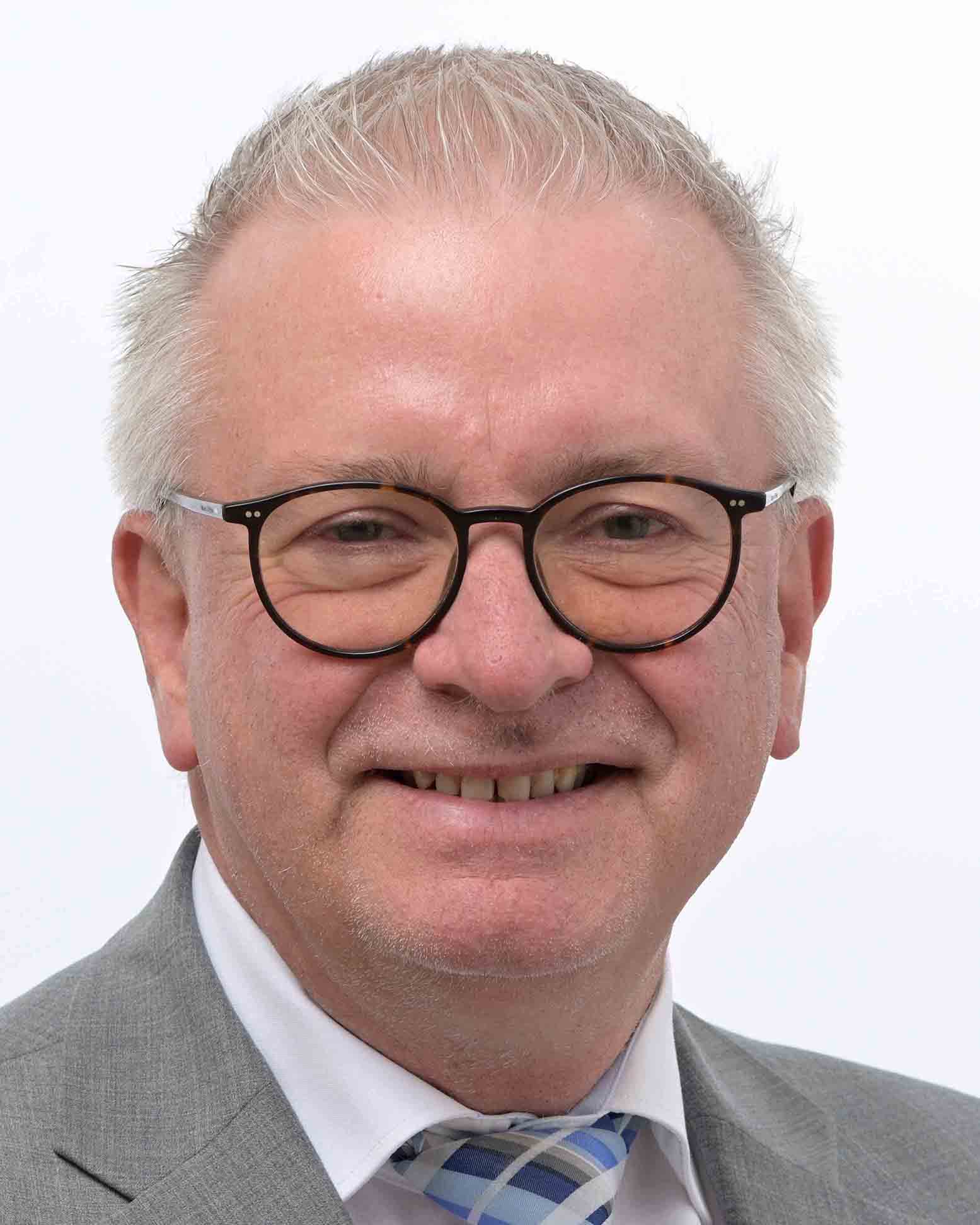
Lukas Sieper | Germany DEU | Non-attached Members (NI) | 390 |
| 2 |
|
Juan Fernando López Aguilar | Spain ESP | Progressive Alliance of Socialists and Democrats (S&D) | 354 |
| 3 |
|
Sebastian Tynkkynen | Finland FIN | European Conservatives and Reformists (ECR) | 331 |
| 4 |
|
João Oliveira | Portugal PRT | The Left in the European Parliament (GUE/NGL) | 232 |
| 5 |
|
Vytenis Povilas Andriukaitis | Lithuania LTU | Progressive Alliance of Socialists and Democrats (S&D) | 227 |
All Contributions (162)
Implementation of the common foreign and security policy - annual report 2022 - Implementation of the common security and defence policy - annual report 2022 (debate)
. – Madam President, High Representative, ladies and gentlemen! We saw last year that there seems to be a need for strong external pressure in foreign policy matters in order to unite and act resolutely together. The war that the criminal Putin regime is waging against Ukraine, but in reality it is also waging against us by other means, has almost forced this common positioning. I would have liked us to have come to a common, more realistic assessment of Putin's intentions earlier. There were more realistic assessments. The greater part, especially in the western part of the EU, did not want to admit it. Let us draw consequences from this. In my view, this is the admission that even the largest Member States are not in a position to develop a specific agenda vis-à-vis a determined dictator, which also impresses him. Already the table at the meetings of Macron, Scholz and others with Putin was visibly not suitable for a dialogue. In a joint communication with the Commission, the High Representative already prioritised Russia before the start of the war: Push back, constrain and engage. Let us act together in such a realistic European approach in the future – let us remain strong together! Let's not go back! Much of Latin America, Africa and Asia will be happy to continue to engage with us, such a strong Europe, in the future. I wish us a victorious New Year.
Upscaling the 2021-2027 Multiannual Financial Framework (debate)
Madam President, ladies and gentlemen, Yes, I am speaking here for the Committee on Foreign Affairs, and this is one of the policy areas where it is quite obvious that it is not enough at the front and back. Commissioner, I'm glad you're here. I would have liked someone from the Council to be there, because they also have to listen, and I hope they will be told that too. We have to be honest. As much as I am glad, as a rapporteur for Ukraine, that in the area of Peace Facility We in Parliament cannot accept it as a principle that, in view of the new challenges, things should be organised here outside the budget. When the financial framework was adopted, we had neither Corona nor the criminal Russian war of aggression. If we now have and have had Corona and the criminal war, then we must respond to it, within the institutional responsibilities. Then, as a Member of Parliament, I say: Everything we need more needs to be reflected in the budget. That is why the debate we are launching here is a necessary one. I hope that the Commission will also find the courage to join in.
Situation of human rights in the context of the FIFA world cup in Qatar (B9-0539/2022, B9-0541/2022, B9-0542/2022, B9-0543/2022, B9-0537/2022, RC-B9-0538/2022, B9-0538/2022) (vote)
Madam President, I’m sorry but a brief indication for my colleagues in the EPP. There’s a wrong signal in three amendments. It concerns 36, 43 and 44: please vote minus. Sorry for this intervention. 36, 43, 44: vote minus, please.
Amending Council Regulation (EU, Euratom) 2020/2093 of 17 December 2020 laying down the multiannual financial framework for the years 2021 to 2027 - Amending Regulation (EU, Euratom) 2018/1046 as regards the establishment of a diversified funding strategy as a general borrowing method - 'Macro-Financial Assistance+' instrument for providing support to Ukraine for 2023 (debate)
Madam President, ladies and gentlemen, Mr Kuhs, you are working on Ukraine as supposedly the most corrupt state in the world. We could be a corner further in the fight against this corruption if we were not here with Russia, the most criminal state in Europe, carrying out its war against Ukraine here. Today we have with a huge majority labelled Russia as what it is: A state sponsor of terrorism and a state that uses means of terrorism. We have illustrated in detail the amount of destruction and suffering that this inhuman, criminal regime has caused and continues to inflict on its peaceful neighbour and its innocent citizens. That is why, as standing rapporteur on Ukraine, I am deeply grateful to all EU institutions and Member States that we continue to stand firm also in our financial support. And I wouldn’t like to forget all those other bodies and civil society that are fiscally supporting Ukraine. EUR 18 billion – that is EUR 1.5 billion per month – is only part of the dire needs to keep the country running, to pay the salaries and so on. And I think – and that has been alluded to also by my colleague Van Overtveldt – given the amount of money and given war—related problems in the amount of transparency and all that, it requires a better role for the Parliament. We need to set up a working group together with the Commission from the Budget Committee and Foreign Affairs to supervise and to accompany the payments of what is going to Ukraine. So that is my suggestion to the Commission: to accept this idea, to involve us closely as a Parliament in administering this huge amount of money. Slava Ukraini!
EU-China relations (debate)
Mr President, ladies and gentlemen, Mr High Representative! In relation to China, it basically remains a triad partner, competitor and systemic rival. It would be nice if China were available as a partner in defending a multilateral, rules-based world order and not only if it suits them. I would have liked China to be a partner on issues such as combating climate change, in the form of China taking its share of responsibility. Unfortunately, I could not find this in Sharm el-Sheikh. The same applies where we, as competitors on the world market, accept the WTO as a common framework for action. The following must apply in the future: Chinese companies are only allowed to do in Europe what our EU companies are allowed to do in China. And, of course, we are systemic rivals where the Chinese dictatorship de facto supports the Russian dictatorship and where we demand that China does not unilaterally and by force change the status quo vis-à-vis Taiwan. Only together can we impress China on all these issues. Tell that, Mr High Representative, to the lone fighters in all our small Member States!
Order of business
Madam President, originally in the EPP we had a discussion and thought it would make more sense to have the High Representative present in a debate, and we therefore suggested that we have the debate in two weeks’ time. But given the urgency and the urgent developments that we have seen – Hannah Neumann referred to the vote in the Majlis and the fact that most of those arrested are even facing the death penalty – I think we should have this debate now. We cannot construct now, from today to tomorrow, a resolution, but as the President has already made an introductory statement, perhaps she could, on behalf of all of us, make another statement focusing both on the fate of those arrested – facing the death penalty – and also calling on the Council to think of sanctions. So we would agree to have this debate and see that we get something official from the House at short notice.
General budget of the European Union for the financial year 2023 - all sections (debate)
Madam President, ladies and gentlemen, The Commissioner rightly said: Ultimately, Russia's war of aggression against Ukraine disrupts the entire financial architecture. If we are to be honest, we actually need a new financial perspective, not just for foreign policy, so that we can do what we really need to do. This includes, of course, direct comprehensive assistance to Ukraine, including the whole region, where all budget lines are extremely tense. And that is why we can only work to ensure that what is needed in terms of priorities - and that is, among other things, what we can do for Ukraine - is done with the limited resources that we have. But we should also provide the means we have in other areas, whether it is in Palestine or in other urgent emergencies. Otherwise, we will lose our credibility in this area.
Order of business
Madam President, colleagues, the EPP Group is prepared to hold this debate this week if it gets a majority. However, we think in order also to preserve the unity of the Parliament on the issue of Ukraine, we should let the discussion go a bit further and we should have the resolution in November II and not to have it at short notice. There is a debate that is ongoing not only in Europe in our Member States, we have it in the Council of Europe, we have this debate in the United States, whether to have it or not to have it. So we should thoroughly reflect about how to position ourselves and not to do it too quickly in this week. So debate, yes, but resolution November II, that is our suggestion.
Russia’s escalation of its war of aggression against Ukraine (debate)
Madam President, ladies and gentlemen, In this systemic conflict between our peace-loving democracies and a belligerent dictatorship, we have seen a renewed escalation in recent weeks on the part of the deeply fascist aggressor: Mobilization, especially in areas with national minorities, and a voting farce to give the impression that here a Ukrainian population is just waiting to be brought home to the Reich. The Potemkin facade of sham legitimacy collapses visibly for all. Now it must be a matter of making Ukraine winter-proof – economically, humanitarianly, socially and, above all, in terms of consolidating arms supplies. Yes, unfortunately it is required. The American Lend-Lease Act I would like to see this happen in Europe, at least in some Member States. This would speed up the supply of weapons because it eliminates the need for individual permits. I hope that Germany and France will finally make their contribution to uniting Europe on this issue by finally making a comparable contribution to arms deliveries, as many Eastern Member States are already making. No solo walks. Coordinated deliveries of armored vehicles and leopard tanks as an example, as the chairman of the Foreign Affairs Committee in the Bundestag calls for, among other things. Chancellor Scholz, do the right thing now. Take Hamburger Helmut Schmidt as an example. He did the right thing and enforced the NATO double decision against his own party. That was right. He also deserved it in history. Don't be afraid of your party. Approve the arms shipments of martens and leopards. History will prove you right.
The situation in the Strait of Taiwan (debate)
Mr President, ladies and gentlemen! Dear High Representative, I can almost entirely agree with what you have just said. I think what we experienced this summer didn't need Nancy Pelosi's visit as a pretext, but what China organized there was practically an exercise in practicing a complete maritime blockade around the island. We cannot accept this threat, and it is therefore right that, in response to it, within the framework that is possible, namely the one-China policy, we should expand our relations with Taiwan as much as possible. I once made an acronym in English during a visit to Taiwan: EBFDR – everything but formal diplomatic recognition – in other words, this abbreviation, which should give us the opportunity to really exercise the full potential of these relations in the field of business and also of political contacts, of culture. And in this context, we as the European Parliament have long called for us to conclude a bilateral investment protection agreement with Taiwan. This would allow both our economy and the Taiwanese to expand these existing contacts. We are interested, for example, in Taiwanese investing in semiconductors. I have heard that they have now founded a company in Italy and started production there. This needs to be expanded. This is better in the context of such an agreement. Please trust me – thank you!
Question Time (VPC/HR) The state of play of the war in Ukraine
Thank you very much for what you said. But Mr Stoltenberg was quite clear. He said it’s worse when Ukraine loses than when we have empty arsenals in our Member States. So how to get our Member States, the big ones especially, to deliver what they have got and not to think that it’s better to preserve it for their own purpose? Because I think one thing is clear, our weapons at home are already directed at Russia. They are the enemy. But if we can make it usable for the Ukrainians and they can reduce the Russian stockpile, then it is also a reduction of the threat towards us. I think it simply as that.
Question Time (VPC/HR) The state of play of the war in Ukraine
Thank you very much. Fortunately, all of us, or most of us here, in the House agree that it is Ukraine that must win the war and not the fascist regime in Moscow. Now, at short notice, we do need, of course, to sustain the supply of weapons from the West. And we see there are deliveries, especially also from the United States and Britain. If it had been only the Europeans, it wouldn’t have been enough for Ukraine to survive. Now we have established a clearing house on the EU side and in parallel now we had the second Ramstein Conference where also some commitments were made. My question is, how is that being coordinated? Are you in contact in this regard with Mr Stoltenberg? And especially the question is also how can we encourage, especially our major Member States – Germany, France, Italy, Spain – to deliver more, and also especially in my German case, to encourage the German Government not to deliver something unilaterally, but take the lead in organising the delivery of tanks that are necessary for Ukraine together with other nations. Please do it behind the scenes and get the Germans where they should be.
2021 Report on Bosnia and Herzegovina (debate)
Mr President! I will inform the rapporteur Paulo Rangel that the debate here has taken the expected course. And that means, I think, that we, as a large majority here in plenary, support the approach that Commissioner Lenarčič has also expressed here, namely that there is still some work to be done on the part of those responsible in Bosnia-Herzegovina before they obtain this candidate status. It is interesting to note that: There are the 14 points, but it is not required that you have to have fulfilled them all, but a substantial part of it. And I think that, as is always the case, if you find a willingness to compromise on the part of those concerned, if you put forward legitimate concerns and at the same time accept offers on the other side, you can come to compromises. I think that if, on the one hand, the right to vote is changed in accordance with the wishes of the Croatian citizens, then, on the other hand, perhaps the scope of the right of veto in the House of Peoples could be reduced to the really essential points – if that were an do ut of If we can – then we can move forward. I think we are all in favour of the fact that there is no discrimination. We are all in favour of making all citizens feel at home throughout the country. And we are all in favour of keeping this country together. That is why we must tell those who want to drive this country apart – and Mr Dodik should be mentioned in the first place – that this must be over and that no future path can be taken. I think that if compromise and pressure from our side comes to an appropriate extent, we can also move forward. I hope so, in the interest of the citizens of Bosnia-Herzegovina.
2021 Report on Bosnia and Herzegovina (debate)
Mr President, Bosnia and Herzegovina is at a crossroads in its European path. After a year of political deadlocks and secessionist movements, the political agreement reached in Brussels on 12 June and the most recent Council conclusions are strong signs of the EU’s commitment to the European and Euro-Atlantic future of the country. The European Council has declared its readiness to grant candidate status to Bosnia and Herzegovina. This is a crucial moment for the country, for the Western Balkans and for Europe. While these are welcome developments, we must not forget the challenges ahead. The country still needs to implement a number of reforms and fulfil several necessary criteria. The Council has said so by inviting the Commission to report immediately on the implementation of the 14 key priorities. Strengthening the independence of the judiciary, the rule of law and the fight against organised crime and corruption will be central to this positive assessment. The two main challenges that Bosnia Herzegovina currently faces are not technical but political. The secessionist movements orchestrated by the leadership of the Republika Srpska and the impasse in negotiations on electoral and constitutional reforms which will bring Bosnia Herzegovina in line with European norms. These two challenges have caused an almost permanent deadlock of state institutions that required the intervention of the High Representative and a reinforcement of Operation Althea. Solving these blockages and bringing functionality back to the state is of paramount importance. Therefore, the Council must follow the example set by the US and the UK and sanction Milorad Dodik, someone who, only days after committing himself to reforms in Brussels, flew to St Petersburg to meet Vladimir Putin and continues to refuse to condemn the Russian war of aggression against Ukraine. The Kremlin’s assets around Europe and the world are being sanctioned. Mr Dodik must be as well. The withdrawal from state institutions and the creation of parallel ones are a violation of the Constitution and the Dayton Peace Agreement and inevitably prevent any advance towards EU integration. That is also why we must support the Office of the High Representative and Operation Althea, which are vital to maintain the peace and stability of Bosnia Herzegovina. Their mandates must be renewed and if they are not, other means must be explored and be at our disposal, including NATO. The European Union’s funding must also be modulated in light of these threats. The electoral and constitutional reforms have also not yet been realised, despite significant mediation by the EU and the US. There was a lack of political will to overcome differences and reach a balanced agreement. That is why we welcome the political agreement reached in Brussels, which will allow the country to progress decisively on its European past. The legacy of the Dayton Peace Agreement must be preserved, but the country must also implement repeated rulings by national and international courts and bodies to guarantee equality and non-discrimination. Most importantly, we must acknowledge the long-standing European aspirations of all citizens of Bosnia and Herzegovina: Bosniaks, Croats, Serbs, Jews, Roma and all other citizens who will benefit immensely with these key reforms. It is their legitimate choices and aspirations that need to be respected. And that is why free and fair elections must take place next October. Funds have now been secured, and we call on all political actors to take part and allow the citizens to express their democratic choices. And so, despite these challenges, we should appreciate the renewed European focus on the Western Balkans and understand its unmistakable importance in Europe’s new strategic and security context. The peace, stability and prosperity of Bosnia Herzegovina depend on our support and on the country’s European perspective.
The EU’s Foreign, Security and Defence Policy after the Russian invasion of Ukraine (debate)
Mr President, ladies and gentlemen. Indeed, we have every reason to adapt our foreign, security and defence policy to the needs of the Russian war of aggression against Ukraine, which is contrary to international law. On closer inspection, I discover with horror many elements of a veritable fascist war of extermination. The US is thankfully ready to engage extensively at the moment, but we as Europeans must take precautions for the time after, when they are no longer willing to do so much for our security. If we now spend much more together on defence in national budgets, we must seize the opportunities of European economies of scale, in planning, in procuring the weapons we need. Because we will always travel together. Interoperability is therefore important. But above all, it is an acute matter of supplying Ukraine with all that is justifiable. And that is why I explicitly criticize the attitude of the German Chancellor, who is doing everything he can to delay and ensure that Ukraine does not get what it needs to defend itself in time. Today in Vilnius we heard very evasive answers, for example to the Spanish wish to deliver Leopard 2. We all know that; Germany must agree. But he claims he hasn't seen a motion to do so yet. This is a bureaucratic approach. Every day of delay in this area benefits Mr Putin, and we must not allow that.
Threats to stability, security and democracy in Western and Sahelian Africa (debate)
Madam President, dear Commissioner, well, yes, this is a timely debate, but for quite a while now, I would say. Your description, your analysis, I have nothing to criticise about, it’s correct – but timely, as I said. I have been here for quite a while in this Parliament, dealing also with development issues. I recall, for instance, a 2011 Sahel strategy that was written by the Commission. So we have had it already more than ten years ago. The structural deficits, the fragility of states, political instability and – I would go so far as to say – the lack of statehood, perhaps, behind the shield of the capital city in many countries, that is indeed a situation that we have been faced with for quite a while. So, I dare to doubt when you say yes, the Sahel remains a priority. It should have been allegedly so for quite long. So I support all pillars that you have enumerated: political dialogue, security stabilisation, development assistance, international regional cooperation – all that. I wonder, in the current very urgent situation, when it is about the food shortage, when we address it and you referred to this pledging conference, which is welcome: are we clear enough to the countries concerned whose fault it is, that it is Russia that is, in the current circumstances, the one that is to be blamed. Are we making it clear that anybody, certainly Mali, that accepts Wagner or other troops of this kind, adds to the plight of their own people? And are we conditioning sufficiently our support to those who behave in a way that they can deliver to their people and that they can actually, in a proper way, accept and deal with the support that we are giving. I hope that that is the case and that we are in a position really to differentiate between those who deliver well and those who really do the opposite. That contributes to stability.
Discharge 2020 (debate)
Madam President, ladies and gentlemen, dear Klaus-Heiner Lehne, dear Commissioner! For an external one minute, keywords: If there is an increased work performance of the EEAS, this must also be accompanied by a corresponding increase in staff and at the same time gender equality and geographical distribution must be ensured. We expressly welcome the Court’s special report on disinformation and its impact on the Union and hope that the recommendations in this context will indeed be fully implemented. We have to say to the Commission: We have also given so much money to third countries outside the Union in the context of the COVID pandemic – over 40 billion. And the visibility and communication regarding this support can actually be improved. And also as rapporteur for Ukraine – it fits right here – the focus of the Court of Auditors’ special report on ‘Combating major corruption in Ukraine’, which focused on the years 2016 to 2019. Since then, some things have gone in the right direction, even before the war. I think that in the context of the reconstruction of the country afterwards, we will find united forces to tackle this evil, which has existed so far, and to ensure that this country can function like a normal European state in the future.
The social and economic consequences for the EU of the Russian war in Ukraine - reinforcing the EU’s capacity to act (debate)
Mr President, ladies and gentlemen. If you help quickly, you help twice. That is why the European Parliament's timetable for imposing sanctions is more ambitious than that of the Council. I very much welcome what the President of the Commission has presented today as the sixth package. But in Parliament's view, the oil embargo should also come now. The Commission should not be exhausted in the role of notifying the lowest common denominator of the Council. Together, the Commission and the European Parliament could push the Council towards a more ambitious timetable. If we turn off the inhumane fascist regime in Moscow more quickly, then the probability of ending the war more quickly increases. We should bear the additional costs for the oil that is available on the world market together. If the war lasts longer, we have the higher costs of delivering weapons, supplying the refugees, the costs of reconstruction and a stronger recession than the consequences of war, and this should also be taken into account in the overall consideration. I think that the Commission, together with the Presidency, should also be very creative in helping all Member States to show that the deadline for the oil embargo has now also been shortened. There is enough on the world market, as I said, but perhaps not every Member State will be able to seize these things. And that's why I hope that the schedule can be shortened in any case. However, Parliament's demand, including from the last plenary, is that the oil embargo should come now. Then it helps better in the shortening of the war, not only in the autumn. And with that, we are also helping our Ukrainian friends who are fighting an existential battle here. Slava Ukrajini!
Conclusions of the European Council meeting of 24-25 March 2022: including the latest developments of the war against Ukraine and the EU sanctions against Russia and their implementation (debate)
Madam President, Mrs von der Leyen, High Representative! Thank you for your upcoming visit to Kiev, this is an important signal. And I beg you to take a look at the places of war crimes! Everybody's talking about Butsha. In Motyzhyn, mayor Olga Suchko was kidnapped with her husband and son on March 23, and they were killed because they did not want to cooperate with the occupying power. We now know what Ukraine as a whole would face if Russian soldiers conquered more parts of Ukraine. That is why we must win this war – for the sake of the people. But the rest of the world is also looking at whether the West is losing ground again or is in the end strengthened because freedom and democracy have triumphed over dictatorship and war crimes. To achieve this, we need - it has been mentioned - an acceleration, an increase in the supply of weapons. I would like to ask all governments to look again at what they have in their depots. Many military officials do not voluntarily tell the political leadership what is actually there. So check this and deliver accordingly quickly. As far as sanctions are concerned: We know what we're doing is tripping. Yes, it is right to impose a coal embargo now. But we also know – and both have already said so here – that, in case of doubt, is just another step and more needs to be done. I am convinced that if, for example, we were already seeking an oil embargo – and there is enough oil on the market – that would have the decisive effect, because that is the vast majority of revenue. So I cordially ask you to speed up and ensure that there is also an oil embargo and, of course, the gas embargo in the end. I am quite sure that there is strong support for this in Parliament as well.
Debriefing of the European Council meeting in Paris on 10 March 2022 - Preparation of the European Council meeting 24-25 March 2022 (debate)
Madam President, when I listen to certain Member States’ governments who are speculating about possible oil and gas shortages for the next winter season, I really wonder how long they think and foresee that this war should last. I think we should take now all available measures to shorten this war, and that can only be done by applying now all possible sanctions on the war criminal in the Kremlin in order to strangle him economically to the extent that he has to stop this war. That is why I call on our Member States and the Commission and the Council to really prepare for comprehensive oil, gas and coal sanctions now, as early as possible, in order to have this effect and, of course, to continue with the supply of arms, humanitarian aid and financial supplies to the government of Ukraine, to the extent possible, and thereby in parallel, of course, also helping the refugees. That is the comprehensive way we can achieve something, not by nitty-gritty considerations. Let’s do it now. Slava Ukraini!
Debate with the Prime Minister of Estonia, Kaja Kallas - The EU's role in a changing world and the security situation of Europe following the Russian aggression and invasion of Ukraine (debate)
Madam President, With many colleagues, I have spoken out against Nord Stream 2 for years – since 2015. Today is the broad consensus, and we see: In reality, it was not only about weakening and bypassing Ukraine, but also about having a free field of fire, because you have a replacement for a pipeline that was shot down in the war – at least Putin believed. I have also long advocated arms deliveries to Ukraine because I had no illusions that a weak opponent is always a temptation for a dictator. This, too, is largely a consensus today. Today I am in favour of us now pulling out all the registers of sanctions, now imposing a comprehensive oil, gas and coal boycott, not only when there is an area bombing à la Aleppo or Grozny. Freedom, democracy must always be worth more to us than the higher price of oil and gas. Every citizen can sacrifice two degrees for Ukraine. Turn down the heating by two degrees, and together we turn off the source of its revenues to the Stalinist dictator in the Kremlin. Suur tänu ja kõike head, Eesti! Slava Ukrajini!
The situation in Bosnia Herzegovina (debate)
Mr President, I welcome the positioning of Bosnia Herzegovina with regard to the Russian military aggression against Ukraine, and I do that also as a standing rapporteur on Ukraine. I think it is no surprise, however, that Milorad Dodik takes an opposite position. But we all know that Russia cannot deliver anything positive abroad, neither to Ukraine nor to Bosnia Herzegovina, or elsewhere. So I strongly urge everyone not to believe that a tactical siding with Dodik would profit the country as a whole or any particular grouping in the country. I think that, and that was the clear message from the Commission for which I am grateful, that the Republika Srpska and Dodik have to return to the institutions and make them work. Therefore, I welcome the conditionality that has been set up by the Commission to implement the foreseen projects in the Republika Srpska, which is EUR 600 million, only if this actually takes place. Moreover, with regard to the elections in October, I also welcome your position to insist that the elections take place in an appropriate set-up and also that the financial means that are required are put in the budget and used for that, in order that something can take place where the people have the right to vote, and it is not about the political parties and their infighting that has contributed to the stalemate.
Russian aggression against Ukraine (debate)
Mr President, ladies and gentlemen. Shanovni ukrajinski drusi, slawa Ukrajini! What is happening here before our eyes is real-time war in Europe, is immeasurable suffering of innocent people, is the biggest catastrophe for Ukraine since the German invasion in 1941 and is the fault and exclusive responsibility of a cynical, constantly lying and inhumane Russian dictator who wants to end the existence of Ukraine as a democratic, independent state and bring it back into the Reich against the will of the people. This attempt is underway, and this attempt must fail. When the Soviet Union began the blockade of West Berlin in 1948, with the Red Army standing all around, Mayor Ernst Reuter appealed to the peoples of the world. Today, revisionist Russia, with its invasion forces, is trying to encircle and strangle the Ukrainian capital and lead the free people there into Soviet servitude. It is therefore appropriate to repeat this appeal: You peoples of the world, you peoples of America, of Europe, of the free world, look at this city and this country and realize that you must not, cannot, must not give up this country and this people! To this people who have brought about the revolution of dignity with Ukrainian and European flags, who have said where they are looking and where they are striving, we must give them a political signal today: that they belong to us, that their struggle for freedom is not in vain, that evil, the Stalinist and fascist Putin regimes alike, will not prevail, and that after this trial, after this Way of the Cross, there will be reconstruction on a path to a common European future. I ask for your approval of our resolution. Slava Ukrajini!
EU-Russia relations, European security and Russia’s military threat against Ukraine (debate)
Mr President, over an eight-year period, the world has witnessed a systematic, multifaceted Russian policy of invading, destabilising and demonising Ukraine. The reason is not that Ukraine was a military threat to Russia or that Russian speakers were discriminated against. Such claims are wrong. Nor should we buy the argument that NATO membership was such a threat. We know it is not our weapons, but it is the power of the values and the attractiveness of democratic societies that pose an existential threat to a repressive Russian state structure behind whose Potemkin facade anything goes. Yesterday, Putin left all options on the table. During the press conference with the German Chancellor, he continued his obvious lie that a genocide was ongoing in the Donbas. His interpretation of history deprives Ukrainians of all features of statehood, claiming it was one people, one empire, one language, one church. No, Mr Putin, it is not. Let us now be prudent. With the implementation of the Minsk Accord, let us not exert undue pressure on Ukraine in order to appease Russian claims. They cannot hand out hundreds of thousands of passports to the citizens of Luhansk and Donetsk and claim the recognition of these Russian Bantustans and, at the same time, demand that Ukraine grant a special status to this region. Ukrainians must stand together against the external threat, but they also need to put their internal divisions aside. Now is not the time for nit-picking partisan infighting. Join forces and implement the ambitious reform agenda that will one day make you an irresistible European country that enjoys all perspectives of a common future. We stand with Ukraine.
Implementation of the common foreign and security policy – annual report 2021 - Implementation of the common security and defence policy – annual report 2021 (debate)
Mr President, ladies and gentlemen. We see the potential of the Lisbon Treaty in the area of the common foreign, security and defence policy. We are experiencing the reality of this world and the challenges we face. And before we hopefully act together, we hopefully share a threat analysis as foreseen in the strategic compass. Because if we were not on the road together in the perception and assessment, then we would not need to claim to play a role in the global foreign policy Champions League. We talk about wake-up calls with every new threat and challenge. I hope that the comprehensive Russian military build-up around Ukraine – by the way, the largest in Europe since the German Wehrmacht surrounded Czechoslovakia in 1938 and then blackmailed the Munich Conference – will indeed sound all the alarm bells, because it is not actually Ukraine that is meant to threaten Russia or our weapons, but we are meant and the way we live our values and how we organise our society. So let's act together and use the tools we have given ourselves. Global Gateway is an instrument that has already been mentioned, and I would like to broaden it to a certain extent, that this offer to all partners willing to cooperate should lead to an alliance of democracies, by bringing trade and security together in a meaningful way globally in order to safeguard our interests permanently.