
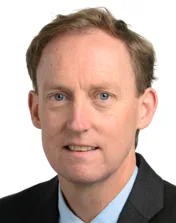

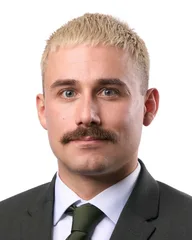
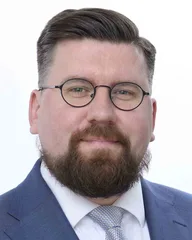
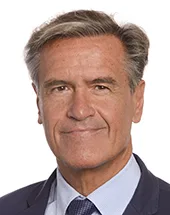
| Rank | Name | Country | Group | Speeches | |
|---|---|---|---|---|---|
| 1 |
|
Lukas Sieper | Germany DEU | Non-attached Members (NI) | 390 |
| 2 |
|
Juan Fernando López Aguilar | Spain ESP | Progressive Alliance of Socialists and Democrats (S&D) | 354 |
| 3 |
|
Sebastian Tynkkynen | Finland FIN | European Conservatives and Reformists (ECR) | 331 |
| 4 |
|
João Oliveira | Portugal PRT | The Left in the European Parliament (GUE/NGL) | 232 |
| 5 |
|
Vytenis Povilas Andriukaitis | Lithuania LTU | Progressive Alliance of Socialists and Democrats (S&D) | 227 |
All Contributions (208)
Need to release all hostages, to achieve a humanitarian ceasefire and prospect of the two-state solution (debate)
Mr President, High Representative/Vice-President, in the early 2000s, I was a member of the board of the Holocaust Education Trust in Ireland, dedicated to the fight against antisemitism and learning the lessons of the past. Since then, it’s a source of enormous sadness for me to see Israel drift away from the principles that underpin the Oslo Accords, to see Israel drift away from the path towards a two-state solution, and to see Israel contribute to the erosion of its own constitutional balance, with protests on the streets of Tel Aviv and Jerusalem. The events of 7 October of course deserve utter and unambiguous condemnation, including sexual violence. But we have arrived at a situation where Israel’s need has become a moral code, separate and distinct from international humanitarian law and the rules of conflict. The Irish Government has been absolutely clear that there must be an immediate humanitarian ceasefire. I fully support this call. If the EU will not lead, Member States must.
Defence of democracy package (debate)
Madam President, Commissioners and colleagues, I think, as we all know, we are living through a democratic recession. According to Freedom House, less than 7% of people live in full democracies across the world, which is an astonishing figure in 2023. And 2024 is a crossroads, with 4 billion people entitled to vote in elections, and that will be a record. As both Commissioners pointed out, there is no single solution to the erosion of our democratic standards. My own country, Ireland, is considered one of the strongest democracies in the world. However, we have seen recent outbreaks of violence on our streets, fuelled by disinformation. The violence I’m referring to triggered the first ever Member State alert to the Commission under the Digital Services Act, and therefore, the Digital Services Act will play a critical role in bolstering our democracy in 2024. The second area is journalism. All of the great investigations that have taken place recently – whether it’s the Pandora Papers, the Panama Papers, the Cyprus files – they’ve all come from long form journalism, from investigations that are very expensive. We need to support our journalism to support our democracy.
One-minute speeches on matters of political importance
Madam President, Commissioner, colleagues, Sellafield is a nuclear waste and storage site on the west coast of England, less than 100 miles from the east coast of Ireland. It stores 140 tonnes of plutonium, but it has been described as a bottomless pit of hell, money and despair. After a year-long investigation, The Guardian newspaper revealed last week that there are very serious dangers at the site. First of all, it found that 2.3 cubic metres of radioactive sludge is being leaked into the ground in the region every single day. A European Parliament report in 2003 said that an accident there could be worse than Chernobyl. Secondly, the investigation found that there is serious cyber attacks and vulnerability at the site, with sleeper malware embedded in its networks. Thirdly, it also found a toxic management culture. There is an agreement between the EU and the UK post-Brexit on nuclear energy, and I would call on you, Commissioner, to use your office to raise these very serious findings of this investigation with your UK counterparts.
The European Elections 2024 (debate)
Madam President, Commissioner, colleagues, it is truly astonishing to me to meet other MEPs who know that they will be in the next Parliament because of how high they are on their party lists. They know they’re going to be in the next mandate, and it should be obvious to all of us that this disincentivises those candidates from investing time and energy into the process. Those of us who will seek direct elections, without lists, will work intensely to engage with voters, will debate the issues and raise the profile of these elections. Lists put candidates at a remove from the people. Lists empower party officials and they enable processes that are not transparent. It should come as no surprise that Ireland is one of the Member States that is most positive towards EU Membership, so I respect the right of Member States to design their own electoral systems. I very much welcome this report and the work of the rapporteurs, but I think that we have an awful lot to learn from each other, from the way that we elect our MEPs.
International day for the elimination of violence against women (debate)
Mr President, Commissioner, colleagues, the murder of Ashling Murphy in January 2022 forced a collective reckoning with violence against women that is anything but random. Over one year on from Ashling’s death and ahead of the International Day for the Elimination of Violence Against Women, we must ask ourselves what has changed for the women of Ireland? According to Women’s Aid, 244 women have died violently in Ireland since 1996. The National Women’s Council recently warned that violence against women is at epidemic levels in Ireland. Late night safety is a serious issue, with fear and harassment a reality for many women. Today serves as a stark reminder of the need for practical and impactful initiatives to combat gender-based violence. Vienna, for example, has been committed to gender mainstreaming since 2000. High-quality public lighting and improved safety measures in underground car parks have been implemented. As well as this, tougher sentencing needs to be imposed for those who commit gender-based violence. Judges cannot impose minimum sentence terms in Ireland, while in the UK they can. In fact, the judge presiding over Ashling Murphy’s case lamented that he did not have the power to do so, given that the case was so far up the scale of gravity.
The lack of legislative follow-up by the Commission to the PEGA resolution (debate)
Mr President, Commissioner and colleagues, Intellexa is registered in Ireland. This is the company that has been blacklisted by the US Government. The Irish Government says there is no evidence of export and no export certification under the Dual-use Regulation. Yet Intellexa posted revenues of EUR 36 million last year in the Irish Companies Registration Office. Perhaps there is something wrong with the Dual-use Regulation. How easy is it to monitor the export of code? How easy is it to monitor the export of software? The reality is that the EU is a permissive regulatory environment that has allowed these toxic products to undermine democracy and freedom everywhere. Next year, 4 billion people will vote in elections – a record. Think of the amount of surveillance of journalists, of activists and of candidates by these products that carry the veneer of EU regulation, that carry the EU stamp. What a shame it is that MEPs don’t have the power to initiate legislation.
30 years of Copenhagen criteria - giving further impetus to EU enlargement policy (debate)
Mr President, Commissioner and colleagues, it hasn’t been mentioned in this debate, but the very first enlargement of the European Union was 50 years ago, in 1973, when Ireland, the UK and Denmark joined the EEC. Had the criteria applied in 1973, there’s no way that Ireland would have been able to join the EEC at that time, not only because of the conflict that was raging on the island of Ireland at that time, but also because we didn’t really have a functioning social market economy. But, like so many accession stories, Ireland joining has been an unambiguously positive story. The criteria is the way we will build our European home, but we mustn’t allow Putin, in particular, to get away with weaponising the Copenhagen criteria through the seeding of conflict in neighbours and the enragement and inflaming of minority sentiment. That is why I fully endorse the decision to provide a clear pathway to membership for both Ukraine and Moldova.
Innovative humanitarian aid strategy: spotlight on current and forgotten crises (short presentation)
Madam President, Commissioner, colleagues, people often ask about crisis fatigue, and whether we get a little bit tired of the vast number of crises that seem to pile on top of each other, but you never hear anybody asking about trivia fatigue. The New Humanitarian pointed out that 100 times more online articles concerned Will Smith slapping Chris Rock at the Oscars than was the case of the then-current crisis in Malawi. Some NGOs, like Concern Worldwide, the Norwegian Refugee Council and CARE, have attempted to shine a light on some of these forgotten crises. Right now, of course, Ukraine and Gaza get and deserve our full attention. But think about Syria. For a long time, Syria was the subject of endless debates in this House. Last month, the UN Security Council heard that the worst escalation of violence since 2019 occurred in north-west Syria. From 5 to 18 October more than 120 000 people were displaced. So I very much thank Carlos Zorrinho for his excellent report.
One-minute speeches on matters of political importance
Mr President, the Institute for Strategic Dialogue published a report today, the third in a series of three reports on disinformation and misinformation in Ireland. This third report focused on narratives. Unsurprisingly, the report concludes that the pandemic supercharged online disinformation and misinformation. The exercise by countries and Member States of extraordinary powers and the rollout of vaccines fed into pre-existing conspiracy theories. Unsurprisingly, also, it finds that the narratives are immigration, LGBT rights and the war in Ukraine. The conclusion, also unsurprising, was that online platforms are failing to discharge their statutory obligations or any of their own community guidelines. The disinformation epidemic triggered by the war in Gaza is unprecedented, according to EU DisinfoLab. Haaretz describes disinformation as a deadly new front in the war. Disinformation exaggerates differences, causing spikes in Islamophobia and anti-Semitism. Disinformation erodes democracy because that is what it is for. The Digital Services Act took enormous political effort from all EU institutions. The urgency of implementation has never been more apparent.
UN Climate Change Conference 2023 in Dubai, United Arab Emirates (COP28) (debate)
Madam President, Commissioner and colleagues, 28 years on from the first Conference of the Parties, some progress has been made. Last week, the OECD noted that developed countries had transferred USD 89 billion to developing countries in climate finance in 2021, and that we are on track to achieve USD 100 billion by the end of this year. Also, we should take some comfort from the unstoppable growth in green technologies. However, our climate is reaching a tipping point and so is our democracy. 2024 is the biggest election year in history, with more than 4 billion citizens voting. In an effort to pacify the far right, many of our moderate politicians are watering down their climate policies. One colleague advised me that I should avoid the use of the hashtag ‘COP28’, considering it toxic, effectively surrendering the ground to the most strident voices. There is now a real risk of the European Green Deal unravelling. Defeating climate change must be the priority of all politicians across the spectrum. We need a true coalition for climate.
Children first - strengthening the Child Guarantee, two years on from its adoption - Reducing inequalities and promoting social inclusion in times of crisis for children and their families (joint debate – International Day of the Rights of the Child)
Madam President, Commissioner and colleagues, on World Children’s Day, I want to focus on two issues. Firstly, foster care is part of the European Child Guarantee and it is, of course, a recommended intervention for the most vulnerable children, preferred over residential care. However, foster care is delivered in a very incoherent way across Member States. There are no common standards for the delivery of foster care or for training of foster parents. We recently adopted a position on aspects of cross-border adoptions, and we should do the same regarding foster care and the Brussels Convention in particular. Secondly, as Minister for Children in Ireland, I introduced a scheme that delivered early childhood care and education. The intention was that this would lead to the increased professionalisation of workers in this sector, so that they could diagnose early developmental delays in children and design appropriate interventions, and I hope that that’s where it goes. Finally, it is impossible on World Children’s Day not to repeat what the WHO’s Dr Mike Ryan said: the best medicine for the children of Gaza is a ceasefire.
Conclusions of the European Council meeting of 26-27 October 2023 - Humanitarian crisis in Gaza and the need for a humanitarian pause (joint debate - Conclusions of the European Council and the humanitarian crisis in Gaza and the need for a humanitarian pause)
Madam President, I want to repeat my abhorrence at the atrocities committed by Hamas on 7 October, and what has been done since then by the Israeli Defence Forces is not proportionate. I grew up in Ireland; over 30 years of the conflict on the island of Ireland, 3 500 people were killed, each one a tragedy. In one month, 4 000 children have been killed in Palestine. How is that proportionate? Thousands more have suffered life-changing injuries and trauma. Those who have not been killed or injured are denied the basic necessities of life: fuel, food, water and electricity. How can that be proportionate? I call on other MEPs to co-sign my request for a review of the EU–Israel Association Agreement, Article 2 of which makes respect for human rights and democratic principles an essential element of that agreement. It was the government of Israel that suspended part of that agreement in 2013. Why is it so radical for the EU to review that agreement, given everything that has happened? It is never too late to do the right thing.
Outcome of the SDGs Summit (18-19 September 2023, New York) – transformative and accelerated actions leading up to 2030 and beyond (debate)
Mr President, Commissioner, Presidency, colleagues, in this Parliament, I believe there is a genuine passion for the 2030 Agenda and what it can do for humanity. The SDGs embody the interdependence of nations and represent a towering achievement of diplomacy. The Parliament insisted, in resolutions in 2022 and 2023, that we would have a greater role in consultation with the Commission on implementation. And, in the SDG Summit political declaration from September, at paragraph 22, it acknowledges the important role of parliaments in ensuring accountability and effective implementation. Even in this Parliament, we set up an SDG alliance: an informal alliance of like-minded MEPs to dedicate themselves towards the drive for implementation. So, why was it that the Commission refused to provide any invitation to any MEPs to attend the summit with the European delegation? I managed to get an invitation through a different channel. When I sought a meeting with the Commission in New York in the margins of the summit, that was also refused. It is a scandal that such contempt is shown to this European Parliament. This Parliament is treated as a barely tolerated inconvenience as far as implementation of the SDGs is concerned, despite what we have written in resolutions, despite the commitments in the political declaration of the SDG Summit. The good news is that the political declaration itself contains very important commitments that we in the Parliament will be able to track about better debt mechanisms and payments and restructuring commitments to the SDG Stimulus to address the financing gap. Sadly, it will be the next mandate, in my opinion, before any meaningful engagement will occur with the European Parliament.
The despicable terrorist attacks by Hamas against Israel, Israel’s right to defend itself in line with humanitarian and international law and the humanitarian situation in Gaza (debate)
Mr President, I’d like to begin by condemning the atrocities carried out by Hamas, including the ongoing hostage taking and sheltering military assets at or near key civilian infrastructure. I assert the right of Israel to defend itself, a right based on international law, specifically the UN charter. But that same international law specifically forbids forced population transfer, collective punishment and indiscriminate targeting, including targeting of civilian infrastructure. International law is all that protects humanity in our darkest hours. I was astonished that President von der Leyen did not take the opportunity to acknowledge the confused communications from the European Commission and the damage that has done to our credibility. The European Union should now support the UN call for an immediate humanitarian ceasefire and humanitarian corridor and take advantage of the global attention on this crisis for a real political initiative to bring peace to the region and end the cycle of violence.
Situation of Ukrainian women refugees, including access to SRHR support (debate)
Mr President, Commissioner, Presidency and colleagues, it is a year since the Russian invasion and, according to the OECD, 70% of adult Ukrainian refugees are women, and the war is having a very severe impact, as we know, on women and girls and marginalised populations, particularly in the area of SRHR. The EU has promised to provide refugees from Ukraine with sanctuary and care. This isn’t the case, of course, in every Member State, where they face a range of pre-existing legal and policy barriers as well as cost barriers. In a 2023 report, the Center for Reproductive Rights found that many refugees feel they have no choice but to return to Ukraine temporarily if they require SRHR. Another concerning finding is that, because of the abortion ban in Poland, some Ukrainian women refugees are forced to seek abortion care outside of legal pathways. Clearly, some of these barriers require action at Member State level. However, the Temporary Protection Directive specifies clear Member State obligations in respect of emergency and essential health care provision, and support for survivors of gender-based violence. There has been an outpouring of solidarity for Ukraine since the war began, but Ukrainian women require continued access to SRHR.
Urgent need for a coordinated European response and legislative framework on intrusive spyware, based on the PEGA inquiry committee recommendations (debate)
Mr President, Commissioner, Presidency and colleagues, Intellexa is the proprietor of Predator and it is a company that’s registered in Ireland. The Irish Government says it doesn’t have a substantial presence there and there’s nothing to worry about. But it books EUR 30 million in revenue through its Irish accounts and a lot of company formation specialists provide the support for Intellexa to be present in Ireland. I put pressure on them. Journalists – including The Currency, an online publication – put pressure on them. And I’m happy to say that, over the summer, Intellexa’s directors resigned, and just last week its company secretary registered its resignation in the companies office. And my message to company formation specialists is: do your due diligence because this industry is toxic. And I’m very concerned that Member States are using spyware for detection, but not for prosecution of crime, because they know it will not survive a challenge under the European Convention on Human Rights. So we need a European Framework, Commissioner, and we need it very, very urgently.
Question Time with Commissioners - European measures to prevent and to fight the rise of organised crime
Mr President. I am aware of that, but as I mentioned, a number of Member States have already signed bilateral extradition treaties that would have the same anxiety that you’ve just underlined. According to the Belgian Justice Minister, and I quote: ‘if I talk to my colleagues in Italy, Spain, Germany and France, they all have a wish list of the people that are hiding in Dubai, and they are not able to move on them to see them extradited to Europe’. I do accept points you’ve made, but I just want to add that by way of clarification.
Question Time with Commissioners - European measures to prevent and to fight the rise of organised crime
Mr President, Commissioner, I want to ask a question about the possibility of an EU extradition treaty with the United Arab Emirates. As you know, a number of EU countries have already bilaterally signed extradition treaties with the UAE: Belgium, Netherlands and Denmark. A lot of these countries have in common that many of the leaders of organised crime gangs are currently in Dubai, in the United Arab Emirates. In Ireland, the Kinahan crime gang are a global drugs and arms cartel and their activities have contributed to a cocaine epidemic in Ireland. As I am sure you aware, the ministers from the Netherlands, Belgium, Germany, Italy, Spain and France met in Antwerp in June for a discussion on organised crime and they co-signed a declaration supporting an EU extradition agreement with the United Arab Emirates. So I would be keen to hear your views about whether or not you think this is appropriate. I'm aware of the safeguards that are necessary from human rights and the reciprocal demands from the UAE. But already Member States are doing this and it would be of tremendous help.
One-minute speeches on matters of political importance
Madam President, earlier this year, I published a report with Housing Europe. Most people dismiss the significance of the European Union in housing policy, and five years ago, people would have had the same attitude to the European Union in health policy. But all of that has changed. The report showed the many policy and financing levers that are available to the European Union, whether the EIB, European Social Fund Plus or the Just Transition Fund, but also state aid rules and fiscal rules. The report also lists 19 examples of best practice from other EU Member States from which we could learn. A good example is the Livret A savings product, which has resulted in EUR 19 billion of funding for 80 000 affordable homes in France, and this is the basis for the Sustainable Development Bank policy proposal that I’ve submitted to the Irish government, which has the benefit of not being public debt because it is financed by private savings. But it also has the benefit of being off balance sheet as well, for the purposes of fiscal rules.
Implications of Chinese fishing operations for EU fisheries and the way forward (short presentation)
Madam President, one of the major problems identified by the Outlaw Ocean Project report is the fact that most major brands rely on ethical trading audits to satisfy themselves that there are no human rights abuses in their supply chain and no environmental damage in their supply chain. But there are major practical difficulties with these audits. How, for example, does an auditor visit a distant fishing fleet? How does a Chinese national call out human rights abuses in a Chinese seafood processing plant? These are the practical difficulties and we all know that Lidl and Aldi and Tesco will have carried out all of these ethical trading audits and were unable to find any of the evidence that was produced as a result of a four-year investigation. So as we move now from a soft law environmental in this area to strict statutory obligations, we really need to support our retailers and supermarkets and our consumers to make good choices.
Fisheries control (debate)
Madam President, Commissioner, colleagues, the Outlaw Ocean Project published the result of a four-year investigation in The New Yorker last week into the Chinese distance fishing fleet. The report found evidence of forced labour in the Chinese seafood processing factories and evidence that this seafood finds its way into European supermarkets. Names that were published in the report include Lidl, Aldi and Tesco. There have been resignations and investigations and parliamentary hearings announced, and this is a wake-up call for the industry. The shame is that we do not have any international system to stop the enormous damage to marine biodiversity. Bottom trawlers account for 1.5 billion tonnes of CO2 every year – the same as the aviation industry. This regulation and the forced labour ban that we voted on earlier in the Trade Committee and the Single Market Committee will help to stop the human rights abuses in the seafood industry, to stop the environmental damage in the seafood industry, and to provide fairness and an end to unfair competition and subsidisation for our fishers.
Need for a speedy adoption of the asylum and migration package (debate)
Mr President, Commissioner Schinas, I was encouraged by your presentation this morning. You were able to document genuine progress and demonstrated real energy to deliver the Pact. I do take issue, however, with the characterisation of the EU-Tunisia partnership, the strategic partnership, as being necessary and workable. We should have known from Libya that efforts to stop human trafficking resulted in torture in captivity in Libyan detention centres. We should have known from border management funding in other African partner countries that no serious human rights guardrails are implementable. Requests for reports on human rights impacts of these arrangements by MEPs have gone unanswered by the Commission. I come from a country where we had 200 years of mass emigration. Now 40 million Americans claim Irish descent. Many of them emigrated in leaky boats and yet there are many in Ireland who would pull the ladder up behind them. It is for this and many other reasons that the Pact, for all its imperfections, is urgently necessary. I hope you and the Council will approach the forthcoming negotiations with flexibility and pragmatism.
Question Time with Commissioners – EU-China trade relations
Commissioner, I have a question that relates to the Corporate Sustainability Due Diligence Directive. As you know, European companies are preparing for this directive, especially companies with supply chains in China. Many of these European companies rely on ethical trading audits. These audits are carried out by third-party companies, and many of these companies hire Chinese nationals to carry out on-site visits at factories that are within their supply chains. As you can imagine, it is very difficult for Chinese nationals to call out human rights abuses that they may identify in these on-site visits. It therefore underlines the deficits associated with these ethical trading audits. As we transition from the soft guidelines in this area to the statutory obligations in the Directive, I wonder if the Commission is aware of these deficits in ethical trading audits and what supports you can give, and reassurance, to European companies that rely on these audits.
Parliamentarism, European citizenship and democracy (debate)
Mr President, I want to take issue with the assertion of MEP Rangel that there is a link between direct democracy and dictatorship. Ireland is the country with which I’m most familiar, and Ireland has more characteristics of direct democracy than any other EU Member State, I would say. First of all, we have real direct elections with no list system, and therefore no barrier between the voters and the elected representatives. Secondly, we have a tradition of citizens’ assemblies like the Agora proposal, which allows very difficult public policy issues to be solved through direct democracy. And thirdly, we’re the only EU Member State that is required to have referendums on Treaty change. I would therefore say that it’s no coincidence that Ireland has the highest approval rating for EU membership and, I would argue also, the highest literacy about the EU and what it can do. So we need to listen to each other, learn lessons from each other, and recognise that the health of European liberal democracy depends on the health of liberal democracy in the Member States.
Ukrainian grain exports after Russia’s exit from the Black Sea Grain Initiative (debate)
Madam President, Commissioner and colleagues, many speakers have rightly focussed on the cynicism and implausibility of Russia’s many statements and actions that have led to the discontinuance of the Black Sea grain initiative. As a member of the Development Committee, I want to focus on the extent to which this initiative was literally a lifeline for many of the 345 million people experiencing high levels of food insecurity around the world – very few of whom live in the European Union – and the 24 million people on the brink of famine – none of whom live in the European Union. I understand the focus on the effect of the Russian aggression on European farmers, but I beg you to consider in addition the need to tackle the issue at its root cause to avoid this kind of blackmail, and that root cause is the absence of food security in Africa and the Middle East.