

| Rank | Name | Country | Group | Speeches | |
|---|---|---|---|---|---|
| 1 |
|
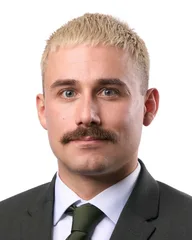
Lukas Sieper | Germany DE | Renew Europe (Renew) | 487 |
| 2 |
|
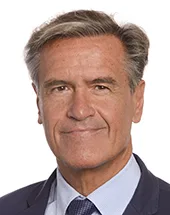
Juan Fernando López Aguilar | Spain ES | Progressive Alliance of Socialists and Democrats (S&D) | 454 |
| 3 |
|
Sebastian Tynkkynen | Finland FI | European Conservatives and Reformists (ECR) | 451 |
| 4 |
|
João Oliveira | Portugal PT | The Left in the European Parliament (GUE/NGL) | 284 |
| 5 |
|
Vytenis Povilas Andriukaitis | Lithuania LT | Progressive Alliance of Socialists and Democrats (S&D) | 273 |
All Speeches (197)
Situation in Lebanon: implementation of the ceasefire, support peace efforts and humanitarian access (debate)
Date:
29.04.2026 19:55
| Language: EN
Speeches
Mr President, last month I visited Beirut and spoke to people who had left south Lebanon for their own safety. They showed me photos of their homes, of their fields and their villages, concluding in many cases that they would not be returning. Since then, the demolition of buildings has continued with relentless ferocity. And then came 8 April 2026, when the US and Iran agreed a ceasefire that offered hope. But did it apply to Lebanon? In the confusion, Israel gave us Operation Eternal Darkness. As others discussed peace, starting at 2 p.m. that afternoon Israel hit, with no warning, 100 targets in 10 minutes across Lebanon: 300 were killed, of whom 100 were women, children and the elderly. The European Foreign Affairs Council sat down to contemplate this – one of the deadliest single bombing campaigns in the region – and once again concluded that this massacre was fine; that it was, laughably, somehow consistent with the EU's expectations of its trading partners. I give the last word to Yair Lapid, who is the leader of the Israeli opposition. He said, 'For the thousandth time, it has been proven: military force without a diplomatic plan does not lead to victory'. Lebanon deserves better.
Global Gateway – past impacts and future orientation (debate)
Date:
26.03.2026 10:18
| Language: EN
Speeches
Madam President, Commissioner and colleagues, the Lobito railway corridor is perhaps the best known Global Gateway flagship project. However, a press release from one of the operators of the railway last month disclosed some of the shortcomings of the Global Gateway project that this opinion seeks to address. The press release announced the transport by railway of low-carbon copper anodes to the EU from a mine in the Democratic Republic of Congo. Firstly, the press release praised the involvement of the US and the African Development Bank, but there was no mention of the role of the European Union. Secondly, it represents almost no added value and is barely distinguishable from extractive practices of the past. And, finally, the mine is 40 % owned by a Chinese company, 40 % owned by a Canadian company, and the press release came from a Swiss company. This underlines how we have to be careful about matching the rhetoric around Global Gateway with the complexity of global supply chains. Equally, this is information that we inadvertently have come across and is not readily available from the Commission. We can do better – let's hope this opinion marks a new departure in transparency around the Global Gateway.
Building Europe's clean, independent and secure energy following the 2026 North Sea Summit (debate)
Date:
11.03.2026 15:10
| Language: EN
Speeches
Madam President, Commissioner and colleagues, I very much welcome the plan arrived at at the North Sea Summit to dramatically ramp up renewable energy in the North Sea with joint European projects and the plans around increased generation in the time frame. I think this can provide a pathway to cost-sharing for the rest of Europe and, indeed, for the highlighted energy pathways, and I think the political point I would make is that it gives us an opportunity to remind the EIB that we need to put pressure on them to provide more risk around frontier technologies, to provide more balance sheet innovation in order to fund these developments. We obviously need cheaper and more reliable energy, and I think we are able to give more certainty for turbine makers, for example. We should remind WindEurope that they have committed to deliver a 30 % decrease in production costs on the basis of the political commitments made at the summit. So, let's keep the pressure on. Let's make sure that we can deliver renewable, cheap energy and make sure that we can inoculate this continent from future fossil fuel price shocks.
Mr President, colleagues, here are 10 ways in which the United States has undermined international law in the last 12 months: rolling out the red carpet for war criminal Putin in Alaska; endless support for Netanyahu's war crimes; withdrawal from the Paris climate agreement; withdrawal from the WHO and UNHRC; the closure of USAID; the illegal global tariffs; sanctions on the International Criminal Court; illegal attacks on Venezuela, Nigeria, Yemen, Syria, Iraq and Somalia; threats to the sovereignty of Greenland and this illegal attack on Iran. So we have three more years of this. And what are we going to do? If we try to beat this by being this, they win and we lose. So I call on President von der Leyen to choose the EU, to choose the rule of law, to choose the EU with all of its weaknesses. The United States is taking a break from political seriousness. We have to have the confidence in our values as reflected in international law.
Mr President, Commissioner and colleagues, we keep hearing about existential threats to the European Union, that the European Union is on the verge of collapse. This is a narrative that we regularly hear from the far right, who would love nothing better than for the European Union to come to an end. So someone needs to explain to me, and indeed to the far right, why so many countries are striving to join the European Union. Why is the waiting room bursting with candidates for EU membership? We all know that the UK is undoubtedly worse-off after Brexit. By contrast, Iceland's parliament today debated moving forwards towards a referendum on EU membership, acknowledging the global turbulence. While Russia in Ukraine and the US in Greenland seek to expand their territorial range by invasion, the EU expands by invitation. I was in Ukraine in November, before this terrible winter, and one of the most important motivations for them is knowing that there is a credible and indeed merit‑based pathway to the European family. I therefore commend this report for illuminating that pathway.
Mr President, Commissioner, when you presented this package, already the situation was urgent. The events of the last 10 days supercharged the urgency of what we are debating here in this Chamber today. We need to really face up to the unavoidable nature of that urgency right now. In my own country, in Ireland, we have extraordinary vulnerabilities. We rely 80 % on fossil fuels for energy consumption; 80 % of our gas comes through just two pipelines from the United Kingdom. So we have an extraordinary vulnerability. Yet just this morning we received a report which shows that we're falling very, very far behind in our residential heat figures, both in terms of heat pumps and in terms of retrofitting and district heating. All of these figures are falling dramatically behind where they should be. So, shockingly, we also have BER A and BER D ratings, which are almost exactly the same in terms of consumption. So there's lots of behavioural issues. I would conclude by saying that we need the incentives, the investment to achieve much greater electrification. These costs, of course, are much less than the uncertainty and price risks inherent in a fossil fuel system.
Single Market: how to move from an incomplete single market to one market for one Europe (debate)
Date:
10.03.2026 12:01
| Language: EN
Speeches
Madam President, Commissioner and colleagues, Chancellor Merz and Prime Minister Meloni were happy to point out the recent IMF report conclusion that we, in fact, impose a 110 % tariff equivalent on ourselves by not completing the single market for services. We are, in effect, sanctioning ourselves. But what Merz and Meloni failed to quote was the same IMF report which concludes that the particular problem is the substantial domestic barriers to entry in services in several countries, so this is substantially a Member State issue. Italy has one of the most highly protected services sectors in Europe. Germany is also a fortress of services. As the Financial Times recently pointed out, in over 30 years of the single market, only one French baker has ever had his credentials recognised in Germany. So the foot dragging by Member States has to stop. We have to lift the sanctions that we impose on ourselves.
Situation in Northeast Syria, the violence against civilians and the need to maintain a sustainable ceasefire (debate)
Date:
10.02.2026 15:13
| Language: EN
Speeches
Mr President, Commissioner, colleagues, the agreement of March 2025 between the Kurds, the SDF and the government promised some hope for the future. However, that is looking increasingly fragile. The blundering attempts by President Trump are no match for the staying power of the European Union, and I believe that the Union has a really critical role now, providing its credibility and its long-term staying power and institutional approach to broker a longer-term peace. This must be matched by long-term support for good governance and support for the political economy of reconciliation. There is no room in complex post-conflict environments for a winner-takes-all approach. It is possible to reconcile the sovereignty of Damascus with the Kurdish aspirations, which should be guaranteed. The lessons of Libya, Sudan and other fragile states are clear: when basic needs are ignored and civilian protection is sidelined, violence inevitably returns. In Sudan, we missed the window to support democratic transition. We cannot do the same in Syria.
Drones and new systems of warfare – the EU’s need to adapt to be fit for today’s security challenges (debate)
Date:
22.01.2026 09:50
| Language: EN
Speeches
Mr President, Commissioner, colleagues, I very much agree with the sentiments of this report and the statements of other MEPs on the effect the extraordinary changes in drone technology have had on security and defence policy, but also on wider industry. Our own capacity here in the European Union is being constantly tested: at least 10 countries have detected drones near airports and military units. The suspect, of course, is an imperialist Kremlin that believes that Europe is unprepared. In my own country, as we prepare for the assumption of the presidency later this year, the ability to counter drone incursion takes on urgency. Ireland has already seen suspected Russian drone activity in the vicinity of Dublin Airport during President Zelenskyy's visit to Ireland in December of last year. It is entirely reasonable to expect this to increase as Ireland hosts world leaders during the presidency in the second half of the year. I very much welcome EU support for dual-use technology through EU financial instruments, and urge the Irish Government to make the necessary legislative changes that would allow a whole-of-government approach to invest in and support such technology.
Territorial integrity and sovereignty of Greenland and the Kingdom of Denmark: the need for a united EU response to US blackmail attempts (debate)
Date:
20.01.2026 14:32
| Language: EN
Speeches
Mr President, High Representative and colleagues, I want to also express my solidarity with the people of Greenland for the stress that they are experiencing. I want to acknowledge the calm resolution of our Danish MEPs, with one notable exception, standing in the face of the extraordinary intimidation and threats that they are receiving from the United States with their barely believable and totally contrived national security considerations. The National Security Strategy, published just two months ago, doesn't even mention the Arctic whatsoever. They have completely and voluntarily downgraded all of their military presence in the Arctic. I will be representing the European Parliament in our discussions on the MFF relationship with Greenland from 2028 to 2034, and this is our opportunity as a Parliament to make a very clear statement of our intention to invest in the sustainable development of Greenland, but also in our connections with the Greenland economy and with the European economy.
One-minute speeches on matters of political importance
Date:
19.01.2026 21:48
| Language: EN
Speeches
Mr President, Commissioner, colleagues, I want to raise the case of Seán Binder. Seán Binder was acquitted in a Greek court last week, together with 23 other defendants. He had been prosecuted as far back as 2017, and his crime was espionage and felony. The facts of his case are that he was trying to save lives at sea. He was one of those volunteers who were embarked on search-and-rescue missions in Greece in 2017 – a year in which 3 000 people lost their lives at sea. That was his 'crime'. He was dragged through the courts for the last seven years. There was no basis whatsoever. This was the maladministration of justice, pure and simple. All it was meant to do was to have a chilling effect on anybody who had the temerity to save lives at sea. I just want to congratulate Seán Binder. I also want to recognise my former colleague Grace O'Sullivan, who did tremendous advocacy for Seán and all of the other defendants.
Humanitarian aid in a time of polycrisis – reaffirming our principles for a more effective and ambitious response to humanitarian crises (short presentation)
Date:
19.01.2026 21:07
| Language: EN
Speeches
Madam President, Commissioner, obviously I want to add my condolences to the expression of condolences of MEP Pajín to the tragic events in Spain earlier today. I want to raise two issues. I'm very much looking forward to the humanitarian communication. But, first of all, I want to thank MEP Pajín for all the work that she and her shadows have done to prepare this report. What we really need to do is to somehow or another, rebuild the credibility of Europe's position on international humanitarian law. Because I don't have to tell the Commissioner how differentiated our approach has been for the past 18 months ‑ two years, and it has really undermined not only Europe's credibility, but obviously international humanitarian law itself. So we have to start the process in this communication, as we have said in this report, to rebuild that sense in which we are adherents to the rule of law, that it is applied evenly, regardless of geography, regardless of politics, regardless of religion. That is the nature of independent, impartial, the application of humanitarian law.
Implementation of the EU-UK Trade and Cooperation Agreement (debate)
Date:
26.11.2025 16:23
| Language: EN
Speeches
Madam President, Commissioner and colleagues, I was at the PPA last week, about 10 days ago, and it was probably the best one so far, reflecting the overall good relations. However, I was quite critical of progress on a number of EU‑UK files. I described them as glacial, and I said that we have to stop treating the UK as a third country. Last Friday, a few days after the PPA, two stories appeared in the media that, in my view, vindicated my position. As regards SAFE, we have not made progress in bringing the UK into SAFE, which is absolutely appalling considering it was announced in May and the summit made its conclusions in May. The report in Politico said that these talks are now going 'to move to a higher political level'. That should have happened a long time ago. Secondly, in the Financial Times, it is reported that some 'carve‑out' might be done for CBAM, but it will apply to the export of electricity from the UK to the EU from 1 January. We are told in the Financial Times that this is also now the first time that the talks have begun in earnest, bearing in mind that CBAM is starting in January. That simply is not good enough. We have to move beyond treating the UK as a third country and we have to increase the political priority.
Escalation of the war and the humanitarian catastrophe in Sudan (continuation of debate)
Date:
25.11.2025 17:08
| Language: EN
Speeches
Madam President, Commissioner and colleagues, I very much welcome your statement and your statement of the fact that Sudan remains a priority and the financial commitments that you have outlined here today. But I wish to make the point that we need to use all of our leverage and all of the institutions available to us to exercise pressure to bring around a sustainable peace. Some of you will be aware that the President of the European Council, António Costa, met with his counterparts from the United Arab Emirates very recently in the context of ongoing negotiations on a free trade agreement. And now, no mention whatsoever was made of the conflict in Sudan in the conclusions of those negotiations or in the press statement that came after it. That is completely unacceptable. We cannot have one arm of the EU institutions making a very clear priority of Sudan, while on the other hand, we ignore the reality of what is happening in the United Arab Emirates. So, I think what we need to do is also be clear that we have to have an investigation on how it is that European arms are finding their way into Darfur. This is not acceptable. There's widespread evidence of it and it needs to be tackled.
One-minute speeches on matters of political importance
Date:
24.11.2025 21:57
| Language: EN
Speeches
Madam President, Commissioner, colleagues, Black Friday gets bigger every year – it's not just one day anymore – and it is the opposite of responsible consumption. The damage to the environment is well documented: almost 100 % more CO2 emissions compared to a normal week, because of deliveries, packaging and returns; 80 % of items bought only survive a couple of uses; and 50 % of consumers regret their purchases, given the impulsive nature of Black Friday. But it doesn't have to be this way. There are lots of things we can do. We have to follow through with the ecodesign for products framework. We also have the waste framework and due diligence. There are lots of things that ordinary people can do, including shopping local; buying from Back Market, which does refurbishing of tech; buying from Vinted, which does pre-loved fashion; supporting brands like Patagonia; supporting outlets like Freitag, who actually close their outlets on Black Friday. So there's no reason why Black Friday can't become Green Friday.
30th anniversary of the Barcelona Process and the new pact for the Mediterranean (debate)
Date:
24.11.2025 20:39
| Language: EN
Speeches
Madam President, Commissioner Šuica and colleagues, when the pact on the Mediterranean was debated in committee, I appealed for a clear alignment between the pact and two other important and related initiatives: firstly, the Global Gateway and secondly, the fragility framework. The pact is described as complementary to the Global Gateway. It should in fact be more than that. It should be aligned with the Global Gateway from methodology, from the theory of change and from the communications – how we deal with our partner countries. Even the Treaties called for policy coherence for development. However, on closer inspection, it is my view that the Global Gateway is out of position and should be more like the pact, focusing, as the pact does, on human development as a primary priority rather than an add‑on. Just 10 % of Global Gateway projects aim at human development. Also, the focus on agriculture in the pact is absent from Global Gateway. I have shared my views with you before, Commissioner, on my view that it is not appropriate to use ODA for private sector investment where there is no clear poverty eradication or human development purpose. I must say a word on the Palestine Donor Group, which you referred to in your opening comments. The US no‑show and the absence of actual donations is a terrible look. While we fail to deliver and we fail to develop a strategy, tens of thousands of Palestinians face starvation in this so‑called ceasefire, which has been violated 500 times since its inception. So I say, once again, Gaza does not need our speeches, Gaza needs our actions.
Protecting EU consumers against the practices of certain e-commerce platforms: the case of child-like sex dolls, weapons and other illegal products and material (debate)
Date:
12.11.2025 21:43
| Language: EN
Speeches
Mr President, Commissioner, colleagues, there are a lot of companies that do a few things wrong, and there are a few companies that do a lot wrong, but there are very few companies that do as much wrong as Shein and similar online platforms. We are all very familiar with the environmental damage done by ultra-fast fashion. Just 1 % of textiles is recycled around the world. Fashion itself contributes 10 % of our global emissions. We all know about the labour law infringements that are happening. We all know about the data infringements, we know about the copyright infringements. We realise that this company is way beyond control at this stage. So what we need to do is to recognise that we need a much stronger reaction from the European Commission. A two-euro levy is going to make no difference whatsoever. That has to be increased to at least five euro. I would also call on the Irish authorities to wake up to this reality. Shein has its European headquarters in Ireland – it therefore falls to the Irish regulators to take seriously the questions of data regulation under the Digital Services Act, under environmental issues and under labour.
The new 2028-2034 Multiannual Financial Framework: architecture and governance (debate)
Date:
12.11.2025 18:37
| Language: EN
Speeches
Mr President, Commissioner and colleagues, it is striking to me that nobody so far in this debate has mentioned Global Europe. I am Chair of the Development Committee. Naturally it is a serious concern to me – it is a EUR 200 billion budget. So my main message to you, Commissioner, is to defend this budget. It is really important that we do this. I very much support our decision to invest heavily in hard power for our security and defence, but we also have to recognise there is a collapse in the exercise of soft power by the European Union. This is creating risks for us. It's creating risks in health, in security, in in extremism, in irregular population movement. So what we have to recognise is yes, it is right to invest in hard power, but we have to reconcile that with soft power. Hard power is stored in a warehouse and hopefully never used. Soft power never stops working. Defend the budget. Thank you, Commissioner.
Renewing the EU-Africa Partnership: building common priorities ahead of the Angola Summit (debate)
Date:
21.10.2025 22:35
| Language: EN
Speeches
Mr President, Commissioner, colleagues, as we all know, there is a massive change in our relationship with Africa evolving over the last decade, and it is embodied in the Global Gateway initiative, which is all about leveraging private sector investment, using European capital to try and create investment in energy, digital, transport, and, of course, also in health and education. That's all good and it's all positive, and I think it's really scaled up in the last few years under Commissioner Síkela. But I have two worries – first of all: debt. Debt is one of the most serious problems that Africa faces. Average bond yields in Africa are almost 10 %, compared to just 3 % in the European Union. And last year, developing nations paid USD 487 billion in external public debt – that's USD 25 billion more than they received in new debt. So net debt flows are going from poor countries to rich countries, and this is really a crisis that we have to address. We have to recognise that when we move from overseas development assistance to loans, this is exactly what happens, so we have to be very careful about it.
Recent peace agreement in the Middle East and the role of the EU (debate)
Date:
21.10.2025 09:48
| Language: EN
Speeches
Madam President, Commissioner and colleagues, peace is not just the absence of war. A true peace delivers justice, freedom and accountability. A true peace – as we know in Ireland – takes decades of patience, of careful nurturing, of reconciliation and investment. It's notable that the decommissioning of arms by terrorists in Ireland took more than a decade after the 1998 peace agreement. Last month, European leaders finally found their moral voice and began to see that they could influence global affairs. No one was more surprised than me to hear President von der Leyen talk about sanctions, or Chancellor Merz bringing an end to armed supplies in certain circumstances, and President Macron and others recognising the Palestinian State. So now the European Union must do three things. Firstly, it must lead the humanitarian response, ensuring urgent access for all life-saving supplies to Gaza. Secondly, it must invest heavily in the political economy of reconciliation, including a major donor conference for reconstruction. And thirdly, we need to use all diplomatic and political channels to make it clear that it is inevitable and unavoidable that sanctions and a full trade embargo will follow if Israel doesn't follow through with an end to the illegal occupation and a pathway to Palestinian self-determination.
Situation in Afghanistan: supporting women and communities affected by the recent earthquakes (debate)
Date:
07.10.2025 19:14
| Language: EN
Speeches
Mr President, Commissioner, colleagues, the reality is that we have seen the cost of aid cuts in real time in Afghanistan at the beginning of this month and the country that has done most to impoverish Afghanistan – the United States – is responsible for the massive reduction in aid support. Back in 2022, EUR 3.5 billion were distributed in aid in Afghanistan. This year, it is just EUR 750 million, so it is an extraordinary reduction. The good thing is that the European Union, by contrast, has increased its contributions, has provided medical teams, has provided flights full of relief and aid. And we're not there because we want to extract resources; we're not there because we want to win procurement contracts. We're doing it because of fellow feeling, because of that sense of global solidarity for our fellow humans. It is the best of us and something that we should absolutely try to save. I am really pleased that we are having this debate and that we are keeping the women and girls of Afghanistan at the top of our agenda here at the European Parliament.
The EU’s role in supporting the recent peace efforts for Gaza and a two-state solution (debate)
Date:
07.10.2025 13:06
| Language: EN
Speeches
Mr President, Commissioner, colleagues, 7 October must be repeatedly and unambiguously condemned. I wish to share my sympathy with the bereaved families, with the injured and those taken hostage. The response that followed, aimed at wiping out Hamas, soon warped into a policy of regional vandalism, bombing and occupying neighbours, thrilling in the awesome power of it all, seemingly possessed of a drunken self‑confidence. The sickening policy that sees children being killed by AI drones, by IDF snipers and been starved to death, as acknowledged by President von der Leyen, is not his strategy. Rather, it is an aimless display of military prowess. So much of the current Israeli leadership are so in awe of this that statesmanship, vision and a genuine desire for peace are not valued. So let us genuinely hope that this peace process can lead to an end to the violence for peace and security for Palestinians and Israelis alike, and that the EU can play its role in ensuring that there is a pathway to self‑determination for the people of Palestine.
Gaza at breaking point: EU action to combat famine, the urgent need to release hostages and move towards a two-state solution (debate)
Date:
09.09.2025 11:08
| Language: EN
Speeches
Madam President, High Representative and colleagues, last month, Major General Haliva of the IDF said that for every one person killed on 7 October, 50 Palestinians must die. A leak from the IDF last month also revealed a civilian death rate of 83%. International humanitarian law is clear: civilians must never be a target of war. This is something that used to bother Israel. Back in 2002, the head of the legal unit of the IDF said, and I quote, 'I was present when we diverted a missile because we saw that a target standing on a roof had picked up a child. We had one clear rule. We were all parents. We could never approve of killing children.' And now we have more than 50 000 children killed or injured in Gaza. This is something that Israel used to agonise about – the legal and moral implications of civilian deaths. So I implore those who consider themselves true friends of Israel to recognise that this is no longer in any way defensible.
One-minute speeches on matters of political importance
Date:
08.09.2025 21:26
| Language: EN
Speeches
Mr President, colleagues, Cognyte Technologies is a spyware company that has been used to target journalists, politicians and minority groups across the world. The Norwegian Government Pension Fund recommended back in 2022 not to invest in Cognyte for ethical reasons associated with human rights violations. However, last week, we learned in The Irish Times that the Irish police force, the Gardai, paid at least EUR 250 000 at the end of 2024 in spyware purchased from this Israeli company, Cognyte Technologies. Ireland has currently no policy on spyware that is publicly available, despite the controversies associated with the industry. Some spyware companies are established in Ireland, including Intellexa. This laissez-faire attitude has to stop. Given the risks that spyware brings, I would urge the Irish Government to issue clear policy guidelines on all aspects of spyware, including its use and the hosting of spyware companies in Ireland.
Mr President, Commissioner and colleagues, like other speakers, I came to this issue through the work of Sir Bill Browder. His endorsement of the cause of Ryan Cornelius was very persuasive by itself, given Mr Browder's track record with the Magnitsky legislation, but when I looked at the detail of the case, I was astonished at the injustice of it. The EU and this Parliament should be clear that cases like this, involving EU citizens and their families, must be resolved before serious progress can be made on improving trade relations with the United Arab Emirates. As has previously been mentioned, the UN Working Group on Arbitrary Detention concluded that the detention of Ryan Cornelius violates the UN Declaration of Human Rights and called for his immediate release seven years ago. The national law of the UAE also makes it clear that when you are over 70, you should be automatically released. What is hard to understand is why the United Kingdom Government turned its back on its own citizen. I am therefore happy to see this case receive the prominence it deserves this evening. Ryan Cornelius and his family can be assured that the European Parliament will remain vigilant.