
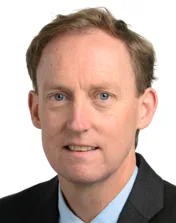






| Rank | Name | Country | Group | Speeches | |
|---|---|---|---|---|---|
| 1 |
|
Lukas Sieper | Germany DEU | Non-attached Members (NI) | 390 |
| 2 |
|
Juan Fernando López Aguilar | Spain ESP | Progressive Alliance of Socialists and Democrats (S&D) | 354 |
| 3 |
|
Sebastian Tynkkynen | Finland FIN | European Conservatives and Reformists (ECR) | 331 |
| 4 |
|
João Oliveira | Portugal PRT | The Left in the European Parliament (GUE/NGL) | 232 |
| 5 |
|
Vytenis Povilas Andriukaitis | Lithuania LTU | Progressive Alliance of Socialists and Democrats (S&D) | 227 |
All Contributions (208)
Objection pursuant to Rule 111(3): Amending the Taxonomy Climate Delegated Act and the Taxonomy Disclosures Delegated Act (debate)
Mr President, I am supporting the objection. I listened carefully to the arguments on all sides and, while I am sure that gas and nuclear have a role in the transition, I cannot identify these as sustainable. I genuinely fear for the diversion of investment away from renewables. We have just completed the Corporate Sustainability Reporting Directive, directing companies to invest in a sustainable and clean future. So on the one hand we are taking away with the taxonomy, and then giving with the CSRD, and we’re sending mixed messages to business. On nuclear, the SCHEER Committee was asked by the Commission to review the Joint Research Centre. It referred to aspects of the JRC report as simplistic and incomplete, and concluded that it overlooked the potential impact on marine and coastal areas. So I’m supporting the objection because the EU must lead in this area, and I believe that the EU can do better.
One-minute speeches on matters of political importance
Madam President, I want to address the human rights situation in Zimbabwe. According to Johns Hopkins University, inflation in Zimbabwe is over 400% – the highest in the world – and 63% of the population live below the poverty line. Unfortunately, President Emmerson Mnangagwa is indistinguishable from his predecessor, President Mugabe. Added to economic mismanagement are his now endless assaults on civil society. The proposed Public Voluntary Organisation (PVO) Amendment Bill is currently before the Zimbabwe Parliament and would criminalise NGOs, designating them as high—risk or vulnerable to terrorist abuse. The UN Human Rights Council last week completed its voluntary periodic review, and Zimbabwe has rejected criticisms of the PVO Amendment Bill by Ireland and others. It has also not implemented any of the EU election observer mission recommendations. Opposition leaders hope for a peaceful, inclusive and modern Zimbabwe. The EU must send a clear message in opposition to this highly regressive legislation.
Future of EU-Africa trade relations (debate)
Madam President, Commissioner, I agree with the comments earlier of Ms Bricmont and Ms Rafaela that we are embarked on a new era of partnership between the EU and Africa, and it is truly welcome. However, I just want to address my comments very briefly on the trade aspects of the immediate food security issue. We’ve heard, I think all of us, from the World Food Programme and FAO who have outlined many times proposals about how to avert famine and whether that can happen. The European Council in its conclusions last month addressed for the first time this question and reiterated, and I quote, ‘its commitment to keep global trade in food commodities free of unjustified trade barriers’. And Minister Beaune, earlier in his comments here in the Hemicycle, mentioned the urgent need to maximise the export of food commodities. Now there is a debate going on here in the European Parliament, in the institutions more generally, whether the EU should require reciprocity of production standards in agri—food imports from third countries. And my plea is that we must be mindful of the possible impacts of such measures on developing countries, and in particular the message it could send.
Implementation and delivery of the Sustainable Development Goals (debate)
Madam President and Commissioner, thank you very much for your response to the debate. And I think, you know, you’re right, we’re lagging behind. However, we have to remember, Eurostat’s latest report is based on data collected before the pandemic and before the war. So we’re in for a shock when we get our next set of data as to how far we really are lagging behind here. We can talk a good game about leaving nobody behind and reaching the furthest behind first. But I think we’re going to find shocking statistics around how bad the situation really is. That’s why I think it is so timely that we have this conversation today, that we have a conversation that’s based on the reality that, unfortunately, this agenda has really fallen off dramatically, and it’s really time that we bring it back onto the agenda, because fundamentally we cannot achieve our Paris climate targets without the SDGs. They are two sides of the one coin. They are mutually reinforcing and they are an off-the-shelf conceptual framework to build back better. You couldn’t imagine a better international global agreed framework to build back better based on solidarity with those that are suffering the most. I want to make a final point about democracy. The European Parliament is the second largest democratically elected body in the world, and I’m very proud that, thanks to the work of my colleagues (particularly my co-rapporteur Petros Kokkalis and my colleagues in the SDG alliance, which I am honored to chair), this House will express its views on the EU’s implementation for the very first time this term. European Parliament’s core function is democratic scrutiny. We communicate to you, Commissioner, the future that your half a billion citizens want. We neglected our duty to scrutinise the European Commission’s implementation over the last couple of years. From now on, this will not be the case.
Implementation and delivery of the Sustainable Development Goals (debate)
Mr President, Commissioner, every issue that we’ve been debating today and tomorrow in the European Parliament is linked to the Sustainable Development Goals, and yet the SDGs have fallen dramatically off the political agenda. Seven years since the EU is the lead negotiator of the SDGs. No European country is on track to achieve the SDGs. In fact, according to the SDSN report, no progress has been made over the past two years in the EU. No progress. We talk about building back better. We talk about a just transition for workers. We talk about global climate justice, brokering peace and protecting democracy. And yet, the framework for delivering all of these objectives lies right under our noses. I would like to convince you today that the SDGs are our last and best resort. The EU has often been criticised for ignoring the concerns of ordinary citizens, as well as the grievances of developing countries. The SDGs are an opportunity to change this perception, because at their heart is the notion of justice. While we policymakers are terrified at the prospect of the end of the world, many of our citizens are terrified about the end of the month. Without our citizens on board, we put the success of the Paris Agreement at risk. What good is it if we reduce our emissions by 55% by 2030, if inequality continues to rise, as it has done in recent years? If wages continue to stagnate while the cost of living rises? Income and wealth, inequality is an example of one SDG where we are failing spectacularly. Wealth distribution in today’s world is more lopsided than ever. The wealthiest 500 people on the planet have amassed $7 trillion in wealth, an increase of $1 trillion in wealth since the beginning of the pandemic. If, for example, there was a global wealth tax on these 500 people that left them with EUR 1 billion each, we could feed and educate every child in the world. We could have universal health care. We could achieve SDG 2, 3 and 4 and still have many billions to spare. And inequality has a tipping point beyond which we end up with social unrest, with conflict and massive political change. We shouldn’t, therefore, be surprised when developing countries cannot be persuaded to do some of the heavy lifting on the issues that I’m talking about, when we are cutting aid, when we are blocking access to vaccines, when we are enabling gross inequality and erecting barriers to trade. And what good is it to have achieved our European climate targets if developing countries can’t afford to decarbonise, or if they are preoccupied by conflict or food insecurity on their own territories or mountains of unserviceable debt? By recognising our goals and those of our partners as inextricable, the SDGs are a blueprint for climate justice. I think that the centre of the challenge is governance. The fact is that the EU still has no strategy for implementing the SDGs. This is despite the calls from the European Council in European Council conclusions in 2017 for a strategy. Yes, there is alignment, but there is no strategy and there is no roadmap for implementation of that strategy. It is welcome that the EU will present an EU voluntary review by 2023, but a review is no replacement for a genuine strategy with concrete targets, with benchmarks and a new approach to leadership and resources. Leadership is crucial. This report contains concrete guidelines informed by the leading experts in civil society for revamping the implementation of the SDGs in the EU and beyond. It is political and it is clear. With this report and your support in the vote tomorrow, we will provide the EU with a democratic mandate to show true leadership on the SDGs once and for all.
A new trade instrument to ban products made by forced labour (debate)
Mr. President, Mr. President, I will be speaking Irish. With the alarming images and documents issued in the Xinjiang Police Files, the continued inactivity of the European Union can no longer be accepted. We can at least guarantee our citizens that they will not be complicit in this abuse by purchasing products from forced labour without their knowledge. But we are not alone in making these promises. This month, the United States will prohibit the import of goods from Xinjiang, unless the importer can provide clear evidence that the goods were not produced as a result of forced labour. I am concerned that these products will be redirected towards Europe. Therefore, the Commission needs to analyse and take effective measures to address this legislation.
The call for a Convention for the revision of the Treaties (debate)
Mr President, Vice-President, Minister, in 2021 the Irish Government originally co-signed a letter with 11 other Member States opposing Treaty change that might arise from the Conference on the Future of Europe. The idea that a bottom up, citizen-led exercise in participatory democracy would be pre-emptively rejected by 12 Member States seemed tone—deaf to me. The letter said, and I quote, ‘it should not create legal obligations, nor should it duplicate or unduly interfere with the established legislative processes’. This seemed ridiculous to me, and despite this discouragement, many thousands of citizens across the European Union participated in the Conference. And I am delighted to say that the Irish Taoiseach yesterday in this Hemicycle announced that Ireland is fully committed to Treaty change that might arise from a Convention. A final note – a cautionary message perhaps – is that Ireland is the only country constitutionally obligated to hold a referendum to give effect to EU Treaty change. At the same time, Ireland is also most consistently positive towards EU membership. There may be a cautionary tale for everybody in that.
The fight against impunity for war crimes in Ukraine (debate)
Mr President, once again, I’m calling on the Commission to act on the call from this Parliament for an EU action plan on impunity. It was called for in a resolution this time last year in the context of a resolution on Syria, and nothing has happened since. It is critically important, for the very obvious reason demonstrated by the Caesar trials in Koblenz, that each EU Member State takes a very different approach to principles of international law, such as universal jurisdiction. In some Member States, they have a different approach to immunities, they have a different approach to the statute of limitations, they have a different approach to the type of crime that triggers a prosecution under war crimes. So we need an EU action plan on impunity that addresses the fragmented approach taken by EU Member States.
One-minute speeches on matters of political importance
Madam President, the stigma around breaking the law has been significantly eroded by the UK Government. It’s not just the personal behaviour of the Prime Minister himself or his very loose grasp of the truth, and it’s not just the breach of so many constitutional norms – like the prorogation of parliament and the multiple events being dragged through court – it is, of course, the way that they have tried to disapply the very agreement that they negotiated, signed and ratified: through triggering Article 16, through threatening to do that, through unilateral extensions of the grace periods and, of course, the Internal Market Bill. So how long can we continue to make concessions? How long can we continue to make concessions that are trousered by the UK Government, and then they come back for more? But we still have to focus on solutions. I believe the US has a key role to play here. It’s always been an honest broker in Northern Ireland and it has something that the UK wants, which is a trade deal. So it needs to provide a pathway to the UK to a trade deal that is contingent on implementing the Withdrawal Agreement and the Protocol.
The impact of the war against Ukraine on women (debate)
Madam President, Commissioner, this morning we’ve heard some of the unspeakable horrors that have been visited on the women and children of Ukraine. The task I want to concentrate on is how we convert evidence into prosecutions. This time last year, the European Parliament passed a resolution calling for the Commission to publish an action plan on impunity. Nothing has happened since then, and it needs to address, for example, the different application of the principle of universal jurisdiction in each Member State. It is applied in a different way, depending on which Member State you are in – whether it’s questions of the Statute of Limitations, whether it is the definition itself of a war crime, which is so significant in the case of sexual violence, or questions of impunity and immunity. So we need to publish that. We also need to address the question of the proposal for a treaty on mutual legal assistance and extradition. The EU Genocide Network was briefed on this last month, so my call is for two things: on 23 May, it is EU day for action against impunity. What we need a commitment to do is to publish an EU action plan on impunity, and also to support the initiative for a treaty on mutual legal assistance and extradition.
One-minute speeches on matters of political importance
Mr President, yesterday, a Russian state TV simulated a nuclear attack on Ireland and the UK. I don’t want to overstate the nuclear threat, but there is no doubt that the stigma against the use of nuclear weapons in war has been significantly eroded in recent years. And I believe it is time to create a pathway to a world without nuclear weapons. Next month, the signatories of the Treaty on the Prohibition of Nuclear Weapons meet for the first time since the signing of that treaty in 2017 and its entry into force in 2021. Sadly, only a handful of EU Member States will attend this meeting in Vienna next month, and I think that sends an extremely bad signal at a time of heightened public anxiety about the nuclear threat as a result of Russia’s invasion of Ukraine. No one, of course, is arguing for unilateral nuclear disarmament, but we can’t wait for an ideal security environment. That is why the first meeting of the States Parties of the Treaty on the Prohibition of Nuclear Weapons is timely and I urge the Member States, the Commission and MEPs to attend this meeting next month.
Situation in Afghanistan, in particular the situation of women’s rights (debate)
Madam President, the women and girls of Afghanistan wonder if they will ever complete their education. The Taliban alone are responsible for this tragedy and intensified diplomacy is now necessary. But these girls might also ask, and I’ve heard them ask this question: why are you starving us to protect our human rights? Twenty-two million Afghans are acutely food insecure. Famine is on the horizon. This humanitarian catastrophe has been rightly described as a catastrophe of choice, as though it was actually designed by the international community. In the name of women’s rights, all international aid was suspended. In the name of women’s rights, all Afghan assets were frozen. In the name of women’s rights, the central bank and public services are now collapsing. Women’s rights begin with the right to life. This is why we need to make sure that no girl or woman goes hungry, that we step up cash assistance to provide women with the means to survive, and restore liquidity in the State by setting clearer benchmarks for the release of Afghan assets and prevent the collapse of the central bank. And this will mean revising the Council’s benchmarks for engagement. If we do not address this economic and humanitarian emergency, girls will simply not survive the opportunity to return to school.
EU Protection of children and young people fleeing the war against Ukraine (debate)
Mr President, it’s difficult to add something new at the end of a debate, but I want to add my voice of shock at the evidence of war crimes that we’ve seen over the weekend, and that had been very articulately expressed by so many colleagues. I want to raise one issue, which is the criticism of the International Committee of the Red Cross (ICRC), which is triggered by the decision by Peter Moore to visit Sergei Lavrov in Moscow ten days ago, and photographs that emerged of Mr Moore seemingly smiling with Mr Lavrov, and the decision to open an office in Rostov just across the Russian border. And we had an engagement with the Members of the Rada Inna Sovsun and Halyna Yanchenko. And their criticism of the ICRC was palpable and very understandable, because clearly Russia has carried out breaches, systematically, of international humanitarian law, whether it is collective punishment, whether it is summary executions, as we saw in Bucha, whether it is the targeting of civilian infrastructure. So that criticism is very, very understandable. Nevertheless, it is clear that the ICRC are mandated very clearly by the Geneva Convention and its first protocol to observe the humanitarian principles, which means impartiality, independence, neutrality and humanity. And that is a very difficult thing for the ICRC to do, and it’s very difficult for Members of the Rada to accept. So my recommendations are twofold: first of all, that the ICRC should be a lot more sensitive in the circumstances where there is clearly an asymmetric approach to respect for international humanitarian law, where the Russian side have been so systematically in breach. And I recommend that DG ECHO would, if possible, open a dialogue between the leadership of the Ukrainian Rada and the ICRC, on the other hand, in order to find a way for mutual understanding.
One-minute speeches on matters of political importance
Madam President, one year ago, together with other MEPs, I proposed a joint motion for a resolution on the 10th anniversary of the uprising in Syria. In it we called on the Commission to prepare an action plan on impunity to include a specific chapter on Syria. Unfortunately, so far nothing has been done, despite the request being the central plank of a resolution that enjoyed cross-party support. The EU has been at the forefront of the fight against impunity, providing technical and financial assistance for accountability efforts. However, the invasion of Ukraine should now provide the motivation for the European Commission to proceed with an action plan. Russia’s behaviour in Ukraine is the brutal standard of warfare, in particular siege tactics and targeting of civilian infrastructure that is such a feature of the Russian involvement in Syria. The EU has to get tough on impunity to protect the staff involved in the humanitarian relief efforts in Ukraine, in Syria and elsewhere.
Need for an urgent EU action plan to ensure food security inside and outside the EU in light of the Russian invasion of Ukraine (debate)
Madam President, the issue of food security is the reason why Putin’s invasion of Ukraine is on the verge of becoming the most disastrous geopolitical moment in modern history. A group of states already on the edge of famine are totally dependent on Ukraine and Russian exports. Even for the more commercially independent, the rise in global energy and food prices will push citizens over the edge. We should remember that the last food crisis in 2007-2008 resulted in riots in 40 countries across the world. The resolution correctly diagnoses the seriousness of the situation in the EU, but we have to understand how much more serious the situation is for the developing world. In Europe, one of the most food-secure regions in the world, it’s about balancing, on the one hand, the need to increase production, while retaining our gains on climate targets. It’s a question of managing disruption, of managing price pressures. But in the developing world, it is a question, sadly, of life and death.
Human rights and democracy in the world – annual report 2021 (continuation of debate)
Mr President, 60 years ago, the Universal Declaration of Human Rights was approved, and it set out 30 freedoms that we should all enjoy – freedom of expression, freedom from torture, the right to equal protection before the law. But last week, the Economist Intelligence Unit noted in its annual report that just 6 % of the world’s population live in full democracy. And last year, Freedom House noted that 86 % of countries have stagnated or regressed in relation to human rights and democracy, and these are astonishing figures in 2022. What happened to the end of history? But what absolutely amazes me is that in this Chamber, especially in the far left and the far right, there are MEPs that make excuses for Russia and its autocratic allies, and they make those excuses under the protection of the very same democracy that Russia seeks to destroy. This has to be called out at every opportunity. Our democracies depend on it.
One-minute speeches on matters of political importance
Madam President, the women of Afghanistan are asking the question, ‘Why are you starving us and our daughters in the name of women’s rights?’. This is because this is not a humanitarian crisis caused by conflict or by climate or by a natural disaster, as David Miliband told the Senate Foreign Relations Committee last week, this is a catastrophe of choice. It is as if it was designed by the western governments that first abandoned the Afghan people to the Taliban and now abandoned them to hunger and starvation. I have written to the Minister of Foreign Affairs in Ireland to ask him to raise this issue as a priority in the European Foreign Affairs Council, and I have asked him to condemn in unambiguous terms the decision of President Biden to steal Afghan assets for the benefit of 9/11 victims. It is shameful and I would urge all MEPs to raise this with their ministries. I was briefed by an NGO last week, and all of their female staff that they spoke to were asked if they had been victims of increased gender-based violence. All of them raised their hands, and I can’t provide them with an answer. Why are we starving them and their daughters in the name of women’s rights?
Outcome of Global Summit Nutrition for Growth (Japan, 7-8 December) and increased food insecurity in developing countries (debate)
Mr President, nutrition is the basis of life and a precondition for the development of societies. Good nutrition, as we know, is an accelerator of all the Sustainable Development Goals and determines an individual’s health, the effectiveness of education, a person’s ability to find decent work, to innovate and to take care of one’s environment. Malnutrition is not only the opposite of development, it is the opposite of living. Nowadays, in the development sphere, we talk a lot about how to propel the digital and green transitions in developing countries. But I wonder, is it worth talking about such lofty ambitions when 800 million people in the world are hungry and 45 million people are on the brink of famine, and, as was mentioned earlier, 150 million children in the world are stunted? EUR 27 billion was committed by donors at last week’s Nutrition for Growth Summit. The EU really led that, and it was a tremendous achievement. It was morally commendable, and it was smart. For every dollar invested in nutrition, USD 16 is returned to the local economy, and investing could increase African GDP by 15%. If we want to achieve the Sustainable Development Goals by 2030, or even to make a difference in the world, nutrition is clearly a good place to start. It’s easy to make commitments, however. It is less easy to honour them. It’s deeply disappointing that just 42% of the financial commitments made at the last summit were actually honoured. Of course, the pandemic redirected global resources, but this lack of follow through is also down to the absence of political will and proper implementation. The international architecture for channelling donations is simply dysfunctional. The last time the EU designed a strategy for nutrition and food security was in 2014 with the EU’s action plan on nutrition, and it is high time for a new targeted EU strategy with concrete measures for achieving SDG 2, zero hunger by 2030.
New orientations for the EU’s humanitarian action (debate)
Mr President, first of all I’d like to acknowledge the work of Mr Neuser, not just in this report, but in his contribution to this House over the last decade. His report, I think, is part of an appropriate period of reflection and response, which follows each successive humanitarian crisis. It’s happened over the last 15 years, whether it is the cluster system and the CERF that followed the situation of the tsunami, whether it was the transformative agenda that followed on from Haiti, or the Grand Bargain referred to earlier by the Commissioner that followed both Syria and Ebola. Now we’re in another period where it’s appropriate to have response and reflection. But the one thing I would encourage the Commissioner not to do is to merely respond to the last crisis, and that is what we’ve done in the past. This is evidenced by the fact that our instrument, the Neighbourhood, Development and International Cooperation Instrument (NDICI) – Global Europe, is inappropriate for the Afghanistan response, and that’s why we have Humanitarian Plus. So I would encourage a strategic approach and an approach based on foresight, not hindsight. I’d like to say a few words in my native language, if I may. An féidir leis an Aontas Eorpach difríocht a dhéanamh? Sílim gur féidir leis ach tá dhá leasú mhóra ag teastáil. Ar an gcéad dul síos, ní mór don Aontas agus do na Ballstáit airgead a chur ar an mbord. Is mór-dheontóir daonnúil an tAontas Eorpach agus a Bhallstáit, ach sa bhliain 2021, ní dhearnadh ach leath de na geallúintí daonnúla domhanda a íoc amach. Is maith an rud é gur mhéadaigh an Coimisiún Eorpach a bhuiséad cabhrach daonnúla ó €900 milliún go €1.4 billiún sa bhliain 2020. Ar an dara dul síos, ní mór córas daonnúil an Aontais a bheith oiriúnach dá fheidhm agus tá riachtanais dhaonnúla oiriúnaithe dá réir.
The human rights situation in Cameroon
Madam President, two weeks ago, seven year old Brandy Tartaw was shot and killed by a police officer while walking home from school in Bamenda, a city in northwest Cameroon. Brandy is just one of thousands of young girls who are the utterly innocent victims of the armed conflict in Cameroon over the past five years. The forced school boycott in the Anglophone regions has exposed children to child recruitment by terrorist organisations, forced labour, forced childhood marriage and sexual abuse. Children make up 28% of all cases of gender—based violence in Cameroon, and 13 percent of girls are married before the age of 15. Today, we mark the International Day of Violence Against Women. The case of Cameroon reminds us that women and young girls continue to be systematically used as pawns in power struggles across the world. Of course, in order to protect women and girls in Cameroon, we need an immediate ceasefire and for both sides to initiate peace talks without further delay. First and foremost, we must protect life. But the only surefire way to ensure that the human rights of women, girls and others are upheld in Cameroon is to have effective legal safeguards. And that is why Renew insisted on strong emphasis on the rule of law in this urgency resolution. To protect human rights, you need functioning courts, robust, proportionate laws and international recourse. This is the responsibility of the Cameroon government, and it is also the European Union’s responsibility as strategic partners of Cameroon to exert the necessary pressure to make this happen.
The EU's role in combating the COVID-19 pandemic: how to vaccinate the world (continuation of debate)
Madam President, earlier I heard an PPE speaker say that it would take two years before developing countries could reach the production capacity necessary to justify the TRIPS waiver – the speaker obviously forgetting that the application was made 14 months ago and that had we had the foresight to grant the TRIPS waiver 14 months ago, we would be on the brink of achieving the production capacity through the transfer of knowledge in order to address the issues that we are all so agonised by in this Chamber. As my colleague, Chrysoula Zacharopoulou, mentioned earlier on, only 6% of people in Africa have been double vaccinated. That’s why I support the TRIPS waiver. It’s an important moment in history, a moment that we have never experienced before. I would echo the words of Dr Tedros Adhanom Ghebreyesus, that it isn’t about all people in some countries being vaccinated, but about some people in all countries. That is the immuno-compromised, the elderly and of course, healthcare workers in some countries in the developing world that have not been reached at this time. I would also like to add my voice to that of Ms Trillet-Lenoir, who earlier spoke up in favour of a pandemic treaty. I believe it should be accepted and promoted by the European Union. I know the European Council has already done so, and there will be a meeting next Monday of the World Health Assembly, and the ambition will be to ensure that a pandemic treaty would be an additional element to address the global needs more equitably.
Multilateral negotiations in view of the 12th WTO Ministerial Conference in Geneva, 30 November to 3 December 2021 (debate)
Madam President, a question that I’m often asked is how and whether we can balance and reconcile our ambitions around the environment and our trade priorities. How can we create jobs and prosperity and avoid environmental degradation and loss of biodiversity? In our resolution, we try to establish a very clear link between the multilateral trading system, on the one hand, and achieving the Sustainable Development Goals. And in MC12 we have an opportunity to demonstrate to the public that link, that very clear link and in that way to restore credibility to the multilateral trading system. In particular, we draw attention to SDG 14, target 6, which calls for an end to harmful fishing subsidies, not by 2030, like all of the other Sustainable Development Goals, but by 2020, underlining the high stakes and the urgency. So I implore all of those who are charged with this difficult task to finish the job and I applaud the EU in its efforts. We have this one opportunity to end a very tough year with some proof that trade and environment can coexist.
One-minute speeches on matters of political importance
Madam President, I wanted to speak on the huge increase in the number of people being arbitrarily detained in Libya since the beginning of October, described by the UN as potentially a crime against humanity. However, this evening, the Guardian newspaper reports that at least 75 people are feared drowned off the coast of Libya in one of the most shocking incidents so far in the Mediterranean. We must carry our share of blame for this latest tragedy. Instead of a migration and asylum framework across the EU, we have externalised our migration policy, causing harmful consequences. The consequences are being washed up on the shores of Libya in their hundreds. The consequences are huddled in freezing conditions on the border with Belarus under barbed wire. They are seen in a completely inappropriate aid policy that links funding to controlling migration and that submits to the right—wing mythology that migration can be stopped and should be stopped. These, Madam President, are the natural but avoidable consequences of trying to externalise migration policy and we should hang our heads in shame.
The outcome of the EU-US Trade and Technology Council (TTC) (debate)
Madam President, I very much welcome the first meeting of the Trade and Technology Council, which took place in September – something that would have been inconceivable under the previous American administration. I certainly welcome the first statement of the Council, which emphasised the importance of workers on both sides of the Atlantic, on shared values and also on SMEs and the working groups that have been set up under the Council. It is striking that some elements of open strategic autonomy are clearly there in the statement – for example, balancing the encouragement of foreign direct investment on the one hand, but also investment screening. But advancing any trade agenda requires a high level of scrutiny and particularly parliamentary scrutiny. So I wish to add my voice to those who’ve already asked what the role of the European Parliament is in scrutinising the work of the Council and the working groups set up thereunder. Finally, I would like to welcome the statement made by President von der Leyen yesterday reaffirming steadfast American support for the Good Friday Agreement and against the triggering of Article 16.
The escalating humanitarian crisis on the EU-Belarusian border, in particular in Poland (debate)
Mr President, in 2017, Tom Wright of the Brookings Institution wrote a book, the title of which is very appropriate for the debate that we are having today. It was called All Measures Short of War. What we are seeing on the Polish—Belarus border is a classic example of hybrid warfare. But we are vulnerable to this type of hybrid warfare because we do not have in place a legislative programme for safe and legal migration. Migration is like water; if there are obstacles somewhere, it will move somewhere else. That is the reality, and because we have no legislative framework, we are seeing reprehensible behaviour, not just on the Polish-Belarus border, but also in the Aegean and also in Libya and on the Bosnia-Croatia border. The Guardian earlier this year identified that there have been 2 000 deaths associated with pushbacks, and 40 000 people have been pushed back by EU authorities. There are 13 NGOs working on this in the border violence monitoring network, and what we have to recognise is that, once you are a signatory to the Geneva Convention, you cannot sign your way out of assessing whether or not somebody has a well-founded fear of persecution.