
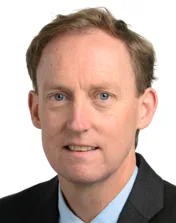






| Rank | Name | Country | Group | Speeches | |
|---|---|---|---|---|---|
| 1 |
|
Lukas Sieper | Germany DE | Renew Europe (Renew) | 487 |
| 2 |
|
Juan Fernando López Aguilar | Spain ES | Progressive Alliance of Socialists and Democrats (S&D) | 454 |
| 3 |
|
Sebastian Tynkkynen | Finland FI | European Conservatives and Reformists (ECR) | 451 |
| 4 |
|
João Oliveira | Portugal PT | The Left in the European Parliament (GUE/NGL) | 284 |
| 5 |
|
Vytenis Povilas Andriukaitis | Lithuania LT | Progressive Alliance of Socialists and Democrats (S&D) | 273 |
All Speeches (197)
Urgent need for a ceasefire in Lebanon and for safeguarding the UNIFIL mission in light of the recent attacks (debate)
Date:
22.10.2024 11:30
| Language: EN
Questions
Is the speaker aware of the widespread reports that for many years the Israeli Government supported Hamas and facilitated financial support to Hamas through third‑party countries in order to undermine the Palestinian Authority? How does he reconcile that fact with the statements he's just made to the Hemicycle?
Mr President, Commissioner and colleagues, we are broadly agreed across this House that nothing we do or say would reward Russia for its aggression and its contempt for human rights. Equally, we are broadly agreed that we would not do or say anything that would reward Iran for its aggression. Yet we are now slowly embarking on a policy to do just that, under the banner of so-called normalisation of relations with Assad's Syria. This will send a clear message to Russia and Iran. Having stood by those who sought freedom, having passed countless resolutions condemning Assad's prisons and gulags and executions, and his use of chemical warfare, and looking for an end to impunity, now we quietly return to restore normal relations at a time that can only send one clear message: the EU will stand by those who seek freedom, but if autocrats have the patience and seek the protection of Iran and Russia, they might just succeed.
Mr President, Commissioner and colleagues, in my opinion, nothing more clearly exemplifies how European development policy is off track than what has happened in Sudan over the last five years. In 2019, a very brief window opened where the potential for Sudanese democracy to develop occurred, and the opportunity to invest in the political economy of reconciliation and making and helping democracy to happen was missed. So by 2021, it was almost too late. Then we had an opportunity for cancellation of a massive amount of debt in Sudan, but it was too late. So now we have a tragic situation. Global Gateway is the big idea in European development. But, of course, Global Gateway has nothing to do with Sudan. Global Gateway can work. So what we have to do is concentrate on fragile countries that are impacted by climate, by conflict and by the situation we see in Sudan. It is true that there was a ministerial at the UN General Assembly, but it was completely ineffective. And we all know that aid budgets have been slashed across the European Commission and EU Member States, and we will pay a price for that.
Outcome of the Summit of the Future: transforming global governance for building peace, promoting human rights and achieving the sustainable development goals (debate)
Date:
08.10.2024 18:56
| Language: EN
Speeches
Madam President, Commissioner, colleagues, whatever you might say about the shortcomings of the UN, everybody showed up. The UN has incredible convening power, and the European Union, more than anybody else, understands the value of multilateralism; it's in our genes. We understand that the sum is greater than the parts – really, really works at a European level and we believe it can work at a global level. Now, the European Parliament took this summit very seriously. Our President, Roberta Metsola, went over. Five European Parliament committees were represented. There were 13 MEPs on the delegation. So we took it really seriously. But let's be clear, parliaments do not have a significant role in the General Assembly, in any of the UN summits and, indeed, across the UN system. So we really have to reflect on whether we are adding any value as a parliament in what is happening at the UN Summit of the Future. We had no role in negotiation, we were not really attending the Summit of the Future, none of the European Commissioners that were present had the time to meet with us. So these are significant shortfalls. However, the more serious issues are the grim issues that are facing the world, the massive underfunding of overseas development assistance, which is impacting all of the UN agencies. The big trend, of course, was reform of the global financial architecture around multilateral development banks, the move from loans to grants, trying to improve the risk profile and the capital adequacy frameworks of multilateral development banks. So we have a great opportunity in the next while to make sure that we are taken seriously at UN Parliamentary Assemblies.
Escalation of violence in the Middle East and the situation in Lebanon (debate)
Date:
08.10.2024 11:42
| Language: EN
Speeches
Madam President, HR/VP, colleagues, I want to talk about the deployment of UNIFIL, UN peacekeepers present in South Lebanon. As you know, there are 29 positions where peacekeepers from different countries are deployed, including from Ireland. And there is now a request from the Israeli Defence Forces that those UN troops be withdrawn, that they be evacuated from South Lebanon. Well, let us remember our lesson of history. When UN peacekeepers were withdrawn from Rwanda, when UN peacekeepers were withdrawn from Srebrenica, these events foreshadowed some of the darkest chapters in the history of the late 20th century. So while I fully respect that this is a military operational decision that will be taken by the force commanders present on the ground, we have to remember that those UN troops are the eyes and ears of the world. We have to remember that the Israeli Defence Forces have shown little regard for international humanitarian law and we know that UNIFIL will play a key role in the inevitable diplomatic resolution of the current wave of violence.
EU response to the Mpox outbreak and the need for continuous action (debate)
Date:
18.09.2024 16:55
| Language: EN
Speeches
Mr President, Commissioner, colleagues, I actually believe that we have learned some lessons from both Ebola and from COVID-19, while some remain to be fully absorbed. An example of this is the growing autonomy of the African Centre for Disease Control, which has forced other organisations actually to sit up straight, and this is real progress, and I would describe it as a 'decolonisation of decision-making'. I really commend them for moving so quickly and forcing the hand of the World Health Organisation. Now the African CDC and the WHO are actually working together, as equal partners, and that's progress. So we've partially learned the lesson that effective response to disease outbreak should be locally led. I worked on the Ebola outbreak ten years ago. It was clear afterwards, when we did our lessons-learned exercise, that the outbreak was stopped because of local action. We need to carry this through now to vaccine development, to vaccine procurement and, of course, to vaccine approval, which has been unforgivably slow in this context. We also need to continue – both EU and Member State budgets – our support for health systems. We will have five European Parliament committees in New York for the Summit of the Future, for the SDGs. The SDGs are about leaving no one behind, the furthest behind first, and yet we have a situation – a continuing pattern of neglect – where the Democratic Republic of Congo requires 3.5 million vaccines to control this when that affects children so much, and yet they have only received a very small amount. That is a key lesson that we must learn.
War in the Gaza Strip and the situation in the Middle-East (debate)
Date:
17.09.2024 18:53
| Language: EN
Speeches
Madam President, Commissioner and colleagues, the landmark ruling of the International Court of Justice on 19 July creates a positive obligation on the European Union and on all Member States and all countries that support multilateralism, to take such action as they can to end the occupation of Gaza, the West Bank and East Jerusalem. The rule of law consistently applied requires that the Commission and the Council report to this House on the implications of that judgment. Doing nothing now actively erodes international humanitarian law. The only way to avoid degrading international humanitarian law is to act, to either ban trade with occupied territories, to to stop arms sales, to sanction leadership. Sadly, the EU's response has been inaction. The legal question is settled for once and for all about the settlements. We have to do all in our power to bring it to an end. And that's why I call on the Irish Government to act on the Occupied Territories Bill. We need to stop acting as a recruiting sergeant for extremist organisations and start working for peace.
Framework of measures for strengthening Europe’s net-zero technology products manufacturing ecosystem (Net Zero Industry Act) (debate)
Date:
25.04.2024 11:33
| Language: EN
Speeches
Mr President, Commissioner and colleagues, as this is my last contribution in this mandate at least, I want to thank all of my colleagues that worked with me on the Sustainable Development Goals Alliance, and it is fitting that my last contribution should be on a law that seeks to chart a path for sustainable development and a Green Deal that works for people and planet. I see the green transition as a unique opportunity to create high-quality jobs in sectors that are very important to Europe, to Dublin and to Ireland. The Net Zero Industry Act is a remarkable piece of legislation that will incentivise public and private investment in wind, solar batteries and in storage. A very welcome shot in the arm for European industry. Dublin is already the tech capital of the European Union, with 16 out of the top 20 digital companies around the world based there. There’s no reason why Ireland shouldn’t be leading in the production of cutting-edge technology and wind, in heat pumps and in carbon capture, with huge competition from the US and China and elsewhere. Net zero will be key to Ireland and the European Union’s future. As I would appear to be the last-scheduled speaker in this mandate, on my behalf and on behalf of my team, I want to thank all of the staff here in Strasbourg and in Brussels for the excellent support that they’ve given me over the last few years.
EU’s response to the repeated killing of humanitarian aid workers, journalists and civilians by the Israel Defence Forces in the Gaza Strip (debate)
Date:
23.04.2024 15:56
| Language: EN
Speeches
Madam President, High Representative and colleagues, the Colonna report states that the Government of Israel provided no evidence to support its claim that UNRWA staff were members of Hamas. Nevertheless, these claims led to an avalanche of condemnation of UNRWA by EU Member States, an avalanche of calls to suspend funding of UNRWA, regardless – it seems – of either the devastating humanitarian consequences or the absence of evidence. And if it’s never the wrong time to do the right thing, then the right thing for Austria, Estonia, Finland, Germany, Italy, Latvia, Lithuania, the Netherlands, Romania and Sweden is to acknowledge that suspension was a mistake and that UNRWA is indispensable. To make matters worse, the US Congress last week passed a bill providing USD 26 billion in support to Israel and banning aid to UNRWA until 2025. It’s difficult not to lose faith in the face of these circumstances, but as this will be my last speech on this issue – in this mandate at least – let me express my pride in the approach of the Irish Government: increasing aid to UNRWA, recognising Palestine and calling for a review of the EU-Israel Association Agreement.
European Disability Card and European Parking Card for persons with disabilities - European Disability Card and European Parking Card for persons with disabilities for third country nationals legally residing in a Member State (joint debate - Disability cards)
Date:
23.04.2024 15:03
| Language: EN
Speeches
Madam President, Madam Commissioner, colleagues, last Friday, I had the honour of meeting with the Disability Federation of Ireland and being the first politician to sign their disability pledge. This commitment, on my part, signifies prioritising disability issues and actively working in Parliament on equality and inclusion. The Disability Federation of Ireland welcomed the European Disability Card, but they stressed that it is not enough, it is just a start. We must fulfil the EU strategy on the rights of persons with disabilities. We must improve electoral accessibility to ensure disabled participation in EU politics and, most importantly, to ensure full accessibility and freedom of movement across the EU through legislation. However, like many other marginalised groups in our society, people with disabilities are fearful of the rise in right-wing populism and what the next mandate may bring. They stressed to me that continuity in the next mandate is vital for people with disabilities. So, as they need representatives who will uphold their rights, people with disabilities tell me that they need the European Union, there is no other regional political entity in the world that stands up for people with disabilities in the way that the European Union does.
Combating violence against women and domestic violence (debate)
Date:
23.04.2024 14:01
| Language: EN
Speeches
Mr President, Commissioner and colleagues, discrimination is where human rights cannot be enjoyed to the full, and if we continue to accept the idea that women are less safe than men on our streets, on our trains, in nightclubs, then we accept discrimination and we accept human rights abuses, and we accept second-class status for women. Women fear public transport and dark streets and prepare defensive postures with headphones, looking over their shoulders. This is the learned behaviour generated by a society that doesn’t truly value women’s safety. In my work on the FEMM Committee, I was happy to support this directive. I very much welcome, also, the announcement by the Irish Taoiseach of a special task force on safety in Dublin. There should be a women’s safety adviser in this task force with expertise on safety for women in public places. In addition, a dedicated transport police is a critical element of addressing this discrimination. Today’s directive is a crucial element in delivering a safer Europe for women, and I would like to pay particular tribute to Evin Incir, the co-rapporteur, and to Frances Fitzgerald, my constituency colleague, for their excellent work over the last couple of years.
One-minute speeches on matters of political importance
Date:
22.04.2024 21:24
| Language: EN
Speeches
Mr President, Commissioner and colleagues, it was my honour to launch Housing Europe’s election manifesto in Brussels in January. For the last two years, I have been exploring ways in which the EU can directly and indirectly support Ireland’s housing policy options, because the reality is that many people struggle to see what the EU can do to help them with the essentials of life, the cost of living, with healthcare and, for young Dubliners at least, access to housing. And I get it. In Ireland, despite record investment, the housing crisis remains acute, and, far from helping, some EU laws are actually stopping progress. For example, strict EU debt rules forced the government to choose between fiscal prudence and investment in public housing. That is why we need a comprehensive housing strategy for Europe to massively ramp up funding. That’s why we need a special committee on housing to work on this day in and day out. Taking real action on housing is our best defence against Euroscepticism.
Prohibiting products made with forced labour on the Union market (debate)
Date:
22.04.2024 20:09
| Language: EN
Speeches
Madam President, Commissioner and colleagues, it is a great pleasure to speak on a new European law aimed at safeguarding the human rights of some of the most vulnerable people in the world. When I visit schools around Dublin, where I come from, and I tell students that their mobile phones, their food and especially their clothes could be tainted by the mark of forced labour and modern slavery, they are astonished, ashamed and they demand action. So this is also about putting power in the hands of consumers and giving them the comfort to know that they are not passively contributing to human rights abuses across the world. I would like to commend the French Government’s recent decision to implement an environmental levy on hyper-fast fashion products, particularly targeting items from Chinese brands like Shein and Temu, as well as banning the advertising of such products. I call on the Irish Government to consider our own national legislation to address the impact of fast fashion and to put an end to the scourge of forced labour and modern slavery. I’d like to congratulate the Outlaw Ocean Project for their excellent investigative journalism in this field, and particularly thank the two rapporteurs, and, if I may say, my friend and colleague Samira Rafaela especially, for their excellent work on this file.
Madam President, the new law on the right to repair will put money back into consumers’ pockets. It will bring new life to broken appliances and make sure that we move away from a disposable economy to a circular economy. The throwaway culture has come to an end. Your smartphones, your airfryer, your bicycles can be repaired even after the expiration of a warranty or a guarantee. Saving 4 million tonnes of greenhouse gas emissions is the equivalent of taking 2 million cars off the road. European consumers lose almost EUR 12 billion a year in buying replacements for goods that could have been repaired. This directive shows how the Green Deal can work for consumers, and for those of us who have consistently voted in favour of Green Deal measures throughout this mandate, it is crucial that we use these positive measures to show members of the public that laws that protect the environment are a win-win for people and for planet.
The immediate risk of mass starvation in Gaza and the attacks on humanitarian aid deliveries
Date:
13.03.2024 20:07
| Language: EN
Speeches
Mr President, Commissioner, colleagues, first of all I would like to applaud the many Irish artists who have refused to participate in the South by Southwest Festival over the issue of US Army sponsorship. It is correct to shift the focus onto the issue of arms exports to Israel. Last month, the US Senate approved a military aid package of USD 14.5 billion. I can only summarise the official EU and US policy as one of wanting well-fed corpses. Providing aid to Gaza with one hand and bombs to Israel with the other is absurd. Gripped by a long-overdue crisis of conscience, the US and the EU make great play of airdrops, maritime corridors and calls for Israel to open new humanitarian routes. What is the logic here? Do they really think that innocent Gazan women and children will be grateful for aid sent to them by the same people that supply arms targeted at them? I would be embarrassed and ashamed to be associated with such a perverse policy.
European Semester for economic policy coordination 2024 – European Semester for economic policy coordination: employment and social priorities for 2024 (joint debate – European Semester)
Date:
13.03.2024 14:37
| Language: GA
Speeches
Mr. President, I wish everyone a warm greeting on St. Patrick's Day. It's Irish language week in Ireland and many people around the world do their best throughout the week to use our own language. First of all, I would like to thank the authors of this report. It is, in my view, a very important topic. Most importantly, European money is available to help with rising costs. There are a lot of families under pressure at this time. But where is the Irish government's request for the RRF? Why didn't they ask for the money? Why is Ireland's application delayed? Now we have to make a hurry.
The adoption of the Special Measure in favour of Tunisia for 2023 (debate)
Date:
12.03.2024 20:31
| Language: EN
Speeches
Madam President, Commissioner, and colleagues, externalisation is the current popular approach. The UK recently – this week – struck an agreement with Libya. Meanwhile, the UK Foreign Office advises against all travel to Libya. It says if you are in Libya against this advice, you should seek to leave immediately by any practical means. The irony of this paradox is not lost on anybody. This advice, of course, applies only to UK citizens. So what do migrants face in Tunisia? They face racism against black Africans, sexual harassment, police beatings, separation from family members – all comprehensively documented and all comprehensively ignored by the Commission. All of this is swept aside for political expediency. Sadly, when you become far right to defeat the far right, you have already lost and they have won.
State of play of the corporate sustainability due diligence directive (debate)
Date:
12.03.2024 19:03
| Language: EN
Speeches
Madam President, Commissioner and colleagues, this morning I listened to a presentation on sustainable global supply chains from the SWP, a think tank in Germany, and the German Ministry of Economic Cooperation described its own government’s position on this directive as an embarrassment. At no point did the German Government or my colleagues in the FDP indicate that they intended to kill this directive. Even what is proposed now by the Belgian Presidency would bring just 40 Irish companies within its scope. This is not corporate accountability, frankly. Sustainable global supply chains – of which this directive, alongside the Critical Raw Materials Act, plays a significant part – are critical to the twin transition. Creating secure supply chains and just supply chains must go hand in hand. For me, and in general terms, global supply chains represent the final step of decolonisation. It means empowering our partners in the Global South to add value to their vast natural resources. And this can be reconciled with the need for EU competitiveness, and diversified and resilient supply chains.
Question Time with Commissioners - Preparedness of EU governments to combat foreign interference, including from Russia
Date:
12.03.2024 16:42
| Language: EN
Speeches
Commissioner, I have a very specific question about media blackouts in the immediate 24 hours before elections. I think you will say that this is a matter for Member States, that it’s a national competence – and that’s probably correct. Nevertheless, I would like to hear what the Commission has to say about the vacuum that is created by the 24-hour media blackouts, the vulnerability that it creates for our democracies, where there is a ban on public discussion in the media about the election that is going to take place within 24 hours. And of course, as we heard in the last debate, artificial intelligence has the capacity to really supercharge this kind of disinformation in the 24 hours before an election. It’s much harder to detect. It’s in the hands of many, many people. And we have seen examples of it: both in 2017, with the famous ‘Macron leaks’ period, and also in 2020 in the US election. So my question is: do you have any plan to communicate with Member States ahead of the European Parliament elections about what I consider to be a ridiculous 24-hour media blackout period?
Definition of criminal offences and penalties for the violation of Union restrictive measures (debate)
Date:
11.03.2024 20:32
| Language: EN
Speeches
Mr President, Commissioner and colleagues, sanctions work and are working against Russia when it is estimated that it has lost greater than EUR 400 billion from its economy as a result of EU sanctions, thus restricting its capacity to pursue its imperialist and illegal war in Ukraine. This directive is aimed at circumvention and I would expect also a strong focus on the subsidiaries of EU companies. I would ask the Commission to give serious consideration to the establishment of an EU office focused on circumvention and implementation of sanctions at Member State level, as recommended by the EU Sanctions Envoy, David O’Sullivan. The one glaring omission from the wide range of sanctions deployed by the EU is Israel. Given the German Foreign Ministry last week tweeted its condemnation of the expansion of West Bank settlements, describing it in its tweet as a grave violation of international humanitarian law, with the humanitarian crisis in Gaza reaching the level of a famine and children starving to death, it is towering hypocrisy for the EU to exclude this crisis from its programme of sanctions.
Commission recommendation on secure and resilient submarine cables (debate)
Date:
29.02.2024 11:35
| Language: EN
Speeches
Mr President, much of the discussion in Ireland is about naval capacity, but the recommendation we’re debating today makes no mention of naval capability, and there is no way that Ireland could – or should – survey or police subsea cables, which are for the most part not in our territorial waters, and in any case privately owned. Whether we like it or not, we will have to cooperate with partners like the UK, Iceland and other EU Member States, and partners have made it clear that they want to work through NATO. It’s not about joining NATO, but about cooperating in a flexible way with NATO on exchange of information and situation analysis. Finally, Ireland can make a significant contribution to the new expert group referred to in the recommendation. We can provide information, carry out risk assessments and cable mapping, and cooperate with the expert group in this way. And we can also work on fast approval of planning and licensing applications, which otherwise are holding up the work of securing resilient submarine cables. Finally, I think we need to press the Commission expert group for recognition of cable projects of European interest in Ireland and associated funding.
The extradition and prosecution of Julian Assange and implications on freedom of the press (debate)
Date:
28.02.2024 22:33
| Language: EN
Speeches
Madam President, I want to add my voice of support to the campaign against the extradition of Julian Assange. I have very little faith in the quality of US justice. However, I want to focus on the second part of this debate: the implications on freedom of the press, because some of the sponsors of this debate are themselves no strangers to attacks on the press. One of the Irish parties of the left, Sinn Féin, identify that the extradition of Mr Assange is an attempt to suppress journalism. But this is the same party that was accused just a few weeks ago of deliberately targeting the media. According to a letter signed by the National Union of Journalists, Pen International and Reporters Without Borders, ‘the number of legal actions that have been filed by Sinn Féin members points to a coordinated campaign against the media in Ireland’. According to Index on Censorship, a UK-based watchdog: ‘We are not aware of members of any other Irish party taking a comparable number of concurrent cases against the media in recent years’. The other Irish MEPs on the left have a bit of form when it comes to suing media outlets as well. What we need is an honest debate about media freedom. We can’t choose the journalists that cover our activities as politicians.
War in the Gaza Strip and the need to reach a ceasefire, including recent developments in the region (debate)
Date:
27.02.2024 16:13
| Language: EN
Speeches
Mr President, Commissioner and colleagues, I want to talk today about evidence. There is sadly widespread evidence of starvation in Gaza, and especially in the north and especially among children. There is evidence of deliberate obstacles being put in the way of the delivery of humanitarian aid by the Israeli authorities, described yesterday by the UN rapporteur on the right to food as a war crime. By contrast, according to Sigrid Kaag, in her presentation to the Foreign Affairs Council, here in the EU, there is no evidence whatsoever to back up the claim by Israel that 12 UNRWA staff took part in the horrors of 7 October. Equally, there is no evidence to support Israel’s claim that 10 % of UNRWA’s staff have links to Hamas or Palestinian Islamic Jihad. EU Member States have ignored this paradox and the ECJ has directed that immediate and effective efforts be made to deliver aid. Since that judgement was delivered, aid has fallen by half. So I implore Member States to make decisions not based on punitive political considerations, but on evidence. And I implore the Commission to disperse in full its commitment to support the UN replaceable and heroic work of UNRWA.
Madam President, already in 2024, Irish road deaths have almost exceeded the total number of deaths on the roads in 2019. The main causes are phone usage, speeding and not wearing seatbelts. The police also say that all of the success in the campaign against driving while under the influence of alcohol has been wiped out by a huge increase in driving under the influence of drugs. I have read many analyses of this sudden and tragic increase in road deaths. Nowhere have I seen it suggested that a good way to tackle this would be by increasing the number of medical tests for older drivers. That is why I strongly welcome the renewed focus on updating the directive and was strongly opposed to the measure on medical tests and the validity of licences for older people. Let’s look at penalties for speeding and mobile phone usage. Let’s look at increased police presence at speed limits and mandatory drug testing. Targeting older drivers is looking in the wrong place for the right answers.
One-minute speeches on matters of political importance
Date:
26.02.2024 21:52
| Language: EN
Speeches
Mr President, the attempt by the right in this hemicycle to kill the nature restoration law is shameful. We need to work together to restore nature, which is our lifeline. There’s too much at stake tomorrow and rejection cannot be an option. We cannot kick away the biodiversity pillar of the Green Deal. We have seen and witnessed the collapse of Europe’s natural systems. More than 80 % of European habitats have vulnerable status and this applies equally to Ireland. Voting in favour of nature restoration tomorrow will give us the opportunity to contribute to a truly historic and pivotal piece of legislation that will improve the lives of people for generations and generations to come. And one of the most important reasons for supporting nature restoration is economic. It seems to escape the right in this hemicycle that the economy and nature don’t compete: they complement one another. That’s why 1 400 businesses wrote a letter of support of the law and according to the EU’s own impact assessment, the costs upon which opponents exclusively focus is EUR 150 billion, whereas the benefits are likely to be EUR 1.8 trillion.