



| Rank | Name | Country | Group | Speeches | |
|---|---|---|---|---|---|
| 1 |
|
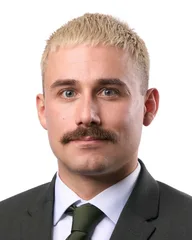
Lukas Sieper | Germany DEU | Non-attached Members (NI) | 390 |
| 2 |
|
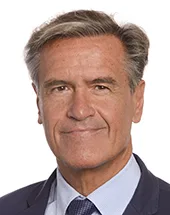
Juan Fernando López Aguilar | Spain ESP | Progressive Alliance of Socialists and Democrats (S&D) | 354 |
| 3 |
|
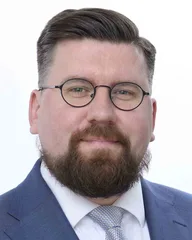
Sebastian Tynkkynen | Finland FIN | European Conservatives and Reformists (ECR) | 331 |
| 4 |
|
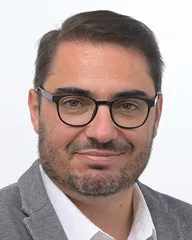
João Oliveira | Portugal PRT | The Left in the European Parliament (GUE/NGL) | 232 |
| 5 |
|
Vytenis Povilas Andriukaitis | Lithuania LTU | Progressive Alliance of Socialists and Democrats (S&D) | 227 |
All Contributions (142)
Violations of right to seek asylum and non-refoulement in the EU Member States (debate)
Madam President, dear Commissioner, dear colleagues, I travelled to Greece recently and I saw – and have heard this before – that a systematic violation of the right to seek asylum in Greece is happening. I will try to outline it to you. Basically, since March 2020, no-one has been returned from Greece to Turkey, and that is Turkey’s fault. But just a year later, the Greek Government still imposed a law, which is the inadmissibility procedure or joint ministerial decree, which basically says that everyone who comes through Turkey, and who comes from Afghanistan, Syria, Somalia, Pakistan or Bangladesh, has to be returned to Turkey. But as I just explained, no one is being returned to Turkey. So this was, from the beginning, absolutely trying to stop the right to seek asylum. And so we have a Kafkaesque situation, where people are being told to go to police stations to be returned, to then ask Turkey whether they would take them, and Turkey doesn’t even answer this. Then the people are being told: okay, you have to wait for a year. They don’t have access to food; they don’t have access to accommodation. We really have to stop this. I ask the Commission to do something about this to guarantee the right of asylum in Europe.
Data Governance Act (debate)
Madam President, I wanted to start by thanking Angelika Niebler for the very constructive cooperation that we had on this file. It was very nice working with you and very fact-based. That was exemplary. I think today’s vote shows that we have actually advanced quite far in our digital policy. You will hear that my voice is still a bit deep because I have jetlag from coming back from the US and talking about data policy to the different stakeholders over there. I realised how close we are to the sweet spot of personal data protection and still enabling innovation at the same time. This is built on the fact that we had a European success with saying that there is a philosophical right of your own data being your own, in a sense, of having that right. Now, we need to transfer that to the industrial data space. We also need to get to a situation where the usage rights for industrial data are equally clear. The Data Governance Act is really helpful because it basically makes it possible to have neutral platforms and data intermediaries if you want data stock exchanges that you can trust and actually share and trade your data. And then, when we get to the data act, I think we have the obligation to ensure that basically we are now applying what we learned from GDPR to the industrial data space in clarifying who is able to trade co-generated data sets. The whole idea behind this is that we can really unlock the innovation potential that we have in our start—ups and that we have in our industries with a lot of very innovative and new concepts and new business models that, as the Commissioner said, will create a lot of jobs.
The deterioration of the situation of refugees as a consequence of the Russian aggression against Ukraine (debate)
Mr President, every morning when we wake to the live documentary of this terrifying war on social media, I feel helpless when I see the images of bombed streets, burning nuclear plants and lines of people fleeing. I feel helpless. But while our options within Ukraine are limited, our options for helping those who are fleeing the war are not. That’s why I wanted to thank you very much, Commissioner, for your swift action and for bringing all the countries together to grant legal protection so fast. And that’s why I want to thank everyone who’s opening their doors currently in Poland, Hungary, Slovakia and Romania, but also all across the continent. But much more needs to be done and we have to adapt to the situation and every moment. So, I would ask you, Commissioner, to also ensure that everyone who’s fleeing is protected, no matter their skin colour or nationality – also the Russians and Belarussians fleeing their crazy tyrants. Even if we decide that some can’t stay, please make sure that they’re all covered by health protection so that they can go to the hospitals to tend to their mental and physical wounds after fleeing. And please ensure that we have a new approach to the European asylum system, so that we can learn from this humane reaction to the fleeing refugees, in our new asylum system.
Shrinking space for civil society in Europe (debate)
Mr President, thank you to Anna, and on behalf of Erik, I would like to thank everyone – the rapporteur, shadows and technical staff, for the great collaboration on this report. It’s a very timely report indeed. The recent intensified crackdown on civil society in Belarus and Russia shows one important truth: an organised civil society is a horror for any form of autocratic leadership because it shows if and how they fail their societies. But we don’t need to look that far. Sadly, we see civil society organisations also being targeted and limited in our own Member States. Some leaders don’t want to allow societies to correct their mistakes. I’ve witnessed systematic persecution and criminalisation in the field of migration, an area where all our governments are currently failing. And the recent events in Ukraine show another and more humane face for Europe in that matter. So let us build on this humane Europe and show that every human being is worth saving, no matter how far they’ve travelled and no matter what their skin colour. Let us build a humane Europe, Commissioner, by supporting civil society organisations, ensuring sufficient funding for CSOs and developing a green strategy for safeguarding civic spaces in the EU.
State of play of the RRF (Recovery and Resilience Facility) (debate)
Madam President, I also want to start on a positive note because I think we have achieved a lot when we look at this year. I think there was a lot of work done, both at Member State level and by the Commission, but also obviously within this Parliament, trying to hold you all accountable in this work. If we think about the adoption of the RRF Regulation, the preparation and also approval of some of the plans, at least the payment requests, the scrutiny that has been done, a lot of work was done. So congratulations on that. But, obviously, now we are entering the next year and so the question is what kind of ambition and what kind of control is necessary for the next phase of the RRF? And here I want to ask us to really try to stay on top of this ambition because we still need to stay strong when it comes to Hungary and Poland and some of the other elements in the plans – we need to ensure that they are corrected. We need to ensure that the operational arrangements are of high quality and fair to all Member States and ensure especially that we have agreed on spending and where it is supposed to go. I would also say that some of the Member States, like Germany, can be ambitious in re-routing some of the money. I mean, there are still EUR four billion, under the new German government, going to hybrid cars, so I think if we have a change of government, this can also be reflected. And this is true for Bulgaria as well. And then we come to control, and here I think we have a couple of elements, which really mean that we need to step-up our game. The first one is we promised to green bond holders that the money will really be spent on green spending. So we need to keep this promise by actually sample-sizing, by testing, by scrutinising in detail the projects that are supposed to be green. And we need to keep the promise to EU citizens that we will use this money to really build solidarity and a strong Union when it comes to economic governance. So I wish us all a restful and great break to be able to do that well.
2022 budgetary procedure: joint text (debate)
Mr President, for the third year in a row now, I was locked away on a rainy November weekend with my colleagues and with the national diplomats to battle over the annual budget, while surviving on very bad sandwiches and bad coffee. For the third year in a row, I have left these negotiations with a curious realisation. Some EU capitals fundamentally reduce these negotiations to how much they have to pay and seem very often to disregard what they actually get for it, their return on investment. In light of this, it may be worth going back to why we actually have a European Union budget. We have it because, some time ago, Presidents and Prime Ministers made a confession, collectively, rationally and out of political self-interest. They made the confession that, in the past, conflicting national interests have led us to radicalisation and, ultimately, war. They made the confession that every nation, however grand and historically powerful, is too small to tackle the issues of our time alone. I would say they made the confession that all our individual nations lost part of their sovereignty exactly because, alone, they cannot safeguard or represent their citizens’ rights when it comes to climate change, healthcare, rising energy prices, leadership and research, global trade, national security and so many other fields which we see represented in our budget. This is why we have a common European budget, and this is why we have a common European institution that helps us thrive and regain some of the sovereignty that our individual nation states have lost. But let’s get back to the content of next year’s budget. From Parliament’s side, the final outcome, as Karlo Ressler has said, is a success. We have barely ever seen such a focused budget underlining our priorities, be it in the fight against climate change, in our solidarity via vaccination campaigns and in supporting our research excellence, just to name a couple of examples. So big congratulations to Karlo and all his colleagues and shadow rapporteurs for the great work. On my side of the table, when it comes to strengthening the institutions of the European Union, I believe we have also achieved quite a lot. First of all, this is true for the European Court of Justice. Justice is always on the side of the weak and the persecuted. Strengthening the Court with additional staff and funds therefore means safeguarding the weakest in our societies against those abusing positions of power, and that is always worth it. Second, we were able to reinforce the Court of Auditors to scrutinise the correct spending of the billions flowing by the European Recovery Instrument. A common responsibility requires hard checks and balances, and the Court is crucial in this regard. Third, I’m also very happy that we were able to reinforce the capacities of Parliament, of this House. After years of increased workload, we have finally managed to strengthen our core legislative capacities, which will improve the quality of legislation for all European citizens. Let me close by thanking the Council Presidency for their fair negotiations and the Commissioner for very creative solutions, Karlo for the great collaboration, Johan for the calm advice, and my shadows for the continuous support throughout the negotiations, but also to my team – Caroline, Zita and Johannes – for their hard work over the last year.
The escalating humanitarian crisis on the EU-Belarusian border, in particular in Poland (debate)
Mr President, one day after the anniversary of the fall of the Berlin Wall, I hear today: walls, walls, walls, fences, barriers, border guards, police, hybrid threat and weapons. It feels like no one cares about the people, the individual stories on the ground anymore. Compassion, colleagues, is not something that we should lose once we become politicians. Let us make sure, first and foremost, that we care for the lives of those in need, and then we can care, secondly, about everything else. But first, we need to care about the lives of the people in need. Once people are safe, we should stop being naive. The weakness that Lukashenko is trying to exploit is not compassion. The weakness he is trying to exploit is that we do not have a European asylum system. None of this would happen if we had a good and decent procedure for people to go through, across Europe, while we find ways to stop Lukashenko from engaging in human trafficking. High Representative, I have two questions. First, will you ensure that there is access for the UNHCR to the European side of the border with Belarus? Second, do you believe that the right to seek asylum in Europe is still intact for the people at the border?
Pushbacks at the EU's external border (debate)
Madam President, after two years of absence, I will be going back to the Greek islands in a couple of weeks, and I’m a bit afraid to go because I’ve just promised myself two years ago that I would improve the situation. But Fortress Europe is still a reality. We build wires and walls and a few of our guards hunt and beat people up, take away their phones and throw them back over the borders. Over the last year, 300 illegal explosions have been recorded in Greece. Two weeks ago, we learned how Croatia is using shadow armies to push people back. And just today, as Sophia has also said, lawyers are suing Frontex – an EU agency – for its role in human rights violations. Commissioner Johansson do not waiver in your defence of asylum law. Help Europe to live up to its values of compassion, law and human rights and let us turn Fortress Europe again into a shelter. For that, let’s set up independent mechanisms to monitor our border guards, make EU funds for migration conditional on safeguarding human rights and trigger infringement procedures against all countries that don’t follow European laws. And please, by all means, never, never, ever legalise pushbacks.
General budget of the European Union for the financial year 2022 - all sections (debate)
Madam President, I would like to thank colleagues, the Minister and the Commissioner for these exchanges. I think we can see this as a start of our formal negotiation to really try to come to the best outcome for our institutions. I just wanted to quickly react to some of the comments that have been made, so I didn’t really fully get the translation of what you were saying, but I’m very thankful for the cooperation we have had so far, and also for you mentioning the potential differences or implications that the Polish situation might have on the budget, because I think that’s actually also relevant if you think about it. How can we transfer money to a country that does not accept the treaties? How can we actually believe that the judges will follow up with due diligence if they’re not bound by our common order? And I think that’s a question that we had discussed this morning, and that the Commission also is currently looking into. Mr Kuhs asked what he should tell his grandchildren and I actually quite enjoyed this question because I think the first answer would be to tell them that, you know, a Europe of segregated nations with closed borders to each other is not a Europe that they want to live in. The second thing, though, which has more to do with the budget, is the question of how we should invest in the future. My colleagues have mentioned many of the points that we believe are relevant for future investment: climate youth programmes, digitisation, ensuring the future competitiveness. I think to get out of this crisis well, the Recovery and Resilience Facility (RRF) is a good tool, but the whole budget is very important to actually build back better. In terms of institutional changes that we can also consider to have in the future better working mode, I think it’s important that when we talk about the budget, we also see the context of the overall architecture of our financial and fiscal framework. And here I’m very happy that we are starting this process of understanding that the RRF was a one time tool, but we have an ongoing understanding or issue with the fact that we have a currency union, but not yet a fiscal union, and that is something that we also need to get to. To end, let me close with what I started with. I think it’s important that we come to a good conclusion for our institutions, for our European Union, to strengthen them, to strengthen the Ombudsman, the Court of Justice, the Court of Auditors, all these institutions that make up our European Union, and I also very much look forward to then, at some point, coming to a conclusion on this budget.
General budget of the European Union for the financial year 2022 - all sections (debate)
Madam President, I am still in shock from this morning’s attack on our rule of law, and also on our institutions by extension, so excuse me if I’m still grappling with this, especially also because good institutions are really the solid rock on which we stand. They are extremely important and a source of – and the first line of defence for – the prosperity and progress of our continent. Good institutions allow us all to negotiate our different ideas, our different interests and preferences, and decide a common political direction. They provide judgments, solve conflicts, discover fraud and fight villains who selfishly seek to profit off the community. Whereas bad institutions, on the other hand, allow a small number of foul apples to put their own power and money above the progress of the many. Bad institutions turn a blind eye to fraud and corruption and bad institutions open the door to state capture, inaction and inequality of citizens in front of the law. Bad institutions allow politicians like Prime Minister Morawiecki to act against the interest of his own people. So what is a good institution then? It’s, quite simply, one that is up to the task, that has the legal means, the people and the political backing to do its job, one that is independent and that can’t be corrupted. Do I think that our current institutions are up to the task? To be honest – and this is quite sad – I don’t think they fully are. We ourselves are completely to blame for this. Despite massive changes in the world and great new challenges for the EU, national governments have not reformed the EU since the treaty change in 2007, and the Council continues to block better decision-making. The EU institutions are not given the means to do their jobs well. We have had the stable staffing policy and cuts of staff for the last years, and somehow this golden calf of austerity really is hurting our institutions and endangering the progress and prosperity that I have been talking about. So we can’t really continue as we currently are. There are many reasons why this has become more of a problem today. First, let’s look at the recovery plan. We have an unprecedented amount of money that is flowing through the different budgets to the Member States. Hundreds of people are needed to really look in the various institutions, to supervise the planning, to monitor the spending of money and to organise the flow of it. Corona has also seen a vast increase in capacities to try to basically grapple with the situation, we have Brexit and other difficult procedures at our borders, and we obviously need to fight climate change, where more resources are needed. So Mr Ressler and I have been tasked to defend the Commission’s budget, but also the other institutions’ budgets, against indiscriminate and horizontal cuts. I wanted to use the opportunity here to thank the fellow shadows for the great cooperation that we had in coming up with Parliament’s position on these matters. Despite all these challenges that I have been outlining, the Council did not come up with a better and more, let’s say, detailed view on where we stand, but really tried to just go for stable staffing, austerity and always the same old narrative. But today, Madam Minister, when we also formally start our discussions about the budget, I would ask you to potentially take into account all these factors that I’ve been mentioning and not just see these numbers, but also the tasks that stand behind them because they are quite important and we need to save our institutions. To say it with slightly more fun words: to stop villains getting fatter, let’s make our institutions matter, to rebut the Polish letter, let’s make our institutions better.
The Rule of law crisis in Poland and the primacy of EU law (debate)
Mr President, I say to the Prime Minister: thanks for coming, but I really wonder, why did you come? Did you come here to shift the narrative with the help of the claps from the far-right? Is this really what you’re trying to do? First, your puppet chord attacks the basis of this House, the Treaties. Second, you write a letter saying that the EU is turning into an autocracy. And third, you come and talk here about legal order, while you’ve been trying to curtail the freedom of your judges for years. I really don’t understand why you came here today, and I think soon you will see that your advisers are wrong and that you have gone far too far with what you have been doing. The Polish people do not want to leave the European Union. We cannot, Commission President, have money flow to a government that does not respect the treaties and therefore we cannot control where it is going. So I ask you to under no circumstance accept the Polish recovery plan and make sure that this tribunal and the judgment are repealed.
European Union Agency for Asylum (debate)
Mr President, today I woke up to the sad news in the media which we had all more or less been expecting: Greece, Croatia, and Romania are pushing people back over European borders to stop them from applying for asylum. At the same time, today, we have the Afghanistan resettlement forum, where we more or less expect that national ministers will agree not to resettle a single soul in Europe. What a day this is already. Why is all this happening? There’s a very simple truth. In the absence of an actual European asylum system, a system that could easily cope with the numbers that we are currently seeing and propose the stability of their asylum claims, we have reverted to a system of violence and terror. Violence and terror as deterrence so that people don’t come. We try to match their suffering that they experienced at home with the suffering that they will experience here. Pushing people back is just the most obvious symbol of the system. Tents at the seaside where, yet again, families freeze with their children this winter is a second, and another 100 people dying in the Mediterranean over the last two weeks is a third. In the absence of a system, we use suffering to keep control. What a shame for this continent and our enlightened society, but then, enlightenment hasn’t stopped us from committing the worst atrocities in history. Now the weird thing is that there is a solution. Building a functioning European asylum system does not mean that everyone who comes can stay. It just means that we adhere to our European values while we are processing the asylum claims. I’m happy that, with the European Asylum Agency, we are an ever—so—little step closer to such a system. While the agency cannot process claims itself yet, it can start organising solidarity between Member States. While some changes would be linked to a Dublin reform, it can already start to set minimum standards and ensure that the rights of asylum seekers are safeguarded in the different European systems. The agency, obviously, with the Fundamental Rights Officer, will have a much stronger role in this as well. In November, I will go visit Samos again. I am quite afraid to go there because I know that I will look people in the eye and have to say that, over the last two years since I last visited, I didn’t really achieve much. However, I am happy that, at least with the European Asylum Agency, we can go in the direction of trying to build a better system. Let’s see this as a start to actually work with those who want to work constructively on a better European asylum system, so that we can give back decency to the people who are arriving and, by extension, to ourselves.
The state of play on the submitted RRF recovery plans awaiting approval (debate)
Mr President, I say to the Commissioner: stand firm. EU taxpayers’ money should not reward governments that violate the most fundamental principles of the European Union. This is especially true for governments that do not accept the primacy of EU law or have a history of corruption, embezzlement and fraud. I therefore urge you not to approve the current Polish or Hungarian plans until we know that this money actually benefits the citizens and safeguards their rights. Stand firm. In addition, Commissioner, let’s prepare well for the future. If you act smartly now, you will be able to stop the flow of recovery money every six months for the next five years. For that to work, I ask you to ensure that the plans have strict six-month targets in improving the rule of law and fighting corruption, and second, to let Parliament help you. Make backroom deals public and give us access to all operational agreements between you and the national governments. Commissioner, we are fighting a good fight. Let’s make sure the tide turns, we improve the rule of law, we fight corruption, and benefit the citizens of this Union. I ask you to stand firm.
EU Blue Card Directive (debate)
Mr President, just yesterday I talked to a young entrepreneur from Berlin, who told me it took him one and a half years to get a visa for the programmer to come to Berlin. One and a half years during which this IT professional could have gone anywhere in the world. In a global competition for talent, that’s just not good enough. If you want to attract talent to Europe, you need to be attractive, and that’s why I’m super happy that today we can celebrate the agreement on the new Blue Card with you from the Commission as well, because finally, people can move from one Member State to the next within one month. Finally, people can take with them the years they agglomerated on long-term residence from one country to the next, making it much more attractive to come to Europe in the first place. And finally, IT professionals can apply for the Blue Card even without a university degree, making this Blue Card the ultimate European tech visa. So today is a day of celebration, and tomorrow we should put our heads together again to ensure that it comes into effect as fast as possible and to tackle, one by one, all pathways for labour migration so that people don’t have to wait one and a half years if they have a job offer in Europe.
Situation in Afghanistan (debate)
Madam President, to anyone who feels empathy, these images from Afghanistan are heartbreaking and shocking to witness. For years, European countries tried to work together towards a more resilient Afghanistan and in this endeavour relied heavily on locals to support this. Amongst these locals are journalists, activists, human rights defenders, women and young people. They knew they took a risk but they still did it, and they were brave enough to support with us and to work with us for a better future for their country. Now they ask for our help, they ask to be saved, but we hear European leaders fostering this narrative of defence and trying to score political gains by playing into nationalistic fears. This is disgraceful. With our resolution today we ask all European leaders to be courageous and compassionate. We ask them ambitiously to step up resettlement pledges at the September Resettlement Forum. We are talking about tens of thousands of pledges that we would need. Second, we ask for safe and legal pathways to be established. We heard about humanitarian visas and we ask for deportations to Afghanistan to be halted, and lastly, to cooperate with all involved actors to ensure that no lives are lost.
Presentation by the Council of its position on the draft general budget - 2022 financial year (debate)
Mr President, our European institutions are in a delicate situation. On the one hand, the economic consequences of the COVID crisis necessitate prudence in spending and planning. On the other, the crisis itself and our responses to it force us to do things differently, to invest and to recover. Minister, let me tell you that I have sympathy for your prudent approach and I myself and the shadows have applied that prudence in developing our position on the budget. We have spoken extensively to all institutions, we have looked at each budgetary line and we have tried to understand clearly where the needs lie. We made clear that this is not a time for unreasonable budgetary increases. But it seems to me that the Council and Parliament still fundamentally diverge in their approach to the budget. Whereas the Council is applying horizontal cuts, the Parliament’s reading is based on a detailed analysis of the needs of each European institution, which supervise, execute and implement EU law and policy. It is one of those needs that I want to especially highlight in this context. As you know, the recovery fund leads to an unprecedented flow of EU money to our economies. I have negotiated this law and I am immensely proud of what we have achieved. However, the Council completely ignores that additional money also requires additional supervision. In this context, it seems bizarre to me that the Council cuts posts and budget for the Court of Auditors and, by the way, also for the European Anti-Fraud Office (OLAF). We should be increasing these budgets because European citizens demand that funds are not being wasted or defrauded. I also cannot understand why you would like to cut many other institutions like the Court of Justice or the European External Action Service (EEAS). All of those posts are, in our view, fully justified and based on the reality on the ground. Finally, I want to remind you of the incredibly important need to reform and update our European institutions at all times to meet the challenges of our time. We owe it to citizens to constantly rejuvenate and reform from within. That’s why I’m incredibly proud that, with COVID, our Parliament has risen to this task and has started a process of internal rejuvenation and reform, which is actually ongoing as we speak. In open process, we have looked at ways in which to be better at scrutiny, we want to improve the committee culture and the hearings in the way they work and we want to strengthen the plenary debates to be more engaging and representative of our issues. I invite all institutions to undergo a similar process of rejuvenation and internal reform. In the same spirit, I invite you, Minister, to push the Council to actually actively engage in the Conference on the Future of Europe, where these debates are taking place on a grander scale. It’s our shared responsibility to ensure that our institutions are ready for the 21st century and that we can actually work for the well-being and interests of our citizens. I can only hope that the Council and Commission join us in the spirit of responsibility, reform and rejuvenation.
Breaches of EU law and of the rights of LGBTIQ citizens in Hungary as a result of the adopted legal changes in the Hungarian Parliament - The outcome of 22 June hearings under Article 7(1) of the TEU regarding Poland and Hungary (debate)
Mr President, Commissioner Jourová, today, despite all odds, is a day of hope. It has been three years since we initiated Article 7 against Hungary. Three years of big words and empty threats. Three years over which the deconstruction of the Hungarian democracy has accelerated. Every day Orbán's government violates the rules that our freedom as a European community are built on. Rules to safeguard the free press and show fair elections, to ensure the independence of judges, rules to protect the diversity of our societies. The new law is another terrible example of how Orbán violates these rules. But today still is a day of hope, because today the European Commission has the power to change this course; because today Parliament and Council stand behind you asking for a strong response; because today the rule of law mechanism is in place; and finally, because today you have the power to make the payment of seven billion euros, equalling 5% of Hungary’s annual GDP, conditional on the change of course. So I urge you to use these powers, then today can be a day of hope.