





| Rank | Name | Country | Group | Speeches | |
|---|---|---|---|---|---|
| 1 |
|
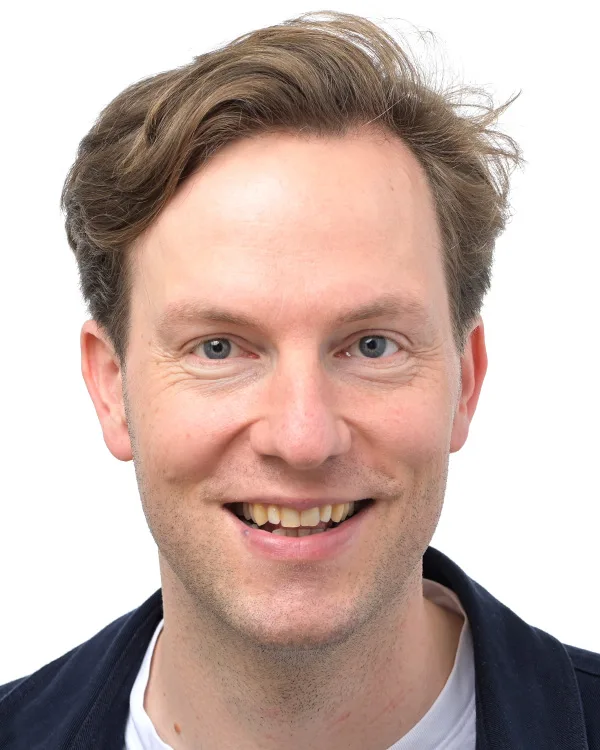
Lukas Sieper | Germany DEU | Non-attached Members (NI) | 390 |
| 2 |
|
Juan Fernando López Aguilar | Spain ESP | Progressive Alliance of Socialists and Democrats (S&D) | 354 |
| 3 |
|
Sebastian Tynkkynen | Finland FIN | European Conservatives and Reformists (ECR) | 331 |
| 4 |
|
João Oliveira | Portugal PRT | The Left in the European Parliament (GUE/NGL) | 232 |
| 5 |
|
Vytenis Povilas Andriukaitis | Lithuania LTU | Progressive Alliance of Socialists and Democrats (S&D) | 227 |
All Contributions (142)
Electoral rights of mobile Union citizens in European Parliament elections - Electoral rights of mobile Union citizens in municipal elections (debate)
Madam President, President Zelenskyy reminded us last week of what it means to be European. Europe is the ideal of diversity, the rule of law, social justice and, above all, peace and democracy. A democracy that, for example, just in the previous debate, we can see where we are fighting for our political ideals rather than just for national interests, at least in principle. But our democracy has left some space for improvement. Over the last 40 years, we didn’t really update the foundations of how we vote, and over the last 15 years, we didn’t update the functioning of the European Union as such. Why? Because our national leaders don’t seem to care too much. If you look at it last year, we triggered the treaty changes and there was no real effect yet until now. No national leader really reacted. We triggered electoral law reforms and, again, nothing. When we look at the right of initiative, there’s also no improvement from the Council side and the same for the right of inquiry. But we should really safeguard our democracy and so I’m happy that at least on this side, when we now look at the rights of mobile citizens, of those citizens that move from one Member State to the next, we do see some improvement. And I do want to thank the shadows for the good cooperation in trying to strengthen their rights. What have we achieved in this report? We propose to the Council to allow for immediate registration so that whenever you come to a new country, you don’t leave your rights as a citizen of the European Union at the borders, but you can actually take them with you and exercise them easily. We want to make it more accessible to vote. So that means that we want to make information available in all languages. We want to make it easier for vulnerable and marginalised groups to vote. We want to make it easier for even people with disabilities, older persons, homeless people to cast their vote. It’s also important that we take note of what works well in different Member States. And so we also recommend to update electoral laws when it comes to postal voting, advance physical voting, proxy voting, mobile polling stations, and also electronic and online voting to make use of modern technologies. We do believe that it should be possible for everyone without derogation to stand as a candidate, as an EU citizen in the different Member States. And it’s now, I think, imperative that we stand together and try to put pressure on the national leaders to actually implement these rights. Because if you look at it, from the 11 million EU citizens who live in different countries right now, only a very marginal part actually stands as candidates. There’s a low voters turnout as well but it’s really striking that in the 2019 elections only over 1 % of the candidates were actually coming from a different Member State. We can do so much more. We can be a real transnational, pan-European democracy. But for that, dear colleagues, we really need to make sure that our strong results that we got in our negotiations are also implemented by the Council and that we do get a treaty change and that we do get an update of our electoral law in general.
REPowerEU chapters in recovery and resilience plans (debate)
Madam President, dear Commissioner, dear colleagues, the EU’s reaction to the corona crisis was, in hindsight, quite impressive. It brought us the Recovery Fund, led to coordinated vaccine production and ultimately made sure that no EU country fell significantly behind. I’m therefore a big fan of the Recovery Fund, I’m a fan especially also because it basically conditioned all spending on green and digital investment and made sure that not a single euro would go into projects that harm the environment. But now I have to admit that the recent reaction I don’t find that impressive. To diversify from Russian gas, we are now subsidising private companies with public money to build LNG terminals and gas pipelines. We fought hard to limit these potential spendings in oil and gas, and I ask the Member States to make sure that they do not spend any dollar in these industries. I think also, if I look now at the newest ideas of State aid, there’s again the idea of potentially allowing gas and oil companies to benefit, and I would just repeat once again that innovation and competitive power come from good institutions and good competition and not by weakening State aid and furthering gas and oil.
The humanitarian situation in Ukraine due to Russia’s attacks against critical infrastructure and civilian areas (debate)
Mr President, dear Commissioner, dear colleagues, yesterday we celebrated the brave people of Ukraine and at the same time there were drone attacks in the middle of Kyiv, in the city centre. I was myself in Kyiv this summer and I fell in love with the city and with the people who are trying to live a regular life despite the constant attacks from the air. But behind their remarkable resilience, there’s a huge and immense tragedy, with attacks on households, families and children at any given point in time. So we must do three things. The first one is we need to look at our sanctions and see if they are economically biting Putin at this very moment and instantly. Second, we need to invest not only with public sector but also with private sector money in the areas of Ukraine that are currently safe with the help of war insurances. And thirdly, we need to make sure that our weapons deliveries are actually working from all our countries, including Germany, with the tanks that are needed. I think we have a chance now with a sanctions package to also sanction political parties and all their party members to make sure Russians have a choice: leave the parties that are pro-war or face sanctions.
The European Year of Youth 2022 Legacy (debate)
Madam President, Commissioner, colleagues, this week we celebrated the 70th birthday of the European Parliament, which, by the way, is also the average age of a conservative politician in this House. I am obviously joking, but I have to tell it to all of us. We have to be honest. If you listen to the Beatles, the Foo Fighters or Limp Bizkit, you’re not young anymore. If the people that go clubbing over the weekend are half your age, you’re not young anymore. So the reality and the funny thing about an ageing societies is that if you’re older, you outvote the young or, to say it a bit differently, the closer you are to death, the more you decide about the future. This obviously leads to absurd situations where you have a German chancellor, Olaf Scholz, campaigning as a full campaign promise to never touch pension schemes. That’s a great strategy if you want to get the old ones. A year of youth won’t change these structural issues. And so we have to ask ourselves, what can we actually do? I think what would really help is to actually give voting rights to 16-year-olds and also to ensure that every 18-year-old across this continent has the right to stand as a candidate for elections. We should prioritise the issues that will have a longer-term effect, which means we should not concentrate too much on the short term. The longer-terms are the ones that will actually affect the people who are young now or that are still to be born. That does definitely include the climate. And then I think as parties, as politicians, we need to make a step, an extra effort, to talk to young people more and to basically show them that it’s more fun to be here to fight against oil and gas than to throw processed food at paintings.
The need for a European solution on asylum and migration including search and rescue (debate)
Mr President, Commissioner, Minister, Maite has just said it has been seven years since we started with the first proposal – since you started with the first proposal on the common European asylum system. And since then, year by year we have been discussing and not much has happened. We have failed more or less to come up with such a system. And every day the right—wingers in this House are very, very happy about this because they can instrumentalise this to grow. And we have seen this. How did Lega get big? How did the AfD get big? How did Marine Le Pen get big? It’s all by capitalising on the fears of migration. This, for me, was one of the reasons of founding a European movement, because I feel that we have not found a system to actually take decisions to solve this issue. And what happens instead is that we have a system of basically deterrence by suffering. We fund Libyan coastguards, we fund billions for border controls, we criminalise NGOs, but we have not found a solution yet. So I would urge you once again, please set up a European search—and—rescue mission. Please ensure that we have mechanisms to embark asylum seekers and please make sure that maritime law is upheld and NGOs are safeguarded.
Assessment of Hungary's compliance with the rule of law conditions under the Conditionality Regulation and state of play of the Hungarian RRP (debate)
Madam President, Commissioner, dear colleagues, after three years in politics, I think I have identified the real big threat for humanity: it’s unhinged, uncontrolled men. Uncontrolled individual men who somehow lost it because of their ego, their delusional narratives, their hunger for power, their narcissistic need to feel important. They are the real problem. We have seen it with Donald Trump in the US. We have seen it in China quite recently. We have seen it in Qatar with the Ayatollahs in Iran and with Putin in Ukraine. Uncontrolled men can be deadly. And sadly, Viktor Orbán, in his own way, is heading in a similar direction. He is unchecked by the media. He is unchecked by the justice system, which he controls. He is unchecked by his party, who would never vote him out of power. He is unchecked by the opposition, who he threatens. And he’s unchecked by the Hungarian people who he lies to, blatantly. However, Orbán does know that you, Commissioner, could actually rein him in by cutting the funds that oil his corrupt machine. And that’s why he’s blackmailing today. But this time he has gone too far. His blackmail is too outrageous and too dangerous. Today he’s vetoing the NATO membership of two EU countries, effectively putting the citizens at risk. He’s vetoing sanctions against Russian oligarchs. He’s vetoing the 18 billion for Ukraine that they need so urgently. And he’s vetoing the global minimum tax on Apple and co., depriving us of better schools and of higher pensions. So, Commissioner, as we can see with Trump, the only language that these people understand is the language of hard power. Therefore, I ask you again, stand firm. Once Orbán reinstates the justice system, allows for fair elections, stops stealing EU cash, invites the European Public Prosecutor’s Office and stops this blackmail, we can talk about unblocking funds. Until then, stand firm.
REPowerEU chapters in recovery and resilience plans (debate)
Mr President, dear colleagues, dear Commissioners, this week because of COP, climate dominates again the narrative and the minds of Prime Ministers and Chancellors, and that’s great. But obviously it’s not enough to just have speeches without clear action behind them. We need immediate and concrete action. And today, colleagues, and tomorrow is a point where we can actually make this happen. Right here with REPowerEU we can ensure that we act on climate. How? We can make sure that there’s not additional money pumped into oil infrastructure. And we can do much better than throwing processed food at Rembrandts and Monets, because here we can actually vote on stopping billions of EU money flowing into the hands of the oil lobby and the oil industry. So this is where it counts and so I ask you, colleagues, please uphold the ban on any money flowing into oil infrastructure, because here today we have the chance to actually make this happen. It is true that we need to ensure energy security, but don’t let yourselves be fooled: we need to be absolutely clear that the current energy crisis does not require investment in fossil fuel infrastructure that will be operational in five years. This does not help the current energy crisis, and we need to make sure that everyone understands that. Solving the current energy crisis means a fast transition to sustainable and renewable energy, and with our votes tomorrow we can make sure that this happens. So thanks a lot for the good cooperation to the rapporteurs. Thank you for the positive negotiations that we had, and I look forward to the vote tomorrow.
Commission proposal for measures under the Rule of Law Conditionality Regulation in the case of Hungary (debate)
Madam President, Commissioner, for three years I’ve been in this house now and every year the situation in Hungary got worse. For three years we have debates here, we have condemnations, we have strong resolutions. And what did Orbán do in this time? He circulated racist rhetorics about mixed races, he had unfair elections and – yes – he continued to steal money every day, European taxpayers’ money. So now finally you have him. You have him because we gave you the power and the tools to actually hold him accountable. So I ask you now, once again: don’t push the conflict down the road to the RRF milestones and targets; make the money only available if there are actual reforms. And as a final remark, I have to say, I think this shows us again that we need to elect the European Commission directly, that we actually reform the European Union so that we can hold our government accountable and actually push for change. Thank you very much.
Statute and funding of European political parties and European political foundations (debate)
Madam President, Commissioner, Minister, it’s amazing that we have managed to write down that European political parties should follow the Treaties, but that should be a given. I think our lack of ambition when we look at this regulation is not sufficient. I’ve been trying to build a European party now for five years with 18 member parties in the different Member States. I can tell you that we need to rethink how we can make them visible and how we can ensure that they are transparent, so that we see where all the money comes from, especially if we have a war of disinformation running. This is not sufficient. The recast procedure, to be honest, didn’t allow us to really go into detail to find these ways of making the political parties more visible and being ambitious in our approach. We have heard a couple of examples where that could have worked, for example, the European political associations. We have new ideas in other legislation that we could have transferred into this one to allow for real European elections. Again, if I see what was happening with the Commission President yesterday proposing that we have a European Convention, we need to be more bold. We need to actually deliver on a European democracy.
Implementation of the Recovery and Resilience Facility (debate)
So then I will wrap up very quickly. So what can we learn from this? I think we need more parliamentary oversight – that’s clear – so that such things can’t happen, like the Polish recovery plan. We need to make sure that we turn the tool into a permanent tool because we can see that new crises are coming up and we need a permanent fiscal architecture to be able to address the challenges that are coming. And we need to make sure that all conditionality, when it comes to the rule of law and green spending, are upheld. Thank you very much for that additional time.
Implementation of the Recovery and Resilience Facility (debate)
Madam President, I was informed there would be additional speaking time because my colleague Ernest Urtasun cannot come, so it will be a bit longer. The Recovery Fund negotiations were extremely intense – and I can still feel parts of this mini—trauma when I see the colleagues here, because of all the all—night sessions that we spent – but they have also been extremely successful. For the first time ever, the European Union decided to take up common debt of such as size to invest us out of the Corona pandemic crisis and all the horrible social and economic effects that ensued. With a large majority in this House, we decided that we wouldn’t just build back in any way, but that we would build back better, that we would build back by fuelling the green transition, by fuelling the digital transition, by making sure that we have new standards for green investment when we do that, and that we also apply this new standard for green investment to cohesion funds. Since then, actually, a lot of remarkable things have happened. We have seen countries implement reforms that have not been tabled for years. We have seen a lot of countries with very good and innovative ideas of how to actually do this green and digital transition. And we have seen that and we have also fought for the fact that no euro should actually go into any form of spending that would harm the environment. That’s the positive side. But we have also obviously seen some issues and I think it’s really important that we point them out so that we can address them and also learn for the future. Some countries still did greenwashing, and I can name Germany with their hybrid cars is one example. Some Member States refuse to adhere to the necessary safeguards for our European taxpayers’ money when it comes to, for example, the rule of law. We have talked about this in the last session, obviously in the case of Poland, but also when it comes to corruption.
The call for a Convention for the revision of the Treaties (debate)
Mr President, I think the first thing that a reformed Europe should do is improve our train system. Colleagues, I want to take one second to thank those individuals who had the foresight to build this Union that we are currently debating in. I think it’s a huge achievement that we have this chance to debate here together. But since the founding, a lot has changed and we have discussed it and heard it here. There are a lot of topics that we need to work on here together in the European Union so the ‘what’ has changed. But also we realise the examples of the ‘how’ that need to be improved. We have heard about the veto. I would add, in general, that we should also improve the Council as a whole, maybe abolish it and replace it with a more functioning body. But I just want to say one thing. This debate is not about left or right. It is not. It is about giving citizens the chance to choose what kind of direction their Europe should take. It’s about empowering a government that is elected by a parliament to make decisions and to be able to act. And if the citizens don’t like it, in the next elections they can vote this government out. So let us not make it about left or right. Let’s make it about daring more democracy.
Parliament’s right of initiative (debate)
Mr President, dear colleagues, you all have said – and I think it’s absolutely clear – that we need the right to initiative. I just want to make this very haptical. This whole House is built on the trust of citizens in their elected officials. We need to live up to this trust. That means that we can do two things that all parliamentarians should be able to do: one is that we are actually able to propose laws and also amend laws that already exist; the second is that we can vote for the European Commission. Then we can transfer the trust that citizens gave us into the actual representative democracy that we should be. I think tomorrow we have a good chance to start this process of Treaty change to bring all of these ideas of a better parliamentary democracy into the European Union. I’m very happy that we are going this way.
The Commission's proposal for "Attracting skills and talent to the EU", particularly the Talent Partnerships with North African countries (topical debate)
Mr President, similar to Mr Oetjen, when I talk to SME founders or start-up founders, what I often hear is that they really need talent as one of the key success factors. Talent is a key success factor for European competitiveness, but we punch way below our weight. Why is that? Because we have 27 completely separate labour markets still. It’s not as attractive as if we had one big labour market because we have these harmful and hurtful narratives that we just heard again here in this House, and the very closed idea of what an identity can actually look like in Europe. And we have an insufficient equalisation of rights which needs to be strengthened. So I want to thank the Commission to bring forward this new package. I think there are very good elements in there when you look at the long-term residence directive. We need to increase European mobility. We need to make it easier to get access to a long-term residence permit. And I want to especially thank you for the talent pool, because this is an idea that I brought to the Commission two years ago, so I’m very happy that it has now been taken up. I think it’s really cool that international talent now has the chance to express their interest to work in Europe and then be matched with European employers. We have to work on that, make it interoperable with what the private sector is already proposing so that we can really attract talent to Europe and make Europe more attractive. So let’s get to work.
The rule of law and the potential approval of the Polish national Recovery Plan (RRF) (debate)
Mr President, I would like to thank the Minister and President von der Leyen for coming here in person for this crucial moment for our Union. Madam President, I said this to Prime Minister Morawiecki when he was here, and it has to be absolutely clear. Our Union is based on Treaties, and treaties need enforcement by a functioning justice system. If we have political puppet courts in our Member States, the laws that we write here are worth nothing. Now, you caved in to the pressures and blackmailing of the Polish Government, and we have seen absolutely zero improvement on the Polish side when it comes to their justice system, and yet you still recommended the recovery plan for approval. The majority of this House, and some of your commissioners, believe this to be a huge mistake. We have little trust that the milestones you negotiated will prevent the Polish Government from sanctioning and dismissing judges, or flooding Polish courts with political appointees; I think this actually falls behind your own criteria. Colleagues, to ensure that the rule of law is upheld, we have to do two things. First, we need to ensure that our national governments do not approve the Polish recovery plan until the judgments of the European Court of Justice and the European Court of Human Rights are implemented. Second, it needs to be clear that we will use all the tools available to us to make sure that the Commission does not approve any European taxpayers’ money, as you have said, flowing to Poland without real reforms taking place. And yes, this also includes the tool to force the Commission to resign. We have to ensure a Union where the Treaties are upheld and a rule of law is in place. So, Madam President, please do the right thing.
The follow up of the Conference on the Future of Europe (debate)
Apparently it’s my democratic right to ask questions, so I will make use of that. I wanted to ask you, if you, as an Italian running on a French list, believe there is something like a European identity?
The follow up of the Conference on the Future of Europe (debate)
So I think it’s very good that you made the effort to go out there. And I think it’s also okay to have a different vision of how Europe should go, which is a vision of where prime ministers and chancellors sit in backroom deals and battle all the deals out on how Europe should work. I just believe that we should fight and I’m fighting for a Europe, where you have a parliamentary democracy, where we can have these debates and where we can fill the government that can then be dis—elected if people don’t like it. I think this gives more voice to citizens also if they’re critical about different policies. But I’m having these conversations and I’m happy to see your study results as well.
The follow up of the Conference on the Future of Europe (debate)
Madam President, fellow Europeans, earlier today, Vladimir Klitschko, who is the mayor of Kiev, wrote that, for Putin, Ukraine is a provocation because it is a democracy. Democracy is a provocation for some people. And we can also see this, sadly, in this Chamber. So what do we have to do? We have to dare more democracy. That’s exactly what they fear. Let us dare more democracy. I said this also on Saturday at the conclusion and I say it now after we voted positively on the transnational list, we need to dare more democracy. If you look at the conclusions that all these citizens that actually dared more democracy came up with, you see that there’s a lot of very positive stuff in there: abolishing the veto, making the Council more transparent, calling it a Senate to make it a real second chamber, and giving more rights and powers to Parliament, including the right of initiative, budgetary powers and so on. So we need to seriously follow up on this. I am very happy that from the Constitution Committee we already requested to trigger Article 48, to trigger Treaty change, and I hope that the countries will follow up, but I also hope that we can follow up on all the other ideas that don’t need Treaty change. (The speaker agreed to take a blue-card speech)
The follow up of the Conference on the Future of Europe (debate)
Actually, I think I will retract my blue—card because I don’t think I’m getting anywhere.
The follow up of the Conference on the Future of Europe (debate)
Mr Benifei, I was just wondering if you would ever run on a transnational list?
The follow up of the Conference on the Future of Europe (debate)
I just have a very simple question. I was here on Saturday and saw the conclusions, I also read the conclusions and my question is: why are you misrepresenting what’s in there, which is actually that we want to strengthen regional parliaments and that we want to strengthen cooperation between national and the European Parliament? So there’s nothing about abolishment of the national regional parliaments, so why are you misrepresenting the results?
Artificial intelligence in a digital age (debate)
Mr President, Executive Vice—President, dear colleagues, first of all, I also want to thank you for the great collaboration. I think we had long hours trying to figure out what the best use of AI in Europe is. But let me go one step back. When we hear AI, I think – and this is thanks to the movie industry – we often think of bots and of holograms of all of us, MEPs, of the Executive Vice—President to be just replaced by AI in this kind of futuristic scenario. But that’s not what AI really is about. In all seriousness, it’s about an objective function. It’s about probabilistic models, and very often our companies are still trying to grapple with what AI is about. So they’re making their way from a very analogue life to an AI—based business model. In this struggle, we see that we have some issues. For example, one is that there’s a strong tendency to market dominance, and that is just the case because you still need a lot of data to train your AI algorithms. I think Europe is trying to find its way in this struggle, and we’ve seen that if you give too much market dominance, there can be abuses of that. We need to find ways to counter that. And we have seen that, for example, maybe in the Chinese model, AI is used to control society. We have to also fight against that. So what can help us to make these steps correct? I think it’s crucial that we make our algorithmic function focus on human agency, and this has been said before. So we need to safeguard fundamental rights, but we also need to find markets concentration. That can be done if we enable our start—ups, our companies, to enter these markets so there’s no closed markets, and there’s no market dominance. I think this is a struggle that is worth fighting and that is also very much represented in the report. Let us continue the struggle, in the Data Act and all other files that are still being discussed in the AI world, so that we create a European way of looking at AI and make it possible for our companies to thrive.
Election of the Members of the European Parliament by direct universal suffrage (debate)
My question is in regard to the European parties. I mean, how many of your voters really know the EPP? That’s my first question. And the second question is: if you don’t like the transnational list system, what is your idea of improving the European Union? Because we have already lost one Member State, the United Kingdom. We need to get more democratic. What’s your idea of improving the European Union?
Election of the Members of the European Parliament by direct universal suffrage (debate)
Paolo, there’s no animal like the EU, so you won’t find any comparisons in other systems. The second point, on bringing European citizens closer; you change nothing by just giving them a second vote. How can that bring citizens further away from the European Union the first time they can actually vote for a European party that you’re part of? And third, on the Spitzenkandidat, there is no system on this earth where the Spitzenkandidat is actually registered in the law. So this is in Germany – I don’t think in any other system – this is by practice, so why do you think that this is worse than, for example, the German system?
Election of the Members of the European Parliament by direct universal suffrage (debate)
Mr President, 18 years ago today, 10 countries joined the European Union in enlarging the ‘original club’. And I think what we have learned and seen over the last 20 years is that basically, the backroom deals between chancellors, prime ministers and presidents do not work anymore. And why is that? Because they are too non—transparent, and they’re inefficient. And so what we need to do now in this mandate as well is to give a voice to European citizens. And this is exactly what the second vote does. It gives a second voice to citizens, allowing them to actually express what kind of Europe they want. Is it a more restrictive Europe, a conservative Europe, where migration is a bit curbed, where you have more money for small and medium-sized businesses, and money for Europol? Or is it a more social Europe, where you have minimum wages and I don’t know what? Or is it more liberal, or is it more bold, whatever kind of Europe they want. So you dare more democracy, you don’t take a single thing away from citizens – you give them a vote. So don’t listen to those people who tell you it’s otherwise. Don’t listen to those who say, ‘28 people, they are so far away from the citizens’. That’s not what this is about. It’s about bringing European parties closer to citizens; that they can, actually, for the first time in their lives, vote for them, say: I like this European programme, I like this European candidate, I like this European party, I want this. Currently, they can’t. And so this is what this is about. Don’t listen to the people who say, ‘oh, the small and medium—sized Member States, they won’t have a voice’. This is not true. In the first place, if you look at Europe, small and medium Member States field the biggest and most prominent figures already. But it’s not only that. In the file, as Verhofstadt also said, there are enough conditions in there to ensure that this is not the case. So don’t listen to them. This is really about all of us thinking, as a Parliament, how can we ensure that we can make the step towards a European parliamentary democracy, how we can dare more democracy? And that’s why I would really ask you to vote in favour. There are other positive elements, we have heard about them. There’s voting age 16, and this is an indication which is positive. There’s a better gender representation with quotas and zipped lists, and there’s a lot more positive in there that is in regard to minimum standards. But there’s also one really negative element in there and I have to mention this. We introduce a threshold of 3.5% for Germany, which, from my perspective, is really sad and bad. I have not heard a single sound argument why this is needed. There’s not a single sound argument out there, and it does take away five million votes from European citizens. That is as much as the smallest five Member States together. I would still ask you to vote in favour, even though it reduces my likelihood of getting re—elected, because I think it’s so important that we give citizens a voice, and that we dare more democracy with the second vote.