
| Rank | Name | Country | Group | Speeches | |
|---|---|---|---|---|---|
| 1 |
|
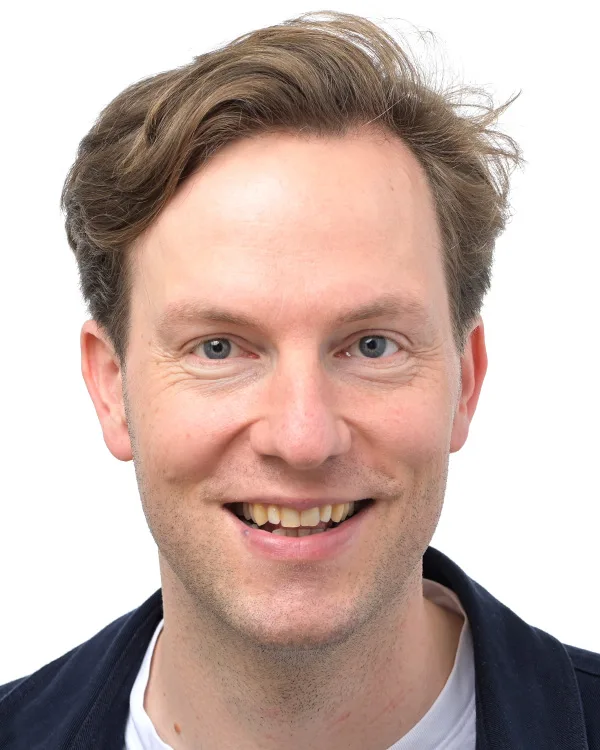
Lukas Sieper | Germany DEU | Non-attached Members (NI) | 390 |
| 2 |
|
Juan Fernando López Aguilar | Spain ESP | Progressive Alliance of Socialists and Democrats (S&D) | 354 |
| 3 |
|
Sebastian Tynkkynen | Finland FIN | European Conservatives and Reformists (ECR) | 331 |
| 4 |
|
João Oliveira | Portugal PRT | The Left in the European Parliament (GUE/NGL) | 232 |
| 5 |
|
Vytenis Povilas Andriukaitis | Lithuania LTU | Progressive Alliance of Socialists and Democrats (S&D) | 227 |
All Contributions (142)
Promoting EU digital rules: protecting European sovereignty (debate)
I have a very, very simple question: Can you explain why the same people who said today that Veggieburger is fake news – that they should be banned as fake news – why exactly the same people say that we cannot control content online?
Promoting EU digital rules: protecting European sovereignty (debate)
There seems to be unhappiness about the debate. I just wanted to ask you the same question that I asked Mr Benifei. What do you think about these new AI tools that are basically a mix of image-generating AI and social media, like Vibes – and there are others – where basically your whole feed is generated by AI? There's no more, let's say, actual video content. Do you see that there are increased risks for fake news?
Promoting EU digital rules: protecting European sovereignty (debate)
Mr Benifei, you are an expert in AI, and so I wanted to ask you, what do you think about the recent developments of social media that is fully powered by AI, by allowing customers to completely generate, if you want, fake content? What do you think about it? And second, as a trans-Atlanticist – that you are also, I think, a big fan of, how can we react to the current situation that there's anti‑democratic pressure also from the US?
Promoting EU digital rules: protecting European sovereignty (debate)
So the access to reach is always a position of power. And it's true, in the past we had the situation where journalistic boards had some power about what goes out there, and there was a separation, at least in Germany, between these boards and their ownership. At least we want to have that separation. In the digital world, the owner of a platform, like Elon Musk, also holds the power key to the boost. He decides what the content is and he can spread it wherever he wants. The idea – that especially far‑right people have, actually – that if we all shout, there's some form of fairness of information, is not true. The one who defines the rules defines what the reach is.
Promoting EU digital rules: protecting European sovereignty (debate)
Mr President, colleagues, if I wanted to go viral today, it would be very easy. I would just fabricate a little fake scandal with the people here in the first row. I would throw in some Soros, some Trump, some Elon Musk children, and suddenly, maybe, I'd make it very aggressive or make it very vengeful, hateful. Suddenly, we would go viral. Then you would say, 'Yeah, but people don't believe it. You know, they wouldn't believe that kind of stuff that Damian is making up.' But then it doesn't really matter, does it? Because the damage is already done. The truth is destroyed. People start to distrust what they see online. Now, we could say we have the Digital Services Act, and that's true. But in its core, the Digital Services Act is a consumer protection instrument. It is not a democracy protection instrument. That's why I would ask you, Executive Vice-President, to think about a digital democracy act. An act that takes our rules that we have – around elections, for example, with posters – and transfers them into the digital age; that checks for political bias; that looks at these algorithms and makes sure that AfD content is not randomly accelerated.
Promoting EU digital rules: protecting European sovereignty (debate)
Ms Maydell, it sounded very nice that you said we need to build strategic autonomy, but I didn't really understand what you meant. Do you think that if Trump forces us to potentially open some of our regulation that we should go ahead and do it because we are dependent when it comes to security? Or how would you go about it? Because it seems that we are currently in a situation where we are not resilient, we are not sovereign, and where our social media is completely biased.
Rising antisemitism in Europe (debate)
Madam President, It is interesting when a colleague of the AfD stands here and says that under an AfD government everything would be better if she had colleagues in the party at the same time who say that the Holocaust was a fly-shot, or call herself the friendly face of National Socialism. These are all quotes from your party. So please, think about it again. Madam President, antisemitism is intolerable. The Holocaust must never be relativised. Today, as we commemorate 7 October, a horrific terror attack claiming the most Jewish lives since the Second World War, we remember the victims. Since then, we have seen a disturbing rise in antisemitism. Hate has grown across Europe: in Manchester and Berlin, online and offline. Our Jewish friends and disciples united hide their kippahs on their way home. Houses of worship have been defaced with hateful messages meant to frighten and threaten. The situation is intolerable, and to me, this is what we have to learn from Germany's guiltFrom our historical responsibility to fight it. We must therefore confront it in all its forms, be it in our security systems, in education or in regulating content online. However, it is also important that in our fight against antisemitism in Europe we need to differentiate between legitimate, albeit diverging, positions on the conflict in the Middle East on the one side, and the hatred of Jews on the other. We need to be able to talk about both, because in the end, debating positions is a sign of a healthy democracy, but antisemitism is a sign of a democracy falling apart.
This is Europe - Debate with the Prime Minister of Luxembourg, Luc Frieden (debate)
Madam President, Prime Minister, let me ask you quite plainly, will you support the United States of Europe? You said it yourself, this table here, this House only exists because before us people thought about a better future. They understood that they don't want to stay in the horrors of the Second World War and build something that brings Europe together. But now you were there last week in Copenhagen, and I wonder, where is the spirit of European unity and dreaming-big gone? You had the chance to decide on sanctions against Russia, to take the Russian assets and give them to Ukraine. You had the chance to build the drone wall that Mr Weber was talking about, and you had the chance to do what Marc Angel said, which is opening the Treaties to actually improve this union. So I'm wondering, where are we headed if our leaders, the 27 Heads of State, don't have the courage anymore to think about a better future? So let me ask you again, will you support a United States of Europe? What will you do to bring Treaty change to the 27 leaders? What will you do to make sure that our children have a better European Union, that we have a defence army, that we have a government that is elected by this House, by the European Parliament. What will you do to bring the United States of Europe into reality?
Taxation of large digital platforms in the light of international developments (debate)
Mr President, dear Commissioner, you should not have caved to Trump's bullying. You should not have stripped the digital tax just because of the looming US-UK trade deal. Let's be clear: a fair tax on big tech should not be a negotiation chip in any trade negotiation. Nobody likes to pay taxes, but employees pay them and small business owners pay their fair share as well. Why? Because they understand that we need them to afford our pensions, subsidise trains and for high-quality health care systems. But tech giants don't pay their fair share. In general, they pay around 9 % of taxes in Europe, while traditional businesses pay 23 %. So, since they are creative, we should be creative as well. First, how about we introduce an Amazon tax, a tax that is basically put on every product sold on large online platforms to equal the competition with local shops? Second, how about a social media tax? We could make Meta, YouTube and TikTok pay for every user that they have in Europe, for example EUR 1 per user. Third, how about a network usage tax, so that big tech actually pay for the networks and the infrastructure that they use? Commissioner, every company that profits from Europe should also profit Europe.
Investments and reforms for European competitiveness and the creation of a Capital Markets Union (debate)
So, I think in Poland your party was governing for some time. It doesn't happen often, but for Germany, I do agree with you. We even had a liberal finance minister, a liberal party, which is supposedly helping the economy, who did not really advance on the savings and investment union and the capital markets union. So, I think it's really high time that the new German Government stands up for a better European perspective on a capital markets union because we really need to tear down these fences between the different countries in order to have the innovation boost that we really need.
Investments and reforms for European competitiveness and the creation of a Capital Markets Union (debate)
Madam President, Commissioner, let me put this report in a bit of a broader perspective: Russia's war of aggression has driven up the energy prices for European producers, a bully in the White House has cut US demand for European products, and China is outpacing us in many sectors and becoming more of a serious competitor. Our economy is at risk and the funny side effect of this is that the more we stagnate, the more people run to the false promises of the far‑right populists who say that we can just go back to the past. So, urgent action is really needed. You promised here that we would have a capital markets union, more investment to somehow drive innovation, that we need to shoulder the pension costs for an ageing society. But we didn't see much happening, as the colleagues have said, over the last year. So, Commissioner, I think we really need to step up our game if we look at this broader picture. We need to scale national successes like the investment and savings account from Sweden, we need to allow for more investment into venture capital funds from pension schemes, and we need in the MFF a horizontal target for start-ups and SMEs.
Digital Markets, Digital Euro, Digital Identities: economical stimuli or trends toward dystopia (topical debate)
Mr President, dear colleagues, let me humour you on the far right with a little dystopia of my own. Let's imagine you wake up tomorrow morning and you try to go to the bakery and buy a croissant, and suddenly it doesn't work; Visa and Mastercard are down – and with them, two thirds of all payments in the EU. Then you are slightly annoyed and hungry, and you go to your office and boot up your computer, and then suddenly your Microsoft Outlook doesn't work anymore. Then you try to text your boss and say, 'This doesn't work, I need to text them', and then suddenly WhatsApp doesn't work anymore. And then you want to check at least your files, and you see your cloud files are all gone. Now you might think this is a crazy dystopia, but it is actually just a tiny little executive order. It's an executive order from your friend away from actually happening. And this is the dystopia we are facing. We have to build real sovereignty in Europe – not the fake sovereignty that you are proclaiming – and really try to make sure that our payments work in the future, which is why we need the digital euro. We need the sovereignty of our innovators, which is why we need digital markets. And we need to make sure that we can debate freely and in a sovereign space in our digital world, and this is the Digital Services Act. So let's make sure that we stand up for sovereignty – for European sovereignty – with a strong European regulation in the relevant fields.
Implementation report on the Recovery and Resilience Facility (debate)
Madam President, thank you for the flexibility, and thank you to the rapporteurs Mr Mureşan and Mr Negrescu for the continued good cooperation. I want to start with addressing a misunderstanding. When the Recovery and Resilience Fund was set up, we saw a situation where within the euro area, interest rates for treasuries were increasing. The financial markets were not sure if the euro area would, in its current form, be able to shoulder this crisis with countries having different fiscal space in their different fields. So it was a daring and courageous huge success to put the RRF forward already with its inception by stabilising the markets. I think there are a couple of really miraculous innovations within it, and I think we should really acknowledge them. The first one is that we had this unprecedented solidarity by taking up debt, and probably pushed GDP up to 1.4 %. Second, we combined reforms with investment, which is in itself a huge success and should be carried over into the future. Third, we tried to really bind outcomes and targets into the measures to make sure that citizens can really feel this. I think the learning from all of this is the RRF is a success, and we should make sure it continues.
EU support for a just, sustainable and comprehensive peace in Ukraine (debate)
Madam President, dear colleagues, for 1 169 days now, Ukraine has been subject to a full‑scale invasion: 1 169 days of sirens, of sleepless nights, of death, abduction and rape; 1 169 days of crimes committed by North Korean and Russian soldiers, and of strong Ukrainian fighters fighting for their independence, for democracy and for European Union membership. And still some Members of this House have the audacity to say that these Ukrainian fighters do not want peace. Peace can be achieved the second Putin retracts his troops and when he stops bombing Ukraine. Nobody would attack Russia, nobody would attack Putin, in this case. But he does not want peace. And even the super‑troll Trump has not been able to achieve any form of listening from Putin. So if you want to go to Russia, Fidias, or if you on the left and right, on the far left and far right, want to listen to Putin, you can do that. But you should ask him for peace and not repeat his lies here in this Hemicycle.
A revamped long-term budget for the Union in a changing world (debate)
Mr President, colleagues, Commissioner, after Trump's 'Liberation Day' tariffs, we saw a really unusual market response. We saw that both US treasuries and the dollar fell in the face of the erratic behaviour of Donald Trump. So if there was ever a time for a Hamiltonian moment, it is definitely today, when we can issue common debt. The MFF is not only about the future budget, but it is also a once-in-a-lifetime and once-in-a-decade opportunity to anchor investor trust. We are currently stuck between a decreasing budget from EUR 2 trillion, with the IMF and the MFF, back to almost only EUR 1 trillion, while our challenges are increasing and all of you have mentioned some of these challenges like competitiveness and innovation. But we have a chance now to basically come forward with a permanent EU-level bond where we create a deep, liquid, euro-denominated safe asset that will allow us to be on par with the US treasuries and go into the investments that we need for our European Union now. Let's seize this moment; let's use this Hamiltonian moment to issue common European debt.
Savings and Investments Union (debate)
Mr President, thank you, Commissioner, for the presentation of the report. I have to say, these are not normal times. In normal times, maybe it would have been fine to propose a patchwork of ideas on how we can become a bit more unified in our financial markets. But we have seen a situation where European competitiveness is at risk with the tariffs that come from the US. We have also seen a situation where still the S&P 500 has seen a 5 % decline year to date since January, and indices like the DAX are actually improving by around 15 %. So, we have a huge potential now to really build European competitiveness. But for that, we cannot just do a little patchwork of ideas, but we have to do an actual Union. We have to do something that is worth being called a Union. For that we need two things: we need national leaders to change how they decide about European fiscal and financial rules – and this is something that also ECB President Lagarde has asked for this morning, we need to wake up, we need fundamental change – and we need more investment in our innovation capacity. And here in this proposal I do see too little of that.
Commission Work Programme 2025 (debate)
Madam President, Commissioner, over the last 50 years, the US listed 200 companies with a market value of more than EUR 10 billion. And Europe – we listed 14. These companies are not just any companies. They're the companies that shape the way we live, how we communicate, how we shop, and how we entertain ourselves. And I see in this work programme that we again differentiate between competitiveness, industry and then on the other side, start‑ups and scale‑ups. I think that's a fundamental mistake. We have to think our competitiveness, our industry from those who innovate, from the start‑ups and scale‑ups, and then we will be able to compete. Let me look at the programme from that perspective. First, compliance. It's great that we have the 28th regime – the EU Inc. – as a proposal in there, but when I look at harmonisation of our rules in Europe, there is too little. Simplification must mean harmonisation. Second, when I look at capital, it's great that we look at the securitisation again, but I wonder where is this proposal on venture capital that you have been proposing in the past? I can't see it. We need money to go into the future industries there as well. And then third, access to talent. I'm sorry, but there is too little when it comes to activation of the female workforce. When I look at the internal migration in Europe, it's impossible to hire someone across the continent without having tax issues. Why is it not possible to go there? And lastly, on talent migration, the debate we have here in this House but across Europe on migration is too negative. We need to attract all these smart people from the Silicon Valley that are now looking for a new home.
Preparedness for a new trade era: multilateral cooperation or tariffs (debate)
Thank you, Ms Hahn, for your intervention. I was just wanting to share a question that I have. If we see trade as a bit of a broader collaboration, if we look at, for example, how we use the digital infrastructure when it comes to cloud infrastructure, if we look at the raw materials that we need from the US, it seems that our whole economy is really built on collaboration with the US. I'm quite afraid of what it would mean to disentangle this. So, how do you think we should assess the risk of a potential trade war in all of these fields, the broader fields of digital infrastructure and such?
Cryptocurrencies - need for global standards (debate)
Madam President, cryptocurrencies themselves are just a technology, but I always have to get a bit careful when I see how excited the far right gets about a certain technology. It reminds me of a saying that I've heard recently, which is that 'not all crypto traders are gangsters, but all gangsters are in crypto'. And now with Trump also launching his meme coin – which I think had a value of USD 40 billion market cap at some point – we really have to ask ourselves how we can get better. The good thing is we already have great standards with MiCA here in Europe, which enables the innovation that we need and fights the misuse and the risks that we can see with people trying to agglomerate power and money without end. So what we need to do now is to really set up global standards. We need to transfer MiCA into global standards so that we can have the innovation that cryptocurrencies can unleash, but fight the risks that are there.
Geopolitical and economic implications for the transatlantic relations under the new Trump administration (debate)
Mr President, I'm always amazed by the far right of this House. There was a mentioning of the new sun of democracy rising across the ocean, and I was wondering that maybe some of the colleagues got a bit too much sun already when I look at what they're saying. They're saying it's amazing that we have this expansionist person now there, but then I hear a Danish far-right guy saying: 'Yeah, but maybe don't take Greenland. You know, that's not so good.' So when it goes against your own interest, then suddenly you realise that maybe if there's an expansionist on the other side, it's not so good to be a patriot and in favour of that. There are three main implications of Trump taking power. The first one is about the economy, the second one is about security, and the third one is about democracy. When it comes to economy, we need to work closer together. We need to go into free trade agreements to diversify trade. We need to really unleash innovation in Europe and build the interior market. When it comes to security, we need to understand that 17 different tank systems for the same category in Europe doesn't make sense. We need to be able to support Ukraine and defend ourselves. And when it comes to democracy, I can only ask all citizens of the European Union to get active in politics now, because we really need you in the centre and not in these false patriotic parties.
Misinformation and disinformation on social media platforms, such as TikTok, and related risks to the integrity of elections in Europe (debate)
Dear colleague, you used your one minute to speak about the evil von der Leyen not doing the right things in Poland. And sometimes I wonder, we're here talking about a situation where Putin is heavily influencing elections in our continent, actually also within your proximity. So, I'm just wondering, why did you choose to rather focus on Ursula von der Leyen and potential situations in Poland, rather than on our common big enemy, Putin, who is influencing right now elections in Europe? Can you answer that question?
Misinformation and disinformation on social media platforms, such as TikTok, and related risks to the integrity of elections in Europe (debate)
Thank you, Fidias, I have a couple of questions because, as you said, you have a lot of experience in this field. The first one is, do you really believe the quality of politics has improved with all these extreme things? I mean, the videos you make, they need to have a hook, they need to be somehow engaging, but it feels like they're also often quite limiting and simplistic. And when I listen to what the colleague, Mrs Disinformation here, has been saying, I have heard that von der Leyen is blackmailing politicians, that she has ordered somehow the courts in Romania to act a certain way, that we smell like sulphide – I don't know where that came from – that the LGBTQI community has been weaponised, that we are in an Orwellian State – this all seems to be disinformation. So how would you improve the quality of information on social media?
A European Innovation Act: lowering the cost of innovating in Europe (debate)
Mr President, I have the firm belief that Europe can unfold a huge potential. We are probably only at 10 % of where we could actually be when it comes to innovation. But I'm with my colleague from Renew, Anna Stürgkh, on the fact that we have exhausted our vocabulary for innovation. And the question is: didn't the politicians in the past also want to be innovative? And why are we not there yet? The truth is that there are a couple of reasons. One is – and I think it's the most important one – that all politicians face a dilemma. Do we give cash to existing big businesses who, together with their unions, say, 'hey, we really need some money to survive this next innovation'? Or do we give some money to new industries and use it to actually save innovators? It's far too easy to save existing jobs, and it's very difficult to build those that can't scream for your attention yet. So when you talk about access to capital, idea generation, when you talk about regulatory burden, when you talk about all these things, it's great to put that in an Innovation Act. But the actual place where it should be is the clean industrial act, the main programme of the European Commission. So I was very happy about your nomination as a start-up Commissioner, but please make sure this is not just one side element of the European Commission's programme, but the actual core piece – that the innovation pact is the core piece of the Clean Industrial Deal. And then we will be successful if we also break national egos.
Promoting a favourable framework for venture capital financing and safe foreign direct investments in the EU (debate)
Madam President, first of all, I want to thank you, Commissioner, for your five years of service: we will spend another five years in this Chamber, but you are free to go. I think the problem awareness is there. We all know that we don't have enough VC capital, and this has been said, I'm very happy that Draghi put it in a new report so we can all see it very clearly again. But then, I wonder, why don't we do anything? The reason that currently nothing is happening – and that Nvidia, Microsoft, Alphabet, all these companies are basically being established in the US – is because of our national egos. We had this conversation recently, the Capital Markets Union is in everyone's ears, but nobody is actually committing because they all want their nations to prevail. That is weakness and that is the perspective of cross-border rather than interior market. So I think we really need to do a couple of things now: we need to unlock the Capital Markets Union. We need to ensure that we really work with the 28th regime, wherever we can, to establish an 'EU Inc', at least to make it easier to invest and scale. We need to make it easier to leverage mezzanine funds and EIB and EIF investments, and we need to make it easier for institutional investors to invest in VCs.
Presentation by the President-elect of the Commission of the College of Commissioners and its programme (debate)
Madam President, dear colleagues, even a failed German Government started with a happy photo at the beginning. But when I look around here, I see that the coalition is already fuming. And that is because, Mr Weber, you chose to strong-arm the social democrats and the liberals into a coalition with Meloni, and because you decided on reforestation and budget votes with the German AfD. What a great start. Why are you so afraid to accept the Greens into a formal coalition? Why are you so afraid? I can tell you, I sit with them for five years now: they don't bite. Mr Weber, stop choosing the far right over the Greens and Volt. Dear Commission President, looking at the US, Ukraine, Germany and France now, and even Romania, we really need a strong European government. We at Volt will therefore stay pragmatic, and we have asked for the group to stay pragmatic, because we need this government to be strong. But please, don't accept the Union as it is. Advance it, reform it, so that European citizens and this House can nominate and vote for the European government.