



| Rank | Name | Country | Group | Speeches | |
|---|---|---|---|---|---|
| 1 |
|
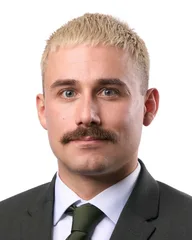
Lukas Sieper | Germany DEU | Non-attached Members (NI) | 390 |
| 2 |
|
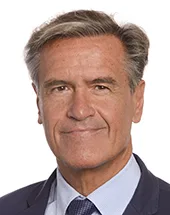
Juan Fernando López Aguilar | Spain ESP | Progressive Alliance of Socialists and Democrats (S&D) | 354 |
| 3 |
|
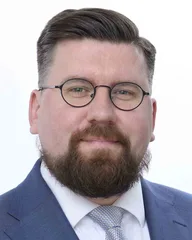
Sebastian Tynkkynen | Finland FIN | European Conservatives and Reformists (ECR) | 331 |
| 4 |
|
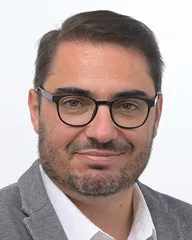
João Oliveira | Portugal PRT | The Left in the European Parliament (GUE/NGL) | 232 |
| 5 |
|
Vytenis Povilas Andriukaitis | Lithuania LTU | Progressive Alliance of Socialists and Democrats (S&D) | 227 |
All Contributions (142)
Need for a speedy adoption of the asylum and migration package (debate)
So I think what I was trying to say and what I said is that every far right party in Europe has grown on the topic of xenophobia and migration and asylum, and that is the truth. I also condemn anyone that uses easy populist solutions of saying, you know, the others are evil and we should keep them out. And it doesn’t matter what kind of party family they’re from. But it’s definitely true that every far right politician sitting here has used this rhetoric and even went so far as to using Nazi terminology in this House. And that is not okay and that’s not acceptable.
Need for a speedy adoption of the asylum and migration package (debate)
Mr President, we do need a deal and we do need a system very fast, because otherwise we will hear this kind of fear mongering from the right that we heard earlier, not even shying away from Nazi terminology. This is something we have to get over. There is no far right party that didn’t rise on the topic of migration and asylum. I think that’s very clear. But it does matter what kind of deal we get, what kind of system we get. And here I just want to say that while I’m happy that maybe we have a crisis position soon, it also matters what’s in that position. And to be honest, what the Member States are currently proposing doesn’t really work. I mean, let’s look at it. Jailing people and children in the camp would have not helped Italy in Lampedusa, nor would it have helped the asylum seekers. Extending the time of jailing wouldn’t have helped. Transferring some cash to Lampedusa from other Member States wouldn’t have helped. So we need to look at the actual system that we want and that actually works. So a system that works would have fast decentralised procedures, a system that works which, understand that we are one union, and that we need to distribute people across the Union to not have borders. A system that works would have understood that integration challenges and opportunities need to be solved within integration and not by reducing the amount of migrants or asylums that we get here. And a system that works would have a functioning search and rescue system, a system that works wouldn’t put anyone in camps, especially not children. We are better than that. And a system that works wouldn’t follow negative rhetoric, but understand that 75 % of people actually getting asylum decisions at the moment in Germany are positive. So let’s work for a system that works rather than just closing any deal. (The speaker agreed to take a blue-card question)
Interim report on the proposal for a mid-term revision of the Multiannual Financial Framework 2021-2027 (debate)
Madam President, Commissioner, Minister, colleagues, we have said that there are many challenges that the European Union is facing – amongst them, a crazy dictator putting tanks into Ukraine and neighbouring countries that hopefully soon will be a candidate, and obviously the global competitiveness challenge due to the overdependence of supply and demand on China and the need to create, massively, green jobs and phase out brown ones. But all these challenges need cash, need funding to be addressed, and if we look at what has been proposed by the Commission with the placet of the Council, it is not enough. I mean, 50 billion for Ukraine is a good start, but it will not be sufficient to even cover the pensions and wages if the US doesn’t live up to its part of the deal. This will not be enough to trigger reconstruction. When it comes to a common investment strategy, I’m sorry, but we know that Germany alone spent around 10 billion for one single factory in Magdeburg, so it cannot be enough to just have, you know, 6 billion out there to strategically invest. This will not be good for the single market. Let’s get real. We need to address the challenges of our time. For that, we need a budget that is actually worth it.
Parliamentarism, European citizenship and democracy (debate)
Mr President, colleagues, I want to thank the rapporteurs for a strong draft and I want to agree with Mr Karas, the thing that the populists fear the most is a functioning parliamentary democracy. And what is a parliamentary democracy? It’s not so complicated. If we were just 100 people in a room, we could potentially still decide together. But since we are many more millions of people, we delegate our power to a couple of people to take decisions. To be able to take decisions, meaning I can bring in new ideas. That’s the right of initiative. I can decide on the government that is actually governing these decisions that proposes new ideas. And I can decide about how the money is allocated, the cash, and that’s budget authority. You bring these three points in your report, and I think they’re very, very crucial. In addition, I really like that you also look into what happens in between elections and there are good ideas of citizen participation that we can learn from. And it should also be clear that if I move to another EU country, I have the right to also participate in the democracy that is there – national elections, regional elections, and of course, the European elections.
SME Relief Package (debate)
Mr President, dear colleagues, Volt – the political movement that I represent – is technically a start-up, maybe by now a scale-up. And we are very much aware what it means to deal with compliance requirements, trying to find affordable lawyers and fight artificial market barriers. Colleagues, we all talk and we love to talk about the backbone that SMEs are for our economy. But we really need to look into the details of the laws to understand what we can do to help them. We need to make sure that they do not need lawyers and legalists to be able to understand what the law looks like. I can give you some positive examples where we have managed to do this. For example, in the Data Act, we ensure that some compliance criteria don’t need to be fulfilled if you’re a small company. And also in the Ukraine facility, we are trying to currently channel a lot of the money also to the SMEs to ensure that we help them. Why? Because SMEs are not only the backbone of our economy, they are also the backbone of our society and they are the ones asking for democracy and for free societies. So we should really help them strive.
Composition of the European Parliament (debate)
Mr President, so we rubber-stamp this proposal by the Council with the 15 extra seats, the deletion of the transnational lists and the invalid budget effect. Okay, we can do that. But I think we have to see that we have learned two things: first, that the Council can be extremely fast if it wants something; and second, that we in Parliament can be extremely weak even if we have negotiating power. Why? What I mean is: what if the Council also acted quickly on the electoral law? We have been waiting for one year to even hear from you on this regard. The transnational lists should be decided there and I am happy that we will have a chance to do that. But this also applies to treaty change. From my perspective, this Parliament already triggered Article 48 more than a year ago as a follow-up to the Conference on the Future of Europe. And what about us? We can say that a consent procedure is not a strong procedure, but the MFF is also a consent procedure, on the seven-year budget, and there we have a full negotiation team actually fighting. The approval of the Commission President is also a consent procedure. So let’s learn how to be stronger and how to really defend our citizens’ interests rather than to bend to national party leaders.
Amendments to Parliament’s Rules of Procedure with a view to strengthening integrity, independence and accountability (debate)
Madam President, colleagues, it’s really high time that we come forward with this report. It has been months since Qatargate happened and we haven’t done much. So I’m very happy that now with the majority of the groups, we actually come – thank you, Gabi – forward with this report. I just want to say it very clearly – transparency does not conflict with the freedom of the mandate. We have nothing to hide and we have a lot of trust to win back. So it’s good that we show what kind of side income we earn, what kind of meetings we have, because we have nothing to hide, and how we spend our money, because we have nothing to hide. Transparency is not in conflict with the freedom of the mandate. I am proud that I could contribute to a more transparent House, and I wish that we all vote in favour of the most important report that we will vote now. Let’s live up to the trust that we need in this House because why should people follow laws if they don’t trust the process that actually makes them? Let’s live up to it. Let’s vote in favour of this report.
Amendments to Parliament’s Rules of Procedure with a view to strengthening integrity, independence and accountability (debate)
–Mr Benifei, I just have a very short question, which is in regards to the freedom of the mandate. People who criticise the new rules often say it would somehow infringe on the freedom of the mandate. Can you understand that argument?
Global Convergence on Generative AI (debate)
Mr President, it is true that, when we started using ChatGPT, I think we all realised it is a bit like this book On Bullshit, by Harry Frankfurt, the great philosopher, who showed us that, you know, the bullshitter doesn’t really know what the difference between truth and lie is, and he’s much more dangerous actually, than the liar because of that. But to be honest, the more I used it, the more I understood its potential. It helped me actually write a code to, you know, write my own chatbot in Python, commit it to GitHub and then like upload it to Heroku to somehow make it work. I couldn’t do this without the help of, basically, ChatGPT writing that code for me. So what do we learn from this? I think we need a couple of principles out there to help us really work with it. The first one is that we should make sure that large models are safe to use and not biased. We should educate our kids, but also our politicians to be able to understand what this technology is. We need authenticity labels to understand what kind of content is AI created. We need to make sure that those who own the data benefit from it or have the right to safeguard it. We need to tax locally to stop concentration of wealth. We need to make sure that public data is used for public good. We need to make sure that we have a start—up friendly ecosystem to be able to have good AI models here, and we need smart enforcement in global coordination.
Recommendations for reform of the European Parliament’s rules on transparency, integrity, accountability and anti-corruption (debate)
Madam President, I just want to remind us of what happened exactly six months ago. Six months ago, in a small household in Portugal or in Bulgaria, every child on their phone, on Instagram and so on heard about the European Parliament. That’s really cool. We bridged the communication gap really to everyone! Sadly, what they heard is that we have bags of cash in our pockets, and we have not been able to win back that trust that we lost back then. We have not been able. This report is going in the right direction, but it’s not going to do that either. So, the key question for us has to be: what can we do to win back trust? Especially since in one year we have elections again and, if we don’t win back that trust, people don’t go to vote or they vote for the radical people who say, ‘Oh, they’re all evil anyway. They’re all corrupt.’ For me, the key question is: what can we do? We can show who we meet publicly, because we don’t have anything to hide. We can show how we spend our public funds that are given to us, because we don’t have anything to hide. Let’s be transparent about the way how we work, and then we can maybe win back some of the trust.
Tax the rich (topical debate)
Madam President, I have to say, when I listen to this debate, I’m always amazed by how much tax as a debate is ideologised – how populist it can become – because if I listen to the right, it’s often about safeguarding the wealth that is there, not destroying the wealth. And on the left side, I often feel that, you know, the rich are the evil people. I have to say that, from my perspective, tax is always an infringement of rights. And if I then look at who are we infringing upon – because we do want to have the public goods that we are having and we have to finance them – I would actually also say that we definitely need to radically decrease income tax, labour tax. It’s too high. At the moment, it’s really hard to afford to buy your own flat, to afford to even come through the month in a good way. And I believe we have to look at the tax revenue. And if we look at it, I mean even The Economist – which is not seen as a very leftist paper – said that the tax that actually has the least negative incentive is the so-called death tax, inheritance tax. So let’s try to really ensure that we don’t have generational wealth so much, but that everybody has a new and good chance by decreasing income tax and increasing inheritance tax.
The need for EU action on search and rescue in the Mediterranean (debate)
Madam President, colleagues, I just want to go back to what actually happened, which is that almost 600 people died. I think we hear a lot of talk about asylum, about smuggling and so on, but we should really picture what that means. I mean, here there are around 700 people if the room is full, and what that would mean if almost 600 of them would die. I think it’s important to picture, for a couple of moments, people actually drowning in the bottom of a boat. Then we talk about search and rescue, and I ask myself why do we actually call it ‘search and rescue’? Eric, you described it quite well. They were first ignored in this boat and then they were not rescued but they were towed away, which is why the boat very likely capsized. So we shouldn’t call this ‘search and rescue’. We should call this something like ‘ignore and risk their lives’. Costas, you said that’s a crime. Yes, it’s a crime – and the crime is not that we’re not following up with smugglers, the crime is that we’re not doing enough to save these lives, that we are stopping NGOs from going there. And yes, that is an Italian problem as well as it is a Greek problem. I really believe we need the EU—led search and rescue mission, we need to monitor what happens and we shouldn’t forget the lives of these people that are lost.
Externalising asylum applications and making funding to third countries conditional on the implementation of return agreements (topical debate)
Madam President, this is now the second plenary in a row where we hear this far-right kind of fearmongering about migration. And it’s clear because, in the end, this is the only topic that actually drives your voter base. You take a highly complex issue and you trying to propose inhumane, complex and unpractical solutions. I have seen it with the AfD: it was a dying party but then they took the issue of migration and try to grow on that. But we have to be honest to our citizens: the real solutions don’t lie there. We already fund third countries like Libya – actually militias over there – to build camps, to host people there. And we see murder, we see rape and we do not see a humane solution. So if we want to really defend the European way of life, our European values, we have to find solutions that are actually in accordance with that. So let’s find a European asylum system with a European asylum application. And then I’m sure the far right will deflate like a popped balloon.
Impact on the 2024 EU budget of increasing European Union Recovery Instrument borrowing costs - Own resources: a new start for EU finances, a new start for Europe (debate)
Mr Körner, these are exciting statements that you have made. What I'm wondering is: If you really look at the recovery fund now and we have seen that there was actually no bank run, that none of the European countries actually ran into any debt trap and we managed to get out with a higher economic level if possible, wasn't it really worth making this recovery fund and taking on the debt here?
Impact on the 2024 EU budget of increasing European Union Recovery Instrument borrowing costs - Own resources: a new start for EU finances, a new start for Europe (debate)
Mr President, Commissioner, colleagues, I have to say I’m extremely happy that 78 years after the end of the Second World War, I came across the French border and I’m discussing now a common European debt instrument. That is a huge, let’s say, satisfaction for me as a federalist and as a speaker of the pan-European party. The instrument has been a huge success if we look at the fact that we were able to invest ourselves out of the corona pandemic and that we as the EU have shown that we can be a stable borrower. So I think we have to say this first, but obviously more needs to be done. We need a European finance minister in order to actually organise the own resources taxes that would make us independent at a federal level. Obviously, we also need to make the RRF, the Corona recovery fund, a permanent tool that would allow us to implement reforms and push for investments whenever it’s needed.
Decision to enter into interinstitutional negotiations: Long-Term Residents (A9-0145/2023 - Damian Boeselager) (vote)
Madam President, I think we can see that the colleagues from the far-right managed to get a lot of speaking time to spread their poisonous agenda, nativist agenda on migration. But what I have to say, what surprises me is that they didn’t open actually all the laws, because my law is not part of the asylum pact. This law is part of the talent and skills package. It’s about attracting international talent to Europe. So I do not understand why you challenge this, because this is actually about the fact that we are losing workforce: 50 million people over the next 30 years. Our start-ups, our hotels, our companies need talent. We need to find ways to be more attractive. This bill actually allows permanent residents to be able to work all across the European Union. When you come as a migrant to the EU you don’t face one labour market, you face 27 markets. And even under Trump, the US was more attractive to international talent than the EU. Why? Because if you get fired in New York, you can find a job in San Francisco. When you want to find a new job, when you work in Sofia or Berlin, you have to go through the whole procedure of getting a visa again. So let’s vote in favour of this bill. I thank my shadows and I thank you for the strong support for this bill.
The need for European solidarity in saving lives in the Mediterranean, in particular in Italy (debate)
Mr President, I have to say, I’m still amazed by this debate because it should be about saving lives, but instead we repeat our points about the asylum system. I think what’s clear is that we currently let people die in the Mediterranean. We let them die by ordering container ships and fisher boats to stand by and wait, we let them die by criminalising and jailing those who want to pull them out of the water, we let them die by systematically funding Libyan coast guards that bring them back to their man-made hells, where they face exploitation, rape and murder. Colleagues, it has been said, but we have to say it again: we need state-funded, state-led search and rescue missions. We need a truly European system of solidarity, where we also allow for disembarkation across Europe. And we need to stop scandalising migration because this actually just drives the points for the far right as we can see now. The real solution is to find a European common asylum system, because otherwise we will delegitimise the European Union as a whole and we need to stand up to our values.
The need for European solidarity in saving lives in the Mediterranean, in particular in Italy (debate)
Mr Benifei, I was just wondering how you see the reactions and the effects of the state of emergency that was declared in Italy and on the overall debate on migration within the country.
Question Time (Commission) - Legacy of the European Year of Youth
Mr President, thank you very much for giving me the speaking time. I have a very quick question regarding the fact that, obviously, the closer you get to death, the more you decide about the future, which is just a fact due to the demographics that we are currently facing. So I was wondering, in regards to more hard power for youth, would you support a voting age of 16, as we’ve also asked for in the electoral law act from the European Parliament? And what do you generally think in terms of allowing younger people to participate, not only in elections but also when it comes to standing as candidates for these elections?
Data Act (debate)
Madam President, dear Commissioner Breton, dear Pilar, dear colleagues, more and more devices – windmills, ships, aeroplanes, paper-cutting machines – are connected to the internet. It’s the internet of things, after all. But who can have access to the non-personal data that these devices produce and who is allowed to share it with others? That is what the Data Act is about: deciding who should have access to what kind of data coming out of connected devices. That’s why I think this law is actually right up there with GDPR and the Digital Services Act when it comes to the importance for the European digital economy. I think overall we have risen to the occasion, and here I want to explicitly thank Pilar and all the other colleagues for the very good cooperation that actually helped us improve the Commission’s proposal. Let me give you two examples of where I think we definitely improved the proposal. First, we put the user, the owner of the connected device, back into the centre. They can decide who they want to engage in contracts with and who they want to share the data with. Second, we created incentives for both the user and the data holder to share data on data markets. And that’s really the core. We need liquid data markets so that new cool startups can come use this data, connect it and build new ideas and applications. However, there’s one point where I don’t think we got the balance correct, and that is what kind of data can be shared. Here, we gave a million excuses to the data holder to not share data. Trade secret protection, security settings, non-compete provisions, complex algorithms; we made the list so long that the Data Act is in the risk of becoming a data suppression act, allowing data holders to basically not share data. That’s short-sighted protectionist policy. We need to make sure that in the next step, when we negotiate with the Council, we have the maximum amount of data to be shared with the user who is actually producing the data with its use. So let’s fight for that.
One-minute speeches on matters of political importance
Madam President, so I asked an artificial intelligence to tell me how to regulate artificial intelligence in Shakespearean English and here is what it said, ‘Good people all, lend me thine ears. A tale of import I bringeth here, of something great that cometh nigh, an age of AI that dost defy. It hath the power, and speed as well, but also doth bring a weighty tale to tell. We cannot stand idle and let it be, but must regulate it, lest it harm thee. Regulation we need of this device, to guide its course and set the right prize. It must not bring bias to the fore, nor infringe upon our rights, that’s more. Transparency must be its guiding light, and accountability with all its might. And not just some, but all shall gain. Equality and fairness shall not be in vain. So let us act with heart so true and regulate AI as we ought to do. It is not a hindrance, but a path made clear, to make progress sustainable and bring good cheer.’ Thank you very much. I think it’s very insightful into how AI works.
Union Secure Connectivity Programme 2023-2027 (debate)
Madam President, colleagues, Commissioner, I just wanted to also chime in here one second, because as a former negotiator of the European Space Programme, it obviously makes me happy to see that we are taking the successive steps to actually make this European moonshot a reality. We all know that we can try to save old industries, curb state aid and really try to preserve what’s already there, but I think what’s much more fascinating is to build on the innovative capacity of the European Union. We have amazing start—ups in the space industry, and I’m very happy that you also mentioned the downstream commercialisation. If we make data available, if we make the internet available, what kind of opportunities, possibilities do we have for new bright minds across Europe to actually make use of that and make us competitive by new ideas, by new frontiers, that we can obviously best see in space?
Following up on measures requested by Parliament to strengthen the integrity of European institutions (debate)
Mr Engerer, I very much agree with your idea of having transparency in all meetings that all MEPs have. I was wondering what you think about the transparency on staff meetings. So for assistants, but also for the administration.
Following up on measures requested by Parliament to strengthen the integrity of European institutions (debate)
Madam President, it has been two months, two months since bags of cash were confiscated. Since then, multiple of our colleagues, people who we work with, people who make laws or who have made laws for all Europeans have been jailed. Every household across the European Union knows about this. But there is a second scandal. And the second scandal is that we haven't done anything since then. Nothing has happened. What have we done? We have written resolutions. We have a new task forces. We have working groups for transparency, working groups for the rules of procedure. But we haven't tangibly changed a thing. This is, for me, a second scandal. We need to act now and we need to get back the trust now. We need to win back trust now by implementing the changes we all know. Further protection for whistle-blowers. cooling-off periods for MEPs, stringent transparency on conflict of interests and financial declarations, biting sanctions. But also transparency on every meeting that every one of us has, no matter the capacity, with lobby groups and interest groups. This is simple. Let's win back trust now, let's win back trust for the European Parliament.
Electoral rights of mobile Union citizens in European Parliament elections - Electoral rights of mobile Union citizens in municipal elections (debate)
Madam President, thank you, colleagues, thank you also, Commissioner, for the positive words. Just one quick word upfront to our colleagues from the far right. I think you’ve still not really understood history because nations were created to overcome smaller units called kingdoms and dukedoms, and back then being a nationalist was being for progress. And I think you really misunderstood the concept of progress. When I started thinking about the theory of democracy, basically when I started building the movement, I heard very often that people don’t really care about the theory of democracy or voting. And I do think that’s absolutely wrong. I think people care very much if they exercise their freedom to move across borders and then are deprived of the democratic rights. I think people care a lot if they’re trying to vote or stand as a candidate and they can’t do that because the voting booth is not accessible. I think people care very much if their vote is unjustly stolen because of unjustified thresholds. I think they care very much if candidates don’t have the chances to present themselves. So, colleagues, democracy is fragile and I think we should really use every opportunity to create trust in democracy, to improve our democracies, and ensure that we strengthen it with all our power. And so I’m very happy that we take this step here now, also as a step towards better democracy, against autocracy and for our common European values.