
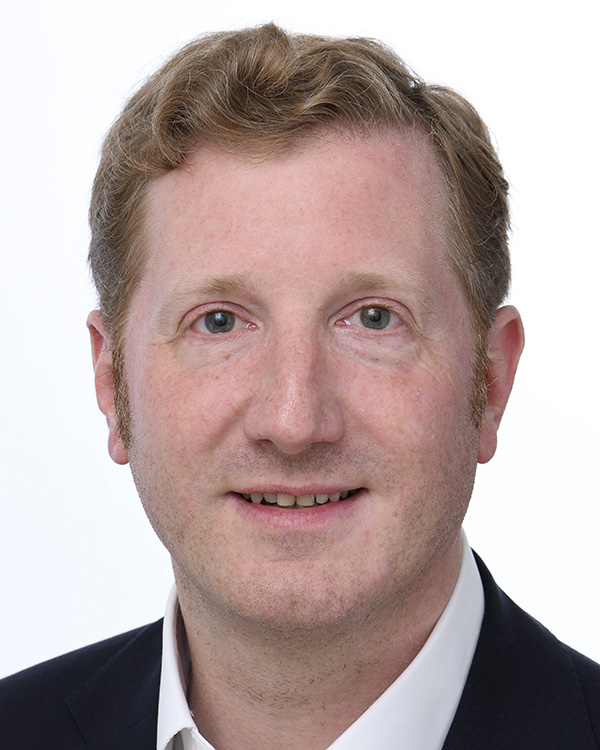

| Rank | Name | Country | Group | Speeches | |
|---|---|---|---|---|---|
| 1 |

|
Lukas Sieper | Germany DEU | Non-attached Members (NI) | 390 |
| 2 |

|
Juan Fernando López Aguilar | Spain ESP | Progressive Alliance of Socialists and Democrats (S&D) | 354 |
| 3 |

|
Sebastian Tynkkynen | Finland FIN | European Conservatives and Reformists (ECR) | 331 |
| 4 |

|
João Oliveira | Portugal PRT | The Left in the European Parliament (GUE/NGL) | 232 |
| 5 |

|
Vytenis Povilas Andriukaitis | Lithuania LTU | Progressive Alliance of Socialists and Democrats (S&D) | 227 |
All Contributions (197)
Threats to stability, security and democracy in Western and Sahelian Africa (debate)
Madam President, Commissioner, ladies and gentlemen, Since the fall of the Gaddafi regime in Libya in 2011, the situation in the Sahel region has been highly unstable, as Mr Gahler has just pointed out. Because as a result of this, weapons circulate, mercenaries are hired in different countries, organized crime is spreading. Since 2012, thousands of soldiers and peace missions have been deployed in various international missions in the region. And I would like to take this opportunity to thank all the soldiers who have done this and remember those who have fallen and think of their families. The missions were launched as security issues in the Sahel region have a direct impact and a direct link with security in the European neighbourhood, in the Maghreb, but also on the coastal states in the Gulf of Guinea. We are dealing with the region today because we are concerned, because after various military coups – it has just been mentioned – in Mali, in Burkina Faso, but also last year, the situation is more precarious than ever and terrorism and organised crime are at a peak. Of course, the missions we sent also had success in the fight against the jihadist terrorists. But we must note that the strategy so far does not seem to have led to a lasting and long-term success. So, from my point of view, we have to question: What do we really need to change? What do we have to do new? And what you mentioned, Commissioner, is certainly all right. But isn't it just more of the same? Do we not perhaps have to consider how we can strengthen democracies in the region better than we have done so far, how we can better strengthen the international organisations that are present in the region? I believe in multilateralism, and I believe that we can only work on it multilaterally. But how can we better support ECOWAS? I believe that we need to rethink our own strategy in a self-critical way and that we need to do so in dialogue with our African partners. Mr Gahler said: The food crisis is coming and will further destabilize the region. And I believe that we need to hear what our partners expect from us and where we can help, and we need to define for ourselves what our conditions are for us to be able to deliver that help.
The Schengen evaluation mechanism (debate)
Madam President, Commissioner, Madam Rapporteur! I am pleased that today we can talk about the Schengen evaluation mechanism. For Europeans, Schengen is part of their identity. The freedom to travel to other countries without these internal border controls is for many people the greatest achievement we have in the European Union. We must cherish and nurture this achievement. This also includes the fact that there are rules on implementation that the Member States must comply with. How these rules are controlled is what we're talking about today. And I support the report in its demands, which say that if there are controls in the Member States on how implementation works, they must of course be unannounced. What else is the point of controls, ladies and gentlemen? If irregularities are detected, which has happened regularly in the past, then there must be a clear and short timetable for how to remedy them. Ladies and gentlemen, if the Member States do not put an end to these irregularities, then of course we also want an infringement procedure, because the functioning of the Schengen mechanism must under no circumstances be disturbed. But I would also like to take this opportunity to turn to the Commission and say that Member States too often deviate from the standard rules in the Schengen area today, introduce border controls, which are then permanently perpetuated. I would really like to urge the Commission that, if such exceptions are allowed, they are really only allowed for a short period of time and that we then return to normality so that we have a freedom, a freedom to travel in the European Schengen area.
Violations of right to seek asylum and non-refoulement in the EU Member States (debate)
Dear colleague, I would like to know how you are going to distinguish asylum seekers, whether he is a real refugee or whether he is someone who has reasons to apply for asylum, if you do not allow that person to make a real statement so that you can examine his wish. How will you know if he is a real asylum seeker, if you do not allow him to apply?
Violations of right to seek asylum and non-refoulement in the EU Member States (debate)
Madam President, Commissioner! Everyone has the right to apply for asylum – by the way, not to be granted asylum, but to apply for asylum. This right is denied to some people. By the way, this right exists regardless of what color of skin you have or what religion you have. And in times when many refugees from Ukraine come to us and many countries also very openly welcome these people – which I can only support and find good – I would also like to say that the same right applies to people who come to us from other cultures. These people have the right to be treated humanely. This has to do with accommodation and proper procedures. And, as the Commissioner has just said, UNHCR has reported, there appear to be misconduct in some Member States. People are being pushed back at the border. They are denied the right to exercise their right to apply for asylum. And, ladies and gentlemen, that too is part of the rule of law that such an application can be made. And part of the rule of law is then also that there is a procedure and the application is accepted or not. I believe that we need an independent monitoring mechanism in these countries, where non-governmental organisations also cooperate and check whether there are such rejections, whether there are such pushbacks or whether international asylum law, the Geneva Convention on Refugees and the European Charter of Fundamental Rights are really respected. And there are question marks in Greece, Poland, Lithuania and Croatia. And I expect that the Member States will clarify this and that those who do not abide by the rules will be clearly held accountable.
Situation in Afghanistan, in particular the situation of women’s rights (debate)
Madam President, ladies and gentlemen, I have two daughters that I have to think about when we talk about women and girls in Afghanistan. And I find it unbearable that colleagues from the AfD here say from this desk that it must be accepted that in Afghan society women are beaten, so we should not rise above it. But I would like this Parliament to rise up. I want us to say: No, we do not accept that because we do not accept that women, that girls are deprived of their rights. Ladies and gentlemen, women's rights are human rights, and they are inalienable, applicable everywhere and to everyone. And I believe that, as the European Parliament, we have a duty to stand up for human rights at all times, including women's rights, girls' rights and women's rights. And in Afghanistan, women should have the opportunity, girls should have the opportunity to go to school. This feeling that they are learning something, that they are progressing, that they can develop further and thus advance society, is what we should stand for here. And I want this European Union to stand up for that.
The deterioration of the situation of refugees as a consequence of the Russian aggression against Ukraine (debate)
Mr President, ladies and gentlemen. In the face of Putin's war of aggression against Ukraine, the European Union is responding with solidarity. It is true that we are now activating the Temporary Protection Directive. As Europeans, we open our house to Europe and our hearts and welcome the refugees who have to flee Ukraine. It is now right that we provide immediate assistance. However, support is needed for the states that organize the initial reception. I firmly believe that we need to send support from EASO and other agencies to Poland, Hungary, Romania and the other countries, and that in the end we probably also need a mechanism for the distribution of refugees, at least if the electricity does not break off. It is true that the Temporary Protection Directive also says that it is possible to start work, and I would ask the Member States to ensure that this actually happens, that children are educated, that students can continue their studies. Ladies and gentlemen, we all do not know how long this war will last. We hope it ends soon, but we don't know how long it will last. That is why we must do everything we can today to ensure that the people who flee to us find a home with us.
Political crisis in Burkina Faso
Madam President, ladies and gentlemen, Commissioner! It has just been mentioned that the situation in the Sahel is a difficult one, a region marked by instability. At present – as has just been said – it is the fourth coup d'état in a country in the region. And I think that, as Europeans, we also have to ask ourselves a little bit: What is the role we have played in the region and want to play in the future? We are discussing this role of the European Union at the Summit together with the African Union. And I hope that we, as the European Union, will be a partner on an equal footing with African countries and that we will do our part to enable the region to return to stability and security. The situation in Burkina Faso, which we are talking about today, is characterised by a large number of terrorist attacks. It has just been said by Maria Arena: About 7,000 victims, 1.5 million displaced people in the country. And this situation of insecurity, these terrorist attacks have been an intolerable situation for the population, so that this coup is to a certain extent a reaction to the sense of lack of security that could not be guaranteed by the government of Burkina Faso. I would also like to say at this point that we must not neglect or lose sight of the fact that in the region also Russian mercenaries from the Wagner Group We as Europeans must be careful that these Russian mercenaries are not seen as a solution to security problems. Because, ladies and gentlemen, these Russian mercenaries are not a solution to security problems, they are only exacerbating these problems. J’invite les Burkinabè à retrouver le chemin de la démocratie et à retourner à l’ordre constitutionnel. Je demande aux militaires qui sont au pouvoir actuellement de garantir une transition pacifique, avec un calendrier clair, pour le retour à des élections ou à un processus électoral clairs et démocratiques, pour que le burkina faso puisse rentrer dans le rang des démocraties. Sur ce chemin, dans cette quête, le Burkina Faso aura tout le soutien de l’Union européenne.
EU-Africa relations (debate)
Madam President, Mr Borrell! It is good that today we talk a lot about human rights, education and justice in Africa. But I have the impression that we are talking a little too little about concrete projects, about concrete projects that, for example, the African Union itself has committed itself to. They have launched an Agenda 2063, and I would like to highlight one of these projects because it is important to me that we get away from this attitude of thinking better of what is good for Africa than the people of Africa themselves. One of these projects is the single African airspace. This may sound very special now, but we're discussing climate change a lot here. And you know, if you want to go from one African capital to another, it is regularly suggested that you first fly to Europe and then fly back to the African continent. We have the know-how in Europe with our EASA. We have the knowledge in the Commission and we should help to implement such projects initiated by the African Union itself. That is why I would like to draw your attention, Mr Borrell, to this project.
Political crisis in Sudan
Madam President, ladies and gentlemen, Commissioner! Since 2019, when the dictator al-Bashir was deposed, there has been a kind of division of power between the military and civilian governments in Sudan. But on 25 October 2021 there was a military coup, and since that military coup there have been protests in Sudan. Protests for a return to a democratic process, protests for a return to a civilian government. And people gather and demonstrate, and these gatherings were crushed, were forbidden. People were killed, many hundreds were injured. We in the European Parliament stand with the people who fight for democracy. As the European Parliament, we stand with the people who stand up for human rights, for free elections and civil liberties, and we do so in Sudan. And that is why we call on the military leaders in Sudan to stop all violence. We call on them, in particular, to put an end to the violence that has manifested itself in recent months, for example, against medical institutions. Because this is a violation of human rights and humanity that we do not want to accept. We expect the way to be cleared again for a process towards a civilian government preparing free elections in Sudan. In particular, we support the UN Tradition Mission, which aims to facilitate this process and dialogue within Sudan so that Sudan can live in freedom and peace in the future and the people of Sudan can strive for a better future for themselves and their country.
The proposed Council decision on provisional emergency measures for the external border with Belarus based on article 78(3) TFEU (continuation of debate)
Mr President, Commissioner, ladies and gentlemen! Yes, Lukashenka has abused people – inhumane. Yes, it was correct that the Commission immediately offered support from EASO and Frontex. And yes, it was also right that you immediately took care that the flights were stopped and no more migrants were brought to the border. I congratulate you on this, because it was very successful. It worked out well. There won't be any more. But that's why your statement is just as correct: We do not have a migration crisis. We do not have a migration crisis on the border between Poland and Belarus, but we have a rule of law crisis at this point. And I would like to make it clear here that, because we do not have a migration crisis, we do not need your proposal either. Because this proposal is intended for situations like the ones we had in 2015 and 2016, but not for a situation where 10,000 people are affected. We will probably be able to cope with 10,000 migrants in the European Union. We'll probably be able to handle that! That can't be the problem! That's why we don't need your proposal. What we need is for all the Member States of the European Union to abide by the rule of law that we have agreed in our European Union. And this also includes the fact that people who come to a border have the right to have their asylum application examined. This does not mean that everyone gets asylum, but first of all that you take care of the people, that you give them a roof over their heads, something to eat and that an asylum application is accepted. And then you can decide how to proceed. But just letting people die in the woods now is indecent.
New orientations for the EU’s humanitarian action (debate)
Mr President! The EU is the largest donor of humanitarian aid, as has been said on several occasions. I would like to stress here that humanitarian aid is the expression of European values. It is the expression of European values because we show solidarity with the people who, by chance, were not born like us in a prosperous society, but on a continent where it is more difficult. It is an expression of our solidarity with people who also have a human dignity that we are trying to support. It is therefore important that, given the increasing number – and it has just been said that we now have 274 million people in need of humanitarian aid – we increase the financial resources we provide as the European Union on a permanent basis in line with our needs, in view of these increasing numbers. This is the only way we can actually help the people who need our help and solidarity.
The humanitarian situation in Haiti following the recent earthquake (debate)
Madam President, the assassination of President Jovenel Moïse was a great shock and added to the already very difficult situation. Let’s put the crisis into perspective. Nearly 5 million people in Haiti are in need of humanitarian aid; in the capital of Port-Au-Prince alone, close to a quarter of a million people are in urgent need of emergency assistance, and 19 000 people have been displaced in their own capital from gang violence that has significantly worsened in the last year. In addition to all this, Haiti has been hit by the worst earthquake since 2010. International actors have shown a great amount of solidarity on the ground, doing what it takes to make sure that humanitarian aid reaches its target. But Haiti has been struck by more than one crisis, and it becomes increasingly clear that aid alone is not enough. Gangs are dominating the streets of Port-Au-Prince, killing dozens by day, staging kidnappings and, not least, blocking aid and stealing critical humanitarian aid. And now there’s no clear leadership in the country, so we all ask: who can secure the situation for aid workers, as the police is not seen as somebody who helps? We, as the European Union – and I go along with Maria Arena’s view, have to do the utmost possible in order to help the people of Haiti, to show solidarity and to do everything possible from our side in order to help to meet the needs of the people.
Pushbacks at the EU's external border (debate)
Madam President, Commissioner, Minister, colleagues! Yes, people are being abused, brought to the European external border to destabilise Europe – by Lukashenka with the help of what do I know who. But even if these people are abused, it must be clear: We cannot allow Member States in Europe to act in violation of international law and for people who come to a border and ask to be able to apply for asylum to be denied this access and for them to be able to apply for asylum. Push-backs Access to the European Union is denied. This is contrary to international law, we must say this clearly. And the clear signal here from the European Parliament must be: We will not allow this to happen, and we will tell the Member States who are doing this that it is unlawful. We must see that some Member States have institutionalised this. If you look at the figures – you mentioned Croatia, Commissioner – then this is a situation that is normal in Croatia today. I believe that we need to be very careful that we get a mechanism that allows for independent viewing: What is happening at our external borders? That people can go, regardless of time and place, to decide where to control... (The President withdrew the floor from the speaker.)
European Union Agency for Asylum (debate)
Mr President, ladies and gentlemen, Today we are making some progress, and we are showing that we can do that, that we can make compromises on issues of migration policy, and that is a good sign. I think that here in this House we should not be impressed by the hate speech of the far-right and ultra-conservatives, but we should try to form common compromises that correspond to the values of this continent. And that's what we're doing today: With the decision on EASO, the European Asylum Agency, we are going one step further and strengthening this asylum agency in its important role of supporting fundamental rights, the fundamental rights of the people of Europe. And we have problems in Europe, and we must not downplay them either. We have problems with how people who come to Europe, who seek refuge, who flee their country because there is war or because they are persecuted there, are treated in Europe. This Asylum Agency has the task of supporting Member States in their work. All of us here are aware that refugees are arriving in the Member States, which are located on the European external border, which are located in the south, on the Mediterranean, and that they are taking on a task for us Europeans. And that's why we need to make it clear: We support these Member States in carrying out this task. That is why the revision of this mandate is so important. That is why it is so important that we develop, strengthen, support the European Asylum Agency, better strengthen it with staff, so that the Member States can receive this support from the European level. This is a sign of European solidarity with the Member States in the South and with refugees alike.
Humanitarian situation in Tigray (debate)
Madam President, ladies and gentlemen, First of all, I would like to thank the political groups, because we have already worked very hard this afternoon on a resolution that we want to adopt here in this Chamber. All the groups have been very constructive at this point. All the factions? No. A faction, which in particular acts as a defender of Christianity, has not intervened at all. But that's the way it is. As a Parliament, we call, above all, for all combat operations to be stopped first. This is the basic prerequisite for us to be able to re-establish access for humanitarian organisations in Tigray. The Commissioner has just presented very correctly what the situation is and how people are suffering. Millions of people suffer from hunger, and this basic requirement must be created first. We already had this situation before, that there was a ceasefire, which was announced, but it was not respected. That is why I am convinced that we need an independent monitoring mechanism that will ensure that a ceasefire is finally respected. Because I think we all agree that if the fighting continues and there is this conviction that war can be done to solve a problem, then we will not have peace in this country. But there are no solutions to war, ladies and gentlemen. War creates problems, and that's why let's fight for this war to end. We then need an end to the blockade on humanitarian organisations. We need a guarantee of security for the non-governmental organisations that help on the ground, provide the necessary support for the people, especially medicines – not only in Tigray, but also in the neighbouring regions of Amhara and Afar. This is shocking, and I agree with Mrs Arena here: There are inexplicable war crimes that can hardly be called by name, they are so heinous, there are mass rapes, there are systematic killings in Ethiopia, and it is clear to me that we as the European Union must also fight for the perpetrators of these crimes to be held accountable. Such crimes, ladies and gentlemen, must not go unpunished. That is why it is important that we send a clear signal at this point that we must use the European Sanctions Mechanism to target those who are causing these war crimes, those who are responsible for them or those who are covering those who are causing these war crimes. The United States has now moved forward at this point. We as the European Union should follow suit and send a clear signal: War crimes are prosecuted and those who cover them are sanctioned. The European Union is a community of values. And we must enforce these values with all our strength.
The situation in Kakuma refugee camp in Kenya
Madam President, Commissioner, ladies and gentlemen, Today we are talking about the Kakuma refugee camp. This is in northwest Kenya, in the border region with Uganda, Ethiopia and South Sudan. This refugee camp has been in existence since 1992, and there are more than 500,000 refugees in the region in total, 100,000 of whom live in this refugee camp, for example. This includes the refugee camp 300, in Kenya a total of 1,000 people from the LGBTIQ scene, as we say here. And Kenya is the only country in Africa and the region that grants asylum to these people. And I would like to expressly join in the thanks already expressed here, because it is important that people who are persecuted because of their sexual orientation have a place where they can get refuge, where asylum is granted. That is why I would like to thank the Kenyan government for recognising this as a ground for asylum and for taking in so many refugees. But on August 16 of this year, there were fires, shots, attacks on people with same-sex sexual orientation in this refugee camp. And we must say clearly here that if the government of Kenya accepts these people in its country, it must also ensure that they can live in safety. And it is important that we, as the European Union, make every effort to ensure that human rights apply to everyone, to refugees, but also to people from minorities and to people who are homosexuals. And for that, we as the European Union should do everything we can and use all our means to support these people and uphold human rights.
Situation in Lebanon (debate)
Madam President, Honourable High Representative! We last debated here a year ago, shortly after the explosion in the port of Beirut. Since then, the situation has only deteriorated, to be clear. I think we have a chance now. At least I have hope. When I heard that a new government was forming in Lebanon, I said: Okay, we need to seize this opportunity now. Above all, however, this new Lebanese government must seize this opportunity. Because in a situation where we have galloping inflation, food shortages, no fuel, high unemployment, an economic crisis that is growing into a social crisis, this new government must now regain confidence in its people. I believe that we, as the European Union, must support this government in launching the necessary reforms in Lebanon. At the same time, we must provide humanitarian aid to the population. Because the Lebanese people are a people who are not only proud and do a lot, but above all need our respect and support.
Situation in Afghanistan (debate)
Madam President, ladies and gentlemen, ladies and gentlemen, ladies and gentlemen, I hear heads of state and government and also colleagues, here in the hall by the way, say that Europe must be protected from refugees. Ladies and gentlemen, what we need to protect are European values. And we protect European values by providing humanitarian corridors to people who fought alongside us for democracy and human rights in Afghanistan, bringing them out of this country and to us in Europe. That is our European responsibility, ladies and gentlemen. And we need resettlement for refugees who are now stranded in other countries – I am grateful for what Mr Karas has just said. European leaders must make it clear that they are ready to take in refugees. And we have to Temporary protection directive Finally activate. But Afghanistan has also shown that we, as Europeans, are incapable of acting in defence policy. And I therefore believe that we need to think about how we can get the European Defence Union off the ground faster and how we can deepen it. And, Mr Bullmann, this has nothing to do with saber rattling, but it has to do with the fact that we as Europeans are capable of operating and that we are independent of the USA in military matters.
The death penalty in Saudi Arabia, notably the cases of Mustafa Hashem al-Darwish and Abdullah al-Howaiti
Mr President, Commissioner! We all know that Saudi Arabia is not a free and tolerant country. On the occasion, I recall that the 2015 Sakharov Prize winner Raif Badawi is still in detention. However, it is particularly abhorrent that minors are executed in Saudi Arabia. 17-year-old Mustafa al-Darwish paid for his participation in protests just over three weeks ago, on 15 June, with his life – executed after being tortured for extorting a confession, without defence, without a fair trial. Today, nine children are sentenced to death in Saudi Arabia and await their execution. One of them is Abdullah al-Huwaiti. He was 14 when he was arrested. He was tortured to blackmail a confession, and in a dubious trial he was sentenced to death in October 2019. In the first half of the year, 31 death sentences were carried out in Saudi Arabia, including eight minor offenders. We condemn this practice, we expect fair trials. The death penalty, especially for minors, should be abolished. There is no justification for such an inhumane practice.
Asylum, Migration and Integration Fund 2021-2027 - Integrated Border Management Fund: Instrument for Financial Support for Border Management and Visa Policy 2021-2027 (debate)
Madam President, dear Tanja Fajon, dear Commissioner! Today we are launching two funds to support Member States in their migration policy. I am consciously saying that we are doing this in support of the Member States, because with these funds we are also drawing the lessons from the migration crisis of 2015/16. As the Commissioner has just said, we have now consolidated the instruments that were used ad hoc at the time, while at the same time Member States enjoy flexibility in the use of these funds, which is very important. We are also strengthening the states that reach a particularly large number of migrants by ultimately enabling them to receive higher benefits. With the funds, on the one hand, we support the integration of those who are coming. We support this resettlementThis means that we are creating legal pathways to Europe for those with the greatest vulnerability. But at the same time, of course, we also enable returns to be promoted through the Fund. In this respect, I believe that we have a good understanding of the possibilities available to the Member States. balance have. The second fund strengthens border protection. And it is particularly important to me to make it clear once again that it is now a question of the Member States accessing and using these funds. After all, the goal is that we in the European Union naturally have good external border protection, but within the European Union we have all the freedoms and no borders. In this respect, I also expect the Member States to call up the funds and then stop deviating from the Schengen acquis and also to dismantle all previous border controls within the European Union. And finally, my appeal to the Member States: Stop blocking migration and asylum policy! Be on your way to finally working constructively with us to ensure that we have a common European functioning asylum and migration system, based on the values of the rule of law and humanity, which includes solidarity with all Member States where many refugees arrive.
Situation in Tigray, Ethiopia (continuation of debate)
Mr President, the situation in Tigray is dramatic, all colleagues said this already and despite the fact that the ceasefire from 28 June is a good step, we need a permanent ceasefire and we need the withdrawal of the foreign troops from the region. Our solidarity is with the people of Tigray in Ethiopia. We condemn the destruction of infrastructure, this is something very horrible. I mean, people are starving already, people get raped and there are others that destroy infrastructure that is urgently needed in this situation. This has to be stopped immediately. And we urge a cessation of human rights violations in the region and seek secure access for humanitarian aid. I ask the Commission to step up the pressure on the authorities because this situation can no longer be accepted. We have to help the people in the region. And so I ask you: urge them to move and to change.
Connecting Europe Facility - Streamlining measures for the realisation of the TEN-T - Railway safety and signalling: Assessing the state of play of the ERTMS deployment (debate)
Mr President, ladies and gentlemen, We are voting today on the Connecting Europe Facility and I would like to thank our negotiators here in the European Parliament since we have a really good result. A good result not only because 33.7 billion euros will be spent in Europe over the next few years from 2021 to 2027 to strengthen cross-border projects, but also because we still have a lot of work to do in cross-border transport today. We still have bottlenecks between states today. We have overarching problems that have not been solved. And for this it is important that we set up a single European framework and launch these projects. But we also have a lot to do on the central trans-European transport corridors. In my home region, for example, this is the electrification of the route from Oldenburg to Wilhelmshaven. Europe is therefore investing money so that the ecological transformation of our economy can become a reality, so that we can make cross-border transport a reality in the face of competition in Europe. That's why I like to agree. And that is why we have a good result here for the European Union and for the citizens.