
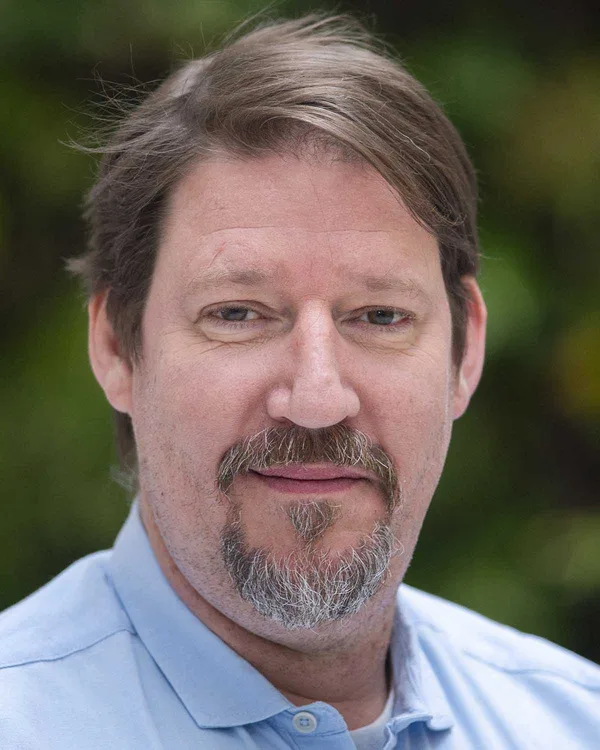
| Rank | Name | Country | Group | Speeches | |
|---|---|---|---|---|---|
| 1 |
|
Lukas Sieper | Germany DEU | Non-attached Members (NI) | 390 |
| 2 |
|
Juan Fernando López Aguilar | Spain ESP | Progressive Alliance of Socialists and Democrats (S&D) | 354 |
| 3 |
|
Sebastian Tynkkynen | Finland FIN | European Conservatives and Reformists (ECR) | 331 |
| 4 |
|
João Oliveira | Portugal PRT | The Left in the European Parliament (GUE/NGL) | 232 |
| 5 |
|
Vytenis Povilas Andriukaitis | Lithuania LTU | Progressive Alliance of Socialists and Democrats (S&D) | 227 |
All Contributions (111)
EU-Russia relations, European security and Russia’s military threat against Ukraine (debate)
Madam President, Commissioner! Are we aware that every year we finance Putin's regime with tens of billions of euros through our gas purchases, indirectly co-financing the military build-up on the Ukrainian border? Anyone who does not understand today that gas is not only a climate policy problem, but also a security policy problem, has – I think – not done his homework. The Commission has recognised this and is looking for replacement solutions for Europe's gas supply. In the medium or long term, we have to get out of gas – not only for climate policy reasons, but also for security concerns. The fact that Orbán can now build a nuclear power plant in Paks II with Russian money and technology – by the way, on an earthquake line – is not only an environmental problem, but also a security problem. Here, the interests of Europeans and the interests of Hungarians are sold to the Russian regime of Vladimir Putin. Last, but not least: Anyone who does not realize that the taxonomy, which is intended to include gas in a green label for private investment, only increases our dependence even more, has not recognized the seriousness of the situation.
Implementation of the common foreign and security policy – annual report 2021 - Implementation of the common security and defence policy – annual report 2021 (debate)
Madam President, I’m reflecting on the Common Security and Defence Policy (CSDP) report by Madame Loiseau, and it states – rightly so – that Europe is spending nearly EUR 400 billion on defence and military equipment. We’re the second-biggest global spender, and this spending is not reflected in our position on the negotiating table at all! The report even calls for extended expenditure of 2% of GDP to all states, which even goes beyond what NATO is asking. For what? For a non—efficient and non—effective military capability with duplications and a lack of interoperability. It is even asking for an increase of spending from the European Defence Fund, and the same question comes here: to what shall that lead if we are not going out with a unified voice and all sticking together for one strategic goal? Lastly, the report calls migrants ‘cyberattack weapons’. Sorry, migrants are human beings looking for a better life, and they are not a military threat, and not a weapon that we have to defend ourselves against. Last but not least: the call for a release of VAT on military spending is, I would say, really going too far.
Protection of animals during transport - Protection of animals during transport (Recommendation) (debate)
Madam President, I would like to thank the Commissioner for her introductory words. The report has shown overwhelming evidence that currently in Europe we’re having systematic non-compliance of the regulation in most of the countries. We have a lack of controls. We have a lack of infringements. We have a lack of data exchange. We have non-enforcement of Regulation (EC) No 1/2005. Also, sorry to say, but up to now by the Commission, there’s not a single infringement procedure that has been taken against a Member State, even though there is overwhelming evidence and scandals as to what is happening on our roads and especially at sea. The regulation is outdated. It’s unclear in many parts. Transport on ships especially is a black hole of lawlessness. Well, on the report, the evidence was so overwhelming that we all found conclusions that we were all able to support, but now when it comes to the recommendations – more than 1.5 million animals are transported across the European Union and they are also exported to third countries. I know that’s a good business for some, but it’s a business model where we’re importing millions of tonnes of fodder, of soy, of palm oil from abroad, stuffing it into animals in the European Union, which we are then exporting to half of the world. And that agriculture model has led to the decrease of farmers in Europe. It is putting we small and medium-sized farmers out of business. It is resulting in farmers closing their businesses. We small and medium-sized farmers stand for a different model – for local production, for high animal welfare, for production that is based on what our land can feed, and for local procurement and local slaughterhouses. And for this, eight hours of transport would be far enough. I call on PPE colleagues to consider that this is still the majority of farmers in the European Union. It’s not the big industrial complex, it’s the small and medium-scale farmers. And, to the Liberals, Mr Kelleher, I don’t know this video that you posted a few days ago. Was it a paid advertisement for one specific calf-exporting company? Or was it a lobby meeting that you have registered? I hope so, because it’s the transporters that have a problem, it’s not the farmers. And we should make sure that unweaned calves below five weeks are not transported in the European Union because they are just not fit for transport. That’s what the experts say. Join the coalition of the ones that care!
Cooperation on the fight against organised crime in the Western Balkans (continuation of debate)
Mr President, unfortunately, in the Balkans, organised crime sometimes, or often, happens close to political leaders or sometimes even under the control of political leaders. In this context, we, as the European Union, should foremost take care that our IPA III funds are first of all – and most of all – used to strengthen the rule of law, to strengthen the institutions and the justice in the region, and also to strengthen the proper election processes that would actually make sure that some of the political leaders may become the history of the region. We need to make sure that our IPA III funds, whenever they go into investments in the regions, especially when it comes to a lot of concrete, no matter if it’s motorways, hydropower plants or windmills, that we really make sure that our controlling system ensures that no part of this money is going into black channels of corruption and of bribes. Also what we very much can do within our very own European Union Member States is make sure that this money that is earned by bribery, corruption or organised crime does not end up in real-estate investments and other investments in our very own countries. That’s where we have control. That’s what we should take care of.
Common agricultural policy - support for strategic plans to be drawn up by Member States and financed by the EAGF and by the EAFRD - Common agricultural policy: financing, management and monitoring - Common agricultural policy – amendment of the CMO and other regulations (debate)
Mr President, Commissioner Wojciechowski! Will we cope with the dramatic loss of biodiversity with this CAP? It doesn't look good. We won't have proper crop rotation. We will not have mandatory environmental measures for all farmers who receive European tax money. We have no goal to reduce herbicides by 50%. Today, agriculture – a large part of agriculture – is unfortunately part of the climate problem. So, are we going to change that with this CAP? It doesn't look good. We do not see a target to reduce artificial fertilizer by 50%. We do not see ambitious soil protection. We missed a chance to make agriculture part of the climate solution, and that will fall back on us. And, will we stop the acute decline in farms, especially small and medium-sized ones, with this CAP? That doesn't look good either. We have not succeeded in enforcing an aid ceiling of EUR 100 000, also thanks to the lobbying of the conservative agricultural representatives, including Coreper, who have clearly betrayed 95 % of European farmers here. There will continue to be millions of dollars in funding for oligarchs, international financial investors and large landowners. Unfortunately, we will not be able to do so, and I ask Commissioner Wojciechowski to make use of his announcement to send back national plans that do not take account of redistribution.
The outcome of the Western Balkans summit (debate)
Mr President, yes, we have been talking about Albania and North Macedonia. We, as the European Union, gave them clear conditions which they had to fulfil for us to start negotiation talks, and both countries have fulfilled all the requirements. In terms of Albania, they made very brave justice reforms, and when it comes to North Macedonia, in all of these countries not everything is perfect yet. That’s why we are not negotiating here or debating here about finally accepting them as partners within the European Union. But we’re talking about starting negotiation talks. And what are negotiation talks? They’re about talking about all the problems, all the reforms, all the progress that is still needed. They’re exactly the platform to also talk about bilateral disputes, which several countries may have with several others. I really call on Bulgaria to lift that deadlock for that region. To Mr Dzhambazki I say, as far as I know, your party has not been re-elected to the Bulgarian parliament twice, so Bulgarian citizens are not supporting your hatred speech, your deepening of the division. As far as I know, they have elected you out of the Bulgarian Parliament. It would be really important for Bulgaria to stand together with the European partners and to lift the deadlock and to start negotiations finally. We still have a majority in the regions that are pro-European, but the majorities are shrinking and we shouldn’t wait all too long, and this is a huge responsibility for all of us, but especially for Bulgaria in that situation. On Montenegro: Montenegro is still the frontrunner when it comes to the negotiations. They have opened the most chapters of all the countries in the region. Yes, we’re having a very difficult situation and we need European influence, we need honest European brokers that help with the debate within the country between the former leading party of Mr Djukanovic, DPS, and the current coalition because they need two-thirds majorities for the juridical reforms that are urgently needed. We should help out there. The last word, on Serbia: Serbia is an important partner in the region. Serbia is a great nation. But you know the European Union is about overcoming historical disputes. It’s about overcoming historical claims on land and whatsoever. I’m an Austrian citizen, what shall I tell you? That’s what the European Union is about, and it’s about looking at the commonalities on what we share and whoever knows the Balkans region knows that the whole Balkans region is sharing a lot: much, much more than divides the different groups, ethnical or religioous, from each other. So I call on Serbia to use your influence to look at the shared heritage, the shared values, the shared cultural identity in the region, and use your influence for more peace, for better cooperation and for progress towards joining the European Union.
Commission Work Programme 2022 (debate)
Madam President, addressing Vice-President Šefčovič I wish to start by saying, Commissioner, that you haven’t talked all too much about climate and biodiversity, which is still the most pressing issue for our mid-term and long-term societal problematics, and I know this was part of the work programme last year but the work is still not done. Science clearly tells us that we should even be more ambitious or look even deeper into the root causes and change even faster. The Commission was proposing the Green Deal, was relatively ambitious, especially compared to what we’ve seen from national governments and other regions of the world. And please be assured that you will have our backing in staying straight and staying firm on pushing through the proposed legislation against a lot of resistance, which I see coming very strongly from all kinds of stakeholders. I sign up to what my colleague from the Conservatives, Mr Aubry, said on dependency on fossil fuels. We see very clearly our weaknesses and our vulnerability that we have in depending on fossil fuel imports, especially from Russia at the moment, as we see the skyrocketing energy prices that are linked to some geopolitical games played by that side. So becoming energy autonomous or as autonomous as possible, please put that at the forefront of your political proposals. And then you tackled health. Well, health is an issue that is related to global warming, but health is also related to many other topics towards environmental protection. And I really want to say a word against what Mr Aubry said, that farmers are endangered by or victims of the farm to fork strategy or environmental policies. It’s exactly the opposite. If we go environmental, then this is helping the farmers. And I also sign up to the proposal to put in the forefront the question of foreign interference, of fake news, that is actually contradicting our democratic processes, which are at the heart of our decision-making and of the European Union. And just last but not least, we need to find legal ways of tackling migration and adopting our trade policies so less people have to flee from their homes. This is a key issue for the next working programme, I think.
The Rule of law crisis in Poland and the primacy of EU law (debate)
Mr President, I say to Prime Minister Morawiecki: we’ve heard today that nearly nine out of ten citizens of Poland are in favour of European Union membership. Are you actually telling your people that questioning the primacy of the European Court of Justice is endangering the membership of Poland in the European Union? Are you telling them that your ECJ criticism and the questioning of the primacy of the ECJ rulings are putting in question all the donations, all the subsidies, all the money that is going to come towards Poland in the favour of citizens? Are you telling them that? No, you are not, you are flooding them with lies. But we do, and don’t expect Polish citizens to not find out on how you are tricking them. You’re seeing them going to the street and you will face the consequences. You will face them in the next democratic elections. You will see how Polish citizens will end your ruling, definitely and finally. Take that.
European solutions to the rise of energy prices for businesses and consumers: the role of energy efficiency and renewable energy and the need to tackle energy poverty (debate)
Madam President, The fact that Russia does not enjoy the fact that Europe is switching to renewable energies, that Russia does not enjoy our Green Deal, may come as no surprise here. The fact that supply bottlenecks are driving up gas prices and thus energy prices is a direct attack on the Green Deal of the European Commission and the European Parliament. I am not surprised that our colleagues here on the right take over Russia's propaganda. I am rather surprised that some Conservative colleagues are doing so. Anyone who hasn't understood at the latest that we need to reduce our energy dependence hasn't learned the lesson. We need a quick transition to renewable energies, we need a quick entry into the insulation and renovation offensive in Europe. Citizens can be supported by the additional tax revenues that our states have from increased energy prices. These increased tax revenues are to be made available to those people who actually have a problem with these geopolitical disputes. And we can cushion it like that.
The situation in Belarus after one year of protests and their violent repression (debate)
Mr President, Commissioner Johansson! I would like to thank you for mentioning the more than 700 political prisoners in Belarus. Let me give you an example: Ksenija Syramalot – sentenced to two and a half years for co-organising a peaceful demonstration for free elections, democracy and human rights. I took over a sponsorship for her. And I call on all of you to join me in sponsoring those people who have defended Western values, democracy, free elections in Belarus. And a second one, to the Commission: We now have sanctions regimes. Yes, we still have to ensure that circumvention of this sanctions regime cannot take place in this way. And I ask you to consider extending the sanctions to include the raw material wood. The forest is almost 100 percent state-owned in Belarus. The wood is sold internationally and brings foreign currency directly into the treasury of Lukashenka. And so we continue to directly finance the oppression of the population. Please consider adding wood to the sanctions list.
Instrument for pre-accession assistance (IPA III) 2021–2027 (debate)
Mr President, dear Commissioner, dear rapporteurs, we Greens very much welcome that after two years of lengthy negotiations, we finally have an IPA III. And we also welcome that the Green Deal of the Commission has left its footprint in this IPA III, literally amounting to up to 27% of all the funds going to climate and biodiversity and environmental topics. And if you know the region, if you know how many people suffer from air pollution in the region, if you know how the wild waste deposits look like, the lack of wastewater treatment that is still pouring the wastewater into the rivers, you see an urgent need for these kind of investments. We also have big infrastructure projects and basically a lot of concrete projects that will be put in place. And the more concrete, the more possibilities to also side-line some of the funds and the more possibilities you find for corruption. So we explicitly welcome the conditionality on the rule of law, on basic fundamental rights, on basic democratic principles that have to be held up in the countries to receive these funds, and if not, we can stop these fundings going to the countries, which is an impactful measure. We very much welcome that also civil society is included into the possible beneficiaries of that money, as they play a key role in the region. But we need stable institutions and we need rule of law, otherwise private investors will not follow our investments into the Balkan region, and I think this would be urgent for the region as well. And last but not least, through the European Parliament having an impact on Annexes 2 to 4, we in the delegations will have more leverage in our negotiations from parliament to parliament.