

| Rank | Name | Country | Group | Speeches | |
|---|---|---|---|---|---|
| 1 |
|
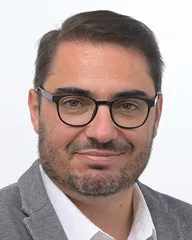
Lukas Sieper | Germany DEU | Non-attached Members (NI) | 390 |
| 2 |
|
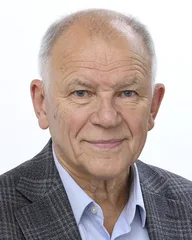
Juan Fernando López Aguilar | Spain ESP | Progressive Alliance of Socialists and Democrats (S&D) | 354 |
| 3 |
|
Sebastian Tynkkynen | Finland FIN | European Conservatives and Reformists (ECR) | 331 |
| 4 |
|
João Oliveira | Portugal PRT | The Left in the European Parliament (GUE/NGL) | 232 |
| 5 |
|
Vytenis Povilas Andriukaitis | Lithuania LTU | Progressive Alliance of Socialists and Democrats (S&D) | 227 |
All Contributions (111)
Question Time (Commission) - Food price inflation in Europe
Commissioner, if we provide you with concrete evidence and concrete information on actual speculation on foodstuff that happened the last two years, will you ask your authorities, your services, to actually do concrete research on it and provide us with data?
Question Time (Commission) - Food price inflation in Europe
Mr President, Commissioner, yes indeed, energy and energy inflation related to the Ukraine war is the main driver of food prices. But there’s two more factors that are, let’s say, not put in the light as much as we need to. On the one hand, there’s the big food companies that have made use of the crisis already during the COVID crisis, raising the prices of the foodstuff they are providing to the wholesalers in an illegitimate way. That even resulted to the very specific situation that big wholesale companies were threatening companies like Mars or Nestlé or Unilever to delist their products because they were not accepting their raise in prices. Do you have any further information on that, especially on the windfall profits this resulted to in these companies? And the second factor is speculation. We’re having speculation on food as commodities, and it’s not about the question whether there’s hedge contracts for fixed price production dealt on the market. But the question is whether we allow speculation on rising or lowering food prices, on grains, on pork meat and so on. Is there any indication from your side now to actually give us research on how much speculation contributes to the food prices?
Tackle the cost of living crisis: increase pay, tax profits, stop speculation (topical debate)
Madam President, esteemed Commission! iPES Food estimates that 20-40% of the increase in food prices is due to speculation. Yesterday we had here the Slovenian Prime Minister, formerly a very successful energy trader, who clearly told us here: A good part of energy prices is due to speculation. He knows what he's talking about. We currently have the opportunity to bring about improvements in the review of the regulation of market speculation, of this law. The Commission's proposals are still not far-reaching enough. At present, we have a more lax approach than the United States. We must finally tackle reforms so that food prices and energy prices are not left to speculation! The European Commission and EU agencies such as the European Securities and Markets Authority are called upon to finally officially verify the amount of speculation. Because it cannot be that EU citizens freeze and starve, while some speculators make a large income. We have to counter this! I ask you to finally act.
This is Europe - Debate with the Prime Minister of Slovenia, Robert Golob (debate)
Mr President, dear Commissioner, dear Prime Minister Robert Golob. First, a short comment to our Conservative colleagues. Geographically, Slovenia is an Alpine republic, and the former speaker from your party, it was your government leaving a devastated health care system to your successor. So don’t blame the new government for your failures. But now, coming to my actual speech, thank you so much for coming to the European Parliament and congrats once again for securing a progressive, a pro-European, a liberal-democracy-oriented majority in my so dear to my heart neighbouring and also partly living country, Slovenia. Thank you so much for that. And also I want to personally thank you for your strong support for the integration of Western Balkan countries towards European Union. It’s very important to have you as one of the pillars of further negotiations. We need to accelerate. We need to keep our promises. It’s important for the citizens, but it’s also important in terms of security, economy and environment. So thank you very much for that. Indeed, I also have a critical question that I would like to ask you, and this is especially towards you as an energy expert. You know that nuclear energy takes a long time to be built. You know that it is causing harm to environment. You know that Krško is built on an earthquake line, on a geological instable region. And you know that renewable energy is much cheaper and much more effective than nuclear energy. Please explain to us why do you want to build the second block, while Slovenia has all the options on the table to go for solar? And please also tell us how you will enable households to also deliver electricity to the system and not just supply themselves.
A long-term vision for the EU's rural areas (debate)
Madam President, Commissioner, indeed, we have to face reality. We have rural areas where families leave the rural areas because there’s a lack of public transport, there’s a lack of internet connectivity to work from home, there’s a lack of kindergartens, there’s a lack of schools, there’s a lack of retailers. And we see less and less public officers or police stations. There are more and more farmers actually closing their businesses: hundreds every day. And it’s mainly small and medium-sized farmers – the ones that mainly produce ecological, viable food – who mainly drive a kind of agriculture that fits with biodiversity and climate. These farmers are leaving rural areas in big numbers and they are the ones providing us with the daily food that we need. So clearly we don’t need just a vision or a plan or a long-term vision. We need concrete action so as not to treat citizens in rural areas as second-class citizens in our European Union. But I call on my conservative colleagues again: we stand together in this report and we stand together in these claims. But once again you have inserted your shoot-the-wolf paragraph, or reduce the, yes, protection status. And with this once again, like last time when we had the six-party agreement, you are doing your best to split the majority here in Parliament. And you know that an INI report will only be powerful if it’s shared by a big majority here. So please withdraw that article so we can all stand together, because the wolf clearly is not responsible for the failures of many of your colleagues in the last decades when it comes to rural areas. So let’s fix that and let’s have a big majority in favour of this wonderful report, thanks to Madam Carvalhais.
Protection of livestock farming and large carnivores in Europe (debate)
Mr President, Commissioner! First of all: Wolves don't eat your grandmother, and wolves don't eat your children on the way to the school bus. This is scaremongering, which comes from parts of the ÖVP, which comes from parts of the Bauernbund. And what does the Austrian Farmers' Federation mean by wolf-free zones? Do we want to exterminate the wolf again in Austria? I think these contributions are not good contributions to a factual debate, because that is exactly what we need here. The reintroduction of the wolf in the EU is a success for nature and species conservation – no doubt. And at the same time, the wolf is quite a challenge for farmers, especially for those who are grazing, who are particularly climate-friendly and particularly nature-friendly farmers, especially for those farmers who live in the mountain areas and where the Union is sparsely populated. We must be aware that nature conservation is a task for society as a whole, and society as a whole must also take responsibility for it. Together we must ensure that our grazing animals are well protected, and together we must ensure that our farmers do not have to pay the price, but are supported as much as possible in securing their animals and their income, because these farms are often the ones that earn the least with us. Nature conservation and agriculture go hand in hand. We need concrete measures on both sides, and in order to develop these concrete measures, we have come together in a joint resolution, and that is where we have to deliver, and I thank you here for the good cooperation and for the joint six-party motion.
Communication on ensuring availability and affordability of fertilisers (debate)
Madam President, I wish to welcome the Commissioner here to the plenary. My colleague Dorfmann has already said it: we’re having fertilizer companies across the European Union that are having windfall profits, enormous profits, as we have not seen before. So why should we now use taxpayers’ money to support these companies? Luckily, our farmers had production prices for their goods which were substantially higher than in the years before. You mentioned that in many countries they were overweighting the additional costs of energy and fertilizer. So there’s a pretty okay income situation in most of our countries. So why would you actually stop the diversification from artificial fertiliser to agro-ecological methods? High fertilizer prices are finally bringing our farmers to change their production methods, to use more leguminosae, to use crop rotation, to invest in a healthy soil. It’s healthy soil that will provide us with food security in the upcoming years – a soil that is able to keep water, to keep the carbon and to sustain our plants without becoming dependent on Russian energy, on the import of substances from abroad. It’s the independent agriculture, the self-sufficient agriculture that keeps our food security in the European Union, and why are we actually taking windfall profits of the energy companies to share them with the fertilizer companies? No, they are meant to help citizens to pay their high energy bills. Yes, also farmers to pay their high energy bills, but I can’t really follow your strategy and don’t understand in times of climate crisis why we are still supporting artificial fertiliser.
Global food security as follow-up to the G20 Agriculture Ministers meeting (debate)
Mr President, dear Commission, dear Council! If a single producer fails in the world food system, as Ukraine has at least partially failed, then the entire global food system will be in distress. You can see what kind of feet this is on. The majority of global outages are due to climate change, even this year in Europe. We have a decline in grain production due to drought, which is climate change-related. In this situation, where many parts of the world are at risk of starvation, can we still be responsible for emptying 20% of our grain production into the tank? Can we still be responsible for feeding 60% of the grain to animals? I'm not talking about keeping animals, on grassland, on mountain mowers, or in northern regions. That's right there. Only the grain should be used to feed people, especially when hunger threatens. We must be aware that every year we lose hundreds of thousands of hectares of land due to a unfortunately destructive monoculture, industrial agriculture, due to soil erosion, devastation of the regions, soil salinization. And to ruin our soil in such a way in a world with an increasing world population, I consider irresponsible. So agroecology and organic agriculture!
EU-Western Balkans relations in light of the new enlargement package (debate)
Madam President, Commissioner, Western Balkans is geographically clearly Europe. It is also culturally clearly Europe. Some of us have been working a lot in the past years to get this region closer to the European Union but, meanwhile, through the geostrategic events that we see, I think a majority of the House has understood the urgency of bringing this region into the European Union. But what we see is that through our actions, through our promises that we do not fulfilled, through keeping the region pending year by year by year, we’re losing more and more public support. Let us look at Montenegro. Well, the fight against organised crime, the fight against smugglers, the actual prosecution of high-ranking politicians and corrupt judges – it is really remarkable. Do we really think this government was ousted because of that, that they did the deal with Orthodox Church? Well, if you talk to people in the country, people do not think so. They say it is because of the fight against organised crime that Đukanović’s DPS withdrew their support. I think we should acknowledge that. Let us look at Kosovo. For Kosovo, again, visa liberalisation was blocked by France and some other States. Again, new conditions for the country. Like this we will lose the public support of Kosovans and we are losing it on. Let us see look at Bosnia and Herzegovina. Well, it is a very good step to grant candidate status or at least to propose it. But let us hope the Council follows that path, because if the Council once again does not follow that path, we will lose the trust of the population again, same as we see in North Macedonia because of these bilateral issues with Bulgaria. We are losing the trust of local population. We need to speed up the process. Otherwise, we leave the region to Russia, to China, to Arabic states, and I am sure that is not what we all together want to see.
The urgent need for an EU strategy on fertilisers to ensure food security in Europe (debate)
Mr President, Commissioner! What kind of scaremongering is this? We have a problem with food supply in the EU? Not at all! 60% of the grain we produce goes to livestock feed, another 20% goes to the production of fuels. We have no problem with food safety in the European Union. By the way, with agroecological and biological methods, we produce wonderful foods without being dependent on artificial fertilizers and on price increases in artificial fertilizers. Organic farmers can continue to produce wonderfully, and we keep our soils fertile by enriching the humus – the humus that, by the way, leads to the soils having a high water storage capacity and being able to produce food even in the event of drought – yes, the climate-related drought that we have seen again this year throughout Europe. This is what food safety looks like. Let us take this opportunity to initiate the turnaround in agricultural policy, and let us not continue here the destructive methods of the last millennia.
Countering the anti-European and anti-Ukrainian propaganda of Putin’s European cronies (topical debate)
Mr President, Commissioner, let me start with a call. We all know what happens if Conservatives help fascists into power. I urge you, Conservatives, to learn from history, do not enable a post—fascist and Putin—friendly government in Italy. Yes, it’s the extreme right party, several extreme right parties, where we know that they have ties to Russia, where we know there were financial implications, loans and so on with Russia. But the polarisation through fake news and ads on social media, the polarisation of our society serves all far right parties and are distracting our elections – our democratic election systems – in the European Union. We have to be aware of that. But we also have to acknowledge that many of our politicians, from the Conservatives, from the Social Democrats, even from the Liberals, were driving us into this dangerous dependency on Russian gas. Some of them even profited personally by serving as employees of Russian companies. Okay, this was the past. But I think after 24 February, after the invasion of Russia into Ukraine, we should all be very clear – Putin is using disinformation and fake news for polarisation. Putin is using the extreme right, and Putin is also using some of our prominent political figures for his asymmetric war. EPP, you have nothing to win by supporting post—fascists. Come back to the cordon sanitaire and please start with not supporting a post—fascist and pro—Putin government in Italy.
Radio Equipment Directive: common charger for electronic devices (debate)
Madam President, Commissioner, we all know the cable spaghetti creeping through our bags. While they are very often consisting of a lot of different chargers, this is not just a waste of money, it’s also a waste of raw materials and it’s creating piles of electronic waste. We tried to actually regulate that much earlier already in 2009. But whenever we try to regulate something, we see industry coming up with, ‘okay, we understand, let’s have some voluntary measurements’. Well, most of the time voluntary measurements just don’t work because it’s the business of businesses to earn money and not to have good, let’s say, environmental friendly and consumer friendly product designs. So, let’s not be naive, by regulating now common chargers across the European Union, we’re serving the climate, we’re serving consumers, and we are ending the differences of chargers. So we’re putting in place common chargers until the end of 2024, for laptops – and thank you for that compromise – until 2026. Here's industry. This is the European Parliament. We stand on the side of consumers.
New EU Forest Strategy for 2030 – Sustainable Forest Management in Europe (debate)
Mr President, Commissioner! First of all, I would like to thank Mrs Müller and the other colleagues for their constructive cooperation. Indeed, the report recognises the problems we have. He acknowledges that we continue to have a problem with clear-cutting, that forests become CO2 emission sources instead of —lowering, that we have a problem with water storage capacity, that we add to the soil with industrial forestry. The report acknowledges these problems. Has he found the courage to put real close-to-nature forestry at the heart of the European Forest Strategy? Unfortunately, no. Near-natural forest management with mixed species, with permanent cover of the soil, with natural rejuvenation, has the highest water storage capacity, the highest storage capacity of CO2, and allows a good harvest of wood and this with a wonderful mix of biodiversity in the forests. Unfortunately, this form of forestry has only got the position of a niche farm, with a nice certificate, just like organic farming. But the courage to say that this is the kind of forestry that fulfils all the social conditions and economic conditions that we need in the 21st century – yes, to use wood as a raw material, but above all to bind CO2 in the soil and then also to keep it bound in the soil – we have unfortunately not quite fulfilled this chance to make a clear statement from Parliament here. Nevertheless: Some important steps have already been outlined. The problems are clearly identified and the next round of negotiations is reserved for the final breakthrough of the good, right and effective model.
Objection pursuant to Rule 111(3): Amending the Taxonomy Climate Delegated Act and the Taxonomy Disclosures Delegated Act (debate)
Mr President, Commissioner! I appeal to all the unconvinced Liberal and Conservative Members here in the House: Tomorrow we have a unique opportunity to prevent gas and nuclear in the taxonomy here. Every child today knows that gas is a fossil fuel and thus causes the climate crisis and is certainly not a solution. The criteria for gas are essentially Russian gas. And the blackmailability and energy dependence of this very one is just becoming our doom. Every child today knows that nuclear power is dangerous for the environment and humans, and nuclear waste is polluting our generations for hundreds and thousands of years. And it is now clear that building nuclear reactors is too slow to stop the climate crisis, too expensive and much cheaper to invest in renewable energy. And let's stop this dilution of the taxonomy, because we lose valuable private financing. We are losing valuable time and credibility against climate change. Vote with us for the appeal. Be part of the solution, not part of the problem.
2021 Report on Montenegro (debate)
Madam President, Commissioner, with Montenegro we have a country that is a real jewel, that has a fantastic natural and cultural heritage, and we have a country that has a minority government, and this in Balkan regions. I think this is very exceptional. But having a minority government that is counting on such a broad support in the Skupština, the local parliament, is really exceptional. And what is keeping that government running is the unified and united will to join the European Union as fast as possible. And if we look at our role in the Balkan region, the European Union has unfortunately lost a lot of credibility through not meeting the promises or at least the hopes that we were creating in the region. And if there is one country of Western Balkans where we can show that there is a path into the European Union, that there is a light at the end of the tunnel – yes, if you do your homework, if you meet the criteria, if you do your job well – if there is one country, this is Montenegro. And with Montenegro, we should accelerate our efforts now to talk about accession, to close chapters. And I see a big willingness on the Montenegrin side, but they are also counting on our support, also to support them to rebuild capacities which have been lost in the past, to negotiate. And it will be also on our side to do our utmost to accelerate the talks, to accelerate the negotiations. I am convinced that we can finalise all the chapters within two years and have Montenegro joining as the 28th member of the European Union, honouring the country for its merits, but also showing the whole Western Balkan regions that if you do your homework, there is a perspective, and you will join us in the European family in the European Union.
Illegal logging in the EU (debate)
Mr President, Commissioner, in many EU countries we are having a problem with illegal logging. I’ve witnessed it in Estonia, in Slovakia, in Poland, in Spain, in Romania and other countries. But let me focus on Romania. While the Environmental Commission is compiling an enormous amount of evidence towards an infringement procedure, there is ongoing illegal logging in Romania happening, concretely in the Făgăraş Mountains, in the Iaşi area. Every citizen can see on Google Maps how deforestation increased in Romania while we were compiling the information for the infringement procedure. Did the Romanian Government really better the situation? I don’t know. An environmental impact assessment only being done after the forest has been logged, I think is not serving the purpose. To actually reduce transparency and reduce the amount of information that is provided to citizens in the public tracking system for wood trucks is actually not the direction that I think the Romanian Government should go in preventing illegal logging. We have to see that while we are doing an infringement procedure, we see something like panic logging in the region – this increased access to the forests and increased deforestation. And I would urge you to start the court case as soon as possible to save as much as can still be saved, please. I coincide with the question of the public: please tell us what the next steps will be.
Binding annual greenhouse gas emission reductions by Member States (Effort Sharing Regulation) - Land use, land use change and forestry (LULUCF) - CO2 emission standards for cars and vans (joint debate – Fit for 55 (part 2))
Mr President, Commissioner, Minister! We remember: Global warming threatens our environment, it threatens our economic performance, it threatens our health, and it threatens the living conditions of our future generations. And at the same time, we see massive lobbying here in the house, on the part of industry, on the part of the agricultural, forestry and chemical industries, which is trying by all means to prevent climate-friendly and environmentally friendly agriculture here. We see a massive intervention of steel and fossil energy, which here refuses to allow the free certificates to expire. How do you explain to citizens that consumers will have to pay part of the emissions payments in the future, but that the major polluters will continue to receive free certificates? And we see a massive lobbying of the auto industry. We are asking for an end to the new registrations of internal combustion engines from the 2030s and not for a ban on internal combustion engines as a whole. And also the argumentation that some conservative colleagues here take directly from the lobby briefings that are in our mailboxes, for example, we would have delivery problems with battery raw materials: Yes, we currently have delivery problems with pretty much everything we don't produce in Europe. Whoever forfeits the right... (The President withdrew the floor from the speaker.)
The EEAS’s Climate Change and Defence Roadmap (debate)
Mr President, Commissioner, indeed our colleagues from the far right did not do their homework, because Mr so-called like Mr Zimniok obviously didn’t read the report, because what are we talking about there? It’s a compromised report with EPP, with social democrats, with liberals. The capabilities of actual military activity, where needed, are not impacted by that report. We’re basically talking about reducing CO2 emissions by changing the way we cool our houses, how we heat necessary infrastructure, and how we are replacing procurement with products that are less CO2-emitting or maybe even CO2-neutral. At a lot of the conversations with the generals, I also learned that the provision of fossil fuels to our missions – for example, in Sahel – is one of the biggest security risks that we have. Colleagues to the far right – who are not here anymore, unfortunately – Have you realised that our dependency on fossil fuels is one of the biggest security threats we’re having at the moment? This counts for the whole society, as it counts for our civilian and military missions. Next time when you walk out here and spread your interesting information, maybe you’ll do your homework first and see where the potential lies. I also learned from a general that even electrifying tanks would be a good idea, because this kind of fuel could be produced right there where the mission is, in the middle of the desert. A tank is so heavy already that the batteries don’t matter. But okay, if you in principle want to be against everything that has the name ‘climate’ and that points out the real and long—standing problems that we have, that’s where we are. Unfortunately, Mick Wallace, you are still here at least. The text says that part of the research money should be used also to develop technologies that omit less CO2 and are more environmentally friendly. It makes sense to use at least part of the defence money for these kinds of uses, which we could maybe also disseminate for the civilian sector. Last but not least, I want to thank all the shadow rapporteurs that worked with me again. We had some intensive compromising. We included all the amendments and all the important inputs from all sides, and we produced a balanced report that reflects many views and many political standpoints. This is clearly a report that shows green participation and leadership, but it’s clearly a report that includes the whole spectrum of perspectives that are needed for this sector. I want to thank all of them once again, and I hope we’re going to get a big majority in the votes tomorrow.
The EEAS’s Climate Change and Defence Roadmap (debate)
Mr President, Commissioner, dear colleagues. First of all, I want to thank all the shadow rapporteurs for the very constructive and compromising way that we were building this file. We were building it before the happenings in Ukraine. And even if the focus has shifted at the moment on security issues that result from the illegal and criminal and inhumane invasion of Putin’s troops into Ukraine, the biggest threat, mid- and long-term to our common security is the devastating effects of global warming, causing extreme weather, causing natural catastrophes like droughts, like floods, like tornadoes, like the rising sea level. It has devastating effects on food production. It creates conflicts and fuels conflicts around the world. And it creates a big competition and conflict around resources like land and water. All sectors of our economy and all sectors of our society actually have to contribute and are contributing to a CO2 neutral society. While the military services and security services, especially the military services, are not even mentioned in the Paris Agreement – we have to be aware of that – they are one of the biggest emitters and one of the biggest absorbers of fossil fuels that we have in our societies. But through climate mainstreaming by the European Commission and the Green Deal and all of us together, this also has an impact on our security services. So there is a clear demand also towards the security services to reduce their CO2 emissions by 30%. And knowing that far more than 50% of the CO2 emissions actually come from cooling and heating or from procurement and other services, we see that there is a huge potential, even before we start talking of potentially electrifying tanks. And this may sound like a joke, but I had conversations with generals who saw the security advantage of possibly actually producing their own fuel on the base somewhere in the Sahel zone to actually run some of their equipment without being dependent on fossil fuel deliveries. We have to be aware that this report is pointing out clearly towards the security needs that we are having also, in terms of cooperation with local populations, which is very much also related to the question whether we are equipped for extreme weather. What advantage does it have if we have equipment on the ground, which we cannot use because it’s just too hot or weather extremes are preventing us from using it? But also equipping our missions with the tools to actually cope with extreme weather can also be of use to also help civilians and local populations to cope with extreme weather. And this cooperation with local populations is also key for us in terms of peacebuilding, in terms of peace making, in terms of also cooperating on local solutions, which also make our civilian and military missions more secure for our staff. So this cooperation, local cooperation, is key. And yes, the experience of many of our generals is that the cooperation, especially with women on the ground, is very much delivering – you’ll find this in the report. We also have to see that we need climate experts in our missions because, meanwhile, we have data where we can actually already see well ahead where potential conflicts or already existing conflicts are accelerating through climate data because a lot of the conflicts that we see are actually based on land and water conflicts. And to use these data to bring them all together, to analyse them and to have people on the ground that are able to cope with this information will allow us and can allow us to also prevent conflicts and prevent actual clashes and and violent activities on the ground. And last but not least, there’s a lot of initiatives across all sectors. We’re having it in the External Action Service, we’re having it in the Defence Fund. NATO is working on climate strategies. National governments are working on climate strategies. And this report also points out that we need to align all of that to one common defence and climate strategy. It is very important that we use the knowledge that is there, the activities that are there, because we need to accept the reality that this is the biggest security threat we have in the long and medium term. We need to be prepared for this. We launched this report with the hope that we’re going forward to these long-term solutions with some goals.
2021 Report on Albania (debate)
Mr President, colleagues, first of all, I want to thank our rapporteur, Isabel Santos, and our shadow rapporteurs for holding a very inclusive process when it came to the compromise sessions that we had so that actually we compromised on all points. There is just one minor point on the Vlora airport construction and the reduction of an environmentally protected area, but these concerns we can raise. On another point, more or less the report reflects very much also the important points that we brought in, important points praising, on the one hand, the substantial reforms Albania has delivered. Albania has done all their homework. Yes, there is a lot of work to do still on media reform, on fighting against criminal activities in the country, on media freedom, clearly. But also on the question of plurality in the country, political plurality. Because what we see now is two parties which are not really reflecting two different political standpoints, but two different regions of the country fighting each other on a very rude way. So, plurality also in terms of party politics is something we have to see. Then we have the situation that Albania is coupled in their accession talks with North Macedonia. There are some good reasons to do that. But we have to be aware – and this is to the colleagues from the Bulgarian side – that advocating to keep up this veto in terms of having negotiations is blackmailing and not negotiations. Accession negotiations are negotiations, but you first need to accept your partner to negotiate with and you’re not just blackmailing your neighbouring country, but you’re blackmailing the security interests and the economic interests of the European Union and the whole region. This should be acknowledged. I think we should push all our governments to put pressure on Bulgaria to finally lift this deadlock so we can start accession talks as early as possible.
Question Time (Commission) Europe’s Energy Autonomy: The strategic importance of renewables and energy interconnections and efficiency
Thank you, Commissioner, for sharing these plans with us. I would just urge you to be louder in communicating those. I think it is a very crucial moment, and we can count on the solidarity and the cooperation of our citizens. So please speak out loud on energy savings.
Question Time (Commission) Europe’s Energy Autonomy: The strategic importance of renewables and energy interconnections and efficiency
Thank you, Commissioner, for coming here to debate with us. It is more than clear that we have to substitute fossil fuels as much as we can through renewables. But my very concrete question is: are you intending to launch a call to European citizens and companies that can afford it to spare energy, to spare the use of gas, to reduce the consumption of oil for the sake of reducing energy prices for all those in our society who cannot afford to pay the energy bills anymore, and for the sake of reducing the amount of euros that we are sending towards Russia for their warfare on a daily basis? Wouldn’t that be a measurement where we all could stand in solidarity with our people in society that are less wealthy and reduce the financing or indirect financing of war that we’re doing vis—à—vis Russia? Are you intending to launch such a call?
Cooperation and similarities between the Putin regime and extreme right and separatist movements in Europe (topical debate)
Madam President, the furious and brutal war that we see that Putin’s Russia holds against Ukraine shows what Putin considers his biggest enemy: it’s democracy, it’s media freedom, it’s civil liberties, it’s our European values. And that’s the reason why he’s running that kind of brutal war crimes against his own brother and sister peoples in Ukraine. But not just that. He’s fuelling fake news. He’s fuelling disinformation within the European Union. And he’s clearly supporting extreme right parties to dismantle our democratic processes here within the European Union. First and foremost, our dear friend Viktor Orbán. Sometimes when these authoritarian people have their best moment of success, they are very honest. He claimed that Hungary is in a war against the European Union. That’s just what Putin likes him to say. But what about the Lega’s Salvini? Can you tell us why you wear T-shirts of Mr Putin? Or actually what have you been talking to Mr Malofeev, who is Putin’s main organizer of the alt-right in the European Union? And would you tell us how much Russian money you invested into your last EU campaign just a few years ago? Or, Madame Le Pen, tell us why you have skipped handing out leaflets with you hand-shaking with Mr Putin, who is considered a war criminal, meanwhile? Or how do you deal with your doubts that you’re still having with Mr Popov, one of the most famous oligarchs of Mr Putin – you still owe him millions. How do you pay him back? Do you pay back with political favours or how are you doing that? But meanwhile, well, your best friend Orbán has stepped in and given you another 10.6 million for the current presidential campaign from a bank that shall not be named. AfD, Mr Gauland going to Mr Aleksandr Dugin or my dear friends from the Austrian Parliament, the FPÖ. Mr Vilimsky, what was actually the content of the friendship agreement that your party had from 2016 until 2021? What was your cooperation with the war criminal, Mr Putin? Would you tell the House here what that is? You are claiming that you are patriots, but you’re the exact opposite. You’re traitors and you’re selling European interests to an autocratic war criminal named Mr Putin. Shame on you.
The situation in Bosnia Herzegovina (continuation of debate)
Mr President, Commissioner Várhelyi, first of all, I want to thank you for taking this step on putting a conditionality on further funding within Republika Srpska. Many of us have asked for that for quite a while, but as it is better late than never, it’s important to take that step now that it has become clear that we cannot expect any constructive moves at the moment and where there is clear evidence that there is direct Russian influence in Republika Srpska decision-making. And yes, sure, we have to talk about the Dayton Agreement. I mean, this was a peace agreement, and unfortunately, it is enshrining ethnical segregation into this new now kind of constitutional level. We need to talk about a reform there. We need to talk about an electoral reform following the European Court decisions. But what we need to do foremost is guarantee the citizens of Bosnia an election that is fair, free of fraud and this is not filibustered by stopping the budget. If there’s no budget from Bosnia and Herzegovina, it’s us that need to put the budget on the floor and to send observers to grant the citizens a legal and fair vote. I think this should be the first priority.
Foreign interference in all democratic processes in the EU (debate)
Madam President, We are talking about Russia's electoral influence here within the European Union. And then we should talk about the fact that we don't have to look so far into the distance. We have our colleagues sitting here in the house. What about Salvini's Lega and Mr Gianluca Savoini's Lombardy-Russia Association, which was founded in 2014, and the sound recordings suggesting that they have also diverted funds for their election campaigns in an Eni-Russia deal? What about Ms. Le Pen's campaign funding in 2014? First Czech- Russian BankYour credit for the election? By the way, the bank is now in bankruptcy, and its loan has been handed over to creditors, who are a collective organization for former KGB agents. Or just her new loan in 2022, this year, with Viktor Orbán and an unknown Hungarian bank – by the way Viktor Orbán, who started Hungary’s energy independence just a few days before the war started Rosatom He wanted to sell it to Putin. This is Paks II. And what about our own Austrian colleagues? With Mr. Vilimsky, who only signed a friendship agreement between his party and Putin's United Russia party in Russia in 2016? These are the real problems here, and they are a direct influence on our European democracy. That's what we should pay attention to.