

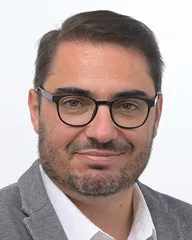
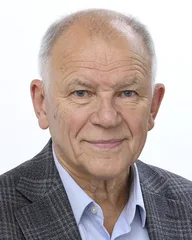
| Rank | Name | Country | Group | Speeches | |
|---|---|---|---|---|---|
| 1 |
|
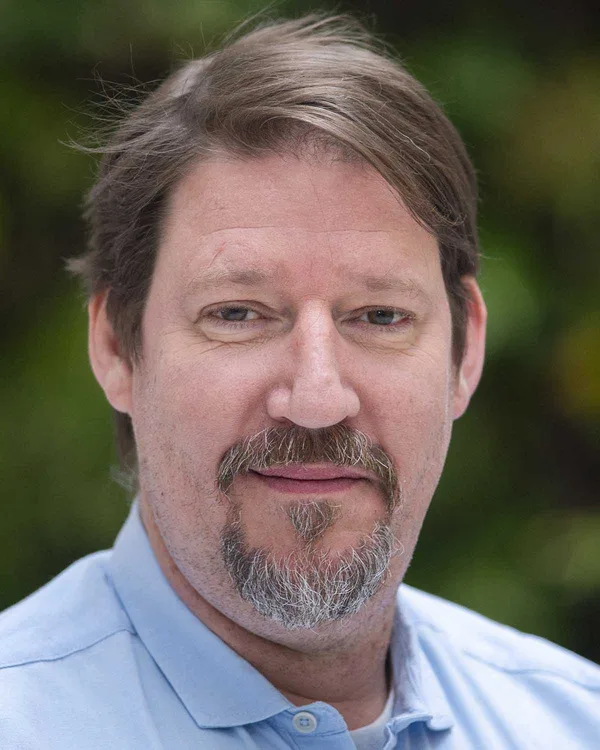
Lukas Sieper | Germany DEU | Non-attached Members (NI) | 390 |
| 2 |
|
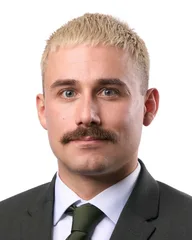
Juan Fernando López Aguilar | Spain ESP | Progressive Alliance of Socialists and Democrats (S&D) | 354 |
| 3 |
|
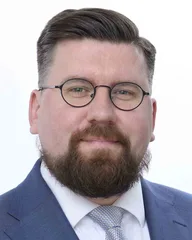
Sebastian Tynkkynen | Finland FIN | European Conservatives and Reformists (ECR) | 331 |
| 4 |
|
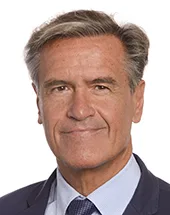
João Oliveira | Portugal PRT | The Left in the European Parliament (GUE/NGL) | 232 |
| 5 |
|
Vytenis Povilas Andriukaitis | Lithuania LTU | Progressive Alliance of Socialists and Democrats (S&D) | 227 |
All Contributions (111)
Improving the socio-economic situation of farmers and rural areas, ensuring fair incomes, food security as well as a just transition (debate)
Madam President, Commissioner! In the long term, we can only ensure security of supply by protecting our good soil, with agriculture adapted to the climate and nature. For us farmers, this means more work and more effort. This surplus labour and this additional expenditure are not compensated for in producer prices today. In any case, producer prices are so puny in the European Union that 800 to 1 000 farms lock their doors forever every day. And what is not possible is that we apply high standards for our own production in Europe and then open the doors for imports, for products that do not have to meet these standards in any way. And the next step – even worse – then at all duty-free imports via free trade agreements, for example the Mercosur agreement. This will make life difficult for our farmers, it already makes it difficult for them today. We have to ensure fair producer prices here and we have to ensure that imported products entering the European Union meet the same standards that we European farmers have to meet in our production. This is our responsibility in the European Parliament.
Role of preventive diplomacy in tackling frozen conflicts around the world – missed opportunity or change for the future? (debate)
Madam President, dear colleagues, preventive diplomacy means action before a conflict escalates, and it’s quite difficult, actually, to get resources and attention for conflicts that have not yet escalated. We have to be aware of that. And just to bring a concrete example, I mean, in Bosnia, we have massive tensions between ethnic groups, mainly steered by Mr Dodik’s Republika Srpska. I think we should not wait until this conflict escalates, but really put our efforts into easing the tensions as much as possible. We, the European Union, consider ourselves a power for peace, but that also comes with an obligation. It comes with the obligation to put attention and resources, to prevent civilian victims, to prevent human suffering, and to prevent destabilisation, also through an accelerating climate crisis, together with diplomatic services, together with civil society and together with the local population. There’s a lack of preventive diplomacy and that is the outcome we can see in and around the Europe in the moment. So let’s learn the lessons of this and put preventive diplomacy at the core of our diplomatic services. I think we should do the learnings and move on onto this. Thanks a lot to Željana Zovko for good leadership on this report. I think we found very good compromises, which we Greens will support.
Revised pollinators initiative - a new deal for pollinators (debate)
Madam President, Commissioner! Mr Bernhuber would therefore like to know what the Commission intends to do within the framework of the common agricultural policy for the conservation of our bees and pollinators. Mr Bernhuber asked the Commission to put forward proposals. It is precisely that colleague, Mr Bernhuber, who today has led the way in sinking the Commission’s proposal to reduce pesticides – and pesticides are the main reason for the loss of biodiversity, they are the main reason for the loss of our bees and pollinators – that is, the very proposal that the Commission has drawn up to reduce pesticides – not only to protect pollinators, but also our health and our environment. What kind of duplicity is that? What is the wrong game that the European Conservatives are playing here? On the one hand, sink good legislation that protects our pollinators, and on the other hand, make yourself here and pretend that you have something left for nature or natural pollinators. I would say, Mr Bernhuber, you are ashamed!
30 years of Copenhagen criteria - giving further impetus to EU enlargement policy (debate)
Mr President, Commissioner! Some of us here in the House have been supporting candidate countries for many years. Since Russia's illegal invasion of Ukraine, it has become more so, because many here in the house have understood that it is not only about economic cooperation and cultural cooperation, but also about tangible geostrategic interests. As far as the Balkans are concerned, many realise that this is not a region that is somewhere on the edge of Europe, but in the middle of our European Union, and that it is precisely in this country that a lot of influencing factors take place from outside. Now we have taken some steps to promote the accession of these countries, to finally bring our commitment as a European Union seriously into the debate and to support the countries. I support this, and I look forward to welcoming all the countries of the Western Balkans to the European Union sooner or later. However, we ourselves must take our criteria - the Copenhagen criteria - seriously when we go into accession talks, when we go into accession negotiations. We must look honestly and not pretend that there are no problems, that laws have not been enacted in Republika Srpska, which, for example, make it impossible for civil society organisations to do their work, which make it impossible for journalists to express their opinions openly. We must not hide the fact that although laws have been enacted in Serbia, the implementation of these laws in detail, where it is felt by the people, unfortunately often does not take place as we would like. We must recognise that in some areas there are still serious problems with the rule of law, despite reforms being carried out. Montenegro, Albania are not yet where we need to go. And it does not help us if we lie to ourselves in the pocket or if the Commission lies to us together in the pocket and says ‘Yes, good progress here, good progress there’. We must ensure that the essential criteria, the essential fundamental values – freedom of expression, democracy, the rule of law, the Copenhagen criteria – are respected seriously and seriously. This must and will remain the basis of our accession talks.
Generational renewal in the EU farms of the future (debate)
Mr President! The Commissioner is no longer here - it doesn't matter. In organic farming, we see that 21 percent of farm managers are under the age of 40, while in conventional agriculture, we have just 12 percent of farm managers under the age of 40. This clearly shows that a friendly approach to animals, an agriculture without chemical-synthetic pesticides, an agriculture that works with nature, is much more attractive for the young generation to take over farms. Perhaps we should develop the whole of European agriculture more towards agroecological and environmentally friendly methods. I think that would help to get more young people interested in the profession. But in particular, it is the educated women who leave rural areas – educated women who, if necessary for part-time work, find hardly any jobs in rural areas where there are infrastructure deficiencies, shortcomings in public transport, kindergartens, schools, access to schools, but also in care for the elderly. This is what makes it difficult for women to work in agriculture: At the same time, take care of the family and a lot of responsibility in agriculture. Finally, access to land: There are many young people who would like to work, who would like to start farming. In order to do so, we must consider whether our support policy will mainly support larger and larger farms and whether we do not need greater support for small farms in the common agricultural policy in order to end the death of farmers and keep young generations in the countryside.
2022 Report on Montenegro (debate)
Madam President, we are talking about a country that has still one of the highest positive attempts towards joining the European Union. We’re talking about a country where actually a vast majority of politically elected parties claim to be or are actually in favour of EU accession. And I think we also need to acknowledge that the country has had some progress in the fight against organised crime. It has had some progress when it came to fulfilling chapter 23 and chapter 24 requirements when it comes to judges. But we also see a country where the obvious common willingness to join the European Union has not really shaped the political decision making. And I really call on Montenegro that is still the frontrunner in the negotiations. I call on Montenegrin politicians when it comes to the questions of accession, of fulfilling chapters 23 and 24, to leave aside their disputes and look into the actual future of their country and deliver on the future of their country and the will of their populations, to bring Montenegro closer to entering the European Union. And it’s the country that has the best chances to enter European Union within a few years. This has to be the main driving interest of the political elite in the country, and I think we should do everything that we can do to support them on this way. I want to thank the rapporteur and all my colleagues. These were exceptionally constructive negotiations. As you see, we mainly came with all amendments compromised – okay, two splits and two amendments to be voted – but thank you for the very constructive work in this shows we are speaking with one voice as the European Parliament when it comes to Montenegro’s accession to the European Union.
Need to complete new trade agreements for sustainable growth, competitiveness and the EU’s strategic autonomy (debate)
Madam President, dear colleagues, I hear this argument that we need to enhance our cooperation with democratic nations and regions in the world, even in the light of authoritarian regimes beefing up their connections to each other and their cooperation. And I buy this argument. Yes, the democracies of the world should move closer to each other and enhance cooperation. But then we need to look into the concrete trade agreements, whether they are serving us with that. And let’s take the EU-Mercosur trade agreement. Do we think this is going to support democracy in Brazil? A trade agreement that will basically favour a handful of multinational mining companies, a trade agreement that will basically favour some big landlord agro-industrial producers, by the way, that produce far below the standards that we have in Europe, and we’re endangering European farming through that. This is a trade agreement that will lead to reduced industrialisation of Brazil. It’s going to lead to an even bigger gap between poor and rich. It’s going to diminish the middle class in Brazil. This is clearly not a strategy to strengthen democracies. And we have seen in our trade relations to several African states that if we go down that path, that this is endangering democracies. So please look into this old trade agreement from the last century – EU-Mercosur – let’s renegotiate it and let’s bring it into a shape for the 21st century.
The proposed extension of glyphosate in the EU (debate)
Mr President, Commissioner! First a little training to my colleagues from the conservative side here, Mr Dorfmann and Mr Liese: Glyphosate is not a plant protection product, but a plant killer, and the alternative is called mechanical weed regulation! And yes, welcome to the 21st century, today we can mechanically regulate weeds with the combination of mechanical technology and new digital technology in mixed crops up to one centimeter to the plant row. Glyphosate is therefore a pesticide that is completely unnecessarily sprayed on our fields. If we're serious about reducing pesticides, we'll start with glyphosate. If we are serious about protecting biodiversity, we must stop using glyphosate in our fields. If we take seriously the protection of our soil life and the protection of aquatic ecosystems, then we must end the use of glyphosate and follow the precautionary principle, because there are several suspicions that these are also negative consequences for health. For the sake of protecting the environment and our citizens and for the sake of modern agriculture: Let's stop using glyphosate and finally get it out of the pesticide shelves!
Recent developments in the Serbia-Kosovo dialogue, including the situation in the northern municipalities in Kosovo (debate)
Mr President! Commissioner! With these events of September 24th, one thing becomes clear: With nationalist and inflammatory rhetoric, President Vučić favors violent confrontations and causes them. There seems to be a direct involvement in this terrorist act by Serbian security forces. We have narrowly shrunk past a newly inflamed Balkan war. It is time to stop this appeasement policy with Vučić! And it is time to launch an international investigation and freeze the IPA III funds for Serbia until the outcome of that investigation. I call on our negotiator Miroslav Lajčák, in the absence of positive results in the dialogue with Serbia and Kosovo, to reflect on his own role and possibly to hand over his office. In any case, we must make every effort on the part of the European Union to prevent a resurgence of violent conflicts in the Balkan region. That must be the top priority.
Reviewing the protection status of wolves and other large carnivores in the EU (topical debate)
Commissioner, ladies and gentlemen, especially the German-speaking Conservatives! I think you love the wolf, at least as a subject. And you have suddenly discovered the love for the extensive pasture farmers, for those who farm the pastures, for those who let the animals out into nature, into the meadow. The good form of animal husbandry that you have now discovered all at once. However, these extensive grazing livestock farmers are economically very depressed. You stand with your back against the wall. Why? Because their products do not receive the appropriate price, because their form of agriculture does not receive the appropriate support from European agricultural funds, because much of the money goes to agricultural industries. But now that there is a theme where you can polarize wonderfully, there you have discovered the pasture keepers. And it is true that many of the companies are economically in a difficult situation. And when the wolf comes along and the necessary measures for pasture protection, then it actually becomes economically tight. But there are wonderful methods, including herding, even in high alpine areas. And the wolf is part of our natural environment and still not widespread in many parts of the European Union. We have already adopted two resolutions on this and we have stated that farmers must be supported. And we also found that problem wolves can be removed. And where there is a proven good conservation status, the population can also be managed. And now you want to use the wolf to expand to other predators. Maybe the lynx or the bear, or I don't know, you still have the otter and the beaver, and I don't know what else you want to release for shooting. This is a false debate, and a great deal of fear and panic is being spread. Wolves do not eat grandmothers or children. Return to a reasonable debate and let's look for proper solutions.
Delivering on the Green Deal: risk of compromising the EU path to the green transition and its international commitments (debate)
Madam President, Commissioner, unfortunately Mr Bellamy is not here anymore but, colleagues from EPP, look, for today the show is over. Could you please return to factual basis in your argumentation? I mean, Mr Bellamy just said 10% of the agricultural landscape should be, I don’t know, renaturalised. No, it’s about having a climate and environment-friendly agriculture on the 10%, changing this agricultural model there. That’s what it’s about. This is the reality. So by creating alternative truth – this is something we’ve seen coming from Trump, this is something we are used to from the right wing here in the House – is this really the standard you want to form your politics upon? I really urge you: come back to the negotiating table. Yes, your concerns have to be taken serious and we have to work on compromises together. I don’t know why you have started the campaign mode already. I think citizens expect from us to work to deliver solutions, to deliver compromises until, I would say, at least into the winter time. For campaign we have enough time after that. So please return to the table, return to the group of constructive parties here in the European Parliament. I would be very thankful for that.
2022 Report on Albania (debate)
Madam President, Commissioner, Albania is a success story, clearly. The vetting process and the juridical reforms have not been seen in this dimension in the Balkans. The full alignment with foreign policy and security policy was mentioned by many colleagues already. But I think Albania has a crucial role to play also in stabilising the region. Albania is a stable factor of the region, which is something we cannot say of too many countries of the Western Balkans. Albania has shown real will to reform towards a European Union accession. They have shown that they take the process serious. That has finally started a bit more than a year ago after a long time of us keeping them waiting. And yes, also Albania still has a lot of reforms to do and implement a lot of legislation, European legislation. The report is pointing out on some weaknesses that we still see on segregation of parts of the minorities, on media freedom and, you know, fighting disinformation and cutting media freedom is a thin line, so one should not be used to do the other. We still see a lot of lack of implementation of laws that are already legally viable, but not yet really implemented on the ground. When it comes to domestic violence, when it comes to protection of children, when it comes to also the fight against organised crime, still there is quite something to deliver. But last but not least, I want to highlight the progress and the positive signals that we see on the environmental side, on the protection of the Vjosa river, even though on the waste management side it will still need quite some ambition, but we should help with that. With this, a big thank you to our negotiators, to the rapporteur for the very constructive work and also for the good cooperation in this country with the Commission and Parliament here and the Member States.
Nature restoration (debate)
Madam President, Commissioner! We are in the largest species extinction since the end of the dinosaurs. We lose three species per hour. Since we've been debating here this morning, we've lost five species forever. I assume nature and biodiversity restoration is nonsense if you follow the Conservatives' Twitter. Thousands of farmers suffer from the heat, they suffer from the drought and then from the floods that are coming. River restoration to avoid flooding and natural rewetting, moor rewetting to keep water on land – that is indeed nonsense in your eyes. Measures to adapt our forests to climate change, to adapt our agricultural land to climate change – in the eyes of the Conservatives nonsense. I absolutely cannot follow you here. Measures to green our cities to avoid heat deaths to protect citizens – nonsense in your eyes. I can't follow you here either. By blocking the Green Deal and the Nature Restoration Act, you are putting agriculture at risk. They endanger our food safety. They endanger measures and lives in the cities, and they endanger the future of our children and children's children. You still have time to turn back. Listen to the economy. Listen to agriculture, listen to those who are committed to restoring nature, and vote with us.
The water crisis in Europe (debate)
Madam President, ladies and gentlemen, ladies and gentlemen, One third of Europe's population is already suffering from water scarcity. Steppe lakes in Central Europe threaten to dry up and desertification is progressing – not only in Spain, but also in Hungary or Austria, for example. Precipitation stays out or then descends from the sky in masses within a few minutes or hours in the form of extreme weather events. Particularly in agriculture, we need to rethink. We cannot continue to grow the same crops – with even more irrigation and even more irrigation. We need drought-resistant varieties and we need to rearrange in other ways. We need agroforestry systems with partial shading to keep the water on the ground. Above all, we need the directive on the restoration of nature. We urgently need it, because it is about giving space to rivers, expanding wetlands to keep the water on the land, giving the water time to penetrate the groundwater body. This is good for our citizens, it is good for biodiversity, and it is also good for agriculture in the end.
Ensuring food security and the long-term resilience of EU agriculture (debate)
Madam President, Commissioner Wojciechowski, ladies and gentlemen! It is the climate crisis that threatens our long-term security of supply: extreme weather events, drought and flooding. It is the loss of bees and pollinators that threatens our security of supply. And it is the loss of arable soils due to erosion, soil salinization and soil compaction. It is the loss of soil fertility, the capacity of our soil to store water and naturally provide our plants with nutrients. This threatens our long-term security of supply. Their chemistry and monoculture farming has caused these problems. Agroecology, bio-agriculture, diversity and soil protection are the guarantors of long-term security of supply. With a view to short-term harvest maximization, you risk the long-term security of supply and a good future for our farmers. Shame on you.
EU Day for the victims of the global climate crisis (debate)
Mr President, Commissioner! The climate crisis is progressing, endangering the food supply, endangering the drinking water supply. The World Health Organization estimates that between 2030 and 2050, an additional 250,000 people per year die of heat, hunger, malaria and diarrhea. Extreme weather events are increasing: Drought, floods, storms. And 90% of the victims live in regions with poor infrastructure. In the EU, too, we see thousands of heat deaths every year, billions in economic damage. When do so-called patriotic parties realize that climate protection is also human protection? And when do so-called economic parties understand that climate protection also serves to protect our economy? End the blockade of the Green Deal! Turn around, save lives with us, come back and work with us on a future- and climate-friendly policy.
The role of farmers as enablers of the green transition and a resilient agricultural sector (continuation of debate)
Mr President, Commissioner! 5.3 million farms in the EU have locked their farm gates forever since 2007. 15 years of European People's Party dominance in the Agriculture Committee, 15 years of almost exclusively conservative agriculture ministers in the EU, 15 years of lobbying for cheap purchase prices for the food industry, lobbying to keep farmers dependent on pesticides and artificial fertilizers, lobbying for the billions in profits of the genetic engineering, seed and chemical industries. Yes, under the illusion of representing the farmers here, you prevent climate-friendly and environmentally friendly agriculture wherever you can. Many innovative companies are already much further ahead: ploughless cultivation with green fertiliser and slotted seed, replacement of import soya with leguminous silage, e.g. agri-photovoltaics instead of hail nets and fungicides in apple cultivation. The list can be extended as desired. Stop representing the interests of the agricultural industry here! Get out of the way and let us raise the potential of climate- and environmentally friendly agriculture here – for the benefit of nature, for the benefit of people and for the benefit of a diverse, small-scale agriculture in a vital rural area!
2022 Report on Kosovo (debate)
Madam President, Commissioner Várhelyi, High Representative Borrell, an agreement that is not signed is neither a success, nor is it a binding agreement. President Vučić refused to sign the Ohrid Agreement and, in reaction to this, President Kurti also refused to sign. And already we see the resistance and the blockade of Serbia when it comes to the accession of Kosovo to the Council of Europe. But I want to also back the call of this report towards the non-recognisers within the European Union: towards Spain, Romania, Slovakia, Cyprus, Malta and Greece. Kosovo is an independent state since more than ten years. Your refusal to recognise is only based on domestic affairs. So I clearly call you to not uphold your blockage. You’re only encouraging Serbia in its course of conflict. And if this is not what you want, finally recognise Kosovo as the independent state it is.
Order of business
Madam President, this House is listening to farmers and this House regularly shows respect to farmers, including their role in the green transition. With your change of title, you try to insinuate that up to now this House has neither respected farmers nor listened to farmers, and against this insinuation, I clearly… this I reject and I ask you to vote against.
Keeping people healthy, water drinkable and soil liveable: getting rid of forever pollutants and strengthening EU chemical legislation now (topical debate)
Madam President, I can only start where my colleague from Poland has just ended. These are eternal chemicals. And who are the people in our society who are most exposed to it? They're our children. It is above all our toddlers, those who, for example, are on the ground in our apartments, where the chemicals accumulate in the house dust. We have seen in history: Wherever research has been carried out, where precautionary – or even retrospective – research has actually been carried out into how toxic these chemicals are, whether they are carcinogenic, whether they cause organ damage, we find out in the vast majority of cases: These are probably carcinogenic substances. At the same time, 4,000 substances of this type are on the market, 4,000 different ones, most of them neither investigated nor tested. We need regulation of chemicals before the end of the mandate so that we can ensure that these products are tested under the precautionary principle before they enter the market, before putting our citizens at risk. That is why I strongly urge the Commission.
European Citizens’ Initiative "Save bees and farmers! Towards a bee-friendly agriculture for a healthy environment" (debate)
Madam President, Commissioner, thanks to tens of thousands of beekeepers, the losses of honeybees, many of them losses towards pesticides, are replaced year by year. But wild pollinators tested in German environmentally protected areas show up to 16 different pesticides. We have a massive decline of wild pollinators. And while farmers have developed a lot of strategies to massively reduce the use of pesticides, some here in the House still have not understood in which direction we are going. The future of agriculture is one that works with nature and not against nature. So to put it clear, for everyone to understand: no nature, no farmers, no food.
Binding annual greenhouse gas emission reductions by Member States (Effort Sharing Regulation) - Land use, land use change and forestry (LULUCF) - Revision of the Market Stability Reserve for the EU Emissions Trading System (debate)
Mr President, Commissioner! Those MEPs, especially right-wing MEPs, who here in the House are irresponsibly refusing to work for measures against the climate and biodiversity crisis, are sinning against the life chances of future generations. They delay the innovation of our industry to the detriment of future economic development, and they knowingly accept the death and displacement of millions of people, especially in poorer countries of the world. But there is still time to turn back. Stop blocking progress with fake news and fear-mongering! Constructively work on the solutions for the 21st century, not only in Sunday speeches, but concretely in the upcoming votes here in the house. Buildings insulate instead of horrendous energy bills, modern electric drives instead of old stinkers and flowering landscapes instead of poisoned agricultural deserts.
Availability of fertilisers in the EU (debate)
Mr President, Commissioner! It is a good thing that the Commission has identified the fatal dependence we have placed our European agriculture on fossil fertilisers. Sad that this is only happening now that we are seeing the war in Ukraine. Because this dependence on fossil fuels is in itself the problem. And the answers can't be here: more mines, fewer tariffs, public money for the producers of artificial fertilisers, because artificial fertilisers also have another problem: It causes climate damage, it causes environmental damage, it pollutes our groundwater. We have large parts of Europe where we have nitrate contamination of groundwater, and millions of citizens can no longer drink groundwater here. We have the problem of climate damage that is greater than that of air and water transport in Europe. The solutions that are on the table, and many farmers are smarter than those who sometimes pretend to represent them. Because the demand for artificial fertilisers has fallen massively, because our farmers know what the alternatives are: Green manure, leguminous crops that collect nitrogen themselves from the air, ploughless farming – yes, without herbicides. There are many farmers out there who use innovative techniques or rely on traditional knowledge to show that you can either completely suspend or massively reduce the need for fertilisers. Today, we use artificial fertilisers in a size that is far too high, which leads to over-fertilisation of many areas. And I do not understand that those in the House – from the conservative side, whether here in Parliament or in the Commission – continue to rely on this old fossil strategy, which must now clearly expire – because of the climate, because of biodiversity, because of the protection of our groundwater – and not finally focus on innovative techniques. And yes, in the communication, these things also appear a bit on the side. This is where the focus needs to be focused, and this is where we need to train farmers: to replace artificial fertilisers – and not to compensate for this impulse, which we are seeing now, to reduce artificial fertilisers in European agriculture through excessive tax subsidies. And at all, your message came at a time when fertilizer prices were actually very high. But what are we talking about now? In most of Europe, we are approaching the prices of October 2021. And for this short increase in the price of artificial fertilisers, the Green Deal To attack, that is what we see here in the House at the moment from the conservative side. This is not future-oriented and plays with the future of our next generations and the independence of our agriculture.
Question Time (Commission) - Strengthened EU enlargement policy to the Western Balkans
Two questions. One, I absolutely share your assessment that after months of a caretaking government in Montenegro, elections are long overdue. You know that there were several tries to get a majority in the parliament for the Constitutional Court members. My question is, are you also in contact with the current opposition, that at least rhetorically, also supports the path towards accession to gear up their attention and readiness to support the compromise? I also heard the news that they are coming close to it, but it has not yet been decided in parliament. I think we need to back them and put a little bit of pressure there. And second question, towards North Macedonia. We have a government there that is very pro-European, but only rhetoric will not save the government through the next elections. The government is perceived in the country to not really deliver to citizens. Do you have plans of support – how we can make it more visible that European funds are actually delivering to citizens to back the pro-European notion that we still hope has a majority in North Macedonia?
The storming of the Brazilian democratic institutions
Mr President, thank you Katalin for your speech. What do we actually learn from these events in Brazil? Be aware of strong men: they sell you sweet language and easy solutions. And it’s a global phenomenon that we see with Bolsonaro, with Trump, but it can also be observed right here in Europe with Meloni, Salvini, Vučić, Orbán, Austrian Kickl or Swedish Åkesson. They all say ‘freedom of speech’, but they actually mean ‘only my view is valid’. They say ‘prosperity’, but they actually mean ‘more tax money for friends and big companies’. They say ‘justice’, but they really mean ‘more protection for me, more rights for me and my family, and more privileges for my people’. They say ‘for the people’, but in reality they mean ‘me, myself and I’. Their only goal is to maintain power, and for this they are willing to cast out people in margins and to use them as scapegoats. They’re not afraid to undermine elections and democracy as a whole. This is how fascism begins. We’ve seen it before and we know where it leads. We must defend our democracies. We must defend our rule of law. We must defend our civil society. Kein Fußbreit für den Faschismus!