
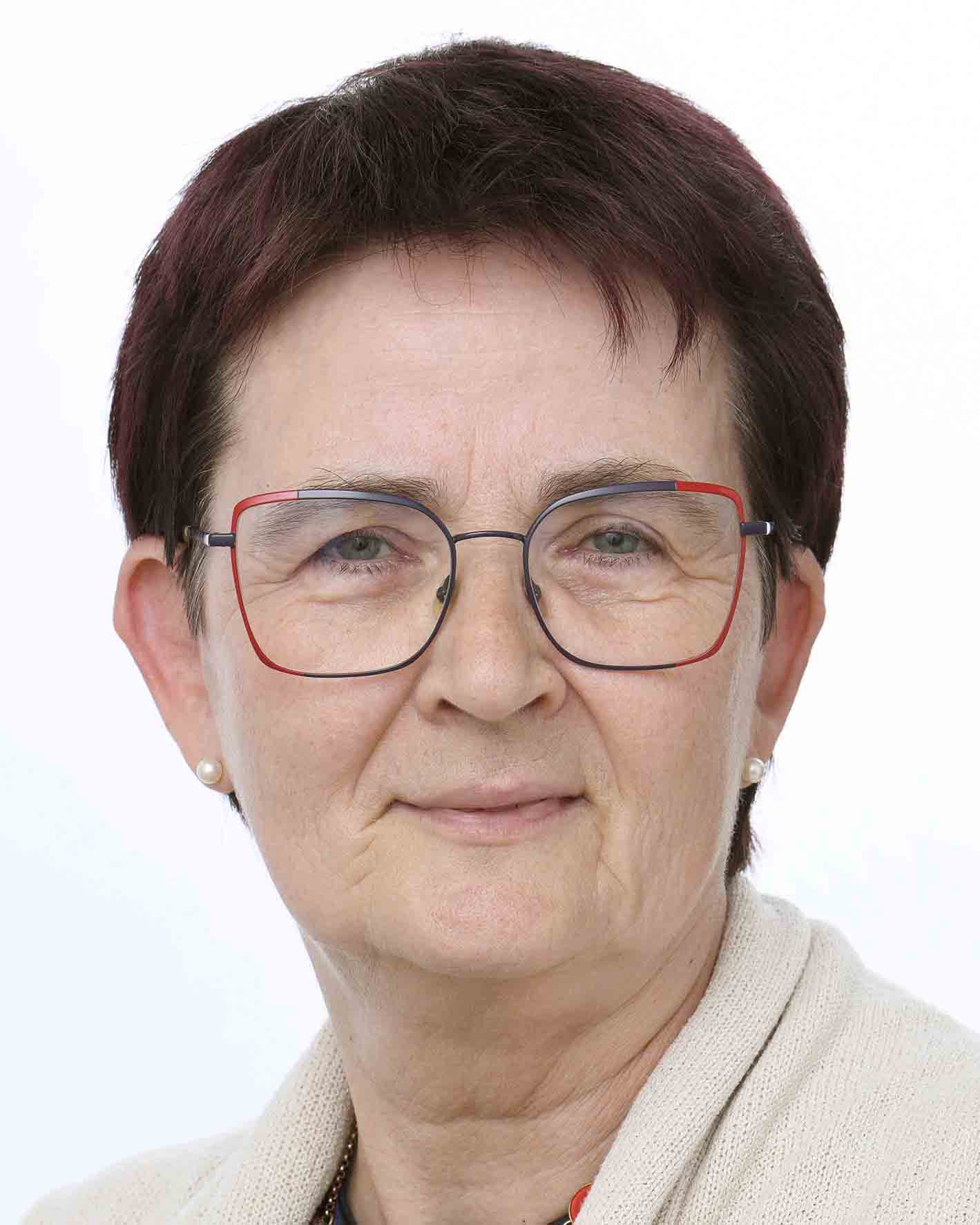


| Rank | Name | Country | Group | Speeches | |
|---|---|---|---|---|---|
| 1 |

|
Lukas Sieper | Germany DE | Renew Europe (Renew) | 487 |
| 2 |

|
Juan Fernando López Aguilar | Spain ES | Progressive Alliance of Socialists and Democrats (S&D) | 463 |
| 3 |

|
Sebastian Tynkkynen | Finland FI | European Conservatives and Reformists (ECR) | 451 |
| 4 |

|
João Oliveira | Portugal PT | The Left in the European Parliament (GUE/NGL) | 284 |
| 5 |

|
Vytenis Povilas Andriukaitis | Lithuania LT | Progressive Alliance of Socialists and Democrats (S&D) | 276 |
All Speeches (68)
Stepping up the fight against and the prevention of the recruitment of minors for criminal acts (debate)
Date:
27.11.2024 14:35
| Language: DE
Speeches
Madam President, Europol's warning is clear: An increasing number of criminal gangs are targeting minors in order to abuse them for the purpose of carrying out crimes and even to avoid prosecution. What is new is how many countries are strategically using this procedure to recruit minors for increasingly serious crimes, including murder, and what tactics are used to do so, via social media in youth language and with crimes trivialised as a game. It is not new who are usually the victims of this tactic: young people living in poverty, with poorer access to good education and thus fewer opportunities for good work, young people in search of belonging and recognition. We need to focus on these young people. They need recognition and real opportunities to thrive in our society, regardless of their social, financial or other background, free from discrimination.
Full accession of Bulgaria and Romania to the Schengen Area: the urgent need to lift controls at internal land borders (debate)
Date:
26.11.2024 19:16
| Language: DE
Speeches
No text available
Fight against money laundering and terrorist financing: listing Russia as a high-risk third country in the EU (debate)
Date:
13.11.2024 21:50
| Language: DE
Speeches
Madam President, Since February 2022, Russia has been waging a war of aggression against Ukraine. As the EU, we have responded with many sanctions, including a directive on sanctions violations. And there are calls to put Russia on the list of third countries at high risk of money laundering and terrorist financing. It's about close financial and military ties with high-risk countries like North Korea and Iran, financing private militias like the Wagner Group, a questionable use of cryptocurrencies, and more. It was not until the end of October that such an attempt failed internationally due to resistance from countries such as China, India, Saudi Arabia and South Africa. But we as the EU must not hesitate: Economic relations, transactions and sanctions avoidance undermine our democratic Europe and are unacceptable. By classifying Russia as a high-risk country, we are sending a clear signal.
Findings of the Committee on the Elimination of Discrimination against Women on Poland's abortion law (debate)
Date:
23.10.2024 16:30
| Language: DE
Speeches
Madam President, Just over a year ago, a very high turnout in Poland helped Donald Tusk to change power, in particular through the participation of young people and many women. These women went to the ballot box for the end of PiS rule, but also for the election promise to make abortions safe and legally accessible within 100 days. After almost 400 days, almost nothing has changed. Worse: Tusk has dropped the issue for this term of office, and thus an abortion law continues to prevail in Poland. Autonomous decisions about their own bodies are denied to women and left to doctors and prosecutors, mostly males. All this is disrespectful. It incapacitates women, and it forces women to secretly abort while risking their lives. You, Mr Tusk, are responsible for these women's lives and the many disappointed hopes for change. You could still change that.
Presentation of the programme of activities of the Hungarian Presidency (debate)
Date:
09.10.2024 12:01
| Language: DE
Speeches
Madam President, Viktor Orbán has the Presidency of the Council – what a joke! More than six years ago, with Article 7, we called on the Council to identify the risk of a serious breach of EU values in Hungary. Nothing has changed – on the contrary. Among you, Viktor Orbán, Hungary is moving ever further away from democracy and the rule of law. Only last year, with the ‘Sovereignty Defence Act’, you made it possible to spy on government critics. In April, you had your puppet parliament adopt the Omnibus Act and can now influence court decisions in your favour. We don't hear from the Council. Mr. Weber called Article 7 an atomic bomb at the time. But the damage to our community of values is not caused by Article 7, but by its disregard and lack of reactions. It's time: No more EU money for anti-democrats, finally clear edge! And I really hope that Hungary will find its way back to democracy, the rule of law and fundamental rights.
The reintroduction of internal border controls in a number of Member States and its impact on the Schengen Area (debate)
Date:
07.10.2024 19:04
| Language: DE
Speeches
Madam President, Open internal borders are one of Europe’s greatest success stories, and the reintroduction of border controls, especially when this happens indefinitely, is a danger – a danger not only for our economy, for jobs, but for European cohesion, for the daily cross-border encounters that strengthen us as the EU. Although a temporary reintroduction of internal border controls is possible in exceptional cases, where necessary, Member States should use other measures, such as border checks or joint police checks, to combat organised crime. In order to protect our freedom of movement and cohesion, the Schengen area – and, incidentally, also at the external borders – does not need border closures and national unilateralism, as has been repeatedly called for recently, but more trust and cooperation among the Member States.
The Hungarian “National Card” scheme and its consequences for Schengen and the area of freedom, security and justice (debate)
Date:
18.09.2024 15:31
| Language: DE
Speeches
Madam President, It is about Orbán again – but not today for a change, because we are discussing Hungary’s breaches of the rule of law, and not because the European Court of Justice has once again condemned Orbán’s government for its illegal migration policy. No, today we are talking about the fact that Europe's self-declared migrant enemy number one wants to enable and facilitate immigration. Sounds weird? However, Hungary, like many other Member States, appears to be in need of immigration, and even in increasing numbers, which is why legal immigration opportunities have been created for people from different countries. But is it really just about that? Apparently, it is important for Orbán to facilitate legal immigration opportunities for Russian and Belarusian nationals, and 14 such residence permits have been issued since July, according to the Hungarian government. Remarkable is the closeness of time to his unscheduled visit to Moscow right at the beginning of the Hungarian Presidency of the Council – pure coincidence, says his Minister for Europe. In view of this visit, but more so because of Orbán's attitude towards the Russian war of aggression, the question is allowed as to what benefits he hopes to gain from this extension of legal migration routes to Russian and Belarusian people. It must already be exceptional circumstances that it should be necessary, despite the geopolitical situation and without special security checks, to extend the immigration programme to precisely these two nations and thus treat them in the same way as, for example, six EU candidate countries. But in the end: Despite all the criticism of Orbán – Europe must consider how long we still want to watch this going on and what further steps are necessary.
Need to prevent security threats like the Solingen attack through addressing illegal migration and effective return (debate)
Date:
16.09.2024 20:16
| Language: DE
Speeches
Madam President, When people are brutally torn out of life or seriously injured, we are all shaken and our thoughts are with the victims and their families. But today I am also shocked by how the suffering of the people in Solingen is instrumentalized. Some are discussing border closures, a general rejection of people seeking protection at our borders or the blanket condemnation of people only on the basis of their nationality. All this stirs up fear, it divides our society. Some claims are illegal: They endanger our Schengen area, fuel criminal smugglers and undermine the European cohesion that we urgently need, especially on migration issues. And we need clear rules: ad hoc border controls only if absolutely necessary, the registration and reception of asylum seekers to check their entitlement to asylum in the responsible Member State and also agreements with countries of origin – agreements on the one hand for the withdrawal of their citizens who are obliged to leave our country and on the other hand for targeted simplification and expansion of legal labour migration, not least in view of the labour shortage in many Member States. In order to combat crime and radicalisation, it is also necessary to strengthen cross-border cooperation between the police and the judiciary and also to offer more preventive services and contact points for relatives of radicalising people. And all this also requires measures for integration from the outset in the interplay of all levels and especially with the strengthening of municipalities for sustainable success. It would be good if all democratic forces worked together to shape these challenges instead of using populism to lay the axe to the foundations of our European Union. (The speaker rejected a question about Jacek Ozdoba's "blue card" procedure.)
Madam President, ladies and gentlemen, I think this debate has shown that the compromise at hand is certainly not an easy one. However, some speeches have also made it very clear why it was so difficult to come up with an appropriate solution in the face of a very complex challenge. Nevertheless: Despite distant starting positions, we managed to reach a comprehensive agreement in just a few months, after eight years. This shows the determination, the commitment of many stakeholders, and it also shows the willingness to take responsibility for such a challenge. And that is why – and despite some justified criticism – today we have the opportunity to finally decide on much-needed common solutions for our handling of flight and migration: Rules for control, responsibility and solidarity. And so, after years of standstill, we can also demonstrate the EU's ability to act on migration issues and ensure that European law is upheld everywhere in Europe by ensuring that the Member States that voted in favour of the reform by qualified majority implement it quickly and on the basis of fundamental rights. And yes, it also means that the Commission is punishing violations by Member States so that systematic human rights violations at our external borders are not only consistently punished, but actually finally eliminated. And I say it again: Our commitment to a solidarity-based migration policy does not end today. Further measures are needed in the next legislature, especially with regard to legal immigration. And we will monitor the implementation and compliance with the law so that this reform becomes a difficult but nevertheless a step in the right direction.
Mr President, ladies and gentlemen. The European migration policy of recent years is unsustainable. We are witnessing systematic violations of human rights at our borders, pushbacks that often go unpunished, and a Dublin system that does not work for Member States or for those seeking protection. Therefore, it is clear: Europe needs effective solutions to migration and asylum, clear rules for control and solidarity based on our values of democracy, the rule of law and fundamental rights, including the right to asylum in Europe. The reform of the Common European Asylum System can play a part in this, but it is also just a piece of the puzzle for a comprehensive migration policy. What is currently missing are, among other things, a stronger role for municipalities and civil society, cooperation with countries of origin on an equal footing, without outsourcing our humanitarian responsibilities, and, last but not least, easier and expanded possibilities for legal entry into the EU, also in order to meet the increasing demand of our economy for labour. Only if we also address these challenges will we be able to make migration sustainable and in the interest of all parties involved in the future. There is still a lot of work ahead of us in the coming years. Today, however, we are talking about the present legislative package, which contains proposals, some of which can only be concluded after eight years. The fact that we had to wait so long for a reform because of the blockade of the Member States is shameful. Shameful but also the circumstances in which the negotiations with the Council took place: Instead of a contractually agreed loyal cooperation between the institutions, there was a council that refused to compromise many times, often without clear arguments. We are therefore not voting today on a perfect legislative package – it is not even a very good one – and I will not hide any criticisms: Mandatory border procedures without exception for families, inadmissibility decisions for allegedly safe third countries and instrumentalisation are highly problematic elements whose necessity the Council could not even explain. This needs to be monitored particularly critically during implementation. Also in my report, the screening, we had to make concessions – for example, the screening of people already present in the territory. There are even considerable doubts as to whether the present legal basis permits this measure. Nevertheless, there are also positive elements in the package: screening, such as important safeguards and uniform standards, or a significantly strengthened independent monitoring mechanism for fundamental rights, which will also be extended to border procedures. Moreover, for the first time, solidarity between Member States will become mandatory – an important first step towards shared responsibility – and a resettlement framework will also be introduced. In addition to an individual classification of the various texts, the overall picture is also important for our decision, and this shows: After years of stalemate in the Council, we have finally reached an agreement on asylum reform. This will allow us to ensure that European law is upheld everywhere in Europe and that Member States – with qualified majority consent – also implement it. We also expect the Commission to return to its role as guardian of the Treaties, which it has neglected or ignored for far too long, especially under Commission President von der Leyen. Our commitment to a solidarity-based and progressive migration policy does not end today. Rather, in addition to the missing elements mentioned above, one of our core tasks in the coming legislature will be to monitor that the new law is fully implemented – in all Member States and yes, respecting our fundamental rights, including the right to asylum. Then this reform can also be a step in the right direction.
Conclusions of the European Council meeting of 14-15 December 2023 and preparation of the Special European Council meeting of 1 February 2024 - Situation in Hungary and frozen EU funds (joint debate - European Council meetings)
Date:
17.01.2024 11:17
| Language: DE
Speeches
Mr President! European taxpayers' money for Orbán? It is good that there are finally financial consequences for Orbán's constant disregard for European values. And the Commission, as guardian of the Treaties, has a special responsibility. Release of funds frozen due to the violation of the Charter of Fundamental Rights is absolutely wrong. ‘Respect for the Charter is a horizontal condition’ means: Money is only given to those who respect fundamental rights. However, as long as homophobic laws apply in Hungary or the right to asylum is disregarded, this condition is not met and the Commission's decision is not comprehensible. It contributes to citizens losing confidence in a democratic Europe. However, we must not make ourselves blackmailable, but must collectively – Commission, Council, Parliament – defend our values, democracy and the rule of law loud and clear against attacks by rights and anti-democrats. That is the task for the future.
Need for a speedy adoption of the asylum and migration package (debate)
Date:
04.10.2023 10:17
| Language: DE
Speeches
Mr President! In the coming months, we could complete years of work on asylum reform. We are working intensively on this, and that is necessary. Because what exactly this reform should look like, the positions of Parliament and Council are still far apart. My Socialist Group is prepared for difficult negotiations. Manfred Weber from the EPP seems to see it differently. Ignoring Parliament's position, he probably simply wants to wave through the Council's position. Many Member States seem to see it that way and, sorry, like Mr Weber, reveal a desolate understanding of the importance of this Parliament as an equal co-legislator and a lack of democratic self-image. Neither institution can decide on the migration package on its own. Both have to make compromises. However, there is so far no willingness on the part of some Member States and probably Mr Weber. Migration is both a challenge and an opportunity, the tasks involved are manifold, and an agreement on asylum could be a solid cornerstone. In addition to a European asylum package, we also need new rules for labour migration, more intensive cooperation with municipalities and countries of origin as well as targeted support, i.e. good prospects for our citizens and for refugees. We have that chance. Let's get it ready!
EU-Tunisia Agreement - aspects related to external migration policy (debate)
Date:
12.09.2023 10:34
| Language: DE
Speeches
Mr President! The Tunisia agreement of the self-proclaimed Team Europe raises serious questions. In July, the UN raised concerns about the situation of migrants in Tunisia. However, reports of ill-treatment and the catastrophic situation of children and pregnant women at the Tunisian-Libyan border have not prevented Commission President von der Leyen and her team from making promises to the Tunisian regime. But what is the legal basis? Who approved the money? What for? How should the EU support and train Tunisian border guards? What does this mean for people seeking protection at the border with or in Tunisia? Do we outsource pushbacks? This deal is spongy, not very meaningful, many things do not seem to have been worked out yet and should still be a blueprint for further agreements. Ms von der Leyen has to explain in detail what are the concrete foundations and goals for such deals and how we ensure compliance with our values and international rights when using taxpayers' money. Questions about Tunisia are on the agenda. It's time for answers.
The need for EU action on search and rescue in the Mediterranean (debate)
Date:
12.07.2023 10:39
| Language: DE
Speeches
Madam President, We have been discussing a European migration and asylum policy and the many related aspects for years. But today, in this debate, it's all about one thing: saving people from drowning. And this is not some political decision, it is a humane and legal obligation. I do not know how many times I and many others have discussed this in this House for years or how many times it still needs to be repeated. But we will not let up until the Council, the Member States and the Commission finally tackle this challenge with the commitment that is appropriate to the urgency. And the task is not particularly complicated. Ensure that there is a European coordinated maritime rescue mission implemented by Member States, supported by Frontex – take Mare Nostrum as inspiration. Unfortunately, however, this idea that we need to save lives is again not reflected in the Council conclusions. But there are repeated reports, as recently in the wake of the disaster off the Greek coast, that Member States are looking the other way, delaying or refusing assistance, and at the same time that civil society is hampered or criminalised by these Member States when they save lives. Finally, face up to your humane and legal responsibilities. That would be a good basis for any further discussions.
Electronic evidence in criminal proceedings: legal representatives directive - Electronic evidence regulation: European production and preservation orders for electronic evidence in criminal matters (debate)
Date:
12.06.2023 18:20
| Language: DE
Speeches
Mr President! I listened very carefully to the debate, both the very positive feedback and the very critical comments. In a way, both are right. This system – if we adopt it, if we implement it – can only work if there is a rule of law and an independent judiciary throughout Europe. It can only exist if the Member States take a concrete stand against anti-democratic tendencies, if the Commission fulfils its role as guardian of the Treaties and if we actually work together to ensure that the rule of law and independent justice are secured in Europe. Our Europe – and this is the challenge – is a Europe that protects against crime, protects fundamental rights and defends our common values. That is what this is all about, and that is why everyone is called upon to do just that when implementing it. Once again, I would like to thank all those who have worked on this treaty, on this legislative work. And I hope that everyone will be equally involved in the implementation.
Electronic evidence in criminal proceedings: legal representatives directive - Electronic evidence regulation: European production and preservation orders for electronic evidence in criminal matters (debate)
Date:
12.06.2023 17:51
| Language: DE
Speeches
Mr President! The laws on electronic evidence in criminal proceedings represent a massive change in cross-border cooperation between the police, the judiciary and service providers. For the first time, national investigative authorities will have the possibility to directly request service providers in other Member States to produce data and secure electronic evidence – with clear deadlines and uniform rules across the EU. And it is only because of Parliament's relentless tenacity that it will at the same time ensure that fundamental rights are protected. For outsiders, it may sound like a lot of time has taken just over five years from the presentation of the proposals – March 2018 – to the adoption of the package – in June of this year. But it was worth every single day. Because we must not forget: Even beyond all debates on the rule of law and the independence of the judiciary, the judicial systems in the Member States are very different, right down to definitions. Nevertheless, had it been for the Commission, the authorities of the countries where service providers were requested to provide data would not have been aware of the order, let alone have been able to object to it. Nor did the Council position give the authorities of the Member State concerned any real scope for intervention. In fact, self-evident rights, such as the right to be informed of persons affected by orders, were attempting to dilute the Member States. And as a Parliament, despite fierce opposition from the Commission and the Council, we have been able to successfully push through urgently needed improvements together. It is only thanks to our pressure that when issuing orders for the most sensitive categories of data, traffic and content data, the authorities also have to inform the authorities of the country of the order at the same time as ordering the service provider. And it is only because of our pressure that the service provider will not release this data directly, but will store it first, so that the authorities have ten days to review the order and, if necessary, refuse to release it on the basis of a clear list of grounds for refusal, such as when the data is protected by immunities, privileges or rules on freedom of the press and expression, the release of the data would constitute a violation of fundamental rights or the criminal offence for which it is investigated is not a criminal offence in the Member State of the service provider. We were also able to enforce that service providers themselves can draw attention to critical orders. In addition, we have, of course, adapted the package to the applicable EU data protection law, with regard to information rights, but also to the categories of data used. And finally, we have successfully insisted on the introduction of a decentralized IT platform, because this is the only way to ensure that orders are actually genuine, originate from the ordinary authorities and that the sometimes highly sensitive data can then also be sent securely. Personally, I would have hoped for a little more. But this is a political compromise with which we can be absolutely satisfied. I would like to express my thanks to the colleagues of the other groups and all their teams behind it. With today's vote and the confirmation of the texts in the Council at the end of June, it is now up to the Commission and Member States to ensure the swift and comprehensive implementation of the package. There is still a lot to be done, especially with regard to the IT platform, and I call on the Commission and all those involved to do the right thing here. However, this is also not yet the end of the chapter on electronic evidence. As rapporteur for the EU-US negotiations on e-evidence and shadow rapporteur for a UN convention on such cooperation, I will take a particularly critical look at these texts together with my colleagues from the other political groups. Because the question of fundamental rights outside the EU is once again a completely different one. Therefore: I will not be satisfied with nice words and declarations of intent there either.
Adequacy of the protection afforded by the EU-U.S. Data Privacy Framework (debate)
Date:
10.05.2023 19:55
| Language: DE
Speeches
Mr President! Improved EU-US data protection – let's not fool ourselves! US surveillance laws still allow massive access to data of European citizens, acting in a way like a big data vacuum cleaner. And yes, the U.S. president's executive order shows improvements and still contains problems: the list of legitimate monitoring objectives that can be updated without public debate, different definitions such as proportionality, a court within the executive branch. This is not an independent judiciary, and an executive order can be changed, withdrawn at any time. Legal certainty is different and therefore I see the risk that this so-called adequacy decision will also fail. And here we miss a unique opportunity: Section 702 of the Foreign Intelligence Surveillance Act runs out. Reforms here should be a condition for the adequacy decision.
Decision to enter into interinstitutional negotiations: Screening of third country nationals at the external borders (A9-0149/2023 - Birgit Sippel) (vote)
Date:
20.04.2023 12:10
| Language: DE
Speeches
Madam President, Thank you, ladies and gentlemen, in particular for the months of work we have been wrestling with the rapporteurs to develop a common position. And in all these months, ECR and ID MEPs shined above all with one thing: by absence. They then voted against the mandate in committee and still want to bring the mandate down today. I do not want to point out that negotiations with the Council will be pushed significantly backwards. But it becomes quite clear: ECR and ID are in no way interested in a European response to migration and asylum. Instead, they want to continue to vote with discrimination and fear-mongering. Incidentally, in this context, it is only marginally interesting to find praise here in plenary for Italy and Meloni, whose party is a member of the ECR. By confirming the LIBE mandate on the reports, including on screening and ECRIS-TCN, which are on the agenda today, we as Members can send a clear signal. Europe needs solutions for migration and asylum with clear rules for control and solidarity, based on our values of democracy, the rule of law and human rights. And that is why, ladies and gentlemen, we reject the idea of ECR and ID and give Parliament a strong position for negotiations with the Council!
2022 Rule of Law Report - The rule of law situation in the European Union - Rule of law in Greece - Rule of law in Spain - Rule of law in Malta (debate)
Date:
30.03.2023 10:49
| Language: DE
Speeches
Mr President! The 2022 Rule of Law Report was the third of its kind with improvements over its predecessors, in particular the country-specific recommendations that we as Parliament have long advocated. But country-specific recommendations do not help if they remain far too vague when there are no deadlines. And country-specific recommendations certainly won't help if there are no consequences for Member States in the absence or inadequacy of implementation. And even if criticisms of the annual report are finally corrected, it remains a paper tiger if no links are drawn to the proceedings under Article 7 or the rule of law mechanism that have been stuck for years. We have these protective tools. And what happens? The Commission hides behind the annual report and one or the other infringement procedure. In the Council was the last hearing under Article 7 - oh yes! – last year, and the Swedish Presidency does not seem to care. She is not even present for today's debate. Instead, the Council conducts an annual rule of law dialogue with a changing group of Member States, with no consequences. Meanwhile, however, the situation of the rule of law, democracy and fundamental rights seems to continue to deteriorate, day by day, in front of all of us. And that is unacceptable. It is, excuse me, Mr President, puking!
Preparation of the Special European Council meeting of February, in particular the need to develop sustainable solutions in the area of asylum and migration (debate)
Date:
01.02.2023 16:38
| Language: DE
Speeches
Mr President! Special Summit on Migration and Asylum: The European Union is happy to commit itself to democracy and fundamental rights, to the fundamental right to asylum and to respect for human rights. This is also the basis of all decisions taken by all Member States, but their practice is all too often different. And now conservative parts of this House are popping up old-fashioned ideas from the mothbox of migration policy. Mr Weber thinks that fences must be conceivable. But it is precisely our German history that shows: Fences and walls are not a solution. And the EU, based on shared values as a peace project, cannot finance walls. And is it not a proof of poverty for the strong European Union to talk about outsourcing asylum procedures to third countries? Colleagues, we must find a solution that strengthens our common values, respects and protects European and international law. That's our job, and I'm ready to tackle it.
Criminalisation of humanitarian assistance, including search and rescue (debate)
Date:
18.01.2023 19:10
| Language: DE
Speeches
. – Mr President. Today we are talking about the criminalization of humanitarian aid. It's about people who courageously stand up for our values, for ours, who save people from drowning. It is about people who show civil courage and take on a task that is actually the responsibility of all Member States. This effort deserves support. Instead, we are witnessing the Italian government harassing sea rescuers by decree. Instead of the next port, long detours are arranged, approvingly accepting the loss of human life. Significant administrative hurdles are also intended to hinder the work. Or the trial of Seán Binder, Sarah Mardini and 22 other human rights defenders in Greece. They are accused, among other things, of membership in a criminal organisation. Membership in a criminal organisation – serious? It may be more criminal how Member States systematically prevent access to the asylum system, including by using force against vulnerable people. Where is the Commission as guardian of the Treaties? Let me conclude by repeating a call I made here in July 2019: Saving lives is not a crime. It is our duty and must never be criminalized.
Presentation of the programme of activities of the Swedish Presidency (debate)
Date:
17.01.2023 11:32
| Language: DE
Speeches
Madam President, Digitalisation and artificial intelligence: Motor for more innovation and opportunities in Europe. However, respect for digital fundamental rights must be borne in mind from the outset. But after reading the Swedish Presidency's work programme, I must say once again: The digital agenda is not particularly prominent. The e-privacy regulation finds only an almost stepmotherly mention on the sidelines. And it is high time that e-privacy It becomes a real priority. Because we need an agreement so that we can rely on the confidentiality of our communications. We need legal certainty for businesses in Europe and for people who want to communicate without fear of spying on their messages and browse the Internet without profiling. And therefore my urgent appeal: Let us take seriously the commitment to the protection of digital fundamental rights and the e—privacyFinally complete the regulation.
The need for a European solution on asylum and migration including search and rescue (debate)
Date:
23.11.2022 09:45
| Language: DE
Speeches
Mr President! Common solidarity solutions for asylum and maritime rescue – let me quote from the Universal Declaration of Human Rights: “Everyone has the right to seek and enjoy asylum in other countries from persecution.” This principle should be the guiding principle of our debates. Border controls in line with fundamental and human rights are also part of a functioning Schengen area as well as mandatory for Member States. Our contracts are clear. Policies on border controls, asylum and immigration must follow the principle of solidarity and fair sharing of responsibilities. For me, this means specifically: Especially when it comes to rescue at sea, we need a reliable distribution mechanism, clear rules with which Member States support each other rather than accusing each other. A voluntary expression of solidarity obviously does not achieve this. Legislation is needed, the implementation of which is called for and controlled by a strong Commission. The Presidency assures that it is working on a concept of solidarity. The Council can now show that it not only respects fundamental and human rights, but also carries them forward in a positive way. And I hope this will be the basis for joint solidarity decisions on asylum and sea rescue.
Continued internal border controls in the Schengen area in light of the recent ruling by the Court of Justice of the European Union (C-368/20) (debate)
Date:
18.10.2022 18:20
| Language: DE
Speeches
Mr President! Borderless travel in the Schengen area – one of our greatest achievements is at risk. This is because, quite independently of the corona patchwork in spring 2020, there are problems. There are the years of internal border controls that some Member States have introduced and seem to be prolonging forever. We Socialists and Democrats have for years described these arbitrarily prolonged border controls as what they are now from the point of view of the European Court of Justice: Simply illegal. Internal border controls must be limited in time. The ECJ has set out clear limits that must be complied with. And if necessary, there must finally be consequences. Member States and the Commission need to do more to effectively protect this one of our greatest achievements. Because we want people in the European Union to be able to move freely and meet each other.
FRONTEX's responsibility for fundamental rights violations at EU's external borders in light of the OLAF report (debate)
Date:
17.10.2022 19:42
| Language: DE
Speeches
Mr President! Frontex has been under criticism for years. mismanagement, lack of transparency, misunderstood knowledge of human rights violations at the external borders, possibly even participation in pushbacks. Leggeri was proud of his new equipment. However, the statutory staff was not recruited. Why? He was apparently of the opinion that border management was not possible in compliance with fundamental rights. The list of misconduct is long and some of the misconduct is well documented, not only since the OLAF report. Yet these transgressions were denied again and again, ignorance was hypocritical or even brazenly lied to. The OLAF report relentlessly reveals all this and, incidentally, confirms that Frontex knew about pushbacks, was involved in them, deliberately and deliberately prevented the recording of such actions. The former Executive Director Leggeri was protected by Member States on the Management Board, conservative parts of the Commission, but also members here in the House. But his resignation now is not a free pass. At the latest with the findings of the OLAF report, it is clear: A new director or new representative on the Board of Directors is not sufficient. New structures are needed, trust must be completely rebuilt. We also need a new approach to transparency. This is exemplified by the fact that OLAF's report has only been made available to a limited extent here in the House and has now also not been published by an official body, but by a news magazine. The sheer scale of the problems must be clearly recognised and new structures must be created. This is necessary precisely because Frontex is such an important agency. But the changes are not yet clear. It's time!