
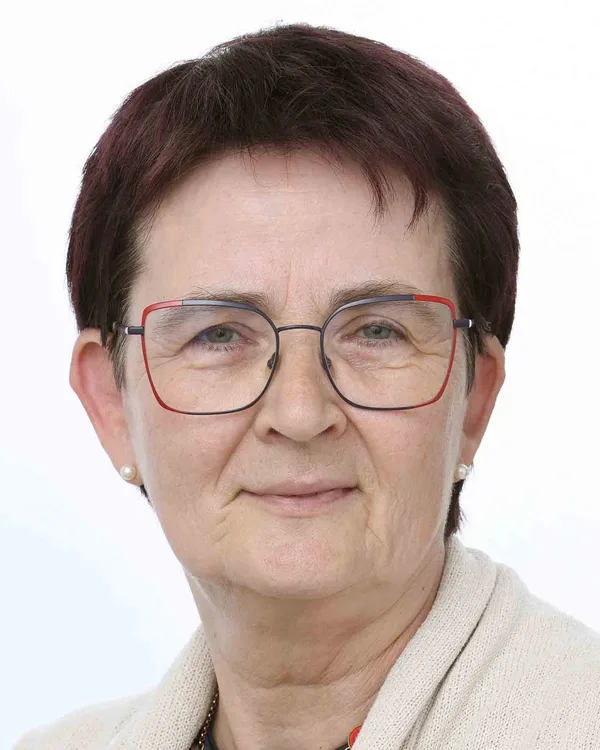

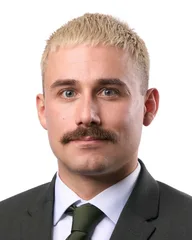
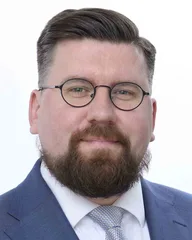
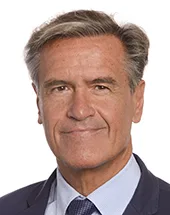

| Rank | Name | Country | Group | Speeches | |
|---|---|---|---|---|---|
| 1 |
|
Lukas Sieper | Germany DEU | Non-attached Members (NI) | 390 |
| 2 |
|
Juan Fernando López Aguilar | Spain ESP | Progressive Alliance of Socialists and Democrats (S&D) | 354 |
| 3 |
|
Sebastian Tynkkynen | Finland FIN | European Conservatives and Reformists (ECR) | 331 |
| 4 |
|
João Oliveira | Portugal PRT | The Left in the European Parliament (GUE/NGL) | 232 |
| 5 |
|
Vytenis Povilas Andriukaitis | Lithuania LTU | Progressive Alliance of Socialists and Democrats (S&D) | 227 |
All Contributions (80)
Child sexual abuse online: protect children, not perpetrators (topical debate)
No text available
Proposal for a regulation of the European Parliament and of the Council amending Regulation (EU) 2021/1232 as regards the extension of its period of application (A10-0040/2026 - Birgit Sippel) (vote)
No text available
Spain’s large-scale regularisation policy and its impact on the Schengen Area and EU migration policy (debate)
Mr. President, can you please intervene? The former speaker used the word – I say it in German: “People are marauding through Europe”. The word ‘maroding’ is used for criminal gangs. She has also spoken of gang rapes that don't exist. And the last speaker also spoke in a way that is unacceptable. I would ask you to intervene against such word choices and not just to ask the speakers to moderate themselves.
Spain’s large-scale regularisation policy and its impact on the Schengen Area and EU migration policy (debate)
No text available
Restoring control of migration: returns, visa policy and third-country cooperation (topical debate)
Mr President! 2026 – a crisis year. Russia's war of aggression against Ukraine is not coming to an end, it seems to be increasing in aggression. Donald Trump uses violence in his own country as a means of pressure, ignores international law, ruthlessly puts the axe to transatlantic cooperation. The Iranian regime is attacking its own people, but the Conservatives think of nothing better than starting a debate on migration in this House for the tenth time and chewing back the ever-same demands for deportations and outsourcing of our humanitarian responsibilities to third countries. But the majority of refugees worldwide remain close to their home region. The number of asylum applications across the EU has fallen over the past year. And yet, before Christmas, the EPP, together with the far-right factions, effectively undermined the fundamental right to asylum in the EU. There is a need for discussion on migration. Our labour market lacks a workforce and vacancies often remain vacant. Small and medium-sized enterprises in particular are affected. But simplification, acceleration and genuine pan-European harmonisation, legal pathways for jobseekers are neglected. And at the same time, whether people flee persecution and violence or poverty and lack of prospects, once here, they want to work, earn a living and participate in society. But there is often a lack of integration. Instead of starting directly with language and integration courses, asking for qualifications, offering training, many people often remain on hold for years, are doomed to inaction, while at the same time we are desperately looking for apprentices and workers in many places. We can no longer afford this madness. So how about putting on a new record at the beginning of the year? Last sentence: Make migration and integration policies positive and proactive in the interest of people and the economy. In 2026, there could be a...
Tackling AI deepfakes and sexual exploitation on social media by making full use of the EU’s digital rules (debate)
Madam President, AI – Freedom through innovation? In fact, we see innovation without responsibility, power without accountability. AI chatbots like Grok's are a systematic violation of dignity and fundamental rights. They are trained to undress, sexualize, and force images of real people into poses they never agreed to. Women are degraded to objects, children to digital victims. A thousand times. This function is no coincidence. It is the desired result of a culture that puts growth above the interest and protection of all for few. But we cannot tolerate dignity and rights being trampled on, people being sexualised without their knowledge and children becoming collateral damage to digital business models. And that is why we need clear bans on such AI sexualisation, a consistent digital tax, personal liability of providers, effective supervisory authorities and yes, also temporarily blocking access to the European market. Let's enforce rules that protect us in Europe.
Implementation of the rule of law conditionality regime (debate)
Madam President, Respect for our values is a prerequisite for EU membership, and they must apply in practice. Conditionality is designed to protect our budget when breaches of the rule of law put it at risk. And that this mechanism is lawful has been confirmed by the European Court of Justice, and it is also in the interest of our citizens. Funds must not go to governments where courts no longer decide independently, where prosecutors are politically instrumentalised, where civil society is criminalised and put before the choice between silence and prosecution, where non-transparency, incorrect procurement procedures, interference with journalists undermine measures against fraud, corruption and mismanagement. And the Commission needs to apply this conditionality mechanism consistently, also linked to other instruments, such as Article 7. The credibility of the EU must be: No rule of law, no EU money.
The urgent need to combat discrimination in the EU through the horizontal anti-discrimination directive (topical debate)
No text available
European Citizens’ Initiative ‘My voice, my choice: for safe and accessible abortion’ (debate)
Mr President! It was not until the 19th century that abortion became part of criminal law, and women were increasingly limited to reproduction and motherhood – a policy choice that can and must be changed. More than 20 million women in Europe do not have safe access to abortion. Consequence: They suffer physically and psychologically, they travel secretly, they are in debt, they endanger their health or they die – in the middle of Europe. Where are human dignity, freedom and equality? And this is precisely why more than 1 million people have benefited from the initiative:My voice, my choice“ raised their voices – for security, solidarity and respect, because physical self-determination is a prerequisite for dignity and freedom. The citizens' initiative calls on all of us to live up to our values. Each and every member of parliament must stand in the vote. Europe is looking. Women are looking. Let us ensure respect and freedom for all women in Europe!
The first European Annual Asylum and Migration report and the setting up of the Annual Solidarity Pool (debate)
Madam President, With a large majority, Parliament and Member States have adopted a new asylum system and clearly: Shared responsibility and solidarity are essential for successful implementation. It is not a positive start for the Commission to ignore legally binding timelines, but it is good that it has now come out of the coup and presented its report on the migration situation and solidarity. The fact that this rather fact-based task has become a highly political process in which many Member States have focused solely on their supposed own advantage is disappointing. And the little constructive behaviour of the German Minister of the Interior has also contributed to this. Now the time is running out. The delay that Commissioner Brunner has accepted must pay off. Member States must adopt a convincing solidarity pool in December, because without shared responsibility and solidarity, the new system that we urgently need will not work.
Allegations of espionage by the Hungarian government within the EU institutions (debate)
Madam President, Two people meet, whisper, exchange documents. What sounds like a scene from a spy movie was a bitter reality, according to research by investigative journalists. From 2013 to 2018, Hungarian intelligence services are said to have set up an espionage network in EU institutions and attempted, under diplomatic cover, to recruit EU staff to share confidential information. According to reports, this was done with the knowledge of then-Ambassador Olivér Várhelyi, now EU Commissioner. Earlier research shows that the Hungarian secret service monitored OLAF investigators who investigated the misuse of EU funds, including in the vicinity of Orbán's family. Further reports prove the use of spyware against journalists, lawyers, politicians. Parliament’s PEGA Committee and the European Court of Human Rights strongly criticised these practices. Basically: Wherever governments monitor civilian, critical actors, democracy is under attack. And those who spy on their partners violate an essential foundation of trusting cooperation. We now need transparency and consistency. I welcome the Commission's announcement of an internal investigation. But this must not remain hidden. This Parliament and the public have a right to know what has happened and how such activities have gone unnoticed for years. Should even a part of the accusations be confirmed, it must not remain with admonishing words. Clear consequences will then be needed, including at the head of the Commission. We must ensure that Europe remains a place where all of us, as citizens and institutions, can live and work freely, safely and without fear of surveillance in a free and democratic Europe.
Changing security landscape and the role of police at the heart of the EU’s internal security strategy (debate)
Mr President! Freedom and security are under pressure. There are hybrid threats, cyberattacks, extremism and fears of social insecurity, exclusion, hatred and hate speech, both offline and online. More than ever, we need police and authorities who work on a case-by-case basis, who are technically, personally and in their training at the level of the times. This also includes a wide range of skills and knowledge, from cyber and intercultural competence to trusting cooperation with civilian actors. Trust is also based on respect for freedoms and fundamental rights, on confidentiality of communications, both online and offline. Therefore: More and more surveillance is not an option, but increases fears. What we need, however, is an overall monitoring bill so that we can systematically protect security, freedom and fundamental rights, and rebuild trust in people and authorities. Only together can we strengthen freedom and security.
Lessons from Budapest Pride: the urgent need for an EU wide anti-discrimination law and defending fundamental rights against right-wing attacks (topical debate)
Madam President, With ever new measures, Orbán discriminates against or oppresses people in Hungary. At the same time, discrimination, hate speech and violence based on sex, sexual orientation, colour, religion, disability, age and poverty are on the rise across the EU. The fact that Ms von der Leyen wants to withdraw the Equal Treatment Directive right now is an attack on the fundamental rights of all people. Now she says she needs a ‘clear signal’ from the Council or Parliament to reconsider this withdrawal and hoped it would not happen. However, with the majority decision of the two responsible committees, there is this signal. Same with the letter from the Conference of Committee Chairs. And also in the Council – contradiction by a majority of Member States. So when the Commission claims that it did not receive a signal, it deliberately turns a deaf ear and falls into the backs of those who urgently need this directive. In doing so, the Commission is harming our democracy and fundamental rights in Europe.
Lessons from Budapest Pride: the urgent need for an EU wide anti-discrimination law and defending fundamental rights against right-wing attacks (topical debate)
Madam President, With ever new measures, Orbán discriminates against or oppresses people in Hungary. At the same time, discrimination, hate speech and violence based on sex, sexual orientation, colour, religion, disability, age and poverty are on the rise across the EU. The fact that Ms von der Leyen wants to withdraw the Equal Treatment Directive right now is an attack on the fundamental rights of all people. Now she says she needs a ‘clear signal’ from the Council or Parliament to reconsider this withdrawal and hoped it would not happen. However, with the majority decision of the two responsible committees, there is this signal. Same with the letter from the Conference of Committee Chairs. And also in the Council – contradiction by a majority of Member States. So when the Commission claims that it did not receive a signal, it deliberately turns a deaf ear and falls into the backs of those who urgently need this directive. In doing so, the Commission is harming our democracy and fundamental rights in Europe.
The Commission’s 2024 Rule of Law report (debate)
Madam President, An analysis of the rule of law situation in all Member States once a year is an important tool. But at the same time, the results of the 2024 report clearly show that: We need more than one report. The EU institutions – above all the Commission as guardian of the Treaties – must finally use all the means at their disposal to defend democracy, the rule of law and fundamental rights. We need more and much faster infringement procedures. The disbursement of funds must be much more closely linked to compliance with our values, through the conditionality mechanism and the MFF, and the horizontal equality directive must not be withdrawn. Example Hungary, in recent months alone: The Orbán regime has pushed laws through parliament that further restrict freedom of assembly, including by abusing facial recognition technologies targeting LGBTIQ+ people. The constitution was changed to put alleged child protection above other fundamental rights, and transgender people were de facto denied their identity. A new transparency law threatens to completely eliminate the remaining Hungarian civil society. Far too often I have had to ask this one question in plenary: What else has to happen? Therefore, once again: For me it is clear – the report is an important basis, but we need more concrete activities.
Statement by the President - 40th anniversary of the Schengen area agreement
Madam President, 40 years of the Schengen Agreement – how did it come about and why is it still important today? After centuries of war, after the Second World War, another idea finally prevailed in Europe: talk to each other and yes, also argue with each other in order to find common interests and solutions; This is invaluable, especially in the face of current crises and wars. At the same time, this cooperation was the basis for the greatest achievement of our Union: the Schengen agreement, the abolition of percussion trees and controls at our internal borders. This has not only fueled the rapid exchange of goods and services and brought benefits. It simplifies people's cross-border encounters for work, exchange programs, leisure time, and concretely identifies common interests. We also want to achieve this for the Member States that are working to join the Schengen area, because these meetings and their consequences are an important prerequisite for a strong Europe that represents itself and its values with global self-confidence. But the increasing border controls in Member States are putting the axe to success so far. They are building new barriers and can ultimately destroy our common Europe. These controls do not solve any problems, on the contrary: They are a pretense of a solution based on hatred, exclusion, isolation, they are the end of good neighbourliness in Europe and cost us a lot of trust. Therefore, in view of this 40th anniversary, it is very clear: We must tackle the real challenges, reinvigorate the founding idea of Europe, oppose hatred and exclusion and finally end border controls. That would be the best contribution to the celebration of 40 years of Schengen.
Malta's Golden Passport scheme circumventing EU sanctions against Russia (debate)
Mr President! The European Court of Justice has clearly ruled: Golden passports are a mere marketing of EU citizenship status and are therefore incompatible with the basic concept of EU citizenship laid down in our Treaties. And I add: Golden passports and golden visas are simply special rights for the rich. All too often they are linked to corruption, money laundering, tax evasion, and they endanger democracy and security in Europe. That is why we have been campaigning for years for the end of the golden passports and for clearer and stricter controls on golden visas across the EU, for example in the new anti-money laundering package. The ECJ ruling now is important, also as a signal to all Member States. The Maltese government has declared that it respects the court ruling. This must be permanent and also apply to similar systems throughout the EU.
Presentation of the New European Internal Security Strategy (debate)
Mr President! In 2020, the Commission presented its last Internal Security Strategy. At that time, we were still at the very beginning of the coronavirus pandemic, the Russian war of aggression on the entire Ukraine seemed unthinkable, the extent of hybrid threats, targeted misinformation and manipulation was hardly conceivable, the destruction of democracy as a result of Donald Trump's second term was at best evil utopia. Much has happened and the new internal security strategy is therefore coming at an important time. Rarely has people's need for security been so strong, uncertainty so comprehensive, amplified by social exclusion and financial insecurity. And yet: We must not let ourselves be driven by fear, uncertainty and seemingly simple ideas, because they do not help, quite the contrary. We had to learn this when, around 2014, the European Court of Justice (ECJ) rightly invalidated the Data Retention Directive at the time. Now we need to create sustainable, fundamental rights-compliant solutions, and to do so, we need to track down the actual security gaps and rationally analyse challenges. These include the fight against increasingly professional organised crime as well as protection against attacks on sensitive infrastructure, protection against natural and environmental disasters, the fight against extremism and terrorism. Even if some people don't like to hear it: In Germany, most politically motivated crimes were committed on the right-wing spectrum in 2023. Also important: the protection against hate crimes and hate violence, the protection of women from femicide, the protection of democracy and the rule of law. All of this must be aimed at a strategy for internal security, because only in this way can we sustainably strengthen people's trust and sense of security.
Presentation of the proposal on a new common approach on returns (debate)
Madam President, The return of people to their countries of origin is part of a functioning asylum system and here we need to become more effective – I agree with Commissioner Brunner. However, in view of the proposal presented today, this may seem to me to be the only point on which we agree: Restrictions on legal remedies, in part possibly contrary to our fundamental rights, the massive extension of detentions to two years, including for unaccompanied minors, and the possibility of setting up deportation centres in third countries without clearing what should happen to the people there and what minimum standards apply there, not to mention controls. And despite the far-reaching impact on fundamental rights, the Commission has once again failed to analyse the possible impact of its proposal – there is again no impact assessment. All this fits seamlessly into the Commission's narrative under Ms von der Leyen that migrants are potentially a threat. I reject this narrative. And Mr Brunner, we will have to incorporate some improvements to your proposal to make it work.
Links between organised crime and smuggling of migrants in light of the recent UN reports (debate)
Madam President, Anyone who is persecuted in their home country has a legal right to asylum in Europe and is therefore not illegal upon arrival in Europe. And I'm tired of listening again and again, people use smugglers to come to Europe. As if this was a free decision in the morning: "Oh yes, I don't buy a ticket, I use the smuggler to come to Europe. I love being beaten up, persecuted, blackmailed and raped." It's not like that! But people are not only made false promises, but the safe way to Europe for vulnerable people is increasingly made impossible by pushbacks, rejections, border closures and much more. And therefore: Yes, safe escape routes are a way to deprive criminal smugglers, brutal traffickers of business. And we should consider the many possibilities of ResettlementTake advantage of programmes of family reunification and safe arrival in Europe and do not limit ourselves to criminal law alone.
Need to enforce the Digital Services Act to protect democracy on social media platforms including against foreign interference and biased algorithms (debate)
Madam President, Digital platforms, protecting democracy – this is where we see a dangerous alliance: the return of imperialists on the one hand and tech oligarchs on the other, who together want to ruthlessly increase their profit, their power. But how free, open and diverse can a society be when people are unilaterally overwhelmed with opinions or fake news, while others are increasingly confronted with discrimination, hatred or even threats of violence? So-called echo chambers avoid the diversity of perspectives, solidify existing prejudices, which are often scattered unreflected with sometimes fatal consequences, especially for young people. The platforms accept that this constant chase for likes, after recognition by other psychological stresses amplifies. In addition, permanent tracking and profiling destroys the confidentiality of communications – for less profit. It is time to ban personalised advertising. Conclusion: The Commission must now consistently implement our digital legislation – DSA, GDPR, AI, ePrivacy – and also apply competition law in a targeted manner. We stand for democracy and fair competition, against hatred and exclusion. Those who do not respect this have no place with us.
Misinformation and disinformation on social media platforms, such as TikTok, and related risks to the integrity of elections in Europe (debate)
Madam President, What are the effects of so-called social media? They help us connect with others, find information in an incredibly short time. They create spaces for debate, civic participation and engagement and play an increasingly important role in public discourse and also in elections. Unfortunately, it is not only the recent presidential elections in Romania that have shown how our constant and all too often uncritical use of social media can also be turned against us by individual actors. Unclear or one-sided filtering of information, non-transparent political advertising, coordinated disinformation campaigns, even non-recognition of election results are just a few points. So: Banning social media, excluding it from the EU? Well, first of all, our task is to secure fundamental rights such as privacy and freedom of expression, while protecting democratic processes and societies as a whole. To do this, platforms must accept their responsibilities. Those providing services in the EU must comply with applicable EU law and they must be held accountable if they ignore it. The Commission and Member States are called upon to effectively enforce compliance with rules with all the means at their disposal, including beyond data protection; DSA, DMA, and we must always be ready to tackle new challenges proactively. Excluding platforms from the EU market is always an option. But in addition, we need cooperation with stakeholders, civil society, independent watchdogs, in order to maintain confidence in public debates and political and democratic processes. Finally, and ultimately, it is also our responsibility to use social media responsibly, critically questioning so-called information. We need to teach media literacy to everyone, from the youngest to the oldest.
Recent legislation targeting LGBTQI persons and the need for protecting the rule of law and a discrimination-free Union (debate)
Madam President, ladies and gentlemen! No one falls in love with the supposedly wrong sex just for fun and risks discrimination and violence. No newborn is born willingly with intersex characteristics. None of these children are sick or in need of therapy. Article 21 of our Charter is very clear: Discrimination on grounds of sex or sexual orientation is prohibited – and yet: Prohibitions on the depiction of supposedly false forms of relationships or gender identities in Hungary, Lithuania, Bulgaria, hate politics in Italy; More and more violent attacks on LGBTIQ+ people across the EU, more and more hatred and hate speech online, especially on X. The new EU Commission must now take a position on the protection of LGBTIQ+ people, and the Council must finally adopt the Anti-Discrimination Directive and add hate speech and violence to the list of EU crimes.
Stepping up the fight against and the prevention of the recruitment of minors for criminal acts (debate)
Madam President, Europol's warning is clear: An increasing number of criminal gangs are targeting minors in order to abuse them for the purpose of carrying out crimes and even to avoid prosecution. What is new is how many countries are strategically using this procedure to recruit minors for increasingly serious crimes, including murder, and what tactics are used to do so, via social media in youth language and with crimes trivialised as a game. It is not new who are usually the victims of this tactic: young people living in poverty, with poorer access to good education and thus fewer opportunities for good work, young people in search of belonging and recognition. We need to focus on these young people. They need recognition and real opportunities to thrive in our society, regardless of their social, financial or other background, free from discrimination.
Full accession of Bulgaria and Romania to the Schengen Area: the urgent need to lift controls at internal land borders (debate)
No text available