
| Rank | Name | Country | Group | Speeches | |
|---|---|---|---|---|---|
| 1 |
|
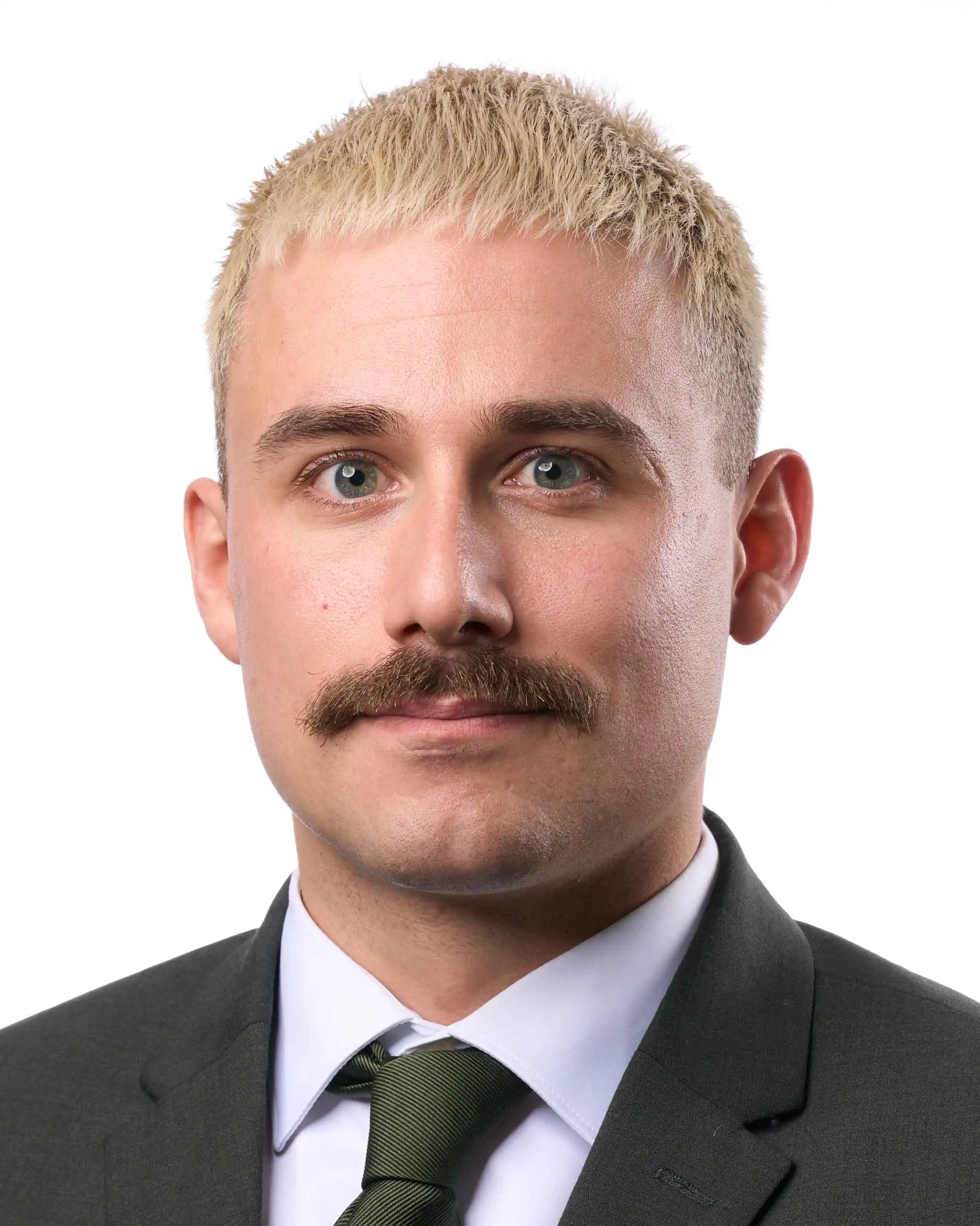
Lukas Sieper | Germany DE | Renew Europe (Renew) | 487 |
| 2 |
|
Juan Fernando López Aguilar | Spain ES | Progressive Alliance of Socialists and Democrats (S&D) | 454 |
| 3 |
|
Sebastian Tynkkynen | Finland FI | European Conservatives and Reformists (ECR) | 451 |
| 4 |
|
João Oliveira | Portugal PT | The Left in the European Parliament (GUE/NGL) | 284 |
| 5 |
|
Vytenis Povilas Andriukaitis | Lithuania LT | Progressive Alliance of Socialists and Democrats (S&D) | 273 |
All Speeches (112)
EUCO conclusions: the need for the speedy finalisation of the Road Map (debate)
Date:
15.02.2023 17:54
| Language: PT
Speeches
Madam President, honourable Member, first of all you must ask Prime Minister Sánchez why he has walls in Ceuta and Melilla. Secondly, you have to ask Prime Minister Costa why he approved the Council's conclusions. That should be your question. And as far as we are concerned, I can tell you that, in general terms, we do not need walls or fences. From the point of view of the PSD, such a policy is not necessary and certainly not necessary in Portugal. Now, European funds are needed to deal with infrastructure, reception posts, control posts, drones, radars, investment in security forces and control forces. That, yes, is necessary. Why does this policy, the policy of the Portuguese Socialist Party, know what it has led to? To the death of two people, in the center of Lisbon, very recently. It is seven years of politics that has made it so that, now, we have migrants coming from East Asia all over Portugal living at 20 and 30 in camaratas, without any dignity. This is the humanist policy of the Portuguese Socialist Party. So you have no moral authority to talk to us.
EUCO conclusions: the need for the speedy finalisation of the Road Map (debate)
Date:
15.02.2023 17:52
| Language: PT
Speeches
Madam President, Minister, Commissioner, I have already said and I repeat: in the PSD and the EPP, we strongly defend the dignity of all people, be they refugees, asylum seekers, economic migrants, foreign or European citizens. As Pope John XXIII said, everyone is a person and that is why we only accept a policy of migration and a policy of borders that are humanistic. Fortunately, the consensus on respect for everyone's dignity is very high in this Parliament. The problem is that some political forces, in a populist and hypocritical way, want to instrumentalize the issue of refugees and migrants for the purposes of partisan struggle. The PSD and the PPE, because they respect the dignity of all and are aware of the complexity of this policy, do not demagogy, do not preach one thing in Brussels or Strasbourg and do, like Sánchez, another on the walls of Ceuta and Melilla. They don't do one thing here and another at Copenhagen airport or on the beaches of Valletta. The EPP does not approve a policy in the Council, with all the prime ministers, including the socialists, and then comes here to proclaim other things in Parliament. In Europe, for demographic reasons, we need immigration. And when we talk about migrants, we don't talk about refugees. We want them to enter Europe safely, with guarantees that they will not be exploited in the estates of the Portuguese Alentejo or crammed into an apartment without conditions at 20 and 30, in the center of Lisbon. In Portugal, SEF and migration aid structures have been destroyed and now migrants are being sworn of respect and not even asked about their lives. This is not a humanist policy, this is not a politics with humanity. (The speaker agreed to respond to a "blue card" intervention)
The erosion of the rule of law in Greece: the wiretapping scandal and media freedom (topical debate)
Date:
15.02.2023 16:25
| Language: EN
Speeches
Madam President, Council, Commissioner, dear colleagues. I believe that the rule of law is indeed under constraint across the European Union, and not only in Hungary or Poland, but this must not be a shabby peeking exercise for some political groups, especially when the criterion is the colour of the government and the electoral period. Mr Babiš was received by President Macron. We all know Mr Babiš’s commitment to the rule of law. Mr Fico is supported by the S&D Group in Slovakia. We all know Mr Fico’s commitment to the rule of law. The Spanish Minister of Justice declared in this House that the Constitutional Court is a political court. Is this any commitment to the rule of law? By the way, Mr Papadimoulis, Stasi supporters are in your group – the Portuguese Communists always supported the DDR. They are your colleagues in your left group. Since the very beginning, while taking revelations, the Greek Government fully cooperated with all institutions, this Parliament and the national parliament. Political responsibility was assumed; the people in charge were removed from office, and unique measures were taken even in the field of media freedom. Can you say the same about similar revelations in Spain, in Malta, in Hungary or Poland? The rule of law deserves our full attention at all times in all Member States. Even in the best functioning democracies, there are always some issues of rule of law, but that is not the essential problem. The question is what they do to address them. That is the test, and the Greek Government... (The President cut off the speaker)
Electoral rights of mobile Union citizens in European Parliament elections - Electoral rights of mobile Union citizens in municipal elections (debate)
Date:
13.02.2023 20:04
| Language: PT
Speeches
Madam President, the free movement of persons within the Union is undoubtedly one of the greatest achievements of European citizenship. It also implies that European citizens residing in other Member States can participate in the European elections, which in itself was obviously already an imperative of European citizenship, but also in municipal elections, because they are part of the life of the local community. It is therefore crucial to ensure that all those who enjoy European citizenship can participate, either as candidates or as voters, in European and municipal elections. The aim of this reform is precisely to increase and facilitate the access of citizens to this right to vote. It is essentially intended that, today, in terms of registration and registration, in terms of access to information in a language that is understandable to citizens, who are candidates or voters, and also citizens with some disabilities, may have much easier exercise of their right. This is not about the electoral system, whatever it is, whatever the European electoral law or the electoral law of each Member State for municipalities, European citizens must have full access to passive and active electoral capacity.
Madam President, Council, Commissioner, almost a year ago, Ukraine was brutally attacked by the Russian regime. Every day, every week, war crimes continue to be committed in this war of aggression. At this summit between the European Union and Ukraine, it is crucial to maintain financial support, humanitarian support, logistical support and all the support needed to strengthen Ukraine’s military capabilities. Finally, the European Union and NATO have made tanks available for Ukraine. Unfortunately, we see that the Portuguese Government continues to hesitate with discussions between the Minister of Defence and the Minister of Foreign Affairs and continues to be against the European integration of Ukraine. We must all make an effort to support President Zelenskyy and Ukraine in military, humanitarian and financial terms.
Preparation of the Special European Council meeting of February, in particular the need to develop sustainable solutions in the area of asylum and migration (debate)
Date:
01.02.2023 16:03
| Language: PT
Speeches
Mr President, Council, Commissioners, the fact is that the issue of migration tests our democratic system and our system of fundamental rights, but the PPE Group, ladies and gentlemen of the Greens, S&D, does not receive lessons on anyone's fundamental rights or on the dignified treatment of people because our Christian roots are clear and present in all our policies. The problem here is how to better protect the human rights of those who are vulnerable, and truly vulnerable, and not of those who are often trying to enter illegally and irregularly. If we have stronger borders, over which we have real control, real dominance, we will be in a much better position to respect the human rights of the most vulnerable, to organise legal migration for the jobs that we need here, given our demographic decline, and we will also be in a position to help third countries develop and have less migration. That is a human policy, that is a policy that respects fundamental rights.
Protecting the Rule of Law against impunity in Spain (topical debate)
Date:
18.01.2023 13:17
| Language: EN
Speeches
Madam President, dear Commissioner, we are deeply concerned about the situation of the rule of law in Spain. We are used to speaking here about Hungary and Poland, and rightly so. But the measures that the Spanish Government has taken in the last year – and in the last years – are very, very concerning. We cannot forget that the Consejo General del Poder Judicial, the Judicial Council, is totally paralysed by decisions of the government. That the Minister of Education has not implemented decisions of the High Court on Catalonia. That there are pardons and amnesties for people that were condemned by the High Court. And that the crime of sedition was totally changed, and that of misuse of public funds also. And this means that these laws – that were made in a procedure that was accelerated and not consensual – these laws are ‘photo laws’. They were done, they were approved, to favour people whose names and faces we know. They are totally unconstitutional. And by the way, about the Constitutional Court, Commissioner: please don’t forget that a minister and someone that was very close to the government were nominated to be judges of the Constitutional Court. And the problem is not that they are former ministers. The problem is that they were members of this government, of this majority. I have never seen this in all of Europe: nominating to the Constitutional Court someone that was a member, a minister of the government. This is totally against the rule of law. I have never seen this. And I regret that a country like Spain – which was a role model for all of us, with its democratic transition – is now at stake in this problem of independence, of judicial power. This is, I would say, a shame for us, because we used to admire the democratic model of Spain and its respect for the rule of law.
Conclusions of the European Council meeting of 15 December 2022 (continuation of debate)
Date:
18.01.2023 10:02
| Language: EN
Speeches
Madam President, happy birthday! President of the European Council, Vice-President of the Commission, first I would like naturally to show our deepest concern with the news that we receive from Ukraine and Kyiv. Then let me say that I would like to congratulate again Croatia for joining Schengen. However, two Member States, Bulgaria and Romania, were left out, and a major injustice occurred. It is highly regrettable that the European Council was not able to overcome politically this huge mistake of 8 December. This is inexcusable and we call on the Swedish Presidency to do their utmost to turn this injustice around. Then I would like also to congratulate the decision on Bosnia and Herzegovina, to grant to this country the candidate status, and we look forward to cooperate with them in this European path. Em dezembro, o Conselho instou a Comissão a apresentar uma estratégia para a indústria europeia e para impulsionar as nossas economias. Ontem, a Presidente Von der Leyen apresentou o plano da Comissão. Todos concordamos que os Estados Unidos não são os nossos inimigos, são parceiros e aliados, e por isso devemos trabalhar em conjunto para alcançar uma concorrência equitativa e leal, para ter um level playing field justo a nível global, mas também a nível europeu. E por isso termino deixando uma pergunta à Comissão Europeia: será que os subsídios que a Alemanha ou a França estão dispostas agora a gastar com as suas empresas não põem em causa o level playing field europeu? Não põem em causa o mercado interno que agora celebra 30 anos? O que vai fazer a Comissão e o que farão os governos, e nomeadamente o Governo português, para evitar que milhões de pequenas e médias empresas dos pequenos e médios Estados europeus sejam prejudicadas por estas medidas discriminatórias?
Preparation of the European Council meeting of 15 December 2022 (debate)
Date:
14.12.2022 10:16
| Language: PT
Speeches
Mr President, Minister Mikuláš Bek, Vice-President Margrethe Vestager, I shall of course begin by congratulating Croatia on joining the Schengen area, but also by saying that it is a huge disappointment, a huge injustice to know that the government of Austria and the government of the Netherlands have not accepted the entry of Romania and Bulgaria into the Schengen area. Romania and Bulgaria fulfil all the conditions to be full members of the Schengen area. I hope that the European Council will deal with this matter and resolve it in good time. I also hope that the European Council will give Bosnia and Herzegovina candidate status. It will be a very important signal for this country, which needs incentives. It will be a very important signal for the Western Balkans. I would also like to send a message to the President of the Commission on energy interconnections. In Alicante, Emmanuel Macron, Pedro Sanchéz and António Costa talked about the new pipeline, but it does not solve the problems. They did not address the key issue for renewables in the Iberian Peninsula, which are electricity interconnections in the Pyrenees. Nothing has been said about this, there is no agreement on this. This is a huge stalemate in creating a new energy link between the Iberian Peninsula and the European continent.
The recent JHA Council decision on Schengen accession (debate)
Date:
13.12.2022 18:12
| Language: EN
Speeches
Mr President, Council, Commission, first, I would like, naturally, to congratulate Croatia on becoming a full member of Schengen. But my joy with this accession is unfortunately in contradiction of my deep sadness and regret at the decision of the Council, which is unfair and unacceptable, to reject the accession of Romania and Bulgaria to the Schengen Area. I have to say to my dear friend, Jan-Christoph Oetjen, that I regret our position in government, despite it being a government from the EPP. I also have to say the same of the Rutte government, which is a liberal government and which had exactly the same attitude. This is not an ideological matter. There are independent assessments by the Commission and by Member States that really say that Romania and Bulgaria are totally prepared to enter the Schengen zone. So this is an unfair, illegal and unconstitutional decision of the Council and we cannot tolerate that. So, all my solidarity to the Romanian and Bulgarian people.
This is Europe - Debate with the Prime Minister of Slovenia, Robert Golob (debate)
Date:
13.12.2022 11:13
| Language: EN
Speeches
Madam President, dear Prime Minister Golob: let me warmly welcome you in such a bitter moment for this Parliament. Slovenia was the first country of former Yugoslavia to join the European Union. This stands, and should stand, as an example and a role model for the Western Balkans. And I must congratulate Slovenia on its great integration process that you have just described as a great example for the whole region and for all Europe. Secondly, congratulations on your new president, the first female president, despite she is not from our political family. This is always a very positive and progressive step towards equality, and that should be here naturally, point of order. We have all have some concerns, including on rule of law, which we must share and which is also the point of these debates. First, Slovenia itself has suffered from internal border checks before. But now we hear that you may consider introducing internal border checks of your own after Croatia joins Schengen. This would send the worst possible signals, especially after the council rejected the accession of Romania and Bulgaria. If it happens, the European Parliament will be ready to scrutinise any individual violation of our freedom of movement in Slovenia or elsewhere in Europe. Second, there are some concerns regarding the rule of law. We are paying close attention to the changing of laws ruling the media landscape in Slovenia, in a rather unusual and urgent procedure. And let me tell you that the resignation of the interior minister after allegations of political pressure regarding the police is also troubling. We have so often criticised recent developments in Spain or even in my own country regarding concentration of the power of police. I have to mention this case here as well. Does this not trigger a rule-of-law alert when we speak about interference in police commands? Finally, Slovenia is an example in the support to Ukraine in the current war in humanitarian, financial and military aid, as you have pointed out. However, it is concerning that the Members of a European Parliament that support your government did not support the resolution of this House recognising Russia as a regime sponsor of terrorism. How do you assess this reluctance to support Ukraine in all possible ways? Your fellow Slovene Slavoj Žižek, famously satirised the geographical divisions in Europe by pointing out what separates the Balkans from Mitteleuropa. But those divisions must be behind us. The Sava or the Danube do not separate us. Just like that, the Dnipro does not divide Ukrainians. Europe is large enough for us all. Europe is more than a continent; it is an idea. And it is also an idea in Slovene and loved by the Slovenians. Even though today we meet in Strasbourg, let me recall a small piece of Brussels: near the Schuman roundabout, not too far from the European Parliament stands a memorial with the first line of your national anthem, Žive naj vsi narodi. God’s blessing on all nations. In this difficult winter, in these difficult times, let these words, these Slovenian words, this anthem by the great France Prešeren echo throughout Europe. May all our nations thrive, žive naj vsi narodi.
Madam President, the EPP requests an additional debate on this issue of rule of law, strengthening the institutions and judicial independence. There are worrying developments in some of your countries, namely in Spain, towards less independence of the judiciary and more governmental intervention in it, in breach of the rule of law principles. The President of the Government has recently announced his intention of taking unilateral measures on the judiciary that clearly go against everything that the European Union’s values and principles defend. The playing rules cannot be changed for political interests in order to place former members of Government in the national constitutional court and to change the criminal court. It cannot be handed over to convicted criminals to decide which crimes to suppress, such as sedition and corruption. This is not a national debate. We see. We listen. We read. If we read, we listen and we see. We cannot pretend that worrying developments are not going on in Spain. We should not have a double pattern.
The need for a European solution on asylum and migration including search and rescue (debate)
Date:
23.11.2022 09:43
| Language: PT
Speeches
Mr President, Minister, Vice-President, Commissioner, the fundamental values of European democracy always imply respect for human rights in all circumstances. Every person, regardless of their origin, ethnicity or religion, deserves protection. There is no doubt that such protection requires balanced solutions. And that the challenge of migration and refugees is not made with demagoguery or populism. Responsible solutions are needed, with support for the states from which migrants come to set the maximum number of people, to combat human trafficking completely, not to encourage such trafficking through populist measures, but at the same time to be able to save all those who come to our shores and to have a mechanism of sharing and solidarity between all states. It cannot be Cyprus, or Greece, or Italy, or Spain, or Malta that has the full weight of this humanitarian policy of openness and responsibility on their shoulders. All other states must cooperate. And I would like now to say that it was very good to see that today both S&D and Renew and also EPP leaders were so constructive today. What I would like to ask you is that when we are drafting legislation, we are aware of this same spirit of cooperation, and then we can deliver and give to the Council also the sign that we have a responsibility and humanitarian policy towards these migration costs.
EU response to the increasing crackdown on protests in Iran (debate)
Date:
22.11.2022 19:24
| Language: PT
Speeches
Madam President, Commissioner, the Ayatollah regime, a theocratic religious fundamentalist, oppresses the entire Iranian people. Since the age of 79, women, in front of everyone, have been the regime's greatest victims. But also young people, also men, also the whole of civil society, in all provinces and in all cities. In schools, on the streets, in universities, people of all professions, social strata and ages are manifesting themselves in an act of great courage in the face of an oppressive and repressive regime. They decree his death. They killed, without looking at means, children, young people, women, men. We cannot agree with this situation. We cannot agree with an oppressive regime that, moreover, supports Russia in its aggression. We must support the women, the young people, the men of Iran. We must do so with the same dignity as the players of the Iranian national team revealed yesterday at the Qatar World Cup. Yes, they are heroes.
Situation of human rights in the context of the FIFA world cup in Qatar (debate)
Date:
21.11.2022 20:05
| Language: PT
Speeches
Madam President, Commissioner, the decision to organise the World Cup in Qatar was taken wrongly, but it was taken. Then that championship was also an opportunity to improve Qatar's rights and political situation. It's a missed opportunity. There is no doubt that today we know that women's rights, the rights of sexual, religious and ethnic minorities, we know that workers' rights and especially the death of migrants is truly shocking to the organization of this event. We know that there are workers who have not received it and that there are workers and families of dead workers who need to be compensated. We know that there is no freedom of speech or demonstration against this event. There are no t-shirts in Qatar and there are no t-shirts in Portugal. And I regret that my President of the Republic, my President of Parliament and my Prime Minister – especially the Prime Minister – saying that he will support the selection when he can do so, like 10 million Portuguese in Portugal, are supporting such an initiative. At this stage they can perfectly be in their homes in Portugal and, at the same time, be in solidarity with the suffering of Qataris and immigrants in Qatar.
Full application of the provisions of the Schengen acquis in Croatia (debate)
Date:
09.11.2022 21:56
| Language: EN
Speeches
Mr President, dear Vice-Presidents, I’d like only to make two or three comments or remarks on issues that were raised during this debate. First, to say that all of us, we all agree that Schengen has two main purposes. One is to defend our external borders – security, safety. The other is to respect all the fundamental rights of European citizens and of the citizens that are non-European and that want to come to Europe. And there’s something that is clear that applies to Croatia, but also to Romania and Bulgaria. If we want to monitor, to check, to be sure, that these two dimensions are fully implemented, bringing more security to our borders, but respecting our heritage of fundamental rights, this is much easier to do if these Member States are inside Schengen than if they are outside. And so, there is no ground and there is no reason to postpone, to delay this accession. And if some Member States are thinking that they can do that, they are doing it not for the common good of the European Union, but for only internal political reasons and we cannot accept that in these exceptional times. We need to have full freedom of movement within our territory and we have to have secure borders in the places where we have full European citizens. And so I say that I trust that at the very end, all the 27 Member States will approve this accession of Croatia and also, naturally, of Romania and Bulgaria.
Full application of the provisions of the Schengen acquis in Croatia (debate)
Date:
09.11.2022 21:22
| Language: EN
Speeches
Mr President, Vice-Presidents, Schengen has been waiting for Croatia. The Croatian people have also waited and now the moment has arrived. It is time for the final steps towards full European integration. Croatia has shown it is fully prepared for the lifting of internal border controls at the same time that it is joining the eurozone. Croatia has successfully completed the most comprehensive and detailed evaluation for Schengen membership for any EU country so far. The Commission in 2019 and the Council in 2021 have formally confirmed Croatia’s readiness to become a full member of Schengen following their respective evaluations and naturally the adoption of all required measures. In addition, Croatia is the only Member State that has so far implemented an independent mechanism for monitoring and controlling the actions of the authorities in the area of irregular migration. Let me now, only for a few seconds, speak in my native language exactly to give the signal that this is a European achievement. Senhor Presidente, a Croácia cumpre todos os requisitos. A União tem de cumprir e de honrar a sua palavra. Como é possível que nesta altura, depois de todas as avaliações e exames que foram feitos, depois de todas as medidas que foram adotadas no campo da segurança, mas no campo dos direitos fundamentais também, que haja Estados-Membros que no Conselho ainda hesitem ou estejam relutantes em aceitar a entrada da Croácia no espaço Schengen? É tempo de dar o passo final já em dezembro. Sem hesitações! A Croácia deve entrar no espaço Schengen em janeiro de 2023, no dia em que passa a integrar a zona euro. There are no legitimate excuses to delay this decision. Giving Croatians, and also Bulgarians and Romanians, full access to the Schengen Area and to the right of free movement is an imperative. The times we live in demand that we act, demand action. With a war on our borders, we must show our commitment to our value of unity, our European value of solidarity. To others who seek discord and division, we must show our strength and our unity. Croatian Schengen brings us together, makes us stronger, protects our external borders and also respects fundamental rights. This decision will also have a strong impact and will send a clear signal to the Western Balkan countries about their future European aspirations. As the youngest EU Member State, Croatia should serve as an inspiration for other countries in the region. It shows that it is possible for any aspiring new Member State to be fully integrated into our European family. And from the Parliament we say, I want to say: Dobrodošli u schengen.
Preparation of the European Council meeting of 20-21 October 2022 (debate)
Date:
19.10.2022 10:29
| Language: PT
Speeches
Madam President, the victims of Russia's war of aggression and the brutal attacks of the last few days are, of course, Ukrainian citizens, but across Europe we suffer the consequences of this war and Putin will exploit those consequences. We see how the most vulnerable classes, but also the middle classes in our countries, are suffering from the rise in the price of energy, of fuels, with the increase in interest rates which, in my country, in Portugal, is a very serious problem, with the increase in poverty, which has also been a fact in Portugal. And the question is: What do the big European countries do? The socialist, green, liberal, German government, these three parties, which call themselves European solidarity, make a package of EUR 200 billion for Germany alone, distorting competition and competition in the internal market. And at the same time, France, in which President Macron says he is Europe's greatest friend, continues to boycott the construction of energy interconnections between the Iberian Peninsula and the European continent. And this is not European solidarity, this is the opposite of the European spirit, and here Renew has to say whether he is on Mr Macron's side or whether he is against Mr Macron in this anti-European attitude.
Impact of Russian invasion of Ukraine on migration flows to the EU (debate)
Date:
18.10.2022 20:14
| Language: PT
Speeches
The Russian war of aggression against Ukraine has several facets that are increasing migratory pressure and humanitarian aid pressure within the European Union. On the one hand, the Ukrainian citizens, where the European response was excellent, has been very, very, very strong, has been very helpful to these families who, hopefully, are in a position to return. We cannot, however, exclude, with the increase in violence from the Russian attacks, a new wave of Ukrainian refugees, given that the war has escalated and is now at a much tougher level than it was a few weeks ago. But a second point we must also draw attention to is that at the moment there is a state, Serbia, which has free visa agreements with a number of countries and is greatly increasing the flow of migrants to Europe, particularly from Cuba, India, Tunisia and Burundi. On the various European borders, whether in Hungary, Croatia, Greece or even in part in Romania and Bulgaria, we see the arrival of this new flow of migrants and it is essentially done, as Lukashenko did in Belarus. The idea is to bring as many citizens as possible to the European area in order to create stress at European borders. This action by Serbia cannot be accepted and must be strongly condemned.
The accession of Romania and Bulgaria to the Schengen area (debate)
Date:
05.10.2022 15:39
| Language: EN
Speeches
Madam President, Minister, Vice-President, first, I would like to say to Mr Reil that there are only two countries that are the far west. One is Portugal and the other is Ireland, because they are geographically the far west of Europe. Nothing more. Let me tell you that, 11 years after stating that Romania and Bulgaria are ready to be full members of Schengen, the Council has not been able to issue the decision that we – the European Parliament, the European Commission, Romanians and Bulgarians and all European citizens that love freedom – are expecting and are impatiently waiting for. Romania and Bulgaria have passed all the stress tests. They had the migration crisis of 2015; they had the pandemic, which was a challenge for Schengen; and now they have the Ukrainian refugees, which was a huge challenge. They were really impeccable in the way they implemented all the rules and principles of the Schengen area. Therefore, they deserve that now, this time, before 2023, we are able to decide that they are full members of the Schengen area. This was always an EPP flagship, and we want this to be the reality in the next months.
Countering the anti-European and anti-Ukrainian propaganda of Putin’s European cronies (topical debate)
Date:
05.10.2022 14:14
| Language: PT
Speeches
Mr President, Minister, Commissioner, Vice-President, it is not only since 24 February this year, but since the invasion of Crimea and even before that, that certain European political actors have taken the side of Russia and that many others are influenced by Russian propaganda and disinformation. We must not forget what happened in the US elections in which Donald Trump was elected, or in the Brexit referendum, or in the apocryphal referendum in Catalonia. We must not forget the funding of many parties of the radical right, but also the launch and funding of many parties of the radical left. In all of them, Russia has always been the center of hacking The world is Russia. Putin has turned Russia into a kind of global KGB, to which we are all subject, to whose actions we are all exposed. That is why it is essential for the European Union to take clear measures, measures which have the power to influence the Member States. media and, most importantly, on social media. At a time when we have a new panorama from a communicational point of view, which is not only the media While traditional, but it is social media, we must be able to figure out ways to counter propaganda and disinformation that can undermine our public opinions and, especially in this very difficult geopolitical context, put them alongside Putin, the Kremlin and their violations of international law.
Russia’s escalation of its war of aggression against Ukraine (debate)
Date:
05.10.2022 11:22
| Language: PT
Speeches
Mr President, the escalation of Putin's war, with the mobilisation of reservists, illegitimate annexations, nuclear threats, means that the European Union must be more united than ever and that support for Ukraine must be systematic. That is why we must ask the S&D Group, the Greens, the Liberals what position they take on the unilateral action of the Scholz government, the green liberal socialist government, to give EUR 200 billion without any coordination, without any articulation with the European Union and its partners for energy subsidies, destroying trust between states and fragmenting the single market. Yes, I want to ask Mrs. Iraxte Pérez: What is the position of S&D Group on Scholz’s decision to take action alone giving EUR 200 billion of subsidies against all the coordination with our partners?
Existence of a clear risk of a serious breach by Hungary of the values on which the Union is founded (debate)
Date:
14.09.2022 14:18
| Language: EN
Speeches
So it’s a pleasure to reply to you, colleague Trócsányi. It’s very clear that very different organisations, independent and impartial, have said that the judicial independence in Hungary is at risk. And the example that you gave on France or others that sometimes Mr Orbán has given in the electoral system about England, they are examples that don’t see the context. (Reactions from the floor) Yes! I’m going to explain to you if you want. In the case of the electoral system in Britain – now I have to say this – the parliament is not responsible for legislation like the parliament in Hungary is, because it is a system that is not a Roman—German system. And that completely changes the context, the political and constitutional context. So you cannot isolate some characteristics of a system ... (The President cut off the speaker)
Existence of a clear risk of a serious breach by Hungary of the values on which the Union is founded (debate)
Date:
14.09.2022 14:15
| Language: PT
Speeches
Madam President, Ministers, Commissioner, in this report Parliament once again lists the evidence, the evidence, which shows that there is an autocratic deviation in the Hungarian government. Now, as I have always said on this subject, the primary responsibility for this situation, beyond, of course, those who have committed the violations of Article 2, lies with the European Council, with the Council, because it has in its hands the ability to implement Article 7 and has never done so. Further: They have the ability to exert informal pressure. We would point out that in 2000 a number of countries had clear attitudes towards Austria, without any need for any Treaty article. Therefore, there were various means of intervening, and the Council always resigned. The question is this: Every time we have a debate here, the situation has worsened from the point of view of fundamental rights, judicial independence, freedom of expression and minority rights. The situation has worsened since 2012, 2014 and 2015, and although Parliament has triggered Article 7, the Council has done nothing. There is today an even more complex factor that is the issue of the war in Ukraine, where the Hungarian government has been the only government in the European context that gives signs of ambiguity regarding Putin’s dictatorship. (The speaker agreed to respond to a "blue card" intervention)
Madam President of Parliament, Madam President Von der Leyen, first of all I express all solidarity with Ukraine and I welcome this initiative to bring the First Lady here as a symbol of our commitment to the Ukrainians, and I am very grateful for the commitment you are putting into the Convention. For the EPP, it is crucial that we already start designing the future of Europe in order to have a Europe ready for the challenges of the post-war period. And now I want to make one very clear question: He spoke in the speech, and referred several times, to the mistakes we made to be dependent on Russia for energy, as there were Member States and the Union itself that did not listen to the governments and populations of other states. For at this moment, regarding the interconnections between the Iberian Peninsula and France, President Macron refuses these interconnections. Will the European Commission be complicit? Prime Minister António Costa, who follows President Macron in everything, was unable to convince him of this. I ask: The European Union will allow France to make the mistake made by Germany when it did so. Nord Stream II? Are we going to repeat the same mistake now? We put ourselves in energy dependence when we have an excellent solution here. We have in Greece, we have in Italy, but we also have in the Iberian Peninsula, to supply the European markets. This is the question I leave: What will the European Commission say to Mr Macron?