
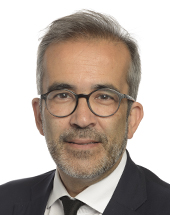






| Rank | Name | Country | Group | Speeches | |
|---|---|---|---|---|---|
| 1 |
|
Lukas Sieper | Germany DEU | Non-attached Members (NI) | 390 |
| 2 |
|
Juan Fernando López Aguilar | Spain ESP | Progressive Alliance of Socialists and Democrats (S&D) | 354 |
| 3 |
|
Sebastian Tynkkynen | Finland FIN | European Conservatives and Reformists (ECR) | 331 |
| 4 |
|
João Oliveira | Portugal PRT | The Left in the European Parliament (GUE/NGL) | 232 |
| 5 |
|
Vytenis Povilas Andriukaitis | Lithuania LTU | Progressive Alliance of Socialists and Democrats (S&D) | 227 |
All Contributions (112)
Need for a speedy adoption of the asylum and migration package (debate)
Mr President, Mr Secretary of State, Mr Vice-President, migration and asylum policy urgently needs reform. We fully support the Commission and Vice-President Schinas in their effort to reach an agreement still in 2023, so that as of 2024, and especially after the elections, we can have an asylum and immigration system at European level already in place, already in place. To this end, it is essential to bear in mind that all our policy, as it is in the EPP, is guided by respect for human dignity and fundamental rights; the fundamental rights of migrants, whether legally or irregularly, refugees, but also of the entire European population, which also deserves respect. That is why we advocate clear and rigorous control of the external borders, combating human trafficking and networks that exploit the fragility of people, ensuring that if irregular migrants are present, they must be returned effectively but safely. Let us not forget, for us, that it is also essential to make agreements with third countries, to find platforms for dialogue and referral of legal and illegal migrants. We are also in favour of development aid in order to prevent these flows from swelling. The EPP is very clear: only by protecting our borders, only by having a strict border policy can we respect human rights. We don't want it to happen like in Lisbon, where 20 people live in apartments. These are not human rights. This is not about treating our migrants well. To treat them well, we must welcome those we can integrate and no more than these. Therefore, all refugees have the right to integration. As for migrants, it is we, Europe, who must choose who enters and who can stay here.
Corrupt large-scale sale of Schengen visas (debate)
Dear Mr Jaki, you are wrong because I didn’t use any number in my intervention. But I have to tell you that there is very good reason to think that this number is in the sphere of hundreds of thousands. So, we should have a really impartial, independent investigation. That is what is at stake. If your number is 268, my dear colleague, this is not credible. And this shows that something is hidden now and this is not acceptable for Schengen area and for your partners.
Corrupt large-scale sale of Schengen visas (debate)
Mr President, dear Vice-President, the recent discovery of systemic and corrupt sale of visas is a sad irony to whoever listens to the rhetoric of the Polish Government. Unfortunately, this scandal has serious implications for Europe, for Schengen and for the security of our citizens. We cannot ignore the fact that this government is openly criticising migration and asylum policies – a government that is actively blocking the files that aim for the EU to have means to tackle migratory pressure in the external borders while ensuring full respect for fundamental rights. You are blocking the pact on migration and asylum, but you are facilitating the entry of a lot of citizens from third states without any control. Mr Saryusz-Wolski, I miss the time that you were a very pro-European member of this House. Unfortunately, you changed side and you chose the wrong side. The paradox is even clearer when we consider that the Law and Justice Government is building a wall on the border with Belarus to stop Lukashenko hybrid attacks and now is giving to a lot of third-country nationals a hybrid visa policy. That is unacceptable, that must be investigated, and for the sake of migration and respect for fundamental rights, for the sake of our policies to protect our borders, please stop this corruption in your own public administration. (The speaker agreed to take a blue-card question)
European Media Freedom Act (debate)
Madam President, Commissioner, we know that freedom of the press, free and independent media, whether internally, externally, internally or externally, are essential to the survival of democracy. This European Media Freedom Act does just that: create conditions for the internal and external independence of the media. But we can only do that if, in our practices, we also support media freedom and independence. We now see the elections in Slovakia, in which there was disinformation, in which the Smer Party, a populist party of the Socialist Group, was the most voted and from which the S&D and the Portuguese PS never demarcated. Five years ago Ján Kuciak died and we did not hear S&D, we did not hear the Portuguese PS demarcate itself. It's five years they haven't broken up. What greater pressure is there on the media than killing journalists and intimidating them? We know that it was in the context of an investigation into corruption in Slovakia and corruption in Mr Fico's government that Ján Kuciak and his wife died. For, in five years, we have never seen, neither in Portugal nor here in Brussels, the Portuguese Socialist Party and S&D depart from the Smer Party and Mr. Fico who, at the moment, are on the side of Russian propaganda and Putin. There is nothing more against freedom of the press than being associated with such a party and such a ruler.
Parliamentarism, European citizenship and democracy (debate)
Mr President, Commissioner, dear colleagues, there are some good ideas in this report. This is quite good when we look at the reinforcement and strengthening of Parliament, legislative initiative, when we see that the Council should go to a second chamber. This is totally good. I’d say they are very good developments. Also there are very good ideas for citizen participation. But this is a dangerous report because it can easily be misunderstood. There is a major constitutional mistake that we are doing all the time, when we say in a recital that Parliament should scrutinise the European Council. This makes no sense. Council and the European Council are totally democratic. They represent the Member States. And then you have Parliament that represents the peoples of the Union. And this should be very clear for us. The European Council is not undemocratic, it’s democratic, and when we accept this, we can reinforce Parliament’s presence. When we say that European citizenship could be defined by another instance than the Member States, this is not acceptable. European citizenship is linked with national citizenship. When we speak about referendums, about permanent agoras, there is the risk that we evolve from a representative democracy to a direct democracy. My dear friends, I understand very well your good intention, your good faith, but make no mistake, history has always taught us the first step to dictatorship is direct democracy. And when we are enhancing all the tools for direct democracy, you are creating the path for a dictatorship.
State of the Union (debate)
Madam President, President von der Leyen, on this occasion of the last debate of the State of the Union of this mandate, let me thank you for your outstanding leadership, namely in the pandemic and in the support to Ukraine. You are leading worldwide our fight in Ukraine for democracy and values of human rights and that is a major achievement for a geopolitical European Union. Senhora Presidente, venho de um país em que a inflação se conjuga com as taxas de juro altas e a política de António Costa de impostos máximos e serviços mínimos, em que 90 % das famílias têm crédito à habitação com taxa variável. Neste país, famílias e empresas estão a sofrer muito e, por isso, é muito importante e fundamental que a União Europeia também tenha uma estratégia de combate à inflação que possa suavizar a necessidade que o Banco Central Europeu tem tido de subir as taxas de juro. Temos de fazer como fez os Estados Unidos e ter uma estratégia de combate à inflação. E é importante e fundamental dizer aqui ao meu colega Pedro Marques que, grande parte dos problemas que ele referiu, são aqueles que são resultado dos oito anos em que a política de António Costa esqueceu as famílias e as empresas e se concentrou em impostos máximos e serviços mínimos.
The need for EU action on search and rescue in the Mediterranean (debate)
Madam President, Presidency, Commissioner, the fundamental values of European democracy require us to help those who need help. This is what dictates the principle of the dignity of the human person. But putting the dignity of the human person at the top, at the top of political priorities and migration policy, is not enough with political attacks in the aftermath of a tragedy; It is not enough with selective border choices that require greater attention and care. The mission to end the tragedies in the Mediterranean Sea requires us to do much more than respond to disasters; it requires us to design a strategy that effectively prevents and prevents them. We need more solidarity with the frontline countries, which save thousands of people in danger every day. Solidarity not only financially, but with operational help, so that rescue missions are effective in liaison with Frontex. We must combat human trafficking networks that profit from the fragility of the people who use them. We must discourage the use of networks by informing migrant citizens of the dangers of travel. We need to strengthen cooperation with the countries of origin, but we need to go further, to ensure that, on arrival, asylum applications are processed quickly and safely and that those who have the right to remain are welcomed and integrated, so that they do not also live, despite having their lives saved, in conditions that are unworthy and incompatible with the fundamental principle of the dignity of the human person.
2022 Report on Bosnia and Herzegovina (debate)
Madam President, Commissioner, colleagues: a year ago, we were voting on the last report on Bosnia and Herzegovina. Twelve months later, a lot is different, positively different. And something remains, unfortunately, the same. At state level, at federation level, at canton level, even at the level of civil society, we see improvement, we see resumption of political decision-making, we see that progress has been made on the European path. There is still, of course, a lot to be done. The protection of minorities, judicial and constitutional reform, public administration, economic development, the green transition or education, among others. But the signs are positive for now. At the level of Republika Srpska, however, we see the regression, the rise of the inflammatory speech, the divisive, secessionist rhetoric of Mr Dodik and his allies. One man cannot hold the country and its progress on European integration hostage. They are the legitimate aspirations of an entire people. This Parliament has been a constant supporter of Bosnia and Herzegovina on its European path. Less than a year ago, there were still those who doubted that it could even achieve candidate status. But anyone who knows the country and its people, who has been to the churches, mosques and synagogues of Sarajevo and who has talked to its inhabitants knows that anyone who has gone through what the Bosnians have gone through and overcome it is capable of the greatest things, of the greatest achievements. I would like to thank my colleagues who have worked on this report, the Commission and the Council for their commitment to showing the way forward to for Bosnia and Herzegovina and its people. Now we must be consistent, reject divisions, reject attacks and support this future for Bosnia and the whole region.
2022 Report on Bosnia and Herzegovina (debate)
Madam President, Commission colleagues, the past year was historic for Bosnia and Herzegovina. First, the granting of candidate status was a clear, a positive and an encouraging sign of a new dynamic in the European Union, of a new understanding of our geopolitical needs and of our own responsibility towards the Western Balkans – and the citizens of Bosnia and Herzegovina, who for such a long time expressed their Euro-Atlantic aspirations, deserved this sign. But candidate status is not only a concession, it is also a responsibility for countries to deliver. The elections of October 2022 allowed us precisely that. A very swift formation of state-level government allowed for moving forward on dozens of policies that have been blocked for years by uncooperative political actors. We see Bosnia and Herzegovina really moving forward and closer to the EU, delivering with concrete results. We have to welcome and we applaud this progress and we expect the authorities to continue building on and seizing this new momentum, this new dynamic. However, despite this very positive progress, we cannot ignore the main obstacle to the EU integration. On the very day that we commemorate Srebrenica, when we stress the importance of unity and reconciliation, we must condemn the escalation in dangerous and secessionist rhetoric by Milorad Dodik and the Republika Srpska leadership. Genocide denial is not acceptable. Undermining Dayton and the constitutional order is not acceptable. Awarding medals to Vladimir Putin is not acceptable. With the end of the blockages, it is clear: division and secessionism are the most serious obstacle to EU integration for Bosnia and Herzegovina. That is why the Commission must keep the funds for Republika Srpska suspended until democratic backsliding stops and until full alignment with our common foreign and security policy is ensured. That is also why the Council must make use of the sanctions regime and finally sanction Mr Dodik and other destabilising actors. And that is why the High Representative and EUFOR Althea have our full support in implementing and protecting peace and stability in Bosnia and Herzegovina. The lessons of Dayton cannot and will not be forgotten. When Russia brutally invades a sovereign Ukraine, when Iran oppresses and represses women, we have to be clear in the defence of our values, and we count on Bosnian diplomacy at home and in multilateral fora, and also on the enforcement of sanctions by its national authorities. It is clear that there were attempts by foreign actors to create instability in the Western Balkans to create another front in their war against Europe. Our response and the Bosnian response can only be unity and reconciliation. Only by ensuring rights to both citizens and peoples and no discrimination, only by protecting minorities and only by aligning with European standards, can we move from Dayton to Brussels and find a common future together. I have to say that it was a privilege to be the standing rapporteur for Bosnia and Herzegovina along this term. I have seen the aspirations of Bosnians in Sarajevo, in Banja Luka, in Mostar, and the willingness to commemorate, but also to overcome the wounds of the past for a better future for all. That is our hope. That is the hope that we have in the Bosnian people.
2023 Annual Rule of law report (debate)
Madam President, I would like to greet the Spanish Presidency and wish it every success during this semester. Senhora Presidente, Caro Comissário, não é precise sublinhar a importância deste relatório para o Estado de Direito. Há muitas falhas em varios States and habém some progresses. Gostaria to highlight três situações that I worry about muito: a primeira, a Polónia. It continues to have clearly uma regressão, passos back, by um parte na independência do Ministério Público, da Procuradoria-Geral da República, but also agora naquele that I consider or maior attack on the values of the State of Direito and gives democracy to that assisti, that é a chamada lei anti-Tusk and that não is neste relatório, but I hope that it is not second. Depois, or case of Espanha, which is a worrying case about the State of Direito, because the Attorney General's Office continues to be highly dependent on the government. Let us call here Minister da Justiça a dizer que o Tribunal Constitucional é um orgão politico e que não ha mal nenhum em nomear ministers para o Tribunal Constitucional. Isto põe serious problems a nível do Estado de Direito. And finally, not case português, onde continuam as critiques muito duras ao combat à corrupção, onde really or governo tem falhado totally. A great reason for concern, demitiu-se or Secretário de Estado da Defesa na ultima sexta-feira, arguido e suspeito de corrupção, e o Primeiro-Minister disse que isto não tinha importância nenhuma, because a corrupção não worries the Portuguese, or that worries the Portuguese or economic development. Ora, na last sondagem que foi feita and who fear less than um mês, 87% two Portuguese consider that a corrupção é um problem muito serious and that não is to be combated. It is necessary to warn or Governo Costa for this falha gravíssima no Estado de Direito.
Commemorating the 28th anniversary of Srebrenica (statement by the President)
Madam President, dear Commissioners, dear colleagues, we address today all Bosnians of all ethnicities, of all religions and beliefs. We address them not as citizens of a country, but as a living proof of Europe, because what we find in Bosnia and Herzegovina is all that is great, all that is painful and all that is human about Europe. The history of Bosnia and Herzegovina is the history of Europe, of different peoples and beliefs, of war and conflict, of reconciliation and peace, of hope for the future. Because in Europe, our darkest moments were followed by our brightest. Because 50 years after Auschwitz, there was Srebrenica, and our failure to act was, and remains, one of our deepest sorrows. We were not saviours. We were merely witnesses of Srebrenica. Twenty-eight years later, we are still only witnesses. Last year in Irpin, we witnessed Srebrenica. Last year in Bucha, we witnessed Srebrenica. So we must go back to Bosnia, to Srebrenica, to learn that difficult and painful lesson: that truth is not compatible with denial, that justice is not compatible with impunity, and that peace is not compatible with aggression.
Preparation of the European Council meeting of 29-30 June 2023, in particular in the light of recent steps towards concluding the Migration Pact (debate)
Mr President, Madam Minister, Mr Vice-President, first of all I would, of course, like to thank and greet the Swedish Presidency for the absolutely impeccable way in which it has presided over the European Union during this six-month period. I would also like to say that, in this Council, it is essential to strengthen support for Ukraine, after the brutal attack on the dam on the Dnieper River that led to human catastrophe, to a war crime and, in particular, to an ecological disaster. We must also look at the revision of the MFF at this European Council, which is crucial to equipping the European Union to tackle the problems it faces in the next three or four years. And finally, the priority that must be given to Latin America at this time. But, coming directly to the point that we consider fundamental, after this advance in the Pact of Migration, it is important to recall, in this regard, what Pope John XXIII said about human dignity: Every human being is a person. Therefore, human dignity obliges us to defend the dignified treatment of refugees, asylum seekers, migrants, those who seek work and arrive at our borders. Contrary to the view of certain political groups, this can only be achieved by guaranteeing secure borders, properly protecting and controlling our borders. This is the only way to combat illegal trafficking in persons, which is a violation of human rights. Only in this way can dangerous and tragic crossings at sea and in the desert, which violate human rights, be discouraged and diminished. Only in this way can we end the cantonment of people in apartments, either in Stockholm or in Lisbon, where there are 20 and 30 people per room or per house. This is a violation of human rights. Therefore, defending human rights and the dignity of people requires combating illegal trafficking, it requires border protection. Only in this way will we put an end to the instrumentalisation of migrants that is now present throughout the north-east of Europe, but which also occurs from time to time in Turkey. All this, as the President of the Commission demonstrated last week with her visit to Tunisia with two heads of government, is only possible if there is close, systematic cooperation with third countries. On the one hand, for development aid that will fix populations and, on the other hand, to help deal with migration flows, combat illegal trafficking, prepare reception conditions, etc. We really have to welcome this step that has been taken. He, however, is not enough. Let us now move on to a decisive phase of negotiation between the Council and Parliament, with the mediation of the Commission. But I believe that we have taken a decisive step to restore the trust of European citizens in the European Union and to ensure that all migrants and European citizens live in dignity and in full exercise of their rights.
Negotiations on the European Electoral Law (debate)
Colleague Sandro Gozi, first to say that I fully agree with you. It’s not acceptable what the Council has made with this electoral law, but also with the previous project from eight years ago. Then, let me tell you that you are not going to teach us democracy: in Parliament, every Member is allowed to speak about the issues that they want. The Parliament, different to a government, is diversity. So, when we go to negotiations, the different groups are there to represent different positions, as the different countries represent different positions. So, in the debate about negotiations, we are entitled to refer that there is diversity on the positions. I’m very sorry to have to teach you democracy.
Negotiations on the European Electoral Law (debate)
Madam President, Minister, Commissioner, I have no doubt that the Council should not avoid or block any legislative initiative coming from the Parliament, even if its final position would be totally against the Parliament’s position. And so negotiations should have already started. But before this new electoral law, it is still pending there. First, reform of electoral law that is not into force. And we should start by this one, not by the second one. Then let me say that this law has very, very interesting developments and good solutions, but unfortunately, it has also some very bad ones. And the worst, the most dangerous is the creation of a single constituency and transnational lists. First, because there is no doubt that they don’t comply with the Treaties. Because if the Treaties wanted to establish a single constituency, this would be expressly in the text of the Treaties. And so it’s quite clear that this doesn’t comply with the Treaties. Second, because it was approved here by a very, very narrow majority, the article that establishes this constituency was approved by less than 20 votes. It was Article 15. And such a change requires a broad and solid consensus and not a narrow, thin majority. And let me also tell you that this doesn’t bring the citizens closer to their representatives. Quite the contrary. It enlarges the distance between representatives and electorate. This is not a federalist idea, because federalism is about devolution, not about concentration. There is not only a single federal state where there is a single constituency. Not in Belgium. Not in Germany. Not in the United States. Not in Switzerland. And so this would be something very, very strange. We are not a federation, but we have a single constituency. That is for nation state, not for the European Union.
This is Europe - Debate with the President of Cyprus, Nikos Christodoulides (debate)
Mr President, President Christodoulides, Commissioner, I have to congratulate you on your recent election, and especially in your commitment and engagement with European values and the European Union. We have today a Maltese President of the European Parliament welcoming the President of Cyprus in this House. And this means that in Europe there is no periphery. Mr President, I want to be very clear: we stand for the reunification of Cyprus; we condemn the illegal occupation of the north territory in Cyprus. Indeed, with the illegal and brutal Russian invasion and occupation of Ukraine, I believe that, today, the European Union and the European peoples are in a better condition to understand the impasse in which Cyprus finds itself. We cannot have double standards. And so I would like to ask you, how do you evaluate the European Union’s commitment to the question of Cyprus in the recent years? And what is the exact model that you are proposing when you are asking for the European Union active role? That would be my questions, because we believe that a peaceful, prosperous, reunified Cyprus will always be in the interest of a peaceful and prosperous European Union. You can count on us.
Threat to democracy and the rule of law in Poland, in particular through the creation of an investigative committee (debate)
Mr President, Council, dear Commissioner, what we are seeing in Poland is the final orchestrated attack on democracy and the rule of law in the country. After this, there will be nothing except a judiciary controlled by the government, media controlled by the government and, finally, opposition silenced by the government. Because what is happening is under the pretext of fighting a dangerous enemy abroad, the ruling majority wants to eliminate the democratic, legitimate and pro—European political opposition at home. First, they granted us that they were democratic. After, they started to confess that they were disciples of illiberal democracy, which is a contradiction in terms. But now, even free elections without the rule of law they want to eliminate. So first they promised they are democratic, then they confessed that they are illiberal democrats, and now we see that they are not even democrats. This is not about Russia. This is not about Russia. So when we see a law like this, where we kill democracy, the rule of law, respect for human rights, respect for opposition, for free and fair elections, we can see who is under Russian influence. It is PiS, its leaders and its government that are imitating Putin and Russia! They are under Russian influence!
Breaches of the Rule of law and fundamental rights in Hungary and frozen EU funds (debate)
Mr President, Council, dear Commissioners, we know that being part of the European project means respect for our core set of values, democracy, the rule of law, fundamental rights. They are not negotiable, and all Member States have voluntarily committed themselves to these values when they joined the EU. So being part of the European Union is not a cherry—picking exercise. I have to say that the behaviour of the Hungarian Government is not an option, is totally against our values, and we have to blame the Council because the Council has the tools to avoid what is taking place now. We activated Article 7. If they were under Article 7, we could avoid a lot of deterioration of the situation that we are now finding is worse and worse. I really have to say, and have to ask Mr Orbán in Budapest, where is the fighter for freedom of the late 1980s? He fought for freedom against communism to bring Hungary to a kind of authoritarian and dictatorship regime? It is unthinkable that someone that in his youth was fighting for the rule of law and democracy is today the bad example in the European Union that we have really to condemn. I urge the Commission not to give funds to Hungary!
Fighting cyberbullying of young people across the EU (debate)
Mr President, Commissioner, ladies and gentlemen, there are a lot of technical matters going on here, a lot of important matters that are debated with distancing, with objectivity, with coldness. But there are days, like today, when we don't speak simply as MPs, as legislators, we speak as human beings, as mothers, fathers, brothers, as citizens. There are thousands of children and adolescents on our continent today who are tormented, persecuted, threatened by a new criminal pandemic. cyberbullying. If there are abuses and bullying which are revolting us in the street, in schools, in sport, ladies and gentlemen, there are very cruel tortures also in the digital world, carried out secretly by insistent private messages that are erased and self-destructed and, publicly, on viral Internet channels, on social networks. Children live with the ghost of humiliation, anguish, guilt, isolation, depression and sometimes even ideas of suicide, which is the only way to escape this persecution. Let's talk about things as they are. O cyberbullying It's a crime. The future Nicole Fox never had was a crime and we thank her mother, Jackie Fox, for giving so many other children the opportunity not to have to go through that ending. We have to protect children, and for that we need an autonomous crime, a crime of our own, a crime of our own. cyberbullying, digital abuse, which can, at bottom, stop the use of many platforms in various ways, the intensity of aggression with viral spread and the secretive, silent, discreet form like this bullying if it is done. O cyberbullying It's a crime. Young people have to know it's a crime, parents have to know it's a crime, teachers have to know it's a crime, the courts have to know it's a crime, and we can't ignore this criminal pandemic that's a crime anymore. cyberbullying.
Council of Europe Convention on preventing and combating violence against women and domestic violence – EU accession: institutions and public administration of the Union - Council of Europe Convention on preventing and combating violence against women and domestic violence - EU accession: judicial cooperation in criminal matters, asylum and non-refoulement (debate)
Madame de la Pisa, I accept your question and answer in your language with great pleasure to say that you have an ideological prejudice. Of course, men are not presumed to be abusers, but there are statistics that show that women are more vulnerable. Statistically they need protection. Because for centuries and centuries women have not had the same rights as men and that still has consequences today. I am not ashamed to say that I do not consider all men to be abusers, but I do consider that women need special protection. And this is our responsibility to ensure that everyone is on an equal footing and that everyone has the same fundamental rights. No, I'm not ashamed to say it. Of course there's a history of mistreatment of women. And we have to put an end to that pandemic of mistreatment of women.
Council of Europe Convention on preventing and combating violence against women and domestic violence – EU accession: institutions and public administration of the Union - Council of Europe Convention on preventing and combating violence against women and domestic violence - EU accession: judicial cooperation in criminal matters, asylum and non-refoulement (debate)
Madam President, Commissioner, every time there is aggression by a husband, a partner, a father, a child against a woman, every time there is persecution, harassment or even rape, every time a woman is forced to marry or abort or sterilise, every time a child is a victim of female genital mutilation, we remember that we have not yet ratified, as the European Union, the Istanbul Convention, that there are six states – Bulgaria, the Czech Republic, Slovakia, Hungary, Latvia, Lithuania – that have not yet ratified and that many states that are signatories to the Istanbul Convention have not been able to put into practice, to apply the rules for the protection of women against violence that are deposited in this Convention. Even in a country like Portugal, the crime of rape is not yet a public crime and should be, in order to protect all women against what is a cloak of opacity, a cloak of concealment, which is often behind violence against women. This is why it is crucial for the European Union to take this step as a decisive step towards respecting the human rights of all human beings – women, men, children, the elderly – but here in particular those who have proven, in the statistics, to be the most likely and most vulnerable victims: our European women, our women living on the European continent. (The speaker agreed to answer a blue card question)
This is Europe - Debate with the Prime Minister of Luxembourg, Xavier Bettel (debate)
Madam President, dear Prime Minister, Commissioner, first, let me thank you and congratulate you for reinforcing the tradition of Luxembourg, Commissioners, Presidents of Commission and Prime Ministers in fighting for rule of law, for human rights, for the rights of minorities. Because I remember that, even against the first steps of wrongdoing of Orbán, Viviane Reding was always with the red alarm, and not by chance, Juncker was not voted by Orbán as President of the Commission. And so this is Luxembourg always giving the example and you keep this tradition and reinforce it. Then let me say as a Portuguese, that we experienced the European Union before we were Members because of the experience of our citizens in Luxembourg. They were so well received, that this was the true European spirit. And then let me put a political question, because at some time, at some moment, you said that peace could be obtained in Ukraine if there was a meeting between Xi Jinping and Biden. And I have to say that I am quite sceptical about this statement and I would like to know how do you envisage a peace process when you try to design this new formulation? Because I see with President Lula now what he is saying and these are not good news for us and not good news for Brazilian external policy. So I would like your comment on this.
The need for a coherent strategy for EU-China Relations (debate)
Mr President, dear High Representative, Mr Vice-President, relations between Portugal and China are the oldest and longest-lasting of any European state. We know very well the importance of dialogue and trade relations with China. But the boundless friendship with Russia, the aggressiveness and threats to Taiwan, the treatment of Uyghurs, are issues that must be on our relationship agenda with China. And so we must always face them, having the attitude that President von der Leyen had, and not the neutral attitude of President Macron. We want strategic autonomy for Europe, but our systemic rival is not the United States. Our systemic rival is China. Autonomy is not a third way. Europe will only truly be an entity with strategic autonomy if it is an Atlantic Europe, a Europe that cultivates Euro-Atlantic values. That is why it is crucial that we take a firm stand in the face of China to defend the international order, Taiwan's integrity and human rights.
Conclusions of the European Council meeting of 23-24 March 2023 (debate)
Madam President-in-Office of the Council, Mr Vice-President of the Commission, I would first of all like, of course, to congratulate the Commission. On the one hand, because of the success of the Windsor Framework Agreement for Northern Ireland, which Mr Vice-President also contributed to, and also because of the success of the Inflation Reduction Act in Washington and the impact it has on Europe. But I would like here, in connection with this summit or this European Council, to give an important warning, in particular to the President-in-Office of the Council, on the question of trade agreements. A timely and rapid response to the Mercosur issue is crucial. The Latin American continent has waited twenty years. We have a deal ready - it's not the ideal deal, but it's the deal possible. And we are leaving countries like Brazil, like Argentina, like Paraguay, like Uruguay and like so many others on the South American continent, who are waiting for this example; We are clearly handing them over to China's power, Russia's power and its geopolitical orientation. It is crucial, not only for economic but also geopolitical reasons, to conclude the agreement with Mercosur.
Combating organised crime in the EU (debate)
Madam President, the fight against organised crime is a borderless fight. The problem of organised crime is now a European problem. 70% of criminal networks active in Europe already operate in more than three countries simultaneously and more than half of them use violence alongside the illegal drug trade, which not only keeps billions of euros hidden in our economies, but destroys the lives of thousands and thousands of citizens. The Commission's package of measures for police cooperation in the European Union has established the right model, which both Parliament and the Council must continue to follow, i.e. to approve tools so that national authorities, national police, can fulfil their mission to combat increasingly sophisticated organised crime. In an area of freedom, security and justice, we must give priority to trafficking in persons and, in particular, to trafficking in minors, to drug trafficking and also, clearly, to what we would call corruption and economic crime, because we know that 60% of these networks are intrinsically linked to corruption, economic crime and fraud, including money laundering. My fellow Members, there is no freedom without security and that is what the Greens and the Left should know here. A society that is afraid is not a society where there are fundamental rights and where there is freedom. The right to freedom is also the right to security.
This is Europe - Debate with the President of Lithuania, Gitanas Nausėda (debate)
Madam President, President Nausėda, Commissioner, I remember that, in the late 1970s, my father, with a map in his hand, taught me, my brother and my sister, that Baltic states were not Soviet Union. They were occupied and they remained independent. I remember that, in 1987, our Prime Minister, from our party, Cavaco Silva – who was Prime Minister ten years and President of the Republic ten years – had a huge conflict with the Parliament because he didn’t agree with a visit to the Soviet Union, where the territories of Baltic states were included. And the government fell down because he was defending this principle. So, I have to tell you that, for decades, we were in the European Union defending the sovereignty and the future of democracy and freedom to Lithuania, Latvia and Estonia. And today, Mr President, we are very proud because your country became a world front runner of defence, of democracy, of freedom, of human rights. This was clear when you sent all the support to the Ukrainian people, but also when you are claiming for democracy in Belarus and when you are saying that you don’t accept the blackmail of China. The example of the Ukrainian solidarity shows that you want for other countries in Europe, and I dare say in world, the same fate that Lithuania had, which was in a very, very oppressive regime and managed to become independent and to give freedom, prosperity and human rights’ respect to all the citizens. I would like to thank you, to say ačiū, Mr President, to all the Lithuanian people and also to you and to your government. Let me try to invite you to have here your say on the prospects for Belarus and how we should shape our relation with China. Because the Lithuanian experience is a very important one and can set the example to all of us.