
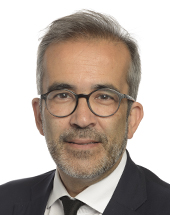





| Rank | Name | Country | Group | Speeches | |
|---|---|---|---|---|---|
| 1 |
|
Lukas Sieper | Germany DEU | Non-attached Members (NI) | 390 |
| 2 |
|
Juan Fernando López Aguilar | Spain ESP | Progressive Alliance of Socialists and Democrats (S&D) | 354 |
| 3 |
|
Sebastian Tynkkynen | Finland FIN | European Conservatives and Reformists (ECR) | 331 |
| 4 |
|
João Oliveira | Portugal PRT | The Left in the European Parliament (GUE/NGL) | 232 |
| 5 |
|
Vytenis Povilas Andriukaitis | Lithuania LTU | Progressive Alliance of Socialists and Democrats (S&D) | 227 |
All Contributions (112)
Preparation of the European Council meeting of 16-17 December 2021 - The EU's response to the global resurgence of Covid-19 and the new emerging Covid variants (debate)
Mr President, Vice-President Šefčovič, tomorrow's Council meeting begins by addressing issues that are fundamental to stability, security and peace in Europe. The issue of the hybrid attack in Belarus with the instrumentalisation of migrants is a key issue on which Europe, together with the United Kingdom and the United States, can under no circumstances compromise. The same goes for the Ukrainian issue and Putin's threat to peace and stability in Europe, which is now challenged by the Russian government and Putin's leadership. Here too, when we look at defence in tomorrow's Council, we must better coordinate the European Union's efforts with NATO and make the European Union naturally a defence power, but always coordinated and within NATO. Speaking of Russia this has a clear impact on energy prices. We know that they keep increasing, that today they strangle families and I can give the case of Portugal where the government continues, in the area of fuels, in the area of gas, to give the Portuguese a winter that will be an unsustainable winter from the point of view of prices. A final word for Africa, for the summit with the African Union that will finally take place on 17 and 18 February, where the issue of development, the issue of security and terrorism, climate change, migration, will naturally be at stake, but where solidarity with the African continent in vaccination, and in particular the fight against the pandemic, must also be at stake. Without the third dose in Europe, but without the first in Africa, there will be no resolution of the pandemic. A Merry Christmas and a Happy New Year to all is my wish.
Situation at the Ukrainian border and in Russian-occupied territories of Ukraine (debate)
Madam President, Commissioner, let us begin with the principle: Russia, led by Putin, first challenged Georgia’s territorial integrity after Ukraine, including with the illegal and unrecognised annexation of Crimea, and then moved on to the war in Ukraine in eastern Ukraine. At the moment Putin has been concentrating tens of thousands of soldiers, tens of thousands of troops, on the border between Russia and Ukraine, precisely creating an effective threat, a real threat to the integrity of Ukraine and an escalation of the conflict that persists. That is why we Western countries, the European Union, together with the United States and the United Kingdom, cannot, under any circumstances, tolerate Russia creating yet another situation of war and violation of the international order in Ukraine. Of course, it is crucial to maintain the dialogue of the Minsk agreements and to maintain the dialogue through Germany and France in that quadrilateral structure with Russia and Ukraine, but as this is very important for the dialogue, it is crucial to maintain a firm position vis-à-vis Russia. This means, first of all, that the sanctions applied to the Russian regime, and in particular the sanctions that may be applied if there is any negative development in relations between Russia and Ukraine, are clear. Here, the European Union, the United States and the United Kingdom must be in full harmony, in a firm, hard and clear way, which also shows solidarity with the Eastern Partnership and with the Eastern European states that are part of the European Union. Without such a guarantee, peace in Europe and peace in the world is in danger. Putin must be stopped, Putin must be stopped.
The situation in Nicaragua (debate)
Mr President, Mr High Representative, since taking office in 2007, President Ortega has basically dismantled all the controls that existed in Nicaragua over presidential power. It gradually turned Nicaragua into a bloody dictatorship, as became clear essentially after the 2018 social protests in which there were incarcerations, ill-treatment, exile, enforced disappearances and, of course, deaths. At the moment we know that, following the preparation of the election, journalists, rural and environmental activists, indigenous activists and students, but also opposition leaders and, in particular, presidential candidates or pre-candidates, have been arrested without charge. There has been systematic detention, harassment and persecution, there is regular intimidation in Nicaragua's political and civic life. The sanctions regime that began in October 2019 and has now, more recently, been extended from 6 to 14 people including Vice President Rosario Murillo, the truth is that it is still not enough to make Ortega leave power and open a democratic process of reconciliation of Nicaragua with its destiny. The days of Somoza go far, but the truth is that Ortega is still an imitator of this great dictator who claimed to fight. All solidarity with the people of Nicaragua.
The Rule of law crisis in Poland and the primacy of EU law (debate)
Mr President, Mr Prime Minister, Madam President of the Commission, I would like to begin by saying that the whole origin of this conflict lies in the disregard for judicial independence. It is clear that there cannot be, in the context of the European Union, in the context of democratic states and states governed by the rule of law, governments, political parties, institutions that do not respect judicial independence. In any European state, once the independence of the judiciary is called into question, all the rest of the principles are called into question. This is a basic principle. Why did the Polish Constitutional Court decide to say that Polish law is ahead of European law, violating all the rules of the Treaties, disrespecting the Treaties and undermining the European Single Market, but not only the market, but also European values? Judges are not independent. The root of evil lies in the attempt, in several European states, and even in some that are not talked about, to control, influence the judiciary, the judges, the judiciary. Never confuse the Polish government and the Polish Constitutional Court with the people of Poland. The people of Poland have centuries and centuries of struggle for freedom, of struggle for the values of law, and we must rightly call on the Polish people, in the streets and in the institutions, to uphold the rule of law, to assert judicial independence and to give European law primacy again over Polish law in the matters in which that primacy is required.
European solutions to the rise of energy prices for businesses and consumers: the role of energy efficiency and renewable energy and the need to tackle energy poverty (debate)
Madam President, energy prices are constantly rising, in natural gas, in fuels in general, in electricity in particular. The colossal increase in electricity prices has effects on households and businesses, has effects on environmental objectives and has effects on inflation. If nothing is done urgently, at European level, but also at the level of each national government, this will not be the winter of our discontent. This will be the winter of our freeze! In the Iberian market, electricity has never been at such a high price. Fuels in Portugal continue to increase: diesel, gasoline. The electricity bill, which was already in Portugal one of the highest in Europe in relation to the standard of living, is now practically unbearable. And what has the Portuguese Government done to alleviate, mitigate, reduce the energy bill of the Portuguese? It maintains the tax on petroleum products and others on fuels, which were introduced temporarily, but after all continue forever. Is the government, is Prime Minister Costa willing to reduce these taxes to ease the energy bill? And in medium-term policies, are you determined to end the rents of the electricity sector, which in many cases lead to an ever-increasing bill for consumers, businesses and households? And for vulnerable families, is there any special plan to ease your bill? These are the answers which the Portuguese Government must give and which the European institutions must also give to consumers and businesses throughout Europe.
The future of EU-US relations (debate)
Mr President, Mr High Representative, as a Portuguese and as a European I have to say: the United States is, and must remain, our priority partner. Liberal democratic values, respect for human rights, but also the market economy and prosperity, are Western values common to Europe and the United States. We must not fall into the temptation that Europe, which must defend its interests, and which must assert itself in the Indo-Pacific, should do so without being in coordination and coordination with the United States. I know that the temptation is great to make Europe a kind of new movement of the Non-Aligned, a third way, in the middle of the bridge, between the United States and China and Russia. But there is no, no doubt: if Europe ceases to be a preferred ally of the United States, it is the values of human rights and the market economy and prosperity that will be at stake. We must do everything to have a trade agreement and we must do everything to have a military and strategic partnership with the United States.
State of the Union (debate)
President Metsola, President von der Leyen, the Commission President's speech shows the difference it makes to belonging to the European Union. It was positive, it was optimistic, it was encouraging and it certainly has the support of the EPP Group and the Portuguese EPP Members. He made a strong defense of the rule of law, in particular as regards the funds and the budget. But it is not enough to ensure that the funds are spent in accordance with the values of the European Union. It is also necessary to ensure that they are well spent, well applied, that they will not be spent on megalomaniac works, on works that focus only on the most important region of the country or on works that serve only clientele. Therefore, it is very important to monitor the implementation of the funds to know if they are well spent. The plan is to relaunch the economy, to relaunch businesses, to give opportunities to young people, to have intergenerational solidarity. It is not to pay the current expenses of the budget as, in part, is happening in some countries, including mine. It is not to be used as an electoral campaign weapon, as the Portuguese Prime Minister is doing now every day. The plan is not from any party and it is not from any country, it is a European plan for Europeans. It is important that the European Commission pays attention to this by ensuring that funds are well spent for the benefit of the digital transition, the green transition, the modernisation of economies and thus prosperity and growth. A great deal of attention, Madam President, on one fundamental point. At the moment, the price of energy is unbearable for businesses and households, in electricity and fuels. We want a green and ambitious transition, an ambitious digital transition, but it needs to be socially sustainable. Families and businesses expect this from Europeans and expect it from our plan. Thank you very much, all the strength and all the courage to the Commission.
Situation in Lebanon (debate)
Madam President, Lebanon has been facing a severe social, financial, economic and political crisis and now faces some challenges that seem to form a humanitarian crisis. After one year of political impasse, a new government has been formed. It is now time to be positive, to focus on the reforms required to steer the country, to fight corruption with determination, to grant stability and a sustainable recovery. For that, we have to congregate all the stakeholders: religious and political forces must be involved, as well as some hugely influential neighbour states. Fair and transparent elections, EU assistance and EU commitment must be ready. A stable and prosperous Lebanon is possible if we want it, if we help the Lebanese people.
Situation in Afghanistan (debate)
Madam President, every day news, images and testimonies come to us from Afghanistan that indignate and revolt us. We have seen the most elementary human rights being trampled upon, particularly those of women, but, I would say, of all citizens. It is the opposite of what we would have liked to have seen, and to see, after 20 years of struggle and sacrifice in order to try to stabilise the region and give the Afghans the future to which they are entitled. But it is not our responsibility, it is the responsibility of the Taliban and this should not be forgotten. It is now up to the European Union and the international community to play a decisive role. I regret that the European Council has not yet had a meeting to assess the geopolitical impact and to devise a strategy with which we can help all refugees and all citizens who, not being refugees, are today facing the risk of oppression and attack on their most basic rights within Afghanistan. We must show solidarity with Afghan women “...” (The Chair took the floor from the speaker)
Breaches of EU law and of the rights of LGBTIQ citizens in Hungary as a result of the adopted legal changes in the Hungarian Parliament - The outcome of 22 June hearings under Article 7(1) of the TEU regarding Poland and Hungary (debate)
Mr President, there will be a day when the Polish people and the Hungarian people will ask ‘Where were the European institutions when they attacked the independence of the judiciary, when they closed universities, when they got all the media in their hands, when they started to persecute LGBTQI people, when they heard hate speech against migrants, where were the European institutions?’ The Parliament was acting, the Commission was acting, but the European Council does nothing. Until now. It’s not only the problem of the presidency: even the Portuguese Presidency decided to remain neutral about this law in Hungary. And so there will be a day when there will be a democratic question in these countries and they will say, ‘Where were you? You were not able to protect our rule of law. You were not able to protect our separation of powers. You were not able to protect our fundamental rights’. What really causes damage to the European Union is not this kind of breach. It is our absence of action. That is what really damages the European Union. So I urge the European Council to act immediately on Article 7, and if Article 7 doesn’t work, to do a political movement on this way. That will be enough to change things in Hungary and in Poland.
Visa Information System (VIS): visa processing - Visa Information System (VIS): conditions for accessing other EU information systems for VIS (debate)
Madam President, Commissioner, Schengen is, as we have just seen, the jewel in the crown of European integration. But this freedom we share will always require shared security. This balance between freedom and security is only possible if we have at our disposal a complex network of instruments, often invisible, for the daily lives of Europeans. The European Union's visa system - in English Visa Information System - It is at the center of this network. It is the most finished example of the symbiosis between the European level and the national level present in all European consulates across the globe and at all external borders, without exception, of the Schengen area. Currently VIS is already responsible for issuing millions of visas to those who visit us, ensuring with its visa code that all tourists are subject to equal rules. In recent years we have been working on what will be the biggest reform since its inception. These are huge changes that make the VIS a more effective, more useful, easier tool for police, border guards, asylum authorities and consulates. We begin by changing the system paradigm itself. It is not only tourists who benefit from free movement, but also third-country nationals who live, study, work or are on our territory for a longer or shorter period of time. So it was necessary, even natural, that all tourists and residents could be subject to the common VIS screen. That's what we do. This system will apply to everyone, including so-called “Gold visa holders”. With this change we ensure greater security, which is why we also extend systems to consulates. All the systems consulted, all the information systems of the European Union will be consulted, without any exception, ensuring a check even before entry into the territory and we dedicate a huge effort to the protection of children, the protection of minors. Every year in Europe, it is estimated that more than 250,000 children - I repeat, 250,000 - are missing. We can and must do more to prevent and combat this tragic phenomenon. The VIS brings new functionalities, collecting biometric data from all children and young people that can be used at the borders or, in case of disappearance, can be used by the police. Madam President, Commissioner, it has been hundreds, I repeat, hundreds of hours to negotiate this complicated dossier. The support and commitment of the European Commission was essential to this outcome and I would particularly like to thank Commissioner Johansson for that. I would also like to highlight the German Presidency, which has done a herculean job and made it possible to find an agreement in December 2020. Finally, a word of great appreciation and thanks to my fellow shadow rapporteurs whose cooperation, guidance, support and also patience have been decisive for us, as rapporteur, to be able to achieve the result that I hope will be adopted in this House tomorrow. Of course, I would like to thank all our collaborators, all those who work with us in the services of Parliament, the Commission, the Council and our offices, because without them a task of this technical complexity and with this political depth would not be possible. I believe that from tomorrow we will all be congratulated on providing a better service to Europeans and to all those who have to enter European territory.
Annual Report on the functioning of the Schengen area (debate)
Madam President, Commissioner, there is no doubt that free movement in Europe is being called into question more seriously than before. It is true that it was public health imperatives that led all European governments to impose restrictions in the Schengen area, but there was nothing to oblige these restrictions not to comply with a uniform and homogeneous criterion. It is one thing to accept that in a pandemic situation restrictions can be created, it is another for each state to define different criteria for different types of restrictions. What the pandemic has proved is that we need a government, a Schengen governance that is a governance put in the hands of the Commission, that has equal criteria for everyone that can be executed by each state, but according to standards that are uniform standards. And that is why it is so, I would say, illusory, the situation we have reached with the digital certificate that allows free movement. What we see today - and I can say this from the experience of the last three or four days flying in Europe - is that at every airport and in every country we have different criteria that we do not know, even though we are using the digital certificate, and so this is already a condemnation of this future of Schengen. I shall end with just the same exhortation as the Commissioner, and we look forward to the entry of Romania, Bulgaria and Croatia into the Schengen area.