

| Rank | Name | Country | Group | Speeches | |
|---|---|---|---|---|---|
| 1 |
|
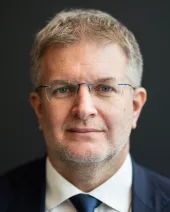
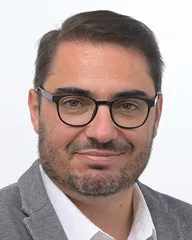
Lukas Sieper | Germany DEU | Non-attached Members (NI) | 390 |
| 2 |
|
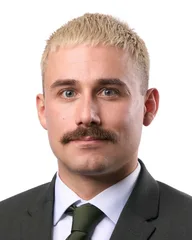
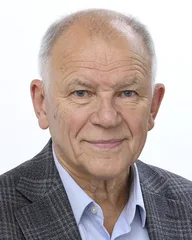
Juan Fernando López Aguilar | Spain ESP | Progressive Alliance of Socialists and Democrats (S&D) | 354 |
| 3 |
|
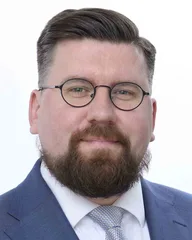
Sebastian Tynkkynen | Finland FIN | European Conservatives and Reformists (ECR) | 331 |
| 4 |
|
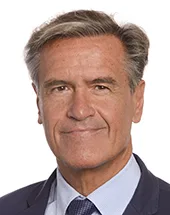
João Oliveira | Portugal PRT | The Left in the European Parliament (GUE/NGL) | 232 |
| 5 |
|
Vytenis Povilas Andriukaitis | Lithuania LTU | Progressive Alliance of Socialists and Democrats (S&D) | 227 |
All Contributions (96)
30th Anniversary of the Single Market (debate)
Mr President, Madam Minister, welcome, Commissioner, ladies and gentlemen, the single market is and remains an achievement to be defended. But now we need to put the real economy and small and medium-sized enterprises back at the centre, not speculative finance and large multinationals. After Brexit, COVID and Ukraine, the need to shorten value chains is becoming increasingly clear; bringing strategic productions back to Europe; protect the quality of our goods; to demand from third countries, starting with China, the same standards as we do; standardise customs procedures; reduce taxes; bureaucracy and hyper-regulation and investing in skills. And in the face of anti-inflation plans like the American one, we must imagine common tools and not responses that benefit only a few, destroying the internal market. Only in this way can it still be an added value and not a bearer of new inequalities and unfair competition.
The 30th anniversary of the UN Declaration on the Rights of Persons Belonging to National or Ethnic, Religious and Linguistic Minorities (debate)
Madam President, Commissioner, ladies and gentlemen, 30 years after the UN declaration, religious minorities are still being persecuted. There are still seven countries in the world where a person can be sentenced to death by criminal blasphemy laws, in clear violation of international law: Pakistan, Iran, Afghanistan, Brunei, Mauritania, Saudi Arabia and Nigeria. And from Nigeria comes a unique opportunity for the world: Musician Yahaya Sharif-Aminu, found guilty of blasphemy and sentenced to death by hanging in August 2020, appealed to Nigeria's Supreme Court, challenging the constitutionality of the law. We call on President Buhari to break down these Sharia-inspired laws that are contrary to the human rights of religious minorities, international law and Nigeria's commitments to respect its treaties. It would be an important signal on the domestic level, against the Islamist militias that bloody the country, and on the international level, towards all the states that use anti-blasphemy laws to target religious minorities.
Preparation of the European Council meeting of 15 December 2022 (debate)
Mr President, Mr Vice-President, Minister, ladies and gentlemen, the next European Council is called upon to provide decisive answers. Support to Ukraine must continue, it is the only premise for a just and lasting peace, but families and businesses cannot afford further delays or ineffective measures. The establishment of a price cap in contrast to speculation on the price of gas, reform of the electricity market, security of supply, out of the usual rhetoric: It is on these choices that the European ambition rate of individual governments will be measured and it is on this that the new Italian conservative government will also be spent. In the same way, we welcome the attention finally given to the Central Mediterranean with the new action plan requested by Italy and presented by the Commission. It's time to move from words to deeds: protection of external borders, European approach to asylum and returns, restoration of legality for NGO vessels, significant investments to bring development to Africa. Finally, there is a need for an immediate rebalancing of our transatlantic relations after the launch of the plan to support the American economy. We need new instruments because, if the answer is entrusted solely to national budgetary capacities, the 30th anniversary that we will celebrate in January could be the last birthday of the single market.
Situation in Libya (debate)
Mr President, Commissioner, ladies and gentlemen, Libya must be stabilised, it is a matter of our security, but in order to achieve stabilisation, including political stabilisation, Europe must play a leading role, repairing the tragic mistake of 2011. We can no longer afford to have a constantly divided country on the southern shore of the Mediterranean, in which weak governments, conditioned by Turkey, Russia and other regional actors, leave the field to armed militias, not infrequently infiltrated by jihadists, who manage illegal trafficking to Europe, starting with migration. Of course, the conditions in Libyan detention centres are horrific and we have to take international organisations there, but that cannot make us accept that it is human traffickers, often with the benevolent complicity of NGOs, who decide who can and who cannot enter Europe. In North Africa, we must bring investments in exchange for concrete efforts to combat illegal immigration, with the patrolling of the coasts, the destruction of smugglers' boats and all that will be necessary to put an end to this shameful traffic, which does nothing but enrich the criminal organizations that are holding Libya and all of us in check.
Conclusions of the European Council meeting of 20-21 October 2022 (debate)
Mr President, ladies and gentlemen, Commissioner, the last Council ended with lights and shadows. Well, the continuation of financial, military and humanitarian support to Ukraine. Badly, having postponed, once again, clear choices on the energy front and this shows that the European Union, once again, is too slow and divided in its response to crises. Households and businesses were expecting and still expecting decisive responses, which, on the other hand, the position revenues of some Member States have once again postponed. The toolbox is known: decoupling and dynamic cap at gas price; alternative listing system to the FTT; diversification of supplies; agreements with allied countries so that there is no unjust enrichment in the crisis; common financial instruments to protect the internal market from distortions. To this I would add the increase in national production of gas and renewables and also, why not, a pause for reflection on the ecological transition, which we are imposing on ourselves in forced stages with the risk of surrendering ourselves to new strategic dependencies. Courageous proposals and definitive answers are now needed to prevent speculation from once again raising prices and hitting our families and businesses.
EU-Western Balkans relations in light of the new enlargement package (continuation of debate)
Madam President, Commissioner, ladies and gentlemen, if it had not been for Ukraine, we would probably have continued to lag behind in the Western Balkans, despite the great work of Commissioner Várhelyi, to whom I would like to publicly applaud. Because, you see, especially in neighbourhood policies, there is not only the issue of formally meeting Community parameters, but increasingly that of political investment in candidate nations. I say this as an Italian, because my country has always had a natural vocation towards the Western Balkans, I say this as a European, because our inertia has allowed Russia, China, Turkey and other countries to conquer land in that area. The stabilisation of the region is based on respect for minorities, the fight against corruption, jihadism, organised crime and the illegal trafficking of drugs, weapons and human beings. In the case of Bosnia and Herzegovina, these priorities are compounded by the urgency of electoral reform leading to pacification and full and legitimate representation of the various ethnic groups. You see, the European political community, strongly desired by President Macron, may be a useful place of confrontation with these countries, but only that strong European political investment in the entire region will really make a difference.
Preparation of the European Council meeting of 20-21 October 2022 (debate)
Madam President, Commissioner, Minister, ladies and gentlemen, first of all I would like to respond to President García Pérez's harsh words about Italy, reassuring you and this House that, you see, the new President of the Italian Senate, Ignazio La Russa, at the time of Merkel, of whom much has been said, was the Minister of Defence of a party that expressed 29 members of a group that is the Group of the European People's Party in this Chamber, and this has not caused any doubt or threat to European democracy. So, when we talk about Italy, we try to know the facts, the truth, to respect the Italian people, the Italian democracy and now also the Italian institutions. But back to us. We need effective responses that can no longer be postponed, we need to go faster to have more effective mechanisms, because, you see, it is no longer time to linger. We need a concrete mechanism of solidarity, we cannot be satisfied with the fact that we are granting more margins on state aid, because it will not guarantee the level playing field of the internal market. We cannot be satisfied with indefinite mechanisms and too late because we have already lost a lot of time. Today, gas prices are low, but they will soon rise again if we do not implement stable corrections that can allow national governments to give concrete answers to citizens and businesses in difficulty. It is no longer time for postponements, it is time for action and ambition, as this word is often misused in this House.
Sustainable maritime fuels (FuelEU Maritime Initiative) - Deployment of alternative fuels infrastructure (debate)
Mr President, Commissioner, ladies and gentlemen, a little less than ten years after the first directive on alternative fuels infrastructure, of which I was the rapporteur, working already then with my colleague Mr Ertug, whom I thank for his cooperation, it was decided to create a regulation, precisely in order to give a clearer picture to industry, operators and consumers. I must say frankly that we would have expected, even more so after the crisis and the war in Ukraine, a pause for reflection, a pause for reflection on the whole package of "Fit for 55", which is still used in an ideological key, and I must say that, unfortunately, this regulation is also affected by this approach. It is a piece of an ideology that is pushing us to a too rapid transition towards the all-electric, ignoring what may be the geopolitical consequences of the dependence to which we will surrender towards China which, as we know, today holds most of the technologies and raw materials. A social consequence, because we are ignoring the impact that this top-down revolution will have on the pockets of European citizens and also of the Member States, because it is still not clear who should pay for this accelerated transition. It is therefore an ideological approach to European legislation, ignoring, I must say, Commissioner, the principle of technological neutrality, which is not sufficiently protected in this legislation. You see, it hides all this, it sells all this as something ambitious, but when ambition refuses to come to terms with reality, it risks becoming utopia, and utopias, we know, very often have generated very great damage.
FRONTEX's responsibility for fundamental rights violations at EU's external borders in light of the OLAF report (debate)
Mr President, ladies and gentlemen, I did not have to speak in this debate, but I must say that it was an enlightening debate, because, you see, we are all in favour of maximum transparency, we are all in favour of respect for human rights, but this debate has revealed to us that this is not really the object of the dispute. The object of the dispute is the mandate of Frontex, because it has been said in several speeches that now that the previous managers have resigned we must change the nature and function of this agency, we would like to turn it into a sort of big NGO that, instead of helping the Member States to try to protect the borders, as provided for by the Treaties, starting from the Schengen Treaty, becomes in fact a body, a body that allows a promiscuity, which is what we see every day, between those who enter illegally and those who instead have the right to be welcomed with the instruments of humanitarian protection. This is wrong. We oppose this ideological vision and we continue to believe that a common immigration policy is also done with an effective instrument that helps the Member States to protect the Union's external borders.
The EU's actions in the field of freedom of religion or belief worldwide (debate)
Madam President, ladies and gentlemen, Minister, Madam Commissioner, for some time now it has seemed that religious freedom is an uncomfortable issue, to be dealt with reluctantly, strictly late in the hour and without ever voting on demanding documents. And when it happens to vote for them, it is difficult to recognize who are the victims and who are the perpetrators, almost as if this fundamental human right were, one might say, the child of a lesser God. We are helpless when this fundamental freedom is attacked in our Europe, where one can die slaughtered in a church, like Father Hamel, or crushed by a tram while fleeing anti-Semitic aggression, like Jérémie Cohen. We are helpless because political correctness prevents us from acknowledging that radicalism is the result of wrong migration and integration policies. But we are also helpless in the face of the daily persecution to which too many human beings around the world are subjected because of their faith. And we are helpless because more than 80% of them are Christians, and this embarrasses those who would like Christianity confined to the private sphere and our Judeo-Christian roots cut off from the tree of our common European identity. This exasperated relativism has long prevented the Commission from establishing, even for a short time, because we are now at the end of the legislature, the special envoy for religious freedom, a figure who will exercise the right to freedom of expression. soft power of the European Union to third countries, so that this right is always guaranteed to all persecuted minorities, perhaps by making the disbursement of the huge resources that we spend every year on cooperation and partnerships conditional on its protection. The situation in the world is constantly deteriorating. There's not a minute left to lose.
Implementation of the Updated New Industrial Strategy for Europe: aligning spending to policy (debate)
Madam President, Commissioner, ladies and gentlemen, first of all I would like to thank the rapporteur. It was necessary to include in the Union’s new industrial strategy the TRAN Committee’s view on the development of a key sector for our economy such as tourism, a sector that is trying to get out of a very harsh situation after the dramatic COVID-19 season and despite the soaring costs following the war in Ukraine. We reiterated our regret at the lack of sector-specific funding in the Multiannual Financial Framework and NextGenerationEU. In thinking about this strategy, we have clarified our priorities: the competitiveness of companies, the digital transition in an undistorted market, environmental sustainability and attention to territories, the need to create good and more guaranteed jobs, in a sector often characterized by strong seasonality and excessive forms of precariousness. We therefore hope that the Commission, within the competences set out in the Treaties and in constant cooperation with the other institutions and stakeholders, will increase its capacity to act and its willingness to support a strategic sector for the sustainable growth of our industry.
Nicaragua, in particular the arrest of the bishop Rolando Álvarez
Madam President, Commissioner, ladies and gentlemen, after having dismantled the independent press and the political opposition, the regime is focusing its repression on the Catholic Church, the last remaining independent reality, considered hostile for criticising the regime and opening its doors to protesters injured as early as 2018, during protests repressed in blood by the Ortega police. Bishop Álvarez's arrest is just the latest in a dramatic series of arbitrary arrests of members of the Catholic Church in Nicaragua, taken from their homes, beaten, accused without evidence of fomenting hatred and violence. The Sandinista regime has banned hundreds of NGOs, the nuns of Mother Teresa of Calcutta, the apostolic nuncio; closed Christian radio stations and assistance centers for those who try to leave the country to escape repression and fomented, with its propaganda, anti-Catholic violence. Here, we can no longer be silent and can no longer accept the constant deterioration of democracy, human rights, freedom of expression and religious freedom that we have been witnessing for years in Nicaragua. We are therefore called upon to strengthen sanctions and to make every effort to put an end to this havoc.
The call for a Convention for the revision of the Treaties (debate)
(IT) Mr President, ladies and gentlemen, Madam Vice-President, Minister, in the face of the pandemic first and the war then we woke up weak and defenceless. We realized, with culpable delay, that we would need energy security, shorter value chains, investments in defense, food sovereignty. If today we do not have all this it is not because of the treaties, but because of the political choices that have been made or not made in recent years by European political leaders and in large part, to hear them, pro-Europeans, at least in words. On the contrary, when Europe has rarely had strong political will, it has expressed it by developing the full potential of the current treaties, and that is what 13 governments, not just us, obviously think. We suspect, not to mention certain, that it is not your interest to remove unanimity in order to resolve sanctions on Russia more quickly or to have a stronger Europe, but to impose by majority vote a determined political agenda, made up of mass immigration, destruction of the family, climate fundamentalism. It is for this reason that we do not trust this false reformist will and that we continue vigorously to defend the founding principles of these treaties, first and foremost subsidiarity and the centrality of the nation states.
The massacre of Christians in Nigeria (debate)
Madam President, ladies and gentlemen, Commissioner, a few weeks ago the stoning and burning of the body of student Deborah Samuel was not enough for this Parliament to wake up from its torpor. It is sad to say, but it took a massacre of 50 faithful, including many, too many children, for this House to accept our request to dedicate a debate to the daily tragedy of Christians in Nigeria. Victims that add to the largest ongoing genocide in the world, the one to the detriment of Christians, which in recent years in Nigeria alone has seen tens of thousands of innocent people die because of their faith. Now someone, even you, Madam Vice-President, would like to blame territorial disputes, social inequalities and climate change, but the truth is that Christians in Nigeria are massacred because they believe in Christ, because their presence is a factor of social and cultural development that annoys too many. For this reason, first the historical Islamist groups and now the Fulani tribal militias want to annihilate them. The president of the Nigerian Bishops' Conference has asked the impotent government of President Buhari to take responsibility for guaranteeing the lives and property of its citizens. Even the European Union, which pays hundreds of millions of euros to Nigeria, must demand in return from its government that it strenuously defends religious freedom, which is a fundamental human right, on a par with so many other rights to which the EU institutions devote rivers of ink and rhetoric every day, while we cannot devote even the necessary energy to religious freedom to appoint a special envoy, whom we have been waiting for too long and whom the Commission has not yet appointed.
The follow up of the Conference on the Future of Europe (debate)
Madam President, ladies and gentlemen, Commissioner, last Saturday in this House I announced on behalf of the ECR Group our withdrawal from the Conference. I did so with the sincere disappointment of those who in recent months have actively participated in the work. I talked about a missed opportunity, but these days I had to admit to myself that those who designed all this, in fact, were good, because they promptly realized their plan. What was needed was a false participation mechanism with supposed representatives of the citizens who in reality represent no one but the NGOs and friendly associations that have indicated them. Organizational chaos and unclear decision-making mechanisms were needed. It served to prevent even the proposals of those who, like us, have a different idea about the future of Europe, so that the catwalk of 9 May could end by saying that there was a consensus, the same consensus that, paradoxically, you want to eliminate from the treaties by majority vote. At the end of the day, this very expensive circus was needed, and you succeeded. Outside this bubble, however, there are hundreds of millions of Europeans who have not been in the least involved or even represented. And I conclude, Mr President, these hundreds of millions of Europeans have the right to express their views in their national democracies if they continue to be, in spite of everything, in spite of you, the salt of European democracy.
Persecution of minorities on the grounds of belief or religion (short presentation)
Mr President, ladies and gentlemen, we have been waiting for this report with the Intergroup on Religious Freedom for a long time, and I really want to thank my colleague Karski, who has worked hard on this report, including on the negotiations that followed. Unfortunately, however, I share with my colleagues that, despite the extraordinary efforts, this negotiation turned out to be problematic. All references that should and could denounce the situation in which millions of faithful live, primarily Christians, more than 80 percent, but also Baha'is, Uyghurs, Rohingya and many others who daily risk their lives for their beliefs have been eliminated. References to regimes guilty of these persecutions have also been removed, from China, to Nigeria, to Pakistan. In short, the world is full of people who risk their lives for their faith, but we do not write about who is to blame. On the other hand, we have a text full of references to the issue of abortion, because as always we are trying to use an important resolution to affirm our own ideological agenda. That is why we have tabled some amendments and requests for a separate vote together with other colleagues, because we want to be free to defend those who suffer because of their beliefs, without having to adhere to the unique thought of the left.
Human rights situation in North Korea, including the persecution of religious minorities
Mr President, Commissioner, ladies and gentlemen, extermination, murder, slavery, torture, imprisonment, rape, forced abortions and other sexual violence, forced exiles of entire ethnic groups, disappearances of people, forced fasts, persecution for the most varied reasons, political, religious, racial and gender: This is what we have heard from North Korea's hell. Think that the recent report of the Intergroup on Religious Freedom, which I have the honour to co-chair, highlighted the ten nations in which the situation has deteriorated in recent years for religious freedom and North Korea is not among them. Not because the situation is not serious but because it was already so compromised that, even for a bloodthirsty dictator, it was practically impossible to make it worse. An estimated 50,000 to 70,000 Christians are victims of the regime in prison systems and labor camps with the sole fault of being believers, as well as other religious minorities. There is rarely a way out, sometimes towards China and, when you arrive in China, you want to escape from there because there is no peace even in China for those who want to exercise their faith. Here, then, Commissioner, we must not give up: We must use all our economic and political weight to make these countries understand that we are not willing to back down in the defense of human rights and religious freedom. (The President withdrew the floor from the speaker)
Outcome of the EU-China Summit (1 April 2022) (debate)
Mr President, Mr High Representative, ladies and gentlemen, this summit has unfortunately not been a success for the European Union. They weigh the too many ambiguities of Beijing and weigh the too many mistakes of the past: excessive relocations, lack of reciprocity, leaving the Chinese in control of many European infrastructures and strategic companies. In 2021, we imported twice as much goods from China as we exported. To achieve the objectives of the Green Deal, we will penalise our companies and enrich China even more. With the war in Ukraine, China will increase its influence on Russia and will also benefit from our just sanctions, hiding behind an equidistance of facade and helping Moscow to circumvent them. We risk a new cold war and a new world order, in which Europe and the West risk being weak subjects. We must therefore use all our weight to make it clear to China that we want to bring our industries home, we want to shorten value chains, we want to counter the new Silk Road with strategic investments inside and outside Europe. In short, that we are not willing to surrender to this perspective.
Situation in Afghanistan, in particular the situation of women’s rights (debate)
Madam President, Commissioner, ladies and gentlemen, the images of last August are still alive in our memory. The tragic Western retreat from Kabul, the triumphant return of the Taliban marked the beginning of dramatic steps backwards on the hard-won rights paid for with blood by Afghan civilians and, let us never forget, also by many of our military. I think of religious minorities, such as the Hazaras and Christians, who face discrimination and humiliation every day, and I think also and above all of women, whose condition has suddenly worsened, again subjugated by tribal laws and customs that obfuscate and overwhelm their own dignity. Uses that we condemn in Afghanistan and that we should condemn with the same force even when they are imported by the Muslim community in Europe. But in order not to limit ourselves to rhetoric and general solidarity, it is important to ask ourselves what we can do now: activate every diplomatic channel to allow rights activists to operate, forcefully condition any future relationship with the Taliban regime on the restoration of the civil and social rights of women, ethnic and religious minorities and, finally, prevent the formal recognition of the Taliban regime until these minimum conditions are met.
Batteries and waste batteries (debate)
Madam President, Commissioner, ladies and gentlemen, the ideology of the Green Deal offers Europeans the blind illusion that the ecological transition of our one, small Europe can save us from the so-called climate crisis, while everything out there around us is leading to serious shortages of supply of strategic raw materials. The production of batteries cannot disregard rare earths, both for their geographical distribution and for their extraction process with high environmental impact. The European Union now imports 98% of its needs from China, despite various partnerships with other countries, the most recent being with Ukraine on 13 July. So predicting common standards and thinking about the production and disposal of batteries with a logic of circularity is a step forward, but we know that it will not be enough and that we need time. Faced with this reality, the Commission should open its eyes: the objectives and timelines for achieving climate neutrality are not realistic and thinking of achieving them by focusing everything on electricity will not only go against the principle of technological neutrality, but will make us even more dependent on third countries, with good peace of the much-vaunted energy sovereignty. Countries that, moreover, are governed in large part by tyrannical regimes ready to blackmail Europe and the West and to which, in the name of ideology green, Greta Thunberg and the interests of some lobbies, we are offering new tools of blackmail. Today's images, today's costs should teach us something and instead we continue with the same suicidal approach as yesterday. Stop before it's too late.
State of the Union (debate)
Madam President, Madam President von der Leyen (which I no longer see), ladies and gentlemen, let us leave out yet another dream book and focus on a budget that has some light, yes, but also too many shadows. Well the idea of common debt to finance the recovery, but badly the delays, the political conditionalities against governments that do not align with the dictates of the Commission and the attempt by too many to bring us back to the season of austerity, which risks nullifying the recovery. We would have expected policies for the family and birth rate and instead bowed to the rainbow lobbies; We would have expected new life to the real economy and instead we have ideology. green the Green Deal, which places unsustainable burdens on our businesses and makes us more dependent on China. More than strategic autonomy. We would have expected the defence of the external borders from uncontrolled immigration and instead we have new landing records and very few returns. We would have expected a leading Europe on the international stage and instead, after Afghanistan, we can only talk about refugees as fundamentalism spreads again. We want a different Europe, Mr President, which does less but better, respects subsidiarity and the sovereignty of the nation states. It's the only Europe that can really work.