

| Rank | Name | Country | Group | Speeches | |
|---|---|---|---|---|---|
| 1 |
|
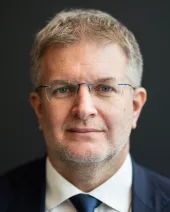
Lukas Sieper | Germany DE | Renew Europe (Renew) | 487 |
| 2 |
|
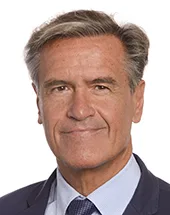
Juan Fernando López Aguilar | Spain ES | Progressive Alliance of Socialists and Democrats (S&D) | 454 |
| 3 |
|
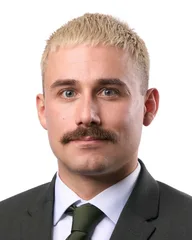
Sebastian Tynkkynen | Finland FI | European Conservatives and Reformists (ECR) | 451 |
| 4 |
|
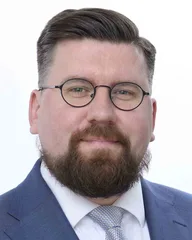
João Oliveira | Portugal PT | The Left in the European Parliament (GUE/NGL) | 284 |
| 5 |
|
Vytenis Povilas Andriukaitis | Lithuania LT | Progressive Alliance of Socialists and Democrats (S&D) | 273 |
All Speeches (94)
How to secure a sustainable future for the EU livestock sector in light of the need to ensure food security, farmers’ resilience and the challenges posed by animal diseases? (debate)
Date:
30.04.2026 10:50
| Language: IT
Speeches
Madam President, ladies and gentlemen, I would like to thank all my fellow Members for their important contributions to this very interesting debate. We have tried with this report to touch on so many points but to be, at the same time, punctual and not generic. I would particularly like to thank those who wished to recall the theme of generational renewal, which is well dealt with in the report, and fundamental: the future of the sector passes through young farmers, through their ability to keep up with innovations, to live them; It also passes from their presence in the most difficult areas, inland areas and mountain areas. Thank you for also recalling the theme of fair distribution of value: We are talking in particular about the dairy sector, but not only. We absolutely must work to recognize the right price to our producers and breeders. We have tried to make an effort with this report, to overcome ideological contradictions that, in my opinion, risk not being able to give concrete answers to the sector, especially that between intensive livestock farming and extensive training. We must certainly make an effort to make intensive livestock farming more sustainable. But we must start from a fundamental premise: we cannot do without animal protein, we cannot do without livestock production; We need meat and we need meat that is sustainably farmed. This is a fundamental step: We must maintain production in Europe and, for the part that we cannot produce in Europe, we need imports that meet our standards and are based on the principle of reciprocity. That is the message, one of the key messages of this report. In addition, innovation, research and prevention: We have worked hard on this; together we will have to defend it in other files that we will face: I am thinking in particular of the subject of the European Competitiveness Fund, where today there are specific resources for this, which we must defend, in a holistic approach that must see agriculture and the agri-food sector included in the European Union's innovation policies. Finally, I would like to thank the Commissioner for his availability, particularly on the subject of fertilisers: We really look forward to this action plan for fertilizers and opening up to organic fertilizers, digestate, with urgent measures. And finally – I close with the President, thank you for your patience, not only by thanking everyone again – but to say that today with this report we can give a strong message to European farmers. The message is: You are not alone, we take care of your needs. That is why I hope that there will be broad support for the final text.
How to secure a sustainable future for the EU livestock sector in light of the need to ensure food security, farmers’ resilience and the challenges posed by animal diseases? (debate)
Date:
30.04.2026 09:06
| Language: IT
Speeches
Mr President, Commissioner, ladies and gentlemen, today we are presenting an ambitious, clear and timely report on the future of European animal husbandry. A text that brings together the right attention to sustainability and animal welfare, with the dimension of competitiveness, innovation and territorial cohesion – a sign that it is possible to think about the future of this sector outside the lens of ideology, starting from concrete needs. That is why I want to thank the shadow rapporteurs and the political groups who have already broadly supported in the AGRI Committee. It is a work that comes at a decisive moment, which has the ambition of being able to represent a starting point for the European strategy on livestock farming that the Commission will present in a few weeks, a strategy that has been awaited for a long time and of which the sector has a real and urgent need: This need arises not only from a structural crisis in European livestock farming, but also from a geopolitical context that has made production in Europe more expensive, uncertain and risky. Geopolitical crises have had a direct and lasting impact on the competitiveness of our agricultural sector. Fertilizer costs have increased by 46% in the last four years, energy costs by 66%, without ever returning to previous levels. Added to this were new tensions in the Middle East, which further destabilized markets and reduced supply from key countries. This means a very simple thing: production in Europe today costs more and when the cost of energy and fertilisers increases, so does the cost of feed, cereal crops and, consequently, the entire livestock supply chain. That is why we say clearly that there is no sustainable animal husbandry without an agricultural policy that takes account of the global economic and geopolitical reality. That is precisely why the European Parliament must show the way. We did so, on the Common Agricultural Policy, when it came to defending farmers' incomes and European food security. We must do so today too, because a strategy on breeding must be born from shared positions, from the confrontation with the territories and from the concrete experience of those who work every day for breeders, for farmers and for consumers. The first result we claim in this report is the defence of farmers' incomes. We call for strengthening the centrality of a stable CAP, defending coupled and direct payments, strengthening crisis management tools, because without economic stability no transition is possible. The second point is equally clear: no forced reduction of herds. We reject ideological approaches that ignore the reality of territories. Reducing farms in a general way would mean rural abandonment, loss of employment, loss of control of the territory and greater environmental fragility. Livestock is not the problem, it is an essential part of the solution for rural areas. We then strongly raised the issue of fair competition: The same rules must apply to everyone. That is why we are calling for mirror clauses in trade agreements, stricter import controls and a stronger defence of our geographical indications against imitations. We have called for more transparency for consumers, with clear labels and mandatory origin, and less bureaucracy for farms, because those who work the land must be able to produce and not be stifled by administrative obligations. We pay the right attention to animal welfare and, in a historical phase marked by many epizootic diseases with often devastating impact, we strengthen the health dimension by focusing on prevention, vaccination and more structured European tools for animal health. And we have also addressed the challenge of sustainability in a pragmatic way, promoting concrete solutions such as the use of livestock digestate as an organic, circular and European alternative to synthetic fertilizers, capable of reducing costs for farmers, strengthening strategic autonomy and contributing to the ecological transition, because without farmers there is no food security and without food security there is no strategic autonomy for Europe. This is where our responsibility as co-legislators comes into play: We do not want to be spectators of the future strategy on livestock farming and with this report we are central interlocutors. I am sure that Commissioner Hansen, whom I thank for his availability, will be able to take this into account. Our farmers, our farmers, our consumers are waiting for quick, strong and common answers and today we can take a step forward to give them these answers.
Shortcomings and deficiencies of the ‘Amnesty Law’ in Venezuela
Date:
29.04.2026 22:02
| Language: ES
Speeches
Mr President, Commissioner, ladies and gentlemen, last February's amnesty law was presented as an important step towards national reconciliation and democratic transition in Venezuela, made possible after the capture of the criminal Maduro. Thanks to this law and international pressure, many prisoners have been released. But on April 23, the provisional authorities unilaterally interrupted the application of the law. The data is clear: hundreds of people remain arbitrarily detained for political reasons and this, together with the worrying continuity with the previous regime, seems to distance that just, transparent and inclusive democratic process, loudly supported by Maria Corina Machado and which sooner or later will lead to free elections and the return to freedom for all Venezuelans. We support the transition, but we must say forcefully that there can be no credible transition or easing of sanctions without respect for the rule of law and without the immediate release of all political prisoners. And we will continue to fight for it. Viva Venezuela libre. Long live Venezuela free!
EU strategy in response to the ongoing Middle East crisis, its implications on energy prices and the availability of fertilizers (joint debate)
Date:
29.04.2026 10:07
| Language: IT
Questions
Mr President, Madam Minister, Madam Commissioner, ladies and gentlemen, geopolitical crises have already had a direct and very severe impact not only on energy but also on our agri-food system. That is why we have insisted on broadening today's debate to include this issue as well. It is clear that the competitiveness of our farms is under pressure today: We therefore welcome Commissioner Hansen's statement in view of the European Fertiliser Action Plan and the Commission's commitment to ensuring predictability and stability for farmers in the short term. It is a signal that goes in the right direction. But we need to be clear: Economic support alone is not enough. Urgent measures are needed that immediately affect production costs. That is why it is essential, in our view, to sterilise the effect of the CBAM and ETS on the production and import of fertilisers. Continuing to apply them as if nothing had happened, in a phase of reduced availability and a sharp increase in costs, affects farmers and consumers and risks fuelling inflation and recession. At the same time, we must offer concrete alternatives, such as animal digestate, which is an already available, organic, natural, European, circular solution. For this reason, regulatory barriers limiting their use need to be removed from the outset and flexibility granted to Member States. Today, European farmers need immediate and realistic decisions like these and we are ready to support them.
Conclusions of the European Council meeting of 19 March 2026 (debate)
Date:
25.03.2026 17:55
| Language: IT
Speeches
Madam President, Commissioner, President Costa, ladies and gentlemen, Europe is under pressure on several fronts and can no longer afford slow or even ideological responses. The crisis in the Middle East requires realism and speed of action because it directly affects the cost of energy, the supply of critical raw materials, trade and, if it continues, also European internal security with possible new migratory flows. A risk that we must prevent if we do not want to hurt ourselves, as it was with the insane management of flows from Syria in 2015. And while waiting for the concrete opening of a negotiating window that could lead to the end of the conflict and Iran's definitive renunciation of its nuclear plans, the European Union should play its part more courageously in supporting the energy security of its Member States and the competitiveness of its businesses. For this reason, the initiative of the Italian government was important, which saw the accession of ten governments to request a profound revision of the ETS system, which impacts on the formation of the price of electricity and affects in a different way between country and country; for some it has become unsustainable. All the more so in its combination with the CBAM, the ETS ends up being an environmental tax that undermines competitiveness and favours the relocation of our industries. It was therefore significant to have obtained for the first time the opening to national interventions to sterilize the impact of the ETS on bills and finally the disappearance of a totem, a pillar of that ideological Green Deal that destroyed European competitiveness. We believe, however, that more needs to be done and that, at this time of crisis, the ETS should be suspended. Then, in the revision proposal of next July, the Commission will be called upon to extend the free quotas for energy-intensive industries, to be courageous in defending the basic industry and finally to tackle with determination the issue of financial speculation on carbon quotas. The time to avoid the industrial desertification of our continent is running out. Those who once again choose the path of downward mediation, bureaucracy or ideology will be responsible to the citizens.
Rise of political violence, notably by far-left organisations (debate)
Date:
11.03.2026 18:38
| Language: IT
Speeches
No text available
State violence in Minneapolis and the rule of law in the United States (topical debate)
Date:
11.02.2026 12:47
| Language: IT
Speeches
Madam President, ladies and gentlemen, Commissioner, there is too much violence in American society. You are right, my colleagues on the left. Certainly, our souls are indignant at the deaths and we feel comforted in our superior European civilization, which would never allow us to witness such images. But then, excited by the anti-Trump hatred, you forget to say that this violence, as well as deaths at the hands of the police, as well as the ICE itself, have existed in America for decades, unfortunately, and well before Donald Trump. And you forget to say that it is not normal, and it would not be normal here in Europe either, to organize systematic protests and violent actions to prevent law enforcement from doing what the law of the state, any state, provides. And of course, fly over the strong political polarization taking place in Minnesota and fly over the billionaire scams orchestrated by local Democrats with the Somali community. And, not happy, in recent days you have come to denounce the arrival of the ICE in Milan for the Winter Olympics, evoking a kind of armed invasion, deportations of immigrants and other similar lies. And so you ended up burning the squares of hatred. And we saw the results. After the violence in Turin, ended with an agent hammered, on Saturday the "No ICE" demonstration in Milan resulted in the ennesimi, repeated attacks against the police. This is what the left should be concerned and concerned about, in Italy and in Europe, not about the non-existent ICE danger, but about the extreme left groups that have now decided to wage war against the State, the police and all decent citizens and towards whom we continue not to feel on your part a dutiful and clear condemnation.
Amending Regulations on agricultural products as regards market rules and sectoral support measures in the wine sector and for aromatised wine products (debate)
Date:
09.02.2026 17:38
| Language: IT
Speeches
No text available
Presidential elections in Honduras, the non-recognition of the outcome by the incumbent administration and the attacks on opposition members of the National Assembly
Date:
21.01.2026 20:29
| Language: IT
Speeches
Mr President, Commissioner, ladies and gentlemen, what happened in Honduras before, during and after the presidential election campaign on 30 November is very serious. We have concretely risked, and perhaps still risk, that Honduras will fall into a Maduro-style drift or Ortega Murillo. The presidential elections were held in the presence of international observers who certified their full validity and legitimacy. The electoral authority proclaimed Nasry Asfura elected president and the President of the Republic ordered a further recount, challenging the legitimate action of the college. We now have a timid promise from the President to start the process of political transition and the European Union must do everything in its power to ensure the affirmation of the rule of law and the restoration of constitutional order. But we cannot ignore what happened. Once again, in Latin America, when a conservative candidate democratically wins the elections, a certain radicalized left chooses to delegitimize the institutions and fuel a climate of confrontation, which in Honduras has also led to serious episodes of political violence, such as those against the parliamentarian of the national party Gladis Aurora López, to whom our solidarity goes. Today we strongly support a peaceful and orderly transition, in full respect of democratic rules. The European Union must accompany this process with clarity and consistency, reiterating a simple principle: Sovereignty belongs to citizens and their vote must always be respected.
No text available
Development of an industry for sustainable aviation and maritime fuel in Europe (debate)
Date:
27.11.2025 09:25
| Language: IT
Speeches
Mr President, Commissioner, ladies and gentlemen, the transition of the aviation and maritime transport sectors requires seriousness, investment and pragmatism. Too often, however, the European Union has chosen ideology, imposing objectives without guaranteeing the means to achieve them. We've been saying this for a long time: Without a genuine European market for sustainable fuels, there will be neither decarbonisation nor competitiveness. The Sustainable Transport Investment Plan is moving in a more realistic direction and this is a good thing. Recognizing the role of LNG, biomethane, methanol, advanced biofuels means finally admitting that there is no single technology valid for everyone, but a gradual path that must start from what is already available today. The problem is that, while we are calling on industry to make an enormous effort, we are continuing to impose very high costs on it, aggravated by a sick system such as that of ETS allowances, which, as it is - and we have seen it in maritime transport - continues to produce counterproductive effects. The funds made available by the Commission are not enough to close the price differential that is holding back European production of sustainable fuels. Targeted instruments and smart use of ETS resources are needed. And we need to simplify: certifications, traceability, imports, partnerships with third countries. Without regulatory certainty, there will be no private investment and we will remain dependent on markets outside Europe. If we really want Europe to play a role in this game, we must put aside ideological approaches and ensure full technological neutrality, supporting innovation and industry instead of hindering them. Only then will the transition be credible and within the reach of our businesses.
The new 2028-2034 Multiannual Financial Framework: architecture and governance (debate)
Date:
12.11.2025 18:05
| Language: IT
Speeches
Mr President, ladies and gentlemen, Madam Minister, Commissioner, we were eagerly awaiting a sign of repentance from the Commission, after the many criticisms received in recent weeks. And yet, once again, it seems that the mountain has given birth to a mouse. Some progress on cohesion, of course, but in the face of a proposal on agriculture that is still absolutely and largely insufficient, I would say unacceptable. Sadly, setting aside a percentage of resources for rural areas figuratively on paper does not mean supporting farmers, and the Commission is well aware of this, and farmers in particular are well aware of this. What we will not stop asking for is not yet another experiment in creative finance. We want guaranteed resources for those who, every day, ensure our food and our food security. We do not resign ourselves to seeing the CAP dismantled with choices that fuel imbalances in the internal market and weaken our producers in global competition. We need a sound, autonomous and adequately funded agricultural policy, because only this approach can guarantee our food sovereignty and thus guarantee the freedom of our peoples.
Preparation of the European Council meeting of 23 October 2025 (debate)
Date:
22.10.2025 10:00
| Language: IT
Speeches
Madam President, Minister, Commissioner, ladies and gentlemen, let us face it: The real novelty of this Council is the letter on competitiveness that President von der Leyen sent to the leaders on Monday. A novelty, also because, for the first time, we read a self-criticism on the Green Deal, which, in addition to finally opening up biofuels for cars, recognises that many rules risk exacerbating strategic dependence on China and making our industries less competitive. The king is finally naked! But, while with the right hand you write a letter to finally meet businesses and citizens, knowing that you are dealing with governments less and less willing to follow these follies, as if there were still Timmermans, with the left hand you tighten the rope around the necks of businesses and citizens, with the nefarious proposal of the climate law and the reduction of emissions to 90% in 2040. And we are moving forward with weak solutions, such as the timid postponement of the deforestation regulation, which should instead be radically changed. Unfortunately, the message is clear: The road of downside compromises with the left is a dead end that leads Europe into irreversible decline.
Europe’s automotive future – reversing the ban on the sale of combustion cars in the EU (topical debate)
Date:
08.10.2025 13:25
| Language: IT
Speeches
Madam President, ladies and gentlemen, Commissioner, today the automotive industry, the beating heart of our economy, risks dying suffocated by ideological choices and a technocratic vision that do not take reality into account. The ban on combustion engines since 2035 is the emblem of this tragic mistake. It is not an environmental policy, it is a wrong and suicidal industrial policy that is giving China the almost monopoly on the market and control of entire production chains, with electricity becoming the Chinese Trojan horse to conquer even the endothermic market. Meanwhile, hundreds of thousands of jobs across Europe are at risk of disappearing. What does the Commission do? He wastes time in a strategic dialogue in which he hears but does not listen to the cry of pain that comes from the sector, in particular from the extraordinary fabric of small and medium-sized industries of the related industries and components that are in danger of disappearing. It sends the fines back to the manufacturers, yes, but only for cars and vans and, incredibly, not for heavy vehicles. And President von der Leyen's magic recipe for competing with the Chinese would be to produce cheap mini electric cars in Europe. A ridiculous idea that sounds like the definitive surrender of a continent that has built its greatness on innovation and quality industry. That is why the joint letter from Italy and Germany to the Commission marks a turning point. Two major manufacturing countries are strongly demanding to change course, to rewrite the rules, to overcome the dogmas of 2035, of the "all-electric", putting technological neutrality and freedom of innovation back at the center. We need a European industrial policy that recognises the value of renewable fuels, biofuels, e-fuel, hybrid engines and new clean combustion solutions. We need a policy that defends Europe's technological, productive and strategic sovereignty, instead of handing over our hands and feet to Asian competitors. That is why I want to make an appeal to the friends of the EPP. There is a possible majority in this House on these issues. Let it express itself with a vote, without suffering the perennial blackmail of the left, the enemy of industry, labor and the environment. And there is also a majority in the Council if, as we hope, Chancellor Merz is able to curb his allies in government. We've been saying this for a long time: Sustainability comes not from prohibitions, but from the freedom to innovate and the courage to compete. For this reason, revoking the 2035 ban is not a step backwards, it is an act of political lucidity to save a strategic sector, millions of workers and the industrial independence of our continent.
Madam President, ladies and gentlemen, Commissioner, today, in too many Latin American countries, the values of freedom and democracy are threatened by authoritarian regimes and the growing influence of hostile powers. While Cuba, Venezuela and Nicaragua continue to repress opponents and violate fundamental rights, the European Union always chooses the most comfortable path, that of downward compromises and the fear of inconvenience to autocrats. Freedom is not negotiated. That is why we have tabled proposals to strengthen this resolution, clearly calling for the suspension of the agreement with Cuba and for the designation of the Cártel de los Soles with its leader Maduro as a terrorist organization, as did the Trump administration and other governments in the region. But it is also time to deal with the very serious violations of the rule of law underway in Brazil against members of the conservative opposition by the duo Lula and de Moraes. Only a Europe that rediscovers the courage of truth can truly defend freedom, inside and outside its borders.
Mr President, ladies and gentlemen, Commissioner, the measures we are going to vote on tomorrow go in the right direction and finally give an important signal of attention to the agricultural world. With the reform of the common market organisation, we are introducing concrete measures to strengthen the position of farmers in the value chain, rebalance contractual relations and enhance the role of agricultural cooperatives. The rules on the labelling of meat products, which are essential to ensure transparency and genuine consumer protection, and the measures that prioritise our products in public procurement, strengthening their traceability and indication of origin, are also good. By simplifying the CAP, we are also reducing red tape and finally giving farmers more effective tools to innovate and compete. Positive the increase of the support to the producer organizations and the measures for a whole European livestock supply chain, with good peace of those environmental associations that still today have sided for the continuation of the unfortunate policies of the Green Deal and to the detriment of our farmers. Instead, it is time to return to an agricultural policy that focuses on production, reciprocity, profitability and economic sustainability. Following in the footsteps of these two positive measures, we therefore call on the Commission to move forward more quickly, more forcefully and more courageously in supporting Europe's farmers, food security and food sovereignty, starting with the future CAP post-2027 and, above all, with the next Multiannual Financial Framework, which, in the proposal formulated, we continue to consider completely unsatisfactory.
Situation in Colombia after the wave of recent terrorist attacks (debate)
Date:
09.09.2025 20:41
| Language: IT
Speeches
Mr President, Madam High Representative, ladies and gentlemen, on 11 August last, Senator Miguel Uribe, a Democratic and Conservative opposition candidate for the next presidential elections, died following the attack he suffered on 7 June. A crime for which the Petro government is politically responsible, including for refusing to strengthen Uribe's personal security. In the following weeks there were new serious terrorist attacks, which caused dozens of deaths and injuries among civilians and law enforcement. Non-isolated episodes that demonstrate the seriousness of the Colombian crisis. President Petro's so-called total peace turned out to be a resounding failure: Armed groups have reorganized, drug cartels have strengthened their power and cocaine production has reached record levels. The role of the Cártel de los Soles, totally penetrated by the upper echelons of the Venezuelan regime of Nicolas Maduro and Diosdado Cabello, destabilises the entire region, including Colombia. This is why the European Union needs to send clear messages: condemns the political polarisation implemented by Petro; identification of the perpetrators of the Uribe murder; protection of candidates in view of the 2026 elections; support for any initiative aimed at dismantling criminal networks, starting with the inclusion of Cártel de los Soles in the list of terrorist organizations to permanently disrupt their financial networks and sanction their political leaders.
Madam President, ladies and gentlemen, 'the sign I hope to leave is one of commitment, respect for people and for reality. That's where it all starts. With these words, last Thursday Mr. Giorgio Armani left us, as his collaborators used to call him. Stylist of extraordinary elegance, founder of a creative universe recognized throughout Europe and all over the world. Giorgio Armani embodied, in his most authentic form, the Italian genius and the value of Made in Italy, which for him was simply this: beautiful, well done and thought out in Italy from start to finish. He was able to resist flattery and remain faithful to his city to the last: "It's the center of my world, it has always inspired me," said Armani of Milan, his city that today greets him and that, after all, looks so much like him: discreet, hardworking, never too flashy. He loved sport, he dressed the Olympic national team, he accompanied from his place on the sidelines the baskets and the victories of his beloved Olympia, because sport - he said - "has the same values that I pursue in life and work." Its cultural heritage of sobriety, modernity, sophistication and universal aesthetic sense will continue to make us proud and inspire future generations. Farewell, King George.
Madam President, Commissioner, ladies and gentlemen, today more than ever the common agricultural policy must be defended and strengthened, because the CAP - and with it the food we produce - is not only an economic instrument, it is a guarantee of stability, autonomy and security for the entire European Union. Food safety cannot be taken for granted: wars on Europe's doorstep, global tensions over supply chains, extreme weather events, everything shows us that food is not just good, it is a geopolitical lever, it is a strategic issue, and we cannot afford to depend more and more on third countries if we want to ensure sufficient good and healthy food for our citizens. For this reason, any proposal to cut CAP funds, inside or outside the so-called single fund, is not only unacceptable, but short-sighted. Cutting the CAP means weakening our farmers, putting rural areas at risk and delivering a crucial part of our sovereignty to external instability. And so we call for a strong, autonomous, adequately financed CAP, but also a more modern CAP, addressed to those who really produce, to those who innovate, to those who do quality, to those who have to deal with trade agreements without reciprocity, to market crises, animal diseases and increasingly frequent natural disasters; A CAP without ideological follies green, but with incentives and rewards for those who invest in sustainability. This is the CAP that we are asking for, this is the CAP that we are going to defend, as millions of European farmers have asked us and are asking us to do.
Conclusions of the European Council meeting of 26 June 2025 (debate)
Date:
09.07.2025 09:49
| Language: IT
Speeches
Madam President, Mr President, Commissioner, ladies and gentlemen, the last European Council, which focused heavily on international issues, was preceded once again by an immigration summit, chaired by Giorgia Meloni and her colleagues from the Netherlands and Denmark. Immigration must not be suffered, but it must be managed. Next, then, with the fight against irregular immigration, with agreements with non-EU countries, with the definition of safe third countries and with the acceleration of returns. Because the instrumentalisation of immigration is one of the hybrid threats to which Europe is subjected, as we saw yesterday in Libya, in eastern Libya, where Commissioner Brunner and three important ministers from as many European countries have been denied access. And that is also why, when we discuss our necessary defence investments, as we did in the Council after the NATO summit, we must also consider as such those to counter hybrid threats, defend borders, protect strategic infrastructure and control critical raw materials. It means defending our freedom and our sovereignty.
Assassination attempt on Senator Miguel Uribe and the threat to the democratic process and peace in Colombia (debate)
Date:
17.06.2025 22:31
| Language: IT
Speeches
(IT) Mr President, ladies and gentlemen, Madam High Representative, the assassination attempt on 7 June on Senator Miguel Uribe, one of the most successful candidates for the next presidential election, struck us deeply. In these critical hours for his health conditions we renew our prayers for him, as in recent days many Colombian citizens have invaded the streets of the country in silence, with great composure. We express our closeness to his family, already tried in the past by similar events, and to the friends of his party, the Democratic Center. But expressing sadness and solidarity is no longer enough. The European Union must demand that President Petro, who in recent years has given free rein to the drug cartels, which have begun to strike again with impunity, should take political responsibility for this attack on democracy in Colombia. We can't pretend anymore. In a nation where mafia-political violence is growing, where the president goes ahead with emergency decrees and constitutional forcings, Europe has a duty to speak out. President Petro's government is a danger and a threat to democracy, because it owes its survival to years of ambiguity and collusion. We need international observers for the next elections and a constant commitment to defend freedom, above all else. It is true in Venezuela of the sadistic tyrant Maduro, it is true in Cuba of the persecutor Díaz-Canel, it is true in Nicaragua of the bloody regime Ortega Murillo and it is also true in Petro's Colombia. Long live freedom!
CO2 emission performance standards for new passenger cars and new light commercial vehicles for 2025 to 2027 (debate)
Date:
06.05.2025 11:56
| Language: IT
Speeches
Mr President, ladies and gentlemen, for months now we have been calling in vain for an urgent resolution on the crisis affecting theautomotive. Today, after so much insistence, we are finally discussing at least the Commission's amendment that allows manufacturers to defer emissions on a three-year basis, rather than on an annual basis. This is certainly a step in the right direction, but it remains insufficient to respond to the problem of fines, which, moreover, will continue to concern - and this is really incomprehensible, colleagues - the heavy-duty vehicle sector, despite the fact that the share of registrations of zero-emission heavy-duty vehicles was only 2.3% at European level. And not only: the crisis in the sector needs to be tackled more at its root automotive, we must anticipate as much as possible the revision of the entire regulation, fully respecting the principle of technological neutrality constantly violated in the name of the sacrifice of our industry to Chinese electricity and thus strongly defending European companies and workers from a decline that we are imposing on ourselves.
Conclusions of the European Council meeting of 20 March 2025 (debate)
Date:
01.04.2025 10:31
| Language: IT
Speeches
Madam President, Commissioner, Mr President-in-Office of the Council, ladies and gentlemen, much has been said in the last Council about defence and security. Do not abandon transatlantic cooperation in the name of ambition; not only to think of new public debt, but of instruments to stimulate private investment; Not just about rearmament, but about 360-degree security and defending our freedoms against hybrid threats. This is the path of common sense traced by far-sighted leaders, such as Giorgia Meloni. But there was talk of competitiveness and simplification: key concepts, which, however, can only be achieved by revising the objectives and timing of each individual measure of the Green Deal, defusing the automatic pilot of some ideologued bureaucrats. Colleagues, in the coming hours we will deposit the necessary signatures to request the establishment of a commission of inquiry on the so-called "green gate". I thank the almost 200 Members who have supported it and I appeal to the friends of the EPP, who have played an important role in calling for clarity on the actions of environmental NGOs, to join us in this battle of truth and transparency.
Madam President, Minister, Commissioner, ladies and gentlemen, I will not say anything. Our group expected much more from this plan. Well the postponement of fines for manufacturers, strongly requested by us; It is very bad not to have provided for a derogation also for the heavy-duty vehicle sector, whose electrification is not technologically and market-friendly, severely damaging a sector in which we still compete with the non-European industry in advantageous conditions. Well the anticipation of the revision of the CO2 regulation, which is also strongly demanded by us; the failure to refer to technological neutrality, despite the reassurances of Vice-President Séjourné, was very bad. Unfortunately, we are still faced with a plan imbued with ideology. full electric Timmermans style, however watered down by the continuous references to autonomous driving and digital content: an unforgivable scientific, industrial, geopolitical error. Someone probably already considers theautomotive It suggests that we should devote ourselves to the conversion towards the defense of our heavy industry, with the beatification of that public debt once seen as smoke in the eyes. I say this clearly: We do not resign this idea and will continue to defend European industry and work, free consumer choice and technological neutrality, the supply chain of components and the industrial and political sovereignty of Europe. This is what the citizens asked us at the polls in June 2024 and with all due respect to the orphans of Timmermans: That's why we will continue to fight.
Madam President, Commissioner, ladies and gentlemen, the European Union has culpably left South America at the mercy of Chinese penetration and of regimes, governments or movements that have often distanced it from Europe and the West. The agreement with Mercosur therefore has clear geopolitical motivations and also presents equally clear growth opportunities for some sectors. Yet, this agreement has generated an immediate reaction from European farmers. And you know why? Because in the recent past it was agriculture that paid the highest price in many free trade agreements. But also because in recent years the ideological choices of the European Union have hit hard the competitiveness of European farmers, with the follies green, with an asphyxiating bureaucracy, with an unbalanced distribution of profitability along the supply chains. It is certainly true that some agri-food sectors – I am thinking of the wine or cheese sectors – could benefit from the agreement. And it is true that the number of formally protected designations of origin is the highest ever included in a free trade agreement, albeit with some obvious flaws. But it is also true that the lack of reciprocity, the possibility granted to South American producers to continue to use pesticides that we have banned for some time, the lack of reliable on-the-spot checks on health standards and against counterfeiting, as well as in European customs procedures, in many of our European ports, on imports, tip the balance towards a legitimate and well-founded concern on the part of the agricultural world. And it will not be enough to reassure our producers of a safeguard clause that is difficult to activate or that one billion euros provided for compensation, a drop in the ocean and even less than that 1.8 billion euros provided by the European Union for Mercosur farmers. Today this agreement is still too unbalanced and too penalizing for our agriculture and we, under these conditions, cannot support it.