
| Rank | Name | Country | Group | Speeches | |
|---|---|---|---|---|---|
| 1 |
|
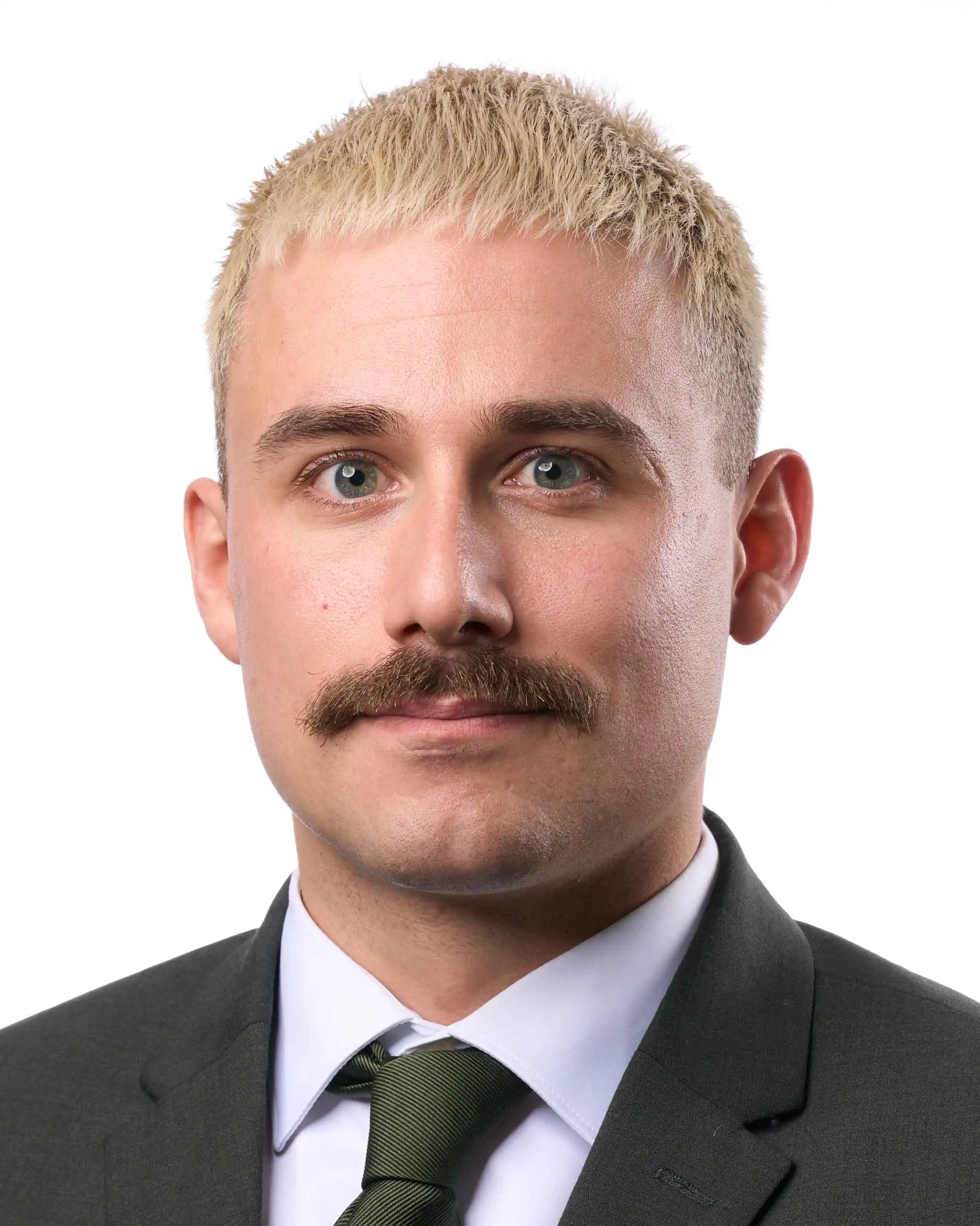
Lukas Sieper | Germany DE | Renew Europe (Renew) | 494 |
| 2 |
|
Juan Fernando López Aguilar | Spain ES | Progressive Alliance of Socialists and Democrats (S&D) | 463 |
| 3 |
|
Sebastian Tynkkynen | Finland FI | European Conservatives and Reformists (ECR) | 460 |
| 4 |
|
João Oliveira | Portugal PT | The Left in the European Parliament (GUE/NGL) | 288 |
| 5 |
|
Vytenis Povilas Andriukaitis | Lithuania LT | Progressive Alliance of Socialists and Democrats (S&D) | 276 |
All Speeches (89)
Preparation of the European Council meeting of 16-17 December 2021 - The EU's response to the global resurgence of Covid-19 and the new emerging Covid variants (debate)
Date:
15.12.2021 11:09
| Language: NL
Speeches
Mr President, Commissioner, today we are in the fourth wave – the fourth corona wave – and with omikron on our path, we can look forward, and I honestly say that a bit cynically, to a fifth wave, to a sixth wave. And the Commission is happy to say that it is doing well, also internationally, with all exports and donations, but the real truth is that three quarters of the vaccines produced go to the rich countries and 1% go to the poorest countries. That is not only ethically irresponsible and unjust, it is also just European oil. Because if you do not vaccinate, you increase the chance of all kinds of variants. The vaccine makes no distinction between rich and poor. That variant is not that stupid at all. And so Europe and the European Commission must be on the right side of history. They must waiver support in the World Trade Organization. But they also need to support the World Health Organization much better. In other words, instead of protecting our own industry and protecting our own vaccines, we need to protect poor countries much better. That is the challenge and the task.
Implementation of the Kimberley Process Certification scheme (debate)
Date:
14.12.2021 20:05
| Language: NL
Speeches
Mr President, Commissioner, no one wants a diamond on his or her finger with blood on it. Today diamond mining is all too often linked to the financing of rebel groups and civil wars in Africa. The Kimberley Process Certification Scheme was established in 2003 to stop the trade in conflict diamonds. And successfully, because today less than 1% of the trade in rough diamonds is considered a conflict diamond. That is, we must say, an important merit. However, the resolution also quite rightly speaks, as mentioned, about the shortcomings of the Kimberley process and the absolute improvements that are needed. The problem of the diamonds is greatly reduced, it is certainly not solved at all. First and foremost, and it has been mentioned, the scope must be enlarged. The current definition is too narrow. Only rough diamonds used by rebels to fund their fight against legitimate governments are considered conflict diamonds. All human rights violations, whether committed by rebels, the military, mine regulators or governments, should be taken into account. Forced labour and child labour. Secondly, improvements are needed in terms of independent monitoring and enforceability. Digitalization can and will provide a solution. And NGOs are an essential partner in the Kimberley Process. They need better support. Furthermore, there is a real danger of shifting the diamond trade to a hub like Dubai, which is not taking it so closely with the regulations. This creates a large hole, a loophole, in the international system and must be countered. However, and that is, of course, the whole problem in the multilateral system, it is necessary to work by consensus and those 56 members do not all see the same need for thorough reforms. The pressure to reform is lacking today and therefore also the lack of the great success story that the process could be. Reforms are therefore not easy and I count on the Commission to remain committed to making improvements possible. This brings me to what the EU itself could do, because we must not hide behind that unanimity. There are things we can do ourselves, and that's the essence of it. due diligence-story, of taking responsibility in the supply chain of diamonds and not closing our eyes to the violations of human rights. Consumers are demanding this today, and they want to know that a diamond has no blood, that it has an ethical origin, that it is not linked to environmental disasters and that it is therefore not made with forced labour or child labour. Regardless of who did, rebels or others, in this entire production process from mining to polishing, grinding and setting, these rights must be guaranteed. A duty of care throughout that supply chain should ensure that human rights violations are a thing of the past. I cannot stress enough that a broad proposal of due diligence There has to be, and quickly. It is really unacceptable that it has been postponed again, Commissioner, and I really urge you to look into it. Apparently, there is such a thing as a Regular Scrutiny Board that has stopped that. Personally, I wonder where democracy is in this story. So I expect openness from the European Commission and I expect a proposal very soon. The same applies, as this is also linked, to a proposal on forced labour. From the Committee on International Trade, we cannot stress enough that there must also be a system of banning products on our forced labour market. This will strengthen the Kimberley Process and the banning of conflict diamonds.
The EU's role in combating the COVID-19 pandemic: how to vaccinate the world (topical debate)
Date:
24.11.2021 15:59
| Language: NL
Speeches
Mr President, Commissioner, the rich countries have already given more inhabitants a third shot than the poor countries a first. That is not only unjust, but also very stupid because that indeed means that, as Mohammed said, we just have to wait for the next variant. In fact, there is an additional injustice. The vaccine that works best in the world today relies on American and European mRNA technology. We should be proud of that. But what do we see? That the companies that own this technology are not very interested in selling, donating or collaborating with poor countries, but rather selling their products to the rich countries. And so those poor countries have to deal with much less efficient Chinese and other vaccines. That is unacceptable. So it's obvious what we need to do. As a number of Members have already said, we have drafted a resolution on this subject and have long since asked for action to be taken. In addition to donating our surpluses of vaccines, it is necessary that mRNA technology, data and patents are shared with the World Trade Organisation – which we trust, I hope – in order to finally increase production as needed to tackle this pandemic.
Mr President, it is true. After the COP in Glasgow, we can say that the one-and-a-half degree has been kept above water and is still the global ambition. But at the same time, we have to admit that we still have a lot of work to do in terms of the commitments, the measures and the bold policies that should have been agreed. This means – and this is an important message I want to give today – that more than ever we must assume our own responsibilities and that the Fit for 55 package must not only stay afloat, but above all become even more ambitious. I have heard too many questions about this package, including in this House. I don't think we can afford that. For our group, solidarity must be at the heart of policy, and that also means solidarity at the international level in our trade policy and not only leading by example, but also sharing our technology, for example, and ensuring that there is sufficient funding internationally to make that policy a reality. I think that is a very important task that is still ahead of us.
Multilateral negotiations in view of the 12th WTO Ministerial Conference in Geneva, 30 November to 3 December 2021 (debate)
Date:
23.11.2021 20:57
| Language: NL
Speeches
Mr President, we all know that multilateralism is in trouble. We also saw that at the COP in Glasgow. It is difficult to make multilateral agreements and so we need success. Success in terms of sustainability through the fisheries agreement, and success in terms of health. I listened carefully to Mr Simon. Last week it was announced that Pfizer, BioNTech and Moderna together made $34 billion in profits. That's about $93 million a day or $1,000 a second. My question to you, Commissioner, but also to the Group of the European People's Party (Christian Democrats) and European Democrats is very simple: Who do we protect if we cannot support the temporary removal of intellectual property rights? Then who are we protecting? The big profits of the pharmaceutical industry or the interests of the world's population? That is the essence of this issue.
The outcome of the EU-US Trade and Technology Council (TTC) (debate)
Date:
11.11.2021 09:43
| Language: NL
Speeches
Mr President, I think we all agree that after Trump, we should work with the current Biden administration on a positive agenda for the future. This means not only solving problems, for example in the area of steel and aluminium, but also establishing a positive agenda with issues that are important for our future. The EU-US Trade and Technology Council is therefore very important. We all know that technology such as artificial intelligence can be used for the success of our future and the well-being of our people. However, this technology can also be used for many other purposes. It is therefore essential that democratic societies such as the United States and Europe work together in this area and do not leave it to societies that use the technology in question for espionage or mass surveillance of their populations. This democratic control must also be possible from within the European Parliament. This is of great importance in order to further strengthen support.
Mr President, today we are voting, for the second time in less than a year, on a resolution on the case of Paul Rusesabagina. In the first resolution, last February, the European Parliament denounced his abduction and subsequent torture. We called for an international investigation into his transfer and arrest and for Rwanda to guarantee that Mr Rusesabagina would receive a fair trial. Well colleagues, today we stand here again because he didn’t receive that fair trial. This was confirmed by the Belgian Foreign Ministry, the US State Department and numerous organisations that monitored this trial. Paul Rusesabagina was forced to make confessions under torture and isolation without the presence of a lawyer, and he only received access to his court documents three days before the start of the trial, a document of more than 3 000 pages. His lawyers and family were intimidated and his co—defendants were put under pressure to testify against him. Key witnesses were not cross-examined or put under oath, even though they gave conflicting statements. Therefore, we, the European Parliament, ask for the humanitarian release and repatriation of Paul Rusesabagina. The prison sentence of more than 25 years de facto is a death sentence. Mr Rusesabagina is 62 years old and a cancer survivor, and he needs care. Finally, and maybe most importantly, he’s a Belgian – a European citizen – and a US resident. This means that we are responsible for his fundamental human rights, and we have seen that these rights are being firmly violated by Rwanda. Therefore, we ask the EEAS and the Member States to do everything within their power to get Paul Rusesabagina to safety.
Mr President, first of all a big congratulations to Hilde for this report. She has succeeded in expressing a clear position with a broad majority. That's fantastic. At the same time, we must also admit that we may be a little late with this clear position. For too long, we've been very naive. We have long thought that China would democratize and play by the rules. Nothing is less true. That is why, Commissioner, I want to stress today our own initiatives and everything we do on trade defence, foreign investment and foreign subsidies. We must tackle unfair practices very hard, while at the same time linking them to human rights, the Uyghurs and forced labour. It is my heart, Commissioner, that the initiative on due diligence is taking too long. We need to get started now. Finally, it is also time to send a clear signal to Taiwan that we are behind them and that we want to start negotiations on the investment agreement.
Presentation of the Fit for 55 package after the publication of the IPCC report (debate)
Date:
14.09.2021 10:19
| Language: NL
Speeches
Mr President, the ‘Fit for 55’ package is the first, truly concrete proposal following the Green Deal and the Climate Law. This proposal proposes a clear and coherent package with a view to achieving the objective. I would therefore like to express my thanks to the Commission for this. I would also like to stress that Parliament has a crushing responsibility to support this package, to strengthen it where possible and, above all, to ensure that it strikes a balance between the various sectors and that it is distributed fairly. I will be very enthusiastic about this package. One of the challenges is that the rules for our products must apply to all products, whether they are made on our market or imported. Therefore, the extensions related to the ETS, the maritime narrative and of course the Carbon Border Adjustment Mechanism are crucial. In doing so, we must also respect our international responsibility. We need to pay extra attention to our vulnerable partners, such as Africa, and we will need to step up our efforts in this area.
Mr President, I think we are all very appalled at what is happening in Hong Kong. There is nothing left of the democratic regime that Hong Kong once was. Under the guise of national security, the rights of the population are increasingly restricted, with the de facto lifting of press freedom as the absolute, sad low. No more democracy. And we in the EU have allowed that to happen. We stood by, we watched and we did nothing. In other words, we have abandoned the people of Hong Kong. We all know that the regime in China is now looking at Taiwan. Are we going to do the same? Are we going to use words, stand up for democracy and human rights, and then do nothing? I propose that the Commission should change its rifle and start negotiating an investment agreement with Taiwan, for example, in order to make it clear to the world that we are not going to abandon the Taiwanese as well.
Mr President, Commissioner, the harsh truth is that if we do nothing, Dr Djalali will die, either from incessant torture, hunger, hardship or from execution by the Iranian regime. And that is unacceptable! Mr Djalali is a citizen of the European Union. He is connected to Belgian, Swedish and Italian society, he is a professor at the Vrije Universiteit Brussel, and his safety is our responsibility. And we must make that very clear to the Iranian regime. Not just a phone call here or there. If Mr Djalali is not transferred to his family in Europe, there must be repercussions. If we do not do that, we are actually saying that it is okay to condemn European citizens to death. The European Parliament therefore expects firm action from the Commission and the Council. And as my fine colleague Hilde said: ‘Free Djalali!’
Mr President, Commissioner, you will not be surprised that respect for labour rights and ILO conventions are essential for my group. It has already been mentioned by many: There is still a lot of work to be done in Bangladesh. Cooperation is ongoing with the ILO and the European Commission. Commissioner, you have already said a number of things about the national action plan. But I think it must be clear to this Parliament, as you will hear from all the interventions, that we want real guarantees for the eradication of child labour, that freedom of association is respected, that not only labour law but also safety regulations are really implemented. And in that respect, we are still a little hungry and waiting for real commitments. It is very important for Parliament to be able to make a proper assessment of this. If we look at the agreement, we have cause for great concern. It is coming to an end and we have no prospect of a permanent and binding alternative. And let it be clear, returning to a system of self-monitoring is out of the question. That didn't work either. The reason why that drama happened is because one has worked with self-monitoring. Finally – and I would like to stress this very strongly – we also need to look at ourselves and our own responsibilities. We have seen that in full covid time Western companies have canceled many orders of products that were already made by all those people. And that has had enormous negative effects. Real, binding due diligence legislation will therefore soon be essential to take our own responsibility.
Conclusions of the European Council meeting of 24-25 June 2021 (debate)
Date:
07.07.2021 10:52
| Language: NL
Speeches
Mr President, hopefully we all agree that cooperation and solidarity form the basis of the European project. These are exactly the values we need to tackle the pandemic globally. We won't be safe until everyone is safe. How many colleagues have said that? However, the Commission and the Council do not seem to be taking any action in this area and the Council conclusions also appear to lack the necessary measures. The issue was not even raised in President Michel's introduction. Only a fraction of the vaccines we need to tackle the pandemic globally are currently being produced. The IMF and the World Bank have put forward a proposal to create an investment mechanism to effectively increase global production. However, the Council does not have much to say on this issue either. Almost all countries in the world support the abolition of intellectual property rights to ensure that enough vaccines can be produced. However, the Commission is currently blocking negotiations in the World Trade Organisation and is not playing a good role in this. We need more cooperation and less blockage to tackle the pandemic globally.
Trade-related aspects and implications of COVID-19 (short presentation)
Date:
05.07.2021 20:45
| Language: EN
Speeches
– Madam President, when the world recovered in the last century from two world wars it became clear that international trade policy would become the centre of recovery and it brought us a full century of prosperity. Today, we are recovering from a pandemic and are heading towards the same direction, putting trade at the centre of recovery. But we have to take care that we do it in a different way, that we make sure that the 21st century recovery and stability put sustainability at the centre, and that is why European trade policy should change. With this pandemic, we saw the face of biodiversity degradation and what will increasingly happen if we do not make sure that our economy becomes climate neutral. Our global actions cannot be limited to statements and non-binding commitments on big conferences. International trade policy in Europe needs to walk the talk of the Green Deal. This means for instance that we need to bring an end to fossil fuels, that green goods need to receive preferential treatment over brown goods and it means that the trade and sustainable development (TSD) chapters become really sanction-based. During the crisis we also saw the decline of multilateralism. While our healthcare workers around the world had to combat a dangerous virus, governments struggled to buy personal protective equipment and basic medicines. Prices surged and there was no transparency on available stocks and production capacity. Weakened already by the Trump Presidency, the World Trade Organization and the World Health Organization struggled to come up with real answers and instead national responses took over, with dramatic export bans and disrupted supply chains. Next time when the world faces a new pandemic, cooperation should be the first answer, not the last one, with strong international bodies to take on leadership. In this report, the European Parliament asks for strong support for an international pandemic treaty with a real and very robust trade pillar. We ask to establish a trade and health committee in the Twelfth Ministerial Conference (MC12). More than ever, we also faced global inequalities. While the West was in lockdown, workers in the East were working around the clock to make our face masks – unprotected and with hunger wages for their services to the world. And while the economic figures are arriving in Europe, we see that women in Africa are struggling to make a living in their micro-businesses, with debt and inflation just around the corner. That’s why we need mandatory due diligence across the supply chain, and fair and ethical trade schemes. While the EU is a producer of the most vaccines in the world and an exporter, we see that the bulk of these productions go to G20 countries. Europe’s global vaccination strategy is not guided by political leadership, but by companies. At a time of crisis the rest of the world needs to know that they can count on Europe. This is a staunch warning not to isolate ourselves in the current discussion on intellectual property rights. Go and set yourselves at the right side of history. Of course at the same time we need to be assertive towards countries which undermine human rights and rule-based trade and democracy. A ban on products made with forced labour, an upgraded trade defence toolbox, effective sanction mechanisms on human rights need to be in place before the European Parliament even can think of starting the ratification of the investment agreement with China. Dear colleagues, trade policy is the most powerful and the most important tool the EU has on the international stage. It is the lever which can unlock the Green Deal and Europe’s industrial strategy for a climate-neutral continent. It is the key to unlocking the economic potential of developing partners and bringing stability to our neighbourhoods. It is the vehicle with which Europe can forge alliances and use its economic power to tackle global changes and global challenges such as pandemics. We need to do that together.