
| Rank | Name | Country | Group | Speeches | |
|---|---|---|---|---|---|
| 1 |
|
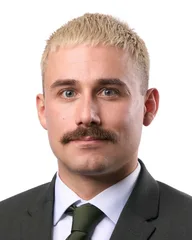
Lukas Sieper | Germany DEU | Non-attached Members (NI) | 390 |
| 2 |
|
Juan Fernando López Aguilar | Spain ESP | Progressive Alliance of Socialists and Democrats (S&D) | 354 |
| 3 |
|
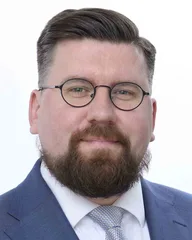
Sebastian Tynkkynen | Finland FIN | European Conservatives and Reformists (ECR) | 331 |
| 4 |
|
João Oliveira | Portugal PRT | The Left in the European Parliament (GUE/NGL) | 232 |
| 5 |
|
Vytenis Povilas Andriukaitis | Lithuania LTU | Progressive Alliance of Socialists and Democrats (S&D) | 227 |
All Contributions (101)
Continued financial and military support to Ukraine by EU Member States (debate)
Mr President, I am sure everyone remembers as yesterday how defeated and horrified we were on Thursday morning, 24 February 2022, when war broke out again on European soil. In the aftermath of that day, we stand united and united behind Ukraine. We will never accept that a people chooses freedom and democracy and that they are simply taken away from them. We do not tolerate this in Europe. Our continued support to Ukraine is therefore essential. We must continue to give Putin the signal that fighting on is pointless. In this context, military, infrastructural and humanitarian assistance to Ukraine is crucial. In my words there is a lot of conviction, but also uncertainty. More and more, it seems that we are heading towards a frozen conflict. Is Europe ready to deal with such a long-term security threat at Europe's borders and in Ukraine? In addition, we must ask ourselves whether, even in a worst-case scenario, we are ready to continue and increase support for Ukraine, for example if Trump is elected President of the United States. The discussion on the frozen Russian assets is essential in this context. We must deliver on our commitments to Ukraine. After all, these will be desperately needed to fill the gap if American support falls away. This requires not only unity, but also a clear strategy. In French there is the saying "les extrêmes se touchent". In Parliament, the extreme right and the extreme left stand united behind Putin. Unity in Parliament is under threat and we must do something about it. Against a strategy that every year condemns us to the blackmail and political poker of Orbán and his associates, against it ... (the President interrupted the speaker) ... we clearly say no. "United, we stand and divided, we will fall..
Withdrawal of the Union from the Energy Charter Treaty (debate)
Mr President, Commissioner, when I saw the Energy Charter Treaty in the Committee on International Trade at the beginning of this legislature, I was quite surprised. How could it be that we were members of such a club with old methods such as ISDS, of which we had clearly said: “We don’t want that kind of private dispute resolution anymore.” But even worse: It was the beginning of the Green Deal legislature. There was one way forward. This ensured that we would be zero-emission by 2050 and that the energy sector would focus on renewable energy, energy efficiency, etc. This agreement was and is completely at odds with that. At the time, I thought we had to get out, but we had the Commission working on a possible modernisation. That has not led to anything, so I am very pleased that we will have that important vote at the end of this legislature tomorrow. And then I assume that the Council is working very quickly to withdraw from the Energy Charter Treaty. Because that hangs like a sword of Damocles above us, the Member States and our energy sector. Let's get this over with now.
EU’s response to the repeated killing of humanitarian aid workers, journalists and civilians by the Israel Defence Forces in the Gaza Strip (debate)
Mr President, colleagues, 34 000 lives have already been claimed by the horrific war in Gaza, including 12 000 children, and thousands more are at risk of starvation as Israel continues to block humanitarian aid. And the horror goes on. The lack of action, including from Europe, is unacceptable. What signal do we give to the families of the more than 280 dead who were found in a mass grave last weekend, to the young girl who has to drink water from a downspout or to the families of the aid workers and the journalists who lost their lives while trying to save lives? What do we say to these people? We need to take action. And that, of course, means an immediate, permanent and unconditional ceasefire. But we have something else we can use: Our economic power. It is high time we put the Association Agreement on the table, suspend it and make sure it really becomes a lever to force Israel to do what it has to do: Stop this war.
Compulsory licensing for crisis management and amending Regulation (EC) 816/2006 (debate)
Mr President, Commissioner, rapporteur, this late in the evening, and it seems like a terribly boring, difficult, technical, legal subject that makes you fall asleep. But actually, nothing less is true. We have experienced a pandemic in this legislature, and I am pleased, Commissioner Breton, that you are sitting here, because I have always - and I say really everywhere I go - had a lot of appreciation for the work you did during that pandemic to ensure that not only the vaccines were there, but also that production was really scaled up to the high level we needed. I always think of it as one of the most important successes. At the same time, we made a very big mistake during that pandemic. Namely: There is not enough solidarity with the rest of the world. You know that I do not agree with the way we dealt with Trips waiver from the committee. I am happy with what is going on here, namely the compulsory licences. This is the first lesson we learned from the pandemic. There is a shortcoming. I will support the proposal tomorrow, but I also want us to support the INTA rapporteur, Mr Scholz, and the S&D fully supports him, to ensure that, if necessary, if we are in a pandemic again, if we need additional production again in the rest of the world, we can also use those compulsory licences at European level to implement. We need to connect the two: we need to make sure that we have compulsory licences at the European level – and I think we will have to do that more and more where it is urgently needed – but we also really need exports, and we need to link the two. So my plea is very simple: support the rapporteur tomorrow, but also support the rapporteur from INTA, with the INTA amendments, for which people are now more competent to ensure exports in a good way than the people from the Committee on International Trade? ‒to ensure that this file allows us to carry out where necessary.
State of play of the corporate sustainability due diligence directive (debate)
Mr President, ladies and gentlemen, the question is: When will child labour become acceptable? When is the exploitation of workers to be defended? When is this the case when it comes to polluting rivers? Well, apparently the answer to that question today is: ‘Or, when it comes to European companies’ or ‘If it brings us anything’. That's incomprehensible. Some political parties, and unfortunately there are some among the liberals, which I find very regrettable, or among the EPP, which we know, or among the far-right parties, which obviously pay that price in order to be able to rise a little in the polls. Is that the price they want to pay today? Because that means that companies today look away from child labour, human rights violations and environmental pollution for the profit. Dear colleagues of the Council, dear European governments, the correct answer to my initial question is of course: That is never acceptable. The Due Diligence Directive is the way to address this. In other words: Take your responsibility.
Multilateral negotiations in view of the 13th WTO Ministerial Conference in Abu Dhabi, 26-29 February 2024 (debate)
Mr President, Commissioner, as we know, the World Trade Organisation, like many other multilateral organisations, is not in the best condition. We have had a reasonably successful MC12, but – in Dutch there is the saying ‘one swallow does not make spring’ – the World Trade Organisation has not yet put it where it should be. I know that there are many references to reforms of the internal system, but I think we need fundamental reforms. Let me give you two examples: 1) Attention to the needs and voice of developing countries in the World Trade Organisation is currently underestimated and needs to be improved. What happened in the pandemic with the discussion on TRIPS and intellectual property rights was not good. So we still need to make an effort to make progress. 2) A second fundamental reform is, of course, the link between climate and trade: not just with a few words and here and there a fine statement, but a fundamental reform of the World Trade Organization system to ensure that we really put the climate at the top of the agenda.
Conclusions of the European Council meetings, in particular the special European Council meeting of 1 February 2024 (debate)
Protecting Presidents, peace and security in the European Union does not stop at the borders of our Member States, nor does it stop at our external borders. The agreement and support package approved in the Council is therefore crucial, as is broad support in this Parliament. Putin cannot win the war. Especially at a time when things are getting more and more difficult in the United States, it is important that Europe is unanimous in its support for the Ukrainian people. You also made time in the Council – and rightly so – to talk to and about the agricultural sector – I think that is very important – a sector that is clearly in crisis. But at the same time, I would like to send a clear message to my colleagues from the EPP and, in the wake of that, the far right – or is it the other way around today: The far right, and in the wake of that, the EPP? — not to make the Green Deal and the Nature Restoration Act a bogeyman in this story. There is no future for agriculture if there is no strong climate policy and biodiversity. The problem today is the common agricultural policy, which is not only at odds with climate policy and biodiversity, but has actually brought the sector into these deep problems today. If there is anything we need to do together here on the way to the next legislature, it is that common agricultural policy is finally fundamentally reforming.
Presentation of the programme of activities of the Belgian Presidency (debate)
– Mr President, Prime Minister. Europe is at a crossroads – you have already referred to this yourself – and it will be the Belgian Presidency that will shape this. For us it is clear: It will be about a Europe that protects, strengthens prosperity and defends freedom, democracy and human rights. Europe must and will be social. That is why the discussion on the revision of the fiscal rules, the so-called economic governance, is so crucial. There can be no return to a policy of saving, saving and saving. Mr. Botenga, you've been misinformed. If there is now one Member State that is very firm on the position that we have taken in the European Parliament in the meantime, in particular room for investment, including social investment, public services and a sustainable transition, it is Belgium. And there is a very important task for you, Prime Minister, to turn the Council's barren position into a better one. My colleague Lamberts has already referred to it: There cannot be a pause button in that transition, Mr Prime Minister, that was a bit of a faux pas. It really is a false choice. It is not about either nature, or farmers, or an ambitious climate policy or our industry. They go hand in hand. What is important, however, is that we in Europe actually do not yet have public funds. A kind of European Investment Fund to set the bar for all Member States and ensure two important things: a genuine industrial policy that keeps industry in Europe; and ensure that everyone is involved in this transition, including those who today do not have the means to renovate their homes or buy an electric car. This is where we need to improve public transport. Last point – very important, our responsibility: geopolitics. Ukraine. If one man – or one woman – stay behind Ukraine and live up to our promises. Prime Minister, it will be very important to show the same courage and the same unity when it comes to the conflict between Israel and Hamas. And I know that the Belgian position in that area is good. Let us ensure that an immediate ceasefire and access to much more humanitarian aid becomes an absolute spearhead of this Belgian Presidency. I wish you a lot of courage and all our support.
Preparation of the European Council meeting of 14-15 December 2023 (debate)
Mr President, next February will be two years since Russia's illegal war against Ukraine began. And more than ever, it is important that we in the Council continue to stand collectively behind Ukraine. Everyone here – as you can see – is extremely concerned about the growing lack of support in the United States, but also within our own Council. And I think it is very important that we put the obstruction policy of Orbán out of play and make an agreement without him. The Council must continue to give clear support to Ukraine and sanctions remain an interesting way to do so. And I really hope that the twelfth package of sanctions will also include the luxury product diamond. To help Ukraine and make our transition a reality, we will really need fiscal space. So not only the MFF, but also the fiscal space of the Member States will be extremely important. For us, S&D, there can be no question of "saving, saving, saving" again. As far as the economic governance package is concerned, I therefore hope that you will also have a frank and good conversation about it: fiscal space to meet the challenges of the future.
European Economic Security Strategy (debate)
Mr President, Commissioner, High Representative, the world is changing very quickly. The geopolitical challenges are greater than ever and it goes without saying that we need to adapt both economic policy and trade policy to them. So we need to become more assertive, more autonomous and take action. The communication about economic security therefore comes as called and it is extremely important that we have them. But now that communication needs to be translated into initiatives and legislation. You referred to it, Commissioner: FDI screening – and I hope that the new initiative will be more binding, more enforceable and therefore more effective – and therefore also an initiative on outbound investments. Secondly, I would like to stress absolutely how essential and important it is in the economic strategy to properly protect and keep our critical infrastructure, for example our ports, in our own hands. Ports are not only a logistics hub, a gateway, they are also a crucial link in the sustainable supply chains needed for the green transition. The careless buying off of ports, for example by China, should no longer happen.
EU-Taiwan trade and investment relations (debate)
Mr President, it is a bit of an open door, but today's geopolitical challenges are enormous: the war in Ukraine; the conflict between Hamas and Israel, which violates all humanitarian rules; China, which has been violating international trade rules for more than a decade. And at such a time, it is extremely important that we draw the map of multilateralism from within the European Union. In all areas. Yes, on trade, yes, on climate, but also on human rights and international security. Those things go together. You cannot choose selectively. And then Taiwan is very important and a very good example. The EU and Taiwan are two hands on one belly. We are what we call like—minded countries, both in terms of democracy and the economy. And that is why it is so important that we take a clear position there. A real deal, like a resilient supply chain—agreement or trade agreement, but also fighting for their place in the World Health Organisation. That is Parliament's clear question to the Commission.
A true geopolitical Europe now (topical debate)
Madam President, Commissioner, dear colleagues, in the last 10 years, the European Union has come a long way since it has been brutally awakened by the notions of war, the pandemic, and great power politics have also not disappeared. And this has led us to deeply reflect about security, about dependencies and about no longer being naive in the new world. And I think that’s a good thing. And I want to remind you of what Mrs Ursula von der Leyen said in the beginning of this term. She said: ‘we want multilateralism, we want fair trade, we want to defend the rules-based order because we know it is better for all of us’. And she continued: ‘if we are going to do it the European way, we must first rediscover our unity. If we are united on the inside, nobody will divide us on the outside’. We did that in the response to the Ukrainian war. We didn’t do that the last couple of days in our response to the terrorist attacks by Hamas on Israel. And I think that is really a disgrace. And I think it’s really very important that we adjust the way we organise our foreign policy.
Question Time with Commissioners - European measures to prevent and to fight the rise of organised crime
Thank you very much, Mr President, and thank you for this timely discussion against the backdrop of the action plan against drugs and the European Port Alliance. And it’s about ports that I want to raise my question. As you know, ports are key access for high-volume illicit drug imports. And they target mostly the bigger ports like Antwerp, Rotterdam, Hamburg. Can I give you an example? In 2022, nearly 110 tonnes of cocaine was seized in the port of Antwerp, making it the biggest entry point of cocaine in the world, taking over from Amsterdam the year before. And as you know, the consequences in our society are huge, but also in the cities that are linked to this because we see increased violence, bombings and shootings in my own town are a sad example. I have two questions: You mentioned already the importance of working together between customs authorities, can you be a little bit more specific how you see that? Because already today Rotterdam and Antwerp are working closely together. And from the Europol reports, we know that these gangs and these criminal organisations, they rely very much on insiders in the ports. And how will the support strategy help to combat corruption there?
Effectiveness of the EU sanctions on Russia (debate)
Mr President, Mr Commissioner, as you mentioned, since February 2022, the EU has an unprecedented sanctions package in place against Russia. And these sanctions, they mean to change Russia’s behaviour and into war by undermining Russia’s economy. And although there is effect, of course, but we continue to see that the Russian economy is not hit as hard as we would have expected. Our sanctions are not as effective as we thought they would be. And first of all, and you mentioned that yourself, there is circumvention in place. A lot of products on the sanctions list still go to Russia and into the Russian war economy. So we need to step up our diplomatic efforts, but also pressure towards these countries, neighbouring countries, allies that circumvent, but also EU companies that keep exporting these products. But we also need to see how to strengthen the sanctions. When the Russian goods that the EU countries still import represent a value that is multiple times higher than the support we give to Ukraine, you can conclude we need to do more. And that brings me to the diamonds: they are still not included in the sanction list, and I do not understand that we still allow Russian diamonds to be sold in the EU. We need to tackle that as soon as possible.
Need to complete new trade agreements for sustainable growth, competitiveness and the EU’s strategic autonomy (debate)
Mr President, Commissioner, from the discussions on TTIP and Mercosur to the crises of recent times – think Brexit, the pandemic, but also the war – they have all had an impact on how we think about trade. They have turned the entire trade policy into a different narrative. They have made an important instrument not only of foreign policy, but also of our domestic policy. And that is particularly important. Trade policy is now based on three principles, all of which are very important: trade in openness (open to the rest of the world), sustainability in all its aspects, and economic security. Today's debate and its title suggest that we need to move forward quickly, quickly and possibly lose some of those ambitions. We really can't do that. We have to stick to those principles. Mercosur is a good example of this. Our group is very keen to support Mercosur, but adjustments must be made so that the chapter on trade and sustainable development is stronger and that we can be sure that, for example, it will not violate the Paris Agreement but, on the contrary, will translate it into action.
Energy Charter Treaty: next steps (continuation of debate)
Madam President, Madam Commissioner, I for an instant thought, ‘they’re suspending to get the Council here.’ Unfortunately. I am going to continue in my mother tongue. Voorzitter, collega’s, noch het oude, noch het gemoderniseerde Energiehandvestverdrag is geschikt voor het beoogde doel. Het is niet in overeenstemming met onze Green Deal, de transitie, enzoverder. We weten dat in dit Parlement eigenlijk al heel lang. In het begin van deze zittingsperiode waren er al heel veel mensen, waaronder ikzelf, die zeiden: laten we ermee stoppen en eruit stappen. We hebben jullie (richt zich tot de Raad) nog een kans gegeven om een goede modernisering af te spreken, maar dat is ook op niets uitgelopen. Ik denk dat het nu belangrijk is dat de Commissie op het juiste standpunt staat en zegt: we moeten gecoördineerd met de Unie, Euratom en de lidstaten uit het verdrag stappen. Samen met het EG-Verdrag, dat ervoor moet zorgen dat het Energiehandvestverdrag niet kan worden toegepast tussen de lidstaten, hebben we eigenlijk de meeste en de beste garanties om de vervalbepaling van twintig jaar te ontmijnen. Ik denk dat wij ons werk moeten doen in onze eigen lidstaten. Het enige wat er nu nog moet gebeuren, is samen met de Commissie de Raad overtuigen om zo snel mogelijk uit het verdrag te stappen. Dat zijn we aan onze energietransitie en aan onze burgers verschuldigd.
Question Time with Commissioners – EU-China trade relations
Thank you very much for that answer. You approached very much how difficult it becomes for business to do business in China. But I think we also have to assess, and maybe you cannot answer today, but we have to assess what will be the implication of that counter-espionage law in China on our own autonomous measures, because if we ask our businesses to implement, for instance, due diligence or if it’s the forced labour regulation, they will have to choose: will we implement EU law when we do business in China or do we just neglect it and try to do business in China if they face, for instance, an arrest?
Question Time with Commissioners – EU-China trade relations
Mr Commissioner, when we look at China and our relations, I think it is extremely important that we also have a close eye on the legislative issues within China and that we can see that they have a very broad understanding of the concept of national security. It is not confined, as we do, to conventional concerns such as terrorism and extremism, and it deals with a very large topic such as culture, technology, data and cyber security. There is now a new proposal under the counter-espionage law that gives the Chinese Government large powers to override economic activity in the interest of national security. They can freeze assets, seize data, and they can conduct arrests within that framework. And this makes it, of course, increasingly difficult and dangerous for the EU business to be active in China. But equally important, it will lead to a huge implementation problem for our autonomous measures such as due diligence, deforestation and the ban on forced labour. Did you have a talk on that when you were in China? How do you address these issues? And specifically when it comes to our autonomous trade measures, what is your assessment, Mr Commissioner?
Medicine shortages and strategic healthcare autonomy in the EU (debate)
Mr President, Commissioner, 20 years ago, the EU produced half of its own medicines, and today that is only a quarter. For various medicines that we very much need, we have become 100% dependent on China and India. Today we only have one factory on European soil that produces antibiotics and we almost lost it. Imagine that a superbacteria will emerge tomorrow and that Europe itself will not be able to produce antibiotics, so we will have to wait for a delivery from – yes – China in the midst of the pandemic. That does ring a bell, because in the pandemic we had to wait for the masks. And if we have learned one thing from the COVID-19 pandemic, it is that the European Union needs to learn to better protect itself against health risks and pandemics. We do not do this if we do not have an adequate answer to a shortage of medicines. I have a proposal, Commissioner. You have announced a communication. Well, Belgium has launched the Critical Medicines Act, supported in the Council and supported in Parliament and will underline this with the Belgian Presidency. I hope you will include that in your communication.
New Agenda for Latin America and the Caribbean in the aftermath of the EU-CELAC Summit (debate)
Mr President, Mr High Representative, let me begin by congratulating you. If you re-establish bi-regional relations with so many representatives after eight years, then it is a success in itself. Moreover – you yourself referred to it, High Representative – it has also produced concrete results. Conversations about raw materials, hydrogen are extremely important. On one subject, however, it was very quiet: The Mercosur Agreement. There's a reason. It has become a very complex dossier, where we in the European Parliament have put it in the freezer because of the very fundamental questions we have about the levers around sustainability. There is also good news to report. In recent months, for example, there has been a sharp decline in the rate of deforestation in the Brazilian Amazon. And let's also include that good news to get started and make an agreement with the Mercosur countries that is based on real challenges around sustainability. And I think we can. I think that is the challenge, High Representative, and that is what Parliament wants to go for.
Public access to documents – annual report for the years 2019-2021 (debate)
Mr President, Commissioner, yesterday we voted in this Parliament the report on the lessons learned from the pandemic. And as the Chair of the COVI Committee I have to say I’m very proud of the work that we have conducted. But there is a very important downside on that work. We – but the Commission particularly – failed to deliver on the transparency regarding the EU contracts on vaccines and the preliminary negotiations. We did a lot of effort to request these documents. They came very late. They came not as they should, and they were either redacted or not everybody had access to them. Many colleagues already referred to the Textgate issues. We as a committee requested the presence of Ursula von der Leyen. Commissioner, do you know any parliament in the world where a minister or a prime minister would refuse to come to a relevant committee to answer questions? I don’t. And I have to say, dear colleagues, it is also our responsibility and problem because the Conference of Presidents in this Parliament did not act upon the request of the COVI Committee, and a lot of our leaders were responsible for that. So let’s be honest: we need to change that, because in a democracy we need full transparency and accountability. It will not only create problems between our institutions if we do not deliver on that, but it will also risk losing the trust of European citizens. So we need to change that approach.
Greening transport package (debate)
Mr President, Commissioner, the importance of logistics cannot, of course, be stressed enough. By the way, the pandemic – but also the energy crisis – has proven this once again. I would like to stress very strongly that the future of our logistics sector is on three axes that are also very interconnected. Of course sustainability, greening, the Green Deal – without any doubt – but also digitalisation. And digitalisation can also really give rise to further greening. But it will not surprise you that as a social democrat I also want to emphasize very much how good jobs, quality jobs, well-paid jobs are important in the sector. A clear and uniform framework for measuring and calculating emissions is essential in the package you are proposing today. But it is equally important that we also better coordinate transport systems, because they are easy to combine with each other. That is why I call on the Commission to move very quickly towards the Combined Transport Directive. Any initiative that puts us on the road to a sustainable, fair and modern transport sector can count on the support of my group.
COVID-19 pandemic: lessons learned and recommendations for the future (debate)
Mr President, Mr Commissioner, as your COVID Committee Chair I am very proud of the work that we did in the committee during more than a year. We have to acknowledge that neither Europe nor the Member States were prepared for a crisis of the magnitude of COVID—19, and the report in front of you is about having all the building blocks to make Europe more crisis resilient for the future. First, and very important, we need to strengthen national and global health security, and that requires additional investments in our healthcare system. But it also means that in our healthcare workers and healthcare professions, we need extra investment and we need to better protect the most vulnerable in our societies, starting with children and youngsters. The pandemic has had a huge impact on their mental health, and we want to make measures to increase access to mental health care and also make sure – and I think that’s very important – that we never have to close schools again. We need a stronger international system for pandemic preparedness and response, and that also means strengthening HERA and the EMA to gear up for health crises to come. But strengthening our resilience does not stop at European borders. The inconvenient truth, dear colleagues, is that Europe failed to show solidarity with the global South. The European Union needs to take the lead in the ongoing negotiations on the Pandemic Treaty, and we must enable the development and production of vaccines in the global South by sharing knowledge and technology. We need European leadership to deliver equal access to vaccines and health equipment. I therefore call on the European Commission to get to work and to turn these recommendations into actions, because Europe will recover from the pandemic and we have everything to take up these challenges. But now we have to strengthen Europe’s foundation to ensure that we are better prepared for the future.
The need for a coherent strategy for EU-China Relations (debate)
Mr President, ladies and gentlemen, this parliamentary term, which is coming to an end, is marked by the Green Deal, by a pandemic and, of course, by the war in Ukraine. All three indicate in their own way that it is very important that we pursue a consistent foreign and trade policy from a geopolitical point of view. We do that when it comes to Ukraine, but unfortunately not when it comes to China. The cacophony of recent weeks is shameful, Mr High Representative. Let's be clear: There is no point in dealing with economic interests only in the short term. It is about a consistent, values-based policy. It is not as if China today is not a dictatorship that violates human rights. Let me make one thing very clear – and I have to say that I agree with my friend Guy Verhofstadt, that is not always the case, but now it is – that one-China policy is based on the fact that two systems are possible. Let's be clear: As far as Taiwan is concerned, we will not allow Europe to abandon them. In that respect, no cacophony can be tolerated.
Deforestation Regulation (debate)
Mr President, the problem is well known. For a very long time we have pursued an overly hypocritical policy, both economically and in our trade policy. At the beginning of this legislature – it seems to have been a while – we put the Mercosur agreement on hold in the Committee on International Trade and in this Parliament. We said: we do not go further with this and we have fought very hard to make trade policy and the TSD chapter (on trade and sustainable development) in the trade agreement more sustainable. So today is an important day, a good day because this instrument is a very important part of it. The importance cannot be underestimated. Our trade policy alone accounts for more than 16% of global deforestation. You cannot, on the one hand, have a tough climate policy for your own European Union and allow all those products on our market that are just pushing that deforestation forward. So important: Let's really support this further. I am very much in favour of further strengthening our products in the future, but this is a very important first step to ensure that our trade policy is made more sustainable. So I call on everyone to continue to support and approve this with great enthusiasm.